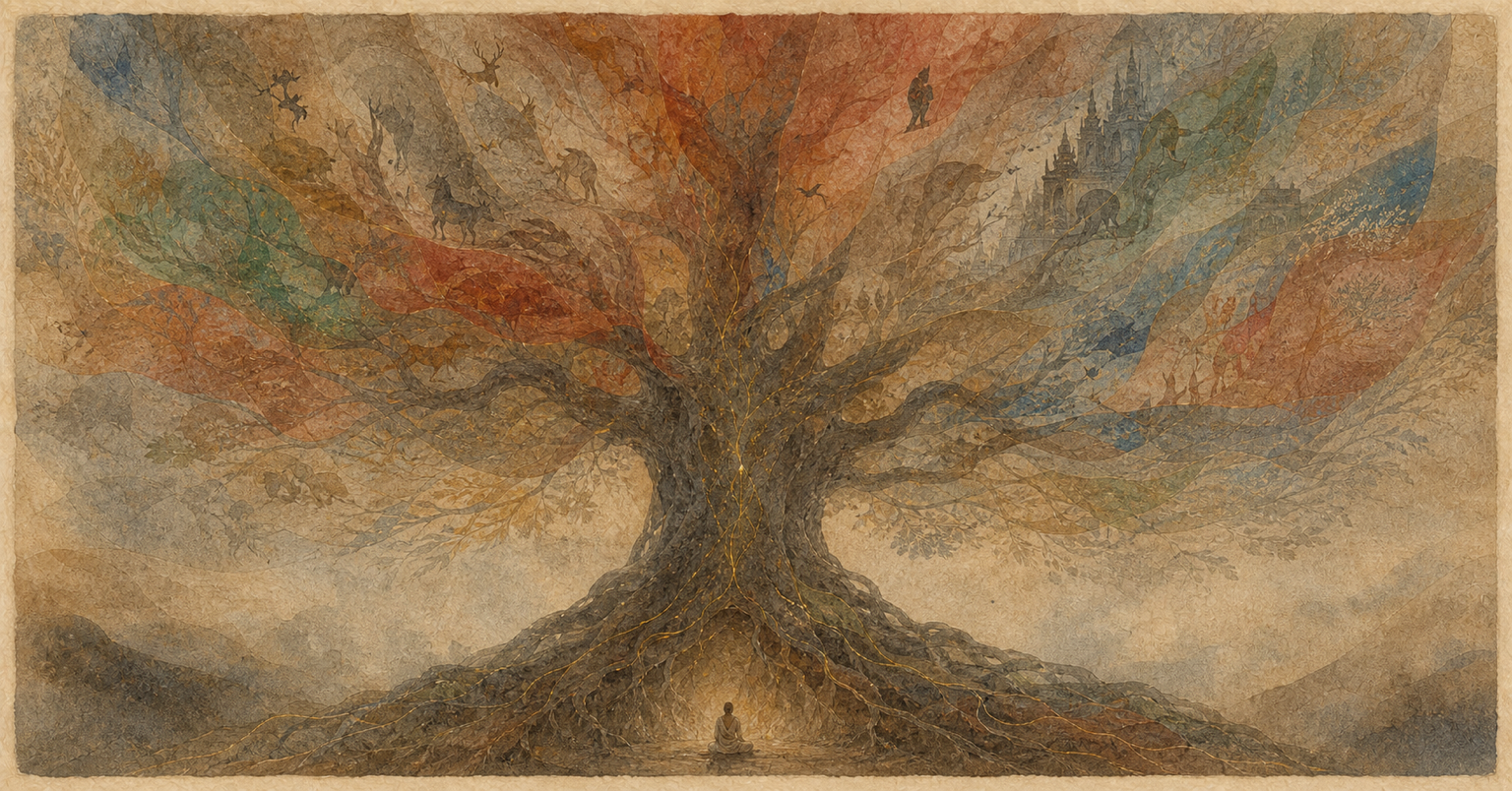
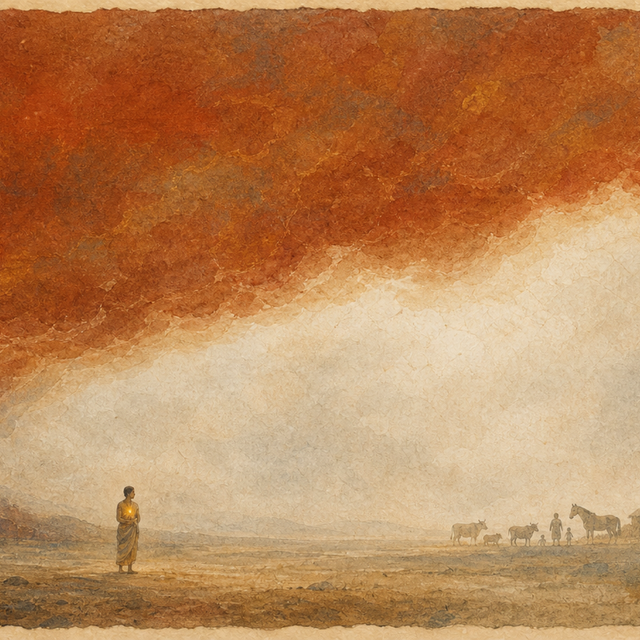
A great tree bears many colourful forms of the world while a person meditates beneath its roots.

Śvetāśvatara Upaniṣad 4: Forms of the World, Māyā and God

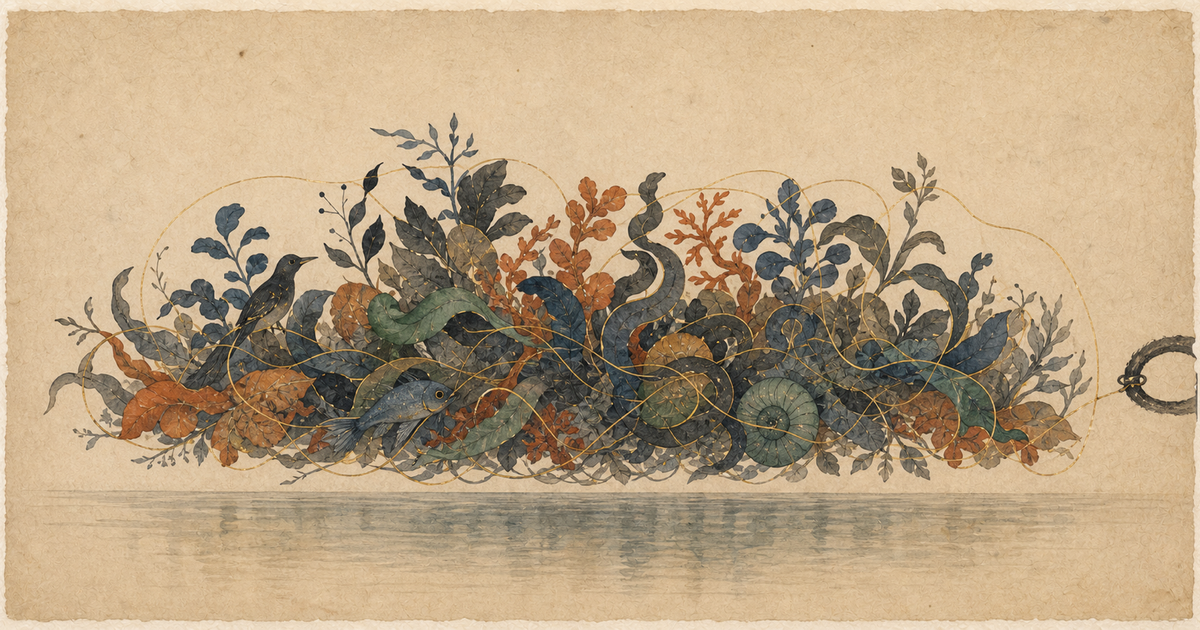
The formless One appears as multiplicity, acts through Māyā and is known as the hidden creator to whom prayers for protection and knowledge are addressed.

Dr. Ronald Steiner Dr. Ronald Steiner Nils Jacob Liersch Nils Jacob Liersch
SVU 4.1-4.5: The One in Every Form

SVU 4.1-4.5: Unity, Forms of the World and Primordial Nature

The colourless One assumes countless forms, pervades fire, sun, nature and living beings, and stands behind the three-coloured primordial nature and those who...

Śvetāśvatara Upaniṣad 4.1
Metre: Pāda 1: Triṣṭubh with Śālinī ending — 12 syllables; Pāda 2: Triṣṭubh with Śālinī ending — 12 syllables; Pāda 3: Triṣṭubh with Śālinī ending — 12 syllables; Pāda 4: Triṣṭubh with Śālinī ending
He who (yaḥ | nom sg m), the One (ekaḥ | nom sg m), [himself] colourless (avarṇaḥ | nom sg m), brings forth (dadhāti | 3p sg act pres), in manifold ways (bahudhā) through union with [his] power (śakti-yogāt | abl sg), forms (varṇān | acc pl), namely numerous ones (anekān | acc pl m), with a hidden purpose (nihitārthaḥ | nom sg m bv). Into diversity (vi) it also (ca) goes (eti | 3p sg act pres), and (ca) at the end (ante | loc sg) the whole (viśvam | nom sg n) [returns into him]; at the beginning (ādau | loc sg) [stands] he (saḥ | nom sg m), God (devaḥ | nom sg). May he (saḥ | nom sg m) endow (saṃyunaktu | 3p sg act imp) us (naḥ | acc pl) with auspicious understanding (buddhyā śubhayā | ins sg).
Dr. Ronald Steiner - 2026 - historically literal
Śvetāśvatara Upaniṣad 4.2
Metre: Anuṣṭubh
That (tat | nom sg n), indeed (eva), is Agni (agniḥ | nom sg); that (tat | nom sg n) [is] Āditya (ādityaḥ | nom sg); that (tat | nom sg n) [is] Vāyu (vāyuḥ | nom sg); that (tat | nom sg n) [is] also (u) the moon (candramāḥ | nom sg). That (tat | nom sg n), indeed (eva), is the Pure (śukram | nom sg n); that (tat | nom sg n) [is] Brahman (brahma | nom sg); that (tat | nom sg n) [is] the waters (āpaḥ | nom pl); that (tat | nom sg n) [is] Prajāpati (prajāpatiḥ | nom sg).
Dr. Ronald Steiner - 2026 - historically literal
Śvetāśvatara Upaniṣad 4.3
Metre: Pāda 1: Anuṣṭubh — 7 rather than 8 syllables; Pāda 2: Triṣṭubh with Vajrā ending — 10 syllables; Pāda 3: Jagatī — 10 syllables; Pāda 4: Jagatī with Vaṃśa ending
You (tvam | nom sg) [are] the woman (strī | nom sg); you (tvam | nom sg) are (asi | 2p sg act pres) the man (pumān | nom sg). You (tvam | nom sg) [are] the boy (kumāraḥ | nom sg) and (uta) also (vā) the girl (kumārī | nom sg). You (tvam | nom sg) [are] aged (jīrṇaḥ | nom sg m ppp) and, with a staff (daṇḍena | ins sg), walk bent over (vañcasi | 2p sg act pres); you (tvam | nom sg), born (jātaḥ | nom sg m ppp), become (bhavasi | 2p sg act pres) all-faced (viśvato-mukhaḥ | nom sg m bv).
Dr. Ronald Steiner - 2026 - historically literal
Śvetāśvatara Upaniṣad 4.4
Metre: Pāda 1: Triṣṭubh with Śālinī ending — 12 syllables; Pāda 2: Triṣṭubh with Vajrā ending — 10 syllables; Pāda 3: Jagatī; Pāda 4: Triṣṭubh with Vajrā ending
You (tvam | nom sg) [are] the dark-blue (nīlaḥ | nom sg m) bird (pataṅgaḥ | nom sg), green (haritaḥ | nom sg m) [and] red-eyed (lohitākṣaḥ | nom sg m bv), bearing lightning within (taḍid-garbhaḥ | nom sg m bv); [you are] the seasons (ṛtavaḥ | nom pl), the seas (samudrāḥ | nom pl). [You are] beginningless (anādimān | nom sg m); through all-pervasiveness (vibhutvena | ins sg) you abide (vartase | 2p sg med pres). From you (yataḥ | abl sg m) [are] the worlds (bhuvanāni | nom pl), all (viśvā | nom pl n), born (jātāni | nom pl n ppp).
Dr. Ronald Steiner - 2026 - historically literal
Śvetāśvatara Upaniṣad 4.5
Metre: Pāda 1: Triṣṭubh with Vajrā ending; Pāda 2: Triṣṭubh with Śālinī ending; Pāda 3: Triṣṭubh with Śālinī ending; Pāda 4: Triṣṭubh with Śālinī ending
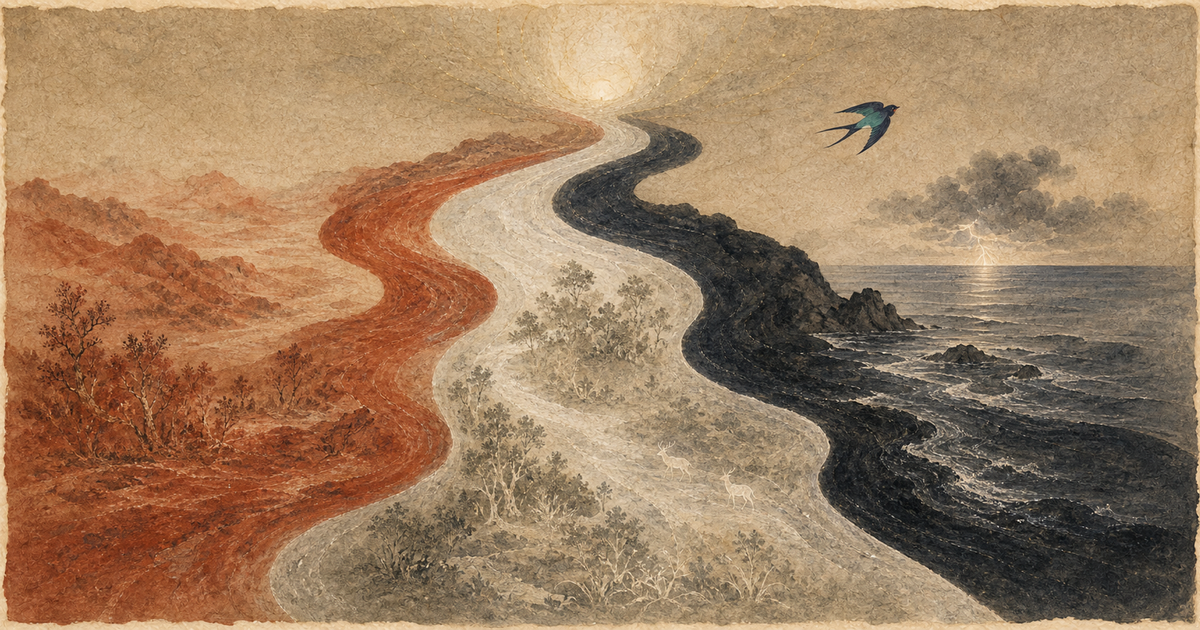
The Unborn female (ajām | acc sg), the one (ekām | acc sg f), red, white and black (lohita-śukla-kṛṣṇām | acc sg f), bringing forth (sṛjamānām | acc sg f pcm) many (bahvīḥ | acc pl f) offspring (prajāḥ | acc pl), [all] of like form (sa-rūpāḥ | acc pl f bv): the Unborn male (ajaḥ | nom sg), indeed (hi), the one (ekaḥ | nom sg m), delighting (juṣamāṇaḥ | nom sg m pcm), lies beside [her] (anuśete | 3p sg med pres). The other (anyaḥ | nom sg m) Unborn male (ajaḥ | nom sg) leaves (jahāti | 3p sg act pres) her (enām | acc sg f), whose enjoyment has been consumed (bhukta-bhogām | acc sg f bv).
Dr. Ronald Steiner - 2026 - historically literal
SVU 4.6-4.10: Two Birds and Māyā

SVU 4.6-4.10: Bound Self, Witness and the Appearance of the World

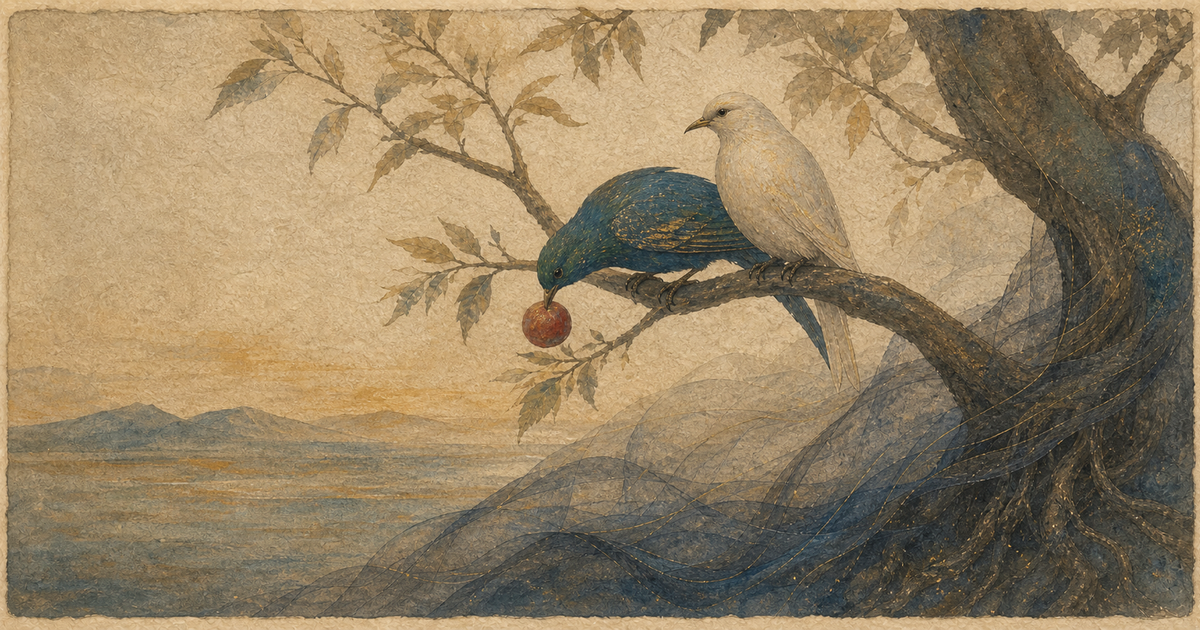
The image of the birds distinguishes the suffering self from the witnessing Lord; texts and sacrifices arise from the Imperishable, and the world arises from...

Śvetāśvatara Upaniṣad 4.6
Metre: Pāda 1: Triṣṭubh with Vajrā ending — 10 syllables; Pāda 2: Triṣṭubh with Vajrā ending; Pāda 3: Triṣṭubh — 9 syllables; Pāda 4: Triṣṭubh with Vajrā ending
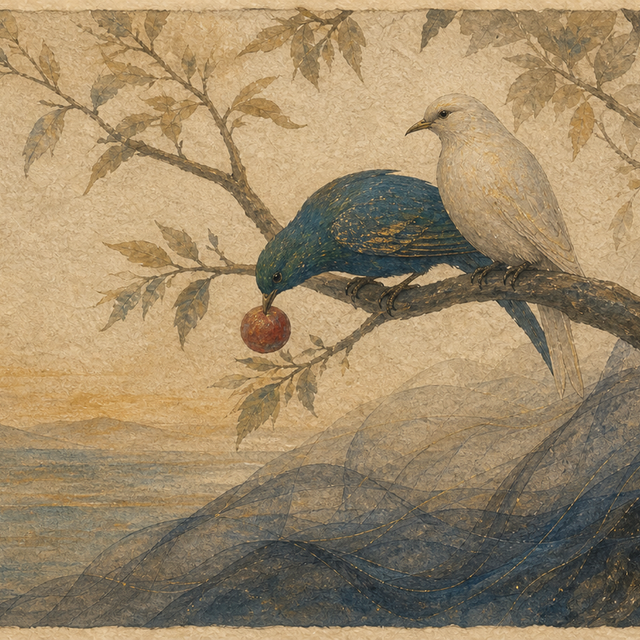
Two (dvā | nom du m) beautiful-winged birds (suparṇā | nom du), closely joined (sayujā | nom du m), two friends (sakhāyā | nom du), have embraced (pariṣasvajāte | 3p du med perf) the same (samānam | acc sg m) tree (vṛkṣam | acc sg). Of the two (tayoḥ | gen du m), one (anyaḥ | nom sg m) eats (atti | 3p sg act pres) the fig fruit (pippalam | acc sg), the sweet one (svādu | acc sg n); not eating (anaśnan | nom sg m pca), the other (anyaḥ | nom sg m) looks on, shining (abhicākaśīti | 3p sg act pres inte).
Dr. Ronald Steiner - 2026 - historically literal
Śvetāśvatara Upaniṣad 4.7
Metre: Pāda 1: Triṣṭubh with Vajrā ending; Pāda 2: Triṣṭubh with Vajrā ending; Pāda 3: Triṣṭubh — 10 syllables; Pāda 4: Triṣṭubh with Vajrā ending — 12 syllables
On the same (samāne | loc sg m) tree (vṛkṣe | loc sg), the Puruṣa (puruṣaḥ | nom sg) [is] sunk (nimagnaḥ | nom sg m ppp); because of his powerlessness (anīśayā | ins sg), he grieves (śocati | 3p sg act pres), becoming deluded (muhyamānaḥ | nom sg m pcm). When (yadā) he sees (paśyati | 3p sg act pres) the gracious one (juṣṭam | acc sg m ppp), the other (anyam | acc sg m) Lord (īśam | acc sg), and his (asya | gen sg m) greatness (mahimānam | acc sg), he is thus (iti) [made] free from sorrow (vīta-śokaḥ | nom sg m bv).
Dr. Ronald Steiner - 2026 - historically literal
Śvetāśvatara Upaniṣad 4.8
Metre: Pāda 1: Triṣṭubh — 10 syllables; Pāda 2: Triṣṭubh with Śālinī ending; Pāda 3: Jagatī with Vaṃśa ending; Pāda 4: Jagatī with Vaṃśa ending
The [essence] of the Ṛc verse (ṛcaḥ | gen sg) [rests] in the Imperishable (akṣare | loc sg), in the highest (parame | loc sg n) heavenly space (vyoman | loc sg), in which (yasmin | loc sg n) all (viśve | nom pl m) the gods (devāḥ | nom pl) have settled (niṣedhuḥ | 3p pl act perf), resting thereon (adhi). He who (yaḥ | nom sg m) does not (na) know (veda | 3p sg act perf) that (tat | acc sg n)—what (kim | acc sg n) will he accomplish (kariṣyati | 3p sg act fut) with the Ṛc verse (ṛcā | ins sg)? Those who (ye | nom pl m) know (viduḥ | 3p pl act perf) precisely (it) that (tat | acc sg n), they (te | nom pl m)—these here (ime | nom pl m)—are gathered together (samāsate | 3p pl med pres).
Dr. Ronald Steiner - 2026 - historically literal
Śvetāśvatara Upaniṣad 4.9
Metre: Pāda 1: Triṣṭubh with Vajrā ending; Pāda 2: Triṣṭubh with Śālinī ending; Pāda 3: Triṣṭubh with Śālinī ending; Pāda 4: Triṣṭubh with Śālinī ending
From this (asmāt | abl sg n), the wielder of Māyā (māyī | nom sg) creates (sṛjate | 3p sg med pres) this (etat | acc sg n) whole (viśvam | acc sg n): the sacred texts (chandāṃsi | nom pl), the sacrifices (yajñāḥ | nom pl), the rites (kratavaḥ | nom pl), the vows (vratāni | nom pl), what has become (bhūtam | nom sg n ppp), what is to be (bhavyam | nom sg n pfp), and (ca) whatever (yat | acc sg n) the Vedas (vedāḥ | nom pl) proclaim (vadanti | 3p pl act pres). In it (tasmin | loc sg n), the other (anyaḥ | nom sg m) too (ca) is bound (saṃniruddhaḥ | nom sg m ppp) by Māyā (māyayā | ins sg).
Dr. Ronald Steiner - 2026 - historically literal
Śvetāśvatara Upaniṣad 4.10
Metre: Anuṣṭubh
One should know (vidyāt | 3p sg act opt) Prakṛti (prakṛtim | acc sg) as Māyā (māyām | acc sg), however (tu), and Maheśvara (maheśvaram | acc sg) as the wielder of Māyā (māyinam | acc sg), however (tu). By [beings] that have become his (tasya | gen sg m) limbs (avayava-bhūtaiḥ | ins pl m ppp), however (tu), this (idam | nom sg n) entire (sarvam | nom sg n) world (jagat | nom sg) is pervaded (vyāptam | nom sg n ppp).
Dr. Ronald Steiner - 2026 - historically literal
SVU 4.11-4.16: The Hidden Creator

SVU 4.11-4.16: Knowledge of the Inner God and Liberation

The one God brings forth powers and beings, remains hidden within them, and grants peace, liberation and the end of every bond to one who knows him.

Śvetāśvatara Upaniṣad 4.11
Metre: Pāda 1: Triṣṭubh with Vajrā ending; Pāda 2: Triṣṭubh with Vajrā ending; Pāda 3: Triṣṭubh with Śālinī ending; Pāda 4: Triṣṭubh with Śālinī ending
He who (yaḥ | nom sg m) governs (adhitiṣṭhati | 3p sg act pres) every source (yonim | acc sg), source after source (yonim | acc sg), [is] the One (ekaḥ | nom sg m). In him (yasmin | loc sg m) this [whole] (idam | nom sg n) comes together (sam) and (ca) moves apart (vi) again, and (ca) thus the whole (sarvam | nom sg n) proceeds (eti | 3p sg act pres). Having recognised (nicāyya | abs) him (tam | acc sg m), the Lord (īśānam | acc sg), the giver of boons (varadam | acc sg m), God (devam | acc sg), the one worthy of praise (īḍyam | acc sg m pfp), one attains (eti | 3p sg act pres) this (imām | acc sg f) peace (śāntim | acc sg) for ever (atyantam).
Dr. Ronald Steiner - 2026 - historically literal
Śvetāśvatara Upaniṣad 4.12
Metre: Pāda 1: Triṣṭubh with Śālinī ending; Pāda 2: Triṣṭubh — 9 syllables; Pāda 3: Triṣṭubh with Vajrā ending — 12 syllables; Pāda 4: Triṣṭubh with Śālinī ending
He who (yaḥ | nom sg m) [is] the source (prabhavaḥ | nom sg) and (ca) origin (udbhavaḥ | nom sg) of the gods (devānām | gen pl), and (ca) exalted above the whole (viśvādhikaḥ | nom sg m), [is] Rudra (rudraḥ | nom sg), the great seer (maharṣiḥ | nom sg). He saw (paśyata | 3p sg med inj) the golden germ (hiraṇya-garbham | acc sg) being born (jāyamānam | acc sg m pcm). May he (saḥ | nom sg m) endow (saṃyunaktu | 3p sg act imp) us (naḥ | acc pl) with auspicious understanding (buddhyā śubhayā | ins sg).
Dr. Ronald Steiner - 2026 - historically literal
Śvetāśvatara Upaniṣad 4.13
Metre: Pāda 1: Anuṣṭubh — 7 rather than 8 syllables; Pāda 2: Anuṣṭubh; Pāda 3: Jagatī with Vaṃśa ending; Pāda 4: Triṣṭubh with Vajrā ending
He who (yaḥ | nom sg m) [is] the overlord (adhipaḥ | nom sg) of the gods (devānām | gen pl), upon whom (yasmin | loc sg m) the worlds (lokāḥ | nom pl) are founded (adhi-śritāḥ | nom pl m ppp), who (yaḥ | nom sg m) rules (īśe | 3p sg med pres) over this [realm] (asya | gen sg n) of the biped (dvi-padaḥ | gen sg m dg) [and] quadruped (catuṣ-padaḥ | gen sg m dg): to which (kasmai | dat sg m) God (devāya | dat sg) shall we render worship (vidhema | 1p pl act opt) with an oblation (haviṣā | ins sg)?
Dr. Ronald Steiner - 2026 - historically literal
Śvetāśvatara Upaniṣad 4.14
Metre: Pāda 1: Triṣṭubh with Vajrā ending; Pāda 2: Triṣṭubh with Vajrā ending; Pāda 3: Triṣṭubh with Vajrā ending — 10 syllables; Pāda 4: Triṣṭubh with Śālinī ending
The exceedingly subtle one beyond even the subtle (sūkṣmāti-sūkṣmam | acc sg m), in the midst (madhye | loc sg) of the tangled mass (kalilasya | gen sg), the creator (sraṣṭāram | acc sg) of the whole (viśvasya | gen sg n), manifold in form (aneka-rūpam | acc sg m bv), the One (ekam | acc sg m) of the whole (viśvasya | gen sg n), the Encompasser (pariveṣṭitāram | acc sg): having known [him] (jñātvā | abs) as the Auspicious One (śivam | acc sg m), one attains (eti | 3p sg act pres) peace (śāntim | acc sg) for ever (atyantam).
Dr. Ronald Steiner - 2026 - historically literal
Śvetāśvatara Upaniṣad 4.15
Metre: Pāda 1: Triṣṭubh with Vajrā ending; Pāda 2: Triṣṭubh with Śālinī ending; Pāda 3: Triṣṭubh with Śālinī ending — 12 syllables; Pāda 4: Triṣṭubh with Śālinī ending — 12 syllables
He (saḥ | nom sg m) alone (eva) [is], in time (kāle | loc sg), the guardian (goptā | nom sg) of the world (bhuvanasya | gen sg), the Lord of the whole (viśvādhipaḥ | nom sg), hidden (gūḍhaḥ | nom sg m ppp) in all beings (sarva-bhūteṣu | loc pl). In him (yasmin | loc sg m) the seers of Brahman (brahmarṣayaḥ | nom pl) and (ca) the deities (devatāḥ | nom pl) are united (yuktāḥ | nom pl m ppp). Having known (jñātvā | abs) him (tam | acc sg m) thus (evam), one cuts apart (chinatti | 3p sg act pres) the bonds of death (mṛtyu-pāśān | acc pl).
Dr. Ronald Steiner - 2026 - historically literal
Śvetāśvatara Upaniṣad 4.16
Metre: Pāda 1: Triṣṭubh with Vajrā ending; Pāda 2: Triṣṭubh with Śālinī ending; Pāda 3: Triṣṭubh with Vajrā ending — 10 syllables; Pāda 4: Triṣṭubh with Śālinī ending
Beyond clarified butter (ghṛtāt | abl sg) [lies] the finer (param | acc sg n) essence (maṇḍam | acc sg), as it were (iva), exceedingly subtle (ati-sūkṣmam | acc sg n). Having known (jñātvā | abs) the Auspicious One (śivam | acc sg m), hidden (gūḍham | acc sg m ppp) in all beings (sarva-bhūteṣu | loc pl), the One (ekam | acc sg m) of the whole (viśvasya | gen sg n), the Encompasser (pariveṣṭitāram | acc sg), and having known (jñātvā | abs) [him] as God (devam | acc sg), one is released (mucyate | 3p sg pas pres) from all bonds (sarva-pāśaiḥ | ins pl).
Dr. Ronald Steiner - 2026 - historically literal
SVU 4.17-4.22: Knowledge and Protection

SVU 4.17-4.22: Transcendent Rudra and the Closing Prayers

Rudra, known in the heart, stands beyond sensory images and all opposites; the closing prayers ask him for knowledge and protection.

Śvetāśvatara Upaniṣad 4.17
Metre: Pāda 1: Triṣṭubh with Śālinī ending; Pāda 2: Triṣṭubh with Śālinī ending — 12 syllables; Pāda 3: Triṣṭubh with Vajrā ending; Pāda 4: Triṣṭubh with Śālinī ending — 12 syllables
This (eṣaḥ | nom sg m) God (devaḥ | nom sg), the maker of all (viśva-karmā | nom sg m up), the great Self (mahātmā | nom sg), is always (sadā) firmly seated (saṃniviṣṭaḥ | nom sg m ppp) in the hearts (hṛdaye | loc sg) of human beings (janānām | gen pl). Through the heart (hṛdā | ins sg), through insight (manīṣā | ins sg), through the mind (manasā | ins sg), he is apprehended (abhikḷptaḥ | nom sg m ppp). Those who (ye | nom pl m) know (viduḥ | 3p pl act perf) this (etat | acc sg n) [are] immortal (amṛtāḥ | nom pl m)—they (te | nom pl m) become [so] (bhavanti | 3p pl act pres).
Dr. Ronald Steiner - 2026 - historically literal
Śvetāśvatara Upaniṣad 4.18
Metre: Pāda 1: Triṣṭubh with Vajrā ending; Pāda 2: Jagatī with Vaṃśa ending; Pāda 3: Triṣṭubh with Vajrā ending; Pāda 4: Triṣṭubh with Vajrā ending
When (yadā) there is no darkness (atamas | nom sg), then (tat | nom sg n) [there is] no (na) day (divā), no (na) night (rātriḥ | nom sg), neither (na) the existent (sat | nom sg n pca) nor (na), indeed (ca), the non-existent (asat | nom sg n pca); the Auspicious One (śivaḥ | nom sg m) alone (eva), the sole one (kevalaḥ | nom sg m), [remains]. That (tat | nom sg n) [is] the Imperishable (akṣaram | nom sg); that (tat | nom sg n) [is] the adorable [light] (vareṇyam | nom sg n pfp) of Savitṛ (savituḥ | gen sg). And (ca) from it (tasmāt | abl sg n) has issued (prasṛtā | nom sg f ppp) insight (prajñā | nom sg), the ancient one (purāṇī | nom sg f).
Dr. Ronald Steiner - 2026 - historically literal
Śvetāśvatara Upaniṣad 4.19
Metre: Anuṣṭubh
No one (na) has encompassed (parijagrabhat | 3p sg act pret) him (enam | acc sg m) above (ūrdhvam | acc sg m), nor (na) across (tiryañcam | acc sg m), nor (na) in the middle (madhye | loc sg). No (na) likeness (pratimā | nom sg) of him (tasya | gen sg m) exists (asti | 3p sg act pres), whose (yasya | gen sg m) name (nāma | nom sg) [is] great (mahat | nom sg n) glory (yaśaḥ | nom sg).
Dr. Ronald Steiner - 2026 - historically literal
Śvetāśvatara Upaniṣad 4.20
Metre: Pāda 1: Triṣṭubh with Vajrā ending; Pāda 2: Triṣṭubh with Vajrā ending; Pāda 3: Triṣṭubh with Vajrā ending; Pāda 4: Triṣṭubh with Śālinī ending
The form (rūpam | nom sg) of him (asya | gen sg m) does not (na) lie (tiṣṭhati | 3p sg act pres) within the range of sight (saṃdṛśe | dat sg); no (na) one at all (kaścana | nom sg m) sees (paśyati | 3p sg act pres) him (enam | acc sg m) with the eye (cakṣuṣā | ins sg). Through the heart (hṛdā | ins sg) [one apprehends] the one dwelling in the heart (hṛdi-stham | acc sg m), through the mind (manasā | ins sg). Those who (ye | nom pl m) know (viduḥ | 3p pl act perf) him (enam | acc sg m) thus (evam) [are] immortal (amṛtāḥ | nom pl m)—they (te | nom pl m) become [so] (bhavanti | 3p pl act pres).
Dr. Ronald Steiner - 2026 - historically literal
Śvetāśvatara Upaniṣad 4.21
Metre: Pāda 1: Anuṣṭubh; Pāda 2: Anuṣṭubh — 6 rather than 8 syllables; Pāda 3: Anuṣṭubh — 9 rather than 8 syllables; Pāda 4: Anuṣṭubh — 7 rather than 8 syllables
“Unborn” (ajātaḥ | nom sg m ppp)—thus (iti), in this way (evam)—some (kaścit | nom sg m) fearful person (bhīruḥ | nom sg m) takes refuge (prapadyate | 3p sg med pres). O Rudra (rudra | voc sg), that which (yat | nom sg n) [is] your (te | gen sg) gracious (dakṣiṇam | nom sg n) face (mukham | nom sg): with that (tena | ins sg n) protect (pāhi | 2p sg act imp) me (mām | acc sg), always (nityam).
Dr. Ronald Steiner - 2026 - historically literal
Śvetāśvatara Upaniṣad 4.22
Metre: Pāda 1: Jagatī; Pāda 2: Jagatī; Pāda 3: Jagatī — 11 syllables; Pāda 4: Jagatī
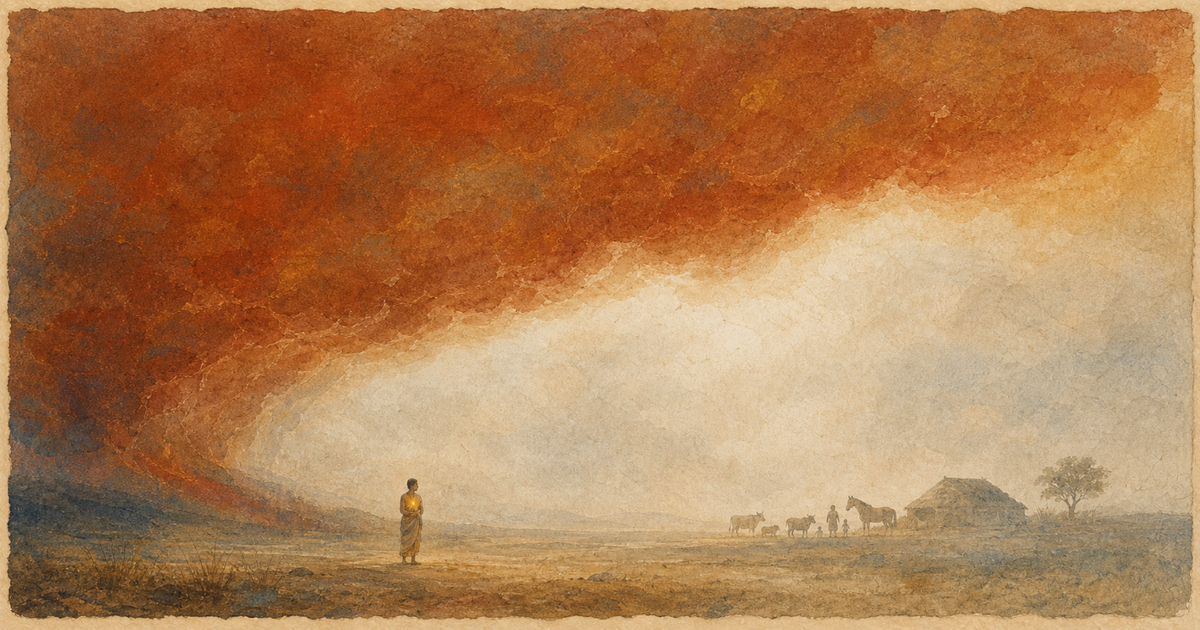
Do not (mā) [harm] us (naḥ | acc pl) in respect of our child (toke | loc sg), in respect of our descendant (tanaye | loc sg); do not (mā) [harm] us (naḥ | acc pl) in respect of life (āyuṣi | loc sg); do not (mā) [harm] us (naḥ | acc pl) in respect of cattle (goṣu | loc pl); do not (mā) [harm] us (naḥ | acc pl) in respect of horses (aśveṣu | loc pl): do not seek to injure [us] (rīriṣaḥ | 2p sg act inj des). O Rudra (rudra | voc sg), when angered (bhāmitaḥ | nom sg m), do not (mā) kill (vadhīḥ | 2p sg act inj) our (naḥ | gen pl) heroes (vīrān | acc pl). Bearing oblations (haviṣmantaḥ | nom pl m), we invoke (havāmahe | 1p pl med pres) precisely (it) you (tvā | acc sg), continually (sadam).
Dr. Ronald Steiner - 2026 - historically literal

Continue with AYI Free

Illustrations: AI-generated.

Editor

Dr. Ronald Steiner

From Ulm

The "Yoga Doc" - Dr. Ronald Steiner is the founder of the AYI method. This method links traditional Ashtanga Yoga with innovative Yogatherapy and living Philosophy. This forms a practice that is personal for each and... more ›

Nils Jacob Liersch

Meine Begeisterung für Yoga, indische Philosophie und Sanskrit führte mich zum Studium der Indologie und Religionswissenschaft an der Universität Heidelberg. Seit 2004 befinde ich mich auf meinem persönlichen Yogaweg... more ›