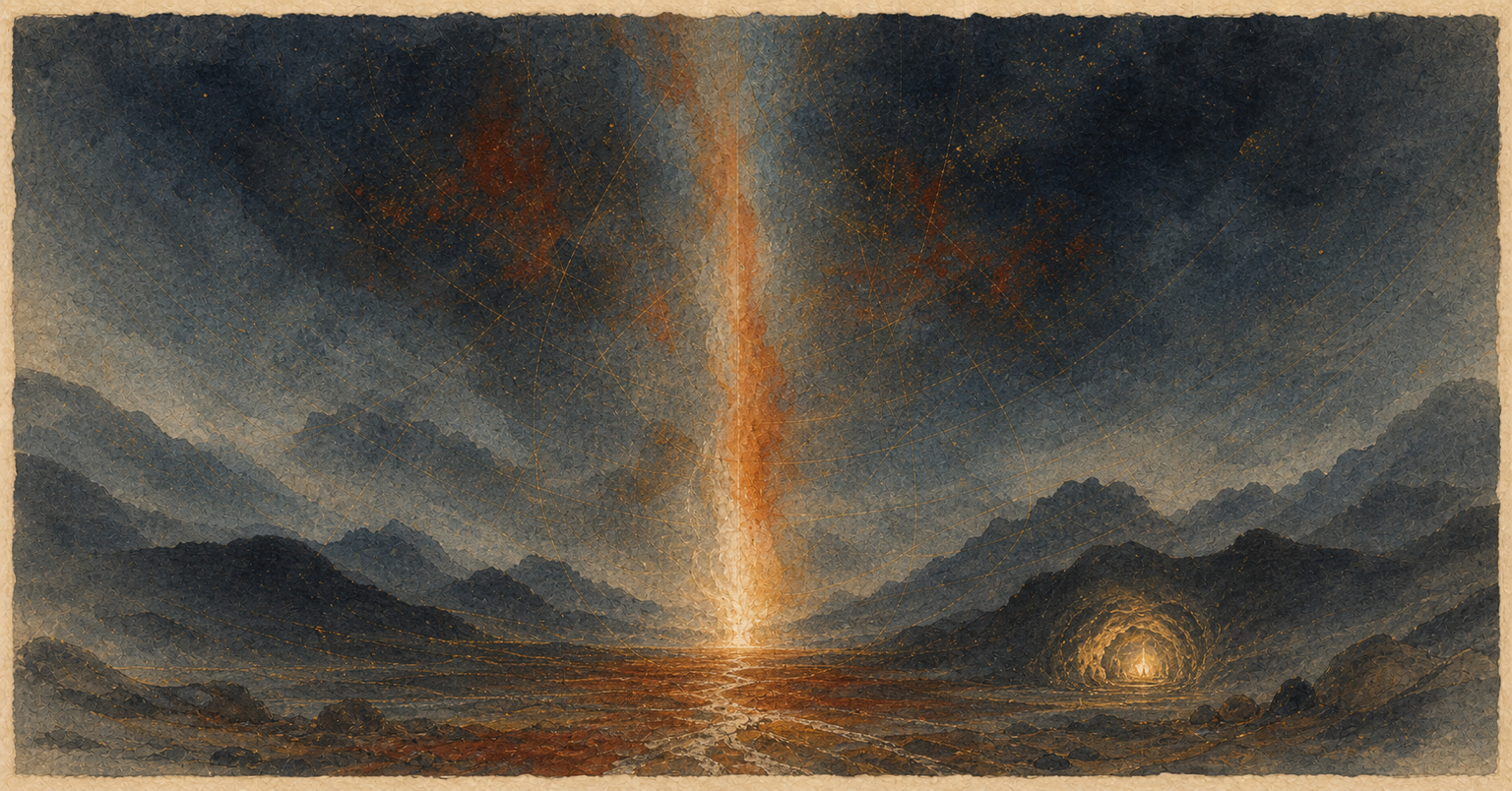
A luminous pillar of fire rises through a dark mountain landscape while a cave glows on the right.

Śvetāśvatara Upaniṣad 3: Lord of the World, Puruṣa and Self

The one Rudra appears as cosmic Lord and auspicious protector, then as the all-encompassing Puruṣa, and finally as the Self hidden in every being.

Dr. Ronald Steiner Dr. Ronald Steiner Nils Jacob Liersch Nils Jacob Liersch
SVU 3.1-3.4: The One Rudra

SVU 3.1-3.4: Rule of the World, Omnipresence and the Golden Germ

The one Rudra rules through Māyā, dwells within human beings, creates, preserves and withdraws everything; as the source of Hiraṇyagarbha, may he grant...

Śvetāśvatara Upaniṣad 3.1
Metre: Pāda 1: Triṣṭubh with Vajrā ending — 13 syllables; Pāda 2: Triṣṭubh with Vajrā ending; Pāda 3: Triṣṭubh with Śālinī ending; Pāda 4: Triṣṭubh with Śālinī ending — 12 syllables
He who (yaḥ | nom sg m), the One (ekaḥ | nom sg m), bearing a net (jāla-vān | nom sg m), rules (īśata | 3p sg med pres) through ruling powers (īśanībhiḥ | ins pl); all the worlds (sarvāṃl lokān | acc pl) he rules (īśata | 3p sg med pres) through ruling powers (īśanībhiḥ | ins pl). He who (yaḥ | nom sg m) is indeed (eva) the One (ekaḥ | nom sg m), [the same] at arising (udbhave | loc sg) and at continuing existence (saṃbhave | loc sg) alike (ca): those who (ye | nom pl m) know (viduḥ | 3p pl act perf) this (etat | acc sg n) [are] immortal (amṛtāḥ | nom pl m)—they (te | nom pl m) become [so] (bhavanti | 3p pl act pres).
Dr. Ronald Steiner - 2026 - historically literal
Śvetāśvatara Upaniṣad 3.2
Metre: Pāda 1: Triṣṭubh with Śālinī ending — 12 syllables; Pāda 2: Triṣṭubh with Vajrā ending — 12 syllables; Pāda 3: Triṣṭubh with Śālinī ending — 14 syllables; Pāda 4: Triṣṭubh with Vajrā ending
The One (ekaḥ | nom sg m), indeed (hi), [is] Rudra (rudraḥ | nom sg); he did not (na) take his stand (tasthe | 3p sg med perf) for a second (dvitīyāya | dat sg m). He who (yaḥ | nom sg m) rules (īśata | 3p sg med pres) these worlds (imāṃl lokān | acc pl) through ruling powers (īśanībhiḥ | ins pl), turned inward (pratyaṅ | nom sg m), O people (janāḥ | voc pl), stands (tiṣṭhati | 3p sg act pres). At the end of time (anta-kāle | loc sg) he drew [them] together (saṃcukoca | 3p sg act perf), having brought forth (saṃsṛjya | abs) all the worlds (viśvā bhuvanāni | acc pl), [as their] guardian (gopāḥ | nom sg).
Dr. Ronald Steiner - 2026 - historically literal
Śvetāśvatara Upaniṣad 3.3
Metre: Pāda 1: Jagatī with Vaṃśa ending; Pāda 2: Triṣṭubh with Vajrā ending; Pāda 3: Triṣṭubh with Vajrā ending; Pāda 4: Triṣṭubh with Śālinī ending
With eyes on every side (viśvataś-cakṣus | nom sg m) and (uta) faces on every side (viśvato-mukhaḥ | nom sg m), with arms on every side (viśvato-bāhuḥ | nom sg) and (uta) feet on every side (viśvatas-pāt | nom sg), together (sam) with both arms (bāhubhyām | ins du) he joins [everything] (dhamati | 3p sg act pres), together (sam) with wings (patatraiḥ | ins pl): bringing forth (janayan | nom sg m pca) heaven and earth (dyāvā-bhūmī | acc du), [acts] the one God (deva ekaḥ | nom sg).
Dr. Ronald Steiner - 2026 - historically literal
Śvetāśvatara Upaniṣad 3.4
Metre: Pāda 1: Triṣṭubh with Śālinī ending; Pāda 2: Triṣṭubh — 9 syllables; Pāda 3: Triṣṭubh with Śālinī ending — 12 syllables; Pāda 4: Triṣṭubh with Śālinī ending
He who (yaḥ | nom sg m) [is] the source (prabhavaḥ | nom sg) and (ca) origin (udbhavaḥ | nom sg) of the gods (devānām | gen pl), and (ca) ruler of the whole (viśvādhipaḥ | nom sg)—Rudra (rudraḥ | nom sg), the great seer (maharṣiḥ | nom sg)—brought forth (janayāmāsa | 3p sg act perf caus) the golden germ (hiraṇya-garbham | acc sg) in ancient time (pūrvam). May he (saḥ | nom sg m) endow (saṃyunaktu | 3p sg act imp) us (naḥ | acc pl) with auspicious understanding (buddhyā śubhayā | ins sg).
Dr. Ronald Steiner - 2026 - historically literal
SVU 3.5-3.6: Rudra's Auspicious Form

SVU 3.5-3.6: A Prayer for Rudra's Most Auspicious Form and the Protection of the Living World

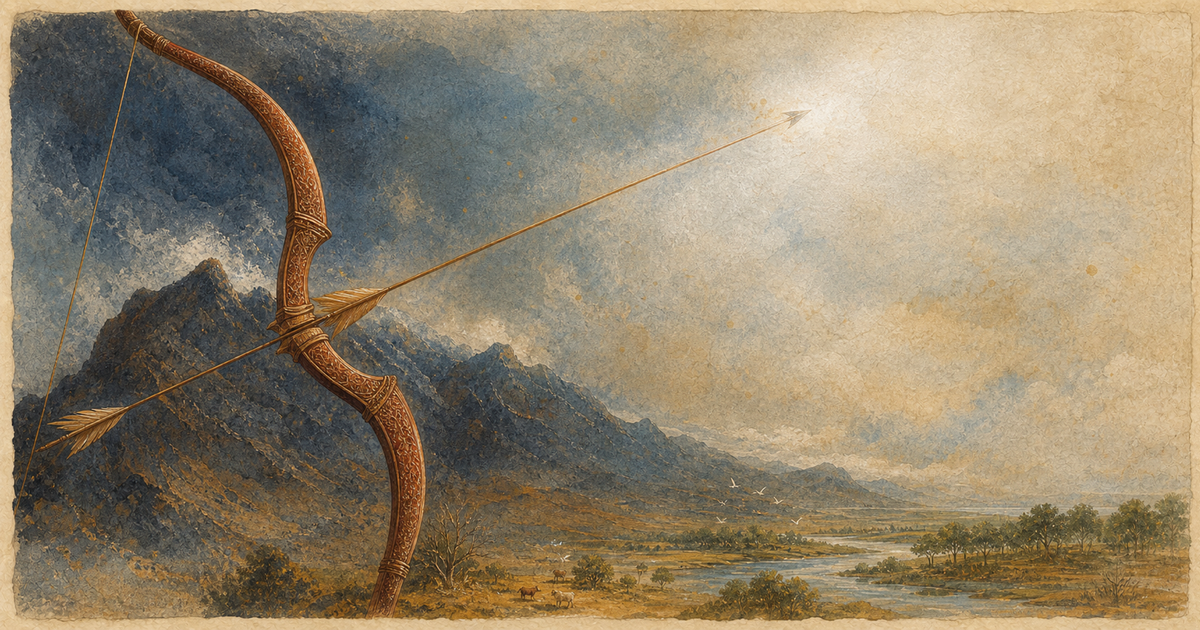
The prayers ask Rudra to show his gentle, most auspicious form: may his arrow become auspicious and injure neither human beings nor the living world.

Śvetāśvatara Upaniṣad 3.5
Metre: Pāda 1: Anuṣṭubh; Pāda 2: Anuṣṭubh; Pāda 3: Anuṣṭubh — 10 rather than 8 syllables; Pāda 4: Anuṣṭubh — 9 rather than 8 syllables
That (yā | nom sg f) form of yours (te | gen sg), O Rudra (rudra | voc sg), which [is] the auspicious body (śivā tanūḥ | nom sg), the gentle one (aghorā | nom sg f), revealing no evil (apāpa-kāśinī | nom sg f): with that (tayā | ins sg f) [look upon] us (naḥ | acc pl), with your body (tanuvā | ins sg), the most auspicious one (śaṃtamayā | ins sg f sup); O mountain-dweller (giri-śanta | voc sg m), look graciously upon [us] (abhicākaśīhi | 2p sg act imp inte).
Dr. Ronald Steiner - 2026 - historically literal
Śvetāśvatara Upaniṣad 3.6
Metre: Pāda 1: Anuṣṭubh — 7 rather than 8 syllables; Pāda 2: Anuṣṭubh — 7 rather than 8 syllables; Pāda 3: Anuṣṭubh; Pāda 4: Anuṣṭubh
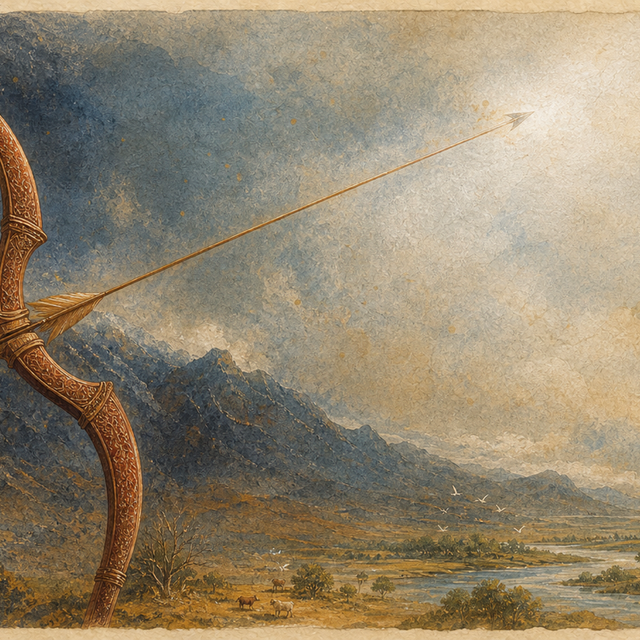
The arrow (yām iṣum | acc sg) which, O mountain-dweller (giri-śanta | voc sg m), you hold (bibharṣi | 2p sg act pres) in your hand (haste | loc sg) to cast [it] (astave | inf), make (kuru | 2p sg act imp) that (tām | acc sg f) auspicious (śivām | acc sg f), O protector of the mountains (giri-tra | voc sg m). Do not (mā) injure (hiṃsīḥ | 2p sg act inj aor) the human being (puruṣam | acc sg) [or] the living world (jagat | acc sg).
Dr. Ronald Steiner - 2026 - historically literal
SVU 3.7-3.9: The Supreme Puruṣa

SVU 3.7-3.9: The Sun-Bright Being Beyond Darkness

The supreme Brahman is hidden in every body; beyond darkness, the sun-bright Puruṣa stands like a tree, fills the world and leads beyond death.

Śvetāśvatara Upaniṣad 3.7
Metre: Pāda 1: Triṣṭubh with Vajrā ending; Pāda 2: Triṣṭubh with Śālinī ending — 12 syllables; Pāda 3: Triṣṭubh with Vajrā ending; Pāda 4: Triṣṭubh with Vajrā ending
Beyond that (tataḥ) [is] the higher Brahman (paraṃ brahma | nom sg). Having known (jñātvā | abs) him (tam | acc sg m)—the Supreme (param | acc sg m), the Great (bṛhantam | acc sg m), hidden (gūḍham | acc sg m ppp) body by body (yathā-nikāyam | acc sg) in all beings (sarva-bhūteṣu | loc pl), the One (ekam | acc sg m) of the whole (viśvasya | gen sg n), the Encompasser (pariveṣṭitāram | acc sg), the Lord (īśam | acc sg)—they become (bhavanti | 3p pl act pres) immortal (amṛtāḥ | nom pl m).
Dr. Ronald Steiner - 2026 - historically literal
Śvetāśvatara Upaniṣad 3.8
Metre: Pāda 1: Triṣṭubh with Vajrā ending; Pāda 2: Triṣṭubh with Vajrā ending; Pāda 3: Triṣṭubh; Pāda 4: Triṣṭubh — 10 syllables
I (aham | nom sg) know (veda | 1p sg act pres) this great Puruṣa (etaṃ puruṣaṃ mahāntam | acc sg), of sun-like radiance (āditya-varṇam | acc sg m), beyond (parastāt) darkness (tamasaḥ | gen sg). Having known (viditvā | abs) him (tam | acc sg m) alone (eva), one goes (eti | 3p sg act pres) beyond (ati) death (mṛtyum | acc sg). No other (nānyaḥ | nom sg m) path (panthāḥ | nom sg) exists (vidyate | 3p sg pas pres) for going (ayanāya | dat sg).
Dr. Ronald Steiner - 2026 - historically literal
Śvetāśvatara Upaniṣad 3.9
Metre: Pāda 1: Triṣṭubh with Vajrā ending; Pāda 2: Triṣṭubh; Pāda 3: Jagatī; Pāda 4: Triṣṭubh with Vajrā ending
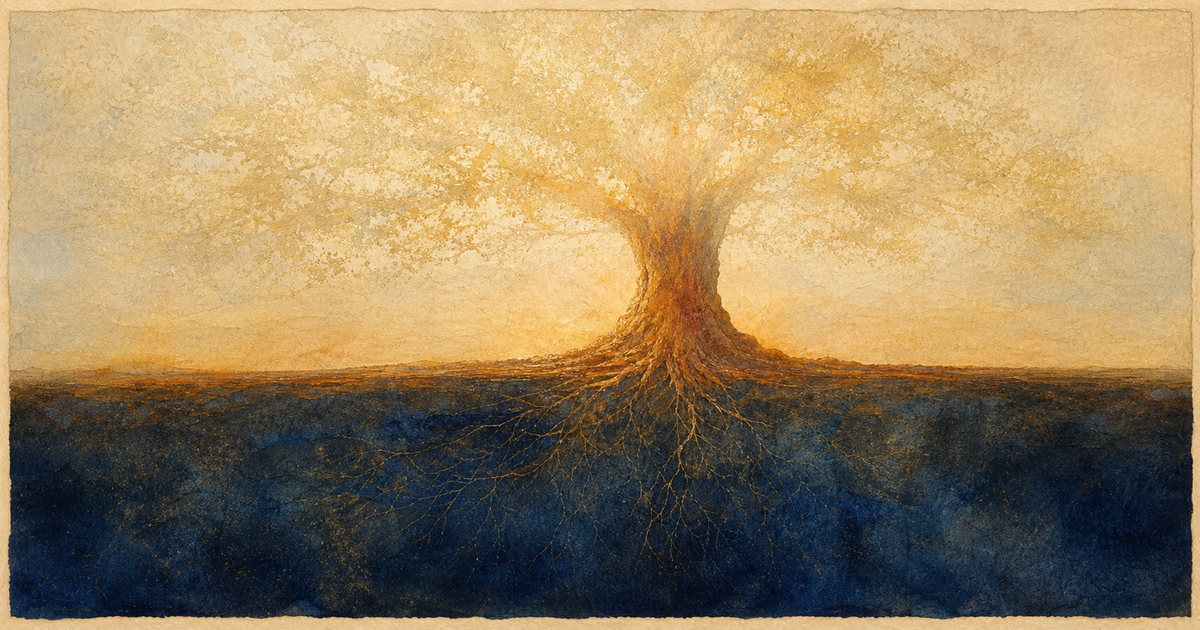
Beyond whom (yasmāt | abl sg m) [is there] anything higher (param | nom sg n)? No (na): neither does anything other (aparam | nom sg n) exist (asti | 3p sg act pres), whatever it may be (kiṃcit | nom sg n). In comparison with whom (yasmāt | abl sg m) [is there] anything smaller (nāṇīyaḥ | nom sg m comp)? No (na): neither is anything greater (jyāyaḥ | nom sg m comp) present (asti | 3p sg act pres), whatever it may be (kiṃcit | nom sg n). Like (iva) a tree (vṛkṣaḥ | nom sg), motionless (stabdhaḥ | nom sg m ppp), the One (ekaḥ | nom sg m) stands (tiṣṭhati | 3p sg act pres) in heaven (divi | loc sg). Through him (tena | ins sg m), through the Puruṣa (puruṣeṇa | ins sg), this [whole] (idam | nom sg n), all of it (sarvam | nom sg n), is filled (pūrṇam | nom sg n ppp).
Dr. Ronald Steiner - 2026 - historically literal
SVU 3.10-3.12: The Formless Light

SVU 3.10-3.12: Presence in the Heart and Pure Light

The formless reality free from affliction pervades all beings, dwells in every heart-cave and leads the inner faculty to realisation as imperishable light.

Śvetāśvatara Upaniṣad 3.10
Metre: Pāda 1: Anuṣṭubh; Pāda 2: Anuṣṭubh; Pāda 3: Triṣṭubh with Śālinī ending — 12 syllables; Pāda 4: Triṣṭubh with Śālinī ending
Beyond that (tatas) [is] what (yat | nom sg n) is still higher (uttara-taram | nom sg n comp), what (yat | nom sg n) is formless (arūpam | nom sg n) [and] free from affliction (anāmayam | nom sg n). Those who (ye | nom pl m) know (viduḥ | 3p pl act perf) this (etat | acc sg n) [are] immortal (amṛtāḥ | nom pl m)—they (te | nom pl m) become [so] (bhavanti | 3p pl act pres); but (atha) the others (itare | nom pl m) go (yanti | 3p pl act pres) only (eva) into (api) suffering (duḥkham | acc sg).
Dr. Ronald Steiner - 2026 - historically literal
Śvetāśvatara Upaniṣad 3.11
Metre: Anuṣṭubh
With all faces, heads and necks (sarvānana-śiro-grīvaḥ | nom sg m), dwelling in the caves of all beings (sarva-bhūta-guhāśayaḥ | nom sg), all-pervading (sarva-vyāpī | nom sg m), he (saḥ | nom sg m), the Blessed Lord (bhagavān | nom sg m), and therefore (tasmāt | abl sg m) omnipresent (sarva-gataḥ | nom sg m ppp), [is] the Auspicious One (śivaḥ | nom sg m).
Dr. Ronald Steiner - 2026 - historically literal
Śvetāśvatara Upaniṣad 3.12
Metre: Anuṣṭubh
The great Lord (mahān prabhuḥ | nom sg), indeed (vai), [is] the Puruṣa (puruṣaḥ | nom sg). Of the inner being (sattvasya | gen sg), this one (eṣaḥ | nom sg m) is the mover (pravartakaḥ | nom sg). The Ruler (īśānaḥ | nom sg m pcm), the Light (jyotiḥ | nom sg), the Imperishable (avyayaḥ | nom sg m), [governs] this utterly pure attainment (su-nirmalām imāṃ prāptim | acc sg).
Dr. Ronald Steiner - 2026 - historically literal
SVU 3.13-3.18: In the Heart and in the World

SVU 3.13-3.18: Cosmic Puruṣa and Inner Controller

The Puruṣa appears to be the size of a thumb in the heart and yet encompasses the whole; free from senses, he guides the nine-gated city as Haṃsa and is the...

Śvetāśvatara Upaniṣad 3.13
Metre: Pāda 1: Triṣṭubh with Vajrā ending; Pāda 2: Triṣṭubh with Śālinī ending — 12 syllables; Pāda 3: Triṣṭubh with Vajrā ending; Pāda 4: Triṣṭubh with Śālinī ending — 12 syllables
The Puruṣa (puruṣaḥ | nom sg), the inner Self (antara-ātmā | nom sg), [is] the size of a thumb (aṅguṣṭha-mātraḥ | nom sg m), always (sadā) seated (saṃniviṣṭaḥ | nom sg m ppp) in the heart (hṛdaye | loc sg) of human beings (janānām | gen pl), apprehended (abhikḷptaḥ | nom sg m ppp) through the heart (hṛdā | ins sg), through insight (manīṣā | ins sg), through the mind (manasā | ins sg). Those who (ye | nom pl m) know (viduḥ | 3p pl act perf) this (etat | acc sg n) [are] immortal (amṛtāḥ | nom pl m)—they (te | nom pl m) become [so] (bhavanti | 3p pl act pres).
Dr. Ronald Steiner - 2026 - historically literal
Śvetāśvatara Upaniṣad 3.14
Metre: Pāda 1: Anuṣṭubh; Pāda 2: Anuṣṭubh; Pāda 3: Anuṣṭubh; Pāda 4: Anuṣṭubh — 7 rather than 8 syllables
Thousand-headed (sahasra-śīrṣā | nom sg m) [is] the Puruṣa (puruṣaḥ | nom sg), thousand-eyed (sahasrākṣaḥ | nom sg m), thousand-footed (sahasra-pāt | nom sg). He (saḥ | nom sg m), having encompassed (vṛtvā | abs) the earth (bhūmim | acc sg) on every side (viśvatas), extended beyond it (atyatiṣṭhat | 3p sg act pret) by ten finger-breadths (daśāṅgulam | acc sg).
Dr. Ronald Steiner - 2026 - historically literal
Śvetāśvatara Upaniṣad 3.15
Metre: Pāda 1: Anuṣṭubh; Pāda 2: Anuṣṭubh — 7 rather than 8 syllables; Pāda 3: Anuṣṭubh; Pāda 4: Anuṣṭubh
The Puruṣa (puruṣaḥ | nom sg) alone (eva) [is] this (idam | nom sg n) whole (sarvam | nom sg n), what (yat | nom sg n) has become (bhūtam | nom sg n ppp) and (ca) what (yat | nom sg n) is yet to be (bhavyam | nom sg n pfp); and (uta) [he is] the Lord (īśānaḥ | nom sg m pcm) of immortality (amṛtatvasya | gen sg), [and of] what (yat | nom sg n) grows forth (atirohati | 3p sg act pres) through food (annena | ins sg).
Dr. Ronald Steiner - 2026 - historically literal
Śvetāśvatara Upaniṣad 3.16
Metre: Anuṣṭubh
With hands and feet everywhere (sarvataḥ-pāṇi-pādam | nom sg n) [is] that (tat | nom sg n), with eyes, heads and faces everywhere (sarvato'kṣi-śiro-mukham | nom sg), hearing everywhere (sarvataḥ-śrutimat | nom sg n) in the world (loke | loc sg); having encompassed (āvṛtya | abs) all (sarvam | acc sg n), it stands (tiṣṭhati | 3p sg act pres).
Dr. Ronald Steiner - 2026 - historically literal
Śvetāśvatara Upaniṣad 3.17
Metre: Anuṣṭubh
[One knows him] as appearing through the qualities of all the senses (sarvendriya-guṇābhāsaṃ | acc sg), [yet] free from all the senses (sarvendriya-vivarjitam | acc sg m ppp), the Lord (prabhum | acc sg) of all (sarvasya | gen sg n), the Ruler (īśānam | acc sg m pcm), [and] the refuge (śaraṇam | acc sg) of all (sarvasya | gen sg n). [He is] the friend (suhṛt | nom sg).
Dr. Ronald Steiner - 2026 - historically literal
Śvetāśvatara Upaniṣad 3.18
Metre: Anuṣṭubh
In the nine-gated [city] (nava-dvāre | loc sg), in the city (pure | loc sg), [dwells] the embodied one (dehī | nom sg); the swan (haṃsaḥ | nom sg) moves playfully (lelāyate | 3p sg med pres inte) outwards (bahiḥ). The controller (vaśī | nom sg m) [is] he of the whole (sarvasya | gen sg n) world (lokasya | gen sg), of the unmoving (sthāvarasya | gen sg n) and (ca) the moving (carasya | gen sg n) alike.
Dr. Ronald Steiner - 2026 - historically literal
SVU 3.19-3.21: Beyond the Senses

SVU 3.19-3.21: The Paradoxical, Subtle and Immeasurable Self

Without sense organs of its own, the Self perceives everything; it is smaller than the smallest, greater than the greatest, and is known as the bodiless Lord.

Śvetāśvatara Upaniṣad 3.19
Metre: Pāda 1: Triṣṭubh with Vajrā ending; Pāda 2: Triṣṭubh with Vajrā ending; Pāda 3: Triṣṭubh with Śālinī ending — 12 syllables; Pāda 4: Triṣṭubh with Vajrā ending
Without hands and feet (apāṇi-pādaḥ | nom sg), [he is] swift (javanaḥ | nom sg m), the grasper (grahītā | nom sg); he sees (paśyati | 3p sg act pres) without eyes (acakṣuḥ | nom sg m), he (saḥ | nom sg m) hears (śṛṇoti | 3p sg act pres) without ears (akarṇaḥ | nom sg m). He (saḥ | nom sg m) knows (vetti | 3p sg act pres) what is to be known (vedyam | acc sg n pfp), but (ca) no (na) knower (vettā | nom sg) of him (tasya | gen sg m) exists (asti | 3p sg act pres). They call (āhuḥ | 3p pl act perf) him (tam | acc sg m) the first great Puruṣa (agryaṃ puruṣaṃ mahāntam | acc sg).
Dr. Ronald Steiner - 2026 - historically literal
Śvetāśvatara Upaniṣad 3.20
Metre: Triṣṭubh with Vajrā ending
Smaller (aṇīyān | nom sg m comp) than the small (aṇoḥ | gen sg), greater (mahīyān | nom sg m comp) than the great (mahataḥ | gen sg n), [is] the Self (ātmā | nom sg), hidden (nihitaḥ | nom sg m ppp) in the cave (guhāyām | loc sg), [the heart-cave] of this (asya | gen sg m) creature (jantoḥ | gen sg). The one free from sorrow (vīta-śokaḥ | nom sg m) sees (paśyati | 3p sg act pres) him (tam | acc sg m), the desireless one (akratum | acc sg m), through the clarity of the constituent faculties (dhātu-prasādāt | abl sg), in his greatness (mahimānam | acc sg), as the Lord (īśam | acc sg).
Dr. Ronald Steiner - 2026 - historically literal
Śvetāśvatara Upaniṣad 3.21
Metre: Pāda 1: Triṣṭubh with Vajrā ending; Pāda 2: Triṣṭubh with Vajrā ending; Pāda 3: Triṣṭubh with Vajrā ending; Pāda 4: Triṣṭubh with Vajrā ending — 12 syllables
I (aham | nom sg) know (veda | 1p sg act pres) this ageless, ancient Self of all (etam ajaraṃ purāṇaṃ sarvātmānaṃ | acc sg), omnipresent (sarva-gatam | acc sg m ppp) through its all-pervasiveness (vibhutvāt | abl sg). They proclaim (pravadanti | 3p pl act pres) of him (yasya | gen sg m) the cessation of birth (janma-nirodham | acc sg); for (hi) the expounders of Brahman (brahma-vādinaḥ | nom pl) proclaim [him] (pravadanti | 3p pl act pres) eternal (nityam).
Dr. Ronald Steiner - 2026 - historically literal

Continue with AYI Free

Illustrations: AI-generated.

Editor

Dr. Ronald Steiner

From Ulm

The "Yoga Doc" - Dr. Ronald Steiner is the founder of the AYI method. This method links traditional Ashtanga Yoga with innovative Yogatherapy and living Philosophy. This forms a practice that is personal for each and... more ›

Nils Jacob Liersch

Meine Begeisterung für Yoga, indische Philosophie und Sanskrit führte mich zum Studium der Indologie und Religionswissenschaft an der Universität Heidelberg. Seit 2004 befinde ich mich auf meinem persönlichen Yogaweg... more ›