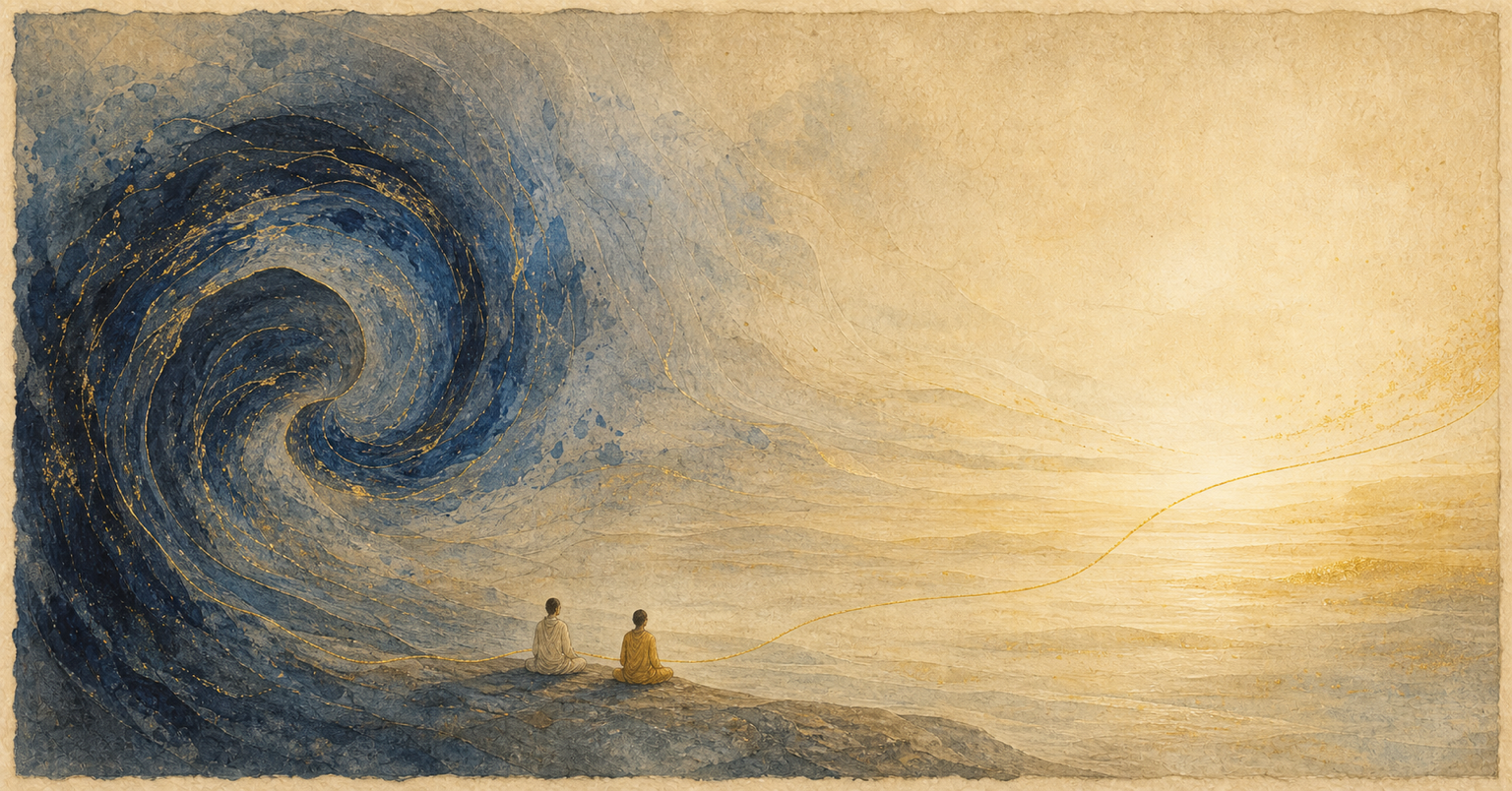




Two people sit between a dark wave and radiant light, joined by a golden thread.

Śvetāśvatara Upaniṣad 6: Lord of the World, Knowledge, and Bhakti

The final chapter brings together cosmic unfolding, divine sovereignty, and knowledge of the Self, and closes with transmission and devotion to teacher and God.

Dr. Ronald Steiner Dr. Ronald Steiner Nils Jacob Liersch Nils Jacob Liersch
SVU 6.1–6.6: Lord of Cosmic Unfolding

SVU 6.1–6.6: God, Time, Action, and Primal Nature

It is not nature or time but God's power that moves the cosmic wheel, orders principles and karma, and leads beyond multiplicity when action comes to an end.

Śvetāśvatara Upaniṣad 6.1
Metre: Pāda 1: Triṣṭubh with Vajrā ending; Pāda 2: Triṣṭubh with Vajrā ending; Pāda 3: Triṣṭubh with Vajrā ending — 10 syllables; Pāda 4: Triṣṭubh with Śālinī ending
Some (eke | nom pl m) seers (kavayaḥ | nom pl) declare (vadanti | 3p pl act pres) inherent nature (sva-bhāvam | acc sg) [to be the cause]; others (anye | nom pl m), utterly deluded (parimuhyamānāḥ | nom pl m pcm), likewise (tathā) name time (kālam | acc sg). But (tu) this greatness (eṣaḥ mahimā | nom sg) in the world (loke | loc sg) belongs to God (devasya | gen sg), by which (yena | ins sg m) this (idam | nom sg n), namely the wheel of Brahman (brahma-cakram | nom sg), is made to revolve (bhrāmyate | 3p sg pas pres caus).
Dr. Ronald Steiner - 2026 - historically literal
Śvetāśvatara Upaniṣad 6.2
Metre: Pāda 1: Triṣṭubh with Vajrā ending; Pāda 2: Triṣṭubh with Śālinī ending; Pāda 3: Triṣṭubh with Vajrā ending; Pāda 4: Triṣṭubh with Vajrā ending
He by whom (yena | ins sg m) this (idam | nom sg n), indeed (hi) all of it (sarvam | nom sg n), is always (nityam) enveloped (āvṛtam | nom sg n ppp) is the knower (jñaḥ | nom sg m), the destroyer of time (kāla-kālaḥ | nom sg), possessing the guṇas (guṇī | nom sg m), and all-knowing (sarva-vidyaḥ | nom sg m). The governed work (īśitam karma | nom sg), under his rule (tena | ins sg m), unfolds (vivartate | 3p sg med pres), indeed (ha); it is to be contemplated (cintyam | nom sg n pfp) as earth, water, fire, air, and space (pṛthivyāptejo’nilakhāni | nom pl).
Dr. Ronald Steiner - 2026 - historically literal
Śvetāśvatara Upaniṣad 6.3
Metre: Triṣṭubh with Vajrā ending
Having performed (kṛtvā | abs) that work (tat karma | acc sg), withdrawn it (vinivartya | abs), and again (bhūyas) entered (sametya | abs) into union (yogam | acc sg) with the essence (tattvena | ins sg) of the principle (tattvasya | gen sg), he [joins it] with one (ekena | ins sg n), with two (dvābhyām | ins du), with three (tribhiḥ | ins pl), or (vā) with eight (aṣṭabhiḥ | ins pl), as well as with time (kālena | ins sg), and (ca) indeed (eva) with the qualities of the self (ātma-guṇaiḥ | ins pl) and (ca) with the subtle [qualities] (sūkṣmaiḥ | ins pl m).
Dr. Ronald Steiner - 2026 - historically literal
Śvetāśvatara Upaniṣad 6.4
Metre: Triṣṭubh with Vajrā ending
Having begun (ārabhya | abs) the actions endowed with the guṇas (karmāṇi guṇānvitāni | acc pl), he who (yaḥ | nom sg m) directs them should assign (viniyojayet | 3p sg act opt caus) all (sarvān | acc pl m) states of being (bhāvān | acc pl) as well (ca). In their (teṣām | gen pl m) absence (abhāve | loc sg), the destruction of the work performed (kṛta-karma-nāśaḥ | nom sg) occurs; when action is exhausted (karma-kṣaye | loc sg), he (saḥ | nom sg m) goes (yāti | 3p sg act pres) beyond it, different (anyaḥ | nom sg m) in reality (tattvataḥ).
Dr. Ronald Steiner - 2026 - historically literal
Śvetāśvatara Upaniṣad 6.5
Metre: Triṣṭubh with Vajrā ending
He (saḥ | nom sg m) is the beginning (ādiḥ | nom sg), the conditioning cause of conjunction (saṃyoga-nimitta-hetuḥ | nom sg); though (api) partless (akalaḥ | nom sg m) and beyond (paraḥ | nom sg m) the three times (tri-kālāt | abl sg), he is seen (dṛṣṭaḥ | nom sg m ppp). First (pūrvam), one is to worship (upāsya | abs) that (tam | acc sg m) deity (devam | acc sg), all-formed (viśva-rūpam | acc sg m), manifest as existence (bhava-bhūtam | acc sg m ppp), worthy of praise (īḍyam | acc sg m pfp), and dwelling in one's own mind (sva-citta-stham | acc sg m).
Dr. Ronald Steiner - 2026 - historically literal
Śvetāśvatara Upaniṣad 6.6
Metre: Pāda 1: Triṣṭubh with Vajrā ending; Pāda 2: Triṣṭubh with Vajrā ending; Pāda 3: Triṣṭubh with Vajrā ending; Pāda 4: Triṣṭubh with Śālinī ending
He (saḥ | nom sg m) is beyond (paraḥ | nom sg m) and other than (anyaḥ | nom sg m) the tree, time, and forms (vṛkṣa-kālākṛtibhiḥ | ins pl); from him (yasmāt | abl sg m) this (ayam | nom sg m) world-expansion (prapañcaḥ | nom sg) proceeds in its cycle (parivartate | 3p sg med pres). Having known (jñātvā | abs) the lord of prosperity who brings righteousness and removes evil (dharmāvahaṃ pāpa-nudaṃ bhageśaṃ | acc sg) as abiding in the self (ātma-stham | acc sg m), immortal (amṛtam | acc sg m), and the abode of all (viśva-dhāma | acc sg), [one attains him].
Dr. Ronald Steiner - 2026 - historically literal
SVU 6.7–6.13: Lord of All Lords

SVU 6.7–6.13: The One God in Every Being

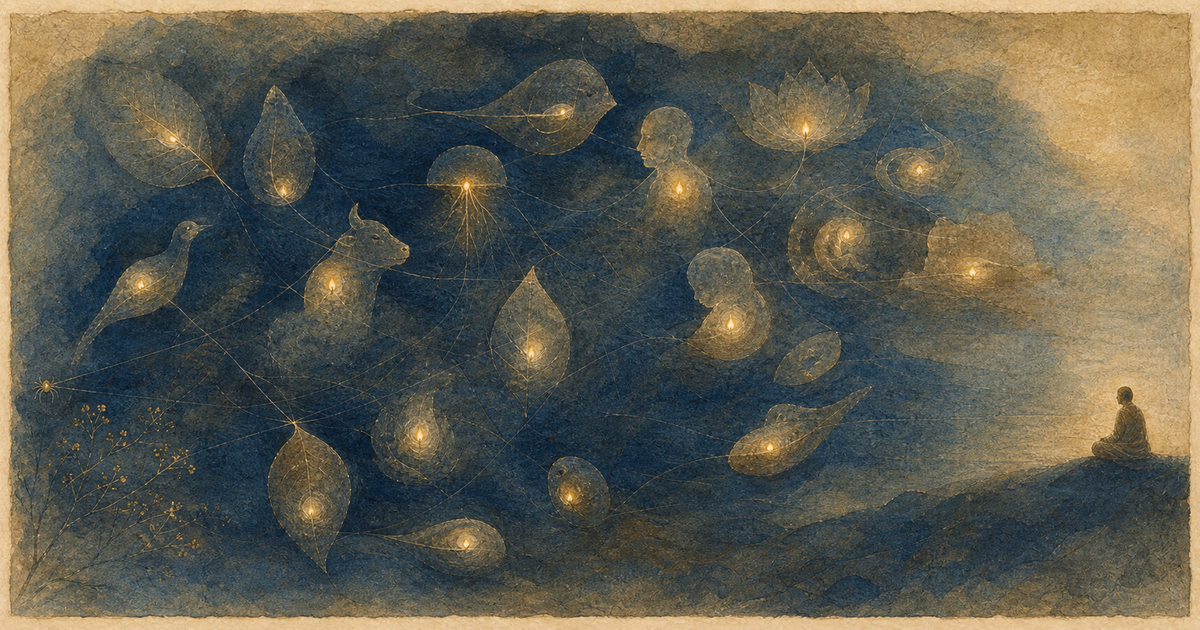
The highest Lord acts through his inherent power, remains uncaused above all, and is known as the hidden inner witness and giver of everlasting happiness.

Śvetāśvatara Upaniṣad 6.7
Metre: Pāda 1: Jagatī with Vaṃśa ending; Pāda 2: Jagatī with Vaṃśa ending; Pāda 3: Triṣṭubh with Vajrā ending; Pāda 4: Triṣṭubh with Vajrā ending
May we know (vidāma | 1p pl act imp) him (tam | acc sg m) as the highest great Lord (paramaṃ maheśvaram | acc sg) above the lords (īśvarāṇām | gen pl), him again (tam | acc sg m) as the highest (paramam | acc sg n) and (ca) supreme divinity (daivatam | acc sg) above the deities (devatānām | gen pl), as the lord (patim | acc sg) of lords (patīnām | gen pl), the highest (paramam | acc sg m) beyond [all] (parastāt): God (devam | acc sg), the Lord of the world (bhuvaneśam | acc sg), worthy of praise (īḍyam | acc sg m pfp).
Dr. Ronald Steiner - 2026 - historically literal
Śvetāśvatara Upaniṣad 6.8
Metre: Pāda 1: Jagatī with Vaṃśa ending; Pāda 2: Jagatī with Vaṃśa ending; Pāda 3: Jagatī with Vaṃśa ending; Pāda 4: Triṣṭubh with Vajrā ending
No (na) task (kāryam | nom sg) or (ca) instrument (karaṇam | nom sg) of his (tasya | gen sg m) exists (vidyate | 3p sg med pres); neither (na) one equal to him (tad-samaḥ | nom sg m) nor (ca) one superior (abhyadhikaḥ | nom sg m) is seen (dṛśyate | 3p sg pas pres) either (ca). His (asya | gen sg m) power (śaktiḥ | nom sg) is supreme (parā | nom sg f); it is heard of (śrūyate | 3p sg pas pres) as manifold (vividhā | nom sg f) indeed (eva). The unity of knowledge, strength, and action (jñāna-bala-kriyā | nom sg) is inherent (svābhāvikī | nom sg f), and (ca) [thus it operates].
Dr. Ronald Steiner - 2026 - historically literal
Śvetāśvatara Upaniṣad 6.9
Metre: Pāda 1: Triṣṭubh with Vajrā ending; Pāda 2: Triṣṭubh with Vajrā ending; Pāda 3: Jagatī with Vaṃśa ending — 11 syllables; Pāda 4: Jagatī with Vaṃśa ending
There is (asti | 3p sg act pres) no (na) one at all (kaścit | nom sg m) who is lord (patiḥ | nom sg) over him (tasya | gen sg m) in the world (loke | loc sg); nor (na ca) a ruler (īśitā | nom sg), and not (na) even (eva), moreover (ca), any mark (liṅgam | nom sg) of him (tasya | gen sg m). He (saḥ | nom sg m) is the cause (kāraṇam | nom sg), the overlord over the lord of the instruments (karaṇādhipādhipaḥ | nom sg); and (ca) for him (asya | gen sg m) there is no (na) one at all (kaścit | nom sg m) who is a begetter (janitā | nom sg), and no (na ca) overlord (adhipaḥ | nom sg).
Dr. Ronald Steiner - 2026 - historically literal
Śvetāśvatara Upaniṣad 6.10
Metre: Pāda 1: Anuṣṭubh — 10 rather than 8 syllables; Pāda 2: Anuṣṭubh; Pāda 3: Anuṣṭubh — 9 rather than 8 syllables; Pāda 4: Anuṣṭubh
He who (yaḥ | nom sg m), like (iva) a spider (tantu-nābhaḥ | nom sg m), works with threads (tantubhiḥ | ins pl) born of primal matter (pradhāna-jaiḥ | ins pl m), according to his own nature (sva-bhāvataḥ), is the one God (deva ekaḥ | nom sg) who envelops (āvṛṇoti | 3p sg act pres) himself (svam | acc sg m). May he (saḥ | nom sg m) grant (dadhāt | 3p sg act imp) us (naḥ | dat pl) absorption in Brahman (brahmāpyayam | acc sg).
Dr. Ronald Steiner - 2026 - historically literal
Śvetāśvatara Upaniṣad 6.11
Metre: Triṣṭubh with Śālinī ending
The one God (eko devaḥ | nom sg) is hidden (gūḍhaḥ | nom sg m ppp) in all beings (sarva-bhūteṣu | loc pl), all-pervading (sarva-vyāpī | nom sg m), the inner Self of all beings (sarva-bhūtāntarātmā | nom sg), the overseer of actions (karmādhyakṣaḥ | nom sg), the abode of all beings (sarva-bhūtādhivāsaḥ | nom sg), witness (sākṣī | nom sg), perceiver (cetā | nom sg), and the sole one (kevalaḥ | nom sg m); he is also (ca) free from the guṇas (nir-guṇaḥ | nom sg m).
Dr. Ronald Steiner - 2026 - historically literal
Śvetāśvatara Upaniṣad 6.12
Metre: Triṣṭubh with Śālinī ending
The One (ekaḥ | nom sg m) is the ruler (vaśī | nom sg m) of the many inactive ones (niṣkriyāṇāṃ bahūnām | gen pl m); he is the one who (yaḥ | nom sg m) makes (karoti | 3p sg act pres) the one seed (ekaṃ bījam | acc sg) manifold (bahudhā). Those who (ye | nom pl m), the wise (dhīrāḥ | nom pl m), perceive (anupaśyanti | 3p pl act pres) him (tam | acc sg m) as abiding in the self (ātma-stham | acc sg m) possess everlasting happiness (sukhaṃ śāśvatam | nom sg); it belongs to them (teṣām | gen pl m), not (na) to the others (itareṣām | gen pl m).
Dr. Ronald Steiner - 2026 - historically literal
Śvetāśvatara Upaniṣad 6.13
Metre: Pāda 1: Triṣṭubh with Śālinī ending — 12 syllables; Pāda 2: Triṣṭubh with Vajrā ending — 12 syllables; Pāda 3: Triṣṭubh with Śālinī ending; Pāda 4: Triṣṭubh with Śālinī ending
The eternal one (nityaḥ | nom sg m) among the eternal (nityānām | gen pl m), the conscious one (cetanaḥ | nom sg m) among the conscious (cetanānām | gen pl m), the One (ekaḥ | nom sg m) among the many (bahūnām | gen pl m), who (yaḥ | nom sg m) apportions (vidadhāti | 3p sg act pres) what they desire (kāmān | acc pl): having known (jñātvā | abs) that cause (tat kāraṇam | acc sg), which is to be known through Sāṃkhya and Yoga (sāṃkhya-yogādhigamyam | acc sg n pfp), as God (devam | acc sg), one is released (mucyate | 3p sg pas pres) from all fetters (sarva-pāśaiḥ | ins pl).
Dr. Ronald Steiner - 2026 - historically literal
SVU 6.14–6.17: Light and Immortality

SVU 6.14–6.17: The Light Beyond Death

The self-luminous divine illumines the world, leads beyond death, and appears as creator, knower, protector, and the sole ground of cosmic order.

Śvetāśvatara Upaniṣad 6.14
Metre: Pāda 1: Jagatī with Vaṃśa ending — 13 syllables; Pāda 2: Triṣṭubh with Vajrā ending — 12 syllables; Pāda 3: Triṣṭubh with Vajrā ending; Pāda 4: Triṣṭubh with Vajrā ending
There (tatra), the sun (sūryaḥ | nom sg) does not (na) shine (bhāti | 3p sg act pres), nor (na) do moon and stars (candra-tārakam | nom sg). These flashes of lightning (imāḥ vidyutaḥ | nom pl) do not (na) shine (bhānti | 3p pl act pres); how much less (kutas) this fire (ayam agniḥ | nom sg)? Everything (sarvam | nom sg n) shines after (anubhāti | 3p sg act pres) him (tam | acc sg m) alone (eva), the shining one (bhāntam | acc sg m pca); through his (tasya | gen sg m) light (bhāsā | ins sg), all this (sarvam idam | nom sg n) shines forth (vibhāti | 3p sg act pres).
Dr. Ronald Steiner - 2026 - historically literal
Śvetāśvatara Upaniṣad 6.15
Metre: Pāda 1: Triṣṭubh with Śālinī ending; Pāda 2: Triṣṭubh with Śālinī ending; Pāda 3: Triṣṭubh; Pāda 4: Triṣṭubh — 10 syllables
The one haṃsa (eko haṃsaḥ | nom sg) [abides] in the midst (madhye | loc sg) of this world (bhuvanasyāsya | gen sg); he (saḥ | nom sg m) alone (eva) is the fire (agniḥ | nom sg) that is settled (saṃniviṣṭaḥ | nom sg m ppp) in the water (salile | loc sg). Having known (viditvā | abs) him (tam | acc sg m) alone (eva), one goes (eti | 3p sg act pres) beyond (ati) death (mṛtyum | acc sg); there is (vidyate | 3p sg med pres) no (na) other (anyaḥ | nom sg m) path (panthāḥ | nom sg) for going (ayanāya | dat sg).
Dr. Ronald Steiner - 2026 - historically literal
Śvetāśvatara Upaniṣad 6.16
Metre: Pāda 1: Triṣṭubh with Vajrā ending; Pāda 2: Triṣṭubh with Śālinī ending; Pāda 3: Triṣṭubh with Vajrā ending; Pāda 4: Triṣṭubh with Vajrā ending
He (saḥ | nom sg m) is the creator of all (viśva-kṛt | nom sg m), the knower of all (viśva-vit | nom sg m), self-sourced (ātma-yoniḥ | nom sg m), the knower (jñaḥ | nom sg m), the destroyer of time (kāla-kālaḥ | nom sg), possessing the guṇas (guṇī | nom sg m), and all-knowing (sarva-vidyaḥ | nom sg m); the lord of primal matter and the knower of the field (pradhāna-kṣetrajña-patiḥ | nom sg), the lord of the guṇas (guṇeśaḥ | nom sg), and the cause of transmigration, liberation, continuance, and bondage (saṃsāra-mokṣa-sthiti-bandha-hetuḥ | nom sg).
Dr. Ronald Steiner - 2026 - historically literal
Śvetāśvatara Upaniṣad 6.17
Metre: Pāda 1: Triṣṭubh with Vajrā ending; Pāda 2: Triṣṭubh with Śālinī ending; Pāda 3: Triṣṭubh with Śālinī ending — 12 syllables; Pāda 4: Triṣṭubh with Vajrā ending
He (saḥ | nom sg m), consisting of that (tan-mayaḥ | nom sg m), is indeed (hi) immortal (amṛtaḥ | nom sg m), established in lordship (īśa-saṃsthaḥ | nom sg m), the knower (jñaḥ | nom sg m), all-pervading (sarva-gaḥ | nom sg m), and the protector (goptā | nom sg) of this world (bhuvanasyāsya | gen sg). He is the one who (yaḥ | nom sg m) always (nityam) alone (eva) rules (īśe | 3p sg med pres) this world (asya jagataḥ | gen sg); no (na) other (anyaḥ | nom sg m) cause (hetuḥ | nom sg) is found (vidyata | 3p sg med pres) for its rule (īśanāya | dat sg).
Dr. Ronald Steiner - 2026 - historically literal
SVU 6.18–6.23: Refuge and Transmission

SVU 6.18–6.23: Liberation, Secrecy, and Devotion

The closing verses take refuge in the stainless God, honour Śvetāśvatara's teaching, and bind its understanding to maturity and equal devotion to God and...

Śvetāśvatara Upaniṣad 6.18
Metre: Pāda 1: Triṣṭubh with Vajrā ending — 10 syllables; Pāda 2: Triṣṭubh with Vajrā ending; Pāda 3: Triṣṭubh with Śālinī ending; Pāda 4: Triṣṭubh with Vajrā ending — 12 syllables
He who (yaḥ | nom sg m) brings forth (vidadhāti | 3p sg act pres) the god Brahmā (brahmāṇam | acc sg) at the beginning (pūrvam), and who (yaḥ | nom sg m) indeed (vai) sends (prahiṇoti | 3p sg act pres) the Vedas (vedān | acc pl) also (ca) to him (tasmai | dat sg m): seeking liberation (mumukṣuḥ | nom sg m), I (aham | nom sg) indeed (vai) take (prapadye | 1p sg med pres) that (tam | acc sg m) very (ha) God (devam | acc sg), the illuminator of self-knowledge (ātma-buddhi-prakāśam | acc sg), as my refuge (śaraṇam | acc sg).
Dr. Ronald Steiner - 2026 - historically literal
Śvetāśvatara Upaniṣad 6.19
Metre: Anuṣṭubh
[He is] partless (niṣkalam | acc sg m), actionless (niṣkriyam | acc sg m), peaceful (śāntam | acc sg m ppp), faultless (niravadyam | acc sg m), and stainless (nirañjanam | acc sg m); the highest bridge (paraṃ setum | acc sg) of immortality (amṛtasya | gen sg), like (iva) a fire (analam | acc sg) whose fuel has been burnt (dagdhendhanam | acc sg m).
Dr. Ronald Steiner - 2026 - historically literal
Śvetāśvatara Upaniṣad 6.20
Metre: Anuṣṭubh
When (yadā) human beings (mānavāḥ | nom pl) roll up (veṣṭayiṣyanti | 3p pl act fut caus) space (ākāśam | acc sg) like a hide (carmavat), then (tadā), without having known (avijñāya | abs) God (devam | acc sg), an end (antaḥ | nom sg) to suffering (duḥkhasya | gen sg) will come to be (bhaviṣyati | 3p sg act fut).
Dr. Ronald Steiner - 2026 - historically literal
Śvetāśvatara Upaniṣad 6.21
Metre: Pāda 1: Triṣṭubh; Pāda 2: Triṣṭubh with Vajrā ending; Pāda 3: Triṣṭubh with Vajrā ending; Pāda 4: Triṣṭubh with Vajrā ending
Through the power of austerity (tapaḥ-prabhāvāt | abl sg) and (ca) through God's grace (deva-prasādāt | abl sg), Śvetāśvatara (śvetāśvataraḥ | nom sg), the wise one (vidvān | nom sg m ppa), then (atha) indeed (ha) proclaimed (provāca | 3p sg act perf) Brahman (brahma | acc sg) properly (samyak) to those beyond the life stages (atyāśramibhyaḥ | dat pl), as the highest purifier (paramaṃ pavitram | acc sg), approved by the company of seers (ṛṣi-saṅgha-juṣṭam | acc sg n ppp).
Dr. Ronald Steiner - 2026 - historically literal
Śvetāśvatara Upaniṣad 6.22
Metre: Pāda 1: Anuṣṭubh; Pāda 2: Anuṣṭubh; Pāda 3: Anuṣṭubh; Pāda 4: Anuṣṭubh — 10 rather than 8 syllables
The highest secret (paramaṃ guhyam | nom sg) in the Vedānta (vedānte | loc sg) was proclaimed (pracoditam | nom sg n ppp) in a former age (purā-kalpe | loc sg). It is not (na) to be given (dātavyam | nom sg n pfp) to one who is unquiet (apraśāntāya | dat sg m ppp), nor (na) to one who is not a son (aputrāya | dat sg m), or (vā), again (punaḥ), to one who is not a pupil (aśiṣyāya | dat sg m).
Dr. Ronald Steiner - 2026 - historically literal
Śvetāśvatara Upaniṣad 6.23
Metre: Pāda 1: Anuṣṭubh; Pāda 2: Anuṣṭubh; Pāda 3: Anuṣṭubh; Pāda 4: Anuṣṭubh; Pāda 5: Anuṣṭubh; iti: extrametrical
For one whose (yasya | gen sg m) supreme devotion (parā bhaktiḥ | nom sg) is towards God (deve | loc sg), and whose devotion towards the teacher (gurau | loc sg) is just as (tathā) it is towards God (yathā deve | loc sg), these (ete | nom pl m) declared (kathitāḥ | nom pl m ppp) teachings (arthāḥ | nom pl) indeed (hi) become manifest (prakāśante | 3p pl med pres) to him (tasya | gen sg m), the great-souled one (mahātmanaḥ | gen sg); they become manifest (prakāśante | 3p pl med pres) to the great-souled one (mahātmanaḥ | gen sg)—thus (iti).
Dr. Ronald Steiner - 2026 - historically literal

Continue with AYI Free

Illustrations: AI-generated.

Editor

Dr. Ronald Steiner

From Ulm

The "Yoga Doc" - Dr. Ronald Steiner is the founder of the AYI method. This method links traditional Ashtanga Yoga with innovative Yogatherapy and living Philosophy. This forms a practice that is personal for each and... more ›

Nils Jacob Liersch

Meine Begeisterung für Yoga, indische Philosophie und Sanskrit führte mich zum Studium der Indologie und Religionswissenschaft an der Universität Heidelberg. Seit 2004 befinde ich mich auf meinem persönlichen Yogaweg... more ›