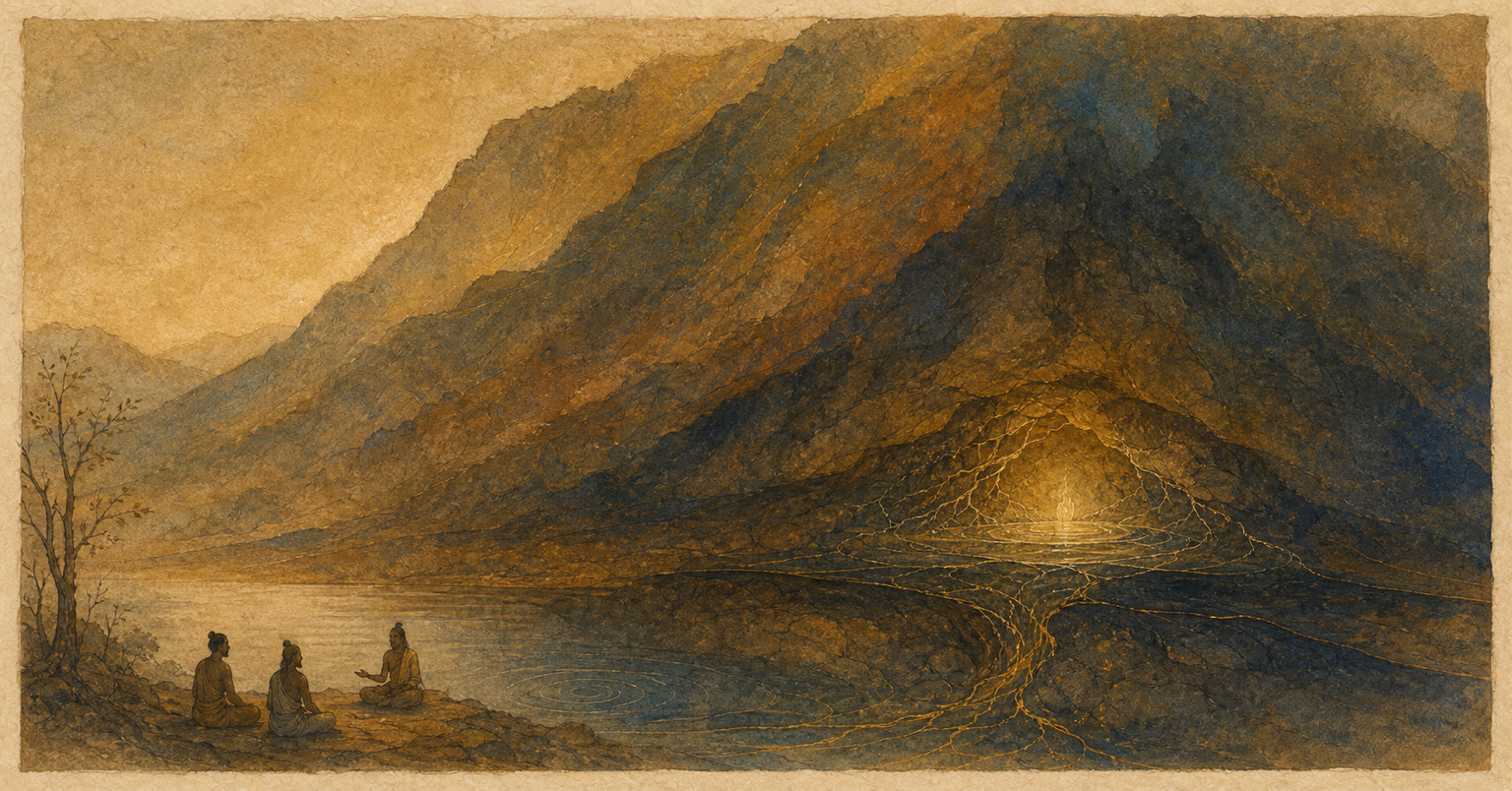
Three teachers sit by the water before mountains as a luminous cave opens in the rock.

Śvetāśvatara Upaniṣad 1: Ground of the World and Knowledge of the Self

The search for the ultimate cause leads through cosmic images and triads to knowledge of the hidden Self through meditation and Om.

Dr. Ronald Steiner Dr. Ronald Steiner Nils Jacob Liersch Nils Jacob Liersch
Śvetāśvatara Upaniṣad 1.0
ॐ ब्रह्मवादिनो वदन्ति |
oṃ brahma-vādino vadanti | Analysis ▾ Analysis ▴
oṃ
oṃ
particle
Om, the sacred syllable
brahma
upapada-compound
substantive neuter
Brahman
vādinaḥ
nominative plural
substantive masculine
knowers, speakers
vadanti
3rd person plural aktive present
verbal root
they say, speak
Metre: none
Om (oṃ), the knowers of Brahman (brahmavādino | nom pl) say (vadanti | 3p pl act pres):
Dr. Ronald Steiner - 2026 - historically literal
Om. Those who know Brahman ask:
Dr. Ronald Steiner - 2026 - modern transfer

The Bhāṣya attributed to Śaṅkara understands the Brahmavādins as knowers of Brahman deliberating together. Their question may concern Brahman's nature as well as its material and efficient causality. The Upaniṣad is to remove the false superimposition of self and non-self through knowledge of their unity.

Śaṅkara's Bhāṣya on the Śvetāśvatara Upaniṣad

Śaṅkarānanda opens with the difficult-to-grasp identity of Brahman and Ātman. For him, the deliberation of the Brahmavādins does not lead merely into cosmological speculation but prepares the knowledge in which the ground of the world and the innermost Self coincide.

Śaṅkarānanda's Śvetāśvataropaniṣaddīpikā

Nārāyaṇa describes the Brahmavādins as those versed in the Veda who consider together what the origin and ground of the world may be. He reads the preamble and the following mantras as a connected sequence of question and answer, thereby making the chapter's dialogical structure explicit.

Nārāyaṇa's Śvetāśvataropaniṣaddīpikā

Vijñānabhagavat first has the Brahmavādins remove opposing positions alien to the Veda. They speak of Brahman as the purport of all the Vedas; on his reading, the following mantras unfold the concise content of this introductory Brāhmaṇa statement.

Vijñānabhagavat's Śvetāśvataropaniṣadvivaraṇa
Om! Die Brahmanlehrer sagen:
Paul Deussen - 1921
Discoursers on Brahma (brahma-vādin) say:—
Robert Hume - 1921
Om. The expounders of Brahm thus reflect:—
Siddhesvar Varma Shastri - 1916
Om! Die Brahmanlehrer sagen:
Paul Deussen - 1897
The Brahma-students say:
F. Max Müller - 1884
The enquirers after Bramha converse (among each other):
Edward Röer - 1853
SVU 1.1-1.3: The Search for the Cause

SVU 1.1-1.3: Questions about the Ground of the World and the Self

The sages examine possible causes of the world and in meditation recognise the one divine power of the Self that rules time, nature and every cause.

Śvetāśvatara Upaniṣad 1.1
Metre: Triṣṭubh with Vajrā ending
What (kim | nom sg n) is the cause (kāraṇam | nom sg)—is it Brahman (brahma | nom sg)? From where (kutas) were we indeed (sma) born (jātāḥ | nom pl m ppp); do we live (jīvāmaḥ | 1p pl act pres) by what (kena | ins sg n)? In what (kva), moreover (ca), are we firmly established (saṃpratiṣṭhāḥ | nom pl m ppp)? Directed (adhiṣṭhitāḥ | nom pl m ppp) by whom (kena | ins sg m), do we find ourselves amid pleasure and its opposite (sukhetareṣu | loc pl) and move therein (vartāmahe | 1p pl med pres)? You knowers of Brahman (brahmavido | voc pl m), explain the order (vyavasthām | acc sg).
Dr. Ronald Steiner - 2026 - historically literal
Śvetāśvatara Upaniṣad 1.2
Metre: Pāda 1: Triṣṭubh with Vajrā ending; Pāda 2: Triṣṭubh — 12 syllables; irregular cadence; Pāda 3: Triṣṭubh with Vajrā ending; Pāda 4: Triṣṭubh with Vajrā ending
Time (kālaḥ | nom sg), inherent nature (svabhāvaḥ | nom sg), necessity (niyatiḥ | nom sg), chance (yadṛcchā | nom sg), the elements (bhūtāni | nom pl), the source (yoniḥ | nom sg), or Puruṣa (puruṣa | nom sg)—so (iti) it is to be considered (cintyam | nom sg n pfp). It is not (na) the conjunction (saṃyogaḥ | nom sg) of these (eṣām | gen pl n), however (tu), because of the existence of the self (ātmabhāvād | abl sg); for (hi) the self (ātmā | nom sg) is not lord (anīśaḥ | nom sg m) of the cause of pleasure and pain (sukhaduḥkhahetoḥ | gen sg).
Dr. Ronald Steiner - 2026 - historically literal
Śvetāśvatara Upaniṣad 1.3
Metre: Triṣṭubh with Vajrā ending
They (te | nom pl m), devoted to the yoga of meditation (dhyānayogānugatā | nom pl m ppp), saw (apaśyan | 3p pl act pret) the divine power of the Self (devātmaśaktiṃ | acc sg), hidden (nigūḍhām | acc sg f ppp) by its own qualities (svaguṇaiḥ | ins pl). He (yaḥ | nom sg m) who rules (adhitiṣṭhati | 3p sg act pres) all (nikhilāni | acc pl n) those (tāni | acc pl n) causes (kāraṇāni | acc pl) that are connected with time and the self (kālātmayuktāny | acc pl n ppp) is the One (ekaḥ | nom sg m).
Dr. Ronald Steiner - 2026 - historically literal
SVU 1.4-1.6: Wheel, River and Soul

SVU 1.4-1.6: Images of the Cycle of the World

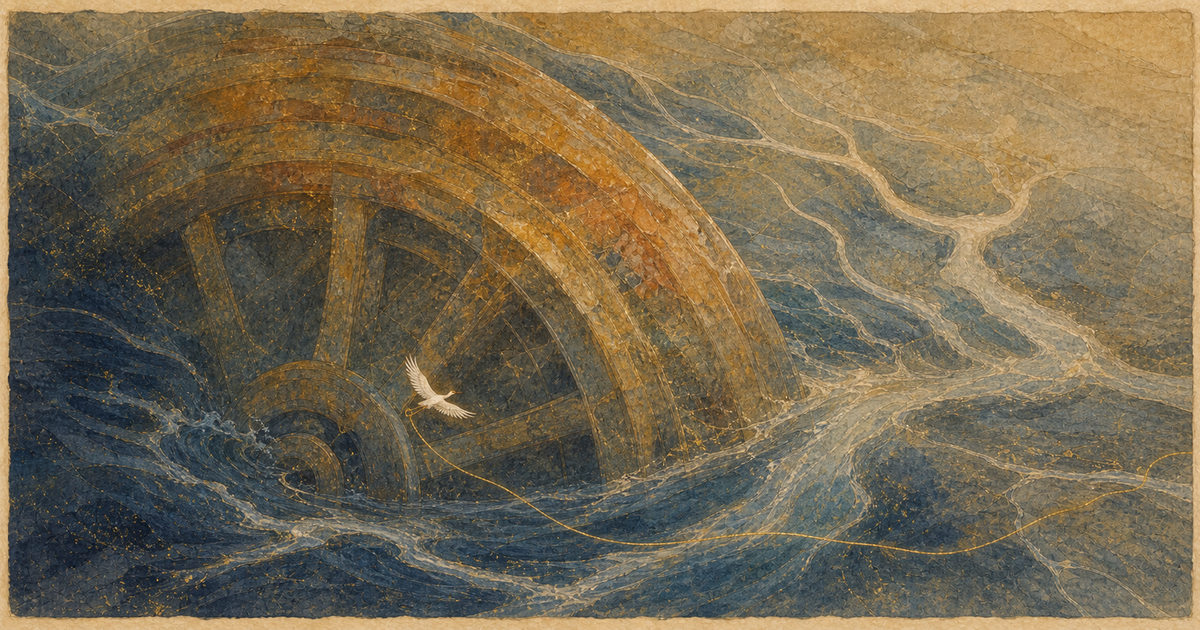
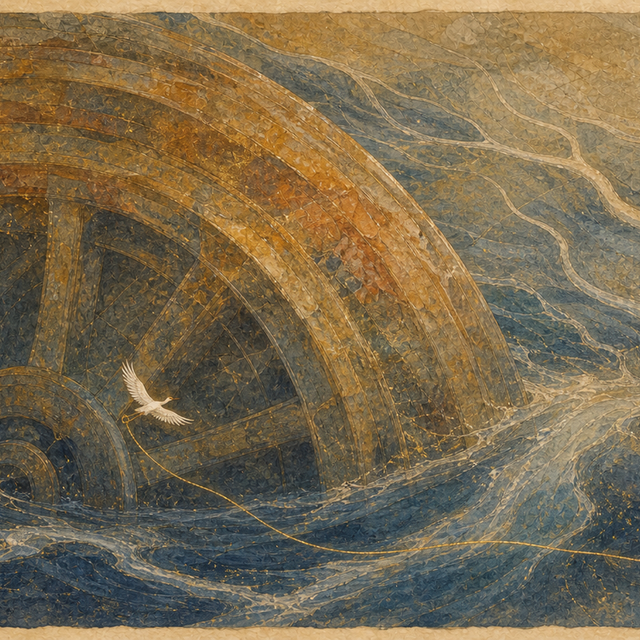
The cosmic wheel and the river of life unfold the multiplicity of existence; the individual soul revolving within them reaches immortality through the divine...

Śvetāśvatara Upaniṣad 1.4
Metre: Pāda 1: Triṣṭubh with Śālinī ending — 12 syllables; Pāda 2: Triṣṭubh with Śālinī ending; Pāda 3: Triṣṭubh with Śālinī ending — 12 syllables; Pāda 4: Triṣṭubh with Śālinī ending — 12 syllables
Him (tam | acc sg m) [they recognised as the cosmic wheel] with one rim (ekanemim | acc sg m), encircled threefold (trivṛtam | acc sg m ppp), with sixteen ends (ṣoḍaśāntam | acc sg m), with fifty spokes (śatārdhāram | acc sg m), and with twenty counter-spokes (viṃśatipratyarābhiḥ | ins pl); with groups of eight (aṣṭakaiḥ | ins pl), six in number (ṣaḍbhiḥ | ins pl), with one bond of all-encompassing form (viśvarūpaikapāśam | acc sg m), with a threefold division of the path (trimārgabhedam | acc sg m), and with one delusion arising from two causes (dvinimittaikamoham | acc sg m).
Dr. Ronald Steiner - 2026 - historically literal
Śvetāśvatara Upaniṣad 1.5
Metre: Pāda 1: Triṣṭubh with Śālinī ending — 12 syllables; Pāda 2: Triṣṭubh with Śālinī ending — 12 syllables; Pāda 3: Triṣṭubh with Śālinī ending; Pāda 4: Triṣṭubh with Śālinī ending — 12 syllables
[A river] whose water comes from five streams (pañcasroto'mbuṃ | acc sg f), with five sources and fierce mouths (pañcayonyugravaktrāṃ | acc sg f), with five vital breaths as waves (pañcaprāṇormiṃ | acc sg), with the five powers of cognition as its root (pañcabuddhyādimūlām | acc sg f), with five whirlpools (pañcāvartāṃ | acc sg f), with the force of the flood of fivefold suffering (pañcaduḥkhaughavegāṃ | acc sg f), with fifty branches (pañcāśadbhedāṃ | acc sg f), and with five sections (pañcaparvām | acc sg f), we contemplate (adhīmaḥ | 1p pl med pres).
Dr. Ronald Steiner - 2026 - historically literal
Śvetāśvatara Upaniṣad 1.6
Metre: Pāda 1: Triṣṭubh with Śālinī ending; Pāda 2: Triṣṭubh with Śālinī ending; Pāda 3: Triṣṭubh with Śālinī ending — 12 syllables; Pāda 4: Triṣṭubh
In that which gives life to all (sarvājīve | loc sg), in which all rests (sarvasaṃsthe | loc sg n), in the great [Brahman] (bṛhante | loc sg n), in it (tasmin | loc sg n), the swan, the individual soul (haṃsaḥ | nom sg), is made to revolve (bhrāmyate | 3p sg pas pres caus) in the wheel of Brahman (brahmacakre | loc sg), having regarded (matvā | abs) the self (ātmānam | acc sg) and (ca) the impeller (preritāram | acc sg) as separate (pṛthak). Favoured (juṣṭaḥ | nom sg m ppp), it then (tatas), through him (tena | ins sg m), reaches and enters (eti | 3p sg act pres) immortality (amṛtatvam | acc sg).
Dr. Ronald Steiner - 2026 - historically literal
SVU 1.7-1.12: Triad and Freedom

SVU 1.7-1.12: Brahman, Māyā and Liberation

The perishable and imperishable, the experiencer and the experienced, are united in the one Brahman; knowledge of God releases one from bondage, suffering and...

Śvetāśvatara Upaniṣad 1.7
Metre: Pāda 1: Triṣṭubh with Vajrā ending; Pāda 2: Triṣṭubh with Śālinī ending; Pāda 3: Triṣṭubh with Vajrā ending; Pāda 4: Triṣṭubh with Śālinī ending — 12 syllables
This (etat | nom sg n) highest (paramam | nom sg n) Brahman (brahma | nom sg) is proclaimed (udgītam | nom sg n ppp), indeed (tu). In it (tasmin | loc sg n) [rests] the triad (trayam | nom sg n) and (ca) the imperishable established in itself (svapratiṣṭhākṣaram | nom sg n). Having known (viditvā | abs) the inner [reality] here (atrāntaram | acc sg), the knowers of Brahman (brahmavido | nom pl m), merged (līnāḥ | nom pl m ppp) in Brahman (brahmaṇi | loc sg), are intent upon it (tatparāḥ | nom pl m) and freed from birth (yonimuktāḥ | nom pl m ppp).
Dr. Ronald Steiner - 2026 - historically literal
Śvetāśvatara Upaniṣad 1.8
Metre: Pāda 1: Triṣṭubh with Vajrā ending; Pāda 2: Triṣṭubh with Śālinī ending; Pāda 3: Triṣṭubh with Śālinī ending — 12 syllables; Pāda 4: Triṣṭubh with Śālinī ending
Joined together (saṃyuktam | acc sg n ppp), this (etat | acc sg n) [contains] the perishable (kṣaram | acc sg n), the imperishable (akṣaram | acc sg n), and (ca) the manifest and unmanifest (vyaktāvyaktam | acc sg n); the Lord (īśaḥ | nom sg) sustains (bharate | 3p sg med pres) the whole universe (viśvam | acc sg n). The self (ātmā | nom sg), however (ca), powerless (anīśaḥ | nom sg m), is bound (badhyate | 3p sg pas pres) because of its condition as experiencer (bhoktṛbhāvāt | abl sg); having known (jñātvā | abs) God (devam | acc sg), it is released (mucyate | 3p sg pas pres) from every bond (sarvapāśaiḥ | ins pl).
Dr. Ronald Steiner - 2026 - historically literal
Śvetāśvatara Upaniṣad 1.9
Metre: Pāda 1: Triṣṭubh with Śālinī ending — 10 syllables; Pāda 2: Triṣṭubh with Śālinī ending; Pāda 3: Triṣṭubh with Śālinī ending — 12 syllables; Pāda 4: Triṣṭubh with Śālinī ending
The knower and non-knower (jñājñau | nom du m), the two (dvau | nom du m), are unborn (ajau | nom du m), Lord and non-lord (īśānīśāv | nom du m). For (hi) the one (ekā | nom sg f) female Unborn (ajā | nom sg) is connected with the purpose of experiencer and experience (bhoktṛbhogārthayuktā | nom sg f ppp). And (ca) the Self (ātmā | nom sg) is infinite (anantaḥ | nom sg m), of every form (viśvarūpaḥ | nom sg m), for (hi) it is the non-agent (akartā | nom sg). When (yadā) he finds (vindate | 3p sg med pres) the triad (trayam | acc sg n), [he finds] this (etat | acc sg n) Brahman (brahmam | acc sg).
Dr. Ronald Steiner - 2026 - historically literal
Śvetāśvatara Upaniṣad 1.10
Metre: Pāda 1: Jagatī with Vaṃśa ending; Pāda 2: Triṣṭubh with Śālinī ending; Pāda 3: Triṣṭubh with Śālinī ending — 12 syllables; Pāda 4: Triṣṭubh with Śālinī ending
The perishable (kṣaram | nom sg n) is Pradhāna, primordial nature (pradhānam | nom sg); the immortal Imperishable (amṛtākṣaram | nom sg n) is Hara (haraḥ | nom sg). The one (ekaḥ | nom sg m) God (devaḥ | nom sg) rules (īśate | 3p sg med pres) the perishable and the self (kṣarātmānāv | acc du). Through meditation upon him (tasyābhidhyānāt | abl sg), through union (yojanāt | abl sg), and through becoming the true reality (tattvabhāvāt | abl sg), there is further (bhūyas), and (ca) at the end (ante | loc sg), the cessation of the whole of Māyā (viśvamāyānivṛttiḥ | nom sg).
Dr. Ronald Steiner - 2026 - historically literal
Śvetāśvatara Upaniṣad 1.11
Metre: Pāda 1: Triṣṭubh with Śālinī ending; Pāda 2: Triṣṭubh with Śālinī ending; Pāda 3: Triṣṭubh — 12 syllables; Pāda 4: Triṣṭubh with Vajrā ending
Having known (jñātvā | abs) God (devam | acc sg), every bond falls away (sarvapāśāpahāniḥ | nom sg); when the afflictions (kleśaiḥ | ins pl) have been destroyed (kṣīṇaiḥ | ins pl m ppp), birth and death cease (janmamṛtyuprahāṇiḥ | nom sg). Through meditation upon him (tasyābhidhyānāt | abl sg), [one reaches], as a third attainment (tṛtīyam | acc sg n), at the separation from the body (dehabhede | loc sg), universal sovereignty (viśvaiśvaryaṃ | acc sg); one is wholly free (kevalaḥ | nom sg m) and has every desire fulfilled (āptakāmaḥ | nom sg).
Dr. Ronald Steiner - 2026 - historically literal
Śvetāśvatara Upaniṣad 1.12
Metre: Triṣṭubh with Śālinī ending
This (etat | nom sg n) is to be known (jñeyam | nom sg n pfp) as eternal (nityam | nom sg n), established precisely in the Self (evātmasaṃstham | nom sg n). Nothing beyond it (nātaḥ) is higher (param | nom sg n) or is to be known (veditavyam | nom sg n pfp), for (hi) there is not any [higher thing] (kiṃcit | nom sg n). Having understood (matvā | abs) the experiencer (bhoktā | nom sg), the experienced (bhogyam | acc sg n pfp), the impeller (preritāram | acc sg), and (ca) [this triad], everything (sarvam | nom sg n) has been declared (proktam | nom sg n ppp): this (etat | nom sg n) Brahman (brahmam | nom sg) is threefold (trividham | nom sg n).
Dr. Ronald Steiner - 2026 - historically literal
SVU 1.13-1.16: The Hidden Fire

SVU 1.13-1.16: Om, Meditation and Knowledge of the Self

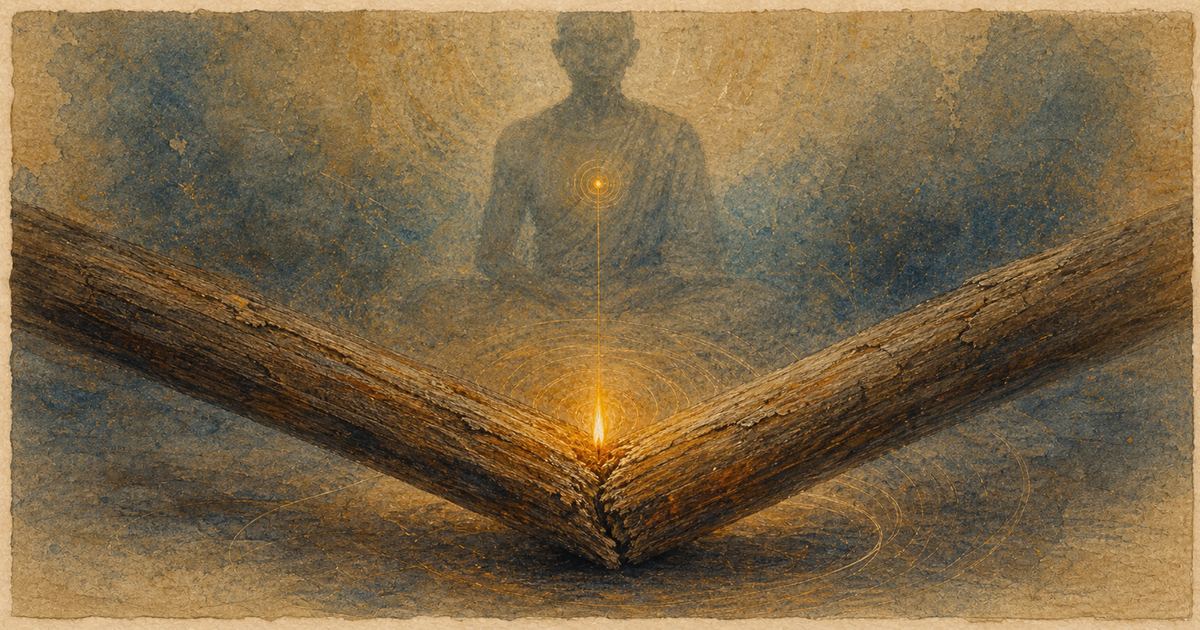
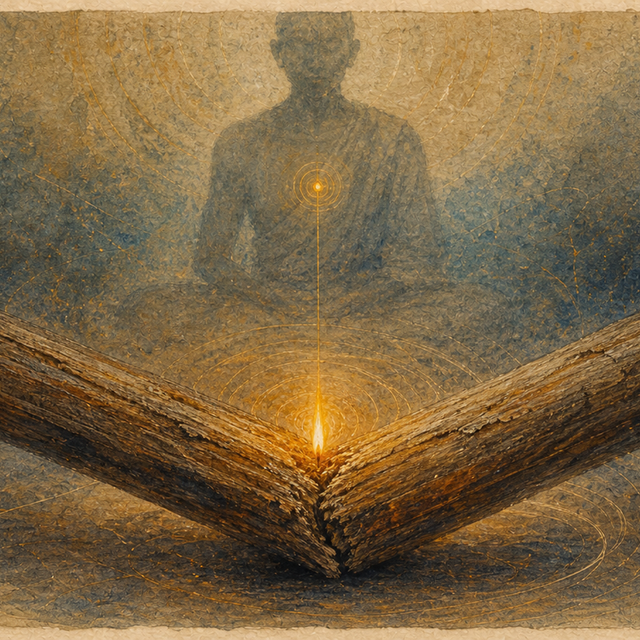
As fire lies hidden in the fire-sticks and butter in milk, the Self lies hidden within; truthfulness, austerity, meditation and Om reveal it there.

Śvetāśvatara Upaniṣad 1.13
Metre: Triṣṭubh with Vajrā ending
As (yathā) the form (mūrtiḥ | nom sg) of fire (vahneḥ | gen sg) that has entered its source (yonigatasya | gen sg m ppp) is not (na) seen (dṛśyate | 3p sg pas pres), yet its mark does not (naiva), in fact (ca), disappear (liṅganāśaḥ | nom sg), so it (saḥ | nom sg m) is indeed (eva) grasped again (bhūyas) in fuel and source (indhanayonigṛhyaḥ | nom sg m pfp). This (tat | nom sg n), or rather (vā) both (ubhayam | nom sg n), are certainly (vai) [to be grasped] through Praṇava (praṇavena | ins sg) in the body (dehe | loc sg).
Dr. Ronald Steiner - 2026 - historically literal
Śvetāśvatara Upaniṣad 1.14
Metre: Anuṣṭubh
Having made (kṛtvā | abs) one's own body (svadeham | acc sg) the lower fire-stick (araṇim | acc sg), and (ca) Praṇava (praṇavam | acc sg) the upper fire-stick (uttarāraṇim | acc sg), through the practice of churning in meditation (dhyānanirmathanābhyāsāt | abl sg) one should see (paśyet | 3p sg act opt) God (devam | acc sg), as something hidden (nigūḍhavat).
Dr. Ronald Steiner - 2026 - historically literal
Śvetāśvatara Upaniṣad 1.15
Metre: Pāda 1: Triṣṭubh with Vajrā ending; Pāda 2: Triṣṭubh with Vajrā ending; Pāda 3: Triṣṭubh with Vajrā ending; Pāda 4: Jagatī
In sesame seeds (tileṣu | loc pl) [lies] oil (tailam | nom sg); in curds (dadhani | loc sg), as in a comparison (iva), [lies] butter (sarpiḥ | nom sg). Water (āpaḥ | nom pl) [lies] in riverbeds (srotaḥsu | loc pl), and (ca) fire (agniḥ | nom sg) in the fire-sticks (araṇīṣu | loc pl). Thus (evam) the Self (ātmā | nom sg), that one there (asau | nom sg m), is grasped (gṛhyate | 3p sg pas pres) in oneself (ātmani | loc sg) by whoever (yaḥ | nom sg m) beholds (anupaśyati | 3p sg act pres) him (enam | acc sg m) through truthfulness (satyena | ins sg) and austerity (tapasā | ins sg).
Dr. Ronald Steiner - 2026 - historically literal
Śvetāśvatara Upaniṣad 1.16
Metre: Pāda 1: Anuṣṭubh; Pāda 2: Anuṣṭubh; Pāda 3: Anuṣṭubh; Pāda 4: Anuṣṭubh; Pāda 5: Anuṣṭubh; iti: extrametrical
[One beholds] the all-pervading (sarvavyāpinam | acc sg m) Self (ātmānam | acc sg), embedded (arpitam | acc sg m ppp) like (iva) butter (sarpiḥ | nom sg) in milk (kṣīre | loc sg), and rooted in knowledge of the Self and austerity (ātmavidyātapomūlam | acc sg m). That (tad | nom sg n) is the highest goal of the Brahman Upaniṣad (brahmopaniṣatparam | nom sg n); that (tad | nom sg n) is the highest goal of the Brahman Upaniṣad (brahmopaniṣatparam | nom sg n)—thus (iti).
Dr. Ronald Steiner - 2026 - historically literal

Continue with AYI Free

Illustrations: AI-generated.

Editor

Dr. Ronald Steiner

From Ulm

The "Yoga Doc" - Dr. Ronald Steiner is the founder of the AYI method. This method links traditional Ashtanga Yoga with innovative Yogatherapy and living Philosophy. This forms a practice that is personal for each and... more ›

Nils Jacob Liersch

Meine Begeisterung für Yoga, indische Philosophie und Sanskrit führte mich zum Studium der Indologie und Religionswissenschaft an der Universität Heidelberg. Seit 2004 befinde ich mich auf meinem persönlichen Yogaweg... more ›