

nṛ नृ – Mann; Mensch
Verbalwurzel · Substantiv Maskulin · Worttyp nicht bestimmt
Wörterbuchquellen
AYI Wörterbuch Substantiv Maskulin
Mann; Mensch
Cappeller 1891 Substantiv Maskulin
Originaltext · Englisch · Substantiv Maskulin
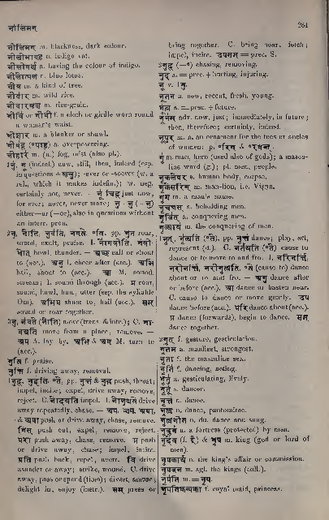
nṛ́ ·m. man, hero (used also of gods); a masculine word (g.); pl. men, people.
Monier-Williams 1872 Substantiv Maskulin
Originaltext · Englisch · Substantiv Maskulin
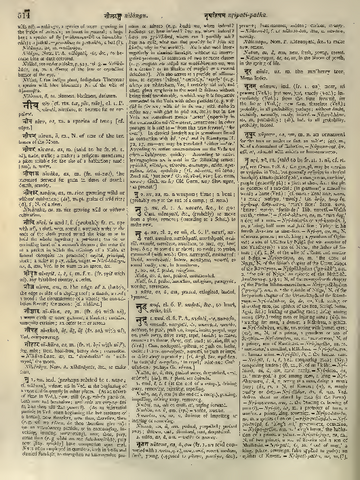
nṛ nṛ, nā, m. (said to be fr. rt. 1. nī, cf. rt. nṝ, see Gram. 128. b; the gen. pl. may be narām or nṛṇām in Ved., but generally nṝṇām in classical Sanskrit), a leader (said of gods), a man, person, mankind, people (generally pl.); a piece at chess, &c.; the pin or gnomon of a sun-dial; (in grammar) a masculine word; a horse (Ved.); [cf. nara: Zend nar, nara, ‘a man;’ nairya, ‘manly:’ Gr. ἀνήρ, ἠνορ-έη, ἀγ-ήνωρ, ἄνθρ-ωπο-ς, ‘man's face:’ Sabin. nero, ‘brave;’ ner-io, ‘fortitude:’ Hib. nearth = Welsh nerth, ‘virtue.’]
Whitney Roots 1885 Verbalwurzel
Originaltext · Englisch · Verbalwurzel
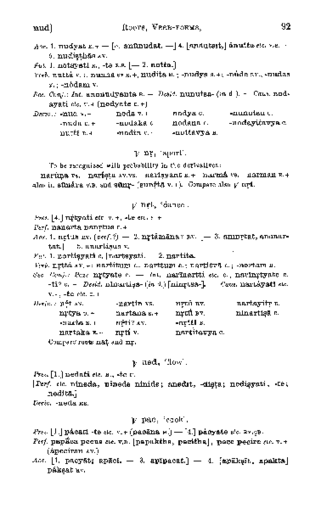
nṛ — sport
Apte 1890 Worttyp nicht bestimmt
Originaltext · Englisch · Worttyp nicht bestimmt
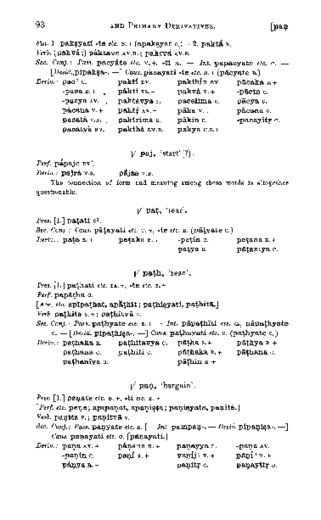
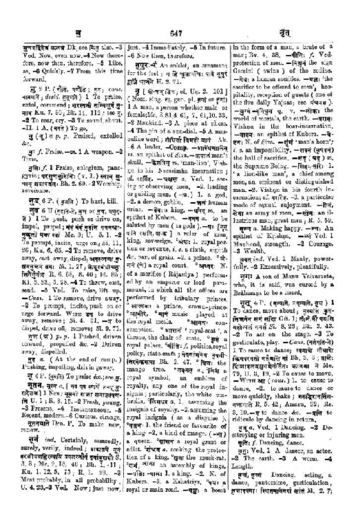
nṛ [nī-ṛn ḍicca; cf. Uṇ. 2. 101] (Nom. sing. nā, gen. pl. nṛṇāṃ or nṝṇāṃ) 1 A man, a person whether male or female; Ms. 3. 81; Ms. 4. 61, Ms. 7. 61, Ms. 10. 33. 2 Mankind. 3 A piece at chess. 4 The pin of a sun-dial. 5 A masculine word; saṃdhirnā vigraho yānaṃ Ak. 6 A leader. Comp. — asthimālin m. an epithet of Śiva. — kapālaṃ man's skull. — kesarin m. ‘man-lion’, Viṣṇu in his Narasiṃha incarnation; cf. narasiṃha. — cakṣas a. Ved. 1 seeing or observing men. 2 leading or guiding men. ( — m.) 1 a god. 2 a demon, goblin. — jalaṃ human urine. — devaḥ a king. — dharman m. an epithet of Kubera. — namana a. to be saluted by men (as gods). — paḥ [nṝn pāti rakṣati, pā-ka] a ruler of men, king, sovereign. ˚aṃśaḥ 1 royal portion or revenue, i. e. a sixth, eighth &c. part of grain. 2 a prince. ˚aṃganaṃ (ṇaṃ) a royal court. ˚adhvaraḥ N. of a sacrifice (Rājasūya) performed by an emperor or lord paramount, in which all the offices are performed by tributary princes. ˚ātmajaḥ a prince, crown-prince. ˚ābhīraṃ, ˚mānaṃ music played at the royal meals. ˚āmayaḥ consumption. ˚āsanaṃ ‘royal-seat’, a throne, the chair of state. ˚gṛhaṃ a royal palace. ˚nītiḥ f. politics, royal policy, state-craft; veśyāṃganeva nṛpanītiranekarūpā Bh. 2. 47. ˚priyaḥ the mango tree. ˚lakṣman n., ˚liṃgaṃ a royal symbol, an emblem of royalty, any one of the royal insignia; particularly, the white umbrella. ˚liṃgadhara a. 1 assuming the insignia of royalty. 2 assuming the royal insignia (as a disguise). ˚vallabhaḥ 1 the friend or favourite of a king. 2 a kind of mango. — (bhā) a queen. ˚śāsanaṃ a royal grant or edict. ˚saṃśraya a. seeking the protection of a king. ˚sutā the musk-rat. ˚sabhaṃ, ˚sabhā an assembly of kings. — patiḥ -pālaḥ 1 a king. 2 N. of Kubera. 3 a Kṣatriya. ˚pathaḥ a royal or main road. — paśuḥ a beast ([Page 0647-c]) in the form of a man, a brute of a man; Bv. 4. 38. — pītiḥ f. Ved. protection of men. — mithutaṃ the sign Gemini (twins) of the zodiac. — medhaḥ a human sacrifice. — yajñaḥ ‘the sacrifice to be offered to men’, hospitality, reception of guests (one of the five daily Yajñas; see paṃcayajña). — yugmaṃ = nṛbhithuna q. v. — lokaḥ the world of mortals, the earth. — varāhaḥ Viṣṇu in the boar-incarnation. — vāhanaḥ an epithet of Kubera. — veṣṭanaḥ N. of Śiva. — śṛṃgaṃ ‘man's horn’; i. e. an impossibility. — sadanaṃ (nṛṣadanaṃ) the hall of sacrifice. — sad (ṣad) m. the Supreme Being. — siṃhaḥ, -hariḥ 1 ‘a lion-like man’, a chief among men, an eminent or distinguished man. 2 Viṣṇu in his fourth incarnation; cf. narasiṃha. 3 a particular mode of sexual enjoyment. — senaṃ, senā an army of men. — somaḥ an illustrious man, great man; R. 5. 59.
Cappeller 1887 Worttyp nicht bestimmt
Originaltext · Deutsch · Worttyp nicht bestimmt
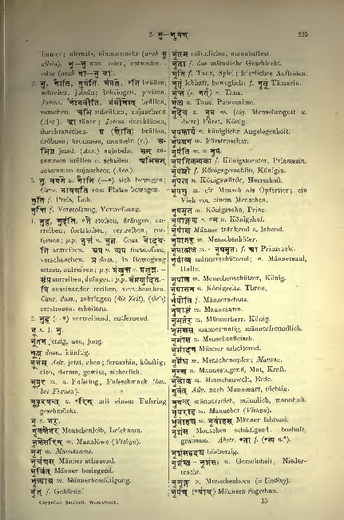
nṛ s. nar.
Burnouf 1866 Verbalwurzel · Substantiv Maskulin
Originaltext · Französisch · Verbalwurzel
*nṛ nṛ, cf. nṝ.
Originaltext · Französisch · Substantiv Maskulin
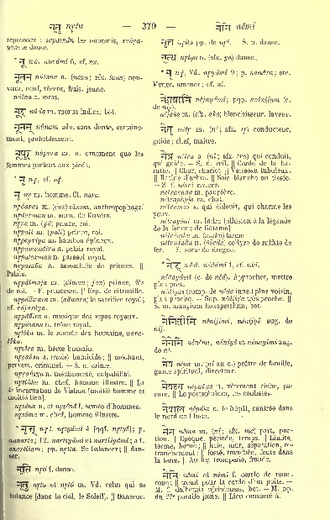
nṛ nṛ m. homme. Cf. nara. nṛcakṣas m. (cakṣ) rākṣasa. anthropophage. nṛdharman m. surn. de Kuvera. nṛpa m. (pā) prince, roi. nṛpati m. (pali) prince, roi. nṛpapriya m. bambou épineux. nṛpamandira n. palais royal. nṛplakṣman n. parasol royal. nṛpasabha n. assemblée de princes. Palais. nṛpātmaja m. (ātman; jan) prince, fils de roi. — F. princesse. Esp. de citrouille. nṛpādhvara m. (adhvara) le sacrifice royal; cf. rājasūya. nṛpābhīra n. musique des repas royaux. nṛpāsana n. trône royal. nṛloka m. le monde des humains, naraloka. nṛvīra m. héros humain. nṛśaṃsa a. (śaṃs) homicide; méchant, pervers, criminel. — S. n. crime. nṛśaṃsya n. méchanceté, culpabilité. nṛsiṃha m. chef, homme illustre. La 4ᵉ incarnation de Viṣṇu [moitié homme et moitié lion]. nṛsena n. et nṛsenā f. armée d'hommes. nṛsoma m. chef, homme illustre.
Abgeleitete Wörter
Quelltextfundstellen (5)
DYS 1 Fundstelle
HP 2 Fundstellen
SiSa 2 Fundstellen
Mit AYI Free weitermachen
Bildquelle: AYI Archiv.