

soma सोम – Mond; Soma; Soma-Saft; Soma-Gottheit
Adjektiv · Substantiv Maskulin · Substantiv Neutrum · Worttyp nicht bestimmt
Wörterbuchquellen
AYI Wörterbuch Substantiv Maskulin · Substantiv Neutrum
Substantiv Maskulin
Mond; Soma; Soma-Saft; Soma-Gottheit
Substantiv Neutrum
Soma; Nektar; Mond
Cappeller 1891 Substantiv Maskulin
Originaltext · Englisch · Substantiv Maskulin
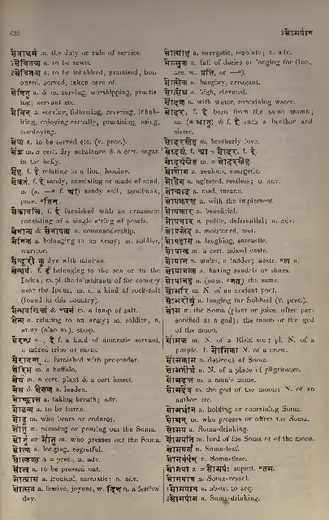
sóma ·m. the Soma (plant or juice, often personified as a god); the moon or the god of the moon.
Monier-Williams 1872 Substantiv Maskulin · Worttyp nicht bestimmt
Originaltext · Englisch · Substantiv Maskulin
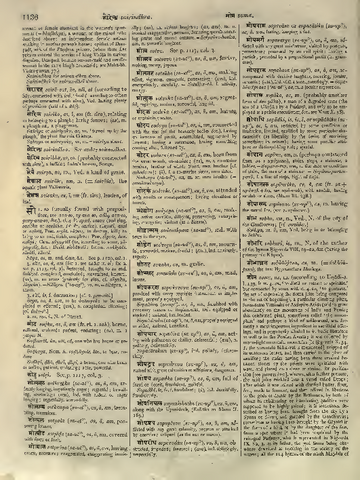
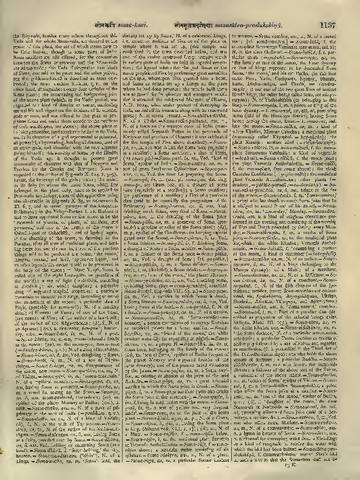
soma soma, as, m. (according to Uṇādi-s. I. 139. fr. rt. 3. su, ‘to distil or extract or sprinkle,’ but connected by some with rt. 4. su, ‘to generate,’ the act of expressing the Soma juice being compared to the act of begetting), a particular climbing plant, Sarcostema Viminalis or Asclepias Acida (said to grow abundantly on the mountains of India and Persia; this celebrated plant, sometimes called ‘the moon- plant’ and perhaps a kind of milk-weed, was for- merly a most important ingredient in sacrificial offer- ings, and is perpetually alluded to in Vedic literature as well as in the Persian Avesta; it was collected by moon-light on certain mountains [in Ṛg-veda X. 34, 1. the mountain Mūja-vat is mentioned], stripped of its numerous leaves, and then carried to the place of sacrifice; the stalks having been there crushed be- tween stones by the priests were sprinkled with water and placed on a sieve or strainer for purifica- tion [see pāvamāna], whence, after further pressure, the acid juice trickled into a vessel called Droṇa; after which it was mixed with clarified butter, flour, &c., made to ferment, and then offered in libations to the gods or drunk by the Brāhmans, by both of whom its exhilarating or intoxicating qualities were supposed to be highly prized; it is sometimes de- scribed as having been brought from the sky by a Śyena or falcon, and guarded by the Gandharvas; sometimes as having been brought by the Gāyatrī in the form of a bird, or by the daughter of the Sun, from a spot where it had been nourished by the rain-god Parjanya, who is represented in Ṛg-veda IX. 82, 3. as its father, the god Soma being else- where described as rejoicing in the society of the waters; all the 114 hymns of the ninth Maṇḍala of the Ṛg-veda, besides many others throughout this Veda and the whole Sāma-veda, are devoted to the praise of this plant, the use of which seems now to be little known, though in some parts of India Soma sacrifices are still offered; for the connection between the Soma ceremonies and the Sāma-veda see sāma-veda; this Veda distinguishes two kinds of Soma, one said to be green and the other yellow, but the golden-coloured is described as most cele- brated; the more modern Su-śruta, q. v., on the other hand, distinguishes twenty-four varieties of the Soma plant); the intoxicating and invigorating juice of the above plant (which, in the Vedic period, was regarded as a kind of Amṛta or nectar, conferring eternal life and vigour on the drinkers of it, whether gods or men, and was offered to the gods to pro- pitiate them and make them accede to the petitions of their worshippers, see above); the above plant or its juice personified (and constantly deified in the Veda, and in its character of a god represented as primeval, all-powerful, all-pervading, healing all diseases, lord of all other gods, and identified with the very supreme Being himself; this worship of Soma by the Hindūs of the Vedic age is thought to possess great community of character with that of Dionysus and Bacchus by the Greeks and Romans; Soma is regarded as the author of Ṛg-veda X. 124, 1, 5 — 9); nectar, the beverage of the gods; water; the moon or its deity (to whom the name Soma, which first belonged to the plant only, came to be applied in Post-vedic mythology, traces of this application being also observable in Ṛg-veda X. 85, in Atharva-veda XI. 6, 7, and in several passages of the Śatapatha- Brāhmaṇa; in the Viṣṇu-Purāṇa I. 22, Brahmā is said to have appointed Soma or the moon to be the ‘monarch of planets, of plants, of sacrifices, and penances,’ and one of the names of the moon is Oṣadhi-pati or Oṣadhīśa, ‘lord of herbs;’ again, at the churning of the ocean, as described in the Purāṇas, after all sorts of medicinal plants and heal- ing herbs &c. are thrown in, three of the precious things said to be produced are Soma, ‘the moon,’ Amṛta, ‘nectar,’ and Surā, ‘spirituous liquor,’ and in other legends this nectar is said to be preserved in the body of the moon; in Manu V. 96, Soma is called one of the eight Loka-pālas or guardians of the world); a ray of light (= dīdhiti, according to Śabda-k.); air, wind; camphor; a particular drug of supposed magical properties; a particular mountain or mountainous range, (according to some) the mountains of the moon; a particular class of Pitṛs, (probably for soma-pā); N. of a monkey chief; of Kuvera; of Yama; of one of the Vasus, (see vasu); of Śiva; of the author of a law-book; of the author of the Rāga-vibodha; (ā), f., N. of an Apsaras; (am), n. rice-water, rice-gruel; heaven, sky, ether.
Originaltext · Englisch · Worttyp nicht bestimmt
Soma. See s. v.
Petersburger 1855 Substantiv Maskulin · Substantiv Neutrum
Originaltext · Deutsch · Substantiv Maskulin · Substantiv Neutrum
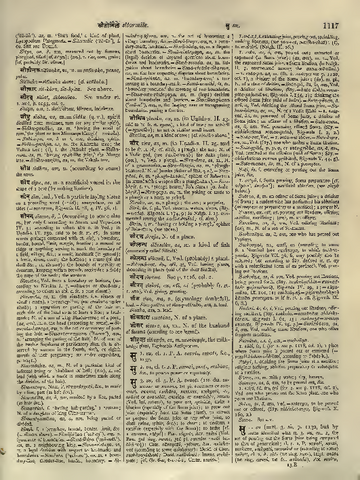
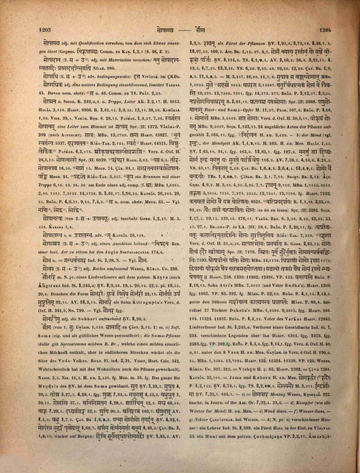
sóma (von 1. su) UṆĀDIS. 1,139. grāmādi zu ŚĀNT. 2,15. 1〉 m. a〉 Saft, Soma (eig. und als göttliches Wesen personificirt); die Soma-Pflanze (dafür gilt Sarcostemma acidum R. Br., welche einen milden säuerlichen Milchsaft enthält, aber in südlicheren Strecken wächst als die Sitze des Veda, Volkes. ROXB. Fl. ind. 2,31. VOIGT, Hort. Calc. 542. Wahrscheinlich hat mit den Wohnsitzen auch die Pflanze gewechselt). NAIGH. 5,5. NIR. 11,2. H. an. 2,431. fg. MED. m. 36. fg. Das ganze 9te Maṇḍala des ṚV. ist dem Soma gewidmet. suta ṚV. 3,35,5. suṣuta ṚV. 4,20,4. tīvra ṚV. 5,27,5. ṚV. 4,28,1. fgg. śukra ṚV. 7,64,5. madhumant ṚV. 4,45,5. babhrudhūta ṚV. 5,30,11. gosakhi ṚV. 5,37,4. abhimiślatama ṚV. 6,29,4. ṛjīṣin ṚV. 6,42,2. madya ṚV. 6,68,10. cāru ṚV. 7,29,1. dadhyāśir ṚV. 7,32,4. śuci ṚV. 7,90,2. atirātra ṚV. 7,103,7. aṃśumant AV. 8,1,2. babhru AV. 5,7,5. ŚAT. BR. 1,6,3,3 yanmā̱ somā̀so ma̱madàn ṚV. 4,42,6. somàsya ja̱ṭharàṃ pṛṇethām ṚV. 6,69,7. apā̀ma̱ somàma̱mṛtā̀ abhūma ṚV. 8,48,3. ŚAT. BR. 5,1,2,10. wächst auf Bergen: di̱vi sūryàmadadhā̱tsoma̱madraù ṚV. 5,85,2. AV. 3,3,3. rājan als Fürst der Pflanzen ṚV. 1,91,8. ṚV. 6,75,18. ṚV. 8,48,7. ṚV. 8,48,8. ṚV. 10,97,22. ṚV. 10,109,2. AIT. BR. 1,12. AIT. BR. 1,27. AIT. BR. 4,7. somàṃ namasya̱ rājā̀na̱ṃ yo ja̱jñe vī̱rudhā̱ṃ patìḥ ṚV. 9,114,2. TS. 6,1,9,1. AV. 2,10,2. AV. 2,36,5. AV. 5,21,11. AV. 6,15,3. AV. 8,7,20. AV. 12,3,31. VS. 6,26. VS. 9,23. VS. 9,40. VS. 10,30. VS. 12,98. ŚAT. BR. 1,6,3,3. ŚAT. BR. 11,4,3,3. — M. 3,257. M. 10,88. M. 11,7. M. 11,8. suṣāva sa bahūnsomān MBH. 1,4695. sute ˚sahasre MBH. 1,8042. adhvaraga MBH. 3,15687. caturvidhātmakaṃ somaṃ ye pibanti MBH. 10,295. MBH. 13,7308. MBH. 13,7311. fgg. MBH. 14,275. fgg. MBH. 14,277. BHĀG. P. 3,13,37. BHĀG. P. 9,3,24. naṣṭasomamivādhvaram R. 2,61,18. kratavaśca yathāsomāḥ Spr. (II) 5988. paśusomānām Thier — und Soma-Opfer M. 11,27. PRAB. 107,3. BHĀG. P. 6,18,1. somānte MBH. 1,6803. sapta somāḥ Verz. d. Oxf. H. 30,b,11. vīrudhaṃ somam MBH. 9,2097. SUŚR. 1,133,15. SUŚR. 1,133,24 angebliche Arten der Pflanze aufgezählt SUŚR. 2,164,11. fgg. ˚nirdalana H. an. 3,428. — b〉 der Mond (vgl. indu), der Mondgott AK. 1,1,2,16. H. 105. H. an. MED. HALĀY. 1,42. ṚV. 1,65,10. fgg. ṚV. 1,91,1. ṚV. 1,163,3. fgg. ṚV. 10,85,1. fgg. ṚV. 10,107,2. ma̱mattù tvā di̱vyaḥ somà indra ma̱mattu̱ yaḥ sū̱yate̱ pārthìveṣu ṚV. 10,116,3. AV. 7,38,3. AV. 4,10,6. AV. 6,21,2. VS. 10,17. pitṛmant VS. 2,29. ŚAT. BR. 1,6,4,5. ŚAT. BR. 2,6,1,4. ŚAT. BR. 10,4,2,1. somo̱ vai ca̱ndramā̀ḥ TBR. 1,4,10,7. ŚĀṄKH. BR. 3,1. ŚĀṄKH. BR. 7,10. ṢAḌV. BR. 3,12. ĀŚV. GṚHY. 4,9,2. M. 3,85. M. 4,52. M. 5,96. M. 7,7. rājan M. 9,129. MBH. 1,1145. MBH. 1,8042. taruṇa MBH. 5,3804. MBH. 5,7131. MBH. 7,979. MBH. 7,2343. MBH. 12,7541. MBH. 13,7298. fg. HARIV. 7152. kanakhalaṃ somo vai yatra cotthitaḥ HARIV. 9521. ˚vatpriyadarśanaḥ R. 1,1,18. R. 2,25,10. R. 2,91,20. (yaiḥ) kṣayī cāpyāyitaḥ somaḥ (so ist zu lesen) Spr. (II) 5582. SUŚR. 1,17,2. SUŚR. 1,19,12. SUŚR. 1,135,16. SUŚR. 1,176,11. VARĀH. BṚH. S. 5,26. VARĀH. BṚH. S. 8,23. VARĀH. BṚH. S. 43,52. VARĀH. BṚH. S. 53,45. VARĀH. BṚH. S. 97,1. BRAHMA-P. in LA. (III) 58,6. BHĀG. P. 5,20,11. fg. (aprīṇayat) kalābhiramṛtārdrābhiḥ somaḥ surapitṝniva RĀJA-TAR. 7,519. ˚cchāyā Verz. d. Oxf. H. 51,a,28. satyātsomaḥ prabhavati R. GORR. 2,61,12. somaḥ śaucaṃ dadau strīṇām Spr. (II) 7176. striyaḥ pūrvaṃ surairbhuktāḥ somagandharvavahnibhiḥ Spr. (II) 7193. oṣadhīnāṃ patiḥ somaḥ MBH. 14,1178. viprāṇāṃ somo rājā MBH. 14,1179. dvijānāṃ vīrudhāṃ caiva nakṣatragrahayostathā . yajñānāṃ tapasāṃ caiva somaṃ rājye 'bhyaṣecayat .. HARIV. 258. HARIV. 1330. HARIV. 11802. HARIV. 12491. VP. 153. vanaspati BHĀG. P. 8,18,15. Sohn Atriʼs MBH. 7,6028 (und Vater Budhaʼs). HARIV. 1309. fgg. HARIV. 1663. VP. 83. VP. 392. fg. MĀRK. P. 52,22. BHĀG. P. 4,1,15. BHĀG. P. 9,14,3. unter den Söhnen mārīcasya kāśyapasya prajāpateḥ MĀRK. P. 80,8. heirathet 27 Töchter Dakṣaʼs MBH. 1,2580. MBH. 9,2013. fgg. HARIV. 104. HARIV. 144. HARIV. 11524. HARIV. 11837. BHĀG. P. 8,4,22. Vater des Varcas HARIV. 12843. Liedverfasser Ind. St. 3,245,a. Verfasser eines Gesetzbuchs Ind. St. 1,234. verschiedene Legenden über ihn HARIV. 1311. fgg. HARIV. 2475. fgg. HARIV. 2583. fgg. VP. 392. fg. BHĀG. P. 6,4,6. fgg. BHĀG. P. 9,14,1. fgg. Verz. d. Oxf. H. 40,a,31. unter den 8 Vasu H. an. MED. JAṬĀDH._in_Verz. d. Oxf. H. 190,a,34. MBH. 1,2582. MBH. 13,7094. HARIV. 152. HARIV. 11524. HARIV. 11539. VP. 120. WEBER, RĀMAT. UP. 307. WEBER, RĀMAT. UP. 312. = Viṣṇu H. ś. 65. HARIV. 2382. = Śiva HARIV. 7581. KATHĀS. 35,101. = Yama und Kubera H. an. MED. somarudrā́ (˚rudrau) P. 6,2,142. ṚV. 6,74,1. fgg. TS. 2,2,10,5. somayamau M. 3,211. índrāsómā ṚV. 7,35,1. ṚV. 7,104,1. — c〉 = somavāra Montag WEBER, KṚṢṆAJ. 222. Inschr. in Journ. of the Am. Or. S. 7,32,4. Journ. of the Am. Or. S. 7,33,6. — d〉 Kampfer (wie alle Wörter für Mond) H. an. MED. — e〉 Wind diess. — f〉 Wasser diess. — g〉 Nektar ŚABDĀRTHAK._bei_WILSON. — h〉 N. pr. α〉 verschiedener Männer: ein Lehrer Ind. St. 8,389. ein Fürst HALL in der Einl zu VĀSAVAD. 53. ein Muni mit dem patron. Śuṣmāyaṇa VP. 3,3,17. Āmuṣyāyaṇa Verz. d. Oxf. H. 80,a,15 (HALL in der 2ten Ausg. des VP. führt noch andere Varianten an und vermuthet saumaśuṣmāyaṇa). ein Sohn Mudgalaʼs VP. 200,a, No. 475. — Verz. d. B. H. No. 969. KṢITĪŚ. 5,9. — β〉 eines Affen H. an. MED. — γ〉 eines Berges ŚABDĀRTHAK._bei_WILSON; vgl. somagiri. — 2〉 f. ā a〉 die Soma-Pflanze RĀJAN. 3,87. — b〉 N. pr. α〉 einer Apsaras MBH. 1,4817. R. ed. Bomb. 2,91,17 (bhīmā SCHL.). — β〉 eines Flusses MĀRK. P. 56,16. — 3〉 f. ī́ gaṇa gaurādi zu P. 4,1,41. — 4〉 n. a〉 Reisschleim. — b〉 Himmel ŚABDĀRTHAK._bei_WILSON. — Vgl. agnīṣoma, nṛ˚, prati˚, prāk˚, bṛhat˚, bhadga˚, mahā˚, yajña˚, rudra˚, vi˚, vīra˚, śānti˚, śruta˚, saṃsuta˚, saha˚, suṣoma, suta˚, saumya.
Böhtlingk 1879 Adjektiv · Substantiv Maskulin · Substantiv Neutrum
Originaltext · Deutsch · Adjektiv · Substantiv Maskulin · Substantiv Neutrum
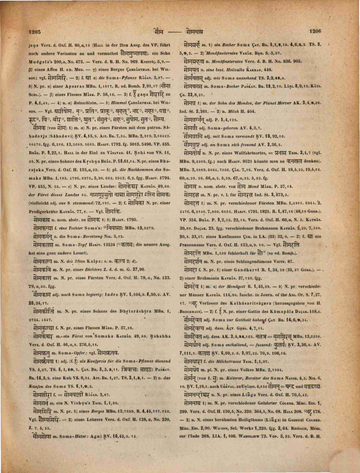
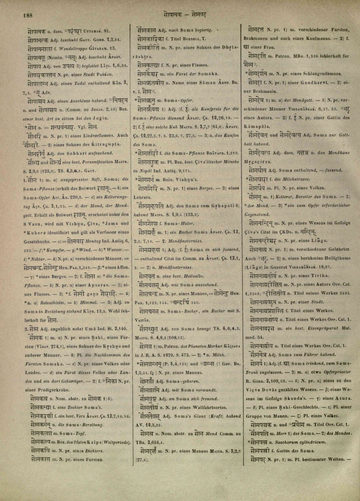
1. sóma — 1〉 m. — a〉 ausgepresster Saft, Soma; die Soma-Pflanze erhält Beiwort rājan. — b〉 ein Soma-Opfer AIT. ĀR. 220,5. — c〉 ein Kelterungstag ĀŚV. ŚR. 3,1,15. — d〉 der Mond, der Mondgott. Erhält als Beiwort rājan erscheint unter den 8 Vasu. wird mit Viṣṇu, Śiva, Yama und Kubera identificirt und gilt als Verfasser eines Gesetzbuchs. — e〉 = somavāra Montag Ind. Antiq. 6,203. — f〉 Kampfer. — g〉 Wind. — h〉 Wasser. — i〉 Nektar. — k〉 N. pr. — α〉 verschiedener Männer = somacandra somendu HEM. PAR. 1,240. — β〉 eines Affen. — γ〉 eines Berges. — 2〉 f. somā — a〉 die Soma-Pflanze. — b〉 N. pr. — α〉 einer Apsaras. — β〉 eines Flusses. — 3〉 f. somī gaṇa gaurādi. — 4〉 n. — a〉 Reisschleim. — b〉 Himmel. — 5〉 Adj. zu Soma in Beziehung stehend KĀṬH. 13,2. Wohl fehlerhaft für sauma.
Originaltext · Deutsch · Adjektiv
2. soma Adj. angeblich nebst Umā Ind. St. 2,140.
Apte 1890 Substantiv Maskulin · Substantiv Neutrum
Originaltext · Englisch · Substantiv Maskulin · Substantiv Neutrum
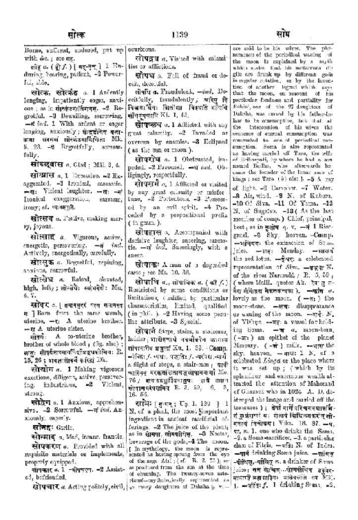
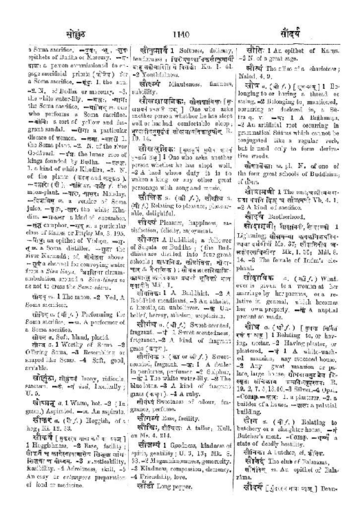
somaḥ [su-man; Uṇ. 1. 139] 1 N. of a plant, the most important ingredient in ancient sacrificial offerings. 2 The juice of the plant; as in somapā, somapīthin. 3 Nectar, beverage of the gods. 4 The moon. [In mythology, the moon is represented as having sprung from the eye of the sage Atri; (cf. R. 2. 75); or as produced from the sea at the time of churning. The twenty-seven asterisms-mythologically represented as so many daughters of Dakṣa q. v.- ([Page 1139-c]) are said to be his wives. The phenomenon of the periodical waning of the moon is explained by a myth which states that his nectarous digits are drunk up by different gods in regular rotation, or by the invention of another legend which says that the moon, on account of his particular fondness and partiality for Rohiṇi, one of the 27 daughters of Dakṣa, was cursed by his father-inlaw to be consumptive, but that at the intercession of his wives the sentence of eternal consumption was commuted to one of periodical consumption. Soma is also represented as having carried off Tārā, the wife of Bṛhaspati, by whom he had a son named Budha, who afterwards became the founder of the lunar race of kings; see Tārā (b) also]. 5 A ray of light. 6 Camphor. 7 Water. 8 Air, wind. 9 N. of Kubera. 10 Of Śiva. 11 Of Yama. 12 N. of Sugrīva. 13 (As the last member of comp.) Chief, principal, best; as in nṛsoma q. v. — maṃ 1 Ricegruel. 2 Sky, heaven. Comp. — abhiṣavaḥ the extraction of Soma juice. — ahaḥ Monday. — ākhyaṃ the red lotus. — īśvaraḥ a celebrated representation of Śiva. — udbhavā N. of the river Narmadā; R. 5. 59; (where Malli. quotes Ak. revā tu narmadā somodbhavā mekalakanyakā). — kāṃta a. lovely as the moon. — (taḥ) the moon-stone. — kṣayaḥ disappearance or waning of the moon. — garbhaḥ N. of Viṣṇu. — grahaḥ a vessel for holding Soma. — ja a. moon-born. — (jaḥ) an epithet of the planet Mercury. — (jaṃ) milk. — dhārā the sky, heaven. — nāthaḥ 1 N. of a celebrated Liṅga or the place where it was set up; (which by its splendour and enormous wealth attracted the attention of Mahomad of Ghazani who in 1024 A. D. destroyed the image and carried off the treasures); teṣāṃ mārge paricayavaśādarjitaṃ gurjarāṇāṃ yaḥ saṃtāpaṃ śithilamakarot somanāthaṃ vilokya . Vikr. 18. 87. — pa, pā, m. 1 one who drinks the Soma. 2 a Soma-sacrificer. 3 a particular class of Pitṛs. — patiḥ N. of Indra. — pānaṃ drinking Soma juice. — pāyin — pīthin, -pītin m. a drinker of Soma juice; tatra kecit… somapīthina uduṃbaranāmāmo brahmavādinaḥ prativasaṃti sma Māl. 1. — pītiḥ f. 1 drinking Soma 2 ([Page 1140-a]) a Soma sacrifice. — putraḥ, -bhūḥ, -sutaḥ epithets of Budha or Mercury. — pravākaḥ a person commissioned to engage sacrificial priests (śrotriya) for a Soma sacrifice. — baṃdhuḥ 1 the sun. 2 N. of Budha or mercury. 3 the white water-lily. — yajñaḥ, -yāgaḥ the Soma sacrifice. — yājin m. one who performs a Soma sacrifice. — yoniḥ a sort of yellow and fragrant sandal. — rogaḥ a particular disease of women. — latā, -vallarī 1 the Soma plant. 2 N. of the river Godāvarī. — vaṃśaḥ the lunar race of kings founded by Budha. — valkaḥ 1 a kind of white Khadira. 2 N. of the plants (karaṃja and kaṭphala). — vallariḥ (rī), -vallikā, -vallī f. the moon-plant. — vāraḥ, -vāsaraḥ Monday. — vikrayin m. a vendor of Soma juice. — vṛkṣaḥ, -sāraḥ the white Khadira. — śakalā a kind of cucumber. — saṃjñaṃ camphor. — sad m. a particular class of Manes or Pitṛs; Ms. 3. 195. — siṃdhuḥ an epithet of Viṣṇu. — sut m. a Soma distiller. — sutā the river Narmadā; cf. somodbhavā above. — sūtraṃ a channel for conveying water from a Śiva-liṅga. ˚pradakṣiṇā circumambulation around a Śiva-liṅga so as not to cross the Soma-sūtra.
Cappeller 1887 Substantiv Maskulin
Originaltext · Deutsch · Substantiv Maskulin
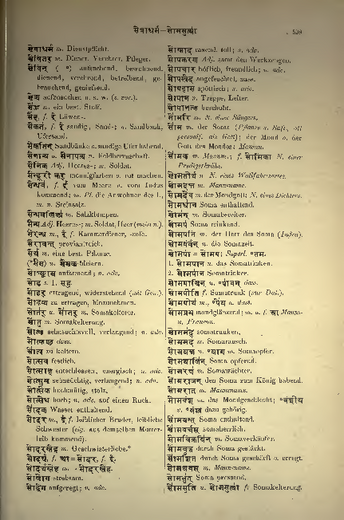
sóma m. der Soma (Pflanze u. Saft, oft personif. als Gott); der Mond o. der Gott des Mondes; Mannsn.
Burnouf 1866 Substantiv Maskulin
Originaltext · Französisch · Substantiv Maskulin
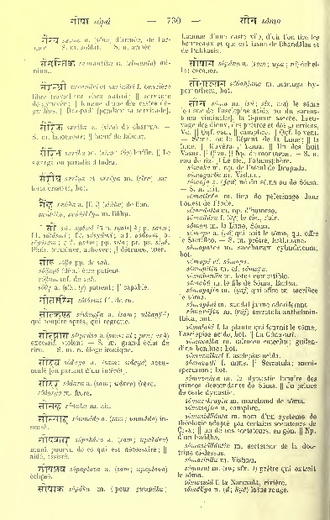
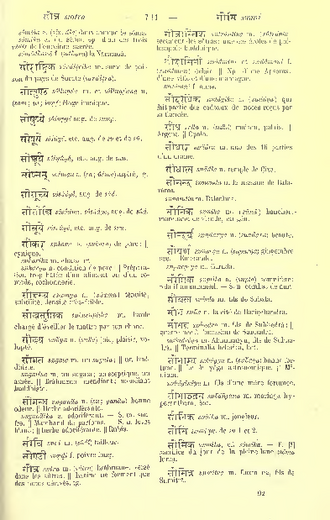
soma soma m. (sū; sfx. ma) le soma [ou suc de l'asclepias acida ou du sarcostema viminalis], la liqueur sacrée, breuvage des dieux, des prêtres et des guerriers, Vd. Qqf. eau; camphre. Qqf. le vent. — Soma, ou le Régent de la Lune; la lune. Kuvera. Yama. Un des huit Vasus. Śiva. Np. de montagne. — S. n. eau de riz. Le ciel, l'atmosphère. somaka m. np. de l'aïeul de Drupada. somagarbha m. Viṣṇu. somaja a. (jan) né du soma ou de Soma. — S. n. lait. somatīrtha m. lieu de pèlerinage dans l'ouest de l'Inde. somadatta m. np. d'homme. somadhārā f. (dhṛ) le ciel, l'air. soman m. la Lune, Soma. somapa a. (pā) qui boit le soma, qui offre le Sacrifice. — S. m. prêtre, brâhmane. somapatra m. saccharum cylindricum, bot. somapā cf. somapa. somapītin m. cf. somapa. somabandhu m. lotus comestible. somabhū m. le fils de Soma, Budha. somayajin m. (yaj) qui offre en sacrifice le soma. somayoni m. sandal jaune odoriférant. somarājin m. (rāj) serratula anthelminthica, bot. somalatā f. la plante qui fournit le soma, l'asclepias acide, bot. La Godāvarī. somavalka m. mimosa catechu; guilandina bonduc; bot. somavallarī f. asclepias acida. somavallī f. mms. Serratula; menispermum; bot. somavaṃśa m. la dynastie lunaire des princes descendants de Soma. Un prince de cette dynastie. somavikrayin m. marchand de soma. somasajña n. camphre. somasiddhānta m. nom d'un système de théologie adopté par certains sectateurs de Śiva; un de ces sectateurs, en gén. Np. d'un buddha. somasiddhāntin m. sectateur de la doctrine ci-dessus. somasindhu m. Viṣṇu. somasut m. (su; sfx. t) prêtre qui extrait le soma. somasutā f. la Narmadā, rivière. somākhya n. (ā; khyā) lotus rouge. [Page731-1] somāla a. (sfx. āla) doux comme le soma. somika a. du soma, ép. d'un des trois vedis de l'enceinte sacrée. somodbhavā f. (udbhava) la Narmadā.
Quelltextfundstellen (8)
HP 5 Fundstellen
HTK 1 Fundstelle
HTK 10.26–29*1: Cakra, Śaṅkha, Vāmāvartta, Vartmagati und Gadā 1 Fundstelle
Direkt belegt
-
HTK 10.27*1 Segment 6
SiSa 1 Fundstelle
SVU 1 Fundstelle
Mit AYI Free weitermachen
Bildquelle: AYI Archiv.