

apara अपर – later; other
adjective · substantive masculine · substantive neuter · Word type unspecified
Dictionary sources
AYI dictionary adjective
later; other
Cappeller 1891 adjective · substantive neuter
Original text · English · adjective
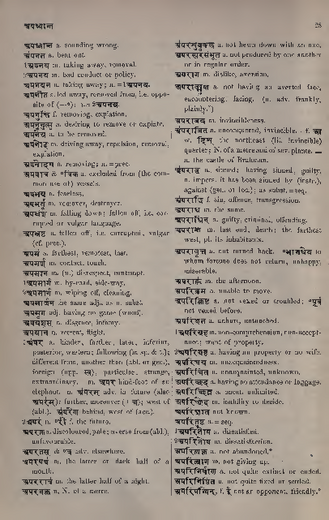
ápara1 ·a. hinder, farther, later, inferior, posterior, western; following (in sp. & t.); different from, another than (abl. or gen.), foreign (opp. sva), particular, strange, extraordinary. m. apara hind-foot of an elephant. n. áparam adv. in future (also aparám); further, moreover (±ca); west of (abl.). ápareṇa behind, west of (acc.).
Original text · English · substantive neuter
apará2 ·n. °rī́ f. the future.
Monier-Williams 1872 adjective
Original text · English · adjective
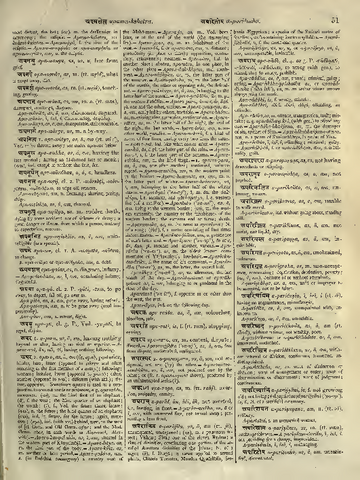
apara 1 . a-para, as, ā, am, having nothing beyond or after, having no rival or superior.
Original text · English · adjective
apara 2 . apara, as, ā, am (fr. apa), posterior, hinder, later, latter (opposed to pūrva and often occuring as the first member of a comp.); following; western; inferior, lower (opposed to para); other, another (opposed to sva); different (with abl.); dis- tant, opposite. Sometimes apara is used as a con- junction to connect words or sentences, e. g. aparañca, moreover. (as), m. the hind foot of an elephant; (ā), f. the west; the hind quarter of an elephant; the womb; (ī), f., Ved. the future times, future; (am), n. the future; the hind quarter of an elephant; (am), ind. in future, for the future; again, more- over; (eṇa), ind. (with acc.) behind, west, to the west of [cf. Goth. and Old Germ. afar; and the Mod. Germ. aber, in such words as Aber-mal, Aber- witz].
Petersburger 1855 adjective · substantive masculine · substantive neuter · Word type unspecified
Original text · German · adjective · substantive masculine · substantive neuter
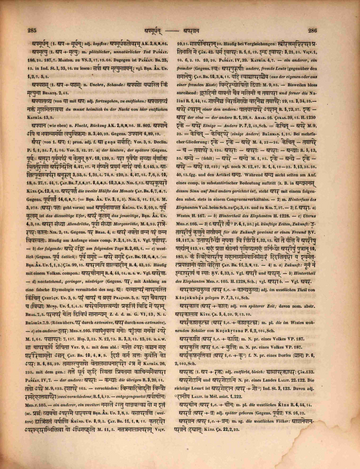
ápara (von 1. apa) 1〉 pron. adj. f. ā gaṇa sarvādi; VOP. 3,9. Declin. P. 1,1,34. P. 7,1,16. VOP. 3,12. VOP. 3,37. a〉 der hintere, der spätere (Gegens. pūrva): a̱nta̱rā pūrva̱mapàraṃ ca ke̱tum ṚV. 10,139,2. parā̱ pūrvèṣāṃ sa̱khyā vṛ̀ṇakti vi̱tartùrāṇo̱ apàrebhireti ṚV. 6,47,17. na mṛ̀ṣyate pratha̱maṃ nāpàra̱ṃ vacàḥ ṚV. 1,145,2. ā̱kṣitpūrvā̱svapàrā anū̱rut ṚV. 3,55,5. ṚV. 1,31,4. ṚV. 1,74,8. ṚV. 1,120,2. ṚV. 6,47,15. ṚV. 7,6,3. ṚV. 10,18,5. ṚV. 10,27,7. ṚV. 10,44,7. ŚAT. BR. 7,1,1,27. ŚAT. BR. 8,4,4,9. ŚAT. BR. 10,3,5,2. NIR. 1,13. aparakūvarī KĀTY. ŚR. 12,4,12. aparapakṣá die zweite Hälfte des Monats ŚAT. BR. 6,7,4,7. Gegens. pūrvapakṣá ŚAT. BR. 14,6,1,7. (= BṚH. ĀR. UP. 3,1,5). NIR. 5,11. NIR. 11,6. M. 3,278. (aparaḥ pakṣaḥ geht voran) und apūryamāṇapakṣa CHĀND. UP. 5,10,3. pūrvaṃ kūlam ist das diesseitige Ufer, aparaṃ kūlam das jenseitige, BṚH. ĀR. UP. 4,3,18. aparā saṃdhyā Abendröthe, pūrvā saṃdhyā Morgenröthe, M. 4,93. rātreraparaḥ kālaḥ NIR. 2,18. Gegens. para BHAG. 4,4: aparaṃ bhavato janma paraṃ janma vivasvataḥ. Häufig am Anfange eines comp. P. 2,1,58. P. 2,2,1. Vgl. pūrvāpara. — b〉 der folgende: apare 'hni am folgenden Tage R. 2,65,1. — c〉 westlich (Gegens. pūrva östlich): pūrve samudre — apare samudre ŚAT. BR. 10,6,4,1. (= BṚH. ĀR. UP. 1,1,2.) ŚĀK. 99,15. aparānapi śālvādīn R. 4,43,23. Häufig mit einem Volksn. compon.: aparacīnān R. 4,44,14. u. s. w. Vgl. apareṇa. — d〉 nachstehend, geringer, niedriger (Gegens. para, mit Anklang an eine falsche Etymologie vermittelst des neg. a): yasmātparaṃ nāparamasti kiṃcit ŚVETĀŚV. UP. 3,9. paraṃ cāparaṃ ca brahma PRAŚNOP. 5,2. parā caivāparā ca (vidyā) MUṆḌ. UP. 1,1,4. MUṆḌ. UP. 1,1,5. apareyamitastvanyāṃ prakṛtiṃ viddhi me parām BHAG. 7,5. paramaparaṃ ceti dvividhaṃ sāmānyam Z. d. d. m. G. VI, 13, N. 4. BHĀṢĀP. 7. BHĀṢĀP. 9. (RÖER übers. para durch extensive, apara durch non-extensive). — e〉 ein anderer (itara) MED. r. 105. svāyaṃbhuvasya manoḥ ṣaḍvaṃśyā manavo 'pare M. 1,61. pañcāparāḥ M. 7,157. HIḌ. 2,32. N. 12,75. R. 3,3,12. R. 3,15,26. u. s. w. sā cāparakārye preṣitā VET. 9,4. mit dem abl.: nāto 'paraḥ kaścana saha śarīreṇāmṛto 'sat ŚAT. BR. 10,4,3,9. īdṛśaṃ karma tvattaḥ kurvīta ko 'paraḥ R. 6,84,29. tannāstyupāyo vetālasādhanādaparo 'tra me KATHĀS. 26,235. mit dem gen.: tatte dhūrta hṛdi sthitā priyatamā kācinmamaivāparā PAÑCAT. IV, 7. — der andere: aparāḥ — kanyāḥ die übrigen R. 3,20,11. tato 'pare M. 9,123. daśāpare M. 9,165. — verschieden: bimbādivoddhṛtau vimbau rāmadehāttathāparau (zwei verschiedene) R. 1,4,12. — entgegengesetzt (arvācīna) MED. r. 105. — ein anderer, ein zweiter: namaste 'stu yājñavalkya yo ma etaṃ (sc. praśnaṃ) vyavaco 'parasmai dhārayasva BṚH. ĀR. UP. 3,8,5. vasāparāṇi (weitere) dvātriṃśataṃ varṣāṇi CHĀND. UP. 8,9,3. ŚAT. BR. 11,1,2,11. kṛtadāro 'parāndārānbhikṣitvā yo 'dhigacchati M. 11,5. nakṣatramālāmaparām VIŚV. 10,21. saptarṣīnaparān VIŚV. 10,20. Häufig bei Vergleichungen: strīratnasṛṣṭiraparā pratibhāti me ŚĀK. 42. dharma ivāparaḥ R. 1,1,19. indra ivāparaḥ R. 3,21,31. VIŚV. 1,10. VIŚV. 6,2. VIŚV. 6,19. VIŚV. 10,20. PAÑCAT. IV, 39. KATHĀS. 4,7. — ein anderer, ein fremder (Gegens. sva): aparapuruṣā́ḥ andere, fremde Leute (gegenüber den samāneṣu) ŚAT. BR. 10,3,5,11. yadi svāścāparāścaiva (aus der eigenen oder aus einer fremden Kaste) vinderanyoṣito dvijāḥ M. 9,85. — Bisweilen bloss anreihend: hlādinī yāvanī caiva nalinī ca tathāparā und ferner die Nalinī R. 1,44,14. gāyanaiśca virāgiṇyo vādanaiśca tathāparaiḥ R. 19,12. R. 3,34,32. — apare 'parān einer den andern: pātayantyapare 'parān R. 5,73,37. eka — -apara der eine — der andere R. 1,39,8. AMAR. 16. ŚUKAS. 39,15. H. 1230 eke — apare Einige — Andere P. 7,2,45, Sch. = kecit — apare M. 9,32. = kecit — kecidapare (einige Andere) BRĀHMAṆ. 1,31. Bei mehrfacher Gliederung: eke — eke — apare M. 4,22—M. 4,24. kecit — tathāpare — ca — tathāpare M. 3,134. aparāḥ — aparāḥ — aparāḥ — anyāḥ R. 5,13,55. anye — (fehlt) — apare — anye M. 1,85. eke — anye — eke — apare — apare M. 12,123; vgl. noch N. 12,87. R. 1,4,18—R. 1,4,22. R. 5,13,35. R. 5,13,38. R. 5,40,13. fgg. und den Artikel anya. Während anya nicht selten am Anf. eines comp. in substantivischer Bedeutung auftritt (z. B. in anyamanas dessen Sinn auf Jmd anders gerichtet ist), steht apara mit einem folgenden subst. stets in einem Congruenzverhältniss. — 2〉 m. Hinterfuss des Elephanten VAIJ. beim Sch. zu ŚIŚ. 5,48. und zu KIR. 7,37. — 3〉 f. aparā. a〉 Westen H. 167. — b〉 Hintertheil des Elephanten H. 1228. — c〉 Uterus MED. r. 105. — 3〉 f. apárī (á˚ P. 4,1,30.) pl. künftige Zeiten, Zukunft: u̱tāpa̱rīṣù kṛṇute̱ sakhā̀yam für die Zukunft gewinnt er einen Freund ṚV. 10,117,3. u̱tāpa̱rībhyò ma̱ghavā̱ vi jìgye ṚV. 1,32,13. o te yànti̱ ye a̱parī̀ṣu̱ paśyā̀n ṚV. 1,113,11. a̱haṃ pra̱jā àjanayaṃ pṛthivyāma̱haṃ janìbhyo apa̱rīṣù pu̱trān ṚV. 10,183,3. ka̱ṃ svide̱vāparī̱ṣu mahānāga̱mivābhisaṃsā̱raṃ didṛkṣitā̱ro ya̱ eva̱meta̱tprayājā̱nāṃ ya̱śo veditā̱ ŚAT. BR. 11,2,7,12. — 4〉 n. a〉 Zukunft: nū̱naṃ nà indrāpa̱rāyà ca syāḥ ṚV. 6,33,5. Vgl. aparī und aparam. — b〉 Hintertheil des Elephanten MED. r. 105. H. 1228, Sch.; vgl. aparā b. — Vgl. avara.
Original text · German · Word type unspecified
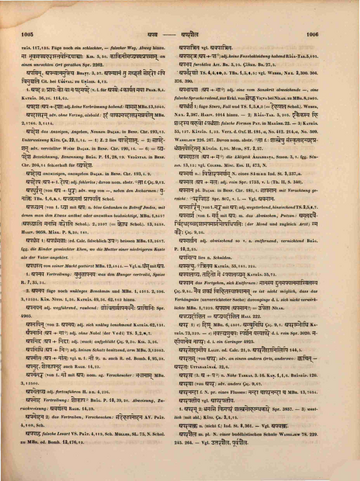
apara 1〉c〉 diś MBH. 6,4801. ambunidhi ŚIŚ. 9,1. aparāmbhodhi KATHĀS. 73,329. — e〉 bhavantyaśucayaḥ sparśena yasyāpare d. i. rein Spr. 3020. mahīyāneva nāparaḥ d. i. ein Geringer Spr. 4925.
Original text · German · Word type unspecified
apara 1〉e〉 kimaparam was Anderes? Spr. (II) 6117. so v. a. was thut es zur Sache? gleichviel Spr. (II) 18. Spr. (II) 6004 (anders in der Uebersetzung). — 3〉c〉 Nachgeburt CARAKA 4,8. SUŚR. 1,328,10. SUŚR. 2,217,6. avarā v. l.; vgl. amarā.
Böhtlingk 1879 adjective · substantive masculine · substantive neuter
Original text · German · adjective · substantive masculine · substantive neuter
1. ápara — 1〉 Adj. (f. ā) — a〉 der hintere, weiter gelegen. — b〉 der spätere M. 9,99. — c〉 der folgende. — d〉 westlich. tatas. westlich davon Chr. 218,21. — e〉 nachstehend, geringer, niedriger. — f〉 ein anderer. kimaparam was Anderes? und auch so v. a. was thut dieses zur Sache? gleichviel. Ein anderer als (Abl.; ausnahmsweise Gen. Spr. 7036); der andere, ein anderer, — zweiter (bei Vergleichungen); im Gegens. zu sva ein fremder. Gegenüber von eka, anya oder ka mit cid der eine — der andere. Entgegengesetzt. Gegenüber von aśuci so v. a. rein Spr. 6522 von mahīyaṃs so v. a. geringer Spr. 5692. — g〉 absonderlich, aussergewöhnlich Chr. 176,1. — 2〉 m. Hinterfuss des Elephanten ŚIŚ. 5,48. — 3〉 f. ā — a〉 *Westen. — b〉 *Hintertheil des Elephanten. — c〉 Nachgeburt (v. l. avarā). — d〉 *Uterus. — 4〉 *n. Hintertheil des Elephanten.
Original text · German · substantive neuter
2. apará n. und aparī́ f. Zukunft.
Apte 1890 adjective · substantive masculine · substantive neuter
Original text · English · adjective · substantive masculine · substantive neuter
apara a. (treated as a pronoun in some senses) 1 Having nothing higher or superior, unrivalled, matchless; without a rival or second (nāsti paro ([Page 0108-c]) yasmāt); strīratnasṛṣṭiraparā pratibhāti sāme Ś. 2. 9; cf. anuttama, anuttara. 2 [na pṛṇāti saṃtoṣayati pṝ-ac] (a) Another, other (used as adj. or subst.). (b) More, additional; Ms. 11. 5. (c) Second, another Pt. 4. 37; khaṃ keśavo'para ivākramituṃ pravṛttaḥ Mk. 5. 2 like another (rival) Keśava. (d) Different; other; anye kṛtayuge dharmāstretāyāṃ dvāpare'pare Ms. 1. 85; Ks. 26. 235; Pt. 4. 6 (with gen). (e) Ordinay, of the middle sort (madhyama); paritaptopyaparaḥ susaṃvṛtiḥ Śi. 16. 23. 3 Belonging to another, not one's own (opp. sva); yadi svāścāparāścaiva viṃderan yoṣito dvijāḥ Ms. 9. 85 of another caste. 4 Hinder, posterior, latter, later, (in time or space) (opp. pūrva); the last; pūrvāsaṃdhyāṃ japaṃstiṣṭhetsvakāle cāparāṃ ciraṃ Ms. 4. 93; rātreraparaḥ kālaḥ Nir.; oft. used as first member of a genitive Tatpuruṣa comp. meaning ‘the hind part,’ ‘latter part or half’; ˚pakṣaḥ the latter half of a month; ˚hemaṃtaḥ latter half of winter; ˚kāyaḥ hind part of the body &c.; ˚varṣā ˚śarad latter part of the rains, autumn &c. 5 Following, the next. 6 Western; payasi prapitsuraparāṃbunidheḥ Śi. 9. 1, Ku. 1. 1; Mu. 4. 21. 7 Inferior, lower (nikṛṣṭaḥ); apareyamitastvanyāṃ prakṛtiṃ viddhi me parāṃ Bg. 7. 5. 8 (In Nyāya) Nonextensive, not covering too much, one of the two kinds of sāmānya, see Bhāṣā P. 8. (paraṃ = adhikavṛtti) higher, aparaṃ = nyūnavṛtti lower, or adhikadeśavṛttitvaṃ paraṃ, alpadeśavṛttitvaṃ aparaṃ Muktā. 9 Distant; opposite. When apara is used in the singular as a correlative to eka the one, former, it means the other, the latter; eko yayau caitrarathapradeśān saurājyaramyānaparo vidarbhān R. 5. 60; when used in pl. it means ‘others’, ‘and others’, and the words generally used as its correlatives are eke, kecit -kāścit &c., apare, anye; kecidraktapaṭīkṛtāśca jāṭilāḥ kāpālikāścāpare Pt. 4. 34; eke samūhurbalareṇusaṃhatiṃ śirobhirājñāmapare mahībhṛtaḥ Śi. 12. 45 some-others; śākhinaḥ kecidadhyaṣṭhurnyamāṃkṣurapareṃbudhau . anye tvalaṃghiṣuḥ śailān guhāsknye nyelaṣata .. kecidāsiṣata stabdhā bhayātkecidaghūrṇiṣuḥ . udatāriṣuraṃbhodhiṃ vānarāḥ setunāpare Bk. 15. 31-33. — raḥ 1 The hind foot of an elephant; baddhāparāṇi parito nigaḍānyalāvīt Śi. 5. 48 (Malli. caramapādāgrāṇi). 2 An enemy (na pṛṇāti saṃtoṣayāti). — rā ([Page 0109-a]) 1 Western direction, the west. 2 The hind part of an elephant. 3 Sacred learning, learning the four Vedas with the 6 Aṅgas. 4 The womb; the outer skin of the embryo. 5 Suppressed menstruation in pregnancy. — rī Ved. The future, future times; atāparībhyomaghavā vijigye Rv. 1. 32. 13. — raṃ 1 The future, any thing to be done in future (kārya); tadetadbrahmāpūrvamaparamanaṃtaṃ Bṛ. Ār. Up. (nāsti aparaṃ kāryaṃ yasya). 2 The hind quarter of an elephant. — raṃ adv. Again, moreover, in future, for the future; aparaṃca moreover; apareṇa behind, west of, to the west of (with gen. or acc.). [cf. Goth. afar; Germ. aber, as in aberglauben]. Comp. — agni (agnī dual) 1 the southern and western fires (dakṣiṇa and gārhapatya). 2 the last fire i. e. used at the funeral ceremony (˚gniḥ). — aṃgaṃ one of the 8 divisions of guṇībhūtavyaṃgya (the second kind of kāvya) mentioned in K. P. 5. In this the vyaṃgya or suggested sense is subordinate to something else; agūḍhamaparasyāṃgaṃ; aparasya rasādervācyasya vā (vākyārthībhūtasya) aṃgaṃ rasādi anuraṇanarūpaṃ vā; e. g. ayaṃ sa rasanotkarṣī pīnastanavimardanaḥ . nābhyūrujaghanasparśī nīvivisraṃsanaḥ karaḥ, where śṛṃgāra is subordinate to karuṇa. — aṃta a. living at the western borders. — (taḥ) 1 the western border or extremity, the extreme end or term; the western shore. 2 (pl.) the country or inhabitants of the western-borders near the Sahya mountain; aparāṃtajayodyataiḥ ( anīkaiḥ) R. 4. 53 western people. 3 the kings of this country. 4 death, ˚jñānaṃ anticipation of one's end. 5 the hind foot of an elephant; mṛducaladaparāṃtodīritāṃdūninādaṃ Śi. 11. 7; Śi. 18. 32. — aṃtakaḥ 1 = ˚aṃtaḥ pl. 2 N. of a song; Y. 3. 113; ˚aṃtikā N. of a metre consisting of 64 mātrās. — aparāḥ, -re, -rāṇi another and another, several, various. — ardhaṃ the latter or second half. — ahṇaḥ [fr. ahan changed to ahna, P. II. 4. 29, V. 4. 88] the latter part of the day, the afternoon, closing or last watch of the day; Ms. 3. 278; Śi. 9. 4; ˚tana, ˚hnetana belonging to this time; ˚kṛtaṃ P. II. 1. 45. — itarā the east. — kānyakubja a. situated in or belonging to the western part of Kānyakubja. — kālaḥ later period. — godānaṃ (also goḍani or goḍāni) N. ([Page 0109-b]) of a country to the west of Mahāmeru (according to Buddhistic ideas). — ja a. born later or at the end of the world. — (jaḥ) the destroying fire. — janaḥ an inhabitant of the west, the western people. — dakṣiṇaṃ ind. in the southwest (belonging to the tiṣṭhadru class). — pakṣaḥ 1 the second or dark half of the month. 2 the other or opposite side; a defendant (in law). — paṃcālāḥ the western Pañcālas. — para a. one and the other, several, various; aparaparāḥ sārthāḥ gacchaṃti P. VI. 1. 144 Sk. several caravans go; (apare ca pare ca sakṛdeva gacchaṃti). — pāṇinīyāḥ the pupils of Pāṇini living in the west. — praṇeya a. easily led or influenced by others, docile, tractable. — bhāvaḥ 1 being another or different, difference. 2 succession, continuation. — rātraḥ [aparaṃ rātreḥ] the latter or closing part of night, the last watch of night (P. V. 4. 87); ˚kṛtaṃ P. II. 1. 45. — lokaḥ the other world, the next world, Paradise. — vaktrā, -ktraṃ N. of a metre. — vairāgyaṃ a kind of Vairāgya mentioned by Patañjali (dṛṣṭānuśrāvikaviṣayavitṛṣṇasya vaśīkārasaṃjñaṃ vairāgyaṃ). — sakthaṃ the hind thigh. — svastikaṃ the western point in the horizon. — haimana a. belonging to the latter half of winter ( P. VII. 3. 11).
Cappeller 1887 substantive neuter · Word type unspecified
Original text · German · substantive neuter
2. apará n., ˚rī́ f. Zukunft.
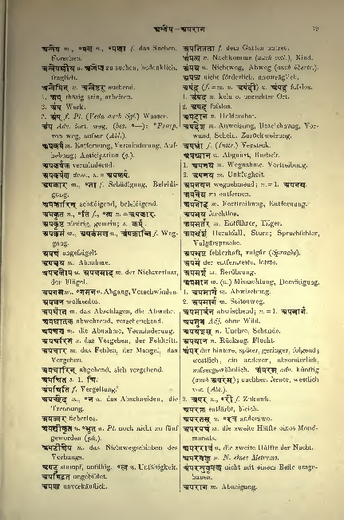
Original text · German · Word type unspecified
ápara der hintere, später, geringer, folgend; westlich, ein anderer, absonderlich, außergewöhnlich. áparam adv. künftig (auch aparám); nachher, ferner, westlich von (Abl.)
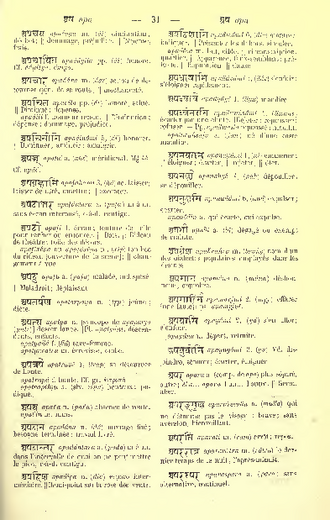
Burnouf 1866 adjective
Original text · French · adjective
apara apara a. (comp. de apa) plus séparé, autre; eka...apara l'un... l'autre. Germ. aber.
Derived words
Occurrences in source texts (17)
DYS 3 occurrences
HP 3 occurrences
HTK 1 occurrence
HTK 10.34*2–38*1: Asvaṅgaśṛṅkhalā and Kumbhāntaraśṛṅkhalā 1 occurrence
Direct occurrences
-
HTK 10.38*1 Segment 2
PYS 2 occurrences
SiSa 6 occurrences
Continue with AYI Free
Image source: AYI archive.