


The Bhāṣya attributed to Śaṅkara presents the verse as the seer's own experience. The sun-like Puruṣa is the inner witnessing consciousness beyond ignorance. Only knowledge of him—not Karma or another path—leads beyond death to the highest goal.
Śaṅkarānanda understands death as Avidyā with its concealing and projecting power. The seer's emphatic statement excludes not only a second object of knowledge but every other path to liberation: direct knowledge of the Self alone carries one beyond Saṃsāra.
Nārāyaṇa stresses the exclusivity of knowledge of Brahman. Pilgrimages, great gifts and other religious acts can at most prepare indirectly; they do not form an independent path beyond death. Knowledge alone is the immediate cause.
Vijñānabhagavat reads the declaration as the seer's knowledge of a Mahāvākya. Death is ignorance itself, which is burnt in perfected knowledge. Neither another object nor an auxiliary means combined with knowledge can bring forth Kaivalya.
<1: = Vāj. Saṃh. 31,18 (Gesch. d. Phil. I, 290).>
<1: This stanza = VS. 31. 18.>
<1: = Vāj. Saṃh. 31,18 (Gesch. d. Phil. I, 290).>
<1: Cf. Vāg. Saṃh. XXX, 18; Taitt. Ār. III, 12, 7; III, 13, 1.>
<2: Cf. Bhagavadgītā VIII, 9.>
<3: Cf. Śvet. Up. VI, 15.>
<1: Taken from the Vāj. Saṃh. 31–8. The second distich of this verse returns, 6–15, and the second part of the first distich is literally found in Bhag. G. 8,9.>
yasmāt paraṃ, nāparam asti kiṃcid; yasmān nāṇīyo, na jyāyo 'sti kiṃcit | Analysis ▾ Analysis ▴
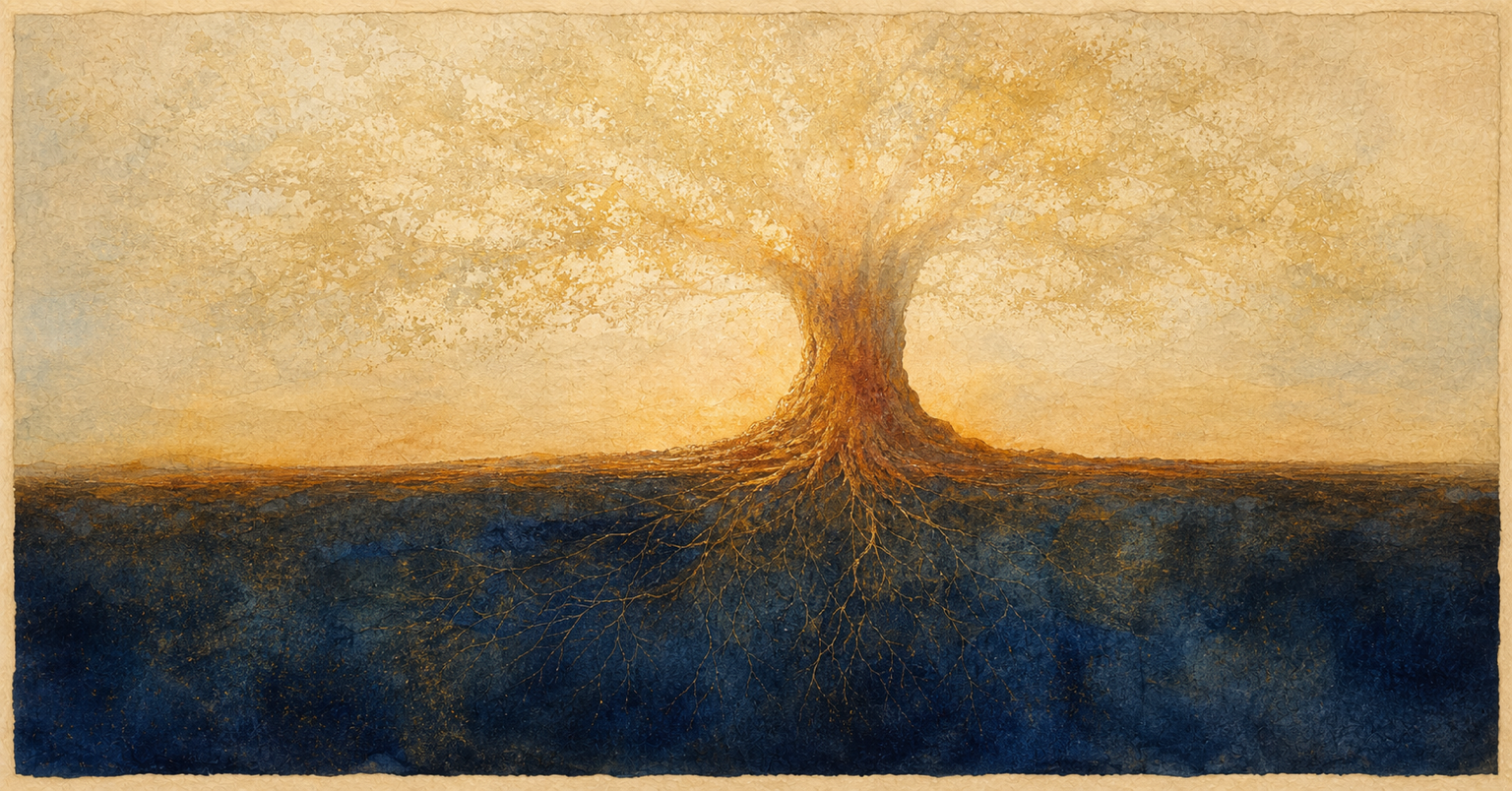
vṛkṣa iva stabdho, divi tiṣṭhaty ekas; tenedaṃ pūrṇaṃ, puruṣeṇa sarvam ||9|| Analysis ▾ Analysis ▴
The Bhāṣya attributed to Śaṅkara allows nothing to exist above or below the one Puruṣa. Like an immovable tree, he rests in his own light; at the same time he fills the entire world without interruption and without thereby being divided.
Śaṅkarānanda understands the tree as an image of inner undifferentiatedness and div as the light of consciousness. Because all things receive their existence and appearance only from the Self, nothing is smaller, greater or outside this One.
Nārāyaṇa also reads the steadfast tree cosmically: the One stands like a sovereign heavenly tree on Kailāsa. His Brahman-form fills everything, and because of non-duality nothing higher or lower can exist beside him.
Vijñānabhagavat offers several readings for divi: the knowledge ahaṃ brahmāsmi, self-luminous consciousness, or the sun. In every interpretation, the unchanging tree denotes the One who pervades all appearances as gold pervades ornaments or a rope a snake.
<1: Es ist derselbe Baum, von dem Kāṭh. 6,1 die Rede ist.>
<2: = Mahānār. 10,20.>
<1: Compare “the eternal fig-tree rooted in heaven,” described at Kaṭha 6. 1.>
<2: This stanza = Mahānār. 10. 20.>
<1: Es ist derselbe Baum, von dem Kāṭh. 6,1 die Rede ist.>
<2: = Mahānār. 10,20.>
<1: Divi, the sky, is explained by Śaṅkara as dyotanātmani svamahimni.>
Continue with AYI Free
Illustrations: AI-generated.


Please log in to write a message. Go to login