

hiṃs हिंस् – injure; harm; kill
adjective · verbal root · Word type unspecified · verb
Dictionary sources
AYI dictionary verbal root
Cappeller 1891 verb
Original text · English · verb
hiṃs hinásti híṃste hiṃsati ·v pp. hiṃsitá (q.v.) injure, hurt, harm, kill, destroy. C. hiṃsayati the same. D. jíhiṃsiṣati wish to injure etc. -- upa & vi = S.
Monier-Williams 1872 Word type unspecified
Original text · English · Word type unspecified
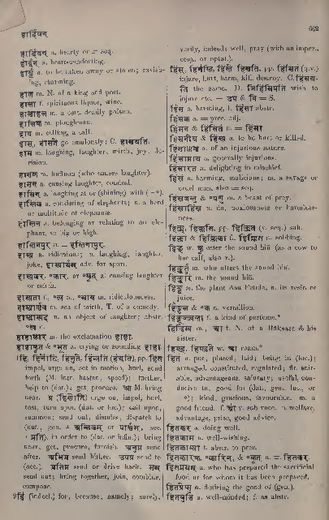
hiṃs hiṃs (by some regarded as an anomalous Desid. of rt. 1. han), cl. 1. 7. P. (ep. also A.) hiṃsati (-te), hinasti, jihiṃsa, hiṃsiṣyati (ep. A. hiṃsiṣyate), ahiṃsīt, hiṃsi- tum, to strike, hit, beat; to hurt, harm, wound, injure; to kill, slay, destroy: Pass. hiṃsyate, Aor. ahiṃsi: Caus. or cl. 10. hiṃsayati, -yitum, Aor. ajihiṃsat, to kill, slay: Desid. jihiṃsiṣati: Intens. jehiṃsyate, jehiṃsti; [cf. perhaps Old Germ. geis- la, ‘a whip;’ Mod. Germ. Geissel.]
Petersburger 1855 adjective · Word type unspecified
Original text · German · adjective
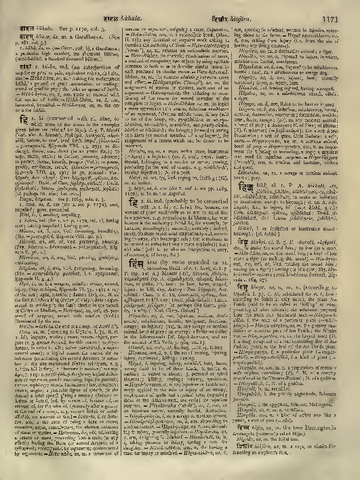
2. √hiṃs (= 1. hiṃs) adj. verletzend, ein Leid zufügend in su˚.
Original text · German · Word type unspecified
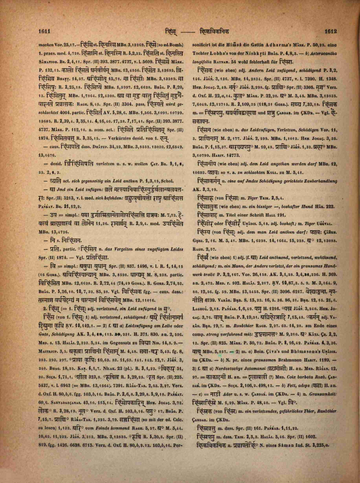
1. hiṃs , hinásti (hiṃsāyām) DHĀTUP. 29,19. VOP. 14,3. híṃsanti und hiṃsánti P. 6,1,188. ahinat, hinasāvas ŚAT. BR. 1,2,1,15. hinasātas ŚAT. BR. 1,1,4,5. hinásan ŚAT. BR. 1,7,4,16. jihiṃsa, jihiṃsima, jíhiṃsīs AV. 12,3,18. hiṃsīt, hiṃsīṣṭa, hiṃsiṣyati, med. híṃste AV. 12,4,13. hiṃsitvā́. verletzen (auch tödtlich), ein Leid anthun; schädigen, stören: na yaṃ hiṃsànti dhī̱tayàḥ ṚV. 6,34,3. ṚV. 10,15,6. ṚV. 10,121,9. VS. 4,1. VS. 4,9. VS. 5,3. VS. 5,34. padā AIT. BR. 5,1. na hi svaḥ svaṃ hi̱nastì TS. 5,1,7,1. TBR. 2,3,2,5. manàḥ AV. 2,12,2. AV. 5,17,7. memama̱nye mṛ̱tyavò hiṃsiṣuḥ AV. 2,28,1. AV. 5,18,12. AV. 5,19,1. AV. 6,120,1. AV. 12,1,34. ŚAT. BR. 1,6,3,7. ŚAT. BR. 4,6,9,1. ŚAT. BR. 7,1,1,38. ŚAT. BR. 7,4,1,18. ŚAT. BR. 10,2,3,18. KĀTY. ŚR. 4,12,24. ĀŚV. GṚHY. 1,17,9. ĀŚV. GṚHY. 2,1,10. AIT. UP. 4,2,2. āsaptamāṃstasya lokān MUṆḌ. UP. 1,2,3. — hinasti u. s. w. M. 4,162. M. 5,42. M. 5,45. M. 6,69. M. 7,73. M. 8,279. M. 8,345. M. 9,316. BHAG. 13,28. MBH. 1,2948. MBH. 1,3911. MBH. 3,1091. MBH. 4,446. R. 2,35,13. R. GORR. 1,41,29 (sarvānna hiṃ˚ zu lesen). R. GORR. 3,5,20. R. GORR. 4,8,9. R. GORR. 4,17,27. R. GORR. 5,29,25. SUŚR. 1,94,18. asūn SUŚR. 2,494,14. VIKR. 16. Spr. (II) 3232. Spr. (II) 3510. Spr. (II) 5269. Spr. (II) 5504. Spr. (II) 7275. Spr. (II) 7392. BHĀG. P. 6,9,54. BHĀG. P. 6,18,46. BHĀG. P. 7,10,19. dravyāṇi M. 8,288. vṛkṣānudakam u. s. w. R. 2,91,9 (R. 2,100,8 GORR.). vratam M. 2,180. VARĀH. BṚH. S. 42,14. VARĀH. BṚH. S. 58,51. VARĀH. BṚH. S. 79,17. BṚH. 4,20. BṚH. 8,23. SARVADARŚANAS. 37,1. indrasya vikramam BHAṬṬ. 6,38. api hiṃsyājjagannātho mahāpātakapañcakam so v. a. zu Nichte machen VOP. 25,17. — hiṃsi st. hinassi MBH. 3,13269. hiṃse (so ed. Bomb.) 1. praes. med. MBH. 4,728. hiṃsāmi st. hinasmi R. 5,2,22. hiṃsati st. hinasti SĀMAVIDH. BR. 2,4,11. Spr. (II) 393. Spr. (II) 3877. Spr. (II) 4737, v. l. Spr. (II) 5609. hiṃsase MĀRK. P. 132,15. kālo hiṃsate dharmavīryam MBH. 13,4556. hiṃseta MBH. 3,13685. jihiṃsitha BHAṬṬ. 14,57. ahiṃsīt BHAṬṬ. 15,78. mā hiṃsīḥ MBH. 3,13289. mā hiṃsiṣuḥ R. 2,25,18. hiṃsiṣye MBH. 1,5997. MBH. 12,6628. BHĀG. P. 8,20,12. hiṃsitum MBH. 1,7864. MBH. 12,4300. atha vā mṛdu vastu hiṃsituṃ mṛdunaivārabhate prajāntakaḥ RAGH. 8,45. Spr. (II) 3304. pass. hiṃsyate wird geschlachtet Spr. (II) 4004. partic. hiṃsitá AV. 5,28,6. MBH. 1,566. MBH. 3,1091. MBH. 3,10799. MBH. 3,13685. R. 2,39,4. R. 3,35,14. R. 4,16,40. R. 4,17,28. R. 7,17,41. Spr. (II) 393. Spr. (II) 3877. Spr. (II) 4737. MĀRK. P. 112,10. n. nom. act.: hiṃsite pratihiṃsitam Spr. (II) 1874. hiṃsitavant R. 3,35,15. — Verkürztes desid. von 1. han. — caus. hiṃsayati dass. DHĀTUP. 34,23. MBH. 3,8552. MBH. 3,13030. MBH. 12,6549. MBH. 13,1676. — desid. jíhiṃsiṣati verletzen u. s. w. wollen ŚAT. BR. 9,1,1,35. ŚAT. BR. 9,2,1,2. — vyati act. sich gegenseitig ein Leid anthun P. 1,3,15, Schol. — ā Jmd ein Leid zufügen: jale matsyānivāhiṃsyurdurbalānbalavattarāḥ Spr. (II) 5213, v. l. med. sich befehden: jahnuvṛcīvanto rāṣṭra āhiṃsanta PAÑCAV. BR. 21,12,2. — upa = simpl.: yathā durgāśritānetānnopahiṃsanti śatravaḥ M. 7,73. devasvaṃ brāhmaṇasvaṃ vā lobhena M. 11,26. rāmārtham R. 2,9,4. med. upahiṃseta MBH. 13,4726. — ni s. nihiṃsana. — prati, partic. ˚hiṃsita n. das Vergelten eines zugefügten Leides Spr. (II) 1874. — Vgl. pratihiṃsā. — vi = simpl.: abudhā budhān Spr. (II) 857. Spr. (II) 1496, v. l. R. 1,14,15 (R. 1,14,16 GORR.). avihiṃsyānyān MBH. 3,8598. dhānyam M. 8,238. partic. vihiṃsita MBH. 12,6628. R. 2,72,44 (R. 2,74,49 GORR.). R. GORR. 2,74,53. BHĀG. P. 5,26,10. BHĀG. P. 10,7,32. BHĀG. P. 10,85,28. Vgl. vihiṃsaka fgg. — caus. dass.: tasmānna vardhayedanyaṃ na cātmānaṃ vihiṃsayet MBH. 12,11016.
Böhtlingk 1879 adjective · verbal root
Original text · German · adjective
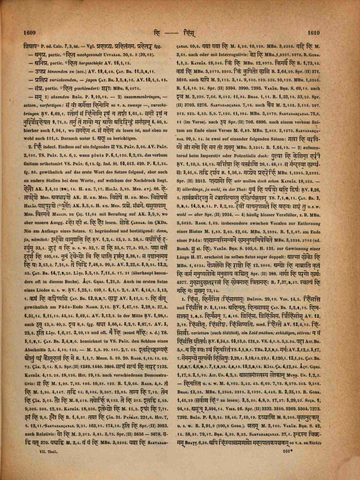
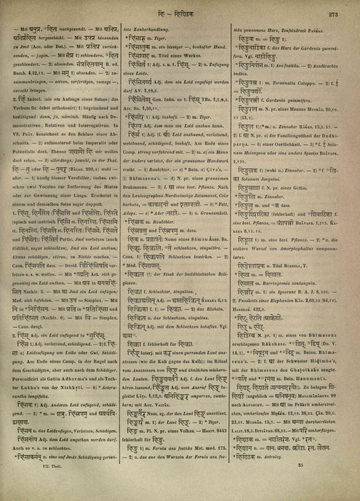
2. hiṃs Adj. ein Leid zufügend in suhiṃs.
Original text · German · verbal root
1. √hiṃs hinásti híṃsanti und hiṃsánti hiṃste (episch und metrisch hiṃsi) st. hinasmi hiṃsāmi st. hinasmi hiṃsati st. hinasti hiṃsase hiṃsate und himseta hiṃsitá Partic. Jmd verletzen (auch tödtlich, sogar schlachten), Jmd ein Leid anthun; Etwas schädigen, stören, zu Nichte machen. — Caus. hiṃsayati dass. — Desid. jíhiṃsiṣati verletzen u. s. w. wollen. — Mit vyati Act. sich gegenseitig ein Leid anthun. — Mit ava in anavahiṃsita Nachtr. 5. — Mit ā Jmd ein Leid zufügen; Med. sich befehden. — Mit upa = Simplex. — Mit ni in nihiṃsana. — Mit prati in pratihiṃsā und pratihiṃsita (Nachtr. 6). — Mit vi = Simplex. — Caus. desgl.
Apte 1890 Word type unspecified
Original text · English · Word type unspecified
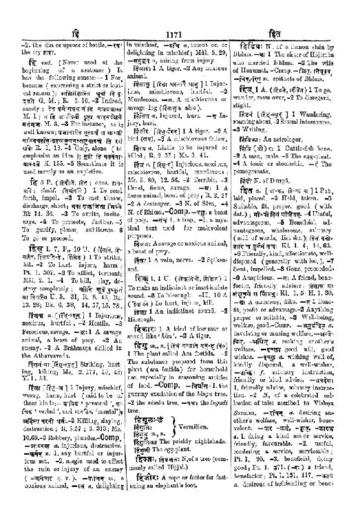
hiṃs 1 7 P., 10 U. (hiṃsati, hinasti, hiṃsayati-te, hiṃsita) 1 To strike, hit. 2 To hurt, injure, harm; Pt. 1. 307. 3 To afflict, torment; Māl. 2. 1. 4 To kill, slay, destroy completely; kīrti sūte duṣkṛtaṃ yā hinasti U. 5. 31; R. 8. 45; Bg. 13. 28; Bk. 6. 38, Bk. 14. 57, Bk. 15. 78.
Cappeller 1887 verb
Original text · German · verb
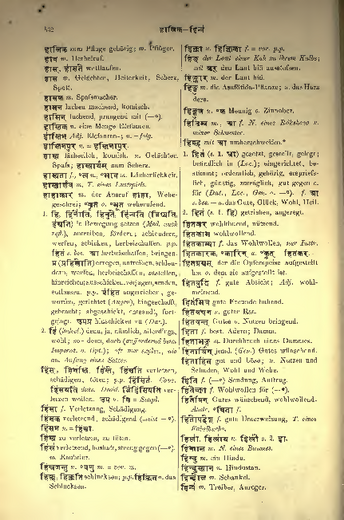
hiṃs, hinásti, híṃste, hiṃsati verletzen, schädigen, töten; p. p. hiṃsita. Caus. hiṃsayati dass. Desid. jíhiṃsiṣati verletzen wollen. upa u. vi = Simpl.
Burnouf 1866 verbal root
Original text · French · verbal root
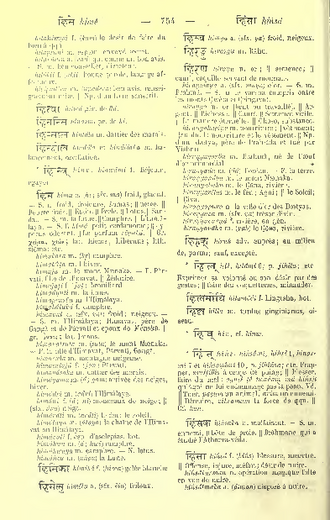
*hiṃs hiṃs. hiṃsāmi, hiṃse 1, hinasmi 7 et hiṃsayāmi 10; p. jihiṃsa; etc. Frapper, muṣṭibhis à coups de poing; blesser, faire du mal: agniṣ ṭe tvacaṃ mā hiṃsīt qu'Agni ne lui endommage pas la peau, Vd. Tuer, paśum un animal, arim un ennemi. Détruire, vikramam la force de qqn. Cf. han.
Derived words
Further derivatives (1)
Occurrences in source texts (8)
DYS 1 occurrence
HP 2 occurrences
PYS 3 occurrences
SiSa 1 occurrence
SiSa 3.32-3.33: Praxis-Hindernisse 1 occurrence
Occurrences through derived words
-
SiSa 3.33 Segment 17
SVU 1 occurrence
Continue with AYI Free
Image source: AYI archive.