

mala मल – impurity; dirt; faeces; excretion; limitation
adjective · substantive masculine · substantive neuter
Dictionary sources
AYI dictionary substantive masculine · substantive neuter
substantive masculine
impurity; dirt; faeces; excretion; limitation
substantive neuter
dirt; impurity
Cappeller 1891 substantive masculine · substantive neuter
Original text · English · substantive masculine · substantive neuter
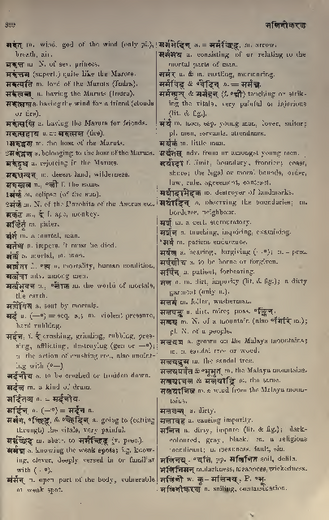
mála ·n. m. dirt, impurity (lit. & fig.); a dirty garment (only n.).
Monier-Williams 1872 substantive neuter
Original text · English · substantive neuter
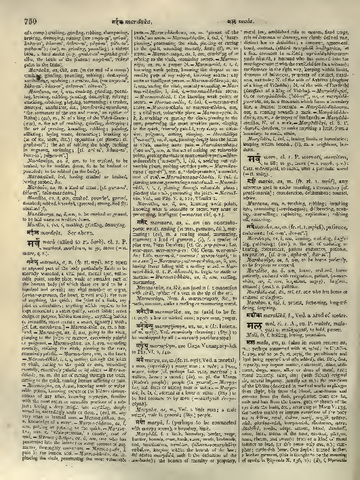
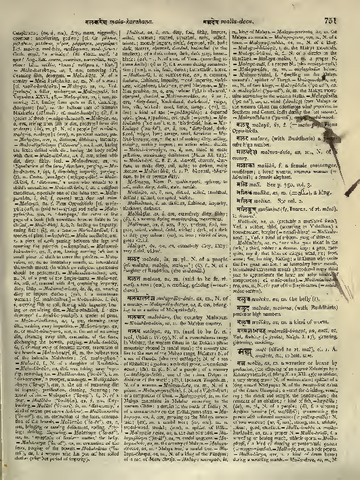
mala mala, am, n. (also in some senses as, m.; perhaps connected with rt. mlai; in Uṇādi-s. 1. 109, said to be fr. rt. mṛj, the penultimate and final being rejected and ala added), dirt, filth, dust, impurity, any impure matter, excrement, refuse, sedi- ment, dregs, scum, alloy or dross of metal, rust; moral impurity, taint, sin; (with Śaivas) original sin, natural impurity, (usually as, m.); the secretions of the Dhātus (described in medical works as phlegm from chyle, bile from the blood, nose-mucus and ear-wax from the flesh, perspiration from the fat, nails and hair from the bones, gum or rheum of the eye from the brain, &c.; according to Manu V. 135, the twelve malāḥ or impure excretions of the body are as follow, vasā, śukra, asṛj, majjā, mūtra, viṣ, ghrāṇa-viṣ, karṇa-viṣ, śleṣman, aśru, dūṣikā, sveda, adeps, semen, blood, dandruff, urine, feces, mucus of the nose, ear-wax, phlegm, tears, rheum, and sweat); brass or a kind of metal inferior to lead, (in this sense only am, n.); cam- phor; cuttle-fish bone, Ossa Sepiæ; tanned leather, a leather garment, (this is thought to be the meaning of mala in Ṛg-veda X. 136, 2); (ā), f. Flacourtia Cataphracta; (as, ā, am), dirty, mean, niggardly, covetous; unbelieving, godless; [cf. Gr. μέλα-ς, μελαίν-ω, μολύν-ω, μόρον, μάρμαρος, μαρμαίρω: Lat. malu-s, mal-itia, mali-gn-us, male-ficu-s: Goth. mail, ‘a wrinkle:’ Old Germ. meil, ‘a spot:’ Angl. Sax. smere, smerian, smerwian, smy- rian: Lith. móli-s, ‘loam;’ mélyna-s, ‘blue.’]
Petersburger 1855 adjective · substantive masculine · substantive neuter
Original text · German · adjective · substantive masculine · substantive neuter
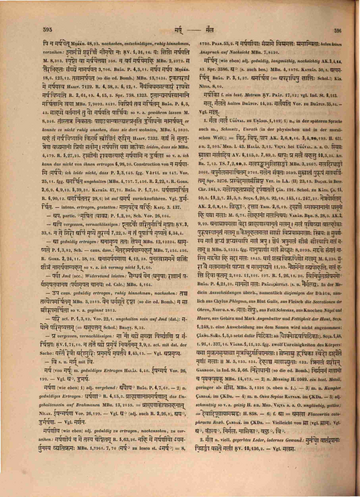
1. mála (malá UJJVAL._zu_UṆĀDIS. 1,109) 1〉 n., in der späteren Sprache auch m., Schmutz, Unrath (in der physischen und in der moralischen Welt); = kiṭṭa, viṣ, pāpa AK. 2,6,2,16. AK. 3,4,26,199. H. 631. H. an. 2,505. MED. l. 43. HALĀY. 3,15. VIŚVA._bei_UJJVAL. a. a. O. svi̱nnaḥ snā̱tvā malā̀diva AV. 6,115,3. AV. 7,89,3. āpa̱ḥ pra malàṃ vahantu AV. 10,5,24. AIT. BR. 7,13. TS. 7,2,10,3. malapaṅkānuliptāṅgī MBH. 3,2667. maladigdhāṅgī MBH. 3,3001. vapurmalasamācitam MBH. 3,2701. malena saṃvṛtaḥ MBH. 3,2699. susnātaṃ puruṣaṃ malavarjitam Spr. 5276. prasvedamalasaṃśliṣṭa VET. in LA. (II) 23,15. DAŚAK._in_BENF. Chr. 184,9. malopahataprasāde darpaṇatale ŚĀK. 191. Schol. zu KĀTY. ŚR. 15,10,3. KĀTY. ŚR. 19,2,7. KĀTY. ŚR. 25,5,9. SUŚR. 1,20,6. SUŚR. 1,92,18. SUŚR. 1,145,14. SUŚR. 1,247,21. netrayormalam AK. 2,6,2,18. jihvā˚, dantaja TRIK. 2,6,19. dahyante dhmāyamānānāṃ dhātūnāṃ hi yathā malāḥ M. 6,71. lohānāṃ malanicayaḥ VARĀH. BṚH. S. 28,5. AK. 2,9,99. anāmnāyamalā vedā vrāhmaṇasyānṛtaṃ malam . malaṃ pṛthivyā bālhīkāḥ puruṣasyānṛtaṃ malam .. kautūhalamalā sādhvī vipravāsamalāḥ striyaḥ .. suvarṇasya malaṃ rūpyaṃ rūpyasyāpi malaṃ trapu . jñeyaṃ trapumalaṃ sīsaṃ sīsyāpi malaṃ malam .. MBH. 5,1524. fgg. mānuṣāṇāṃ malaṃ mlecchāḥ MBH. 8,2095. madrake saṃgataṃ nāsti madrako hi sadā malaḥ MBH. 8,1845. annaṃ śastravikrayiṇo malam M. 4,220. surā vai malamannānāṃ pāpmā ca malamucyate M. 11,93. naiśameno vyapohati, malaṃ hanti divā kṛtam M. 2,102. M. 11,101. M. 11,107. R. 1,26,18. R. 1,26,20 vinirdhutāśeṣamano˚ BHĀG. P. 4,21,31. mānaso malaḥ PRĀYAŚCITTAT. (s. u. nairmalya). In der Medicin Ausscheidungen überh., namentlich diejenigen der Dhātu, nämlich aus Chylus Phlegma, aus Blut Galle, aus Fleisch die Secretionen der Ohren, Nase u. s. w. (malaḥ kheṣu), aus Fett Schweiss, aus Knochen Nägel und Haare, aus Gehirn und Mark Augenbutter und Fettigkeit der Haut, SUŚR. 1,248,2. eine Ausscheidung aus dem Samen wird nicht angenommen; ŚĀRṄG. SAṂH. 1,5,5 setzt dafür piṭikāḥ an (yauvanodbhavapiṭikāḥ). SUŚR. 1,48,1. SUŚR. 1,91,1. SUŚR. 1,337,10. VĀGBH. 1,11,23. fgg. zwölf Unreinigkeiten des Körpers: vasā śukramasṛṅmajjā mūtraviṭkarṇaviṇnakhāḥ . śleṣmāśru dūṣikā svedo dvādaśaite nṛṇāṃ malāḥ .. M. 5,135. M. 5,134. dehācca malāścyutāḥ M. 132. trimalaṃ śarīram GARBHOP._in_Ind. St. 2,66. nirodhānāṃ (so die ed. Bomb.) nirgamanaṃ malānāṃ ca pṛthakpṛthak MBH. 14,573. — 2〉 n. Messing H. 1049. ein best. Metall, geringer als sīsa, MBH. 5,1526 (s. oben u. 1.). — 3〉 m.n. Kampher ŚABDAC._im_ŚKDR. — 4〉 m.n. Ossa Sepiae RATNAM._im_ŚKDR. — 5〉 adj. schmutzig so v. a. geizig H. an. MED. VIŚVA a. a. O. ungläubig, gottlos; = devādipūjāyāmaśraddhaḥ H. 858. — 6〉 f. ā = amalā Flacourtia cataphracta Roxb. ŚABDAC._im_ŚKDR. — Vielleicht von mlā (vgl. mlāna). Vgl. a˚, kāṃsya˚, nirmala, nāsikā˚, bahu˚, vi˚.
Original text · German · substantive masculine
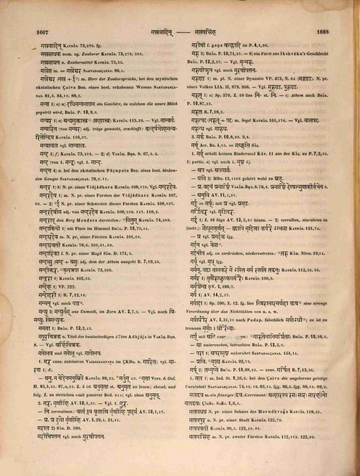
1. mala 1〉 m. Ind. St. 9,26,6. bei den Śaiva die angeborene geistige Unreinheit SARVADARŚANAS. 74,13. fgg. SARVADARŚANAS. 74,19. SARVADARŚANAS. 85,14. fgg. SARVADARŚANAS. 86,6. SARVADARŚANAS. 88,18. fgg. SARVADARŚANAS. 89,9.
Original text · German · substantive neuter
2. mála n. viell. gegerbtes Leder, ledernes Gewand: munàyo̱ vātàraśanāḥ pi̱śaṅgā̀ vasate̱ malā̀ ṚV. 10,136,2. — Vgl. malaga.
Böhtlingk 1879 adjective · substantive masculine · substantive neuter
Original text · German · adjective · substantive masculine · substantive neuter
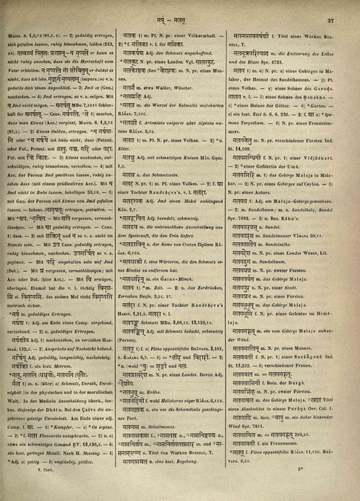
mála — 1〉 m. n. (älter) — a〉 Schmutz, Unrath, Unreinigkeit (in der physischen und in der moralischen Welt). In der Medicin Ausscheidung überh., insbes. diejenige der Dhātu. Bei den Śaiva die angeborene geistige Unreinheit. Am Ende eines adj. Comp. f. ā. — b〉 *Kampfer. — c〉 *Os sepiae. — 2〉 *f. malā Flacourtia cataphracta. — 3〉 n. — a〉 etwa ein schmutziges Gewand ṚV. 10,136,2. — b〉 ein best. geringes Metall. Nach H. Messing. — 4〉 *Adj. — a〉 geizig. — b〉 ungläubig, gottlos.
Apte 1890 adjective · substantive neuter
Original text · English · adjective · substantive neuter
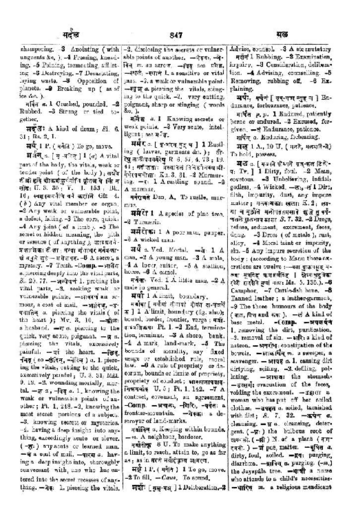
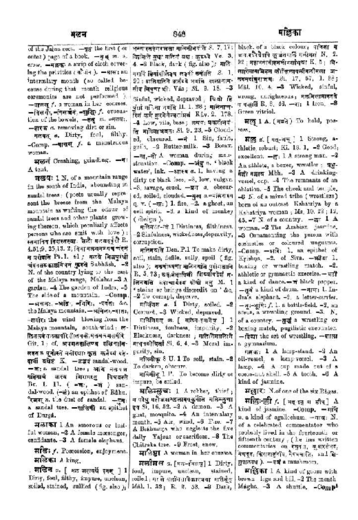
mala a. [mṛjyate śodhyate mṛj-kala ṭilopaḥ Tv.] 1 Dirty, foul. 2 Mean, covetous. 3 Unbelieving, infidel, godless. 4 Wicked. — laḥ, -laṃ 1 Dirt, filth, impurity, dust, any impure matter; maladāyakāḥ khalāḥ K. 2; chāyā na mūrchati malopahataprasāde śuddhe tu darpaṇatale sulabhāvakāśā Ś. 7. 32. 2 Dregs, refuse, sediment, excrement, feces, dung. 3 Dross (of metals), rust, alloy. 4 Moral taint or impurity, sin. 5 Any impure secretion of the body; (according to Manu these excretions are twelve:-vasā śukramasṛṅ majjā mūtraviḍ ghrāṇakarṇaviṭ . śle'māśrudūṣikā svedo dvādaśaite nṛṇāṃ malāḥ Ms. 5. 135.). 6 Camphor. 7 Cuttle-fish bone. 8 Tanned leather; a leather-garment. 9 The three humours of the body (vāta, pitta and kapha). — laṃ A kind of base metal. Comp. — apakarṣaṇaṃ 1 removing the dirt, purification. 2 removal of sin. — ariḥ a kind of natron. — avarodhaḥ constipation of the bowels. — ākarṣin m. a sweeper, a scavenger. — āvaha a. 1 causing dirt dirtying, soiling. 2 defiling, polluting. — āśayaḥ the stomach. — utsargaḥ evacuation of the feces, voiding the excrement. — udvāsā a woman who has put off her soiled clothes. — upahata a. soiled, tarnished with dirt; Ś. 7. 32. — karṣaṇa a. cleansing. — ghna a. cleansing, detergent. — (ghnaḥ) the bulbous root of śālmalī. — (ghnī) N. of a plant ( nāgadamanī.) — jaṃ pus, matter. — dūṣita a. dirty, foul, soiled. — dravaḥ purging, diarrhœa. — drāvin a. purging. ( — m.) the Jayapāla tree. — dhātrī a nurse who attends to a child's necessities. — dhārin m. a religious mendicant ([Page 0848-a]) of the Jaina sect. — pṛṣṭhaṃ the first (or outer) page of a book. — bhuj m. a. crow. — mallakaḥ a strip of cloth covering the privities (kaupīna). — māsaḥ an intercalary month (so called because during that month religious ceremonies are not performed). — vāsas f. a woman in her courses. — visargaḥ, -visarjanaṃ, -śuddhiḥ f. evacuation of the bowels. — haṃtṛ m. = malaghnaḥ. — hāraka a. removing dirt or sin.
Cappeller 1887 substantive masculine · substantive neuter
Original text · German · substantive masculine · substantive neuter
mála n. m. Schmutz, Unrat (auch übertr.); schmutziges Gewand (nur n.) Abstr. malatva n.
Burnouf 1866 adjective
Original text · French · adjective
mala mala a. sale, malpropre, souillé; au fig. sordide, avare. — S. m. n. saleté, ordure; boue, fange; sédiment; excrétion organique; camphre; rouille; os de sêche. Au fig. la souillure du péché, le mal. — S. f. flacourtia, bot. — Lat. malus, malum, macula. [Page495-1] malaja a. (jan) produit par la saleté, par la boue, etc. — S. n. pus. malapaṅkin a. (paṅka) couvert de boue et de poussière. malapū f. (pū purifier) ficus oppositifolia, bot. malabhuj m. corneille. malayū f. mms. que malapū. malākarṣin m. (ā; kṛṣ au c.) nettoyeur, balayeur. malāpakarṣaṇa n. (apa; kṛṣ au c.) nettoyage; balayage; purification.
Occurrences in source texts (14)
DYS 2 occurrences
GoS 1 occurrence
HP 6 occurrences
HP 2.1-2.6: Introduction to Prāṇāyāma 3 occurrences
Direct occurrences
HP 2.37-2.43: Path to Manonmanī 2 occurrences
Direct occurrences
HTK 2 occurrences
HTK 10.11*2–14*1: Bhastrikā: Breath like a bellows 1 occurrence
Direct occurrences
-
HTK 10.14*1 Segment 4
HTK 10.30–33*1: Nāḍī-viśudhy-ākhyaka-kumbha and Nāḍīśuddhi 1 occurrence
Direct occurrences
-
HTK 10.33 Segment 9
MAN 1 occurrence
PJH 1 occurrence
PYS 1 occurrence
Continue with AYI Free
Image source: AYI archive.