
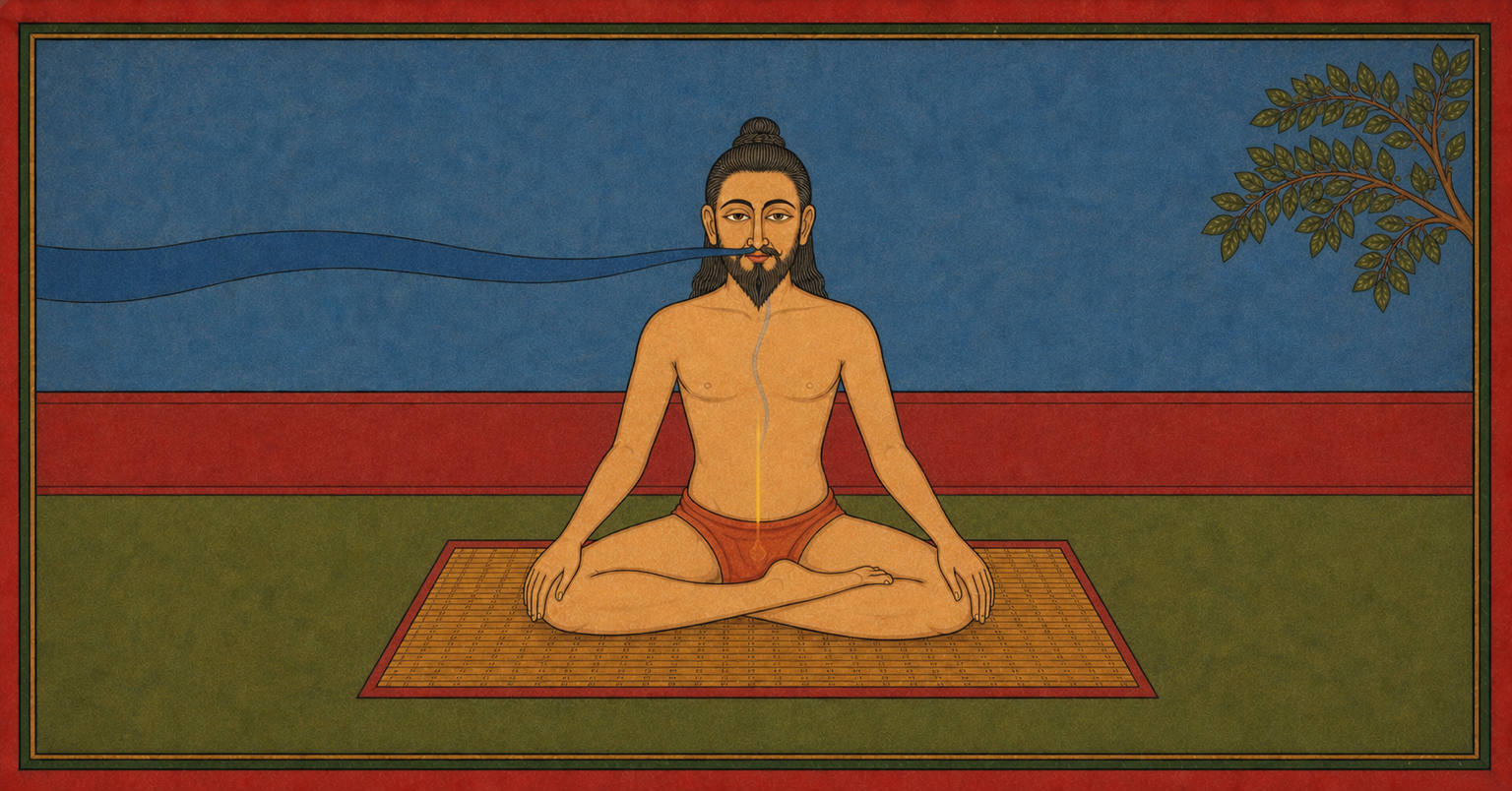

Brahmānanda gives Stāṇutva, literally the stability of an immovable post, two interpretations: a stable, long life or a form of sovereignty. Both rest on breath and mind becoming still together. For him, Prāṇāyāma is thus a direct means of stabilizing the mind.
nibandhayet MBHDL2026 ] nirodhayet NS1882
kathaṃ syād unmanī-bhāvaḥ; kāya-siddhiḥ kathaṃ bhavet ||4|| Analysis ▾ Analysis ▴
Brahmānanda defines the “completion of what must be done” as Kaivalya, final liberation. In his interpretation, impure Nāḍīs prevent Prāṇa from flowing through Suṣumṇā; without this middle current, neither Unmanī nor the actual goal of yoga can arise.
prāṇābhyāsaṃ tataḥ kuryān; nityaṃ sāttvikayā dhiyā | Analysis ▾ Analysis ▴
For Brahmānanda, a sattvic mind is luminous and serene because rajasic distraction and tamasic lethargy have already been reduced. As means, he names devotion to Īśvara together with the previously required qualities of enthusiasm, courage, and perseverance. The purification of Suṣumṇā thus combines breath practice with mental orientation.
suṣumṇā susvasthā MBHDL2026 ] suṣumṇānāḍīsthā NS1882
Continue with AYI Free
Illustrations: AI-generated.

Please log in to write a message. Go to login
No messages yet.