

muni मुनि – sage; seer
substantive feminine · substantive masculine · substantive neuter · Word type unspecified
Dictionary sources
AYI dictionary substantive masculine
sage; seer
Cappeller 1891 substantive masculine
Original text · English · substantive masculine
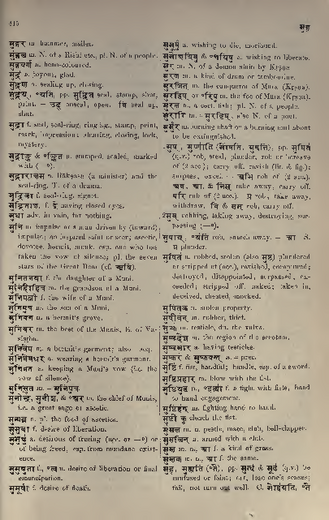
múni ·m. impulse or a man driven by (inward) impulse; an inspired saint or seer; ascetic, devotee, hermit, monk, esp. one who has taken the vow of silence; pl. the seven stars of the Great Bear (cf. ṛ́ṣi).
Monier-Williams 1872 substantive masculine
Original text · English · substantive masculine
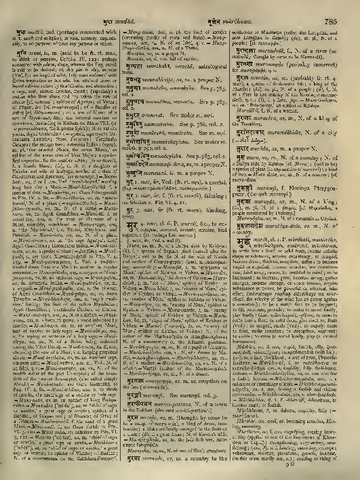
muni muni, is, m. (said to be fr. rt. man, to think or perceive, Uṇādi-s. IV. 122; perhaps connected with μόνος, alone, whence the Eng. monk is said to be derived; cf. also μία fr. εἷς), impulse (Ved. ?); an inspired saint, holy man endowed with divine inspiration or one who has attained more or less of a divine nature by mortification and abstraction; a sage, seer, ascetic, devotee, monk; (especially) a recluse who lives alone and has taken the vow of silence [cf. mauna]; epithet of Agastya; of Vyāsa; of Pāṇini, &c. [cf. muni-traya]; of a Buddha or Arhat [cf. śākya-muni]; of a son of Kuru; of a son of Dyuti-mat, &c.; the internal monitor or conscience, (according to Kullūka on Manu VIII. 91 = paramātman, the Supreme Spirit); N. of various plants, Agati Grandiflora (= agasti, agastya); Bu- chanania Latifolia; Butea Frondosa; Terminalia Catappa; the mango tree; Artemisia Indica; (ayas), m. pl. ‘the celestial Munis, the seven Munis,’ an epithet of the seven stars of Ursa Major; a symbo- lical expression for the number seven; (is or munī), f. a female Muni; (is), f., N. of a daughter of Dakṣa and wife of Kaśyapa, mother of a class of Gandharvas and Apsarasas, (see mauneya.)
Petersburger 1855 substantive feminine · substantive masculine
Original text · German · substantive feminine · substantive masculine
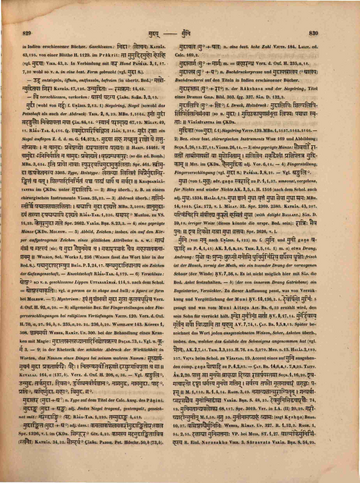
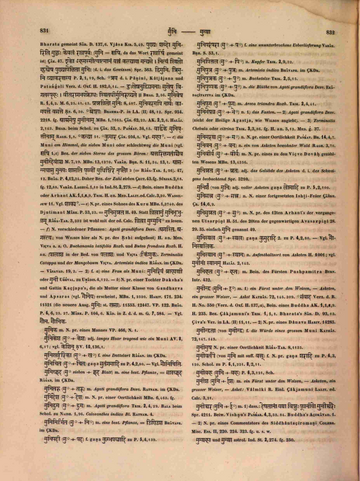
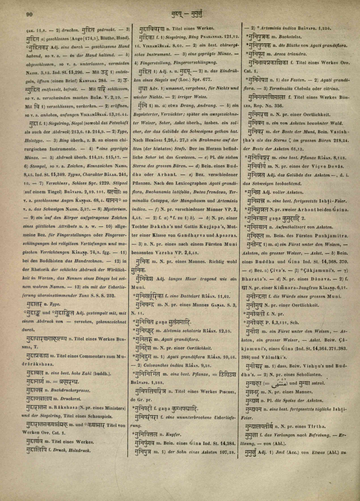
múni (von man nach UṆĀDIS. 4,122) m. f. (muni und munī gaṇa bahvādi zu P. 4,1,45) AK. 3,6,5,38. TRIK. 3,5,16. 1〉 m. a〉 etwa Drang. Andrang: śu̱bhro va̱ḥ śuṣma̱ḥ krudhmī̱ manā̀ṃsi̱ dhuni̱rmunìriva̱ śardhàsya dhṛ̱ṣṇoḥ frisch ist der Hauch, zornig der Muth, wie ein tosender Drang der verwegenen Schaar (der Winde) ṚV. 7,56,8. Es ist nicht möglich hier mit SĀY. die Bed. Asket festzuhalten. — b〉 (der von innerem Drang Getriebene) ein Begeisterter, Verzückter. Zu dieser Auffassung passt, was von Verzük- kung und Vergöttlichung der Muni ṚV. 10,136,2. ṚV. 10,136,4. de̱veṣìto̱ munìḥ 5 gesagt und was vom Muni Aitaśa AIT. BR. 6,33 erzählt wird, den sein Sohn für verrückt hält. indro̱ munī̀nā̱ṃ sakhā̀ ṚV. 8,17,14. munèrde̱vasya̱ mūlèna̱ sarvā̀ vidhyāmi̱ tā a̱ham AV. 7,74,1. ŚAT. BR. 9,5,2,15. Später bezeichnet das Wort jeden ausgezeichneten Weisen, Seher, Asketen überh., insbes. den, welcher das Gelübde des Schweigens angenommen hat (vgl. mauna), AK. 2,7,41. TRIK. 3,3,252. H. 76. H. an. 2,279. MED. n. 15. HALĀY. 2,189. HALĀY. 2,257. VIŚVA beim Schol. zu VĀSAVAD. 19. Accent eines auf muni ausgehenden comp. gaṇa ghoṣādi zu P. 6,2,85. — ŚAT. BR. 14,6,4,1. ŚAT. BR. 14,7,2,25. TAITT. ĀR. 2,20. pāntu tvā munayo brāhmyā divyā rājarṣayastathā SUŚR. 1,16,20. evamācārato dṛṣṭvā dharmasya munayo gatim . sarvasya tapaso mūlamācāraṃ jagṛhuḥ param .. M. 1,110. R. 1,4,14. RAGH. 3,49. nagānyakṣānsurānpitṝn . gandharvāpsarasaścaiva munīnsiddhāṃśca VARĀH. BṚH. S. 48,25. devamunisiddhacāraṇaiḥ VARĀH. BṚH. S. 74,19. munimatānyavalokya VARĀH. BṚH. S. 68,117. Spr. 3019. VET. in LA. (II) 20,20. marīcyādīnmunīn M. 1,58. bhṛgu M. 59. munīnāmapyahaṃ vyāsaḥ (sagt Kṛṣṇa) BHAG. 10,37. vasiṣṭhādyairmunibhiḥ WEBER, RĀMAT. UP. 327. R. 1,52,3. RAGH. 1,94. RAGH. 2,55. dakṣādyā munisattamāḥ VP._bei_MUIR, ST. 1,27. vālmīkermunisiṃhasya R. Einl. Narasakha VIKR. 3. Sārasvata VARĀH. BṚH. S. 54,99. Bharata gemeint SĀH. D. 137,6. Vyāsa KIR. 5,49. puṇyaḥ śabdo muniriti muhuḥ kevalaṃ rājapūrvaḥ (muni = ṛṣi, da das Wort rājarṣi gemeint ist) ŚĀK. 47. eko 'hamasmītyātmānaṃ yattvaṃ kalyāṇa manyase . nityaṃ sthito hṛdyeṣa puṇyāpekṣitā muniḥ (d. i. das Gewissen) Spr. 563. dvimuni, trimuni vyākaraṇasya P. 2,1,19, Sch. ˚traya d. i. Pāṇini, Kātyāyana und Patañjali Verz. d. Oxf. H. 182,b,14. — duḥkheṣvanudvignamanāḥ sukheṣu vigataspṛhaḥ . vītarāgabhayakrodhaḥ sthitadhīrmunirucyate .. BHAG. 2,56. muniveṣa R. 1,4,2. M. 6,25. M. 6,41. M. 6,43. pravrajito muniḥ M. 8,407. munivaramapi nāryaḥ kāmayante vasante ṚT. 6,30. ˚śreṣṭhāḥ BRAHMA-P. in LA. (II) 48,12. Spr. 954. Spr. 2218. fg. āśrameṣu munīnām MBH. 1,7665. ŚĀK. 62,23. AK. 2,2,6. HALĀY. 2,143. BHAR. beim Schol. zu ŚĀK. 52,3. PAÑCAT. 34,13. vārddhake munivṛttīnām RAGH. 1,8. ˚kanyā RAGH. 1,51. ˚kumāra ŚĀK. 104,5. Vgl. mahā˚. — c〉 die Muni am Himmel, die sieben Muni oder schlechtweg die Muni (vgl. ṛṣi 1,c) Bez. der sieben Sterne des grossen Bären: antarikṣagatāṃścaiva munīndevāṃśca M. 7,29. MBH. 13,1370. VARĀH. BṚH. S. 11,34. VARĀH. BṚH. S. 13,1. āsanmaghāsu munayaḥ śāsati pṛthvīṃ yudhiṣṭhire nṛpatau VARĀH. BṚH. S. 13,3 (= RĀJA-TAR. 1,56). VARĀH. BṚH. S. 47,12. BHĀG. P. 4,12,34. Daher Bez. der Zahl sieben ŚRUT. 43. fg. SŪRYAS. 2,18. fg. SŪRYAS. 12,88. VARĀH. LAGHUJ. 1,10_in_Ind. St. 2,279. — d〉 Bein. eines Buddha oder Arhant AK. 1,1,1,9. TRIK. H. an. MED. LALIT. ed. Calc. 3,20. WASSILJEW 11. Vgl. śākya˚. — e〉 N. pr. eines Sohnes des Kuru MBH. 1,3740. des Dyutimant MĀRK. P. 53,23. = munisuvrata H. 49. Statt jitvāmuṃ munibhūbhujam RĀJA-TAR. 3,332 ist wohl mit der ed. Calc. jitvā mummuni˚ zu lesen. — f〉 N. verschiedener Pflanzen: Agati grandiflora Desv. (agasti, agastya; von WILSON hier als N. pr. des Ṛṣi aufgefasst) H. an. MED. VIŚVA a. a. O. Buchanania latifolia Roxb. und Butea frondosa Roxb. H. an. (pālāśa in der Bed. von palāśa) und VIŚVA (kiṃśuka). Terminalia Catappa und der Mangobaum VIŚVA. Artemisia indica RĀJAN._im_ŚKDR. — VĀSAVAD. 19,2. — 2〉 f. a〉 eine Frau als Muni: muniriyaṃ brāhmaṇī oder munī UJJVAL._zu_UṆĀDIS. 4,122. — b〉 N. pr. einer Tochter Dakṣaʼs und Gattin Kaśyapaʼs, die als Mutter einer Klasse von Gandharva und Apsaras (vgl. mauneya) erscheint, MBH. 1,2520. HARIV. 171. HARIV. 234. HARIV. 11521 (die neuere Ausg. muniḥ st. khasā). HARIV. 11553. HARIV. 12447. VP. 122. BHĀG. P. 6,6,25. BHĀG. P. 6,6,27. MĀRK. P. 104,6. KĀD._in_Z. d. d. m. G. 7,584. — Vgl. mauna, maunika.
Böhtlingk 1879 substantive feminine · substantive masculine · substantive neuter · Word type unspecified
Original text · German · substantive feminine · substantive masculine · substantive neuter
múni — 1〉 m. — a〉 etwa Drang, Andrang. — b〉 ein Begeisterter, Verzückter; Später ein ausgezeichneter Weiser, Seher, Asket überh. insbes. ein solcher, der das Gelübde des Schweigens gethan hat. Nach HEMĀDRI 1,26,4. 27,3 ein Brahmane auf der 8ten (der höchsten) Stufe. Der im Herzen befindliche Seher ist das Gewissen. — c〉 Pl. die sieben Sterne des grossen Bären. — d〉 Bein. eines Buddha oder Arhant. — e〉 Bez. verschiedener Pflanzen. Nach den Lexicographen Agati grandiflora, Buchanania latifolia, Butea frondosa, Terminalia catappa, der Mangobaum und Artemisia indica. — f〉 N. pr. verschiedener Männer VP. 2,4,48. — 2〉 f. — a〉 f. zu 1〉b〉 N. pr. einer Tochter Dakṣaʼs und Gattin Kaśyapaʼs, Mutter einer Klasse von Gandharva und Apsaras. — 3〉 n. N. pr. eines nach einem Fürsten Muni benannten Varṣa = VP. 2,4,48.
Original text · German · Word type unspecified
muni V. 1〉b〉 Nom. abstr. ˚tā f. KIR. 6,19. KIR. 12,28. [Nachtrag, Band 7]
Apte 1890 substantive masculine
Original text · English · substantive masculine
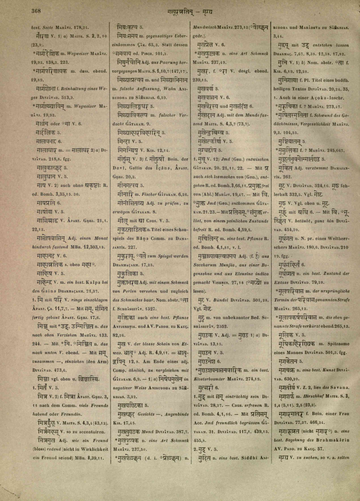
muniḥ [man-in ucca Uṇ. 4. 122] 1 A sage, a holy man, saint, devotee, an ascetic; munīnāmapyahaṃ vyāsaḥ Bg. 10. 37; duḥkheṣvanudvignamanāḥ sukheṣu vigataspṛhaḥ . vītarāgabhayakrodhaḥ sthiradhīrmunirucyate .. Bg. 2. 56; puṇyaḥ śabdo muniriti muhuḥ kevalaṃ rājapūrvaḥ Ś. 2. 14; R. 1. 8, R. 3. 49. 2 N. of the sage Agastya. 3 Of Vyāsa. 4 Of Buddha. 5 of Pāṇini. 6 N. of several plants (piyālu, parāśara and damanaka). 7 The internal conscience (according to Kull. on Ms. 8. 91 ‘the supreme spirit’). 8 The mango-tree. 9 The the number ‘seven’. — pl. The seven sages. Comp. — annaṃ (pl.) the food of ascetics. — iṃdraḥ 1 ‘the lord of the sages’, a great sage. 2 an epithet of Śākyamuni. 3 of Bharata. 4 of Śiva. — īśaḥ, -īśvaraḥ 1 a great sage. 2 an epithet of Viṣṇu. 3 of Buddha. — trayaṃ ‘the triad of sages’, i. e. Pāṇini, Kātyāyana, and Patanjali (who are considered to be inspired saints); munitrayaṃ namaskṛtya, or trimuni vyākaraṇaṃ Sk. — dārakaḥ, -kumāraḥ a young sage. — drumaḥ the Śyonāka tree. — pittalaṃ copper. — puṃgavaḥ a great or eminent sage. — putrakaḥ 1 a wagtail. 2 the damanuka tree. — bheṣajaṃ 1 the fruit of the yellow myrobalan. 2 fasting. — vṛtti a. leading an ascetic life; śaiśave munivṛttīnāṃ R. 1. 8. — vrataṃ an ascetic vow; Ku. 5. 48.
Cappeller 1887 substantive masculine
Original text · German · substantive masculine
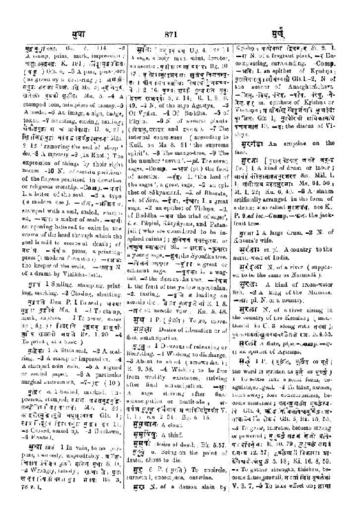
múni m. Erregung, Drang; ein Verzückter, Begeisterter, sp. ein Weiser, Seher, Asket, Büßer, Mönch; Pl. die sieben Sterne des großen Bären.
Burnouf 1866 substantive masculine
Original text · French · substantive masculine
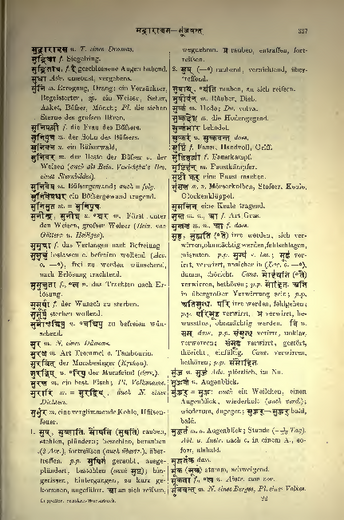
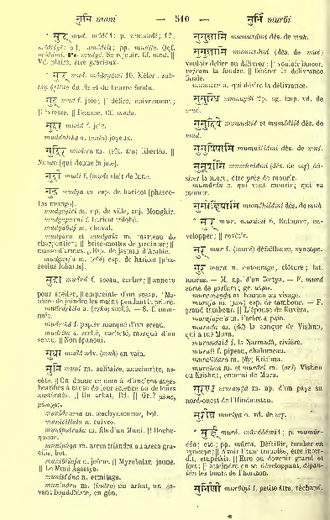
muni muni m. solitaire, anachorète, ascète. On donne ce nom à d'anciens sages béatifiés à cause de leur science ou de leurs austérités. Un arhat, Bd. Gr.? μόνος, μόναχος. munidruma m. æschynomène, bot. munipittala n. cuivre. muniputraka m. fils d'un Muni. Hochequeue. munipūga m. areca triandra ou areca gracilis, bot. munibheṣaja n. jeûne. Myrobalan jaune. Le Muni Agastya. munisthāna n. ermitage. munīndra m. (indra) un arhat, un savant bouddhiste, en gén.
Occurrences in source texts (15)
DYS 7 occurrences
HP 2 occurrences
HTK 3 occurrences
MAN 1 occurrence
Continue with AYI Free
Image source: AYI archive.