

saṃstha संस्थ – situated; standing
adjective · substantive masculine · Word type unspecified
Dictionary sources
AYI dictionary adjective
situated; standing
Cappeller 1891 adjective
Original text · English · adjective
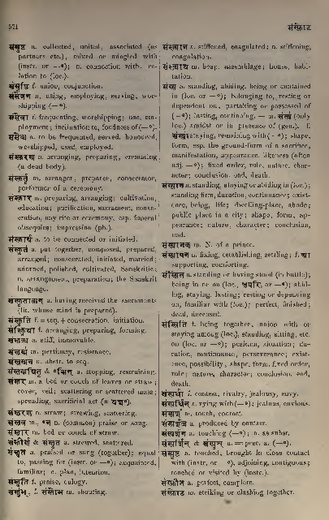
saṃstha ·a. standing, abiding, being or contained in (loc. or --°); belonging to, resting or dependent on, partaking or possessed of (--°); lasting, continuing. -- m. saṃsthá (only loc.) amidst or in presence of (gen.). f. saṃsthā́ staying, remaining with (--°); shape, form, esp. the ground-form of a sacrifice; manifestation, appearance, likeness (often adj. --°); fixed order, rule, nature, character; conclusion, end, death.
Monier-Williams 1872 adjective
Original text · English · adjective
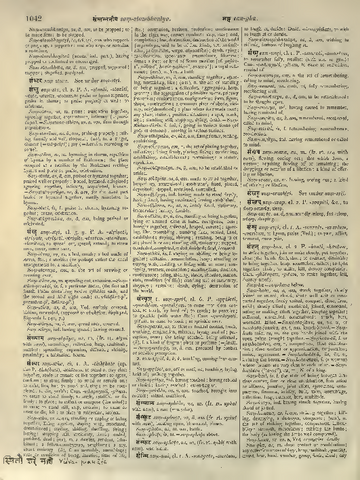
Saṃ-stha, as, ā, am, standing or staying or being together, living together, staying with, associated, domesticated; staying, abiding, dwelling, living; lasting; stopping still, stationary, fixed; ended, perished, dead; (as), m. a dweller, resident, inha- bitant; a fellow-countryman, neighbour; a spy, secret emissary; (ā), f. an assembly, assemblage; state or condition of being, situation, time of life, &c.; occupation, business, profession; continuance in the right way, correct conduct; stop, stay; end, completion; loss, destruction, destruction of the world (= pralaya, said to be of four kinds, viz. naimit- tika, prākṛtika, nitya, ātyantika); death, dying; manifestation, appearance; resemblance, likeness; form; a form or kind of Soma sacrifice [cf. yajña- s˚, pāka-s˚, havir-yajña-s˚, soma-s˚]; a royal ordi- nance; (am), n., Ved. a battle.
Petersburger 1855 adjective · substantive masculine
Original text · German · adjective · substantive masculine
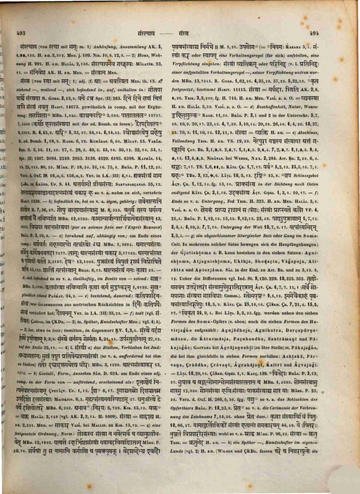
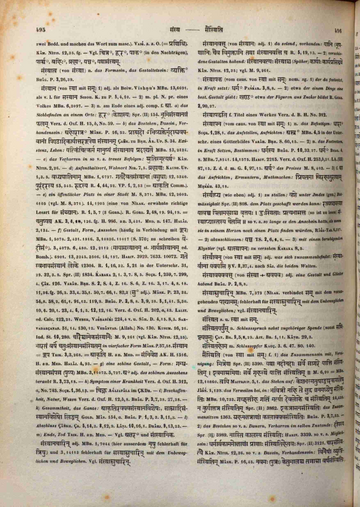
saṃstha (von sthā mit sam) 1〉 adj. (f. ā) = avasthita MED. th. 13. a〉 stehend —, weilend —, sich befindend in, auf, enthalten in: sītayā pārśve saṃsthayā R. GORR. 2,13,8. vane 'tra Spr. (II) 263. dine dine kṣaṇaṃ cittaṃ tvayi saṃsthaṃ bhavatu HARIV. 14673. gewöhnlich in comp. mit der Ergänzung: takṣaśilā˚ MBH. 1,834. kāñcanayaṣṭi˚ MBH. 3,698. pātālatala˚ MBH. 3,15757. MBH. 7,3800 (karṇo hastasaṃsthayā mit der ed. Bomb. zu lesen). draupadītalpa˚ MBH. 8,3505. R. 4,45,9. ari˚ R. 5,33,37. R. 5,54,14. R. 6,14,22. svoccasaṃstheṣu graheṣu R. ed. Bomb. 1,18,9. RAGH. 6,29. KUMĀRAS. 6,60. MĀLAV. 15. VARĀH. BṚH. S. 5,35. VARĀH. BṚH. S. 11,40. VARĀH. BṚH. S. 17,2. VARĀH. BṚH. S. 28,3. VARĀH. BṚH. S. 40,3. VARĀH. BṚH. S. 45,10. VARĀH. BṚH. S. 50,12. VARĀH. BṚH. S. 52,10. VARĀH. BṚH. S. 54,1. Spr. (II) 1307. Spr. (II) 2094. Spr. (II) 2249. Spr. (II) 2953. Spr. (II) 3138. Spr. (II) 4529. Spr. (II) 6185. Spr. (II) 6598. KATHĀS. 14,19. KATHĀS. 25,113. KATHĀS. 80,53. MĀRK. P. 18,50. MĀRK. P. 51,16. MĀRK. P. 75,8. BHĀG. P. 11,12,21. Verz. d. Oxf. H. 16,a,6. Verz. d. Oxf. H. 156,a,2. VET. in LA. (III) 4,14. ṛksaṃsthaṃ sāma ŚAṂK._zu_CHĀND. UP. S. 44. antaryāmī jīvasaṃsthaḥ SARVADARŚANAS. 55,12. tasyāścarumathājñānādātmasaṃsthaṃ cakāra ha so v. a. nahm zu sich, verzehrte HARIV. 1439. — b〉 befindlich in, bei so v. a. eigen, gehörig: javenātmani saṃsthena R. 7,36,27. goṣu brāhmaṇasaṃsthāsu M. 8,325. caturthaṃ tasya dharmasya tatsaṃsthaṃ vai bhaviṣyati MBH. 12,2522. kāmānsarvānpārthivānekasaṃsthān MBH. 13,3685. vidyayā cātmasaṃsthayā (par sa science fixée sur lʼEsprit BURNOUF) BHĀG. P. 3,10,6. — c〉 beruhend auf, abhängig von; am Ende eines comp.: arthavargaḥ sahāmātyo matsaṃstho 'dya MBH. 1,5684. amātyasaṃsthaḥ sarveṣu kāryeṣvabhavattadā MBH. 1,7477. (tām) ātmasaṃsthāṃ cakāra MBH. 3,17125. asmatsaṃsthā ca pṛthivī vartate MBH. 5,2167. deva˚ MBH. 13,1005. putrasaṃsthaṃ vipulaṃ rājyaṃ viproṣite tvayi MBH. 15,162. śāntiṃ matsaṃsthām BHAG. 6,15. ātmasaṃsthaṃ manaḥ kṛtvā 25. — d〉 sich befindend in so v. a. theilhaftig, im Besitz von — seiend: sattva˚ MBH. 5,1690. phalasaṃsthā bhaviṣyāmi kṛtvā karma suduṣkaram MBH. 1,6193. sukha˚ glücklich lebend PAÑCAT. 94,2. — e〉 bestehend, dauernd: katipayadinasaṃsthaṃ (was GILDEMEISTER aus metrischen Rücksichten in dinaiḥ katipayaiḥ saṃsthaṃ verändert hat) yauvanam VET. in LA. (III) 35,22. — f〉 todt (vgl. saṃsthita) ŚABDAR._im_ŚKDR. — 2〉 m. Späher, Kundschafter MED.; vgl. 4〉h〉. — 3〉 loc. etwa in loco; inmitten, in Gegenwart ṚV. 1,5,4. sa̱ṃsthe yadàgna īyàse rayī̱ṇām ṚV. 5,3,8. sa̱ṃsthe janàsya̱ gomàtaḥ ṚV. 8,21,11. upàstutīnām ṚV. 8,27,15. auf der Stelle ṚV. 8,32,11. — 4〉 f. saṃsthā́ a〉 das Bleiben, Verbleiben bei Jmd: (abhyāgatasya) sukhaṃ pṛṣṭvā prativedyātmasaṃsthāṃ (so v. a. auffordernd bei ihm zu bleiben) tato dadyādannamavekṣya dhīraḥ MBH. 5,1399. ātmasaṃsthākara MBH. 13,1272. — b〉 Gestalt, Form, Aussehen SĀH. D. 624. am Ende eines adj. comp. in der Form von — auftretend, erscheinend als: etajjñeyaṃ nityamevātmasaṃstham ŚVETĀŚV. UP. 1,12. īśa˚ ŚVETĀŚV. UP. 6,17. imāścatasro diśaścatasra upadiśo dalasaṃsthāḥ MAITRYUP. 6,2. mṛdvatsaṃsthamayaspiṇḍam 27. dhanuḥsaṃsthe dve varṣe dakṣiṇottare MBH. 6,233. abhāva˚ (niraya) MBH. 5,729. KIR. 15,12. vakra˚ = vakra HALĀY. 2,148 (vgl. AK. 2,2,14. H. 1009). saṃsthā = sādṛśya H. an. 2,221. MED. = sākāra VAIJ._bei_MALLIN._zu_KIR. 15,12. — c〉 eine festgesetzte Ordnung, Norm: lokasya saṃsthā na bhavetsarvaṃ ca vyākulībhavet MBH. 12,1992. yācante 'harniśāsaṃsthāṃ yathāvadavikhaṇḍitām MĀRK. P. 16,70. sarveṣāṃ tu sa nāmāni karmāṇi ca pṛthakpṛthak . vedaśabdebhya evādau pṛthaksaṃsthāśca nirmame .. M. 1,21. upayoga˚ (= ˚niyama) CARAKA 3,1. saṃsthāṃ kar oder sthāpay eine Verhaltungsregel (für sich) aufstellen, eine Verpflichtung eingehen: saṃsthāṃ vyatikram oder paribhid (v. l. pratibhid) einer aufgestellten Verhaltungsregel —, seiner Verpflichtung untreu werden MBH. 13,7543. R. GORR. 1,62,26. R. GORR. 4,35,29. R. GORR. 4,57,23. R. GORR. 5,32,23. ˚kṛta festgesetzt, bestimmt HARIV. 11113. saṃsthā = maryādā, sthiti AK. 2,8,1,26. TRIK. 3,3,200. fg. H. 744. H. an. MED. VAIJ. a. a. O. = vyavasthā H. an. HALĀY. 5,33. VAIJ. a. a. O. — d〉 Beschaffenheit, Natur, Wesen: duhitṛśulka˚ RAGH. 11,38. BHĀG. P. 2,1 und 2 in der Unterschr. BHĀG. P. 3,7,26. BHĀG. P. 3,10,9. BHĀG. P. 3,20,17. BHĀG. P. 3,23,43. BHĀG. P. 4,7,39. BHĀG. P. 5,10,14. BHĀG. P. 5,20,38. BHĀG. P. 5,26,40. BHĀG. P. 6,4,26. BHĀG. P. 10,37,23. BHĀG. P. 10,70,5. BHĀG. P. 11,10,15. BHĀG. P. 12,11,9. saṃsthā = vyakti H. an. — e〉 Abschluss, Vollendung TRIK. H. an. VS. 19,29. netpurā yajñasya saṃsthāyā antaṃ gacchāni ŚAT. BR. 3,1,3,6. ŚAT. BR. 3,2,1,7. ŚAT. BR. 1,1,1,3. ŚAT. BR. 1,9,1,4. ŚAT. BR. 7,2,3,7. ŚAT. BR. 8,1,3,3. ŚAT. BR. 8,1,9,4. ŚAT. BR. 8,1,4,15. ŚAT. BR. 13,4,4,3. NIDĀNAS._bei_WEBER, Nax. 2,284. AIT. BR. 2,28. AIT. BR. 6,3. ahnaḥ AIT. BR. 7,17. TS. 1,6,11,2. KĀTY. ŚR. 1,7,17. parva˚ KĀTY. ŚR. 5,2,13. KĀTY. ŚR. 25,5,16. KĀTY. ŚR. 25,7,1. ahaḥ˚ TBR. 3,12,9,6. LĀṬY. 10,5,13. iṣṭi˚ LĀṬY. 15,8. ˚japa Schlussgebet ĀŚV. ŚR. 1,12,14. fg. ĀŚV. ŚR. 1,13,10. prāksaṃstha in der Richtung nach Osten endigend KĀTY. ŚR. 2,1,16. udaksaṃstha ĀŚV. GṚHY. 1,3,1. ĀŚV. GṚHY. 1,10,17. — f〉 Ende so v. a. Untergang, Tod TRIK. H. 323. H. an. MED. HALĀY. 3,6. VAIJ. a. a. O. kṣemakaṃ prāpya rājānaṃ sa (vaṃśaḥ) saṃsthāṃ prāpsyate kalau VP. 4,21,4. BHĀG. P. 1,12,16. BHĀG. P. 1,15,32. BHĀG. P. 9,12,15. BHĀG. P. 9,22,43. pāṇḍuputrāṇām BHĀG. P. 1,7,12. BHĀG. P. 2,4,4. BHĀG. P. 6,10,3. BHĀG. P. 7,7,10. Untergang der Welt BHĀG. P. 12,7,9. BHĀG. P. 12,7,17. yatsaṃsthamidam BHĀG. P. 2,5,2. — g〉 ein abgeschlossener liturgischer Satz oder Gang im Soma-Cult. In mehreren solcher Sätze bewegen sich die Hauptbegehungen; der Jyotiṣṭoma z. B. kann bestehen in den sieben Sätzen: Agniṣṭoma, Atyagniṣṭoma, Ukthya, Shoḍaśin, Vājapeya, Atirātra und Aptoryāma. SĀY. in der Einl. zu AIT. BR. und zu AIT. BR. 3,49. AIT. BR. 4,12. Ueber die Differenzen vgl. Ind. St. 9,120. Ind. St. 9,229. Ind. St. 10,325. Ind. St. 10,352. tṛtīyasavana uttarottarāṃ saṃsthāmupeyurātirātrāt ĀŚV. ŚR. 6,7,7. ĀŚV. ŚR. 6,11,1 (sarve somayāgāḥ saṃsthayā saptavidhāḥ Comm.). stomapṛṣṭha˚ ĀŚV. ŚR. 9,1,12. imamevaikāhaṃ pṛthaksaṃsthābhirupeyuḥ ĀŚV. ŚR. 10,5,9. KĀTY. ŚR. 25,14,10. ŚĀṄKH. ŚR. 7,21,4. ŚĀṄKH. ŚR. 15,5,17. ˚vikṛta ŚĀṄKH. ŚR. 26,9,4. bei LĀṬY. 5,5,22. fgg. werden neben den sieben Formen des Soma-Opfers (s. oben) noch die sieben Formen des Haviryajña aufgezählt: Agnyādheya, Agnihotra, Darśapūrṇamāsau, die Cāturmāsya, Paśubandha, Sautrāmaṇī und Pākayajña; GAUTAMA hat Agrāyaṇeṣṭi (an 5ter Stelle) st. Pākayajña, die bei ihm gleichfalls in sieben Formen zerfallen: Aṣṭakā, Pārvaṇa, Śrāddha, Śrāvaṇī, Āgrahāyaṇī, Caitrī und Āśvayujī. — LĀṬY. 10,20,10. ŚĀṄKH. GṚHY. 1,1. KAUŚ. 138. ˚vibhedāḥ BHĀG. P. 3,13,37. suṣāva ca bahūnsomānsomasaṃsthāstatāna ca MBH. 1,4695. somasaṃsthāsu saptasu MBH. 12,930. somasaṃsthā haviḥsaṃsthāḥ pākasaṃsthāśca sapta yāḥ MĀRK. P. 23,38. Verz. d. Oxf. H. 266,b,36. fgg. paśu˚ so v. a. das Schlachten des Opferthiers BHĀG. P. 10,23,8. preta˚ so v. a. die Cerimonie der Verbrennung des Leichnams BHĀG. P. 7,14,26. ohne preta dass.: kṛtvā saṃsthāvidhiṃ pituḥ BHĀG. P. 10,66,27. yāmāhurlaukikīṃ saṃsthāṃ hatānāṃ samakārayat BHĀG. P. 44,49. ye (pitaraḥ) bhuñjate vipraśarīrasaṃsthāḥ wohl so v. a. śrāddha MĀRK. P. 96,32. saṃsthā = kratu TRIK. = kratubheda H. an. — h〉 ein Späher —, Kundschafter im eigenen Lande (vgl. 2) H. an. (WILSON und ŚKDR. fassen care ca nijarāṣṭrake als zwei Bedd. und machen das Wort zum masc.) VAIJ. a. a. O. (= praṇidhi). KĀM. NĪTIS. 12,35. fg. — Vgl. citra˚, dūra˚, pāka˚ (in den Nachträgen), pārśva˚, bahiḥ˚, brahma˚, yajña˚, yathāsaṃstham.
Böhtlingk 1879 adjective · substantive masculine · Word type unspecified
Original text · German · adjective · substantive masculine
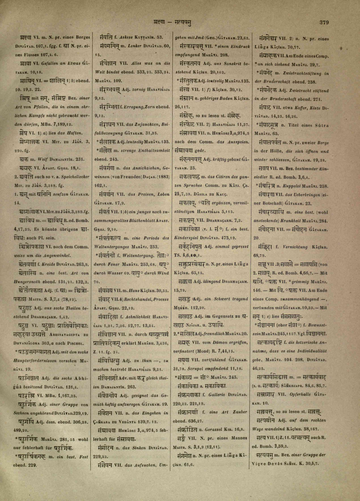
saṃstha — 1〉 Adj. (f. ā) — a〉 Stehend —, weilend —, sich befindend in oder auf, enthalten in (Loc. oder im Comp. vorangehend). — b〉 befindlich in oder bei, so v. a. Jmd (Loc. oder im Comp. vorangehend) eigen, gehörig VAITĀN. 25,14. — c〉 am Ende eines Comp. beruhend auf, abhängig von. — d〉 am Ende eines Comp. sich befindend in, so v. a. theilhaftig —, im Besitz von — seiend. — e〉 bestehend, dauernd. — f〉 *todt. — 2〉 m. saṃsthá — a〉 Anwesenheit, Gegenwart. Nur Loc. inmitten —, in Gegenwart von (Gen.); mit folgendem cid so v. a. durch die blosse Anwesenheit. — b〉 *Späher, Kundschafter. — 3〉 f. saṃsthā́ (adj. Comp. ā vorangehen). — b〉 Gestalt, Form, Aussehen. Am Ende eines adj. Comp. in der Form von — auftretend, erscheinend als. — c〉 eine festgesetzte Ordnung, Norm. Acc. mit kar oder sthā Caus. eine Verhaltungsregel (für sich) aufstellen, eine Verpflichtung eingehen; mit vyatikram oder pari (v. l. prati-) bhid einer aufgestellten Verhaltungsregel —, seiner Verpflichtung untreu werden. — d〉 Beschaffenheit, Natur, Wesen. — e〉 Abschluss, Vollendung. Am Anfange eines Comp. als Loc. zu fassen VAITĀN. — f〉 Ende, so v. a. Untergang, Tod ĀPAST. 2,15,8. — g〉 Untergang der Welt. — h〉 ein abgeschlossener liturgischer Satz oder Gang —, die Grundform eines Opfers. Der Jyotiṣṭoma, Haviryajṅa und Pākayajña bestehen aus sieben Formen. — i〉 in Comp. mit paśu˚ das Schlachten des Opferthiers. — k〉 die Ceremonie der Verbrennung eines Leichnams. Auch preta˚ — l〉 vielleicht so v. a. [Page7-010-b] śrāddha Todtenmahl. — m〉 Späher —, Kundschafter im eigenen Lande.

Original text · German · Word type unspecified
saṃstha VII. 1〉f〉 KĀŚĪKH. 30,12. [Nachtrag, Band 7]
Apte 1890 adjective · substantive masculine
Original text · English · adjective · substantive masculine
saṃstha a. 1 Staying, abiding, lasting. 2 Dwelling, being, existing, situated (at the end of comp.); śiṣṭā kriyā kasyacidātmasaṃsthā M. 1. 16; Ku. 6. 60; nisargaminnāspadamekasaṃsthaṃ R. 6. 29; Māl. 5. 16. 3 Tame, domesticated. 4 Fixed, stationary. 5 Ended, perished, dead. 6 Come to an end, completed. 7 Manifested (vyakta). — sthaḥ 1 A dweller, an inhabitant. 2 A neighbour, countryman. 3 A spy.
Cappeller 1887 Word type unspecified
Original text · German · Word type unspecified
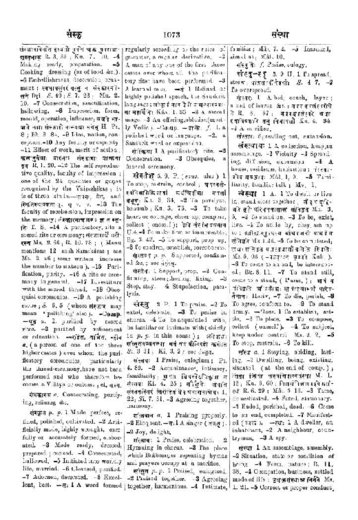
saṃstha stehend, bestehend, dauernd; weillend o. befindlich in, an, auf (Loc. o. —˚), beruhend auf, teilhaftig des (—˚). m. saṃsthá Anwesenheit, Gegenwart, Loc. inmitten des o. in Gegenwart von (Gen.). f. saṃsthā́ das Verweilen bei (—˚); Gestalt, Form, bes. die Grundform eines Opfers; ordnung, Natur, Wesen; Abschluss, Vollendung, Ende.
Burnouf 1866 adjective
Original text · French · adjective
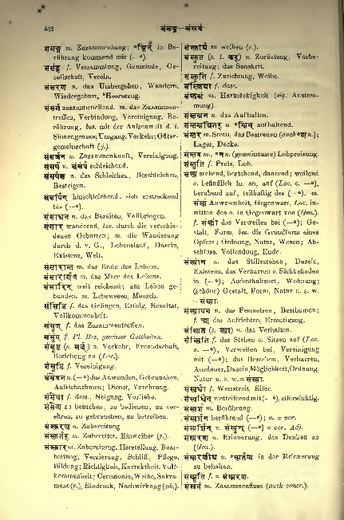
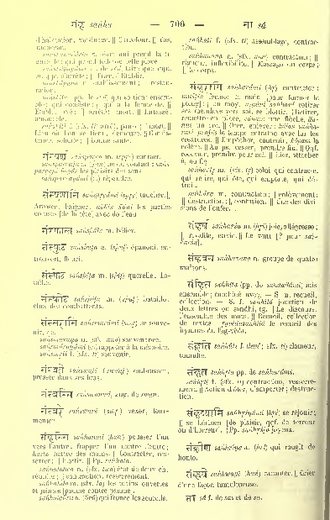
saṃstha saṃstha a. (sthā) qui se tient avec, uni, associé. Stationnaire, fixe. — S. m. un habitant; voisin, homme du même pays. Espion, envoyé secret. — S. f. saṃsthā station, fixité. Pause, cessation du mouvement, mort. Etat, condition; état final, forme définitive; manière d'être, manifestation; ressemblance. Assemblée, séance. Ordonnance royale. saṃsthāna n. (sfx. ana) arrêt, pause, cessation. Formation initiale, réunion des éléments d'une ch., constitution; forme, figure; marque, signe. Communauté [Page706-1] d'habitation, voisinage. Carrefour. Tas, monceau. saṃsthānacārin a. (car) qui prend la figure de; qui prend telle ou telle place. saṃsthāpayāmi (c. de sthā) faire que qqn. ou qqc. s'arrête; Tuer. Etablir. saṃsthāpana n. établissement; restauration. saṃsthita (pp. de sthā) qui se tient ensemble; qui consiste; qui a la forme de. Etabli, fixé; arrêté; mort. Entassé, amoncelé. saṃsthiti f. (sfx. ti) arrêt, pause; mort. Lieu où l'on se tient, demeure. Consistance, solidité; bonne santé.
Occurrences in source texts (9)
DYS 1 occurrence
HP 1 occurrence
SiSa 3 occurrences
SVU 3 occurrences
VBT 1 occurrence
Continue with AYI Free
Image source: AYI archive.