

samaya समय – convention; condition; time
substantive masculine · Word type unspecified
Dictionary sources
AYI dictionary substantive masculine
convention; condition; time
Derived from
Cappeller 1891 substantive masculine
Original text · English · substantive masculine
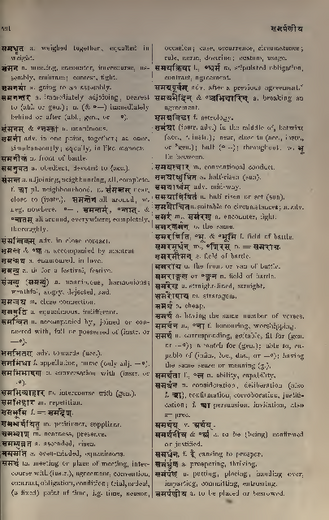
samayá ·m. meeting or place of meeting, intercourse with (instr.), agreement, convention, contract, obligation, condition; trial, ordeal, (a fixed) point of time, i.g. time, season, occasion; case, occurrence, circumstance; rule, norm, doctrine; custom, usage.
Monier-Williams 1872 substantive masculine · Word type unspecified
Original text · English · substantive masculine
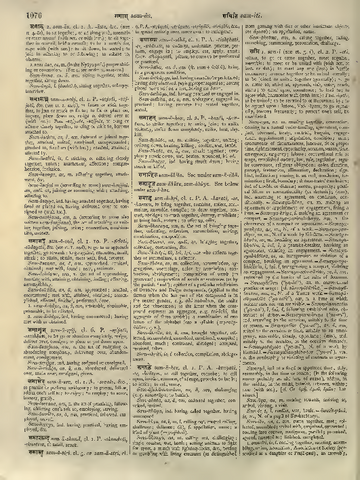
Sam-aya, as, m. coming together, convention, coming to a mutual understanding, agreement, com- pact, covenant, treaty, contract, bargain, engage- ment, appointment; stipulation, condition; oath; concurrence of circumstances, juncture, fit or proper time, right moment, opportunity, occasion, season, time, emergency, exigency; leisure; conventional rule or usage, established custom, law, rule, regulation, regu- lar observance, religious obligation; order, direction, precept, instruction, affirmation, declaration; sign, hint, indication; coming to an end, conclusion, ter- mination; limit, boundary; demonstrated conclusion; end of trouble or distress; success, prosperity; poetī- cal idiom or conventionality (in rhetoric); (ena), ind. according to agreement, on condition, con- ditionally.
Original text · English · Word type unspecified
samaya sam-aya, sam-āya, &c. See under 1. sam-i, p. 1076.
Petersburger 1855 substantive masculine
Original text · German · substantive masculine
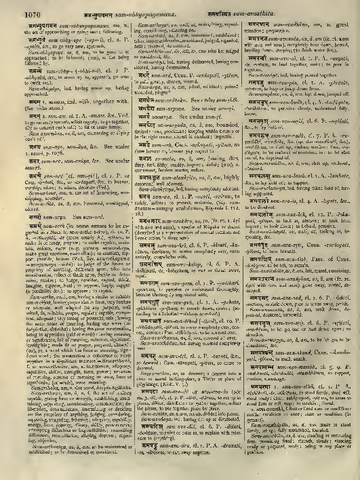
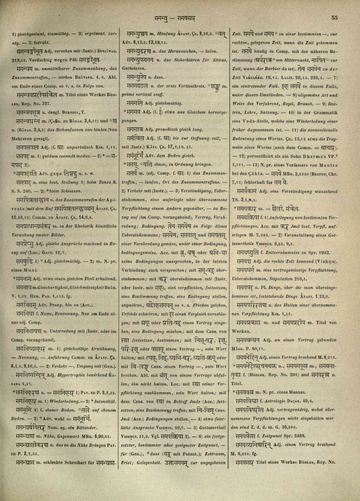
samayá (von 3. i mit sam) m. am Ende eines adj. comp. f. ā. 1〉 das Zusammentreffen, Zusammenlaufen, Ort des Zusammentreffens (= samara): sītānām ŚAT. BR. 7,2,3,3. AV. 2,35,3 (samare TS.). — 2〉 Verkehr: na taiḥ samayamanvicchet M. 10,53. — 3〉 Verständigung, Uebereinkommen; eine auferlegte oder übernommene Verpflichtung; Vertrag, Verabredung, Bedingung: sa̱ṃgrā̱me saṃyàtte sama̱yakā̀maḥ TS. 2,1,8,4. HARIV. 10571. HARIV. 14833. R. 1,3,24. R. 2,26,22. R. GORR. 2,123,14. R. GORR. 4,16,13. YOGAS. 2,31. KATHĀS. 28,69. KATHĀS. 34,33. KATHĀS. 86,144. samayākṛṣṭa KATHĀS. 34,38. tena samayena in Folge dieses Uebereinkommens RĀJA-TAR. 1,234. samayena einer Verabredung gemäss MBH. 3,10211. R. GORR. 1,1,73. R. GORR. 1,39,24. unter einer Bedingung, bedingungsweise MBH. 3,2598. MBH. 3,13153. BHĀG. P. 3,22,19. samayāt einer Verabredung gemäss YĀJÑ. 1,61 (mithas). AK. 2,8,2,66. unter einer Bedingung MBH. 3,13256. HARIV. 1375. samayatas bedingungsweise MṚCCH. 18,24. samayabandhana adj. an einen Vertrag gebunden MĀRK. P. 80,11. samayaṃ brū seine Bedingung aussprechen MBH. 3,13256. vac dass. KATHĀS. 86,113. abhi-dhā dass. KATHĀS. 110. so v. a. versprechen BHĀG. P. 3,23,10. samudya samayaṃ mithaḥ gegenseitig übereinkommen BHĀG. P. 4,25,43. samayaṃ kar übereinkommen mit (instr. oder instr. mit saha); sich verpflichten, festsetzen, eine Bestimmung treffen, eine Bedingung stellen, stipuliren: adhvaryubahvṛcaiḥ samayaṃ kṛtvā LĀṬY. 4,8,23. ĀŚV. ŚR. 10,5,20. GṚHY. 1,6,5 (mithaḥ). dvāpareṇa saha MBH. 3,2254. — MBH. 1,2749. MBH. 3,16730. MBH. 5,7028. MBH. 5,7488. MBH. 14,1619. R. 1,38,24. R. GORR. 1,1,70. R. GORR. 4,30,8. R. GORR. 4,30,10. R. GORR. 4,52,14. R. GORR. 4,53,4. R. GORR. 5,66,3. R. GORR. 5,66,22. R. GORR. 7,104,3. KATHĀS. 22,204. PAÑCAT. 193,13. adrohasamayaṃ kar Spr. (II) 206. fg. Spr. (II) 3242. kṛtaśayanasamaya PAÑCAT. 34,11. samayaṃ dā einen Vergleich vorschlagen KATHĀS. 18,139. prati — pad einen Vertrag eingehen, eine Bedingung annehmen MBH. 4,705. grah dass. MBH. 1,6299. KATHĀS. 20,193. nis — tar R. GORR. 2,74,42. rakṣ Spr. (II) 3332. ˚parirakṣaṇa KIR. 1,45. samayaṃ pālay R. GORR. 2,11,5. Verz. d. Oxf. H. 32,b,4. BHĀG. P. 8,9,22. tyaj MBH. 1,3098. vi — laṅghay KUMĀRAS. 3,25. bhid HARIV. 14374. ˚bhedin M. 8,218. ˚vyabhicārin M. 220. fg. samayasyāvyatikramaḥ Spr. (II) 698. yathā bhraśyetsamayāt RĀJA-TAR. 1,236. samaye sthā seiner Verpflichtung nachkommen, sein Wort halten HARIV. 14375 (tasya diesem gegenüber). R. 4,30,21. KATHĀS. 18,142. samaye sthāpay in Betreff Jmdes (acc.) festsetzen, eine Bestimmung treffen MĀRK. P. 51,111. samayaṃ sthāpay festsetzen, bestimmen RĀJA-TAR. 4,617. samaye ni — veśay Jmd (acc.) Bedingungen stellen MBH. 1,6297. dharma˚ eine übernommene Verpflichtung: ˚samayātpracyutaḥ M. 9,273. — 4〉 ein festgesetzter, bestimmter oder geeigneter Zeitpunkt; Zeitraum, Frist; Gelegenheit KĀŚ._zu_P. 5,4,60. adya prabhṛti yajasva samayo hi te MBH. 14,2614. R. 4,25,16. Spr. (II) 3612. samaye hyasminnivṛtte R. 2,86,19. R. 4,53,17. ŚIŚ. 9,24. RĀJA-TAR. 4,182. BHĀG. P. 5,21,7. gamaya samayam Spr. (II) 1229. samayasya laṅghanam R. GORR. 1,4,66. samayocita BHĀG. P. 6,7,27. HIT. 114,13. atīta˚ adj. R. 5,1,78. prāpta˚ adj. RĀJA-TAR. 5,407. uktasamayam zur angegebenen Zeit DAŚAR. 2,25. vājimedhasya MBH. 14,1937. mit infin. P. 3,3,167. MBH. 3,12281. mit yad und potent. P. 3,3,168. samaye zu einer bestimmten —, zur rechten, gelegenen Zeit Spr. (II) 6840. R. 2,56,3. RAGH. 3,13. Spr. (II) 1943. Spr. (II) 4907. Spr. (II) 5046. PAÑCAT. 24,25 (nach der Lesart der ed. Bomb. dṛṣṭvā st. dhṛtvā). am Anfange eines comp. in derselben Bed.: samayayantrita ŚĀK. 100,21, v. l. RAGH. 7,28 (ed. Calc. besser samara). PAÑCAR. 1,11,3. asamaya am Anf. eines comp. nicht zur gewöhnlichen Zeit KATHĀS. 18,2. häufig in comp. mit der näheren Bestimmung: ardharātrasamaye MBH. 3,2537. sāyāhna˚ R. 2,57,5. prabhāta˚ R. 77,4. R. 79,1. R. 5,9,68. R. 6,112,61. VARĀH. BṚH. S. 43,19. KATHĀS. 18,238. KATHĀS. 30,144. PAÑCAR. 3,12,20. PAÑCAT. 55,3. PAÑCAT. 77,12. PAÑCAT. 81,19. PAÑCAT. 229,10. PAÑCAT. 247,12. VET. in LA. (III) 10,5. grīṣma˚ ŚĀK. 4,4. jaladhara˚ VIKR. 56,1. Spr. (II) 993. varṣā˚ KATHĀS. 19,65. surabhi˚ SĀH. D. 21,1. stanita˚ MEGH. 22. yugānta˚ BHĀG. P. 6,9,12. ṛtu˚ (der Weiber) PAÑCAT. 74,18. VARĀH. BṚH. S. 78,26. udaya˚ VARĀH. BṚH. S. 16,40. garbha˚ VARĀH. BṚH. S. 21,32. fg. prasava˚ 37. gopraveśa˚ VARĀH. BṚH. S. 24,35. VARĀH. BṚH. S. 28,16. VARĀH. BṚH. S. 33,23. VARĀH. BṚH. S. 43,32. śakuna˚ VARĀH. BṚH. S. 53,107. prārambhayāna˚ VARĀH. BṚH. S. 95,60. mṛtyu˚ BṚH. 25 (23), 2. Spr. (II) 3647. Spr. (II) 5784. prāṇānta˚ KATHĀS. 94,127. kusumaprasūti˚ ŚĀK. 84. Spr. (II) 4860. Spr. (II) 5684. Spr. (II) 6672. Spr. (II) 7586. R. 1,34,35. R. GORR. 2,38,27. R. GORR. 4,25,13. KATHĀS. 53,100. MĀRK. P. 62,30. RĀJA-TAR. 4,639. PRAB. 78,8. BHĀG. P. 6,9,38. BHĀG. P. 7,8,44. SARVADARŚANAS. 9,7. SARVADARŚANAS. 51,19. grahaṇasamayavelā Spr. (II) 2468. nāpita˚ zur Zeit, wenn der Barbier da ist, Spr. (II) 3004. rātrau niśīthe svābhīle gate 'rdhasamaye so v. a. nach Mitternacht MBH. 3,388. ardhasamaye 'rdhajñāne gate sati loke tandrāvati satītyarthaḥ NĪLAK. — 5〉 ein eintretender Fall: evaṃvidhe 'pi samaye PAÑCAT. 42,6. iha samaye in diesem Falle, unter diesen Umständen HIT. 104,15. HIT. 114,3. HIT. 115,2. HIT. 121,18. vibhāgasamaye Comm. zu TS. PRĀT. 3,1. padasamaye vartamānaḥ zu TS. PRĀT. 4,5. TS. PRĀT. 6,14. — 6〉 allgemeine Art und Weise des Verfahrens, Regel: deśācārānsamayān (= bhāṣābhedān NĪLAK.) jātidharmān MBH. 5,1084. ṛṣīṇāṃ samaye nityaṃ ye caranti MBH. 13,4319. pativratānāṃ samayānurodhinī R. 3,2,28. ārya˚ BHĀG. P. 5,14,29. — 7〉 Doctrin, Lehre, Satzung: nairukta˚ NIR. 1,12. ākhyāna˚ NIR. 7,7. (itihāsam) alaṃkṛtaṃ śubhaiḥ śabdaiḥ samayairdivyamānuṣaiḥ MBH. 1,28. śruti˚ Spr. (II) 826. tārkika˚ ŚAṂK._zu_BṚH. ĀR. UP. S. 162. jaina˚ Schol. zu H. 90. H. 193. ārhata SARVADARŚANAS. 43,6. gāndharvaśāstra˚ SARVADARŚANAS. 78,2. PAÑCAR. 3,9,19. (pl.). dharmaṃ ca nānāsamayānurūpam BHĀG. P. 4,19,37. ˚seturakṣā BHĀG. P. 5,4,5. kāvya˚ Verz. d. Oxf. H. 207,b,4. Verz. d. Oxf. H. 250,b,1. śabdahetusamayavidyāsu (d. i. śabdavidyā, hetu˚ und samaya˚) DAŚAK. 60,13. hetusamayānabhijña DURGA_bei_MUIR, ST. 2,184. — 8〉 in der Gramm. eine Veda-Stelle, welche Wiederholung einer früher dagewesenen ist, ṚV. PRĀT. 10,12. ṚV. PRĀT. 11,12. ṚV. PRĀT. 15,14. ṚV. PRĀT. 18,30. UPALEKHA 4,14. fgg. UPALEKHA 9,20. fgg. — 9〉 die conventionelle Bedeutung eines Wortes KUSUM. 22,18. KUSUM. 31,14. — 10〉 in der Dramatik das Entfernen —, Schwinden eines Schmerzes BHAR. NĀṬYAŚ. 19,100. DAŚAR. 1,47. SĀH. D. 400. PRATĀPAR. 22,b,2. — 11〉 bei den Śākta N. pr. eines Verfassers von Mantra Verz. d. Oxf. H. 101,b,13. — samaye MBH. 5,5990 (BENFEY Chr. 7,15) fehlerhaft fur mama ye, wie die ed. Bomb. liest. Die indischen Lexicographen geben dem Worte folgenden Bedd.: saṃvid AK. 3,4,24,151. H. an. 3,511. saṃketa, saṃketaka H. an. MED. HALĀY. 5,83. kriyākāra H. an. MED. śapatha AK. H. an. MED. kāla AK. 1,1,3,1. AK. 3,4,24,151. H. 126. H. an. MED. HALĀY. avasara H. 1509. H. an. ācāra AK. 3,4,24,151. H. an. MED. HALĀY. siddhānta AK. H. 242. H. an. MED. HALĀY. 1,10. HALĀY. 5,83. nirdeśa und bhāṣā H. an. MED. saṃpad und niyama H. an. dhī MED. kaṭa HALĀY. 5,34. Vgl. grīṣma˚, puṣpa˚, pūrṇa˚, mahā˚, yathā˚, lagna˚, vasanta˚ (unter vasanta), vasantasamayotsava, śaratsamaya, sāmayika.

Böhtlingk 1879 substantive masculine
Original text · German · substantive masculine
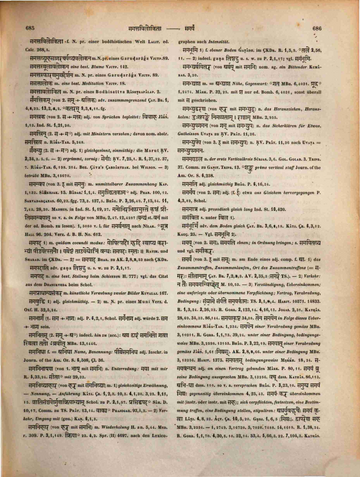
samayá m. (adj. Comp. f. ā) — 1〉 das Zusammentreffen, -laufen, Ort des Zusammentreffens. — 2〉 Verkehr mit (Instr.) — 3〉 Verständigung, Uebereinkommen, eine auferlegte oder übernommene Verpflichtung einem Andern gegenüber, — in Bezug auf (im Comp. vorangehend), Vertrag, Verabredung; Bedingung. tena samayena in Folge dieses Uebereinkommens; samayena, samayāt und samayas einer Verabredung gemäss, unter einer Bedingung, bedingungsweise. Acc. mit brū, vac oder abhi-dhā seine Bedingungen aussprechen, in der letzten Verbindung auch versprechen; mit sam, vad über einkommen; mit kar übereinkommen mit (Instr. oder Instr. mit saha) sich verpflichten, festsetzen, eine Bestimmung treffen, eine Bedingung stellen, stipuliren, adrohasamayam so v. a. Frieden geloben, Urfehde schwören; mit dā einen Vergleich vorschlagen; mit grah oder prati-pad einen Vertrag eingehen, eine Bedingung machen; mit dem Caus. von sthā festsetzen, bestimmen; mit nis-tar, rakṣ, pari-rakṣ oder pālay einen Vertrag —, sein Wort halten; mit tyaj, bhid, vyabhi-car, vyāti-kram oder mit vi-laṅg Caus. einen Vertrag —, sein Wort brechen. Abl. mit bhraṃś von einem Vertrage abfallen, ihn nicht halten. Loc. mit sthā seiner Verpflichtung nachkommen, sein Wort halten; mit dem Caus. von sthā in Betreff Jmds (Acc.) festsetzen, eine Bestimmung treffen; mit ni-viś Caus. Jmd (Acc.) Bedingungen stellen. — 4〉 etwa feierliche Ansprache VIṢṆUS. 10,7. — 5〉 Gottesurtheil VIṢṆUS. 11,9. Vgl. samayakriyā 2〉. — 6〉 ein festgesetzter, bestimmter oder geeigneter Zeitpunct, — für (Gen.) dass (yad mit Potent.); Zeitraum, Frist; Gelegenheit. uktasamayam zur angegebenen [Page7-055-c] Zeit. samaye und samaya˚ zu einer bestimmten —, zur rechten, gelegenen Zeit, wenn die Zeit gekommen ist. samaye häufig in Comp. mit der näheren Bestimmung (ardharātra˚ um Mitternacht, nāpita˚ zur Zeit, wann der Barbier da ist). tena samayena zu der Zeit VAJRACCH. 19,14. LALIT. 20,12. 295,8. — 7〉 ein eintretender Fall. iha samaye in diesem Falle, unter diesen Umständen. — 8〉 allgemeine Art und Weise des Verfahrens, Regel, Brauch. — 9〉 Doctrin, Lehre, Satzung. — 10〉 in der Grammatik eine Veda-Stelle, welche eine Wiederholung einer früher dagewesenen ist. — 11〉 die conventionelle Bedeutung eines Wortes. ŚIŚ. 15,19 etwa die Tragweite eines Wortes (nach dem Comm. = ācāra). — 12〉 personificirt als ein Sohn Dharmaʼs VP. 21,111. — 13〉 N. pr. eines Verfassers von Mantra hei den Śakta. — samaye MBH. 5,5990 (BENF.Chr. 7,15) fehlerhaft für mama ye.
Apte 1890 substantive masculine
Original text · English · substantive masculine
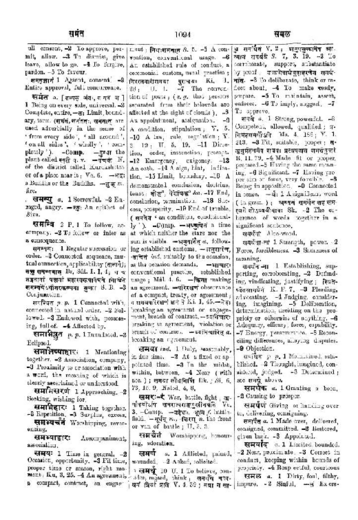
samayaḥ 1 Time in general. 2 Occasion, opportunity. 3 Fit time, proper time or season, right moment; Ku. 3. 25. 4 An agreement, a compact, contract, an ([Page 1094-b]) engagement; mithaḥsamayāt Ś. 5. 5 A convention, conventional usage. 6 An established rule of conduct, a ceremonial custom, usual practice; nirastanārīsamayā durādhayaḥ Ki. 1. 28; U. 1. 7 The convention of poets; (e. g. that persons separated from their beloveds are affected at the sight of clouds). 8 An appointment, assignation. 9 A condition, stipulation; V. 5. 10 A law, rule, regulation; Y. 3. 19; U. 5. 19. 11 Direction, order, instruction, precept. 12 Emergency, exigency. 13 An oath. 14 A sign, hint, indication. 15 Limit, boundary. 16 A demonstrated conclusion, doctrine, tenet; bauddha˚, vaiśeṣika˚ &c. 17 End, conclusion, termination. 18 Success, prosperity. 19 End of trouble. (samayena ‘on condition, conditionally’). Comp. — adhyuṣitaṃ a time at which neither the stars nor the sun is visible. — anuvartin a. following established customs. — anusāreṇa, — ucitaṃ ind. suitably to the occasion, as the occasion demands. — ācāraḥ conventional practice, established usage; Māl. 4. 6. — kriyā making an agreement. — parirakṣaṇaṃ observance of a compact, treaty, or agreement; na samayaparirakṣaṇaṃ kṣamaṃ te Ki. 1. 45. — bhedaḥ breaking an agreement or engagement, breach of contract. — vyabhicāraḥ breaking an agreement, violation or breach of contract. — vyabhicārin a. breaking an agreement.
Cappeller 1887 substantive masculine
Original text · German · substantive masculine
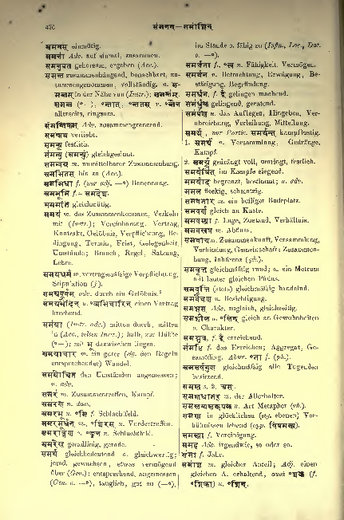
samayá m. das Zusammenkommen, Verkehr mit (Instr.); Vereinbarung, Vertrag, Kontrakt, Termin, Frist, Gelegenheit, Umstände; Brauch, Regel, Satzung, Lehre.
Burnouf 1866 substantive masculine
Original text · French · substantive masculine
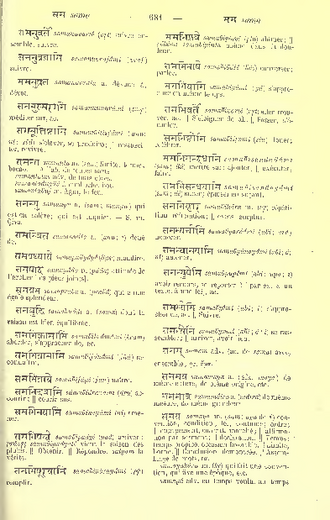
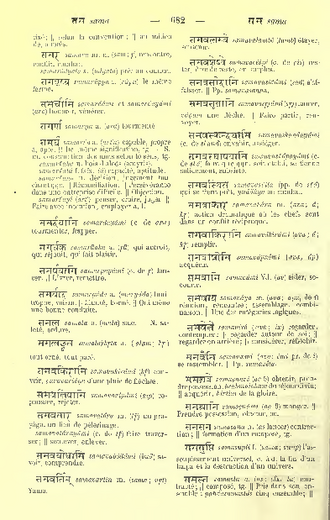
samaya samaya m. (sam; aya de i) convention, condition, loi, coutume; ordre; engagement, contrat, marché; affirmation par serment; déclaration. Temps; temps propice, occasion favorable. Limite, borne. Conclusion démontrée. Assemblage de mots, tg. samayakāra m. (kṛ) qui fait une convention, qui fixe une époque, etc. samayā adv. en temps voulu, au temps [Page682-1] fixé; selon la convention; au milieu de, auprès.
Occurrences in source texts (5)
DYS 1 occurrence
HTK 1 occurrence
PYS 2 occurrences
SiSa 1 occurrence
Continue with AYI Free
Image source: AYI archive.