

tamas तमस् – darkness
substantive masculine · substantive neuter · Word type unspecified
Dictionary sources
AYI dictionary substantive neuter
darkness
Cappeller 1891 substantive neuter
Original text · English · substantive neuter
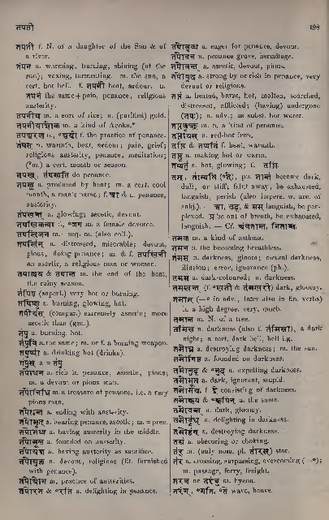
támas ·n. darkness, gloom; mental darkness, illusion; error, ignorance (ph.).
Monier-Williams 1872 substantive neuter
Original text · English · substantive neuter
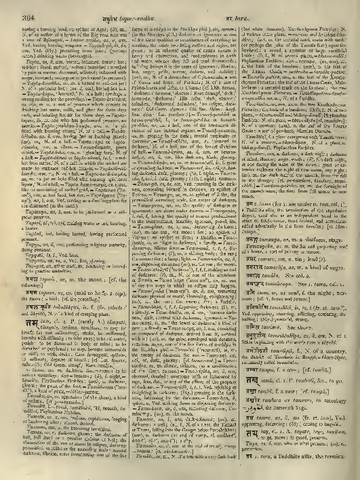
Tamas, as, n. darkness, gloom; the darkness of hell, hell itself or a peculiar division of hell; the obscuration of the sun or moon in eclipses, darkness personified as Rāhu or the ascending node; mental darkness, illusion, error (constituting one of the five forms of a-vidyā in the Sāṅkhya phil.), sin, sorrow; (in the Sāṅkhya phil.) darkness or ignorance as one of the three qualities or constituents of everything in creation, the other two being sattva and rajas, see guṇa; as an inherent quality of nature tamas is heavy and obstructive, and predominates in earth and water, whence they fall and tend downwards; in living beings it is the cause of ignorance, illusion, lust, anger, pride, sorrow, dulness, and stolidity; (as), m., N. of a descendant of Gṛtsa-mada, a son of Śravas and father of Pra-kāśa; N. of a son of Pṛthu-śravas and father of Uśanas; [cf. Lith. tamsa, ‘darkness;’ tamsus, ‘obscure:’ Russ. temnyi, ‘dark;’ temno-ta, ‘darkness:’ Hib. teim, ‘dark, obscure;’ teimhen, ‘darkness;’ teimheal, ‘an eclipse, dark- ness:’ Old Germ. demar: Old Sax. thim: Angl. Sax. dim: Lat. tenebrœ?].
Petersburger 1855 substantive neuter · Word type unspecified
Original text · German · substantive neuter
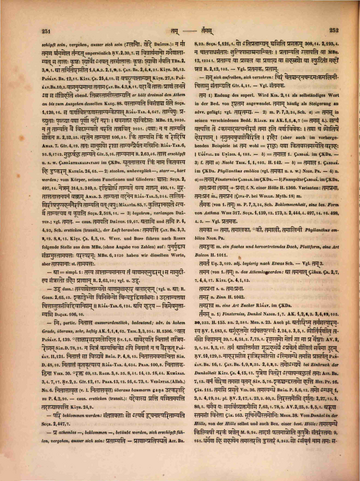
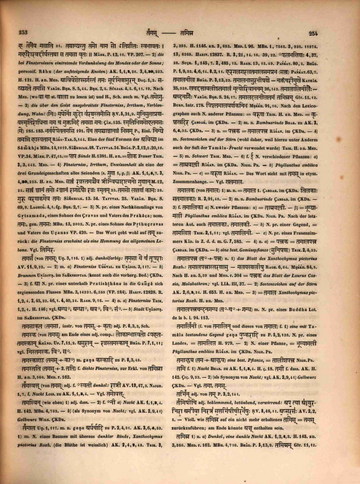
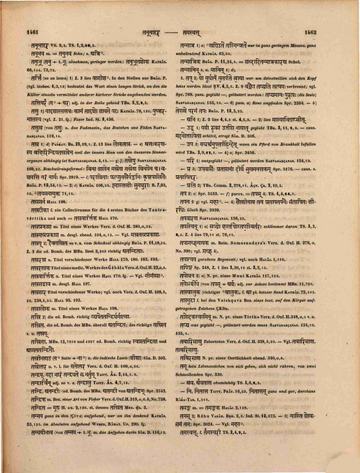
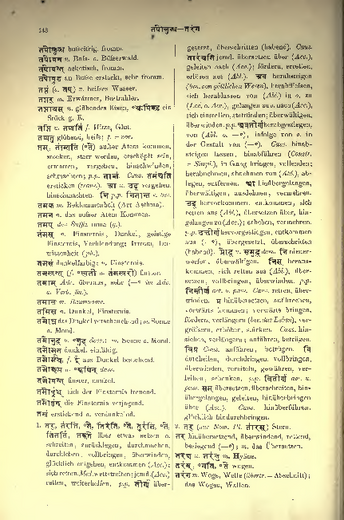
támas n. 1〉 Finsterniss, Dunkel NAIGH. 1,7. AK. 1,2,1,3. AK. 3,4,17,105. AK. 3,4,30,233. H. 155. H. an. 2,581. MED. s. 23. Auch pl. atā̀riṣma̱ tamàsaspā̱rama̱sya ṚV. 1,183,6. agū̀ha̱ttamo̱ vyàcakṣaya̱tsvàḥ ṚV. 2,24,3. ṚV. 3,5,1. jyotìrvṛṇīta̱ tamàso vijā̱nan ṚV. 39,7. ṚV. 4,51,2. ṚV. 7,75,1. raja̱stamo̱ mopà gā̱ mā pra mèṣṭhāḥ AV. 8,2,1. AV. 8,2,24. AV. 9,2,17. tamà āsī̱ttamàsā gū̱ḻahamagrè 'prake̱taṃ sàli̱laṃ sarvàmā i̱dam ṚV. 10,129,3. nāharāsīnna rātrirāsītso 'sminnandhe tamasi prāsarpat PAÑCAV. BR. 16,1. ŚAT. BR. 1,9,2,35. ŚAT. BR. 2,4,2,5. tamo'bhyaye bei Einbruch der Dunkelheit KĀTY. ŚR. 4,15,13. putreṇa pitaro 'tyāyanbahulaṃ tamaḥ AIT. BR. 7,13. vanaṃ ghoreṇa tamasā vṛtam SĀV. 5,76. ekaścandrastamo hanti HIT. Pr. 16. ŚĀK. 111. tamasi prasṛte VID. 36. tamasyandhe BHĀG. P. 5,6,12. tamo 'ndham BHĀG. P. 1,2,3. BHĀG. P. 4,19,34. pl. ṚV. 2,17,4. ṚV. 2,23,2. ṚV. 2,40,2. ti̱rastamā̀ṃsi darśa̱taḥ ṚV. 3,27,13. ṚV. 5,80,5. carmèva̱ yaḥ sa̱mavìvya̱ktamā̀ṃsi ṚV. 7,63,1. ṚV. 7,78,2. AV. 2,25,5. AV. 9,5,1. aruṇa stamasāṃ vibhettā ŚĀK. 163. sūcibhedyaistamobhiḥ MEGH. 38. Vom Dunkel in der Hölle, von der Hölle selbst und auch Bez. einer best. Hölle: tamasyandhe kilviṣī narakaṃ vrajet M. 8,94. tādṛśaṃ phalamāpnoti kuputraiḥ saṃtaraṃstamaḥ M. 9,161. dharmeṇa hi sahāyena tamastarati dustaraṃ M. 4,242. so 'saṃvṛtaṃ nāma tamaḥ saha tenaiva majjati M. 81. tathānyastu tamo nāma so 'tiśītaḥ svabhāvataḥ . mahārauravaddīrghastathā sa tamasā vṛtaḥ .. MĀRK. P. 12,10. VP. 207. — 2〉 die bei Finsternissen eintretende Verdunkelung des Mondes oder der Sonne; personif. Rāhu (der aufsteigende Knoten) AK. 1,1,2,28. AK. 3,4,30,233. H. 121. H. an. MED. āviveśopasargastaṃ tamaḥ sūryamivāsuram DAŚ. 1,2. savyagate tamasi VARĀH. BṚH. S. 5,44. BṚH. 2,5. SŪRYAS. 4,5. SŪRYAS. 6,11. SŪRYAS. 6,19. Nach MED. (wo vā nā st. bālā zu lesen ist) und H., Sch. auch m. Vgl. tamogu. — 3〉 die über den Geist ausgebreitete Finsterniss, Irrthum, Verblendung, Wahn: (niḥ) ma̱ghonò hṛ̱do vàratha̱stamā̀ṃsi ṚV. 5,31,9. munisutāpraṇayasmṛtirodhinā mama ca muktamidaṃ tamasā manaḥ ŚĀK. 135. smṛtibhinnamohatamasaḥ (me) ŚĀK. 181. ŚĀK. 183. bhartaryapetatamasi ŚĀK. 191. yena tamaścājñānajaṃ bhinnam P., Einl. ninye tamasi hāsyatām RĀJA-TAR. 5,144. Eine der fünf Formen der avidyā im Sāṃkhya MBH. 14,1019. SĀṂKHYAK. 48. TATTVAS. 34. BHĀG. P. 3,12,2. BHĀG. P. 3,20,18. VP. 34. MĀRK. P. 47,15. = pāpa Sünde H. 1381. H. an. = śoka Trauer TRIK. 3,3,445. MED. — 4〉 Finsterniss, Irrthum, Unwissenheit als eine der drei Grundeigenschaften alles Seienden (s. guṇa 1,g,β) AK. 1,1,4,7. AK. 3,4,30,233. H. an. MED. sattvaṃ rajastamaścaiva trīnvidyādātmano guṇān M. 12,24. sattvaṃ jñānaṃ tamo 'jñānaṃ rāgadveṣau rajaḥ smṛtam M. 25. tamaso lakṣaṇaṃ kāmaḥ M. 38. guru varaṇakameva tamaḥ SĀṂKHYAK. 13. SĀṂKHYAK. 54. TATTVAS. 25. VARĀH. BṚH. S. 69,9. LAGHUJ. 4,1. fg. BṚH. 2,7. — 5〉 N. pr. eines Nachkömmlings von Gṛtsamada, eines Sohnes des Śravas und Vaters des Prakāśa; nom. tamaḥ, gen. tamasaḥ MBH. 13,2002. N. pr. eines Sohnes des Pṛthuśravas und Vaters des Uśanas VP. 420. — Das Wort geht wohl auf tam zurück: die Finsterniss erscheint als eine Hemmung des allgemeinen Lebens. Vgl. timira.
Original text · German · Word type unspecified
tamas 2〉 Rāhu VARĀH. BṚH. 2,3. Ind. St. 10,175. — 3〉 nāsti śokasamaṃ tamaḥ Spr. 3024. — Vgl. mahā˚.
Böhtlingk 1879 substantive neuter · Word type unspecified
Original text · German · substantive neuter
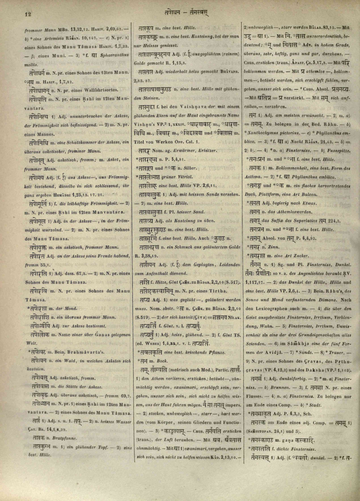
támas n. — 1〉 Sg. und Pl. Finsterniss, Dunkel. támaḥ práṇitaḥ so v. a. des Augenlichtes beraubt ṚV. 1,117,17. — 2〉 das Dunkel der Hölle, Hölle und eine best. Hölle VP. 2,6,4. — 3〉 Bein. Rāhuʼs, des Sonne und Mond verfinsternden Dämons. Nach den Lexicographen auch m. — 4〉 die über den Geist ausgebreitete Finsterniss, Irrthum, Verblendung, Wahn. — 5〉 Finsterniss, Irrthum, Unwissenheit als eine der drei Grundeigenschaften alles Seienden. — 6〉 im Sāṃkhya eine der fünf Formen der Avidyā. — 7〉 *Sünde. — 8〉 *Trauer. — 9〉 N. pr. eines Sohnes des Śravas, des Pṛthuśravas (VP. 4,12,2) und des Dakṣa (VP.² 1,103).
Original text · German · Word type unspecified
tamas III. 8〉 KIR. 3,32. [Nachtrag, Band 7]
Apte 1890 substantive masculine · substantive neuter
Original text · English · substantive masculine · substantive neuter
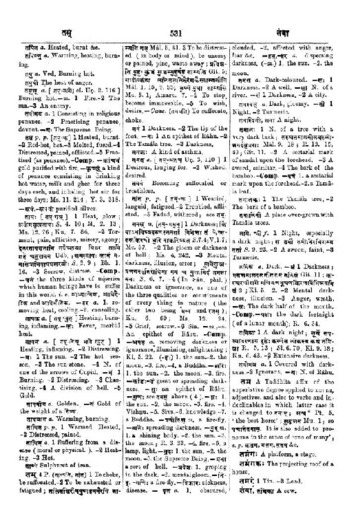
tamas n. [tam-asun] 1 Darkness; kiṃ vā'bhaviṣyadaruṇastamasāṃ vibhettā taṃ cetsahasrakiraṇo dhuri nākariṣyat Ś. 7. 4; V. 1. 7; Me. 37. 2 The gloom or darkness of hell; Ms. 4. 242. 3 Mental darkness, illusion, error; munisutāpraṇayasmṛtirodhinā mama ca muktamidaṃ tamasā manaḥ Ś. 6. 7. 4 (In Sān. phil.) Darkness or ignorance, as one of the three qualities or constituents of every thing in nature (the other two being sattva and rajas); Ku. 6. 60; Ms. 12. 24. 5 Grief, sorrow. 6 Sin. — m., — n. An epithet of Rāhu. Comp. — apaha a. removing darkness or ignorance, illumining, enlightening; Ki. 5. 22. — (haḥ) 1 the sun. 2 the moon. 3 fire. 4 a Buddha. — ariḥ 1 the sun. 2 the moon. 3 fire. — kāṃḍaḥ -ḍaṃ great or spreading darkness. — guḥ an epithet of Rāhu. — guṇaḥ see tamas above (4). — ghnaḥ 1 the sun. 2 the moon. 3 fire. 4 Viṣṇu. 5 Śiva. 6 knowledge. 7 a Buddha. — jyotis m. a fire-fly. — tatiḥ spreading darkness. — nud m. 1 a shining body. 2 the sun. 3 the moon; R. 3. 33. 4 fire. 5 a lamp, light. — nudaḥ 1 the sun. 2 the moon. 3 the Supreme Being. — prabhā a sort of hell. — praveśaḥ 1 groping in the dark. 2 mental gloom. — bhid, -maṇiḥ a fire-fly. — vikāraḥ sickness, disease. — vṛta a. 1 obscured, ([Page 0531-c]) clouded. 2 affected with anger, fear &c. — han, -hara a. dispersing darkness. ( — m.) 1 the sun. 2 the moon.
Cappeller 1887 substantive neuter
Original text · German · substantive neuter
támas n. Finsternis, Dunkel, geistige Finsternis, Verblendung; Irrtum, Unwissenheit (ph.).
Burnouf 1866 substantive neuter
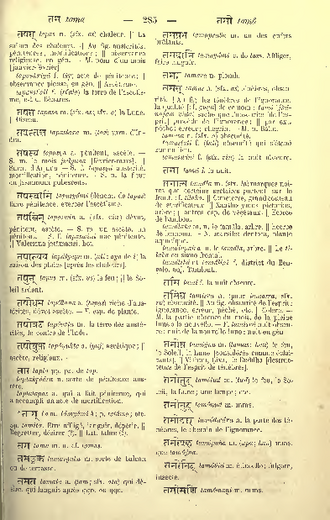
Original text · French · substantive neuter
tamas tamas n. (sfx. as) ténèbres, obscurité. Au fig. les ténèbres de l'ignorance, la qualité [cf. guṇa] de ce nom: tamo jñānajam viddi sache que l'obscurité [de l'esprit] procède de l'ignorance; par ext. péché; erreur; chagrin. — M. n. Rāhu. tamasa n. (sfx. a) obscurité. tamastati f. (tali) obscurité qui s'étend sur un lieu. tamasvinī f. (sfx. vin) la nuit obscure.
Occurrences in source texts (12)
IVU 5 occurrences
MAN 1 occurrence
SiSa 3 occurrences
SVU 2 occurrences
VBT 1 occurrence
Continue with AYI Free
Image source: AYI archive.