

tapas तपस् – asceticism; heat; discipline
substantive masculine · substantive neuter
Dictionary sources
AYI dictionary substantive neuter
Cappeller 1891 substantive neuter
Original text · English · substantive neuter
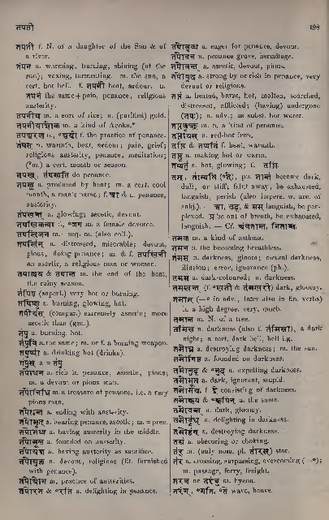
tápas ·n. warmth, heat, ardour; pain, grief; religious austerity, penance, meditation; (*m.) a cert. month or season.
Monier-Williams 1872 substantive neuter
Original text · English · substantive neuter
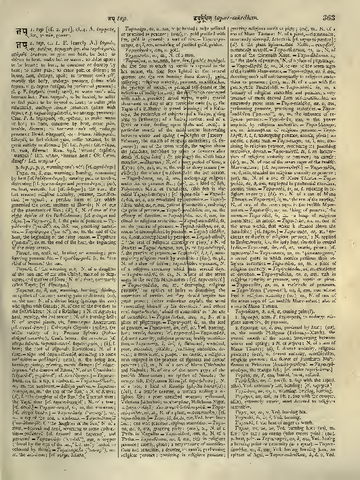
Tapas, as, n. warmth, heat, fire, (pañca tapāṃsi, the five fires to which an ascetic is exposed in the hot season, viz. four fires lighted in the several quarters and the sun burning from above); pain, suffering; religious austerity, penance, mortification, the practice of mental or personal self-denial or the infliction of bodily tortures; the meditation connected with such a practice; moral virtue, merit; special observance or duty of any particular caste (e. g. the Tapas of a Brāhman is sacred learning; of a Kṣa- triya, the protection of subjects; of a Vaiśya, giving alms to Brāhmans; of a Śūdra, service; and of a Ṛṣi or saint, feeding upon herbs and roots); a particular month of the cold season intervening between winter and spring (= Māgha or January- February, the month of religious austerities; cf. ta- pasya); one of the seven worlds, the region above the Jana-loka, inhabited by saints or devotees after death [cf. tapo-loka]; (in astrology) the ninth lunar mansion, = dharma; N. of a long period of time, a Kalpa; (ās, as), m. n. the cold or dewy season (= śiśira); the winter (= himartu); the hot season.
Petersburger 1855 substantive neuter
Original text · German · substantive neuter
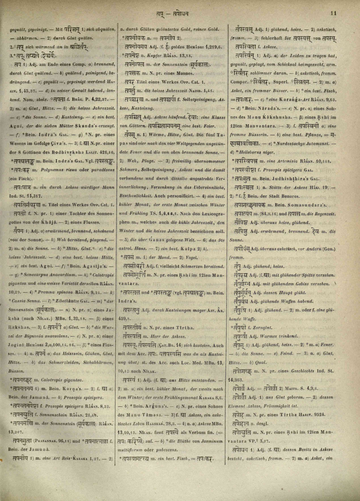
tápas (von 1. tap) n. 1〉 Wärme, Hitze, Gluth NAIGH. 1,17. (agne) yebhi̱stapòbhi̱radàho̱ jarū̀tham ṚV. 7,1,7. tapā̀ tapiṣṭha̱ tapàsā̱ tapàsvān ṚV. 6,5,4. ṚV. 6,5,8. ṚV. 6,49,16. ṚV. 10,16,4. AV. 7,77,2. AV. 11,1,16. viṣṇùryunaktu bahu̱dhā tapā̀ṃsi AV. 5,26,7. VS. 37,11. VS. 37,15. VS. 12,15. ŚĀṄKH. ŚR. 3,19,16. ŚĀṄKH. ŚR. 4,13,3. die fünf Feuer, denen sich der Asket in der heissen Jahreszeit aussetzt, sind vier nach den vier Weltgegenden angezündete Feuer und die von oben brennende Sonne (vgl. RAGH. 13,41): pañcatapo 'nvitāḥ R. 3,10,5. grīṣme pañcatapāstu syādvarṣāsvabhrāvakāśikaḥ M. 6,23. R. 1,43,14. R. 1,63,24. R. GORR. 2,28,26. BRAHMA-P. in LA. 50,7. BHĀG. P. 4,23,6. — 2〉 Weh, Plage: na tamaṃho̱ na dùri̱tāni̱ na tapa̱ḥ kutàśca̱na (naśate) ṚV. 7,82,7. — 3〉 freiwillig übernommener Schmerz, Selbstpeinigung; daher a〉 Askese überh., bestehe sie in Enthaltsamkeit, Abhärtung oder schmerzlichen Uebungen; und b〉 die mit der Askese verbundene und durch dieselbe angestrebte Verinnerlichung, Versenkung in das Unsinnliche, Beschaulichkeit. Dieser Begriff findet sich schon in einigen späteren Liedern des ṚV. und ist im AV. ganz gewöhnlich. Er wird durch Busse insofern nicht richtig wiedergegeben, als die brahmanische Askese keine Genugthuung ist. = kṛcchrādikarman AK. 3,4,30,234. H. an. 2,580. = cāndrāyaṇādi MED. s. 23. = vrata TRIK. 3,3,445. = niyama H. 82. H. ś. 152. = dharma TRIK. H. an. MED. sa̱pta̱ṛ̱ṣaya̱stapàse̱ ye nìṣe̱duḥ ṚV. 10,109,4. tapàsa̱stanmàhi̱nājā̀ya̱taikàm ṚV. 129,3. ṚV. 183,1. ṛ̱taṃ cà sa̱tyaṃ cā̱bhī̀ddhā̱ttapa̱so 'dhyàjāyata (mit Anspielung auf die Grundbedeutung des Wortes; vgl. VS. 1,18 und dīptatapas BRAHMA-P. in LA. 52,7) ṚV. 10,190,1. AV. 4,34,1. AV. 11,1,26. ŚAT. BR. 12,1,3,23. ṛ̱ta̱vā̱kenà sa̱tyenà śra̱ddhayā̱ tapàsā su̱taḥ ṚV. 9,113,2. ma̱timā dhèhi me̱dhāmathò no dhehi̱ tapà indri̱yaṃ cà AV. 6,133,4. bra̱hma̱caryèṇa̱ tapàsā̱ rājā̀ rā̱ṣṭraṃ vi ràkṣati AV. 11,5,17. dī̱kṣā, tapàḥ VS. 4,7. VS. 5,6. AV. 12,1,1. AV. 19,40,3. AV. 19,41,1. ŚAT. BR. 3,6,2,9. tapàḥ, karmà AV. 11,8,6. brahmà, tapàḥ AV. 5,6,9. AV. 8,10,25. tapàḥ, śramàḥ AV. 4,35,2. AV. 6,133,3. ŚAT. BR. 9,5,1,2. ma̱nyuḥ, tapàḥ personif. ṚV. 10,83,2. ṚV. 10,83,3; vgl. AV. 5,18,9. Manyu heisst ein Sohn des Tapas ṚV. ANUKR. — kiṃ nu malaṃ kimajinaṃ kimu śmaśrūṇi kiṃ tapaḥ AIT. BR. 7,13. TBR. 2,2,9,3. ŚĀṄKH. GṚHY. 4,5. vidyātapobhyām ĀŚV. ŚR. 9,3. tapase yayau R. 1,46,7. tapastaptvā M. 1,33. yatra — mṛdu tīvraṃ tapo dīrghaṃ tepāte BHĀG. P. 3,4,22. tapaścarati P. 3,1,15. tapasaścaraṇaiḥ M. 6,75. tapaḥ kuryāt M. 11,233. HIT. Pr. 17. racitaṃ tapaḥ DHŪRTAS. 83,12. tapaścitam MBH. 5,3837. saṃcinuyādbrahmādhigamikaṃ tapaḥ M. 2,164. ciraṃ dhṛtena tapasā BHĀG. P. 2,9,19. gaṅgāyamunayormadhye yadabhūdvipulaṃ tapaḥ HARIV. 12196. bhikṣoḥ svaṃ tapoyogaśamādayaḥ H. 76. tapaḥ paraṃ kṛtayuge tretāyāṃ jñānamucyate . dvāpare yajñamevāhurdānamekaṃ kalau yuge .. M. 1,86. prāṇāyāmāḥ paraṃ tapaḥ M. 2,83. M. 6,70. tapasā (śudhyanti) vedavittamāḥ M. 5,107. ṛṣayaḥ — tapasaiva prapaśyanti trailokyaṃ sacarācaram M. 11,236. fgg. vedābhyāso hi viprasya tapaḥ paramihocyate M. 2,166. fg. teṣveva triṣu (die Eltern und der Lehrer) tuṣṭeṣu tapaḥ sarvaṃ samāpyate M. 228. fg. brāhmaṇasya tapo jñānaṃ tapaḥ kṣatrasya rakṣaṇam . vaiśyasya tu tapo vārttā tapaḥ śūdrasya sevanaṃ .. M. 11,235. rakṣāyogādayamapi (d. i. rājā) tapaḥ pratyahaṃ saṃcinoti ŚĀK. 47. tapaḥ śārīram, vāṅmayam, mānasam BHAG. 17,14. fgg. pl. M. 2,97. BHAG. 8,28. BHAG. 11,48. R. GORR. 1,66,4. R. GORR. 1,67,3. ŚĀK. 171. ŚĀK. 99,18. KATHĀS. 4,27. PRAB. 5,13. atapas der keine Askese übt M. 4,190. mahātapas ein grosser Asket M. 10,107. dīrghatapas adj. HARIV. 14532. — 4〉 ein best. kühler Monat, der erste Monat der zwischen Winter und Frühling fallenden Jahreszeit (der Monat der Askese; vgl. tapasya)ḥ tapàśca tapa̱syàśca śaiśi̱rāvṛ̱tū VS. 15,57. tapase VS. 7,30. VS. 22,31. ŚAT. BR. 4,3,1,19. tapastapasyau śiśiraḥ SUŚR. 1,19,8. P. 4,4,128, Vārtt. 2, Sch. COLEBR. Misc. Ess. I, 108. VP. 225. tapasi (so ist zu lesen) mandagabhastirabhīṣumān ŚIŚ. 6,63. Nach den Lexicographen m. AK. 1,1,3,15. H. 153 (nach dem Schol. auch n.). H. an. 2,581. MED. s. 23. m. die kühle Jahreszeit (śiśira) H. an. MED. der Winter (himartu) TRIK. 3,3,445. die heisse Jahreszeit NAYANĀNANDA_zu_AK. ŚKDR. — 5〉 N. einer der 7 Welten, der über Janas gelegenen, H. an. MED. VEDĀNTAS. (Allah.) No. 70. Vgl. tapoloka. — 6〉 in der Astrol. N. des 9ten Hauses (= dharma) VARĀH. BṚH. 1,19. VARĀH. BṚH. 9,1. VARĀH. BṚH. 9,4. — 7〉 N. einer best. grossen Zeitperiode (kalpa) VĀYU-P._in_Verz. d. Oxf. H. 51,b,41. — Vgl. tāpasa.

Böhtlingk 1879 substantive neuter
Original text · German · substantive neuter
tápas n. — 1〉 Wärme, Hitze, Glut. Die fünf Tapas sind vier nach den vier Weltgegenden angezündete Feuer und die von oben brennende Sonne. — 2〉 Weh, Plage. — 3〉 freiwillig übernommener Schmerz, Selbstpeinigung, Askese und die damit verbundene und durch dieselbe angestrebte Verinnerlichung, Versenkung in das Uebersinnliche, Beschaulichkeit. Auch personificirt. — 4〉 ein best. kühler Monat, der erste Monat zwischen Winter und Frühling TS. 1,4,14,1. Nach den Lexicographen m., welches auch die kühle Jahreszeit, den Winter und die heisse Jahreszeit bezeichnen soll. — 5〉 die über Janas gelegene Welt. — 6〉 das 9te astrol. Haus. — 7〉 ein best. Kalpa 2〉h〉.
Apte 1890 substantive masculine · substantive neuter
Original text · English · substantive masculine · substantive neuter
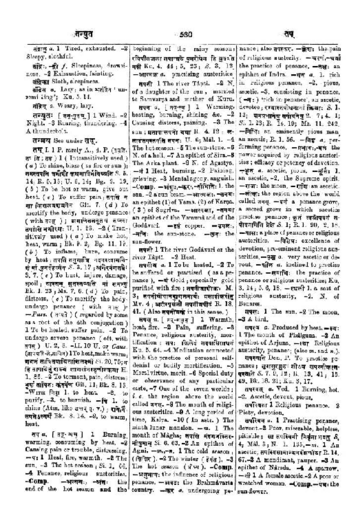
tapas n. [tap-asun] 1 Warmth, heat, fire. 2 Pain, suffering. 3 Penance, religious austerity, mortification; tapaḥ kiledaṃ tadavāptisādhanaṃ Ku. 5. 64. 4 Meditation connected with the practice of personal selfdenial or bodily mortification. 5 Moral virtue, merit. 6 Special duty or observance of any particular caste. 7 One of the seven worlds; i. e. the region above the world called janas. 8 The month of religious austerities. 9 A long period of time, Kalpa. 10 (In astr.) The ninth lunar mansion. — m. 1 The month of Māgha; tapasi maṃdagabhastirabhīṣumān Śi. 6. 63. 2 An epithet of Agni. — m., — n. 1 The cold season; (śiśira). 2 The winter (hemaṃta). 3 The hot season (grīṣma). Comp. — anubhāvaḥ the influence of religious penance. — avaṭaḥ the Brahmāvarta country. — kara a. undergoing ([Page 0530-c]) penance; also tapaskara. — kleśaḥ the pain of religious austerity. — caraṇaṃ, -caryā the practice of penance. — takṣaḥ an epithet of Indra. — dhana a. 1 rich in religious penance. 2 pious, ascetic. 3 consisting in penance, — (naḥ) ‘rich in penance’, an ascetic, devotee; ramyāstapodhanānāṃ kriyāḥ Ś. 1. 13; śamapradhāneṣu tapodhaneṣu Ś. 2. 7; Ś. 4. 1; Śi. 1. 23; R. 14. 19; Ms. 11. 242. — nidhiḥ an eminently pious man, an ascetic; R. 1. 56. — niṣṭha a. performing penance. — prabhāvaḥ, -balaṃ the power acquired by religious austerities; efficacy or potency of devotion. — bhṛt a. ascetic, pious. — mūrtiḥ 1 an ascetic. 2 the Supreme spirit. — rājaḥ the moon. — rāśiḥ an ascetic. — lokaḥ the region above the world called janas. — vanaṃ a penance-grove, a sacred grove in which ascetics practise penance; kṛtaṃ tvayopavanaṃ tapovanamiti prekṣe Ś. 1; R. 1. 90, R. 2. 18. — vāsaḥ a place of penance or religious austerities. — viśeṣaḥ excellence of devotion, pre-eminent religious austerities. — vṛddha a. very ascetic or devout. — śīla a. inclined to practise penance. — samādhiḥ the practice of penance or religious austerities; Ku. 3. 24; Ku. 5. 6, Ku. 5. 18. — sthalī 1 a seat of religious austerity. 2 N. of Benares.
Cappeller 1887 substantive neuter
Original text · German · substantive neuter
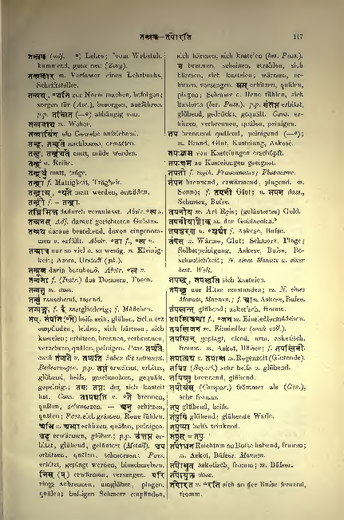
tápas n. Wärme, Glut; Schmerz, Plage; Selbstpeinigung, Askese, Buße, Beschaulichkeit; N. eines Monats u. einer best. Welt.
Burnouf 1866 substantive neuter
Original text · French · substantive neuter
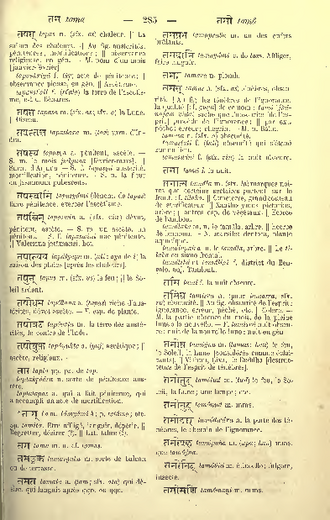
tapas tapas n. (sfx. as) chaleur. La saison. des chaleurs. Au fig. austérités, pénitences, mortifications; observance religieuse, en gén. — M. nom d'un mois [janvier-février]. tapaskriyā f. (kṛ) acte de pénitence; observance pieuse, en gén. Ascétisme. tapassthalī f. (sthala) la terre de l'ascétisme, c-à-d. Bénarès.
Occurrences in source texts (10)
HP 1 occurrence
PYS 4 occurrences
SiSa 2 occurrences
Continue with AYI Free
Image source: AYI archive.