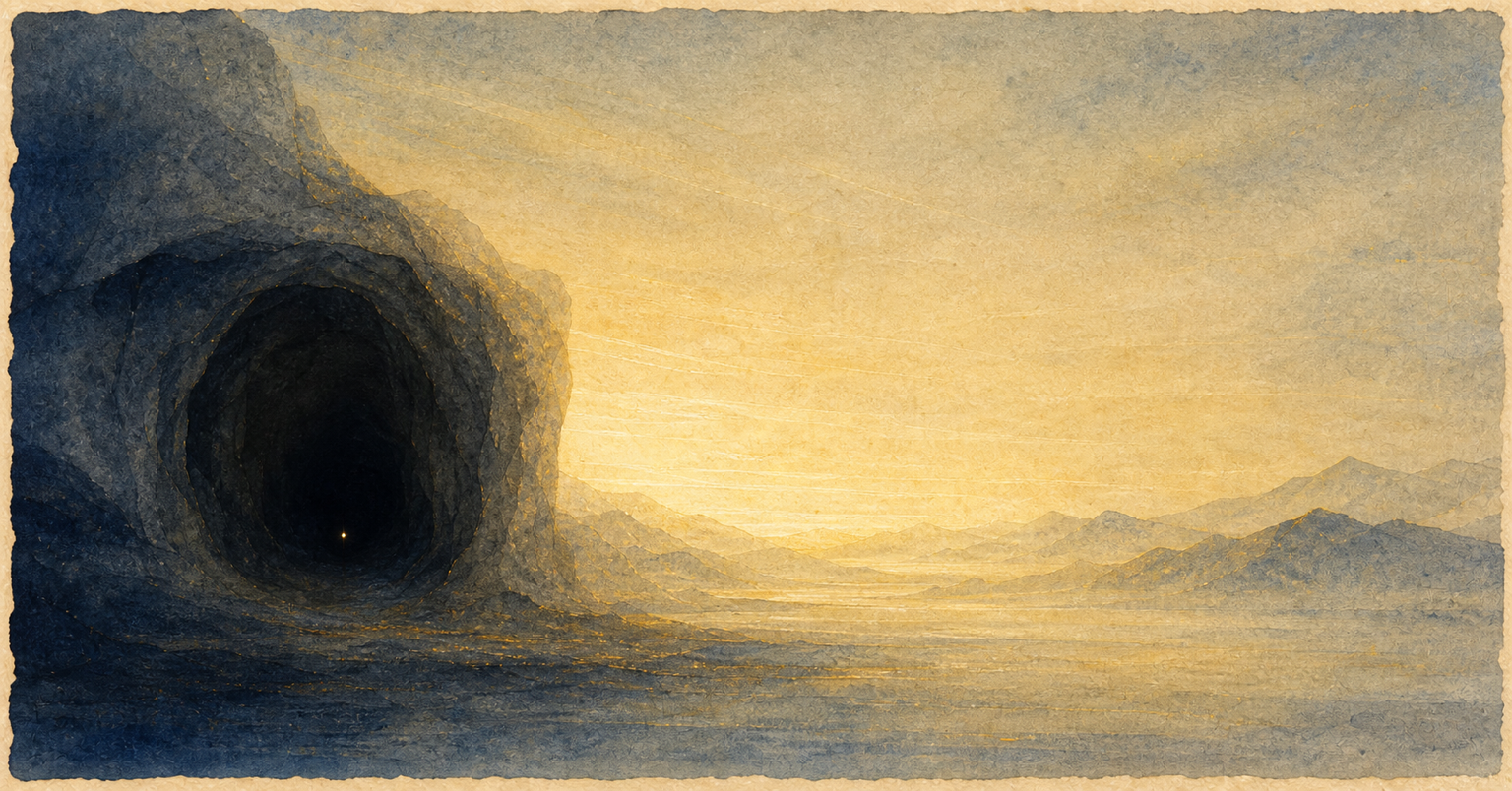
SVU 3.19-3.21: Beyond the Senses

SVU 3.19-3.21: The Paradoxical, Subtle and Immeasurable Self

Without sense organs of its own, the Self perceives everything; it is smaller than the smallest, greater than the greatest, and is known as the bodiless Lord.

Dr. Ronald Steiner Dr. Ronald Steiner Nils Jacob Liersch Nils Jacob Liersch
Śvetāśvatara Upaniṣad 3.19
अपाणिपादो जवनो ग्रहीता पश्यत्यचक्षुः स शृणोत्यकर्णः |
apāṇi-pādo, javano grahītā; paśyaty acakṣuḥ, sa śṛṇoty akarṇaḥ | Analysis ▾ Analysis ▴
apāṇi
bahuvrīhi-compund
adjective
without hands
pādaḥ
nominative singular
substantive masculine
without hands and feet
javanaḥ
nominative singular masculine
adjective
swift
grahītā
nominative singular
substantive masculine
the grasper
paśyati
3rd person singular aktive present
verbal root
he sees
acakṣuḥ
nominative singular masculine
adjective
without eyes
saḥ
nominative singular masculine
pronoun dem
he
śṛṇoti
3rd person singular aktive present
verbal root
he hears
akarṇaḥ
nominative singular masculine
adjective
without ears
स वेत्ति वेद्यं न च तस्यास्ति वेत्ता तमाहुरग्र्यं पुरुषं महान्तम् ||19||
sa vetti vedyaṃ, na ca tasyāsti vettā; tam āhur agryaṃ, puruṣaṃ mahāntam ||19|| Analysis ▾ Analysis ▴
saḥ
nominative singular masculine
pronoun dem
he
vetti
3rd person singular aktive present
verbal root
he knows
vedyam
accusative singular neuter future participle passive
verbal root
what is to be known
na
particle
not
ca
particle
and, but
tasya
genitive singular masculine
pronoun dem
of him
asti
3rd person singular aktive present
verbal root
exists
vettā
nominative singular
substantive masculine
a knower
tam
accusative singular masculine
pronoun dem
him
āhuḥ
3rd person plural aktive perfekte
verbal root
they call
agryam
accusative singular masculine
adjective
the first, foremost
puruṣam
accusative singular
substantive masculine
the Puruṣa
mahāntam
accusative singular masculine
adjective
the great
Metre: Pāda 1: Triṣṭubh with Vajrā ending; Pāda 2: Triṣṭubh with Vajrā ending; Pāda 3: Triṣṭubh with Śālinī ending — 12 syllables; Pāda 4: Triṣṭubh with Vajrā ending
Without hands and feet (apāṇi-pādaḥ | nom sg), [he is] swift (javanaḥ | nom sg m), the grasper (grahītā | nom sg); he sees (paśyati | 3p sg act pres) without eyes (acakṣuḥ | nom sg m), he (saḥ | nom sg m) hears (śṛṇoti | 3p sg act pres) without ears (akarṇaḥ | nom sg m). He (saḥ | nom sg m) knows (vetti | 3p sg act pres) what is to be known (vedyam | acc sg n pfp), but (ca) no (na) knower (vettā | nom sg) of him (tasya | gen sg m) exists (asti | 3p sg act pres). They call (āhuḥ | 3p pl act perf) him (tam | acc sg m) the first great Puruṣa (agryaṃ puruṣaṃ mahāntam | acc sg).
Dr. Ronald Steiner - 2026 - historically literal
Without hands or feet he moves swiftly and grasps; without eyes he sees, without ears he hears. He knows everything knowable, yet no one knows him. He is called the primordial, great Puruṣa.
Dr. Ronald Steiner - 2026 - modern transfer

The Bhāṣya attributed to Śaṅkara describes the unconditioned Paramātman: without hands he grasps, without eyes he sees, and without ears he hears; without a thinking organ he knows everything. Because nothing else exists beside him, there is no second knower of him.

Śaṅkara's Bhāṣya on the Śvetāśvatara Upaniṣad

Śaṅkarānanda reads the organless knower as the Lord identical with the Jīva. His movement, grasping and knowing do not depend on bodily instruments. He is self-luminous, complete and prior to everything else as its cause.

Śaṅkarānanda's Śvetāśvataropaniṣaddīpikā

Nārāyaṇa resolves the paradox of absent organs through omnipresence: one who is present everywhere reaches everything without feet and grasps everything without hands. He knows every knowable thing but himself remains without a higher knower.

Nārāyaṇa's Śvetāśvataropaniṣaddīpikā

Vijñānabhagavat explains seeing and hearing as immediate self-presence in organ, function and object. A further knower behind self-luminous consciousness would generate an infinite regress. The Puruṣa is therefore the primordial witness and is not himself the object of another knowledge.

Vijñānabhagavat's Śvetāśvataropaniṣadvivaraṇa
Ohn’ Hände greift er, ohne Füße läuft er, Sieht ohne Augen und hört ohne Ohren, Er weiß, was wißbar, aber ihn weiß niemand, Er heißt der Erstlings-Purusha, der Große.<1>
<1: Das Subjekt des Erkennens allein ist, greifend, laufend, sehend, hörend, obgleich die betreffenden Organe gar nicht Subjekt sind; und dieses individuelle Subjekt ist das Ursubjekt, „das Große“ (mahat, buddhi) der Sāṅkhyalehre.>
Paul Deussen - 1921
Without foot or hand, he is swift and a seizer! He sees without eye; he hears without ear! He knows whate’er is to be known; him there is none who knows! Men call him the Great Primeval Person.
Robert Hume - 1921
Having no hands and feet, He can reach fast and can grasp; without eyes, He can see; without ears, He can hear, (without a mind) He knows what is to be known; there is no knower of His; (they) speak of Him as the First, Perfect and Mighty Being.
Siddhesvar Varma Shastri - 1916
Ohn’ Hände greift er, ohne Füße läuft er, Sieht ohne Augen und hört ohne Ohren, Er weiß, was wißbar, aber ihn weiß niemand, Er heißt der Erstlings-Purusha, der Große.<1>
<1: Das Subjekt des Erkennens allein ist, greifend, laufend, sehend, hörend, obgleich die betreffenden Organe gar nicht Subjekt sind; und dieses individuelle Subjekt ist das Ursubjekt, „das Große“ (mahat, buddhi) der Sāṅkhyalehre.>
Paul Deussen - 1897
Grasping without hands, hasting without feet, he sees without eyes, he hears without ears. He knows what can be known, but no one knows him; they call him the first, the great person (purusha).
F. Max Müller - 1884
Without hands and feet he speeds, he takes; without eye he sees, without ear he hears. He knows all that is to be known, yet none is there that knows him. They call him the supreme, great soul (Purusha).
Edward Röer - 1853
Śvetāśvatara Upaniṣad 3.20
अणोरणीयान्महतो महीयानात्मा गुहायां निहितो ऽस्य जन्तोः |
aṇor aṇīyān, mahato mahīyān; ātmā guhāyāṃ, nihito 'sya jantoḥ | Analysis ▾ Analysis ▴
aṇoḥ
genitive singular
substantive masculine
of the small
aṇīyān
nominative singular masculine comperative
adjective
smaller
mahataḥ
genitive singular neuter
adjective
of the great
mahīyān
nominative singular masculine comperative
adjective
greater
ātmā
nominative singular
substantive masculine
the Self
guhāyām
lokative singular
substantive feminine
in the cave, heart-cave
nihitaḥ
nominative singular masculine past participle passive
previx
verbal root
hidden
asya
genitive singular masculine
pronoun dem
of this
jantoḥ
genitive singular
substantive masculine
of the creature
तमक्रतुं पश्यति वीतशोको धातुप्रसादान्महिमानमीशम् ||20||
tam akratuṃ, paśyati vīta-śoko; dhātu-prasādān, mahimānam īśam ||20|| Analysis ▾ Analysis ▴
tam
accusative singular masculine
pronoun dem
him
akratum
accusative singular masculine
adjective
desireless
paśyati
3rd person singular aktive present
verbal root
he sees
vīta
upapada-compound past participle passive
previx
verbal root
free from
śokaḥ
nominative singular masculine
substantive masculine
free from sorrow
dhātu
tatpuruṣa-compound genitive
substantive masculine
of the constituent faculties
prasādāt
ablative singular
substantive masculine
through clarity
mahimānam
accusative singular
substantive masculine
greatness
īśam
accusative singular
substantive masculine
the Lord
Metre: Triṣṭubh with Vajrā ending
Smaller (aṇīyān | nom sg m comp) than the small (aṇoḥ | gen sg), greater (mahīyān | nom sg m comp) than the great (mahataḥ | gen sg n), [is] the Self (ātmā | nom sg), hidden (nihitaḥ | nom sg m ppp) in the cave (guhāyām | loc sg), [the heart-cave] of this (asya | gen sg m) creature (jantoḥ | gen sg). The one free from sorrow (vīta-śokaḥ | nom sg m) sees (paśyati | 3p sg act pres) him (tam | acc sg m), the desireless one (akratum | acc sg m), through the clarity of the constituent faculties (dhātu-prasādāt | abl sg), in his greatness (mahimānam | acc sg), as the Lord (īśam | acc sg).
Dr. Ronald Steiner - 2026 - historically literal
Smaller than the smallest and greater than the greatest, the Self rests in the heart-cave of every being. One who has become free from sorrow recognises, through inner clarity, the desireless Lord in his full greatness.
Dr. Ronald Steiner - 2026 - modern transfer

The Bhāṣya attributed to Śaṅkara gives two interpretations of dhātuprasāda: the grace of the creator through which true knowledge arises, or the clarity of the body-supporting senses after insight into the defects of objects has loosened their outward attachment.

Śaṅkara's Bhāṣya on the Śvetāśvatara Upaniṣad

Śaṅkarānanda understands the decisive prasāda either as the merciful glance of the creator of the world or as purity of the inner organ. Through it, the person free from Avidyā recognises the desireless Self in its greatness and as the independent Lord.

Śaṅkarānanda's Śvetāśvataropaniṣaddīpikā

Nārāyaṇa relates grace variously to the Self, the creator or the Guru. In the compound reading dhātuprasāda, it means the tranquillity and Sattva-purity of the senses. Both paths explain how the sorrowless person knows the hidden Self.

Nārāyaṇa's Śvetāśvataropaniṣaddīpikā

Vijñānabhagavat reads dhātuprasāda as the gathering of the senses: they are withdrawn from hard-to-control objects and the mind turns inward. The seeker thus knows the desireless inner Self as the non-dual Lord and becomes free from the sorrow of Saṃsāra.

Vijñānabhagavat's Śvetāśvataropaniṣadvivaraṇa
dhātuprasādān LV1958 ] dhātuḥ prasādān ASS1927; dhātuḥ prasādāt LV1958-app
Critical Apparatus
Des Kleinen Kleinstes und des Großen Größtes, Wohnt er als Selbst im Herzen dem Geschöpf hier; Den willensfreien schaut man, fern von Kummer, Durch Gottes Gnade als den Herrn, als Größe.<1>
<1: Vgl. über diesen Vers die Anmerkungen zu Mahānār. 10,1. Kāṭh. 2,20 (oben S. 247. 274).>
Paul Deussen - 1921
More minute than the minute, greater than the great, Is the Soul (Ātman) that is set in the heart of a creature here. One beholds Him as being without the active will, and becomes freed from sorrow—When through the grace (prasāda) of the Creator he sees the Lord (īś) and his greatness.<1>
<1: This stanza = TA. 10. 10. 1 (= Mahānār. 10. 1, or in the Atharva Recension 8. 3), and also, with slight variation, Kaṭha 2. 20.>
Robert Hume - 1921
Minuter than the minute, and greater than the great, the Soul is situated in the heart of this creature. By the grace of the Creator one can see that Mighty Controller who is free from appetites, and is redeemed from sorrow.
Siddhesvar Varma Shastri - 1916
Des Kleinen Kleinstes und des Großen Größtes, Wohnt er als Selbst im Herzen dem Geschöpf hier; Den willensfreien schaut man, fern von Kummer, Durch Gottes Gnade als den Herrn, als Größe.<1>
<1: Vgl. über diesen Vers die Anmerkungen zu Mahānār. 10,1. Kāṭh. 2,20 (oben S. 247. 274).>
Paul Deussen - 1897
The Self, smaller than small, greater than great, is hidden in the heart of the creature. A man who has left all grief behind, sees the majesty, the Lord, the passionless, by the grace of the creator (the Lord).<1>
<1: Cf. Taitt. Ār. X, 12 (10), p. 800; Kaṭh. Up. II, 20; above, p. 11. The translation had to be slightly altered, because the Śvetāśvataras, as Taittirīyas, read akratum for akratuḥ, and īśam for ātmanaḥ.>
F. Max Müller - 1884
He is more subtle than what is subtle, greater than what is great, the soul, dwelling in the cavity (of the heart) of this creature.<1> He who sees by the grace of the creator the glorious ruler as devoid of action, becomes free from grief.<2>
<1: Of all animate beings.>
<2: This is a view of the Sānkhya. The whole verse is taken from the Kāṭhaka U. (2,20), where, however kratu is read instead of kraturo, and ātmanaḥ instead of īśam.>
Edward Röer - 1853
Śvetāśvatara Upaniṣad 3.21
वेदाहमेतमजरं पुराणं सर्वात्मानं सर्वगतं विभुत्वात् |
vedāham etam, ajaraṃ purāṇaṃ; sarvātmānaṃ, sarva-gataṃ vibhutvāt | Analysis ▾ Analysis ▴
veda
1st person singular aktive present
verbal root
I know
aham
nominative singular
pronoun pers 1p
I
etam
accusative singular masculine
pronoun dem
this
ajaram
accusative singular masculine
adjective
the ageless
purāṇam
accusative singular masculine
adjective
the ancient
sarva
karmadhāraya-compound
pronoun quant
all
ātmānam
accusative singular
substantive masculine
the Self of all
sarva
karmadhāraya-compound
pronoun quant
everywhere
gatam
accusative singular masculine past participle passive
verbal root
omnipresent
vibhutvāt
ablative singular
substantive neuter
through all-pervasiveness
जन्मनिरोधं प्रवदन्ति यस्य ब्रह्मवादिनो हि प्रवदन्ति नित्यम् ||21||
janma-nirodhaṃ, pravadanti yasya; brahma-vādino, hi pravadanti nityam ||21|| Analysis ▾ Analysis ▴
janma
tatpuruṣa-compound genitive
substantive neuter
of birth
nirodham
accusative singular
substantive masculine
cessation
pravadanti
3rd person plural aktive present
previx
verbal root
they proclaim
yasya
genitive singular masculine
pronoun rel
of whom
brahma
upapada-compound
substantive neuter
Brahman
vādinaḥ
nominative plural
substantive masculine
the expounders of Brahman
hi
particle
for
pravadanti
3rd person plural aktive present
previx
verbal root
they proclaim
nityam
adverb
always
Metre: Pāda 1: Triṣṭubh with Vajrā ending; Pāda 2: Triṣṭubh with Vajrā ending; Pāda 3: Triṣṭubh with Vajrā ending; Pāda 4: Triṣṭubh with Vajrā ending — 12 syllables
I (aham | nom sg) know (veda | 1p sg act pres) this ageless, ancient Self of all (etam ajaraṃ purāṇaṃ sarvātmānaṃ | acc sg), omnipresent (sarva-gatam | acc sg m ppp) through its all-pervasiveness (vibhutvāt | abl sg). They proclaim (pravadanti | 3p pl act pres) of him (yasya | gen sg m) the cessation of birth (janma-nirodham | acc sg); for (hi) the expounders of Brahman (brahma-vādinaḥ | nom pl) proclaim [him] (pravadanti | 3p pl act pres) eternal (nityam).
Dr. Ronald Steiner - 2026 - historically literal
I have known this ageless, ancient Self, present in everything and pervading all. Those who know Brahman declare that it is no longer subject to birth and remains eternal.
Dr. Ronald Steiner - 2026 - modern transfer

The Bhāṣya attributed to Śaṅkara understands the verse as the confirming experience of the seer of the mantra. He knows the immutable, ancient and all-pervading Self. The Brahmavādins teach its birthlessness and thus its timeless permanence.

Śaṅkara's Bhāṣya on the Śvetāśvatara Upaniṣad

Śaṅkarānanda mentally supplies the ignorant as the subject of the first clause: they ascribe birth and destruction to the Self. The Brahmavādins, by contrast, have known reality and unequivocally teach it as birthless, deathless and eternal.

Śaṅkarānanda's Śvetāśvataropaniṣaddīpikā

Nārāyaṇa either considers the reading “they proclaim no birth” meaningful or understands the transmitted form in stages: the deluded speak in ignorance of birth and death, whereas those versed in the Veda recognise the eternity attested in many Vedic statements.

Nārāyaṇa's Śvetāśvataropaniṣaddīpikā

Vijñānabhagavat offers two interpretations of janmanirodha. Either world-creation and world-dissolution are actions of the Lord, or the cessation of further individual birth is intended. In both cases the seer confirms the same ageless, omnipresent Paramātman.

Vijñānabhagavat's Śvetāśvataropaniṣadvivaraṇa
Ich weiß ihn, jenen alterlosen Alten, In allem, es durchdringend, gegenwärtig, Als Selbst in allem, dem Entstehn absprechen Die Brahmanwisser, das sie ewig nennen.
Paul Deussen - 1921
I know this undecaying, primeval Soul of all, present in everything through immanence, Of whose exemption from birth they speak—For the expounders of Brahma (brahma-vādin) speak of Him as eternal.
Robert Hume - 1921
I know that Being, unchangeable, ever-fresh though old, the Self of all, Omnipresent owing to his immanence, whose absence of birth the expounders of Brahm (as is well-known) always declare.
Siddhesvar Varma Shastri - 1916
Ich weiß ihn, jenen alterlosen Alten, In allem, es durchdringend, gegenwärtig, Als Selbst in allem, dem Entstehn absprechen Die Brahmanwisser, das sie ewig nennen.
Paul Deussen - 1897
I know this undecaying, ancient one, the self of all things, being infinite and omnipresent. They declare that in him all birth is stopped, for the Brahma-students proclaim him to be eternal.<1><2><3>
<1: Cf. Taitt. Ār. III, 13, 1; III, 12, 7.>
<2: A. reads vedārūḍham, not B.>
<3: A. and B. read brahmavādino hi pravadanti.>
F. Max Müller - 1884
I know him, the undecaying, ancient, the soul of all, omnipresent by his pervading nature, whom the knowers of Bramha call unborn, whom the knowers of Bramha call everlasting.
Edward Röer - 1853

Continue with AYI Free

Illustrations: AI-generated.

Editor

Dr. Ronald Steiner

From Ulm

The "Yoga Doc" - Dr. Ronald Steiner is the founder of the AYI method. This method links traditional Ashtanga Yoga with innovative Yogatherapy and living Philosophy. This forms a practice that is personal for each and... more ›

Nils Jacob Liersch

Meine Begeisterung für Yoga, indische Philosophie und Sanskrit führte mich zum Studium der Indologie und Religionswissenschaft an der Universität Heidelberg. Seit 2004 befinde ich mich auf meinem persönlichen Yogaweg... more ›

Messages and ratings
2 messages

Please log in to write a message. Go to login

U
Zum gemeinsamen Rezitieren: https://youtu.be/l8I2UpavjjE
Wie greift der Ewige, der in mir wohnt, behende ohne Füße und Hände? Durch meine Füße und Hände.
Wie sieht ER ohne Augen, hört ohne Ohren? Durch meine Augen und Ohren.
Begreiflich? Ist wohl zu nah und zu inwendig, um vor Augen zu sein.
Wau. Vielen Dank fürs Teilen.
Ich bin so inspiriert von Deinen Inspirationen.