

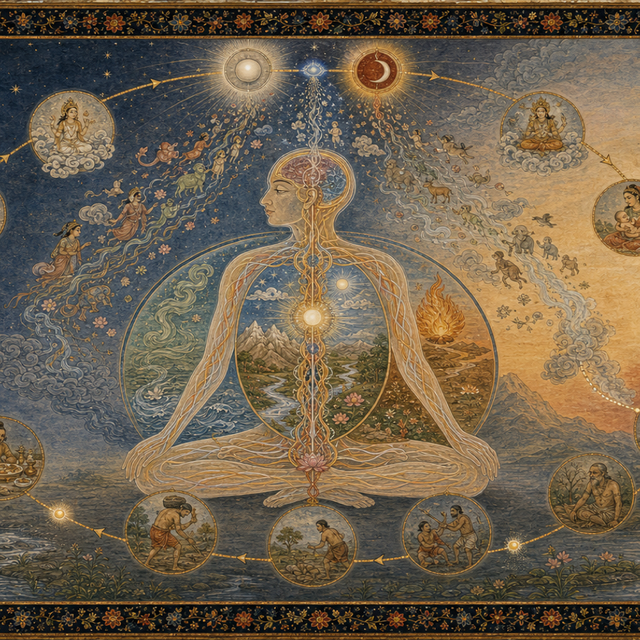

Śiva Saṃhitā 1: foundational knowledge, doctrines, Karma and knowledge of the Self

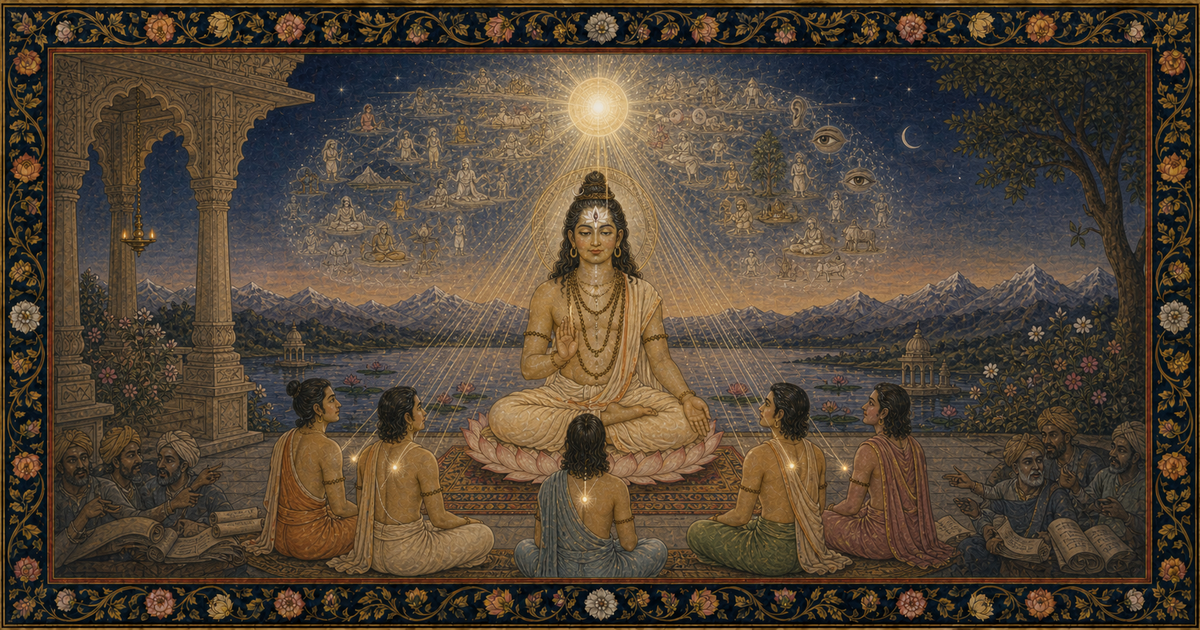
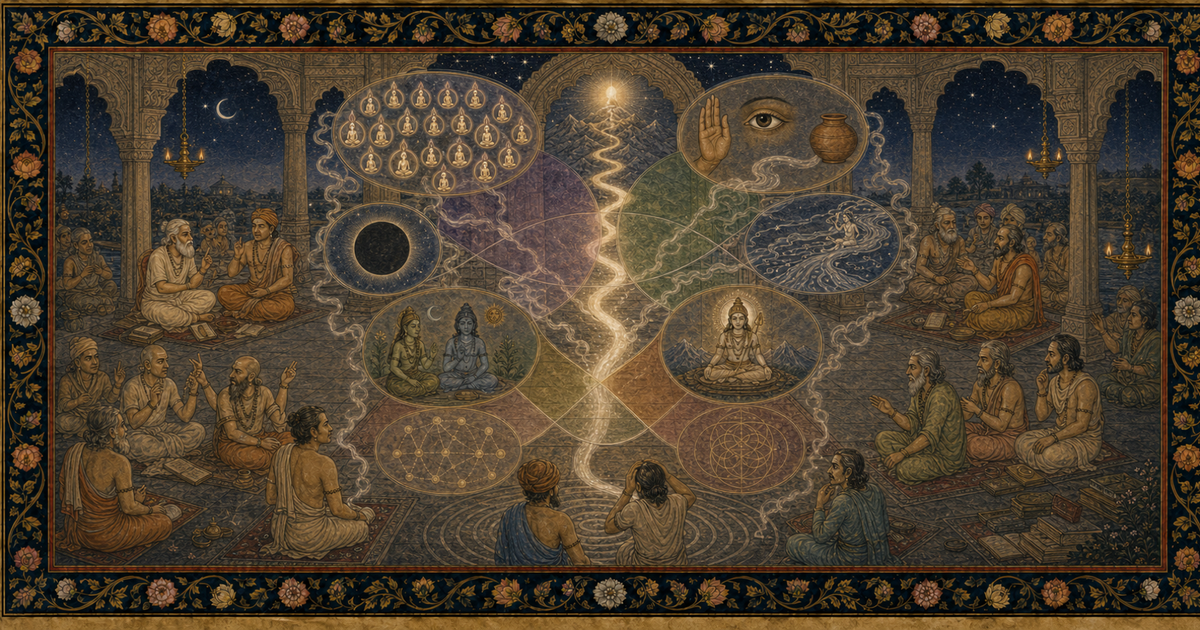
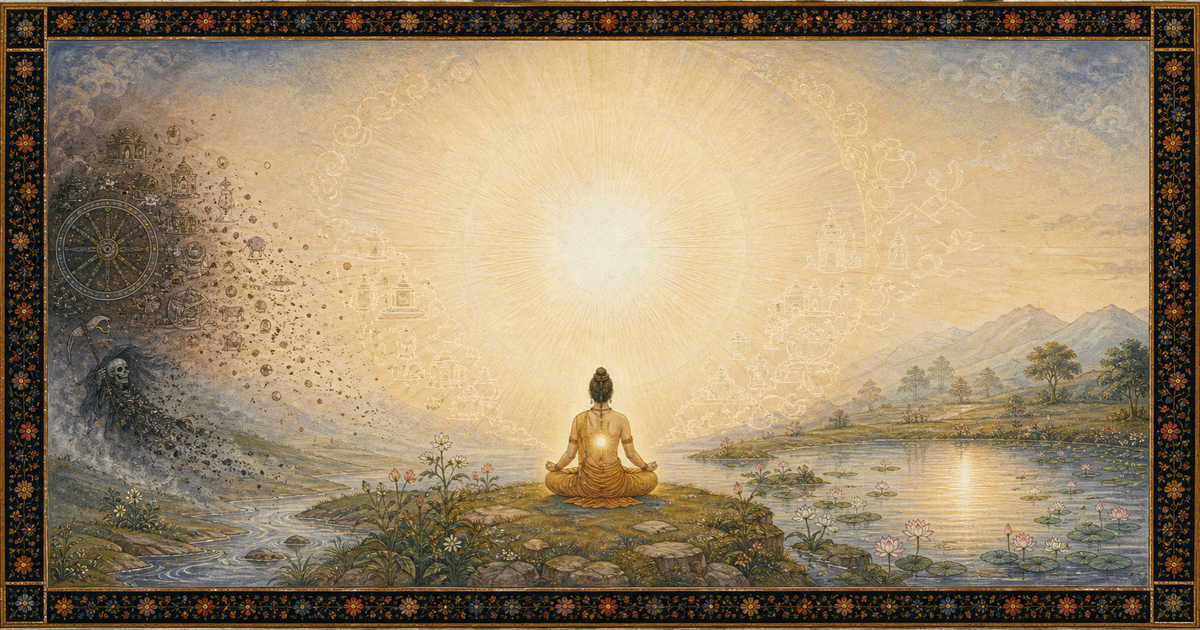
Chapter 1 unfolds the one knowledge, examines doctrines, Karma and Māyā, and leads to the recognition of the Self as the source of appearances. Its Sanskrit title is Layaprakaraṇa.

Dr. Ronald Steiner Dr. Ronald Steiner
SiSa 1.1-1.3: The one knowledge

Śiva Saṃhitā 1.1-1.3: the one knowledge and the teaching of Yoga

Īśvara establishes the unity of knowledge as the foundation and directs the teaching of Yoga towards knowledge of the Self rather than doctrinal disputes.

Śiva Saṃhitā 1.1
One single knowledge (ekaṃ jñānam | nom sg) [is] eternal (nityam | nom sg n), without beginning or end (ādyanta-śūnyam | nom sg n). No other (nānyat | nom sg n), nor anything else (kiṃcit | nom sg n), exists (vartate | 3p sg med pres) as true reality (vastu satyam | nom sg). Whatever appears (bhāsate | 3p sg med pres) as a difference (bhedaḥ | nom sg) within this [knowledge] (asmin | loc sg) certainly (vai) appears through the limitation of the senses (indriyopādhinā | ins sg): this [is an appearance] of knowledge (jñānasya | gen sg) and nothing else (nānyathaiva).
Dr. Ronald Steiner - 2026 - historically literal
Śiva Saṃhitā 1.2
Now (atha), indeed (hi), Īśvara (īśvaraḥ | nom sg), who is devoted to those who worship (bhakta-anuraktaḥ | nom sg m ppp), proclaims (vakti | 3p sg act pres) the teaching of yoga (yogānuśāsanam | acc sg), which grants liberation of the Self (ātma-mukti-pradāyakam | acc sg n) to all beings (sarva-bhūtānām | gen pl).
Dr. Ronald Steiner - 2026 - historically literal
Śiva Saṃhitā 1.3
Having abandoned (tyaktvā | abs) the opinion caused by false knowledge (mataṃ durjñāna-hetukam | acc sg) of those whose conduct is contentious (vivāda-śīlānām | gen pl), [he speaks] for the self-knowledge (ātma-jñānāya | dat sg) of beings (bhūtānām | gen pl) whose minds have no other goal (ananya-gati-cetasām | gen pl).
Dr. Ronald Steiner - 2026 - historically literal
SiSa 1.4-1.9: Limited paths

Śiva Saṃhitā 1.4-1.9: limited paths and the confusion of action

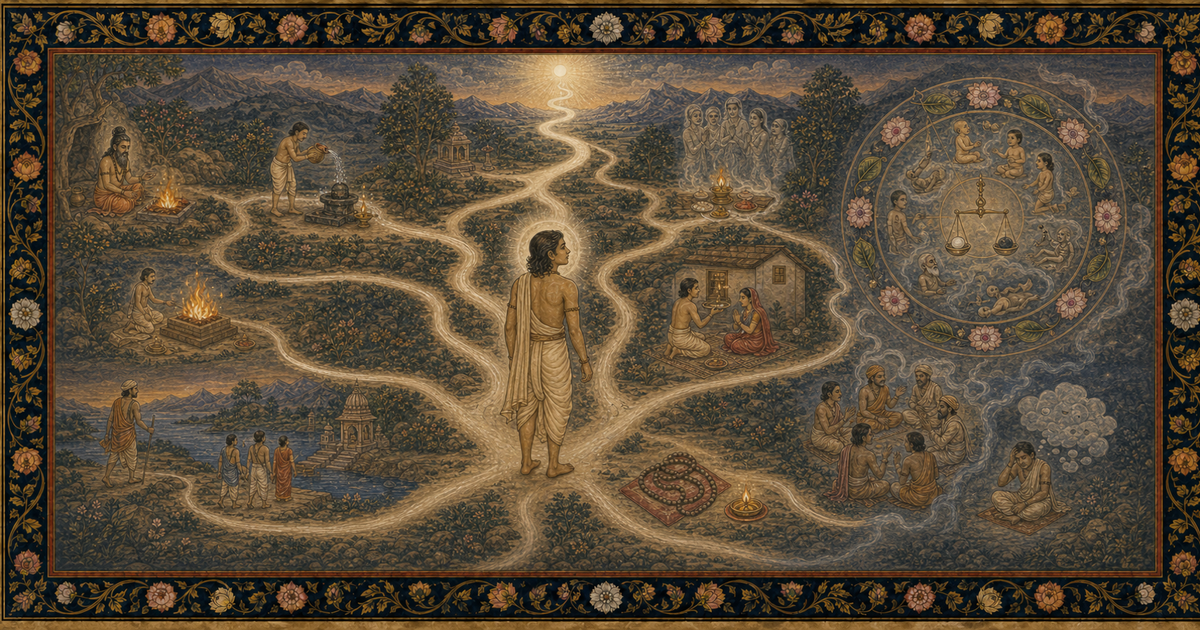
Many paths are named, yet attachment to practice, duty and doctrine leads further into confusion and the cycle of rebirth.

Śiva Saṃhitā 1.4
Some (ke cit | nom pl m) praise (praśaṃsanti | 3p pl act pres) truth (satyam | acc sg); others (apare | nom pl m) likewise (tathā) [praise] asceticism (tapaḥ | acc sg) and purity (śaucaṃ | acc sg). Some (ke cit | nom pl m) praise (praśaṃsanti | 3p pl act pres) patience (kṣamām | acc sg), and likewise (tathaiva) calm (śamam | acc sg) and sincerity (ārjavam | acc sg).
Dr. Ronald Steiner - 2026 - historically literal
Śiva Saṃhitā 1.5
Some (ke cit | nom pl m) praise (praśaṃsanti | 3p pl act pres) generosity (dānam | acc sg), others (apare | nom pl m) likewise (tathā) [praise] ancestral ritual (pitṛ-karma | acc sg). Some (ke cit | nom pl m) praise (praśaṃsanti | 3p pl act pres) action (karma | acc sg), and some (ke cit | nom pl m) [praise] supreme dispassion (vairāgyam uttamam | acc sg).
Dr. Ronald Steiner - 2026 - historically literal
Śiva Saṃhitā 1.6
Some (ke cit | nom pl m) discerning people (vicakṣaṇāḥ | nom pl m) praise (praśaṃsanti | 3p pl act pres) the actions of householders (gṛhastha-karmāṇi | acc pl); likewise (tathā), some (ke cit | nom pl m) recognise (viduḥ | 3p pl act perf) ritual beginning with the fire offering (agnihotra-ādikaṃ karma | acc sg) as the highest (paraṃ | acc sg n).
Dr. Ronald Steiner - 2026 - historically literal
Śiva Saṃhitā 1.7
Some (ke cit | nom pl m) praise (praśaṃsanti | 3p pl act pres) mantra yoga (mantra-yogaṃ | acc sg), some the visiting of sacred places (tīrtha-anusevanam | acc sg); thus (evaṃ) they proclaim (pravadanti | 3p pl act pres) indeed (hi) many means (bahūny upāyāni | acc pl) to liberation (muktaye | dat sg).
Dr. Ronald Steiner - 2026 - historically literal
Śiva Saṃhitā 1.8
Thus (evaṃ), people (janāḥ | nom pl) in the world (loke | loc sg) who are set in their views (vyavasitāḥ | nom pl m ppp) and know what is to be done and not to be done (kṛtya-akṛtya-vidaḥ | nom pl m) fall (gacchanti | 3p pl act pres) precisely (eva) into confusion (vyāmoham | acc sg), although they are freed (vimuktāḥ | nom pl m ppp) from bad actions (pāpa-karmabhiḥ | ins pl).
Dr. Ronald Steiner - 2026 - historically literal
Śiva Saṃhitā 1.9
Whoever (yaḥ | nom sg m) clings to this teaching (etan-mata-avalambī | nom sg m), having acquired (labdhvā | abs) guilt and merit (durita-puṇyake | acc du n), that person (saḥ | nom sg m) wanders (vibhramati | 3p sg act pres) here (atra), powerless (avaśaḥ | nom sg m), through the succession of birth and death (janma-mṛtyu-paramparām | acc sg).
Dr. Ronald Steiner - 2026 - historically literal
SiSa 1.10-1.16: Philosophical doctrines

Śiva Saṃhitā 1.10-1.16: disputes among philosophical doctrines

Empiricism, emptiness, Sāṃkhya, theism and other categories are presented as a multiplicity of concepts that obscures liberation.

Śiva Saṃhitā 1.10
By other (anyaiḥ | ins pl m) foremost [teachers] (śreṣṭhaiḥ | ins pl m) among the discerning (matimatāṃ | gen pl m), who are devoted to the vision of reality (tattva-ālokana-tatparaiḥ | ins pl m), many selves (ātmānaḥ bahavaḥ | nom pl) were taught (proktāḥ | nom pl m ppp): eternal (nityāḥ | nom pl m) and likewise (tathā) omnipresent (sarvagatāḥ | nom pl m).
Dr. Ronald Steiner - 2026 - historically literal
Śiva Saṃhitā 1.11
Whatever (yad | acc sg n) it may be (yat | acc sg n) that is an object of direct perception (pratyakṣa-viṣayaṃ | acc sg), nothing other than that (tadanyat | nom sg n) exists (nāsti | 3p sg act pres), so they say (cakṣate | 3p pl med pres). From where (kutaḥ) [could] such things as heaven (svarga-ādayaḥ | nom pl) exist (santi | 3p pl act pres)? Thus (iti) [say] others (anye | nom pl m) whose minds are made up (niścita-mānasāḥ | nom pl m).
Dr. Ronald Steiner - 2026 - historically literal
Śiva Saṃhitā 1.12
Others (anye | nom pl m) [assume] a stream of knowledge (jñāna-pravāham | acc sg), thus (iti); some (ke cit | nom pl m) regard (viduḥ | 3p pl act perf) emptiness (śūnyam | acc sg) as the highest (param | acc sg n). Others (apare | nom pl m) think (manyante | 3p pl med pres) that in reality (tattve | loc sg) there are precisely (eva) two (dvau | acc du m): nature and spirit (prakṛti-puruṣau | acc du).
Dr. Ronald Steiner - 2026 - historically literal
Śiva Saṃhitā 1.13
With radically different views (atyanta-bhinna-matayaḥ | nom pl m), turned away from ultimate reality (paramārtha-parāṅmukhāḥ | nom pl m), others (anye | nom pl m), however (tu), reflect (saṃcintya | abs) in this way (evam), according to their own understanding (yathā-mati) and according to what they have heard (yathā-śrutam | acc sg n ppp).
Dr. Ronald Steiner - 2026 - historically literal
Śiva Saṃhitā 1.14
Others (pare | nom pl m) declare (prāhuḥ | 3p pl act perf) this (idam | acc sg n) entire world (jagat | acc sg) to be without God (nir-īśvaram | acc sg n) and (ca) with God (sa-īśvaram | acc sg n). Those who are uncertain in their position (sthiti-kātarāḥ | nom pl m) speak (vadanti | 3p pl act pres) with various distinctions (vividhair bhedaiḥ | ins pl) and sound reasoning (su-yuktyā | ins sg).
Dr. Ronald Steiner - 2026 - historically literal
Śiva Saṃhitā 1.15
These (ete | nom pl m) and (ca) other (anye | nom pl m) distinctions of terminology (saṃjñā-bhedāḥ | nom pl), of various kinds (pṛthag-vidhāḥ | nom pl m), [taught] by sages (munibhiḥ | ins pl), have been taught (kathitāḥ | nom pl m ppp) in the scriptures (śāstreṣu | loc pl); these (ete | nom pl m) are indeed (hi) causes of the world's confusion (loka-vyāmoha-kārakāḥ | nom pl m).
Dr. Ronald Steiner - 2026 - historically literal
Śiva Saṃhitā 1.16
This (etad | acc sg n) doctrine (mataṃ | acc sg) of those inclined to dispute (vivāda-śīlānām | gen pl) cannot (na) be expressed (vaktuṃ | inf); [it] is not possible [to state conclusively] (śakyate | 3p sg pass pres). All people (janāḥ sarve | nom pl) wander (bhramanti | 3p pl act pres) within it (asmin | loc sg n), excluded from the path of liberation (mukti-mārga-bahiṣkṛtāḥ | nom pl m ppp).
Dr. Ronald Steiner - 2026 - historically literal
SiSa 1.17-1.19: The secret teaching of Yoga

Śiva Saṃhitā 1.17-1.19: the teaching of Yoga, its validation and secrecy

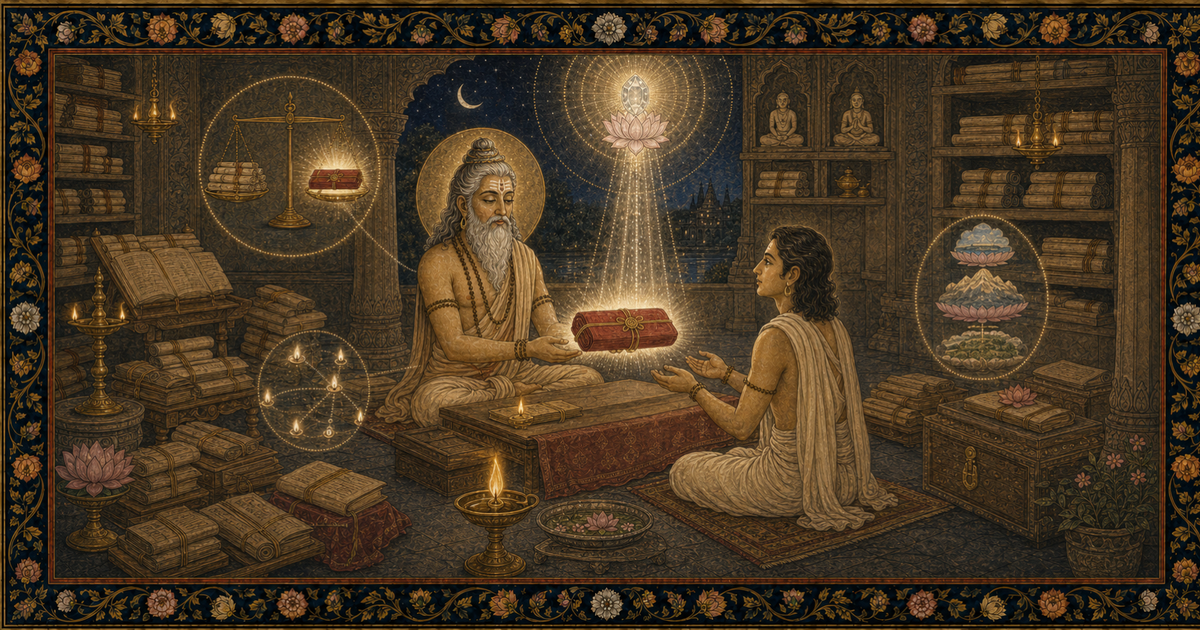
After the scriptures have been examined, the teaching of Yoga is held to be the highest instruction; it should be entrusted only to worthy devotees.

Śiva Saṃhitā 1.17
Having surveyed (ālokya | abs) all the scriptures (sarva-śāstrāṇi | acc pl) and (ca) examined them (vicārya | abs) again (punaḥ) and again (punaḥ), this (idam | nom sg n) one (ekaṃ | nom sg n), perfected (suniṣpannaṃ | nom sg n ppp) teaching of yoga (yoga-śāstraṃ | nom sg) is regarded (matam | nom sg n ppp) as supreme (paraṃ | nom sg n).
Dr. Ronald Steiner - 2026 - historically literal
Śiva Saṃhitā 1.18
When this (yasmin | loc sg n) is known (jñāte | loc sg n ppp), this (idaṃ | nom sg n) all (sarvam | nom sg n) becomes (bhavati | 3p sg act pres) known (jñātam | nom sg n ppp); [that is] certain (niścitam | nom sg n ppp). Effort (pariśramaḥ | nom sg) is to be directed (kāryaḥ | nom sg m pfp) towards this (asmin | loc sg n); what (kim | nom sg n) [use is there in] anything else (anyat | nom sg n) said by scripture (śāstra-bhāṣitam | nom sg n ppp)?
Dr. Ronald Steiner - 2026 - historically literal
Śiva Saṃhitā 1.19
This (idaṃ | acc sg n) teaching of yoga (yoga-śāstram | acc sg), to be kept secret (gopyam | acc sg n pfp) and explained (paribhāṣitam | acc sg n ppp) by us (asmābhiḥ | ins pl), is to be given (pradātavyam | acc sg n pfp) to a deeply devoted person (su-bhaktāya | dat sg m) and (ca) a great soul (mahātmane | dat sg m) in the three worlds (trailokye | loc sg).
Dr. Ronald Steiner - 2026 - historically literal
SiSa 1.20-1.31: Karma and knowledge

Śiva Saṃhitā 1.20-1.31: Karma, its fruits and the turn towards knowledge

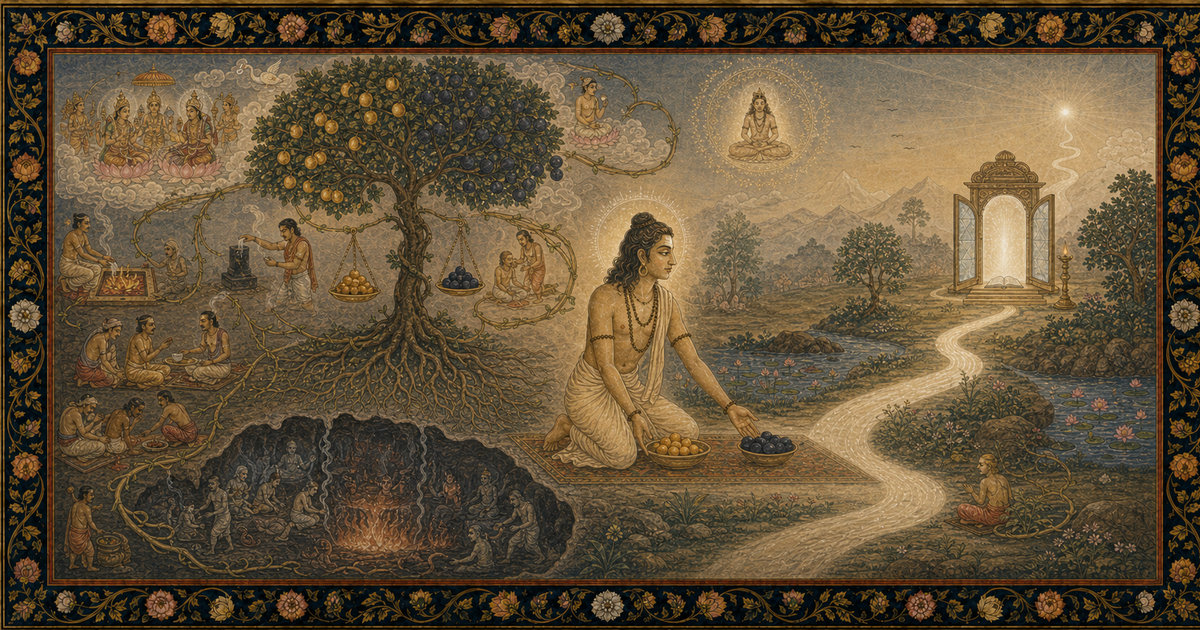
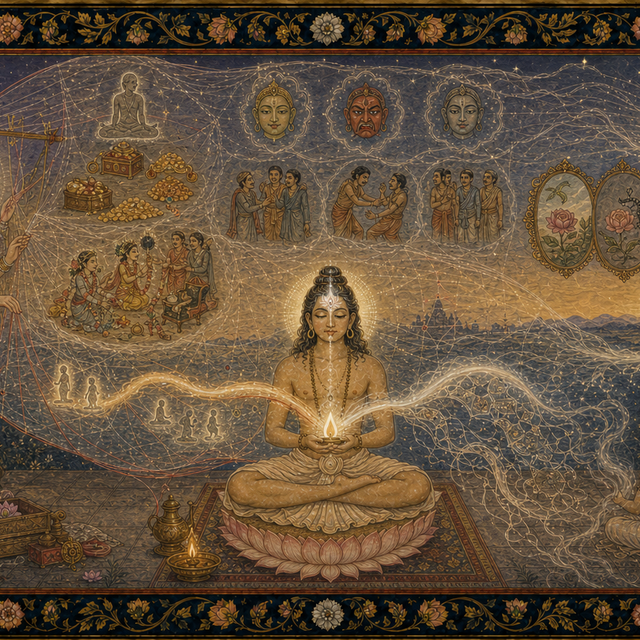
The path of action produces merit, demerit, heaven and hell; the Yogi lets go of the pursuit of its fruits and turns towards knowledge.

Śiva Saṃhitā 1.20
The Veda (vedaḥ | nom sg) is regarded (mataḥ | nom sg m ppp) as twofold (dvidhā): as a section on action (karma-kāṇḍaṃ | acc sg) and a section on knowledge (jñāna-kāṇḍam | acc sg), thus (iti). The distinction (bhedaḥ | nom sg) between the section on knowledge (jñāna-kāṇḍasya | gen sg) and action (karmaṇaḥ | gen sg) also exists (bhavati | 3p sg act pres) in a twofold form (dvi-vidhaḥ | nom sg m).
Dr. Ronald Steiner - 2026 - historically literal
Śiva Saṃhitā 1.21
The section on action (karma-kāṇḍam | nom sg) is twofold (dvi-vidham | nom sg n), founded on prohibition and prescription (niṣedha-vidhi-pūrvakam | nom sg n). When a prohibited action is performed (niṣiddha-karma-karaṇe | loc sg), guilt (pāpam | nom sg) certainly (niścitam) arises. When an action is performed (karma-karaṇe | loc sg) according to the prescription (vidhinā | ins sg), merit (puṇyam | nom sg) certainly (niścitam) arises.
Dr. Ronald Steiner - 2026 - historically literal
Śiva Saṃhitā 1.22
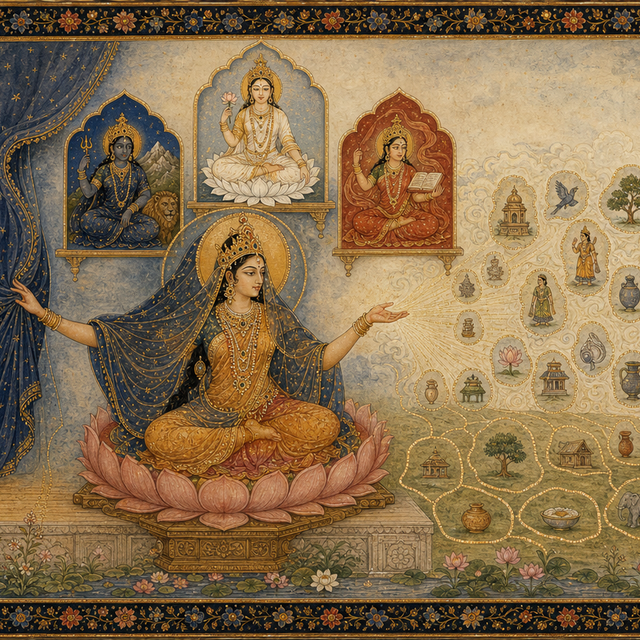
The body of prescriptions (vidhi-kūṭaḥ | nom sg) is threefold (tri-vidhaḥ | nom sg m), namely according to what is regular, occasion-dependent and desire-driven (nitya-naimittika-kāmyataḥ). When what is regular (nitye | loc absl sg n) has not been done (akṛte | loc absl sg n ppp), guilt (kilbiṣam | nom sg) arises; from what is desire-driven (kāmye | loc sg n) and occasion-dependent (naimittake | loc sg n), a result (phalam | nom sg) arises.
Dr. Ronald Steiner - 2026 - historically literal
Śiva Saṃhitā 1.23
The result (phalam | nom sg), however, is to be understood (jñeyam | nom sg n pfp) as twofold (dvi-vidham | nom sg n): heaven (svargaḥ | nom sg) and (ca) indeed (eva) hell (narakaḥ | nom sg). Heaven has many forms (svargaḥ nānā-vidhaḥ | nom sg), and likewise (tathā), in turn (punaḥ), so too (api) does hell (narakaḥ | nom sg).
Dr. Ronald Steiner - 2026 - historically literal
Śiva Saṃhitā 1.24
With meritorious action (puṇya-karmaṇi | loc sg), there is truly (vai) heaven (svargaḥ | nom sg); with sinful action (pāpa-karmaṇi | loc sg), hell (narakaḥ | nom sg). Creation consists of bondage through action (karma-bandha-mayī sṛṣṭiḥ | nom sg); it is certainly (dhruvam) not (na) otherwise (anyathā).
Dr. Ronald Steiner - 2026 - historically literal
Śiva Saṃhitā 1.25
By living beings (jantubhiḥ | ins pl), many kinds of (nānā) pleasure (sukhāni | nom pl) are experienced (anubhūyante | 3p pl pas pres) in heaven (svarge | loc sg), and (ca) in hell (narake | loc sg), truly (vai), many kinds of unbearable suffering (nānā-vidhāni duḥsahāni duḥkhāni | nom pl) [are experienced].
Dr. Ronald Steiner - 2026 - historically literal
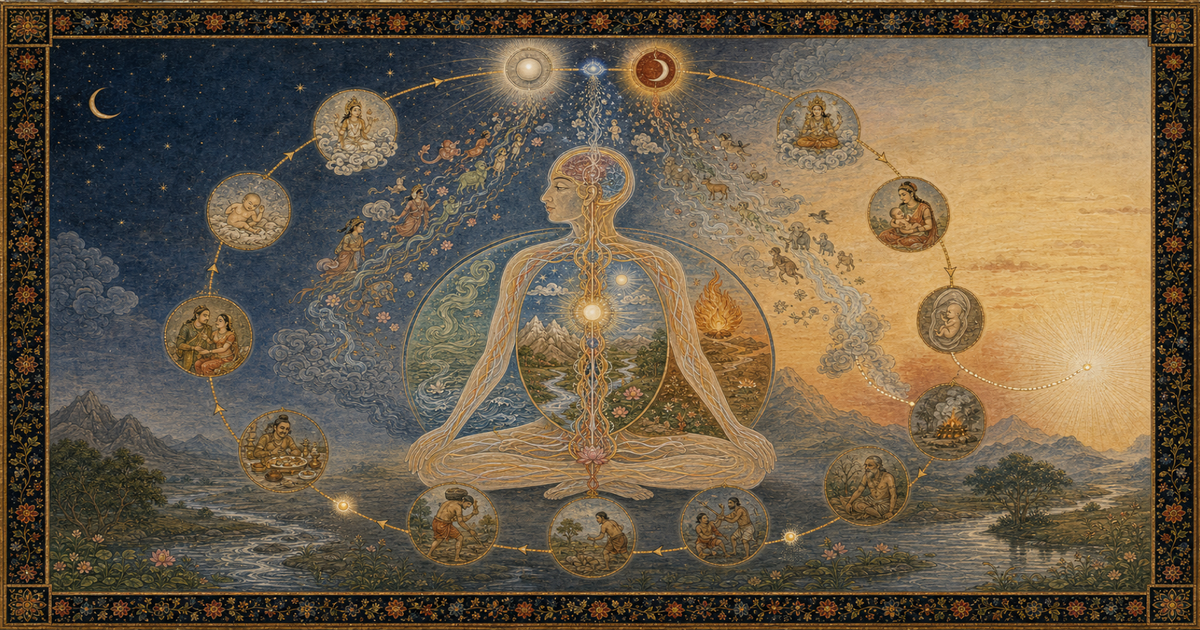
Śiva Saṃhitā 1.26
Through the power of sinful action (pāpa-karma-vaśāt | abl sg), suffering (duḥkham | nom sg) arises; through the power of meritorious action (puṇya-karma-vaśāt | abl sg), pleasure (sukham | nom sg). Therefore, one who seeks pleasure (sukhārthī | nom sg m) certainly (dhruvam) performs (prakurute | 3p sg med pres) many kinds of meritorious deeds (vividhaṃ puṇyam | acc sg).
Dr. Ronald Steiner - 2026 - historically literal
Śiva Saṃhitā 1.27
At the end of the experience of sinful karma (pāpa-bhoga-avasāne | loc sg), birth (janma | nom sg) certainly (khalu) arises again (punar). At the end of the experience of meritorious karma (puṇya-bhoga-avasāne | loc sg), however (tu), it is certainly (dhruvam) not (na) otherwise (anyathā).
Dr. Ronald Steiner - 2026 - historically literal
Śiva Saṃhitā 1.28
Even in heaven (svarge | loc sg), there is also (api) an experience of suffering (duḥkha-saṃbhogaḥ | nom sg), for example upon seeing other women and the like (para-strī-darśanādiṣu | loc pl). Therefore (tataḥ), this (idaṃ | nom sg n) all (sarvam | nom sg n) is suffering (duḥkham | nom sg); about this (atra), there is (asti | 3p sg act pres) no (na) doubt (saṃśayaḥ | nom sg).
Dr. Ronald Steiner - 2026 - historically literal
Śiva Saṃhitā 1.29
This (tat | nom sg n) karma (karma | nom sg) is taught (proktam | nom sg n ppp) by those versed in ritual (kalpakaiḥ | ins pl) as twofold (dvidhā): merit (puṇyam | nom sg) and sin (pāpam | nom sg), thus (iti). The bondage (bandhaḥ | nom sg) of embodied beings (dehinām | gen pl), consisting of merit and sin (puṇya-pāpa-mayaḥ | nom sg m), arises from karma (karmataḥ).
Dr. Ronald Steiner - 2026 - historically literal
Śiva Saṃhitā 1.30
One who rejects the results here and hereafter (ihāmutra-phala-dveṣī | nom sg m) should abandon (saṃtyajet | 3p sg act opt) action that bears results (sa-phalaṃ karma | acc sg). Having abandoned (tyaktvā | abs) attachment to regular and occasional [actions] (nitya-naimittikaṃ saṃgam | acc sg), one turns (pravartate | 3p sg med pres) to yoga (yoge | loc sg).
Dr. Ronald Steiner - 2026 - historically literal
Śiva Saṃhitā 1.31
Having understood (jñātvā | abs) the significance (māhātmyam | acc sg) of the section on action (karma-kāṇḍasya | gen sg), the wise yogi (yogī sudhīḥ | nom sg) should abandon [it] (tyajet | 3p sg act opt). Having abandoned (tyaktvā | abs) the duality of merit and sin (puṇya-pāpa-dvayam | acc sg), the yogi turns (pravartate | 3p sg med pres) to the section on knowledge (jñāna-kāṇḍe | loc sg).
Dr. Ronald Steiner - 2026 - historically literal
SiSa 1.32-1.34: The Self as source

Śiva Saṃhitā 1.32-1.34: Śruti and the Self as source

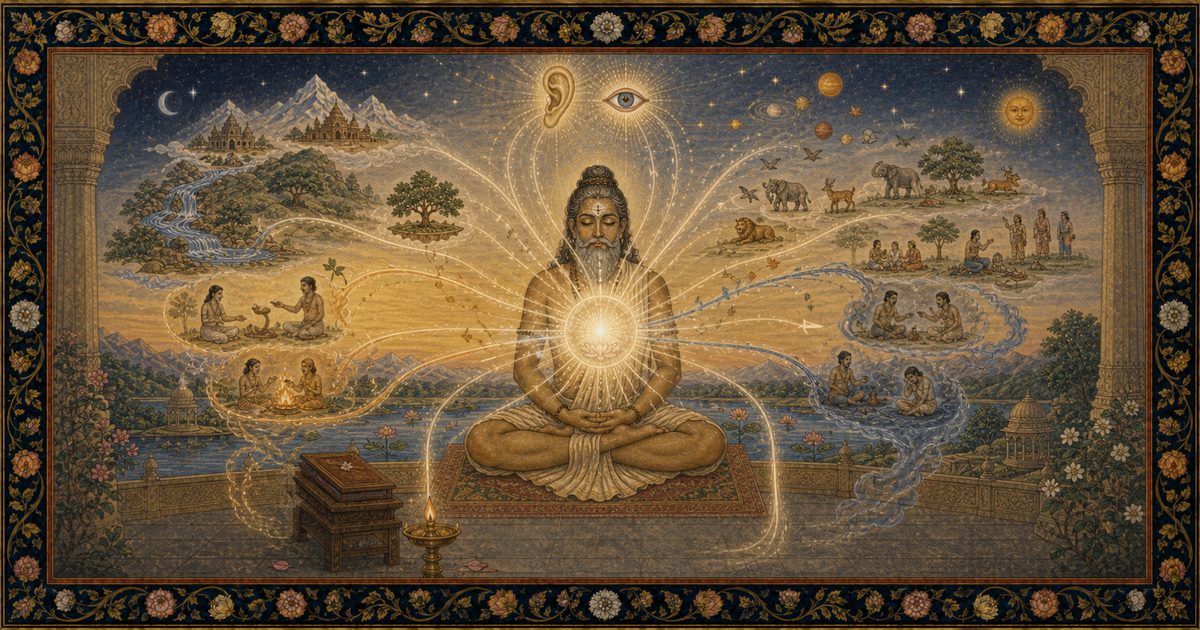
Śruti leads to the direct perception of the Self: the Self moves mind and world; everything appears from it and returns to it.

Śiva Saṃhitā 1.32
The Self (ātmā | nom sg), dear one (are), is indeed (vā), however (tu), to be seen (draṣṭavyaḥ | nom sg m pfp) and heard (śrotavyaḥ | nom sg m pfp), thus (iti) the Śruti (śrutiḥ | nom sg) also (ca) says. This [teaching] (sā | nom sg f), however (tu), is to be followed (sevyā | nom sg f pfp) carefully (prayatnena | ins sg), for it grants liberation (mukti-dā | nom sg f) and the basis for it (hetu-dāyinī | nom sg f).
Dr. Ronald Steiner - 2026 - historically literal
Śiva Saṃhitā 1.33
The one (yaḥ | nom sg m) who impels (pracodayāt | 3p sg act opt) the movement of thought (dhī-vṛttim | acc sg) into bad actions (duriteṣu | loc pl) and (ca) meritorious actions (puṇyeṣu | loc pl), that one (saḥ | nom sg m) am I (aham | nom sg). From me (mattaḥ | abl sg), the world (jagat | nom sg), entire (sarvam | nom sg n), moving and unmoving (carācaram | nom sg n), arises (pravartate | 3p sg med pres).
Dr. Ronald Steiner - 2026 - historically literal
Śiva Saṃhitā 1.34
Everything (sarvam | nom sg n) is seen (dṛśyate | 3p sg pas pres) as arising from me (mattaḥ | abl sg), and (ca) everything (sarvam | nom sg n) dissolves (līyate | 3p sg med pres) in me (mayi | loc sg). In this [knowledge] (asmin | loc sg n), I (aham | nom sg) am (asmi | 1p sg act pres) not (na) different from that (tad-bhinnaḥ | nom sg m ppp); indeed (tu), nothing at all (kiṃcana | nom sg n) is different from me (mad-bhinnam | nom sg n ppp).
Dr. Ronald Steiner - 2026 - historically literal
SiSa 1.35-1.44: Analogies of illusion

Śiva Saṃhitā 1.35-1.44: analogies of illusion

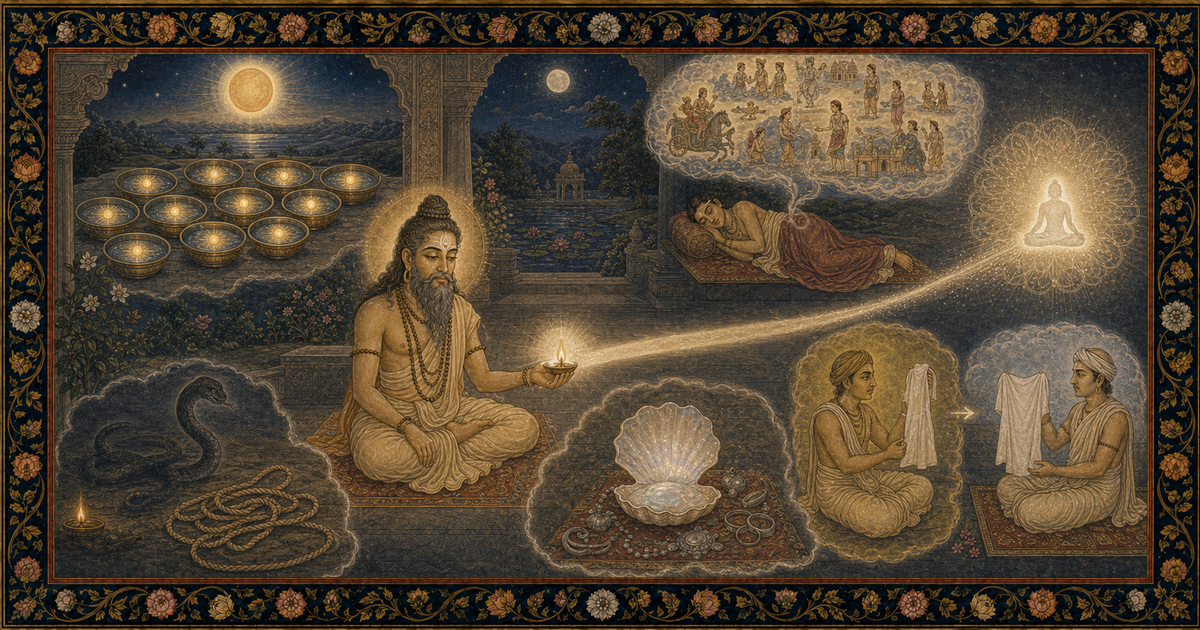
The sun, dreams, a rope mistaken for a snake, and illness explain how multiplicity and the world appear through limitation and ignorance.

Śiva Saṃhitā 1.35
Just as (yathā), in countless bowls filled with water (jala-pūrṇeṣu asaṃkhyeṣu śarāveṣu | loc pl), the sun (raveḥ | gen sg), though single (ekasya | gen sg m), appears (bhāti | 3p sg act pres) countless (asaṃkhyatvam | nom sg), so (tad-vat) multiplicity (bhedaḥ | nom sg) is seen (dṛśyate | 3p sg pas pres) here (atra).
Dr. Ronald Steiner - 2026 - historically literal
Śiva Saṃhitā 1.36
Whatever (yā | nom sg f) number (saṃkhyā | nom sg) exists (vartate | 3p sg med pres) only (param) in the limiting conditions (upādhiṣu | loc pl), the bowls (śarāveṣu | loc pl), that (sā | nom sg f) number (saṃkhyā | nom sg) is related (bhavati | 3p sg act pres) as (yathā) it is in the sun (ravau | loc sg); and (ca) in the Self (ātmani | loc sg), this (tat | nom sg n) is likewise (tathā).
Dr. Ronald Steiner - 2026 - historically literal
Śiva Saṃhitā 1.37
Just as (yathā) a single (ekaḥ | nom sg m) imagining subject (kalpakaḥ | nom sg) appears or is conceived (iṣyate | 3p sg pas pres) in a variety of forms (nānā-vidhatayā | ins sg) in a dream (svapne | loc sg), yet remains one (ekaḥ | nom sg m) when awake (jāgare | loc sg), so (tathā) indeed (eva) the world (jagat | nom sg) is manifold (bahudhā).
Dr. Ronald Steiner - 2026 - historically literal
Śiva Saṃhitā 1.38
Just as (yathā) the idea of a snake (sarpa-buddhiḥ | nom sg) [arises] in a rope (rajjau | loc sg), or (vā) the mistaken appearance of silver (rajata-bhramaḥ | nom sg) in a shell (śuktau | loc sg), likewise (tad-vat) this (idam | nom sg n) whole (sarvam | nom sg n) world (jagat | nom sg) is manifested (vivṛtam | nom sg n ppp) in the highest Self (parama-ātmani | loc sg).
Dr. Ronald Steiner - 2026 - historically literal
Śiva Saṃhitā 1.39
Just as (yathā), through knowledge of the rope (rajju-jñānāt | abl sg), the snake (sarpaḥ | nom sg), having become unreal (mithyā-bhūtaḥ | nom sg m ppp), disappears (nivartate | 3p sg med pres), so (tathā), through knowledge of the Self (ātma-jñānāt | abl sg), this (idam | nom sg n) world (jagat | nom sg), having become unreal (mithyā-bhūtam | nom sg n ppp), passes away (yāti | 3p sg act pres).
Dr. Ronald Steiner - 2026 - historically literal
Śiva Saṃhitā 1.40
Just as (yathā) this (iyam | nom sg f) illusion of silver (raupya-bhrāntiḥ | nom sg) certainly (khalu) disappears (yāti | 3p sg act pres) through knowledge of the shell (śukti-jñānāt | abl sg), so (tathā) this (iyam | nom sg f) illusion of the world (jagad-bhrāntiḥ | nom sg) always (sadā) disappears (yāti | 3p sg act pres) through knowledge of the Self (ātma-jñānāt | abl sg).
Dr. Ronald Steiner - 2026 - historically literal
Śiva Saṃhitā 1.41
Just as (yathā) the mistaken perception of a snake in a rope (rajjūraga-bhrāntiḥ | nom sg) can arise (bhavet | 3p sg act opt) through an eye ointment made from frog fat (bheka-vasā-añjanāt | abl sg), so (tathā) this (iyam | nom sg f) illusion of the world (jagad-bhrāntiḥ | nom sg) [arises] through the eye ointment of superimposition and imagination (adhyāsa-kalpanā-añjanāt | abl sg). Just as (yathā), through knowledge of the Self (ātma-jñānāt | abl sg), [it] does not (na) exist (asti | 3p sg act pres), so, through knowledge of the rope (rajju-jñānāt | abl sg), the snake (bhujaṅgamaḥ | nom sg) [no longer exists].
Dr. Ronald Steiner - 2026 - historically literal
Śiva Saṃhitā 1.42
Just as (yathā), through the power of a disorder (doṣa-vaśāt | abl sg), what is white (śuklaḥ | nom sg m) appears (bhavati | 3p sg act pres) yellow (pītaḥ | nom sg m) and not (na) otherwise (anyathā), so also (api), through the disorder of ignorance (ajñāna-doṣāt | abl sg), the Self (ātmā | nom sg) appears as the world (jagat | nom sg), which is difficult to relinquish (dustyajam | nom sg n).
Dr. Ronald Steiner - 2026 - historically literal
Śiva Saṃhitā 1.43
Just as (yathā), when the illness disappears (doṣa-nāśe | loc sg), what is white (śuklaḥ | nom sg m) is perceived (gṛhyate | 3p sg pas pres) naturally (svayam) by the patient (rogiṇā | ins sg), so (tathā), through pure knowledge (śuddha-jñānāt | abl sg) and the destruction of ignorance (ajñāna-nāśāt | abl sg), the Self (ātmā | nom sg) is realised as such (tathā-kṛtaḥ | nom sg m ppp).
Dr. Ronald Steiner - 2026 - historically literal
Śiva Saṃhitā 1.44
Just as (yathā) a rope (rajjuḥ | nom sg), even (api) in the three periods of time (kāla-traye | loc sg), would not (na) become (bhavet | 3p sg act opt) a snake (sarpaḥ | nom sg), so (tathā) the Self (ātmā | nom sg), beyond the guṇas (guṇa-atītaḥ | nom sg m) and unstained (nirañjanaḥ | nom sg m), would not (na) become the universe (viśvam | nom sg).
Dr. Ronald Steiner - 2026 - historically literal
SiSa 1.45-1.50: Return to consciousness

Śiva Saṃhitā 1.45-1.50: impermanence and the return to consciousness

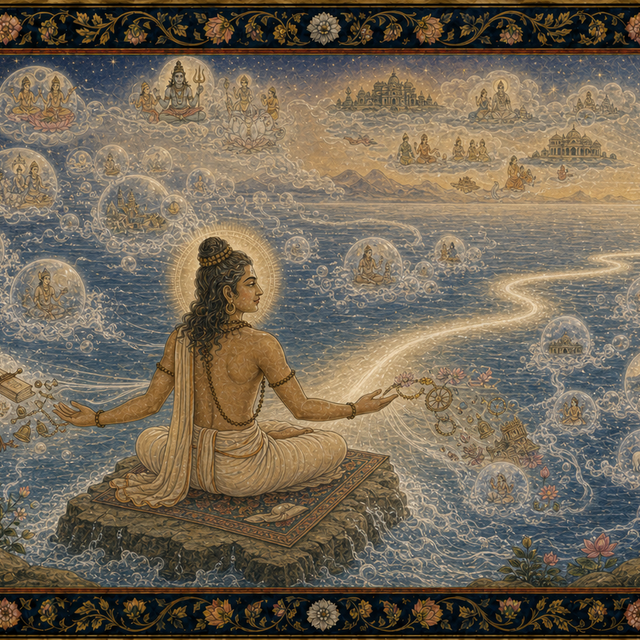
Gods, Saṃsāra and the world are regarded as transient appearances; everything is grounded in the highest Self and leads back to consciousness.

Śiva Saṃhitā 1.45
Īśvara and the other [gods] (īśvara-ādayaḥ | nom pl) come and go (āgama-apāyinaḥ | nom pl m) and are not eternal (anityāḥ | nom pl m), because they can be destroyed (nāśyatvāt | abl sg). By some [knower] (kenāpi | ins sg m), through self-knowledge (ātma-bodhena | ins sg), this (etad | nom sg n) has been established (viniścitam | nom sg n ppp) from scripture (śāstrāt | abl sg).
Dr. Ronald Steiner - 2026 - historically literal
Śiva Saṃhitā 1.46
Just as (yathā) bubbles of foam (phena-budbudāḥ | nom pl) have arisen (utpannāḥ | nom pl m ppp) in the ocean (sindhau | loc sg) through the power of the wind (vāta-vaśāt | abl sg), so (tathā) saṃsāra (saṃsāraḥ | nom sg), perishing in an instant (kṣaṇa-bhaṅguraḥ | nom sg m), has arisen (samudbhūtaḥ | nom sg m ppp) in the Self (ātmani | loc sg).
Dr. Ronald Steiner - 2026 - historically literal
Śiva Saṃhitā 1.47
Non-difference (abhedaḥ | nom sg) appears continually (nityam); a difference in reality (vastu-bhedaḥ | nom sg) does not (na) appear (bhāsate | 3p sg med pres). This (ayam | nom sg m) distinction of duality, triplicity and so on (dvitva-tritvādi-bhedaḥ | nom sg) ends (paryavasyati | 3p sg act pres) in a state of error (bhramatve | loc sg).
Dr. Ronald Steiner - 2026 - historically literal
Śiva Saṃhitā 1.48
Whatever (yat | nom sg n) is past or has come into being (bhūtam | nom sg n ppp), and (ca) whatever (yat | nom sg n) is yet to be (bhāvyam | nom sg n pfp), truly (vai), the formed and the unformed (mūrta-amūrtam | nom sg n) likewise (tathaiva) and (ca): this (idam | nom sg n) whole (sarvam | nom sg n) world (jagat | nom sg) is thus (evam) manifested (vivṛtam | nom sg n ppp) in the highest Self (parama-ātmani | loc sg).
Dr. Ronald Steiner - 2026 - historically literal
Śiva Saṃhitā 1.49
Vidyā (vidyā | nom sg), constructed (kalpitā | nom sg f ppp) by those versed in ritual or by those who imagine (kalpakaiḥ | ins pl), has arisen deceptively (mithyā-jātā | nom sg f ppp) and is false in nature (mṛṣā-ātmikā | nom sg f). This (idam | nom sg n) world (jagat | nom sg), rooted in it (etan-mūlam | nom sg), how (katham) could it be (bhaviṣyati | 3p sg act fut) true (satyam | nom sg n)?
Dr. Ronald Steiner - 2026 - historically literal
Śiva Saṃhitā 1.50
From consciousness (caitanyāt | abl sg), everything (sarvam | nom sg n) has arisen (utpannam | nom sg n ppp): this (etat | nom sg n) world (jagat | nom sg), moving and unmoving (carācaram | nom sg n). Therefore (tasmāt | abl sg n), having relinquished (parityajya | abs) everything (sarvam | acc sg n), one should instead (tu) take refuge (samāśrayet | 3p sg act opt) in consciousness (caitanyam | acc sg).
Dr. Ronald Steiner - 2026 - historically literal
SiSa 1.51-1.64: The Self as light

Śiva Saṃhitā 1.51-1.64: the Self as space, light and bliss

The Self remains untouched like space; it is self-luminous, unlimited and real, and is bliss and knowledge. The Yogi recognises it in Samādhi.

Śiva Saṃhitā 1.51
Just as (yathā) space (ākāśam | nom sg) exists (pravartate | 3p sg med pres) inside (abhyantare | loc sg) and outside (bāhye | loc sg) a pot (ghaṭasya | gen sg), so (tathā) the Self (ātmā | nom sg) exists inside (abhyantare | loc sg) and outside (bāhye | loc sg) the universe (brahmāṇḍasya | gen sg).
Dr. Ronald Steiner - 2026 - historically literal
Śiva Saṃhitā 1.52
Just as (yathā) space (ākāśam | nom sg) remains unattached (asaṃlagnam | nom sg n) within things that have become unreal (mithyā-bhūteṣu vastuṣu | loc pl), so (tathā) the Self (ātmā | nom sg) is unattached (asaṃlagnaḥ | nom sg m) to the groups of effects or actions (kārya-vargeṣu | loc pl), and not (na) otherwise (anyathā).
Dr. Ronald Steiner - 2026 - historically literal
Śiva Saṃhitā 1.53
The entire world, beginning with Īśvara and the rest (īśvara-ādi-jagat sarvam | nom sg), is pervaded by the Self (ātma-vyāptam | nom sg n ppp) on all sides (samantataḥ). There is (asti | 3p sg act pres) one (ekaḥ | nom sg m) being-consciousness-bliss (sat-cit-ānandaḥ | nom sg), complete (pūrṇaḥ | nom sg m), free from duality (dvaita-vivarjitaḥ | nom sg m ppp).
Dr. Ronald Steiner - 2026 - historically literal
Śiva Saṃhitā 1.54
Because (yasmāt | abl sg n) there is (asti | 3p sg act pres) no (na) illuminator (prakāśakaḥ | nom sg), it is therefore (tataḥ) self-luminous (sva-prakāśaḥ | nom sg). Because (yatas) it is self-luminous (sva-prakāśaḥ | nom sg), the Self (ātmā | nom sg) therefore (tasmāt | abl sg n) has the nature of light (jyotiḥ-svarūpakaḥ | nom sg m).
Dr. Ronald Steiner - 2026 - historically literal
Śiva Saṃhitā 1.55
Because (yataḥ), for the Self (ātmanaḥ | gen sg), with regard to place, time and its own form (deśa-kāla-svarūpataḥ), there is (asti | 3p sg act pres) no (na) limitation (avacchedaḥ | nom sg) in any respect (sarvathā), the Self (ātmā | nom sg) is therefore (tasmāt | abl sg n) indeed (khalu) complete (pūrṇaḥ | nom sg m).
Dr. Ronald Steiner - 2026 - historically literal
Śiva Saṃhitā 1.56
Because (yasmāt | abl sg n) no (na) destruction (nāśaḥ | nom sg) is found (vidyate | 3p sg med pres) through the five elements (pañca-bhūtaiḥ | ins pl), which are deceptive in nature (vṛthā-ātmakaiḥ | ins pl n), the Self (ātmā | nom sg) is therefore (tasmāt | abl sg n) eternal (nityaḥ | nom sg m). Of itself (svena | ins sg m), it is indeed (khalu) indestructible (anāśyaḥ | nom sg m).
Dr. Ronald Steiner - 2026 - historically literal
Śiva Saṃhitā 1.57
Because (yasmāt | abl sg n) here (iha) what is other than that (tad-anyaḥ | nom sg m) does not (na) exist (asti | 3p sg act pres), it is therefore (tasmāt | abl sg n) always (sarvadā) one (ekaḥ | nom sg m). Because (yasmāt | abl sg n) what is different from that (tad-anyaḥ | nom sg m) would be (syāt | 3p sg act opt) unreal (mithyā), the Self (ātmā | nom sg) is indeed (khalu) true (satyaḥ | nom sg m).
Dr. Ronald Steiner - 2026 - historically literal
Śiva Saṃhitā 1.58
In saṃsāra born of ignorance (avidyā-bhūta-saṃsāre | loc sg), the destruction of suffering (duḥkha-nāśaḥ | nom sg) is happiness (sukham | nom sg), because (yataḥ), through knowledge (jñānāt | abl sg), [this happiness] would be (syāt | 3p sg act opt) without beginning or end (ādya-anta-śūnyam | nom sg n). Therefore (tasmāt | abl sg n), the Self (ātmā | nom sg) is happiness (sukham | nom sg).
Dr. Ronald Steiner - 2026 - historically literal
Śiva Saṃhitā 1.59
Because (yasmāt | abl sg n) ignorance (ajñānam | nom sg), the cause of the world (viśva-kāraṇam | nom sg), is destroyed (nāśitam | nom sg n ppp) by knowledge (jñānena | ins sg), the Self (ātmā | nom sg) is therefore (tasmāt | abl sg n) knowledge (jñānam | nom sg). Therefore (tasmāt | abl sg n), knowledge (jñānam | nom sg) is eternal (sanātanam | nom sg n).
Dr. Ronald Steiner - 2026 - historically literal
Śiva Saṃhitā 1.60
When (yadā) this (idam | nom sg n) universe (viśvam | nom sg) becomes (bhavet | 3p sg act opt) manifold (vividham | nom sg n) over time (kālataḥ), then (tadā) this (saḥ | nom sg m) very (eva) Self (ātmā | nom sg) is (asti | 3p sg act pres) one (ekaḥ | nom sg m) and free from the path of imagination (kalpanā-patha-varjitaḥ | nom sg m ppp).
Dr. Ronald Steiner - 2026 - historically literal
Śiva Saṃhitā 1.61
All external beings or things (bāhyāni sarva-bhūtāni | nom pl) pass over time (kālataḥ) into destruction (vināśam | acc sg). The Self (ātmā | nom sg), from which (yataḥ) words (vācaḥ | nom pl) turn back (nivartante | 3p pl med pres), is free from duality (dvaita-vivarjitaḥ | nom sg m ppp).
Dr. Ronald Steiner - 2026 - historically literal
Śiva Saṃhitā 1.62
Neither (na) space (kham | nom sg), nor (na) wind (vāyuḥ | nom sg), and (ca) not (na) fire (agniḥ | nom sg); neither (na) water (jalam | nom sg), nor (na) earth (pṛthivī | nom sg), and (ca); not (na) this (etat | nom sg n) created thing (kāryam | nom sg), not (na) Īśvara and the rest (īśvara-ādi | nom sg): certainly (khalu), [there is only] the complete, one Self (pūrṇa-eka-ātmā | nom sg).
Dr. Ronald Steiner - 2026 - historically literal
Śiva Saṃhitā 1.63
The yogi (yogī | nom sg) who has renounced all conceptions (sarva-saṃkalpa-saṃnyāsī | nom sg) and relinquished clinging to unreal existence (tyakta-mithyā-bhava-grahaḥ | nom sg) certainly (niścitam) sees the Self (ātmānam | acc sg) through the Self (ātmanā | ins sg) in the Self (ātmani | loc sg).
Dr. Ronald Steiner - 2026 - historically literal
Śiva Saṃhitā 1.64
Having seen (dṛṣṭvā | abs), through the Self (ātmanā | ins sg), in the Self (ātmani | loc sg), the Self (ātmānam | acc sg), infinite (anantam | acc sg m) and of the nature of happiness (sukha-ātmakam | acc sg m), and (ca) having forgotten (vismṛtya | abs) the universe (viśvam | acc sg), the yogi thus (tathā) delights (ramate | 3p sg med pres) intensely (tīvratas) in samādhi (samādheḥ | gen sg).
Dr. Ronald Steiner - 2026 - historically literal
SiSa 1.65-1.70: The dissolution of Māyā

Śiva Saṃhitā 1.65-1.70: Māyā and the negation of attributions

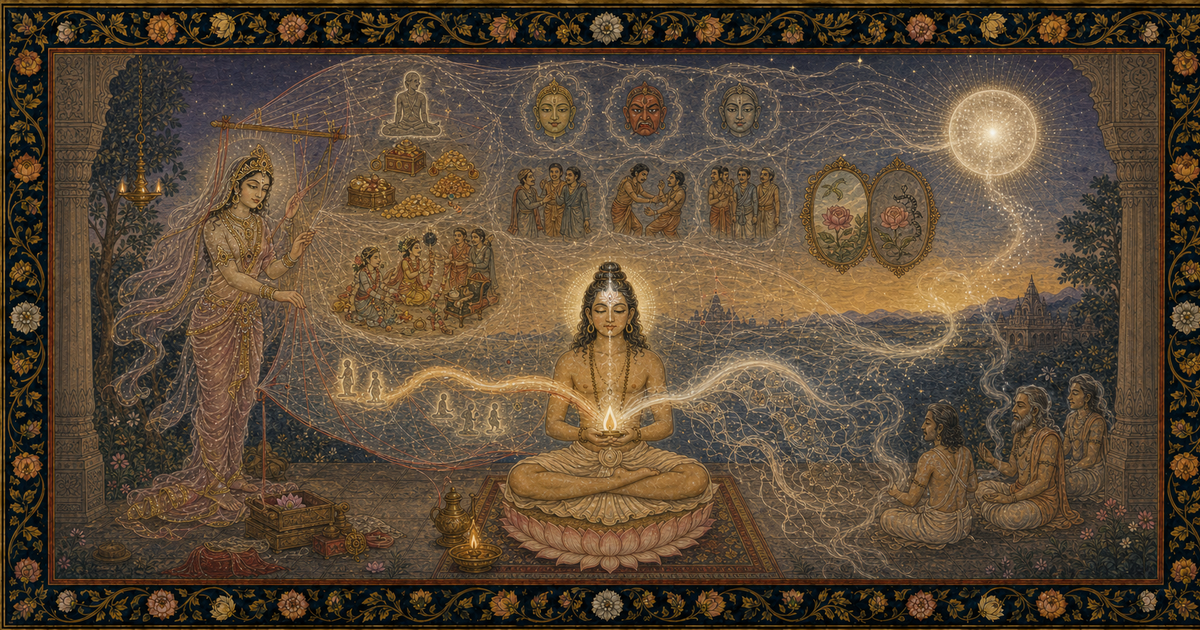
Māyā produces the world, ownership, judgements and karmic attributions; Yogis dissolve these appearances through superimposition and negation.

Śiva Saṃhitā 1.65
Māyā (māyā | nom sg) itself (eva) is the mother of the universe (viśva-jananī | nom sg), supreme (parā | nom sg f) and to be destroyed (nāśyā | nom sg f pfp) through insight into truth (tattva-dhiyā | ins sg). When (yadā) it comes (samāyāti | 3p sg act pres) to destruction (nāśam | acc sg), then (tadā) the universe (viśvam | nom sg) certainly (khalu) does not (na) exist (asti | 3p sg act pres).
Dr. Ronald Steiner - 2026 - historically literal
Śiva Saṃhitā 1.66
All (sarvam | nom sg n) this (idam | nom sg n) which (yat | nom sg n), however (tu), is the play of Māyā (māyā-vilasitam | nom sg n ppp) is to be relinquished (heyam | nom sg n pfp), because (yataḥ) the [domain] consisting of body, possessions and pleasure (tanu-vitta-sukha-ātmakaḥ | nom sg m) is not (na), of itself (svataḥ), an object of joy (prīti-viṣayaḥ | nom sg).
Dr. Ronald Steiner - 2026 - historically literal
Śiva Saṃhitā 1.67
This (idam | nom sg n) world (jagat | nom sg) would be threefold (tri-vidham | nom sg n): enemy (ariḥ | nom sg), friend (mitram | nom sg) and someone neutral (udāsīnam | nom sg n). In everyday dealings (vyavahāreṣu | loc pl), it is certainly (niyatam) seen (dṛśyate | 3p sg pas pres) this way repeatedly (punaḥ), and not (na) otherwise (anyathā).
Dr. Ronald Steiner - 2026 - historically literal
Śiva Saṃhitā 1.68
The distinction between pleasant, unpleasant and so on (priya-apriyādi-bhedaḥ | nom sg), however (tu), is clearly (sphuṭam) not fixed (aniyataḥ | nom sg m) within things (vastuṣu | loc pl). Even with one's son (putre | loc sg), too (api), it arises only (eva) through the power of one's own attribution or limitation (ātma-upādhi-vaśāt | abl sg), and not (na) otherwise (anyathā).
Dr. Ronald Steiner - 2026 - historically literal
Śiva Saṃhitā 1.69
Having recognised (jñātvā | abs), through the reasoning of the Śruti (śruti-yuktitaḥ), the universe (viśvam | acc sg) as precisely (eva) the play of Māyā (māyā-vilasitam | acc sg n ppp), yogis (yoginaḥ | nom pl) bring about (kurvanti | 3p pl act pres) dissolution (layam | acc sg) through superimposition and negation (adhyāropa-apavādābhyām | ins du).
Dr. Ronald Steiner - 2026 - historically literal
Śiva Saṃhitā 1.70
Having understood (matvā | abs) this (idam | nom sg n) universe (viśvam | nom sg) as born of karma (karma-janyam | nom sg n) and [understood] actions (karmāṇi | acc pl) according to the Veda (vedataḥ), a person (puruṣaḥ | nom sg) triumphs (vijayate | 3p sg med pres) then (tadā), when (yadā) they truly (vai) become (bhavati | 3p sg act pres) free from all limitations (nikhila-upādhi-hīnaḥ | nom sg m), as one whose form is undivided knowledge (akhaṇḍa-jñāna-rūpī | nom sg m), pure (nirañjanaḥ | nom sg m).
Dr. Ronald Steiner - 2026 - historically literal
SiSa 1.71-1.81: Avidyā and the elements

Śiva Saṃhitā 1.71-1.81: Avidyā, the elements and the order of the senses

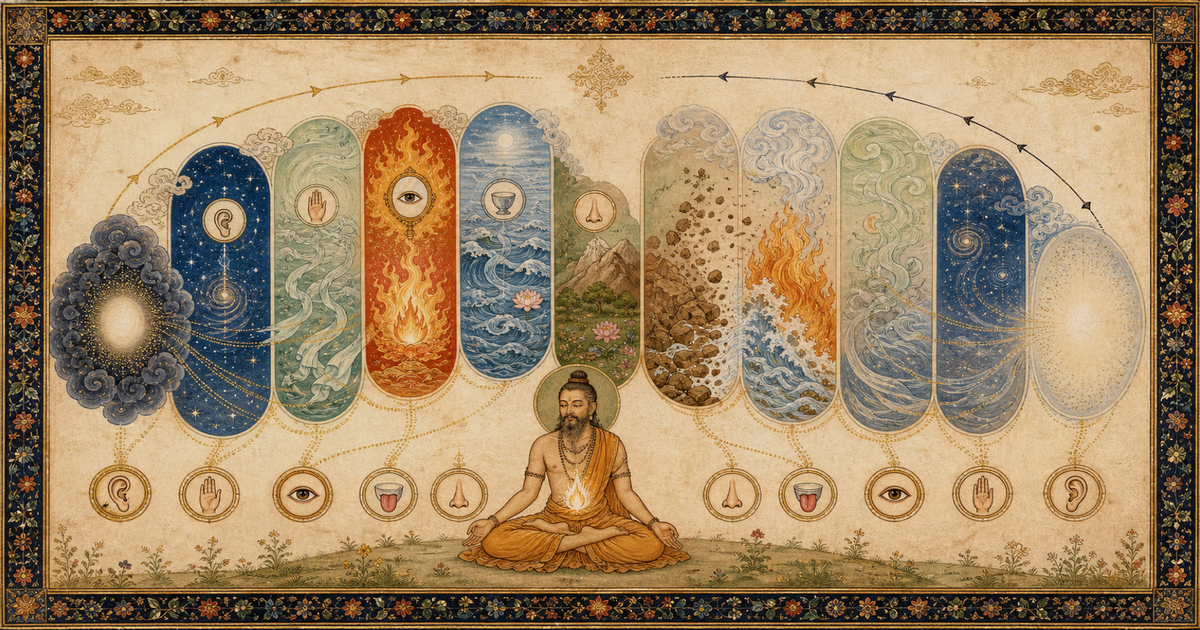
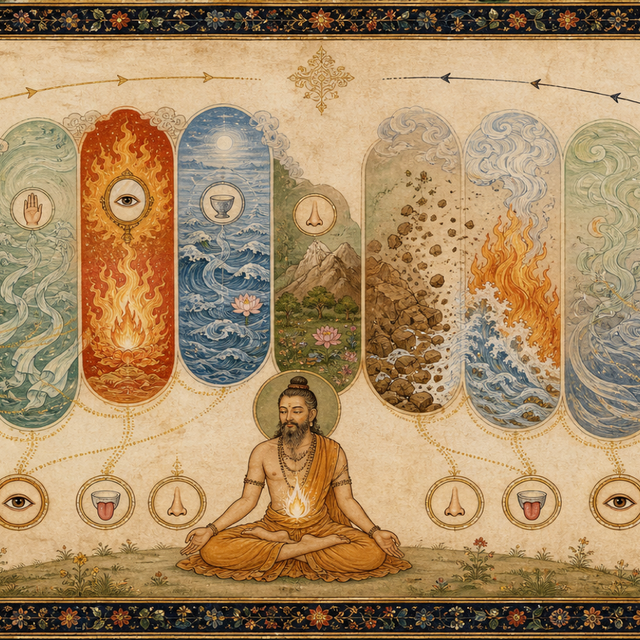
Space and the elements, with their qualities and senses, unfold from Avidyā; in the end, they dissolve again in reverse order.

Śiva Saṃhitā 1.71
For (hi) he (saḥ | nom sg m) desires (kāmayate | 3p sg med pres) everything (sarvam | acc sg n) and (ca) himself (svayam) creates (sṛjate | 3p sg med pres) beings (prajāḥ | acc pl). Because (yasmāt | abl sg n) ignorance (avidyā | nom sg) appears (bhāsate | 3p sg med pres), it is therefore (tasmāt | abl sg n) unreal (mithyā) by nature (svabhāvataḥ).
Dr. Ronald Steiner - 2026 - historically literal
Śiva Saṃhitā 1.72
When, in pure Brahman (śuddha-brahmaṇi | loc sg), that connection (saṃbandhaḥ | nom sg) which (yaḥ | nom sg m) arises (bhavet | 3p sg act opt) together (saha) with ignorance (avidyayā | ins sg) [is present], Brahman (brahma | nom sg) then attains (yāti | 3p sg act pres) through it (tena | ins sg m) the state of lordship (īśatām | acc sg). From that (tataḥ), space (nabhaḥ | nom sg) appears (ābhāsate | 3p sg med pres).
Dr. Ronald Steiner - 2026 - historically literal
Śiva Saṃhitā 1.73
From that (tasmāt | abl sg n), air (vāyuḥ | nom sg) appears (prakāśate | 3p sg med pres); from air (vāyoḥ | abl sg), fire (agniḥ | nom sg) [appears], and from that (tataḥ), water (jalam | nom sg). From that (tataḥ), earth (pṛthivī | nom sg) appears (prakāśate | 3p sg med pres). This conception or creation (iyam kalpanā | nom sg) remains (sthitā | nom sg f ppp) as an existing [order] (satī | nom sg f).
Dr. Ronald Steiner - 2026 - historically literal
Śiva Saṃhitā 1.74
From space (ākāśāt | abl sg), air (vāyuḥ | nom sg) [arises]; from space and wind (ākāśa-pavanāt | abl sg), there is the arising of fire (agni-saṃbhavaḥ | nom sg). From space, wind and fire (kha-vāta-agneḥ | abl sg), water (jalam | nom sg) [arises]; from space, wind, fire and water (vyoma-vāta-agni-vāritaḥ | nom sg m), earth (mahī | nom sg) [arises].
Dr. Ronald Steiner - 2026 - historically literal
Śiva Saṃhitā 1.75
Space (kham | nom sg) is characterised by sound (śabda-lakṣaṇam | nom sg n); moving air (vāyuḥ cañcalaḥ | nom sg) is characterised by touch (sparśa-lakṣaṇaḥ | nom sg m). Fire (tejaḥ | nom sg) is characterised by form (rūpa-lakṣaṇam | nom sg n), water (salilam | nom sg) by taste (rasa-lakṣaṇam | nom sg n).
Dr. Ronald Steiner - 2026 - historically literal
Śiva Saṃhitā 1.76
Earth (pṛthivī | nom sg) is characterised by smell (gandha-lakṣaṇikā | nom sg f); certainly (dhruvam), it is not (na) otherwise (anyathā). The particular qualities (viśeṣa-guṇāḥ | nom pl) emerge (sphuranti | 3p pl act pres), because (yataḥ) [this] is a conclusion (vinirṇayaḥ | nom sg) drawn from scripture (śāstrāt | abl sg).
Dr. Ronald Steiner - 2026 - historically literal
Śiva Saṃhitā 1.77
Space (ākāśam | nom sg) has sound as its one quality (śabda-eka-guṇam | nom sg n). Air (vāyuḥ | nom sg) is said (ucyate | 3p sg pas pres) to have two qualities (dvi-guṇaḥ | nom sg m). Likewise (tathaiva), fire (tejaḥ | nom sg) has three qualities (tri-guṇam | nom sg n), and water (āpaḥ | nom pl) has four qualities (catur-guṇāḥ | nom pl f).
Dr. Ronald Steiner - 2026 - historically literal
Śiva Saṃhitā 1.78
Sound (śabdaḥ | nom sg), touch (sparśaḥ | nom sg), form (rūpam | nom sg), taste (rasaḥ | nom sg) and likewise (tathaiva) also (ca) smell (gandhaḥ | nom sg): this (etat | acc sg n), earth with its five qualities (pañca-guṇā pṛthivī | nom sg), is now (adhunā) defined (kalpyate | 3p sg pas pres) by the systematisers (kalpakaiḥ | ins pl).
Dr. Ronald Steiner - 2026 - historically literal
Śiva Saṃhitā 1.79
Form (rūpam | nom sg) is perceived (gṛhyate | 3p sg pas pres) by the eye (cakṣuṣā | ins sg); smell (gandhaḥ | nom sg) is perceived (gṛhyate | 3p sg pas pres) by the nose (ghrāṇena | ins sg). Taste (rasaḥ | nom sg) [is perceived] by the tongue (rasanayā | ins sg); touch (sparśaḥ | nom sg), furthermore (param), is perceived (saṃgṛhyate | 3p sg pas pres) by the skin (tvacā | ins sg). Sound (śabdaḥ | nom sg) is perceived (gṛhyate | 3p sg pas pres) by the ear (śrotreṇa | ins sg). This appears (bhāti | 3p sg act pres) definite (niyatam), and not (na) otherwise (anyathā).
Dr. Ronald Steiner - 2026 - historically literal
Śiva Saṃhitā 1.80
From consciousness (caitanyāt | abl sg), everything (sarvam | nom sg n) has arisen (utpannam | nom sg n ppp): this moving and unmoving world (jagad etat carācaram | nom sg). If (cet) it exists (asti | 3p sg act pres), then it would be this conception (iyam kalpanā | nom sg); if (cet) it does not (na) exist (asti | 3p sg act pres), then it is (asti | 3p sg act pres) composed of consciousness (cinmayam | nom sg n).
Dr. Ronald Steiner - 2026 - historically literal
Śiva Saṃhitā 1.81
Earth (pṛthivī | nom sg), having disintegrated (śīrṇā | nom sg f ppp), sinks (magnā | nom sg f ppp) into water (jale | loc sg); water (jalam | nom sg) has sunk (magnam | nom sg n ppp) into fire (tejasi | loc sg). Likewise (tathā), fire (tejaḥ | nom sg) is dissolved (līnam | nom sg n ppp) in air (vāyau | loc sg); air (vātaḥ | nom sg) went (yayau | 3p sg act perf) into dissolution (layam | acc sg) in space (vyomni | loc sg). Vast space (mahākāśaḥ | nom sg) dissolves (līyate | 3p sg med pres) into ignorance (avidyāyām | loc sg) in the highest state (parame pade | loc sg).
Dr. Ronald Steiner - 2026 - historically literal
SiSa 1.82-1.90: Guṇas and objects

Śiva Saṃhitā 1.82-1.90: Māyā, Guṇas and the emergence of objects

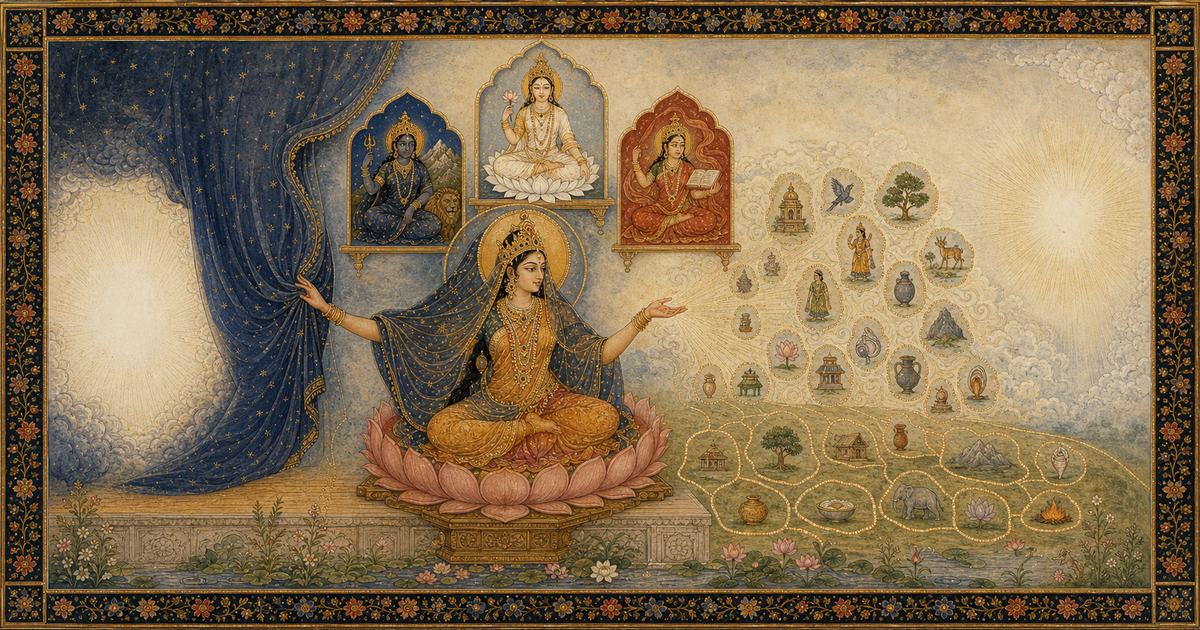
Māyā works through concealment and projection, appears as goddesses characterised by the guṇas, and brings objects into being through naming.

Śiva Saṃhitā 1.82
The power of projection and concealment (vikṣepa-āvaraṇa-śaktiḥ | nom sg) has a difficult or bad nature (dur-ātmā | nom sg f) and the form of happiness (sukha-rūpiṇī | nom sg f). Great Māyā (mahā-māyā | nom sg) has a coarse, unconscious form (jaḍa-rūpā | nom sg f) and possesses rajas, sattva and tamas as its qualities (rajaḥ-sattva-tamo-guṇā | nom sg f).
Dr. Ronald Steiner - 2026 - historically literal
Śiva Saṃhitā 1.83
This (sā | nom sg f), concealed (āvṛtā | nom sg f ppp) by Māyā's power of concealment (māyā-āvaraṇa-śaktyā | ins sg), has the form of knowledge or consciousness (vijñāna-rūpiṇī | nom sg f). Through its own projecting nature (vikṣepa-svabhāvataḥ), it makes this form of the world (taṃ jagad-ākāram | acc sg) appear (darśayet | 3p sg caus opt).
Dr. Ronald Steiner - 2026 - historically literal
Śiva Saṃhitā 1.84
Whichever power of knowledge or goddess (yā vidyā | nom sg) is predominantly shaped by the guṇa tamas (tamo-guṇa-adhikā | nom sg f), that (sā | nom sg f) itself (svayam) becomes Durgā (durgā | nom sg). The consciousness connected with it (tad-upahitaṃ caitanyam | nom sg) is Īśvara (īśvaraḥ | nom sg); this (tat | nom sg n) certainly (dhruvam) came to be (abhūt | 3p sg act aor).
Dr. Ronald Steiner - 2026 - historically literal
Śiva Saṃhitā 1.85
Whichever power of knowledge or goddess (yā vidyā | nom sg) is predominantly shaped by sattva (sattva-adhikā | nom sg f), divinely beautiful in form (divya-rūpiṇī | nom sg f), is Lakṣmī (lakṣmī | nom sg). The consciousness connected with it (tad-upahitaṃ caitanyam | nom sg) is Viṣṇu (viṣṇuḥ | nom sg), and not otherwise (nānyathā).
Dr. Ronald Steiner - 2026 - historically literal
Śiva Saṃhitā 1.86
The power of knowledge or goddess (vidyā | nom sg) predominantly shaped by the guṇa rajas (rajo-guṇa-adhikā | nom sg f) is truly (vai) to be known (jñeyā | nom sg f pfp) as Sarasvatī (sarasvatī | nom sg). Brahmā (brahmā | nom sg), whose own nature is consciousness (yaḥ cit-svarūpaḥ | nom sg m), is its bearer (tad-upadhārakaḥ | nom sg m).
Dr. Ronald Steiner - 2026 - historically literal
Śiva Saṃhitā 1.87
All the gods (sakalā devāḥ | nom pl), beginning with Īśa (īśa-ādyāḥ | nom pl m), are seen (dṛśyante | 3p pl pass pres) in the highest Self (paramātmani | loc sg). Likewise (tathā), ignorance (avidyā | nom sg) is conceived (kalpitā | nom sg f ppp) as all that is inert, beginning with the body (śarīrādi jaḍaṃ sarvam | nom sg n).
Dr. Ronald Steiner - 2026 - historically literal
Śiva Saṃhitā 1.88
Those who imagine, or the teachers (kalpakāḥ | nom pl), conceive (kalpante | 3p pl med pres) the arising of the world (viśva-saṃbhavam | acc sg) in this form (evaṃ-rūpeṇa | ins sg). Here (iha), the conception (kalpanā | nom sg), prompted (coditā | nom sg f ppp) by another (anyena | ins sg m), becomes (bhavantī | nom sg f pca) real and unreal (tattva-atattvā | nom sg f).
Dr. Ronald Steiner - 2026 - historically literal
Śiva Saṃhitā 1.89
Every thing or object (sarvaṃ vastu | nom sg) is made visible (prakāśyate | 3p sg pass pres) in the form of being knowable and the like (prameyatvādi-rūpeṇa | ins sg). In just this way (tathaiva), a thing (vastu | nom sg) does not (na) exist (asti | 3p sg act pres) at all (eva) [independently]; ultimately (param), the revealer (bhāsakaḥ | nom sg) remains.
Dr. Ronald Steiner - 2026 - historically literal
Śiva Saṃhitā 1.90
A thing or object (vastu | nom sg) appears (bhāsate | 3p sg med pres) as its own form (svarūpaṃ | nom sg), in this form (rūpeṇa | ins sg) by virtue of having its own shape (svarūpatvena | ins sg). Difference (bhedaḥ | nom sg) arises (bhavati | 3p sg act pres) when a distinguishing word is used (viśeṣa-śabda-upādāne | loc sg), and not otherwise (nānyathā).
Dr. Ronald Steiner - 2026 - historically literal
SiSa 1.91-1.92: True knowledge

Śiva Saṃhitā 1.91-1.92: return to the one true knowledge

The one true knowledge remains when all attributions are negated; whoever realises it is freed from the suffering of Saṃsāra.

SiSa 1.93-1.99: Karmic embodiment

Śiva Saṃhitā 1.93-1.99: the body, the elements and karmic embodiment

The body arises from the elements through Karma; Śiva and Śakti bring forth dreamlike beings, and the Jīva experiences its deeds.

Śiva Saṃhitā 1.93
From the sheath made of food (annamayāt kośāt | abl sg) of the father (pituḥ | gen sg), the body (śarīram | acc sg) arises (jāyate | 3p sg med pres) because of previous karma (pūrva-karmataḥ). Truly (vai), they regard it (viduḥ | 3p pl act perf) as full of suffering (duḥkham | acc sg n), for the experience of one's own previous karma (sva-prāg-bhogāya | dat sg), O beautiful one (sundare | voc sg).
Dr. Ronald Steiner - 2026 - historically literal
Śiva Saṃhitā 1.94
Formed from flesh, bones, tendons, marrow and other constituents (māṃsa-asthi-snāyu-majjādi-nirmitam | acc sg n ppp), it is a temple of experience (bhoga-mandiram | acc sg). Solely (kevalam) for the experience of suffering (duḥkha-bhogāya | dat sg), it is entwined with a network of nāḍīs (nāḍī-santati-gulphitam | acc sg n ppp).
Dr. Ronald Steiner - 2026 - historically literal
Śiva Saṃhitā 1.95
This body (idaṃ gātram | nom sg), serving another or dependent on another (para-preṣyam | nom sg n), is formed from the five elements (pañca-bhūta-vinirmitam | nom sg n ppp). Called Brahmāṇḍa (brahmāṇḍa-saṃjñakam | nom sg n), it is made (kalpitam | nom sg n ppp) for the experience of suffering and happiness (duḥkha-sukha-bhogāya | dat sg).
Dr. Ronald Steiner - 2026 - historically literal
Śiva Saṃhitā 1.96
Bindu (binduḥ | nom sg) is Śiva (śivaḥ | nom sg); rajas (rajaḥ | nom sg) is Śakti (śaktiḥ | nom sg). From the union (melanāt | abl sg) of the two (ubhayoḥ | gen du), dreamlike beings or elements (svapna-bhūtāni | nom pl) arise of themselves (svayam), through their own power (sva-śaktyā | ins sg) of inert form (jaḍa-rūpayā | ins sg f).
Dr. Ronald Steiner - 2026 - historically literal
Śiva Saṃhitā 1.97
From the fivefold combination of those [elements] (tat-pañcī-karaṇāt | abl sg), countless gross things (sthūlāni asaṅkhyāni vastūni | nom pl) arise according to wish or desire (kāmataḥ), situated in Brahmāṇḍa (brahmāṇḍa-sthāni | nom pl n), where (yatra) the jīva (jīvaḥ | nom sg) exists (asti | 3p sg act pres) through karma (karmabhiḥ | ins pl). From that group of five elements (tad-bhūta-pañcakāt | abl sg), everything (sarvam | nom sg n) arises for the experience (bhogāya | dat sg) of those called jīvas (jīva-saṃjñinām | gen pl m).
Dr. Ronald Steiner - 2026 - historically literal
Śiva Saṃhitā 1.98
I (aham | nom sg) bring about (karomi | 1p sg act pres) the assembly (ghaṭanām | acc sg) in accordance with previous karma (pūrva-karma-anurodhena | ins sg). The non-inert one, that is, the conscious one (ajaḍaḥ | nom sg m), truly (vai) experiences (bhunakti | 3p sg act pres) all those beings or elements (sarva-bhūtān tān | acc pl m) through their inert state (jaḍa-sthityā | ins sg).
Dr. Ronald Steiner - 2026 - historically literal
Śiva Saṃhitā 1.99
From matter (jaḍāt | abl sg n), bound (baddhvā | abs) by its own deeds (sva-karmabhiḥ | ins pl), what is called jīva (jīva-ākhyaḥ | nom sg m) becomes manifold (vividhaḥ | nom sg m). It (saḥ | nom sg m), too (api), arises (utpadyate | 3p sg med pres) for experience (bhogāya | dat sg), again (punaḥ) and again (punaḥ), in what is called Brahmāṇḍa (brahmāṇḍa-ākhye | loc sg n). And (ca) the jīva (jīvaḥ | nom sg) dissolves (līyate | 3p sg med/pass pres) at the end of the experience (bhoga-avasāne | loc sg) of its own karma (sva-karmaṇaḥ | gen sg).
Dr. Ronald Steiner - 2026 - historically literal

Continue with AYI Free

Illustrations: AI-generated.

Editor

Dr. Ronald Steiner

AYI Expert teacher

From 89075 Ulm

The "Yoga Doc" - Dr. Ronald Steiner is the founder of the AYI method. This method links traditional Ashtanga Yoga with innovative Yogatherapy and living Philosophy. This forms a practice that is personal for each and... more ›