










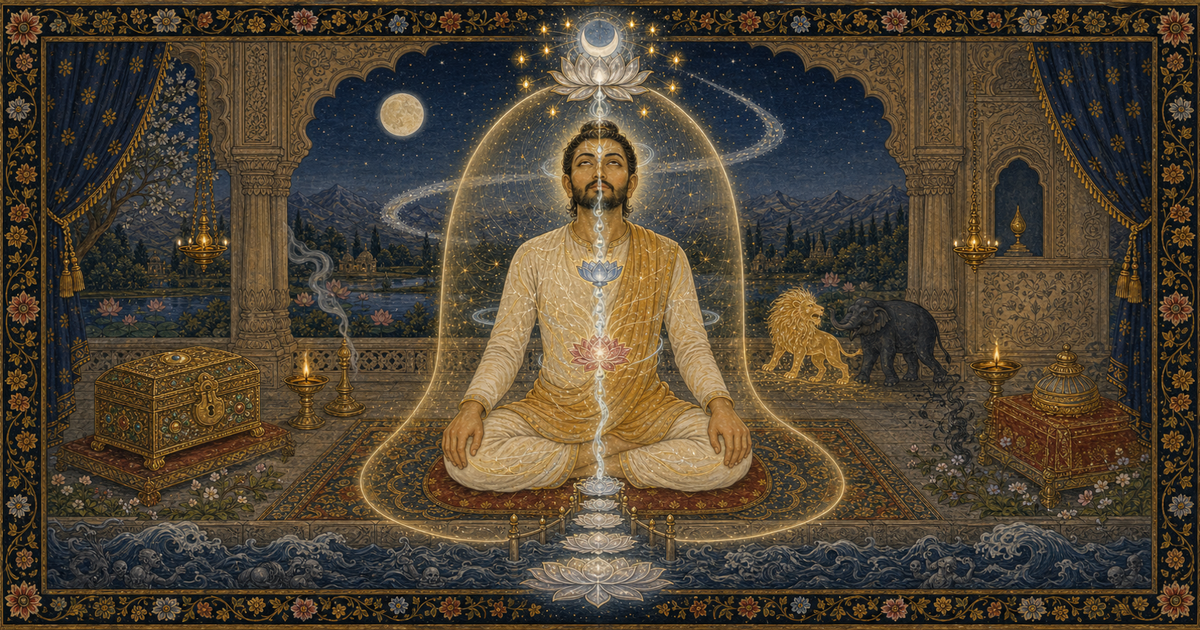

















Chapter 4 of the Śiva Saṃhitā – Mudrās and bandhas

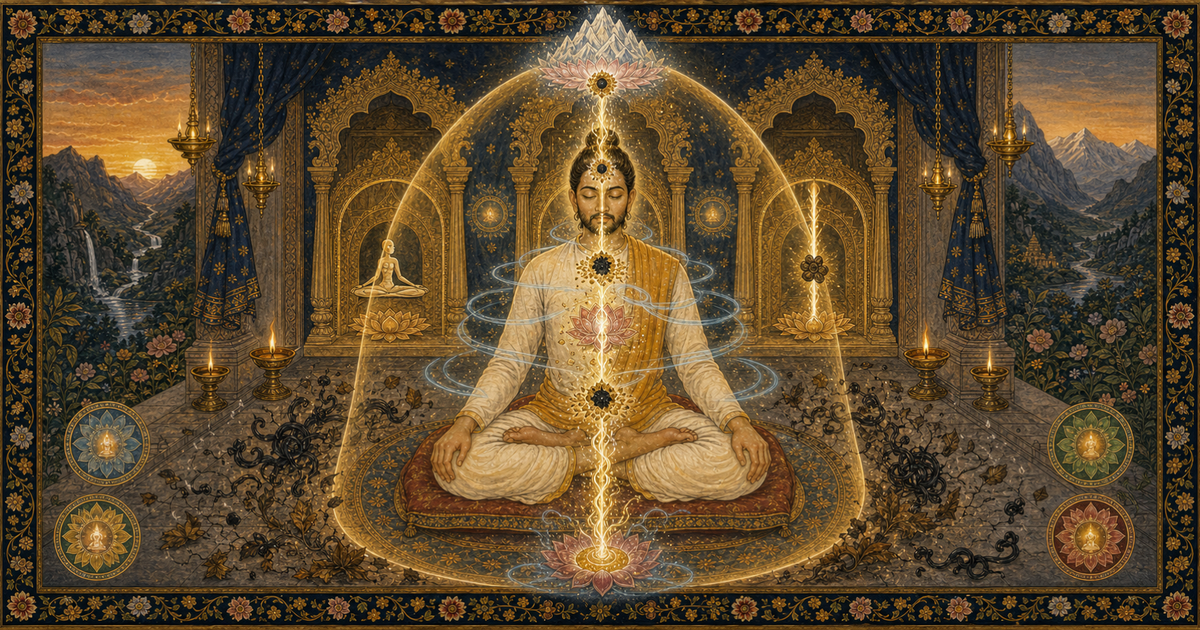
Śiva Saṃhitā 4: Yonimudrā, Mahāmudrā, bandhas, Vajrolī and Śakticālana

Chapter 4 leads from Yonimudrā through Mahāmudrā, the bandhas, Vajrolī, Sahajolī and Amarolī to Śakticālana and the conclusion of the ten mudrās. Its Sanskrit title is Mudrākathana.

Dr. Ronald Steiner Dr. Ronald Steiner
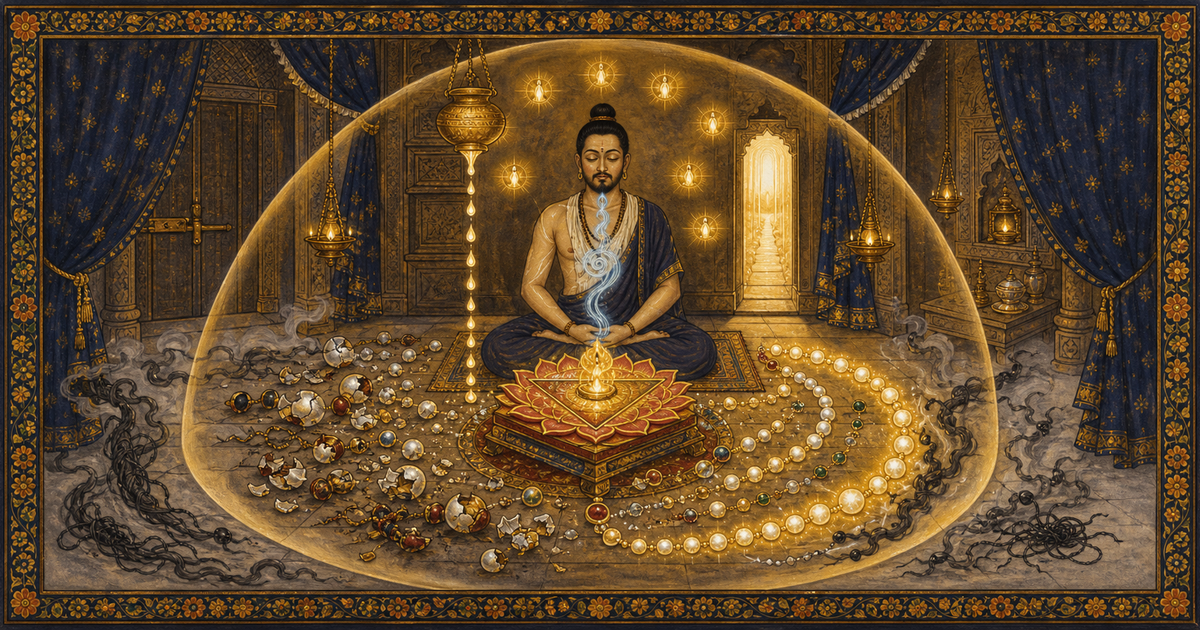
SiSa 4.1-4.8: The cycle of Yonimudrā

Śiva Saṃhitā 4.1-4.8: Yonimudrā and the inner Kula cycle

The practice guides mind and Prāṇa into Ādhāra/Yoni, visualises Kāma and Kalā, drinks Kula-Amṛta and establishes the power of the Mudrā.

Śiva Saṃhitā 4.1
First (ādau | loc sg), through the method of inhalation (pūraka-yogena | ins sg), he should fill (pūrayet | 3p sg act opt caus) the mind (manas | acc sg) in his own base (sva-ādhāre | loc sg). In the space between the anus and the penis (guda-meḍhra-antare | loc sg) is the Yoni (yoniḥ | nom sg); having contracted (ākuñcya | abs) this (tām | acc sg f), it becomes active (pravartate | 3p sg med pres).
Dr. Ronald Steiner - 2026 - historically literal
Śiva Saṃhitā 4.2
Having meditated (dhyātvā | abs) on Kāma (kāmam | acc sg), who is situated in Brahman's Yoni (brahma-yoni-gatam | acc sg m ppp), [he sees him] resembling a ball (kanduka-sannibham | acc sg m), shining like ten million suns (sūrya-koṭi-pratīkāśam | acc sg m) and very cool like ten million moons (candra-koṭi-suśītalam | acc sg m).
Dr. Ronald Steiner - 2026 - historically literal
Śiva Saṃhitā 4.3
Above (ūrdhvam) him (tasya | gen sg m), however (tu), is a subtle flame (śikhā sūkṣmā | nom sg), the highest Kalā (paramā-kalā | nom sg), whose form is consciousness (cid-rūpā | nom sg f). He should visualise (vicintayet | 3p sg act opt caus) himself (ātmānam | acc sg) as connected (sahitam | acc sg m ppp) with her (tayā | ins sg f), having become one (ekībhūtam | acc sg m ppp).
Dr. Ronald Steiner - 2026 - historically literal
Śiva Saṃhitā 4.4
He goes (gacchati | 3p sg act pres), truly (vai), along the Brahman path (brahma-mārgeṇa | ins sg), in the sequence of the three Liṅgas (liṅga-traya-krameṇa | ins sg), towards [that] which shines like ten million suns (sūrya-koṭi-pratīkāśam | acc sg n) and is very cool like ten million moons (candra-koṭi-suśītalam | acc sg n).
Dr. Ronald Steiner - 2026 - historically literal
Śiva Saṃhitā 4.5
This nectar (amṛtaṃ tat | acc sg), indeed (hi), which is situated in heaven (svarga-stham | acc sg n), whose characteristic is highest bliss (parama-ānanda-lakṣaṇam | acc sg), white and red (śveta-raktam | acc sg n), filled with radiance (tejasā-āḍhyam | acc sg n), raining down streams of nectar (sudhā-dhārā-pravarṣiṇam | acc sg n): having drunk (pītvā | abs) the divine Kula nectar (kula-amṛtaṃ divyam | acc sg), he should indeed (eva) enter (viśet | 3p sg act opt) the Kula (kulam | acc sg) again (punar).
Dr. Ronald Steiner - 2026 - historically literal
Śiva Saṃhitā 4.6
Again (punar), indeed (eva), he should go (gacchet | 3p sg act opt) to the Kula (kulam | acc sg), through the method of measuring the breath (mātrā-yogena | ins sg), not (na) otherwise (anyathā). And (ca) she (sā | nom sg f) is called Prāṇa (prāṇa-samākhyātā | nom sg f ppp), namely (hi), in this Tantra (asmin tantre | loc sg), as stated (uditā | nom sg f ppp) by me (mayā | ins sg).
Dr. Ronald Steiner - 2026 - historically literal
Śiva Saṃhitā 4.7
Again (punaḥ), [everything] whose nature extends from Kāla-Agni through to Śiva (kāla-agni-ādi-śiva-ātmakam | nom sg n) dissolves (pralīyate | 3p sg med pres) in her (tasyām | loc sg f). This (eṣā | nom sg f) is indeed (hi) the highest Yonimudrā (yoni-mudrā parā | nom sg); her (tasyāḥ | gen sg f) Bandha (bandhaḥ | nom sg) has been taught (prakīrtitaḥ | nom sg m ppp).
Dr. Ronald Steiner - 2026 - historically literal
Śiva Saṃhitā 4.8
Through her (tasyāḥ | gen sg f) Bandha alone (bandha-mātreṇa | ins sg), there is (asti | 3p sg act pres) not (na) that (tat | nom sg n) which (yat | acc sg n) he could not (na) realise (sādhayet | 3p sg act opt caus).
Dr. Ronald Steiner - 2026 - historically literal
SiSa 4.9-4.20: The secret of Yonimudrā

Śiva Saṃhitā 4.9-4.20: Yonimudrā, the efficacy of Mantra and secrecy

Even weakened Mantras become effective through Yonimudrā; practice brings Siddhi, Mokṣa and protection from sin, yet remains secret.

Śiva Saṃhitā 4.9
Those mantras (ye mantrāḥ | nom pl) which are now (tu) truncated in form (chinna-rūpāḥ | nom pl m), locked (kīlitāḥ | nom pl m ppp), and (ca) those (ye | nom pl m) which are paralysed (stambhitāḥ | nom pl m ppp); burned mantras (dagdhāḥ mantrāḥ | nom pl), headless (śiro-hīnāḥ | nom pl m), but (tu) impure (malināḥ | nom pl m) and rejected (tiraskṛtāḥ | nom pl m ppp) ...
Dr. Ronald Steiner - 2026 - historically literal
Śiva Saṃhitā 4.10
Those (ye | nom pl m) which are weak (mandāḥ | nom pl m), young (bālāḥ | nom pl m), likewise (tathā) old (vṛddhāḥ | nom pl m), bold (prauḍhāḥ | nom pl m), proud through youth (yauvana-garvitāḥ | nom pl m ppp), broken (bhedinaḥ | nom pl m), connected with error (bhrama-saṃyuktāḥ | nom pl m ppp), unconscious (mūrcchitāḥ | nom pl m ppp) for seven days (saptāham), and (ca) those (ye | nom pl m) ...
Dr. Ronald Steiner - 2026 - historically literal
Śiva Saṃhitā 4.11
And (ca) those (ye | nom pl m) which stand (sthitāḥ | nom pl m ppp) on the enemy's side (ari-pakṣe | loc sg), are powerless (nirvīryāḥ | nom pl m), deprived of strength (sattva-varjitāḥ | nom pl m ppp), likewise (tathā) deficient (hīnāḥ | nom pl m) in strength (sattvena | ins sg), and (ca) broken (khaṇḍitāḥ | nom pl m ppp), made into a hundred [pieces] (śatadhā-kṛtāḥ | nom pl m ppp) ...
Dr. Ronald Steiner - 2026 - historically literal
Śiva Saṃhitā 4.12
Connected (saṃyuktāḥ | nom pl m ppp) with this method (vidhānena | ins sg), however (tu), they soon (acireṇa) become effective (prabhavanti | 3p pl act pres); all (sarve | nom pl m), when applied (viniyojitāḥ | nom pl m ppp) by the guru (guruṇā | ins sg), bestow Siddhi and liberation (siddhi-mokṣa-pradāḥ | nom pl m).
Dr. Ronald Steiner - 2026 - historically literal
Śiva Saṃhitā 4.13
If (yadi) the yogi (yogī | nom sg) utters (uccarate | 3p sg med pres) a mantra form (mantra-rūpam | acc sg n), beneficial or harmful (śubha-aśubham | acc sg n), he attains (samavāpnoti | 3p sg act pres) its Siddhi (tat-siddhim | acc sg) through the application of Yonimudrā (yoni-mudrā-nibandhanāt | abl sg).
Dr. Ronald Steiner - 2026 - historically literal
Śiva Saṃhitā 4.14
Having initiated (dīkṣayitvā | abs caus) [him] properly (vidhānena | ins sg) and anointed (abhiṣiñcya | abs) [him] a thousand times (sahasradhā), then (tataḥ) this Mudrā (eṣā mudrā | nom sg) is taught (prakīrtitā | nom sg f ppp) for the purpose of authorisation to practise mantras (mantra-adhikāra-artham | acc sg).
Dr. Ronald Steiner - 2026 - historically literal
Śiva Saṃhitā 4.15
Even if [he committed] thousands of killings of Brahmins (brahma-hatyā-sahasrāṇi | acc pl) and even (api) caused the three worlds (trailokyam | acc sg) to be annihilated (ghātayet | 3p sg act opt caus), this person (asau | nom sg m) would not (na) be stained (lipyati | 3p sg pas pres) by sin (pāpena | ins sg), through the application of Yonimudrā (yoni-mudrā-nibandhanāt | abl sg).
Dr. Ronald Steiner - 2026 - historically literal
Śiva Saṃhitā 4.16
A killer of a guru (guru-hā | nom sg m) and (ca) a drinker of alcohol (surā-pī | nom sg m), and (ca) a thief (steyī | nom sg m), and (ca) one who enters the guru's bed (guru-talpa-gaḥ | nom sg m), would not (na) be bound (badhyeta | 3p sg pas opt) by these sins (etaiḥ pāpaiḥ | ins pl), through the application of Yonimudrā (yoni-mudrā-nibandhanāt | abl sg).
Dr. Ronald Steiner - 2026 - historically literal
Śiva Saṃhitā 4.17
Therefore (tasmāt), the practice (abhyāsanam | nom sg) is to be performed (kartavyam | nom sg n pfp) constantly (nityam) by those who desire liberation (mokṣa-kāṅkṣibhiḥ | ins pl m). Through practice (abhyāsāt | abl sg), Siddhi (siddhiḥ | nom sg) arises (jāyate | 3p sg med pres); through practice (abhyāsāt | abl sg), one should attain (āpnuyāt | 3p sg act opt) liberation (mokṣam | acc sg).
Dr. Ronald Steiner - 2026 - historically literal
Śiva Saṃhitā 4.18
He attains (labhate | 3p sg med pres) consciousness (saṃvidam | acc sg) through practice (abhyāsāt | abl sg); yoga (yogaḥ | nom sg) is set in motion (pravartate | 3p sg med pres) through practice (abhyāsāt | abl sg). The Siddhi (siddhiḥ | nom sg) of the Mudrās (mudrāṇām | gen pl) [arises] through practice (abhyāsāt | abl sg); through practice (abhyāsāt | abl sg), mastery of the breath (vāyu-sādhanam | nom sg) arises.
Dr. Ronald Steiner - 2026 - historically literal
Śiva Saṃhitā 4.19
Through practice (abhyāsāt | abl sg) comes the outwitting of time (kāla-vañcanam | nom sg); likewise (tathā), [he] becomes (bhavet | 3p sg act opt) a conqueror of death (mṛtyuñjayaḥ | nom sg). Siddhi of speech (vāk-siddhiḥ | nom sg) and movement at will (kāma-cāritvam | nom sg) arise (bhavet | 3p sg act opt) through the application of practice (abhyāsa-yogataḥ | abl sg).
Dr. Ronald Steiner - 2026 - historically literal
Śiva Saṃhitā 4.20
Yonimudrā (yoni-mudrā | nom sg) is to be kept (gopyā | nom sg f pfp) supremely (param) secret, not (na) to be given (deyā | nom sg f pfp) to just anyone (yasya | gen sg m) at all (kasyacit | gen sg m). It is absolutely (sarvathā) not (naiva) to be given (dātavyā | nom sg f pfp), even (api) when the vital forces have reached the throat (prāṇaiḥ kaṇṭha-gataiḥ | ins pl).
Dr. Ronald Steiner - 2026 - historically literal
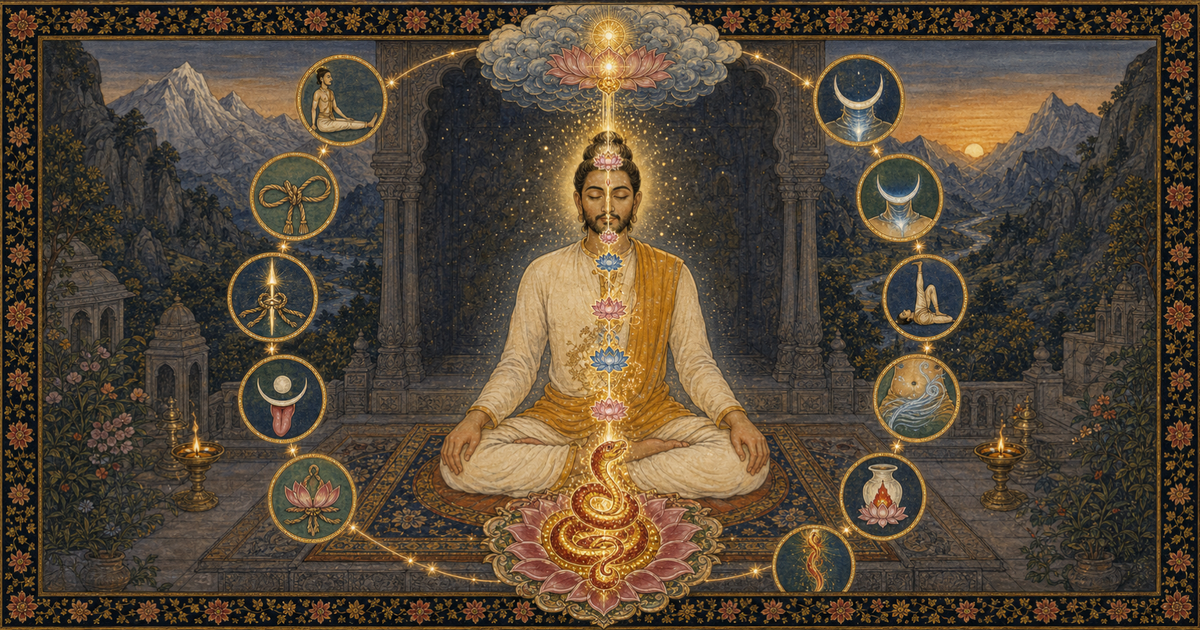
SiSa 4.21-4.25: Ten Mudrās

Śiva Saṃhitā 4.21-4.25: awakening Kuṇḍalinī and the ten Mudrās

Kuṇḍalinī awakens through the Guru’s grace; all Padmas and Granthis open, and the ten highest Mudrās are named.

Śiva Saṃhitā 4.21
Now (adhunā) I shall teach (kathayiṣyāmi | 1p sg act fut caus) the highest (param | acc sg m) yoga (yogam | acc sg), which brings about yoga Siddhi (yoga-siddhi-karam | acc sg m): that which is supremely difficult to attain (parama-durlabham | acc sg m), to be kept secret (gopanīyam | acc sg m pfp) by the perfected ones (susiddhānām | gen pl m).
Dr. Ronald Steiner - 2026 - historically literal
Śiva Saṃhitā 4.22
When (yadā) the sleeping (suptā | nom sg f ppp) Kuṇḍalinī (kuṇḍalī | nom sg) awakens (jāgarti | 3p sg act pres) through the guru's grace (guru-prasādena | ins sg), then (tadā) all the Padmas (sarvāṇi padmāni | nom pl) are pierced (bhidyante | 3p pl pas pres), and (ca) so too (api) are the Granthis (granthayaḥ | nom pl).
Dr. Ronald Steiner - 2026 - historically literal
Śiva Saṃhitā 4.23
Therefore (tasmāt | abl sg n), with every effort (sarva-prayatnena | ins sg), he should perform (samācaret | 3p sg act opt) the practice of Mudrā (mudrā-abhyāsam | acc sg) in order to awaken (prabodhayitum | inf caus) the goddess (īśvarīm | acc sg) who [lies] sleeping (suptām | acc sg f ppp) at the entrance to the Brahman cleft (brahma-randhra-mukhe | loc sg).
Dr. Ronald Steiner - 2026 - historically literal
Śiva Saṃhitā 4.24
Mahāmudrā (mahā-mudrā | nom sg), Mahābandha (mahā-bandhaḥ | nom sg) and (ca) Mahāvedha (mahā-vedhaḥ | nom sg), Khecarī (khecarī | nom sg), Jālandhara (jālandharaḥ | nom sg), Mūlabandha (mūla-bandhaḥ | nom sg), as well as (tathā) Viparītakṛti (viparīta-kṛtiḥ | nom sg) ...
Dr. Ronald Steiner - 2026 - historically literal
Śiva Saṃhitā 4.25
Uḍḍāna (uḍḍānam | nom sg) and indeed (caiva) Vajroṇī (vajroṇī | nom sg), with Śakti-Cālana (śakti-cālanam | nom sg) as the tenth (daśame | loc sg n): this (idam | nom sg n) is indeed (hi) the group of ten Mudrās (mudrā-daśakam | nom sg), the very highest (uttamottamam | nom sg n) among the Mudrās (mudrāṇām | gen pl).
Dr. Ronald Steiner - 2026 - historically literal
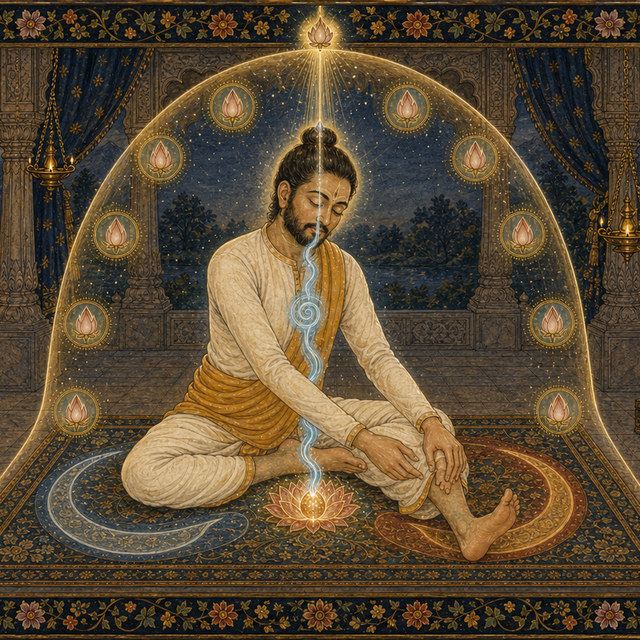
SiSa 4.26-4.30: Practising Mahāmudrā

Śiva Saṃhitā 4.26-4.30: Mahāmudrā, posture and changing sides

Mahāmudrā is introduced as a secret Mudrā; pressure on the Yoni, the extended leg, the gates of the senses, Citta and the breath are brought into alignment.

Śiva Saṃhitā 4.26
I shall teach (pravakṣyāmi | 1p sg act fut), in this (asmin | loc sg n) Tantra (tantre | loc sg), which is dear (vallabhe | loc sg n) to me (mama | gen sg), Mahāmudrā (mahā-mudrām | acc sg), which (yām | acc sg f) the Siddhas (siddhāḥ | nom pl), Kapila and others (kapilā-ādyāḥ | nom pl), attained (prāpya | abs) in earlier times (purā) and thereby reached (gatāḥ | nom pl m ppp) Siddhi (siddhim | acc sg).
Dr. Ronald Steiner - 2026 - historically literal
Śiva Saṃhitā 4.27
Having pressed (sampīḍya | abs) carefully (sādaram) with the heel of the left foot (apasavyena pāda-mūlena | ins sg), according to the guru's instruction (guru-upadeśataḥ | abl sg), [he presses] the Yoni (yonim | acc sg), which lies in the space between the anus and the member (guda-meḍhrāntarāla-gām | acc sg f).
Dr. Ronald Steiner - 2026 - historically literal
Śiva Saṃhitā 4.28
Having held (dhṛtvā | abs) the extended right foot (savyaṃ prasāritaṃ pādam | acc sg) with the pair of hands (pāṇi-yugena | ins sg), having closed (saṃyamya | abs) the nine gates (nava-dvārāṇi | acc pl), [he places] the chin (cibukam | acc sg) on the chest (hṛdaya | tp loc), above it (upari).
Dr. Ronald Steiner - 2026 - historically literal
Śiva Saṃhitā 4.29
Having placed (dattvā | abs) the mind (cittam | acc sg) on the path of the mind (citta-pathe | loc sg), mastery of the breath (vāyu-sādhanam | nom sg) should take effect (prabhavet | 3p sg act opt). This (eṣā | nom sg f) is (bhavet | 3p sg act opt) Mahāmudrā (mahā-mudrā | nom sg), kept secret (gopitā | nom sg f ppp) in all the Tantras (sarva-tantreṣu | loc pl).
Dr. Ronald Steiner - 2026 - historically literal
Śiva Saṃhitā 4.30
Having practised (samabhyasya | abs) with the left side of the body (vāma-aṅgena | ins sg), he should practise (abhyaset | 3p sg act opt) again (punaḥ) with the right side of the body (dakṣa-aṅgena | ins sg). Having made (kṛtvā | abs) the Prāṇāyāma (prāṇāyāmam | acc sg) balanced (samam | acc sg m), [he is] a yogi (yogī | nom sg) with a restrained mind (niyata-mānasaḥ | nom sg m).
Dr. Ronald Steiner - 2026 - historically literal
SiSa 4.31-4.36: The effects of Mahāmudrā

Śiva Saṃhitā 4.31-4.36: the effects of Mahāmudrā and secrecy

Mahāmudrā is described as bringing movement in the Nāḍīs, stabilisation of Bindu, purification, health and protection from death; it must be carefully kept secret.

Śiva Saṃhitā 4.31
Through this procedure (anena vidhinā | ins sg), even (api) a yogi (yogī | nom sg) with little good fortune (manda-bhāgyaḥ | nom sg m) succeeds (sidhyati | 3p sg act pres). The movement (cālanam | nom sg) of all (sarvāsām | gen pl f) the Nāḍīs (nāḍīnām | gen pl), indeed (eva), and the immobilising of the Bindu (bindu-māraṇam | nom sg) [arise].
Dr. Ronald Steiner - 2026 - historically literal
Śiva Saṃhitā 4.32
The consumption (jīvanam | nom sg) of the clouding (kaṣāyasya | gen sg), the destruction (vināśanam | nom sg) of sins (pātakānām | gen pl), the heating of Kuṇḍalinī (kuṇḍālī-tāpanam | nom sg) and the entry into the Brahman opening (brahma-randhra-praveśanam | nom sg) of the breath (vāyoḥ | gen sg) [arise].
Dr. Ronald Steiner - 2026 - historically literal
Śiva Saṃhitā 4.33
The healing of all illnesses (sarva-rogopaśamanam | nom sg), the strengthening of the digestive fire (jaṭharāgni-vivardhanam | nom sg), spotless beauty (amalāṃ kāntim | acc sg) through the body (vapuṣā | ins sg), and the destruction of ageing and death (jarā-mṛtyu-vināśanam | nom sg) [arise].
Dr. Ronald Steiner - 2026 - historically literal
Śiva Saṃhitā 4.34
The fruit of the desired goal (vāñchita-artha-phalam | nom sg), happiness (saukhyam | nom sg) and (ca) the subjugation (māraṇam | nom sg) of the senses (indriyāṇām | gen pl): all these named [things] (etad-uktāni sarvāṇi | nom pl n) certainly (avaśyam) arise for the yogi established in yoga (yogārūḍhasya yoginaḥ | gen sg) through practice (abhyāsataḥ | gen sg m pca). Here (atra), no (na) consideration [doubt] is to be entertained (kāryā vicāraṇā | nom sg).
Dr. Ronald Steiner - 2026 - historically literal
Śiva Saṃhitā 4.35
This Mudrā (mudrā iyam | nom sg f), O you who are revered by the gods (sura-pūjite | voc sg f ppp), is to be kept secret (gopanīyā | nom sg f pfp) with care (prayatnena | ins sg). Having attained (prāpya | abs) it (yām | acc sg f), the yogis (yoginaḥ | nom pl) reach (gacchanti | 3p pl act pres), however (tu), the farther shore (pāram | acc sg) of the ocean of becoming (bhava-ambhodheḥ | gen sg).
Dr. Ronald Steiner - 2026 - historically literal
Śiva Saṃhitā 4.36
This (eṣā | nom sg f) Mudrā (mudrā | nom sg) of the practitioners (sādhakānām | gen pl), taught (uditā | nom sg f ppp) by me (mayā | ins sg), fulfils wishes (kāma-dughā | nom sg f). It is to be performed (kartavyā | nom sg f pfp) through a secret manner of practice (gupta-ācāreṇa | ins sg) and is not (na) to be given (deyā | nom sg f pfp) to just anyone (yasya | gen sg m) at all (kasyacit | gen sg m).
Dr. Ronald Steiner - 2026 - historically literal
SiSa 4.37-4.42: Mahābandha

Śiva Saṃhitā 4.37-4.42: Mahābandha, Prāṇa-Apāna and Suṣumṇā

Mahābandha aligns Prāṇa and Apāna, directs the inner current towards the head, strengthens body and heart, and opens the way to Siddhi.

Śiva Saṃhitā 4.37
Then (tataḥ), having placed (vinyasya | abs) this (tam | acc sg m) extended foot (prasāritaḥ pādaḥ | nom sg) on the thigh (ūrū | tp loc), upon it (upari) ...
Dr. Ronald Steiner - 2026 - historically literal
Śiva Saṃhitā 4.38
Having contracted (samākuñcya | abs) the anus and Yoni (guda-yonim | acc sg), and (ca) having made (kṛtvā | abs) Apāna (apānam | acc sg) move upwards (ūrdhva-gam | acc sg m), having connected (yojayitvā | abs caus) [it] with Samāna (samānena | ins sg), and having made (kṛtvā | abs) Prāṇa (prāṇam | acc sg) face downwards (adho-mukham | acc sg m) ...
Dr. Ronald Steiner - 2026 - historically literal
Śiva Saṃhitā 4.39
That discerning [yogi] who (yaḥ sudhīḥ | nom sg) should close (bandhayet | 3p sg act opt) with Prāṇa and Apāna (prāṇāpānena | ins sg) for the purpose of upward movement (ūrdhva-gaty-artham | acc sg): this (ayam | nom sg m) is called (kathitaḥ | nom sg m ppp) Mahābandha (mahā-bandhaḥ | nom sg), which opens the path to Siddhi (siddhi-mārga-pradāyakaḥ | nom sg m).
Dr. Ronald Steiner - 2026 - historically literal
Śiva Saṃhitā 4.40
From the network of Nāḍīs (nāḍī-jālāt | abl sg), the yogi's (yoginaḥ | gen sg) stream of fluid (rasa-vyūhaḥ | nom sg) reaches (yāti | 3p sg act pres) the head (mūrdhānam | acc sg). He should perform (sādhayet | 3p sg act opt caus) it with both feet (ubhābhyāṃ padbhyām | ins du), one at a time (ekaikam | acc sg n), with great care (su-prayatnataḥ | abl sg).
Dr. Ronald Steiner - 2026 - historically literal
Śiva Saṃhitā 4.41
Through practice (abhyāsataḥ | gen sg m pca), the breath (vāyuḥ | nom sg) enters the centre of Suṣumṇā (suṣumṇā-madhya-saṅgataḥ | nom sg m ppp). Through this (anena | ins sg n) [arise] strengthening (puṣṭiḥ | nom sg) of the body (vapuṣaḥ | gen sg) and a firm bond (dṛḍha-bandhaḥ | nom sg) in the skeletal framework (asthi-pañjare | loc sg).
Dr. Ronald Steiner - 2026 - historically literal
Śiva Saṃhitā 4.42
The yogi (yogī | nom sg) whose heart is fulfilled (sampūrṇa-hṛdayaḥ | nom sg m), [in] whom these [effects] (etāni | nom pl n) of the yogi (yoginaḥ | gen sg) arise (bhavanti | 3p pl act pres): through this Bandha (bandhena anena | ins sg), the lord of yogis (yogīndraḥ | nom sg) should realise (sādhayet | 3p sg act opt caus) everything desired (sarvam īpsitam | acc sg n).
Dr. Ronald Steiner - 2026 - historically literal
SiSa 4.43-4.50: Mahāvedha

Śiva Saṃhitā 4.43-4.50: Mahāvedha and the secret triad of Mudrās

Mahāvedha pierces the Granthis; Mahāmudrā, Mahābandha and Mahāvedha work as a secret triad against death.

Śiva Saṃhitā 4.43
Having established (kṛtvā | abs) the unity (aikyam | acc sg) of Apāna and Prāṇa (apāna-prāṇayoḥ | gen du), O Lady of the three worlds (tri-bhuvaneśvari | voc sg), the yogi established in Mahāvedha (mahā-vedha-sthito yogī | nom sg), having filled (āpūrya | abs) the abdomen (kukṣim | acc sg) with breath (vāyunā | ins sg), should discerningly (dhīmān | nom sg m) strike (saṃtāḍayet | 3p sg act opt caus) both buttocks (sphicau | acc du). This (ayam | nom sg m) Vedha (vedhaḥ | nom sg) was proclaimed (kīrtitaḥ | nom sg m ppp) by me (mayā | ins sg).
Dr. Ronald Steiner - 2026 - historically literal
Śiva Saṃhitā 4.44
The best of yogis (yogi-puṅgavaḥ | nom sg), having pierced (saṃvidhya | abs) with the breath (vāyunā | ins sg) through this Vedha (vedhena anena | ins sg), breaks through (bhinatti | 3p sg act pres) this (asau | nom sg m) knot (granthim | acc sg), the Brahman knot (brahma-granthim | acc sg), by the path of Suṣumṇā (suṣumṇā-mārgeṇa | ins sg).
Dr. Ronald Steiner - 2026 - historically literal
Śiva Saṃhitā 4.45
For one who (yaḥ | nom sg m) constantly (sadā) performs (karoti | 3p sg act pres) as a practice (abhyāsam | acc sg) the closely guarded (su-gopitam | acc sg m ppp) Mahāvedha (mahā-vedham | acc sg), for him (tasya | gen sg m) arises (bhavet | 3p sg act opt) mastery of the breath (vāyu-siddhiḥ | nom sg), which destroys ageing and death (jarā-maraṇa-nāśinī | nom sg f).
Dr. Ronald Steiner - 2026 - historically literal
Śiva Saṃhitā 4.46
The gods (devāḥ | nom pl) who are situated (sthitāḥ | nom pl m ppp) in the centre of the Cakra (cakra-madhye | loc sg) tremble (kampanti | 3p pl act pres) through the impact of the breath (vāyu-tāḍanāt | abl sg). Kuṇḍalinī (kuṇḍalī | nom sg), the great Māyā (mahā-māyā | nom sg), she (sā | nom sg f) too (api) dissolves (vilīyate | 3p sg pas pres) in Kailāsa (kailāse | loc sg).
Dr. Ronald Steiner - 2026 - historically literal
Śiva Saṃhitā 4.47
Mahāmudrā and Mahābandha (mahā-mudrā-mahā-bandhau | nom du) are fruitless (niṣphalau | nom du m) without Vedha (vedha-varjitau | nom du m ppp). Therefore (tasmāt | abl sg n), the yogi (yogī | nom sg) carefully (prayatnena | ins sg) performs (karoti | 3p sg act pres) the triad (tritayam | acc sg) in sequence (kramāt | abl sg).
Dr. Ronald Steiner - 2026 - historically literal
Śiva Saṃhitā 4.48
Whoever (yaḥ | nom sg m) carefully (prayatnena | ins sg) performs (karoti | 3p sg act pres) this triad (etat-trayam | acc sg) four times (catur-vāram | acc sg) certainly (eva) conquers (jayati | 3p sg act pres) death (mṛtyum | acc sg) within six months (ṣaṇ-māsa-abhyantaram | acc sg n). [There is] no (na) doubt (saṃśayaḥ | nom sg).
Dr. Ronald Steiner - 2026 - historically literal
Śiva Saṃhitā 4.49
A Siddha (siddhaḥ | nom sg) knows (jānāti | 3p sg act pres) the greatness (māhātmyam | acc sg) of this triad (etat-trayasya | gen sg), not (na) another (itaraḥ | nom sg m). Having understood (jñātvā | abs) this (yat | acc sg n), all practitioners (sādhakāḥ sarve | nom pl) certainly (vai) attain (labhanti | 3p pl act pres) Siddhi (siddhim | acc sg) completely (samyak).
Dr. Ronald Steiner - 2026 - historically literal
Śiva Saṃhitā 4.50
It is to be carefully (prayatnena | ins sg) kept secret (gopanīyā | nom sg f pfp) by practitioners (sādhakaiḥ | ins pl) who strive for (īpsubhiḥ | ins pl m pca) Siddhi (siddhim | acc sg). Otherwise (anyathā), no (na) Siddhi (siddhiḥ | nom sg) of the Mudrās (mudrāṇām | gen pl) arises (syāt | 3p sg act opt): this (eṣaḥ | nom sg m) is certain (niścayaḥ | nom sg).
Dr. Ronald Steiner - 2026 - historically literal
SiSa 4.51-4.59: Khecarīmudrā

Śiva Saṃhitā 4.51-4.59: Khecarīmudrā, nectar and purification

Khecarī turns the gaze and tongue inwards, opens access to the nectar, purifies the practitioner and remains hidden as an exceptionally precious Mudrā.

Śiva Saṃhitā 4.51
The discerning one (sudhīḥ | nom sg), having placed (vidhāya | abs) the firmly [directed] gaze (su-dṛḍhāṃ dṛṣṭim | acc sg) between the two eyebrows (bhruvoḥ | gen du), situated there (antar-gatām | acc sg f ppp) ...
Dr. Ronald Steiner - 2026 - historically literal
Śiva Saṃhitā 4.52
Having sat down (upaviśya | abs) in the Vajra seat (āsane vajre | loc sg), free from manifold disturbances (nānopadrava-varjitaḥ | nom sg m ppp), [he guides] the tongue turned backwards (viparīta-gāṃ rasanām | acc sg) into the cavity (garte | loc sg) which is situated (sthite | loc sg m ppp) above (ūrdhvam) the uvula (lambikā | tp loc).
Dr. Ronald Steiner - 2026 - historically literal
Śiva Saṃhitā 4.53
The insightful one (vicakṣaṇaḥ | nom sg m) should carefully (prayatnena | ins sg) insert (saṃyojayet | 3p sg act opt caus) [it] into the well of nectar (sudhā-kūpe | loc sg). This Mudrā (mudrā eṣā | nom sg f), Khecarī (khecarī | nom sg), is taught (proktā | nom sg f ppp) out of affection (anurodhataḥ | abl sg) for the devotees (bhaktānām | gen pl).
Dr. Ronald Steiner - 2026 - historically literal
Śiva Saṃhitā 4.54
This (eṣā | nom sg f) is indeed (hi) the mother (jananī | nom sg) of the Siddhis (siddhīnām | gen pl) and dearer than life (prāṇa-adhika-priyā | nom sg f) to me (mama | gen sg). Through uninterrupted practice (nirantara-kṛtābhyāsāt | abl sg), he should drink (pibet | 3p sg act opt) nectar (pīyūṣam | acc sg) daily (pratyaham). Through this (tena | ins sg n), bodily Siddhi (vigraha-siddhiḥ | nom sg) arises (syāt | 3p sg act opt), a lion confronting the elephant of death (mṛtyu-mātaṅga-kesarī | nom sg).
Dr. Ronald Steiner - 2026 - historically literal
Śiva Saṃhitā 4.55
Whether (vā) impure (apavitraḥ | nom sg m), or (vā) pure (pavitraḥ | nom sg m), or (vā) even (api) having entered (gataḥ | nom sg m ppp) any state (sarvāvasthām | acc sg): whoever's (yasya | gen sg m) Khecarī (khecarī | nom sg) is pure (śuddhā | nom sg f ppp), however (tu), that person (saḥ | nom sg m) is pure (śuddhaḥ | nom sg m ppp). Here (atra) [there is] no (na) doubt (saṃśayaḥ | nom sg).
Dr. Ronald Steiner - 2026 - historically literal
Śiva Saṃhitā 4.56
Whoever (yaḥ | nom sg m), however (tu), practises (kurute | 3p sg med pres) it for half a moment (kṣaṇa-ardham | acc sg), having crossed (tīrtvā | abs) the great ocean of sin (pāpa-mahārṇavam | acc sg), and (ca) having enjoyed (prabhuktvā | abs) divine pleasures (divya-bhogān | acc pl), he (saḥ | nom sg m) is born (prajāyate | 3p sg med pres) into a good family (sat-kule | loc sg).
Dr. Ronald Steiner - 2026 - historically literal
Śiva Saṃhitā 4.57
Whoever (yaḥ | nom sg m), however (tu), [abides] in this Khecarī-Mudrā (mudrā eṣā khecarī | nom sg) with a calm mind (svastha-cittaḥ | nom sg m) and indeed (hi) without tiring (atandritaḥ | nom sg m), that person (saḥ | nom sg m) certainly (hi) regards (manyate | 3p sg med pres) even (api) the passing of a hundred [ages] of Brahmā (śata-brahma-gatena | ins sg n ppp) as half a moment (kṣaṇa-ardham | acc sg).
Dr. Ronald Steiner - 2026 - historically literal
Śiva Saṃhitā 4.58
The wise one (dhīmān | nom sg m) who (yaḥ | nom sg m) knows (vetti | 3p sg act pres) this (imām | acc sg f) Khecarī-Mudrā (khecarīṃ mudrām | acc sg) according to the guru's instruction (guru-upadeśataḥ | abl sg), even if devoted to many kinds of sin (nānā-pāpa-rataḥ | nom sg m ppp), that person (saḥ | nom sg m) reaches (yāti | 3p sg act pres) the highest goal (paramāṃ gatim | acc sg).
Dr. Ronald Steiner - 2026 - historically literal
Śiva Saṃhitā 4.59
This (sā | nom sg f) Mudrā (mudrā | nom sg), comparable to life [precious] (prāṇa-sadṛśī | nom sg f), is not (na) given (dīyate | 3p sg pas pres) to just anyone (yasmin | loc sg m) at all (kasmin | loc sg m). This Mudrā (mudrā iyam | nom sg f), O you who are revered by the gods (sura-pūjite | voc sg f ppp), is carefully (prayatnena | ins sg) concealed (pracchādyate | 3p sg pas pres).
Dr. Ronald Steiner - 2026 - historically literal
SiSa 4.60-4.63: Jālandharabandha

Śiva Saṃhitā 4.60-4.63: Jālandharabandha and the preservation of nectar

Jālandhara closes the throat and chin, protects the nectar from the digestive fire, and leads to immortality and Siddhi.

Śiva Saṃhitā 4.60
[Establishing] the bound network of vessels in the neck (baddha-gala-śirā-jālam | acc sg), he should place (nyaset | 3p sg act opt) the chin (cibukam | acc sg) against the chest (hṛdaye | loc sg). Jālandhara-Bandha (jālandharaḥ bandhaḥ | nom sg) has been taught (proktaḥ | nom sg m ppp), difficult to attain (durlabhaḥ | nom sg m) even (api) for the gods (devānām | gen pl).
Dr. Ronald Steiner - 2026 - historically literal
Śiva Saṃhitā 4.61
The fire situated in the navel (nābhi-stha-vahniḥ | nom sg) of living beings (jantūnām | gen pl) should drink (pibet | 3p sg act opt) the abundance of nectar (pīyūṣa-vistāram | acc sg) which has fallen from the thousand-petalled lotus (sahasra-kamala-cyutam | acc sg m ppp). For this purpose (tad-artham | acc sg), he should apply (bandhayet | 3p sg act opt caus) this [Bandha] (imam | acc sg m).
Dr. Ronald Steiner - 2026 - historically literal
Śiva Saṃhitā 4.62
Through this Bandha (bandhena anena | ins sg), the wise one (buddhimān | nom sg m) himself (svayam) drinks (pibati | 3p sg act pres) the nectar (pīyūṣam | acc sg). Having attained (samprāpya | abs) immortality (amaratvam | acc sg), he rejoices (modate | 3p sg med pres) in the three worlds (bhuvana-traye | loc sg n).
Dr. Ronald Steiner - 2026 - historically literal
Śiva Saṃhitā 4.63
This (eṣaḥ | nom sg m) Jālandhara-Bandha (jālandharaḥ bandhaḥ | nom sg) bestows Siddhi (siddhi-dāyakaḥ | nom sg m) upon the Siddhas (siddhānām | gen pl). The practice (abhyāsaḥ | nom sg) is constantly (nityam) performed (kriyate | 3p sg pas pres) by a yogi (yoginā | ins sg) who desires (icchatā | ins sg m pca) Siddhi (siddhim | acc sg).
Dr. Ronald Steiner - 2026 - historically literal
SiSa 4.64-4.68: Mūlabandha

Śiva Saṃhitā 4.64-4.68: Mūlabandha and drawing Apāna upwards

Mūlabandha applies pressure at the lower lock, draws Apāna upwards, strengthens Yonimudrā and enables mastery of earth and breath.

Śiva Saṃhitā 4.64
Having compressed (sampīḍya | abs) with the root of the foot, the heel (pāda-mūlena | ins sg), [Apāna], held fast (yantritam | acc sg n ppp) in the anal passages (guda-mārgeṣu | loc pl) ...
Dr. Ronald Steiner - 2026 - historically literal
Śiva Saṃhitā 4.65
Having drawn in (ākṛṣya | abs) Apāna (apānam | acc sg) with force (balāt | abl sg), he should guide (cārayet | 3p sg act opt caus) [it] properly (su) upwards (ūrdhvam), gradually (kramāt | abl sg). This (ayam | nom sg m) Mūlabandha (mūla-bandhaḥ | nom sg) is established (kalpitaḥ | nom sg m ppp), destroying ageing and death (jarā-maraṇa-nāśanaḥ | nom sg m).
Dr. Ronald Steiner - 2026 - historically literal
Śiva Saṃhitā 4.66
It brings about (prakaroti | 3p sg act pres) the unity (aikyam | acc sg) of Apāna and Prāṇa (apāna-prāṇayoḥ | gen du), firmly established (adhi-kalpitam | acc sg n ppp). Through this Bandha (bandhena anena | ins sg), Yonimudrā (yoni-mudrā | nom sg) succeeds (prasidhyati | 3p sg act pres) especially easily (sutarām).
Dr. Ronald Steiner - 2026 - historically literal
Śiva Saṃhitā 4.67
When Yonimudrā (yoni-mudrāyām | loc sg) is perfected (siddhāyām | loc sg f ppp), what (kim | nom sg n) does not (na) succeed (sidhyati | 3p sg act pres) on earth (bhūtale | loc sg)? Through the grace (prasādena | ins sg) of this Bandha (bandhasya asya | gen sg), the yogi (yogī | nom sg), seated in Padmāsana (padmāsane sthitaḥ | nom sg m ppp), with the breath mastered (vijitānilaḥ | nom sg m), abides (vartate | 3p sg med pres) in the air (gagane | loc sg), having left (utsṛjya | abs) the earth (bhuvam | acc sg).
Dr. Ronald Steiner - 2026 - historically literal
Śiva Saṃhitā 4.68
In a well-protected (su-gupte | loc sg m ppp), deserted (nirjane | loc sg m) place (deśe | loc sg), he should thoroughly practise (samabhyaset | 3p sg act opt) this Bandha (bandham enam | acc sg), if (yadi) the best of yogis (yogi-puṅgavaḥ | nom sg) should wish (icchet | 3p sg act opt) to cross (tartum | inf) the ocean of Saṃsāra (saṃsāra-sāgaram | acc sg).
Dr. Ronald Steiner - 2026 - historically literal
SiSa 4.69-4.71: Viparītakṛti

Śiva Saṃhitā 4.69-4.71: Viparītakṛti, inversion and Amṛta

Viparītakṛti inverts the body, preserves Amṛta and overcomes death; one who drinks Amṛta becomes worthy of reverence.

Śiva Saṃhitā 4.69
Having placed (dattvā | abs) his own head (sva-śiraḥ | acc sg) on the ground (bhūtale | loc sg), he should raise (nayet | 3p sg act opt caus) the pair of feet (caraṇa-dvayam | acc sg) into the air (khe | loc sg). And (ca) this (eṣā | nom sg f) inverted practice (viparīta-kṛtiḥ | nom sg) is kept secret (gopitā | nom sg f ppp) in all the Tantras (sarva-tantreṣu | loc pl).
Dr. Ronald Steiner - 2026 - historically literal
Śiva Saṃhitā 4.70
The yogi (yogī | nom sg) who (yaḥ | nom sg m) performs (kurute | 3p sg med pres) this (etad | acc sg n) as a practice (abhyāsam | acc sg) daily (nityam) for the duration of one Yāma (yāma-mātrataḥ | abl sg) conquers (jayati | 3p sg act pres) death (mṛtyum | acc sg). Even (api) through the dissolution of the world (pralayena | ins sg), [he] sinks (sīdati | 3p sg act pres).
Dr. Ronald Steiner - 2026 - historically literal
Śiva Saṃhitā 4.71
Whoever (yaḥ | nom sg m) performs (kurute | 3p sg med pres) the drinking of the nectar of immortality (amṛta-pānam | acc sg) may attain (iyāt | 3p sg act opt) equality (samatām | acc sg) with the Siddhas (siddhānām | gen pl). Whoever (yaḥ | nom sg m) performs (karoti | 3p sg act pres) this Bandha (bandham enam | acc sg), that person (saḥ | nom sg m) is to be revered (sevyaḥ | nom sg m pfp) by all the worlds (sarva-lokānām | gen pl).
Dr. Ronald Steiner - 2026 - historically literal
SiSa 4.72-4.77: Uḍḍyānabandha

Śiva Saṃhitā 4.72-4.77: Uḍḍyānabandha, purification of the Nābhi and Vāyu-Siddhi

Uḍḍyāna draws the abdomen and Nābhi backwards, destroys suffering, purifies the Nābhi, strengthens the fire, and leads to Vāyu-Siddhi and bodily Siddhi.

Śiva Saṃhitā 4.72
Above (ūrdhvam) and also (cāpi) below (adhaḥ) the navel (nābheḥ | gen sg), he should perform (ācaret | 3p sg act opt) the backward stretch (tānaṃ paścimam | acc sg). This (eṣaḥ | nom sg m) is (syāt | 3p sg act opt) Uḍḍyāna-Bandha (uḍḍyāna-bandhaḥ | nom sg), which destroys the entire flood of sufferings (sarva-duḥkhaugha-nāśanaḥ | nom sg m).
Dr. Ronald Steiner - 2026 - historically literal
Śiva Saṃhitā 4.73
In the abdomen (udare | loc sg), he should bring about (kārayet | 3p sg act opt caus) the backward stretch (paścimaṃ tānam | acc sg) above (ūrdhvam) the navel (nābheḥ | gen sg). This Bandha (bandhaḥ ayam | nom sg), called Uḍḍyāna (uḍḍyānākhyaḥ | nom sg m) here (atra), is a lion confronting the elephant of death (mṛtyu-mātaṅga-kesarī | nom sg).
Dr. Ronald Steiner - 2026 - historically literal
Śiva Saṃhitā 4.74
For the yogi (yogī | nom sg) who (yaḥ | nom sg m) performs (kurute | 3p sg med pres) [it] daily (nityam), four times (catur-vāram | acc sg), day (dine | loc sg) after day (dine | loc sg), for him (tasya | gen sg m) arises (syāt | 3p sg act opt) purification (śuddhiḥ | nom sg) of the navel (nābheḥ | gen sg), whereby (yena | ins sg n) the wind (marut | nom sg) becomes (bhavet | 3p sg act opt) mastered (siddhaḥ | nom sg m ppp).
Dr. Ronald Steiner - 2026 - historically literal
Śiva Saṃhitā 4.75
The yogi (yogī | nom sg) who practises (abhyasan | nom sg m pca) for six months (ṣaṇ-māsam | acc sg) certainly (niścitam) conquers (jayati | 3p sg act pres) death (mṛtyum | acc sg). For him (tasya | gen sg m), the abdominal fire (udara-agniḥ | nom sg) burns (jvalati | 3p sg act pres), and an increase in the Rasas (rasa-vṛddhiḥ | nom sg) arises (prajāyate | 3p sg med pres).
Dr. Ronald Steiner - 2026 - historically literal
Śiva Saṃhitā 4.76
Through this (anena | ins sg n), Siddhi (siddhiḥ | nom sg) of the body (vigrahasya | gen sg) arises (prajāyate | 3p sg med pres) very easily (sutarām). And also (cāpi), the destruction (saṅkṣayaḥ | nom sg) of the yogi's (yoginaḥ | gen sg) illnesses (rogāṇām | gen pl) certainly (dhruvam) occurs (bhavati | 3p sg act pres).
Dr. Ronald Steiner - 2026 - historically literal
Śiva Saṃhitā 4.77
Having received (labdhvā | abs) [it] from the guru (guroḥ | gen sg), the insightful one (vicakṣaṇaḥ | nom sg m) should carefully (prayatnena | ins sg) perform (sādhayet | 3p sg act opt caus) the Bandha (bandham | acc sg), which is extremely difficult to attain (parama-durlabham | acc sg m), in a solitary (nirjane | loc sg m), well-situated (su-sthite | loc sg m ppp) place (deśe | loc sg).
Dr. Ronald Steiner - 2026 - historically literal
SiSa 4.78-4.80: The path of Vajrolī

Śiva Saṃhitā 4.78-4.80: Vajrolī as a secret path to liberation

Vajrolī is introduced as an exceptionally secret practice said to make liberation possible even for householders who enjoy worldly pleasures.

Śiva Saṃhitā 4.78
I shall teach (kathayiṣyāmi | 1p sg act fut caus) my own devotees (sva-bhaktebhyaḥ | dat pl), in brief (samāsena | ins sg), Vajrolī (vajrolīm | acc sg), the destroyer of the darkness of Saṃsāra (saṃsāra-dhvānta-nāśinīm | acc sg f), even (api) the most secret (guhyatamām | acc sg f) of secrets (guhyāt | abl sg n).
Dr. Ronald Steiner - 2026 - historically literal
Śiva Saṃhitā 4.79
Even (api) a householder (gārhasthaḥ | nom sg) living (vartamānaḥ | nom sg m pca) according to his own wishes (sva-icchayā | ins sg), without (vinā) the rules taught in yoga (yogokta-niyamaiḥ | ins pl), becomes (bhavati | 3p sg act pres) liberated (muktaḥ | nom sg m ppp) through the application of Vajrolī practice (vajrolī-abhyāsa-yogataḥ | abl sg).
Dr. Ronald Steiner - 2026 - historically literal
Śiva Saṃhitā 4.80
This (ayam | nom sg m) yoga of Vajrolī practice (vajrolī-abhyāsa-yogaḥ | nom sg) gives liberation (muktidaḥ | nom sg m), even (api) when connected with enjoyment (bhoge yukte | loc sg). Therefore (tasmāt | abl sg n), it is always (sadā) to be performed (kartavyaḥ | nom sg m pfp) by yogis (yogibhiḥ | ins pl) with the greatest care (ati-prayatnena | ins sg).
Dr. Ronald Steiner - 2026 - historically literal
SiSa 4.81-4.90: Preserving Bindu

Śiva Saṃhitā 4.81-4.90: Vajrolī, Rajas and the preservation of Bindu

Vajrolī works with Rajas and Bindu, unites the solar and lunar principles, and explains the preservation of Bindu as the foundation of life and Siddhi.

Śiva Saṃhitā 4.81
First (ādau), the discerning [yogi] (sudhīḥ | nom sg), carefully (yatnena | ins sg) and correctly (vidhivat), having drawn together (ākuñcya | abs) [it], should cause the woman's (striyaḥ | gen sg) Rajas (rajaḥ | acc sg) to enter (praveśayet | 3p sg act opt caus) his own body (sva-śarīre | loc sg) from the Yoni (yonyāḥ | gen sg), through the channel of the member (liṅga-nālena | ins sg).
Dr. Ronald Steiner - 2026 - historically literal
Śiva Saṃhitā 4.82
Having awakened (saṃbodhya | abs) his own Bindu (svakaṃ bindum | acc sg), he should perform (ācaret | 3p sg act opt) the movement of the member (liṅga-cālanam | acc sg). If (ced) [it] happens (daivāt | abl sg) to move (calati | 3p sg act pres) upwards (ūrdhvam), [it is] bound (nibaddhaḥ | nom sg m ppp) through Yonimudrā (yoni-mudrayā | ins sg).
Dr. Ronald Steiner - 2026 - historically literal
Śiva Saṃhitā 4.83
Having also (api) guided (nītvā | abs) that Bindu (tad-bindum | acc sg) onto the left path (vāma-mārge | loc sg), he should withdraw (nivārayet | 3p sg act opt caus) the member (liṅgam | acc sg). This person (ayam | nom sg m) should [take it] out of the Yoni (yonitaḥ | abl sg) for the duration of a moment (kṣaṇa-mātram | acc sg) and perform (ācaret | 3p sg act opt) the movement (cālanam | acc sg) again (punaḥ).
Dr. Ronald Steiner - 2026 - historically literal
Śiva Saṃhitā 4.84
According to the guru's instruction (guru-upadeśataḥ | abl sg), the yogi (yogī | nom sg), having contracted (ākuñcya | abs) the Apāna wind (apāna-vāyum | acc sg), should forcefully (balāt | abl sg) draw in (ākarṣayet | 3p sg act opt caus) the Rajas (rajaḥ | acc sg) from the Yoni (yonitaḥ | abl sg) through the Huṃ-Huṃ sound (huṃ-huṅkāreṇa | ins sg).
Dr. Ronald Steiner - 2026 - historically literal
Śiva Saṃhitā 4.85
Through this procedure (anena vidhinā | ins sg), the yogi (yogī | nom sg), the worshipper of the guru's lotus feet (guru-pādāmbuja-pūjakaḥ | nom sg), acts (kurute | 3p sg med pres) quickly (kṣipram) towards the Siddhi (siddhaye | dat sg) of yoga (yogasya | gen sg), consuming cow products (gavya-bhuk | nom sg m).
Dr. Ronald Steiner - 2026 - historically literal
Śiva Saṃhitā 4.86
Bindu (binduḥ | nom sg) is to be understood (jñeyaḥ | nom sg m pfp) as lunar (vidhu-mayaḥ | nom sg m), and Rajas (rajaḥ | nom sg) likewise (tathā) as solar (sūrya-mayaḥ | nom sg m). The union (melanam | nom sg) of both (ubhayoḥ | gen du) is to be brought about (kāryam | nom sg n pfp) carefully (prayatnataḥ | abl sg) within one's own body (sva-śarīre | loc sg).
Dr. Ronald Steiner - 2026 - historically literal
Śiva Saṃhitā 4.87
I (aham | nom sg) [am] Bindu (binduḥ | nom sg); Rajas (rajaḥ | nom sg) [is] Śakti (śaktiḥ | nom sg). When (yadā) the union (melanam | nom sg) of both (ubhayoḥ | gen du) [takes place], then (tadā) the body (vapuḥ | nom sg) of practising yogis (yogināṃ sādhanavatām | gen pl) becomes (bhavet | 3p sg act opt) divine (divyam | nom sg n).
Dr. Ronald Steiner - 2026 - historically literal
Śiva Saṃhitā 4.88
Death (maraṇam | nom sg) [arises] through the fall of Bindu (bindu-pātena | ins sg), life (jīvanam | nom sg) in the retention of Bindu (bindu-dhāraṇe | loc sg). Therefore (tasmāt | abl sg n), he performs (kurute | 3p sg med pres) the preservation of Bindu (bindu-dhāraṇam | acc sg) with the greatest care (ati-prayatnena | ins sg).
Dr. Ronald Steiner - 2026 - historically literal
Śiva Saṃhitā 4.89
Through Bindu (bindunā | ins sg), one is born (jāyate | 3p sg med pres) and dies (mriyate | 3p sg med pres) in the world (loke | loc sg); about this (atra) [there is] no (na) doubt (saṃśayaḥ | nom sg). Having understood (jñātvā | abs) this (etat | acc sg n), the yogi (yogī | nom sg) should always (sadā) practise (ācaret | 3p sg act opt) the preservation of Bindu (bindu-dhāraṇam | acc sg).
Dr. Ronald Steiner - 2026 - historically literal
Śiva Saṃhitā 4.90
When Bindu (bindau | loc sg), the great jewel (mahā-ratne | loc sg), is mastered (siddhe | loc sg m ppp), what (kim | nom sg n) does not (na) succeed (sidhyati | 3p sg act pres) on earth (bhūtale | loc sg)? Through its (yasya | gen sg m) effect (prasādāt | abl sg), even (api) my (mama | gen sg) greatness (mahimā | nom sg) becomes (bhavet | 3p sg act opt) such (etādṛśī | nom sg f).
Dr. Ronald Steiner - 2026 - historically literal
SiSa 4.91-4.94: Vajrolī-Siddhi

Śiva Saṃhitā 4.91-4.94: the fruits of Vajrolī and Siddhi amid enjoyment

Bindu determines happiness and suffering; this Śaṅkara-Yoga leads to Siddhi, fulfilled aims and complete attainment even amid enjoyment.

Śiva Saṃhitā 4.91
Bindu (binduḥ | nom sg), situated [according to its state] (saṃsthitaḥ | nom sg m ppp), brings about (karoti | 3p sg act pres) happiness (sukham | acc sg) and (ca) suffering (duḥkham | acc sg) for all (sarveṣām | gen pl m) deluded Saṃsārins (saṃsāriṇāṃ vimūḍhānām | gen pl) who are subject to ageing and death (jarā-maraṇa-śālinām | gen pl m).
Dr. Ronald Steiner - 2026 - historically literal
Śiva Saṃhitā 4.92
And (ca) this (ayam | nom sg m) śāṅkara yoga (śāṅkaraḥ yogaḥ | nom sg) is the very highest (uttamottamaḥ | nom sg m) of the yogis (yoginām | gen pl).
Dr. Ronald Steiner - 2026 - historically literal
Śiva Saṃhitā 4.93
Through practice (abhyāsāt | abl sg), a person (mānavaḥ | nom sg) attains (āpnoti | 3p sg act pres) Siddhi (siddhim | acc sg), even (api) when connected with enjoyment (bhoga-yuktaḥ | nom sg m ppp). Complete (sakalaḥ | nom sg m), with the goal realised (sādhitārthaḥ | nom sg), he also (api) becomes (bhavati | 3p sg act pres) perfected (siddhaḥ | nom sg m ppp) on earth (bhūtale | loc sg).
Dr. Ronald Steiner - 2026 - historically literal
Śiva Saṃhitā 4.94
Having indeed (vai) enjoyed (bhuktvā | abs) all pleasures (bhogān aśeṣān | acc pl), through this yoga (yogena anena | ins sg), surely (niścitam), through this (anena | ins sg n), the complete Siddhi (sakalā siddhiḥ | nom sg) of yogis (yoginām | gen pl) certainly (dhruvam) arises. Therefore (tasmāt | abl sg n), he should thoroughly practise (samabhyaset | 3p sg act opt) this (enam | acc sg m) with great, pleasant enjoyment (sukha-bhogena mahatā | ins sg).
Dr. Ronald Steiner - 2026 - historically literal
SiSa 4.95-4.100: Sahajolī and Amarolī

Śiva Saṃhitā 4.95-4.100: Sahajolī, Amarolī and secrecy

Sahajolī and Amarolī are variants of Vajrolī; they bring mastery of Bindu, differ in name and remain exceptionally secret.

Śiva Saṃhitā 4.95
Sahajolī (sahajolī | nom sg) and (ca) Amarolī (amarolī | nom sg) arise (bhavet | 3p sg act opt) as variants (bhedataḥ | abl sg) of Vajrolī (vajrolyā | abl sg). In whatever (yena | ins sg m) particular (kena | ins sg m) way (prakāreṇa | ins sg), the yogi (yogī | nom sg) should master (prasādhayet | 3p sg act opt caus) Bindu (bindum | acc sg).
Dr. Ronald Steiner - 2026 - historically literal
Śiva Saṃhitā 4.96
If (ced) [Bindu] happens (daivāt | abl sg) to move (calati | 3p sg act pres) in the Yoni (bhage | loc sg), the union (melanam | nom sg) of moon and sun (candra-sūryayoḥ | gen du) [arises]. This (iyam | nom sg f) is called (proktā | nom sg f ppp) Amarolī (amarolī | nom sg); he should absorb (śoṣayet | 3p sg act opt caus) [it] through the channel of the member (liṅga-nālena | ins sg).
Dr. Ronald Steiner - 2026 - historically literal
Śiva Saṃhitā 4.97
The yogi (yogī | nom sg) should retain (bandhayet | 3p sg act opt caus) his own (svakam | acc sg m) Bindu (bindum | acc sg), which has moved (gatam | acc sg m ppp), through Yonimudrā (yoni-mudrayā | ins sg). This (iyam | nom sg f) is called (proktā | nom sg f ppp) Sahajolī (sahajolī | nom sg) and is kept secret (gopitā | nom sg f ppp) in all the Tantras (sarva-tantreṣu | loc pl).
Dr. Ronald Steiner - 2026 - historically literal
Śiva Saṃhitā 4.98
Through the difference in designation (saṃjñā-bhedāt | abl sg), a difference (bhedaḥ | nom sg) arises (bhavet | 3p sg act opt), by which [designation] (yayā | ins sg f) the course (gatiḥ | nom sg) in practice (kārye | loc sg) is the same (tulyā | nom sg f). Therefore (tasmāt | abl sg n), [it] is always (sadā) mastered (sādhyate | 3p sg pas pres) by yogis (yogibhiḥ | ins pl) with full care (sarva-prayatnena | ins sg).
Dr. Ronald Steiner - 2026 - historically literal
Śiva Saṃhitā 4.99
This yoga (ayam yogaḥ | nom sg) was taught (proktaḥ | nom sg m ppp) by me (mayā | ins sg), O beloved (priye | voc sg f), out of affection (snehataḥ | abl sg) for the devotees (bhaktānām | gen pl). It is to be carefully (prayatnena | ins sg) kept secret (gopanīyaḥ | nom sg m pfp) and not (na) given (deyaḥ | nom sg m pfp) to whoever [it may be] (yasya | gen sg m), to just anyone (kasyacit | gen sg m).
Dr. Ronald Steiner - 2026 - historically literal
Śiva Saṃhitā 4.100
This (etad | nom sg n) is the most secret secret (guhyatamaṃ guhyam | nom sg n). [Anything like it] has not (na) existed (bhūtam | nom sg n ppp) and will not (na) exist (bhaviṣyati | 3p sg act fut). Therefore (tasmāt | abl sg n), [it] is always (sadā) to be kept secret (gopanīyam | nom sg n pfp) by the wise (budhaiḥ | ins pl) with the utmost care (ati-prayatnena | ins sg).
Dr. Ronald Steiner - 2026 - historically literal
SiSa 4.101-4.104: Bindu-Siddhi

Śiva Saṃhitā 4.101-4.104: Bindu-Siddhi through control and practice under the Guru

Through daily practice under the Guru, control of urine and Bindu leads to Bindu-Siddhi, protects Bindu and makes Śiva’s power attainable.

Śiva Saṃhitā 4.101
Whoever (yaḥ | nom sg m), at the time of passing his own urine (sva-mūtra-utsarga-kāle | loc sg), has forcefully (balāt | abl sg) drawn back (ākṛṣya | abs) [the urine] through the breath (vāyunā | ins sg), should release (tyajet | 3p sg act opt) the urine (mūtram | acc sg) in drops (stokaṃ), drop by drop (stokaṃ), having drawn (ākṛṣya | abs) it (tat | acc sg n) upwards (ūrdhvam) again (punaḥ).
Dr. Ronald Steiner - 2026 - historically literal
Śiva Saṃhitā 4.102
For whoever (yaḥ | nom sg m) practises (samācaret | 3p sg act opt) daily (pratyaham) according to the path taught by the guru (guru-upadiṣṭa-mārgeṇa | ins sg), for him (tasya | gen sg m) arises (bhavet | 3p sg act opt) Bindu-Siddhi (bindu-siddhiḥ | nom sg), which bestows great Siddhi (mahā-siddhi-pradāyikā | nom sg f).
Dr. Ronald Steiner - 2026 - historically literal
Śiva Saṃhitā 4.103
For whoever (yaḥ | nom sg m) should practise (abhyaset | 3p sg act opt) daily (pratyaham) for six months (ṣaṇ-māsam | acc sg), through the guru's instruction (guru-śikṣayā | ins sg), his (tasya | gen sg m) Bindu (binduḥ | nom sg) is not (na) lost (naśyati | 3p sg act pres), even (api) during enjoyment with a hundred women (śatāṅganā-upabhoge | loc sg).
Dr. Ronald Steiner - 2026 - historically literal
Śiva Saṃhitā 4.104
When Bindu (bindau | loc sg), the great jewel (mahā-ratne | loc sg), is mastered (siddhe | loc sg m ppp), what (kim | nom sg n) does not (na) succeed (sidhyati | 3p sg act pres) on earth (bhūtale | loc sg)? Through its effect (yat-prasādena | ins sg), even (api) my (mama | gen sg) divinity (īśatvam | nom sg) becomes (bhavet | 3p sg act opt) easy to attain (sulabham | nom sg n).
Dr. Ronald Steiner - 2026 - historically literal
SiSa 4.105-4.111: Śakticālana

Śiva Saṃhitā 4.105-4.111: Śakticālana and the conclusion of the ten Mudrās

Śakticālana awakens Kuṇḍalī, bestows Siddhi relating to life and the body, and concludes the ten Mudrās as an incomparable practice.

Śiva Saṃhitā 4.105
The wise one (buddhimān | nom sg) should vigorously (dṛḍham) move (cālayet | 3p sg act opt caus) Kuṇḍalī (kuṇḍalīm | acc sg), sleeping (suptām | acc sg f ppp) in the Ādhāra lotus (ādhāra-kamale | loc sg), having mounted [or caused to rise] (āruhya | abs) the Apāna wind (apāna-vāyum | acc sg) and forcefully (balāt | abl sg) drawn [her] up (ākṛṣya | abs). This (iyam | nom sg f) Śakticālana-Mudrā (śakti-cālana-mudrā | nom sg) bestows all powers (sarva-śakti-pradāyinī | nom sg f).
Dr. Ronald Steiner - 2026 - historically literal
Śiva Saṃhitā 4.106
For whoever (yaḥ | nom sg m) practises (samācaret | 3p sg act opt) Śakticālana (śakti-cālanam | acc sg) in this way (evam), indeed (hi), daily (pratyaham), for him (tasya | gen sg m) arise (bhavet | 3p sg act opt) an increase in lifespan (āyur-vṛddhiḥ | nom sg) and (ca) the destruction (vināśanam | nom sg) of illnesses (rogāṇām | gen pl).
Dr. Ronald Steiner - 2026 - historically literal
Śiva Saṃhitā 4.107
Having left (vihāya | abs) sleep (nidrām | acc sg), the serpent (bhujagī | nom sg) certainly (khalu) rises (vrajet | 3p sg act opt) upwards (ūrdhvam) of her own accord (svayam). Therefore (tasmāt | abl sg n), the practice (abhyāsanam | nom sg) is to be performed (kāryam | nom sg n pfp) by a yogi (yoginā | ins sg) who desires (icchatā | ins sg m pca) Siddhi (siddhim | acc sg).
Dr. Ronald Steiner - 2026 - historically literal
Śiva Saṃhitā 4.108
Whoever (yaḥ | nom sg m) performs (karoti | 3p sg act pres) constant practice (sadā-abhyāsam | acc sg) of the highest Śakticālana (śakti-cālanam uttamam | acc sg n), through which (yena | ins sg n) bodily Siddhi (vigraha-siddhiḥ | nom sg) arises (syāt | 3p sg act opt), bestowing the powers beginning with Aṇimā (aṇimādi-guṇa-pradā | nom sg f), ...
Dr. Ronald Steiner - 2026 - historically literal
Śiva Saṃhitā 4.109
For him (tasya | gen sg m), [who practises] according to the method of the guru's instruction (guru-upadeśa-vidhinā | ins sg), from where (kutaḥ) [should] fear of death (mṛtyu-bhayam | nom sg) [come]? Śakticālana (śakti-cālanam | acc sg) [is to be practised] according to the rule (vidhinā | ins sg) for up to two Muhūrtas (muhūrta-dvaya-paryantam | acc sg n).
Dr. Ronald Steiner - 2026 - historically literal
Śiva Saṃhitā 4.110
For whoever (yaḥ | nom sg m) performs (karoti | 3p sg act pres) [it] carefully (prayatnena | ins sg), for him (tasya | gen sg m) Siddhi (siddhiḥ | nom sg) is not (na) far away (dūrataḥ | abl sg). Śakticālana (śakti-cālanam | nom sg) is to be performed (kartavyam | nom sg n pfp) by yogis (yogibhiḥ | ins pl) in Muktāsana (mukta-āsanena | ins sg).
Dr. Ronald Steiner - 2026 - historically literal
Śiva Saṃhitā 4.111
This (etat | nom sg n) group of ten Mudrās (mudrā-daśakam | nom sg), now (tu), has not (na) existed (bhūtam | nom sg n ppp) and will not (na) exist (bhaviṣyati | 3p sg act fut). When each individual practice (ekaika-abhyāsane | loc sg) is mastered (siddhe | loc sg n ppp), Siddhi (siddhiḥ | nom sg) arises (bhavati | 3p sg act pres), not (na) otherwise (anyathā).
Dr. Ronald Steiner - 2026 - historically literal

Continue with AYI Free

AI-generated illustrations.

Editor

Dr. Ronald Steiner

AYI Expert teacher

From 89075 Ulm

The "Yoga Doc" - Dr. Ronald Steiner is the founder of the AYI method. This method links traditional Ashtanga Yoga with innovative Yogatherapy and living Philosophy. This forms a practice that is personal for each and... more ›