









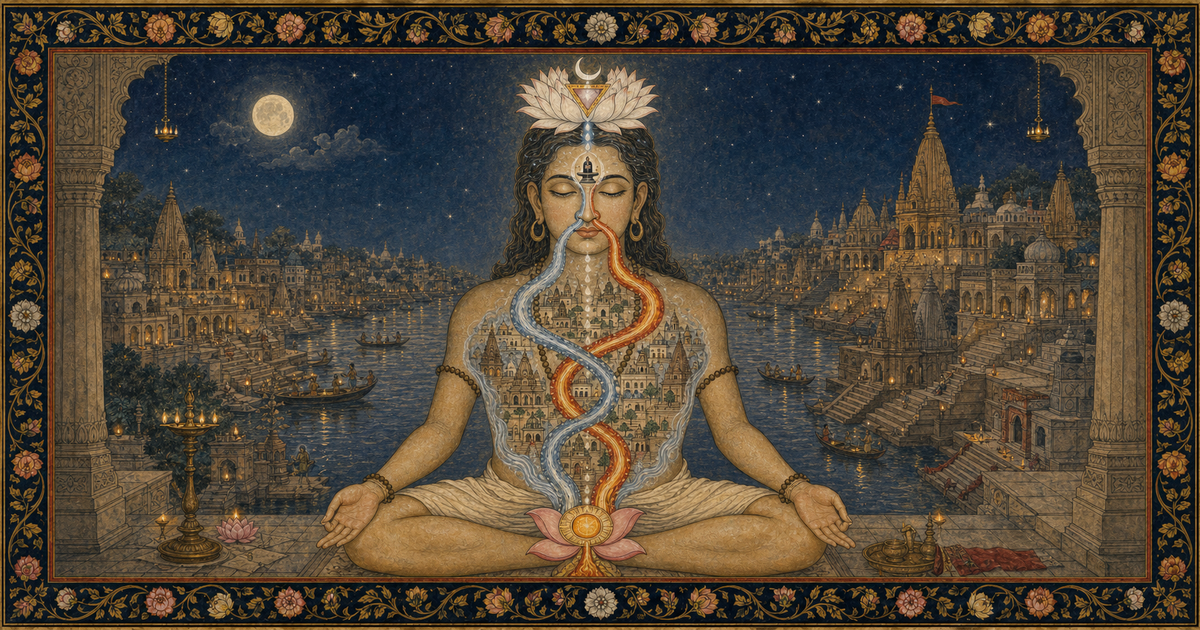
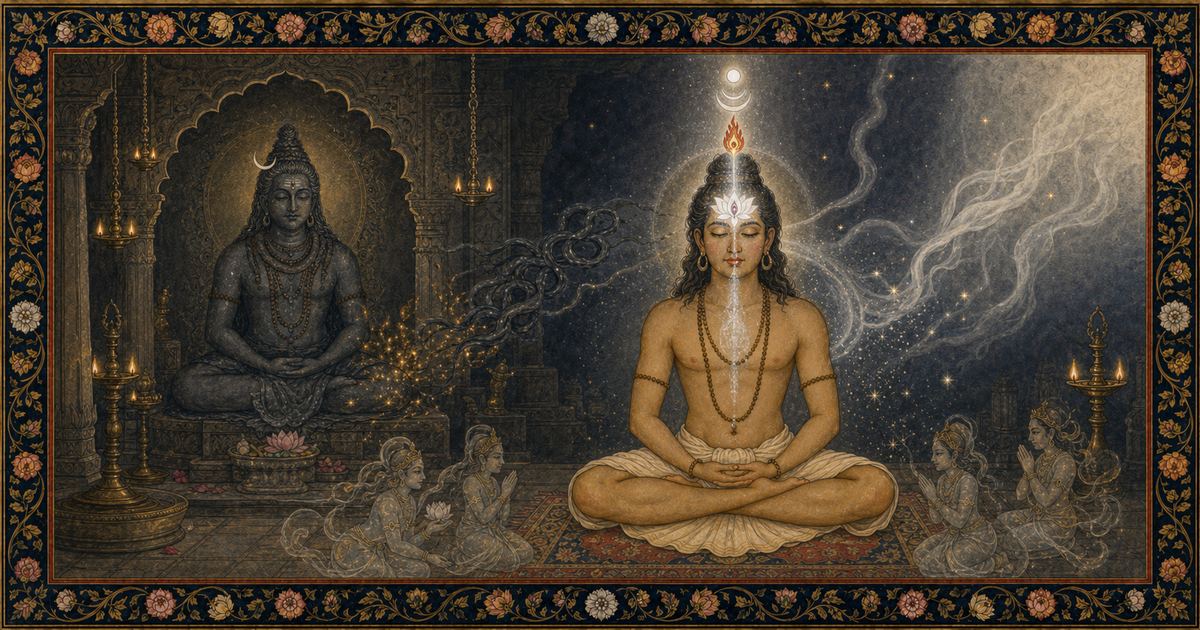





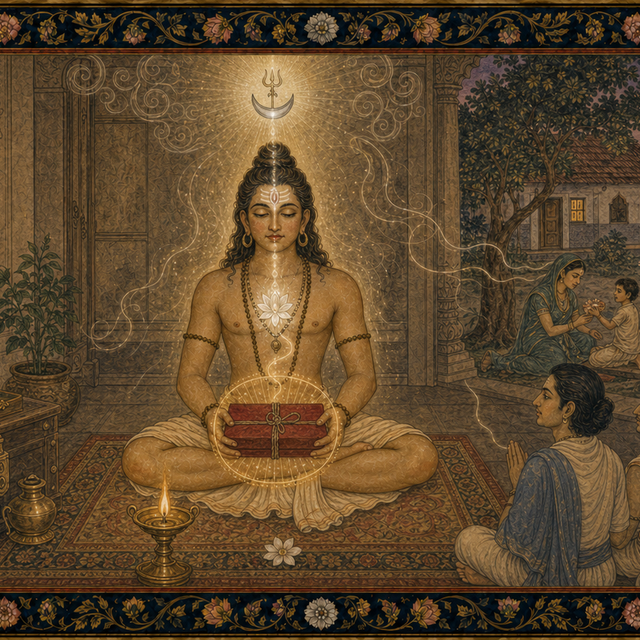

Chapter 5 of the Śiva Saṃhitā – The householder’s path

Śiva Saṃhitā 5: obstacles, meditation, cakras, mantra and liberation

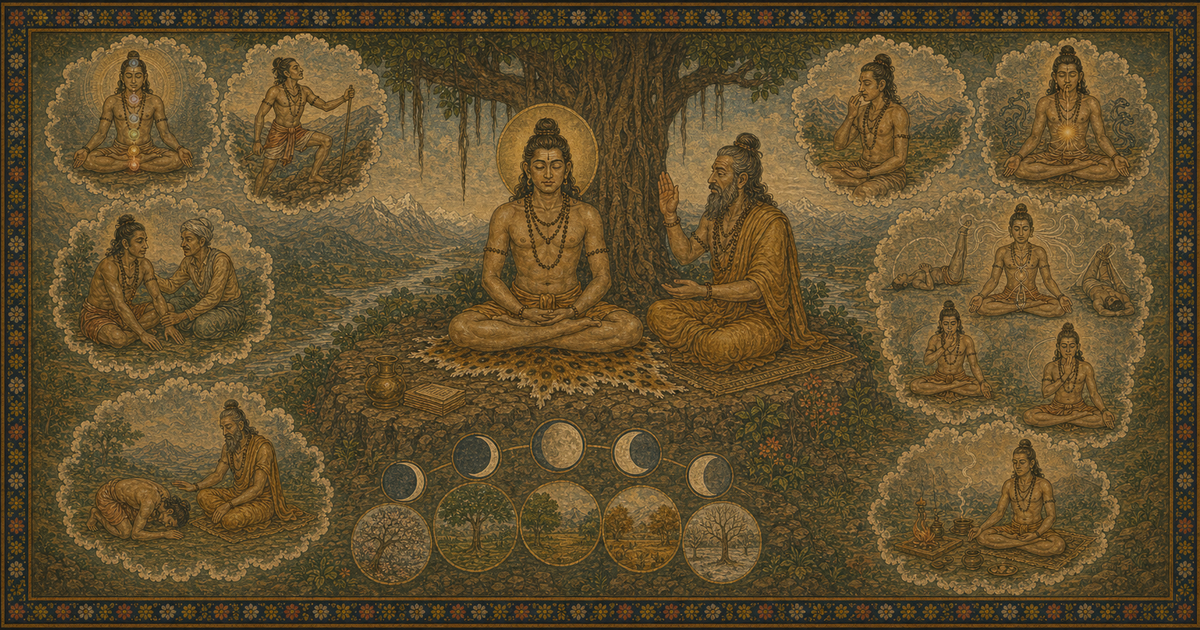
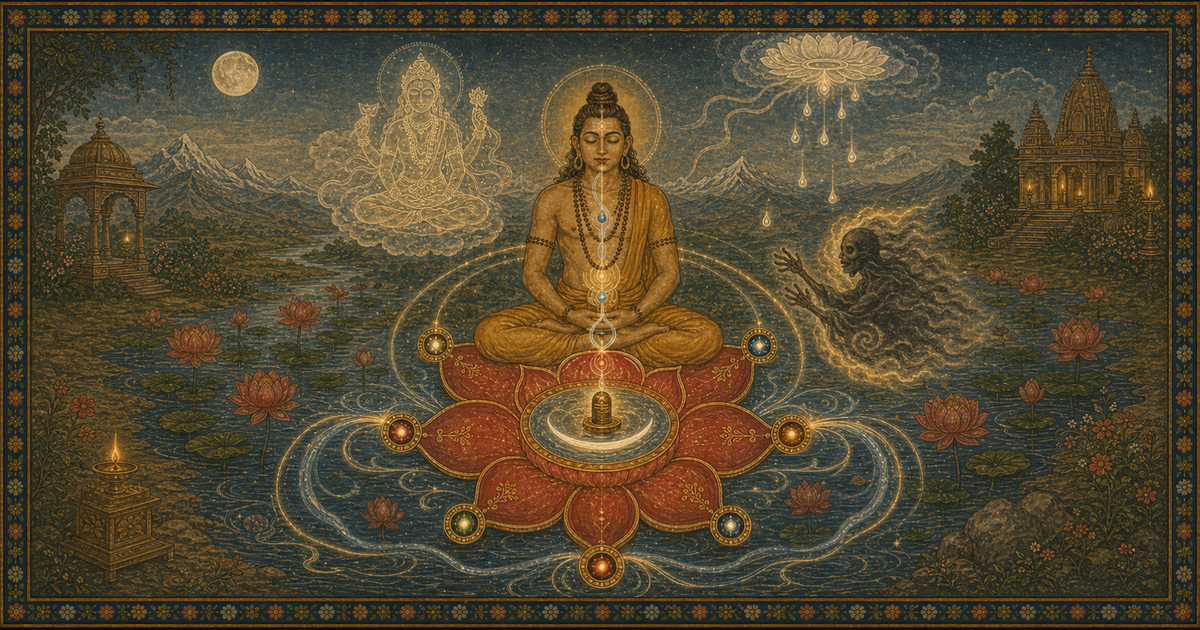
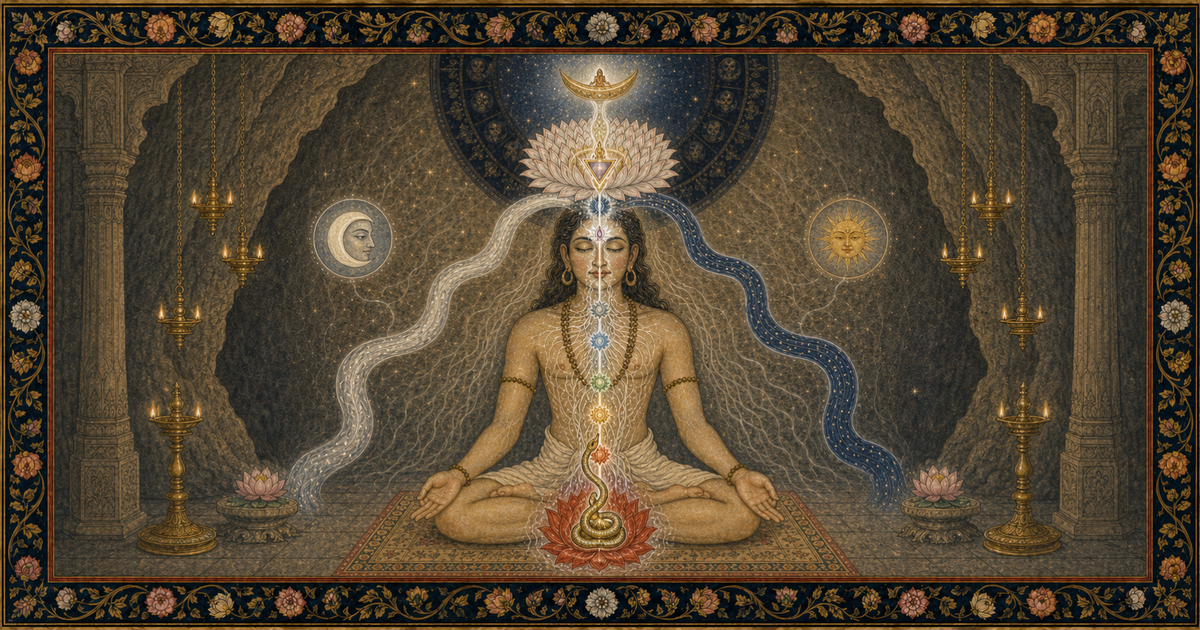
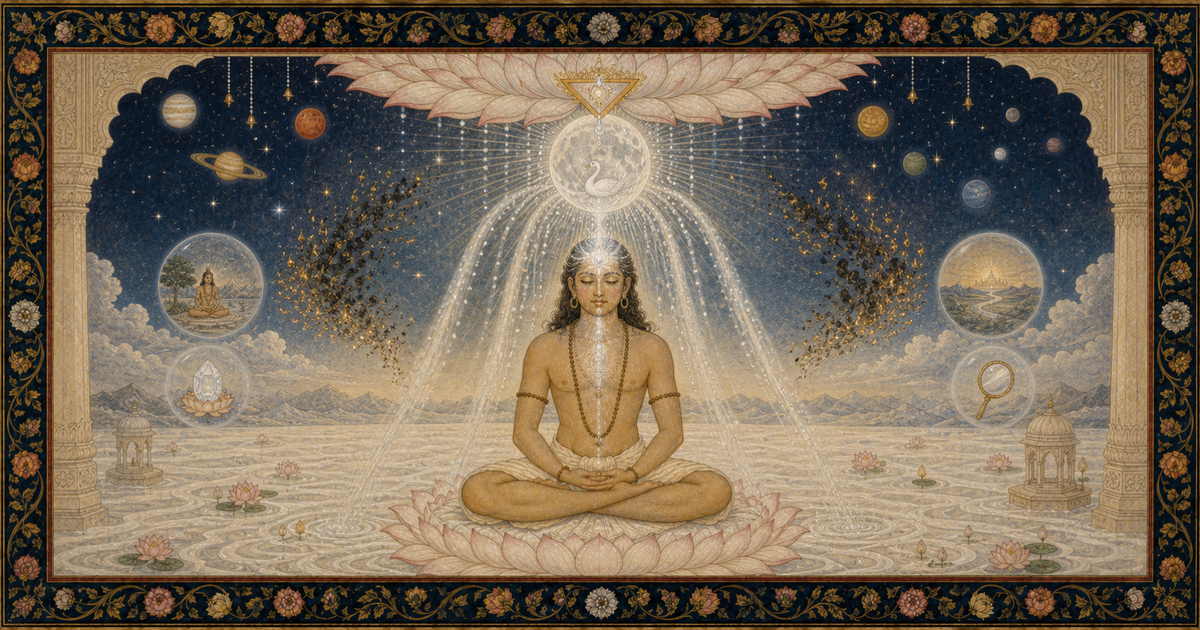
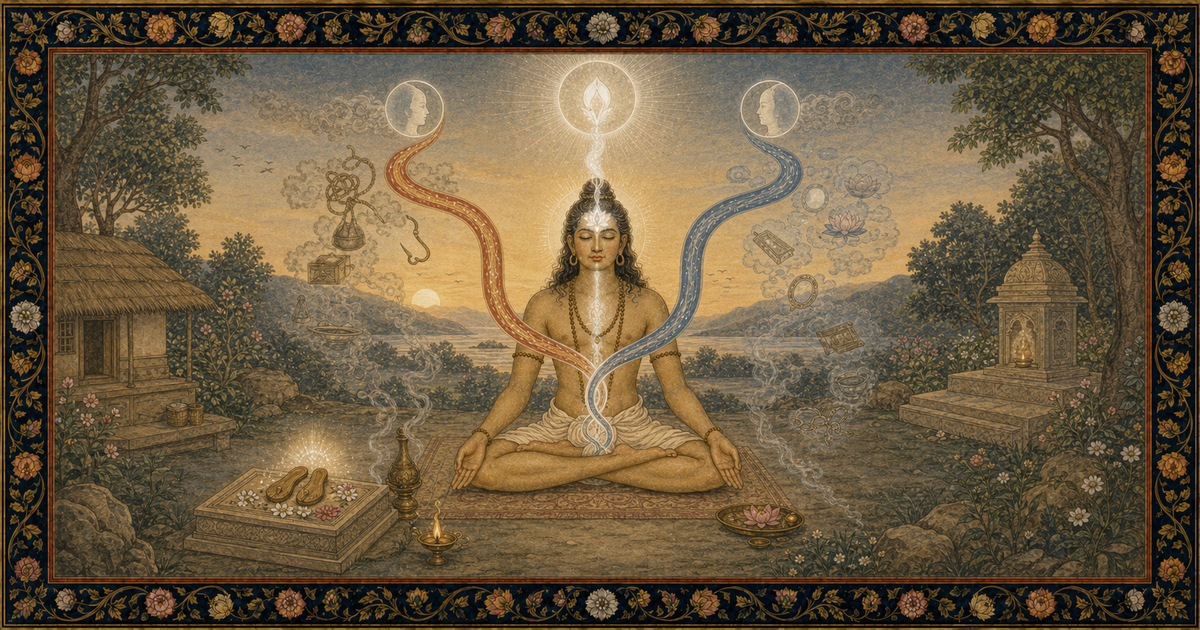
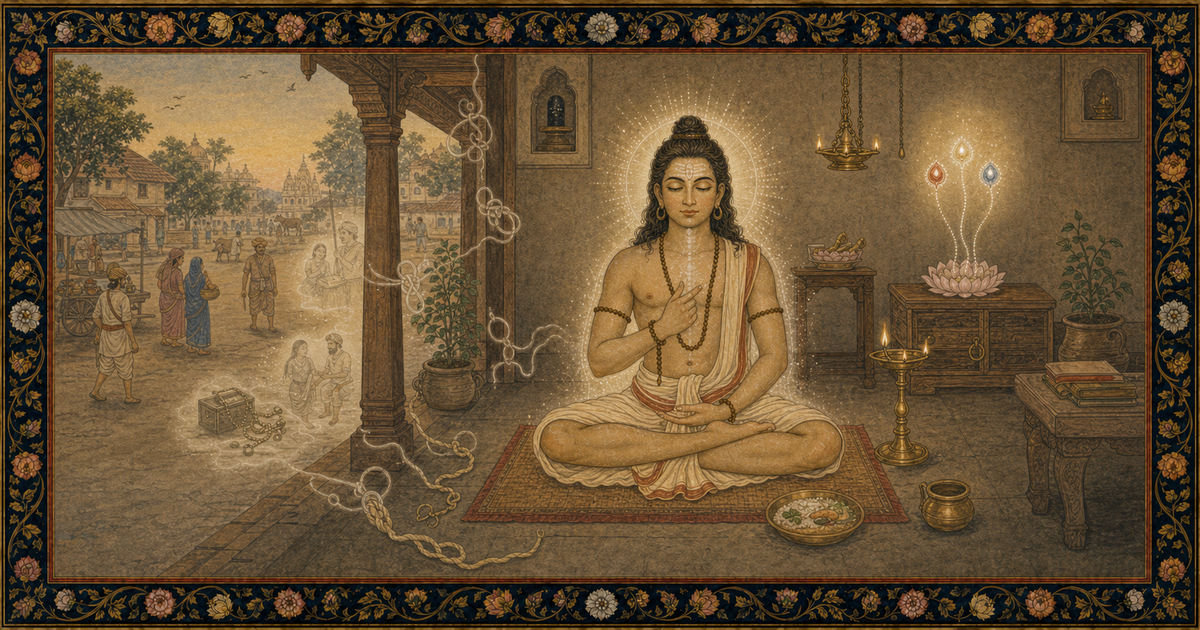
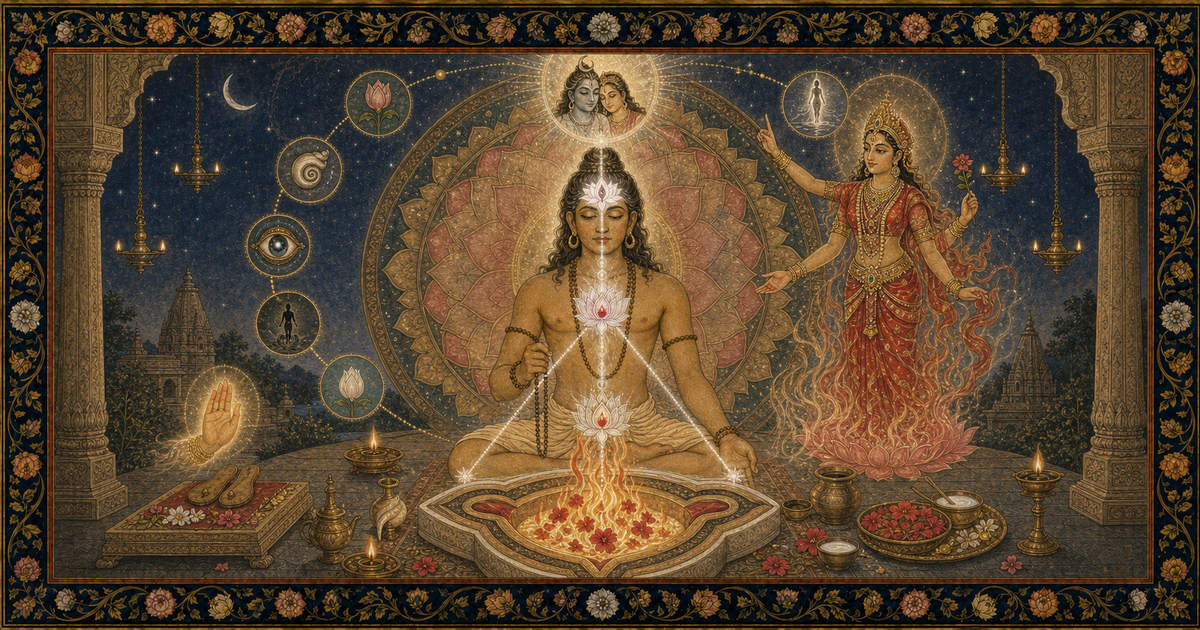
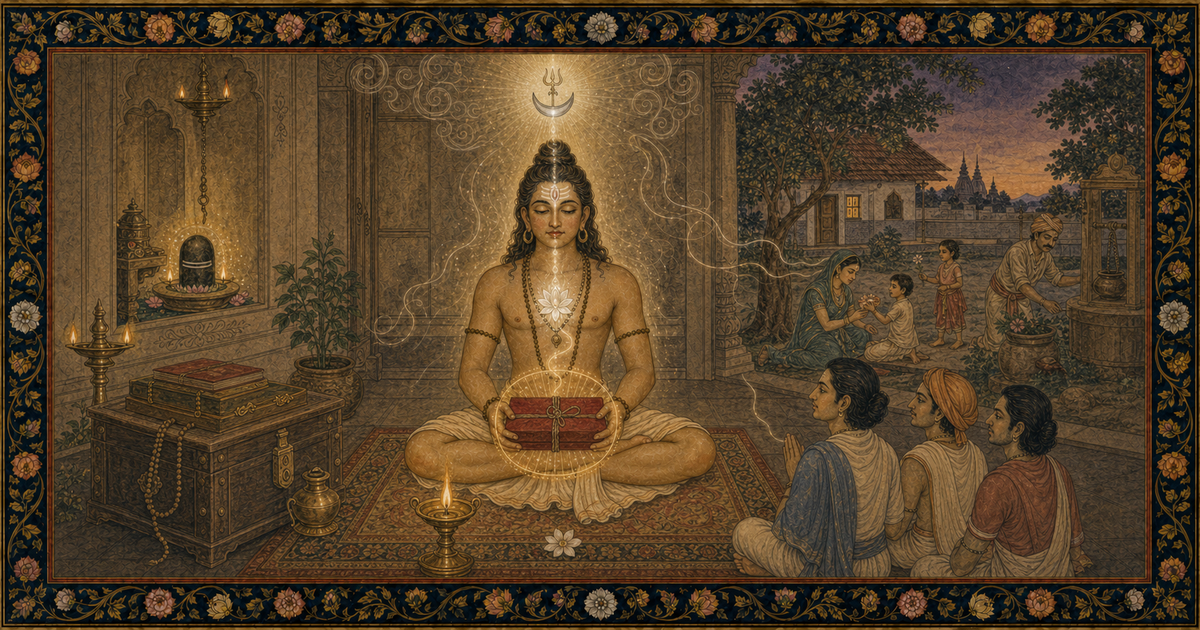
Chapter 5 moves from obstacles through inner meditation, cakras, Rājayoga and mantra to the householder’s liberation. Yogarahasya names the secret of practice, and Gṛhastha-Sādhana the householder’s path.

Dr. Ronald Steiner Dr. Ronald Steiner
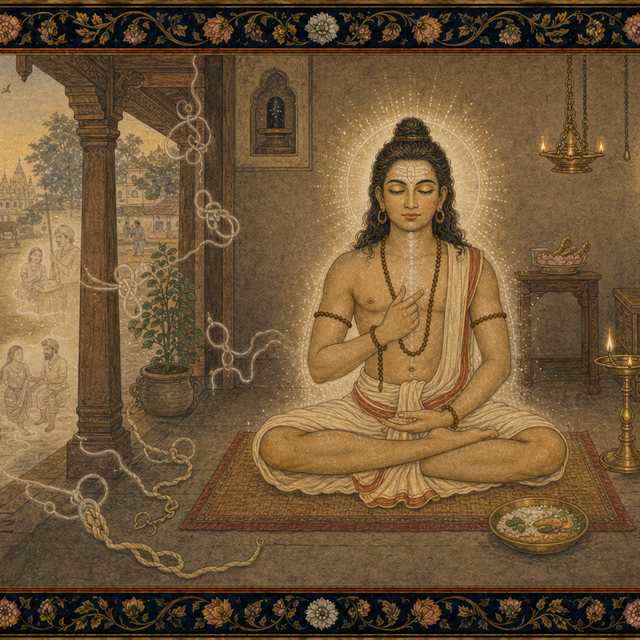
SiSa 5.1-5.2: Obstacles to liberation

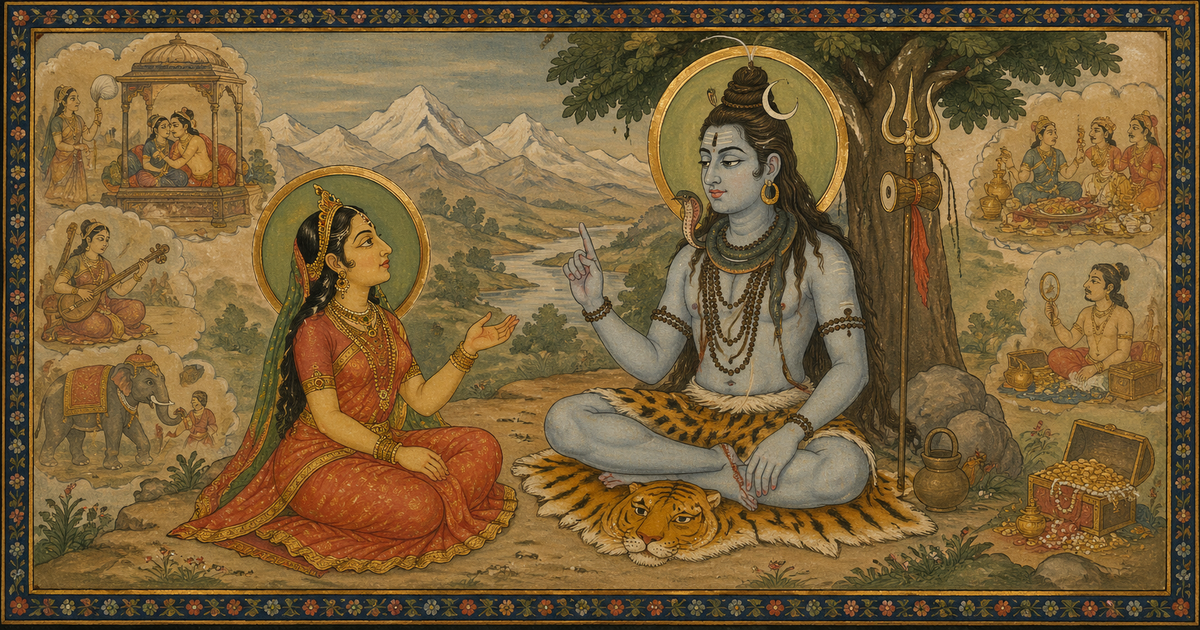
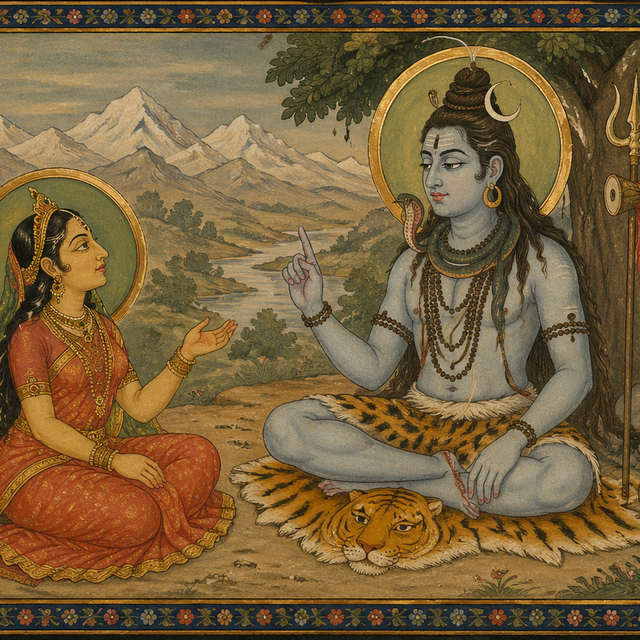
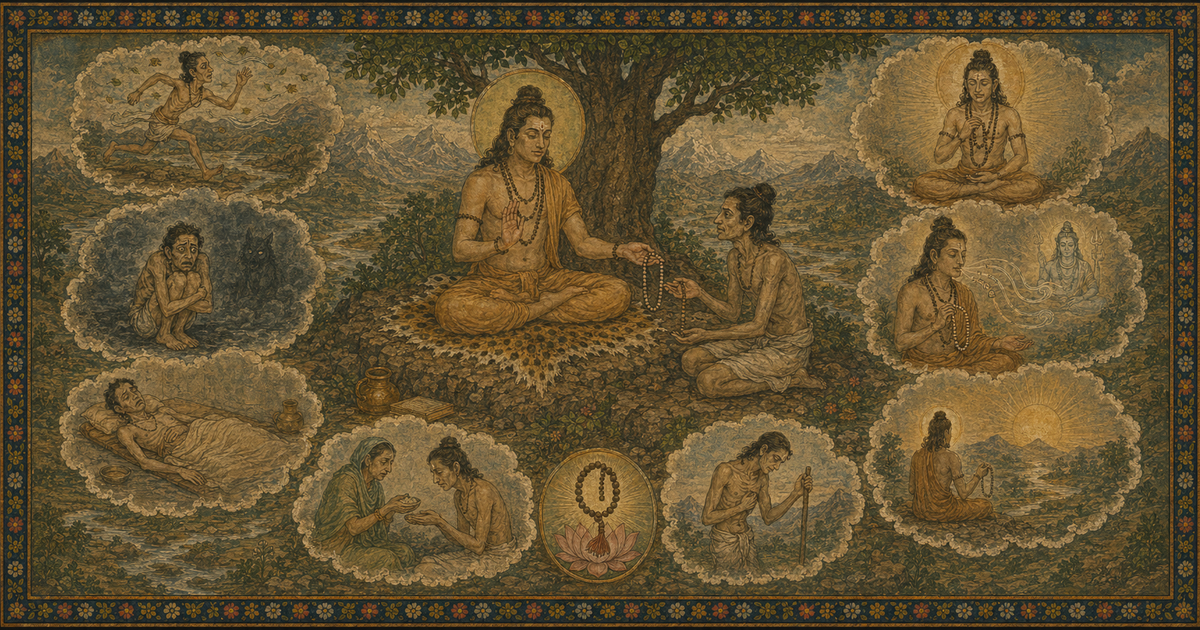
Śiva Saṃhitā 5.1-5.2: Devī’s question about obstacles and Śiva’s answer

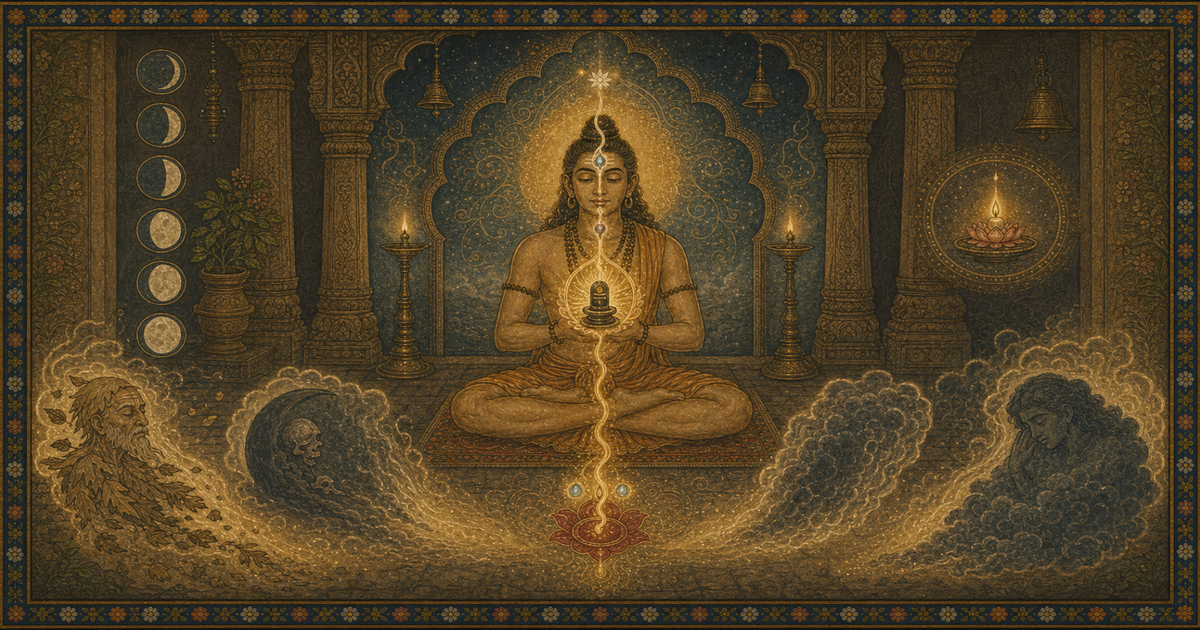
Devī asks about the obstacles on the path to the highest truth; Śiva names Bhoga, enjoyment bound by attachment, as a central obstacle to liberation.

SiSa 5.3-5.5: The obstacles of Bhoga

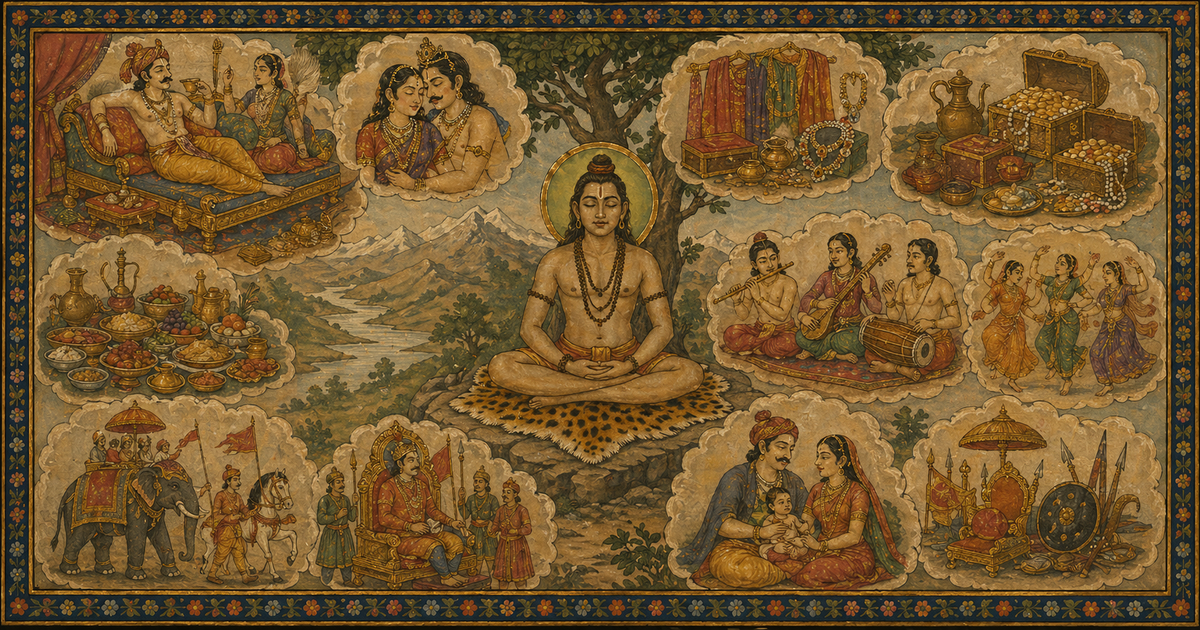
Śiva Saṃhitā 5.3-5.5: Bhoga as worldly temptation

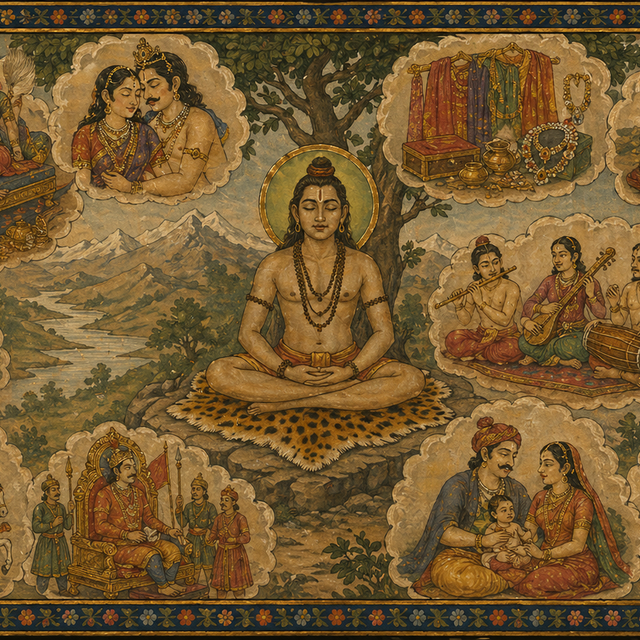
Sensual pleasure, comfort, possessions, music, power, family and external objects draw the mind outwards and become attachments that hinder practice.

Śiva Saṃhitā 5.3
[The obstacles are:] [desire for a] woman (nārī | nom sg), [idle] lying or sitting (śayyāsanaṃ | acc sg), [a focus on fine] clothing (vastraṃ | acc sg), [obsession with] money (dhanam | acc sg), kissing on the mouth (āsya-vicumbanam | acc sg); chewing betel (tāmbūla-bhakṣyaṃ | acc sg), [intoxicating] drinks (pānāni | acc pl), [desire for] dominion, heroic prowess and riches (rājya-śaurya-vibhūtayaḥ | nom pl).
Dr. Ronald Steiner - 2026 - historically literal
Śiva Saṃhitā 5.4
Gold (hema | acc sg), silver (rūpyaṃ | acc sg), likewise (tathā) copper (tāmraṃ | acc sg), jewels (ratnāni | acc pl), agarwood and cows (aguru-dhenavaḥ | nom pl). Scholarship (pāṇḍityaṃ | acc sg), the teachings of the Vedas (veda-śāstrāṇi | acc pl), dance (nṛtyaṃ | acc sg), song (gītaṃ | acc sg), adornment (vibhūṣaṇam | acc sg).
Dr. Ronald Steiner - 2026 - historically literal
Śiva Saṃhitā 5.5
Flutes, vīṇās and mṛdaṅga drums (vaṃśī-vīṇā-mṛdaṅgāḥ | nom pl), and (ca) riding great elephants and tall horses (gajendra-uccā-aśva-vāhanam | nom sg). Wives and children (dārā-apatyāni | nom pl), objects of the senses (viṣayāḥ | nom pl)—these (ete | nom pl m) obstacles (vighnāḥ | nom pl) [have been] named (prakīrtitāḥ | nom pl m ppp).
Dr. Ronald Steiner - 2026 - historically literal
SiSa 5.6-5.9: The obstacles of Dharma

Śiva Saṃhitā 5.6-5.9: Dharma as pious attachment

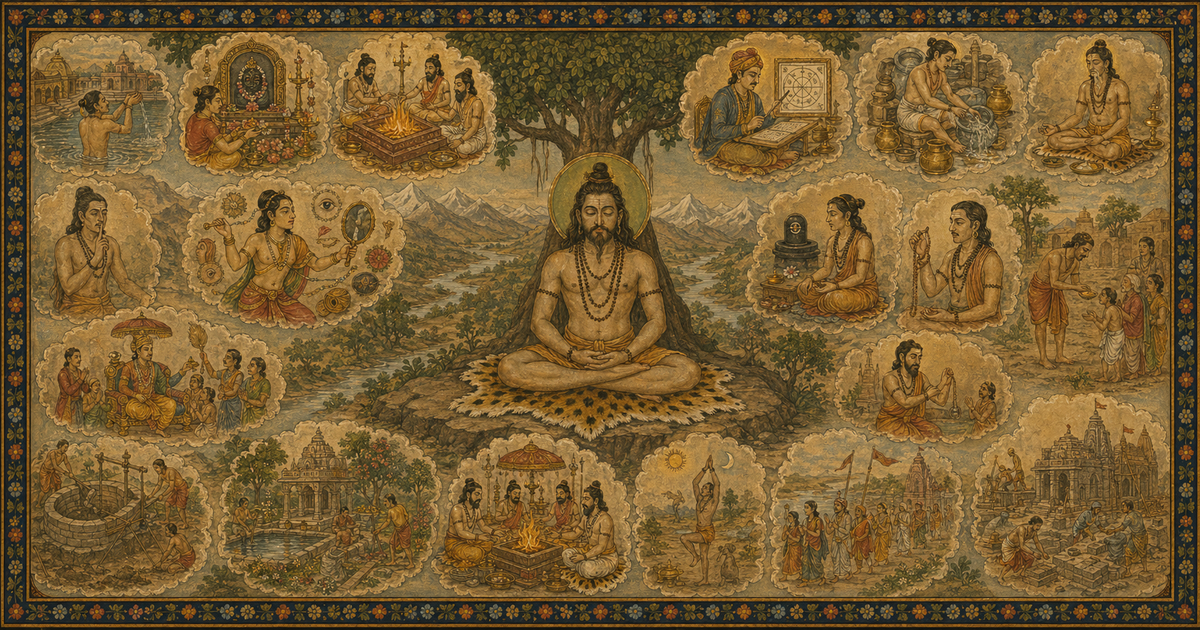
Even ritual and meritorious acts can bind when they arise from attachment: bathing, Pūjā, Homa, fasting, Mantra, Dāna and fame.

Śiva Saṃhitā 5.6
These obstacles (ime vighnāḥ | nom pl) [take] the form of enjoyment (bhoga-rūpāḥ | nom pl m). Learn (śṛṇu | 2p sg act imp) [now] of these [following ones] (imān | acc pl m), which take the form of dharma (dharma-rūpān | acc pl m): bathing (snānaṃ | nom sg), worship (pūjā | nom sg), a lunar day (tithiḥ | nom sg), a fire offering (homaḥ | nom sg), likewise (tathā) a state of persistence (sthitiḥ | nom sg) filled with purity (śauca-mayī | nom sg f).
Dr. Ronald Steiner - 2026 - historically literal
Śiva Saṃhitā 5.7
Vows, fasting and rules (vrata-upavāsa-niyamāḥ | nom pl), silence (maunam | nom sg), restraint of the senses (indriya-nigrahaḥ | nom sg); the object of meditation (dhyeyaḥ | nom sg), meditation (dhyānam | nom sg), likewise (tathā) mantra (mantraḥ | nom sg), a pious gift (dānam | nom sg), and (ca) fame (khyātiḥ | nom sg) in all directions (diśāsu | loc pl).
Dr. Ronald Steiner - 2026 - historically literal
Śiva Saṃhitā 5.8
The construction of reservoirs, wells, ponds and similar works, temples and pleasure gardens (vāpī-kūpa-taḍāgādi-prāsāda-ārāma-kalpanā | nom sg).
Sacrificial action (yajñam | acc sg), the Cāndrāyaṇa ritual (cāndrāyaṇam | acc sg), Kṛcchra penance (kṛcchram | acc sg), and (ca) various sacred bathing places (tīrthāni vividhāni | acc pl).
Dr. Ronald Steiner - 2026 - historically literal
Śiva Saṃhitā 5.9
And (ca) these (ime | nom pl m) obstacles (vighnāḥ | nom pl) are seen (dṛśyante | 3p pl pas pres) as established (saṃsthitāḥ | nom pl m ppp) in the form of dharma (dharma-rūpeṇa | ins sg). How (yena | ins sg n) knowledge (jñānaṃ | nom sg) can become (bhavet | 3p sg act opt) an obstacle (vighnaṃ | acc sg)—that I explain (kathayāmi | 1p sg act pres caus), O beautiful-faced one (varānane | voc sg).
Dr. Ronald Steiner - 2026 - historically literal
SiSa 5.10-5.14: Subtle obstacles

Śiva Saṃhitā 5.10-5.14: Jñāna and Yoga techniques as subtle obstacles

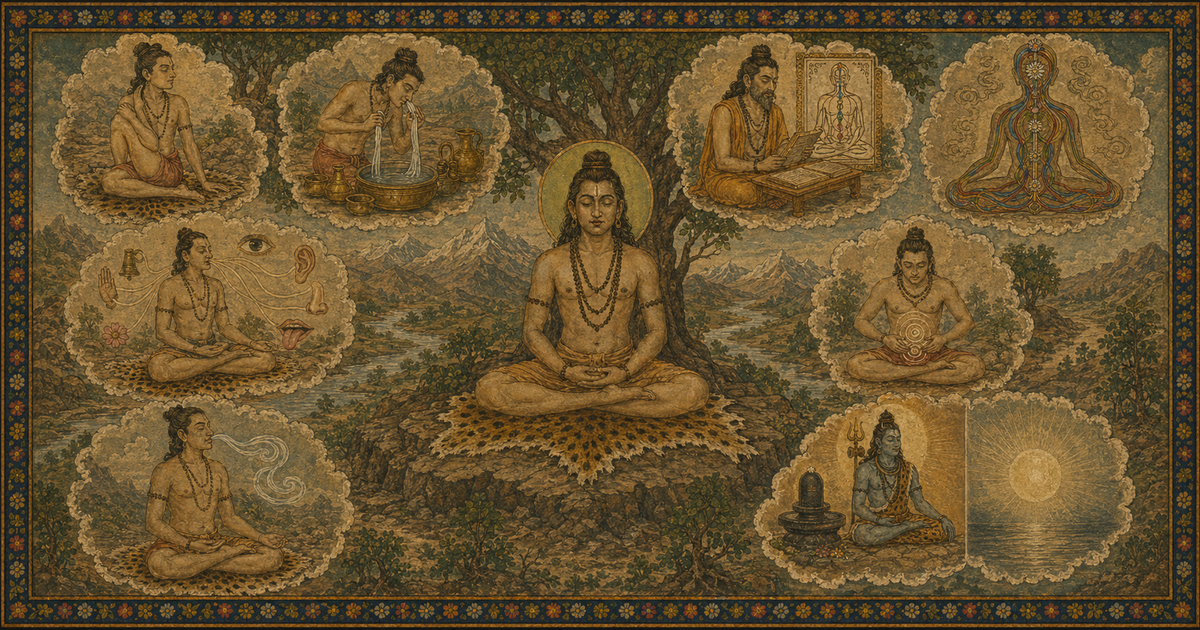
Even knowledge, bodily techniques, observation of the breath and teachings on Brahman can bind as soon as the mind clings to them as possessions or as a self-image.

Śiva Saṃhitā 5.10
Also (ca) this cleansing (prakṣālanaṃ tat | acc sg) through Dhautī (dhautyā | ins sg), [when] one has performed (kṛtvā | abs) Gomukha and other seated postures (go-mukha-ādi-āsanaṃ | acc sg), [and] knowledge of the course of the nāḍīs (nāḍī-saṃcāra-vijñānaṃ | acc sg), [and] restraint through pratyāhāra (pratyāhāra-nirodhanam | acc sg) [—these too are obstacles].
Dr. Ronald Steiner - 2026 - historically literal
Śiva Saṃhitā 5.11
Moving the abdomen (kukṣi-saṃcālanam | acc sg), introducing milk (kṣīra-praveśaḥ | nom sg) through the passage of the penis (indriyā-adhvanā | ins sg).
Also (api), eating (bhojanam | nom sg) something (kasya | gen sg) during the nāḍī procedure (nāḍī-karmaṇi | loc sg). Let this be heard (śrūyatāṃ | 3p sg pas imp) from me (mama | gen sg).
Thus (iti) [are] these (etāḥ | nom pl f) named (kathitāḥ | nom pl m ppp) obstacles (vighnāḥ | nom pl), established (vyavasthitāḥ | nom pl m ppp) in the form of knowledge (jñāna-rūpe | loc sg).
Dr. Ronald Steiner - 2026 - historically literal
Śiva Saṃhitā 5.12
Cut apart (chindhi | 2p sg act imp) the essence of the nine dhātus (nava-dhātu-rasaṃ | acc sg); furthermore (punaḥ), one should strike (tāḍayet | 3p sg act opt caus) against the uvula (śuṇṭhikāḥ | acc pl). In an instant (eka-kālam | acc sg), samādhi (samādhiḥ | nom sg) could arise (syāt | 3p sg act opt). Listen ("śṛṇu | 2p sg act imp) to this (idam | acc sg n), which has become evidence for it (liṅga-bhūtam | acc sg n).
Dr. Ronald Steiner - 2026 - historically literal
Śiva Saṃhitā 5.13
Seek out (gaccha | 2p sg act imp) the company (saṅgamam | acc sg) of good people (sādhūnām | gen pl); practise (bhaja | 2p sg act imp) keeping your distance (saṅkocam | acc sg) from bad people (durjanāt | abl sg). As the breath (vāyoḥ | gen sg) enters and leaves (praveśa-nirgame | loc absl sg), one should observe closely (vilokayet | 3p sg act opt caus) the teacher's sign (guru-lakṣam | acc sg).
Dr. Ronald Steiner - 2026 - historically literal
Śiva Saṃhitā 5.14
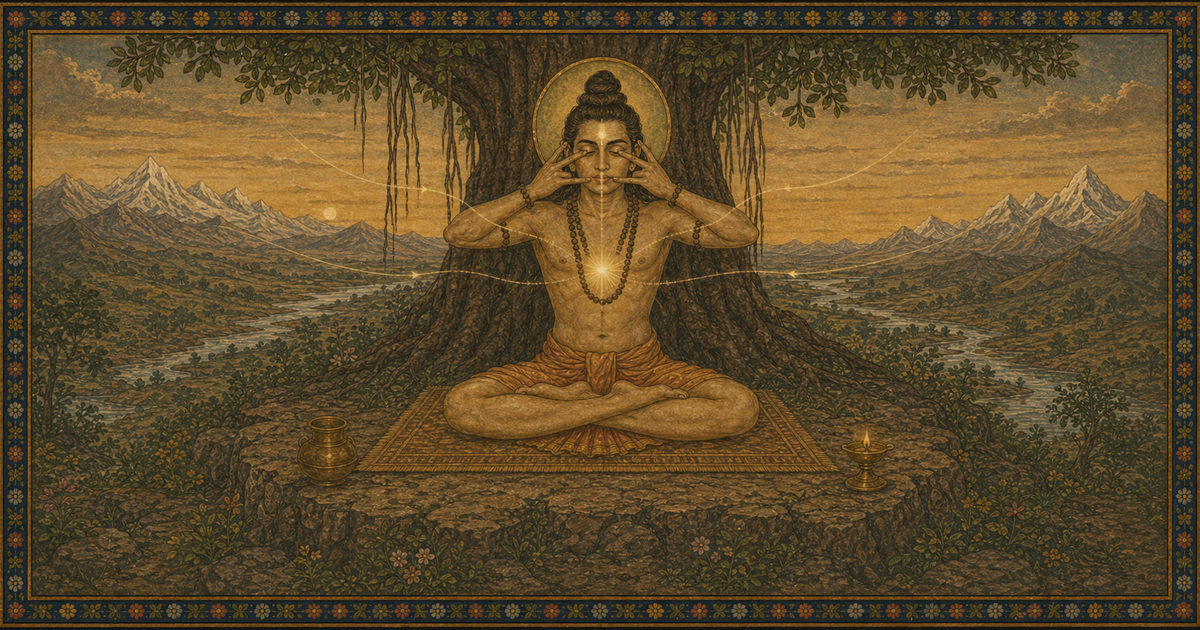
Brahman (brahma | nom sg) [is] situated in the body (piṇḍa-stham | nom sg n), constituted by form (rūpa-saṃstham | nom sg n) and (ca) situated in form (rūpa-stham | nom sg n), [but also] free from form (rūpa-varjitam | nom sg n). In this (etasmin | loc sg n), the state (avasthā | nom sg) [is] recognised (matā | nom sg f ppp), and (ca) the heart (hṛdayam | nom sg) becomes calm (praśāmyati | 3p sg act pres). Thus (iti) [are] these (ete | nom pl m) named (kathitāḥ | nom pl m ppp) obstacles (vighnāḥ | nom pl), established (vyavasthitāḥ | nom pl m ppp) in the form of knowledge (jñāna-rūpe | loc sg).
Dr. Ronald Steiner - 2026 - historically literal
SiSa 5.15-5.16: Mṛdu and Mantrayoga

Śiva Saṃhitā 5.15-5.16: the Mṛdu student and Mantrayoga

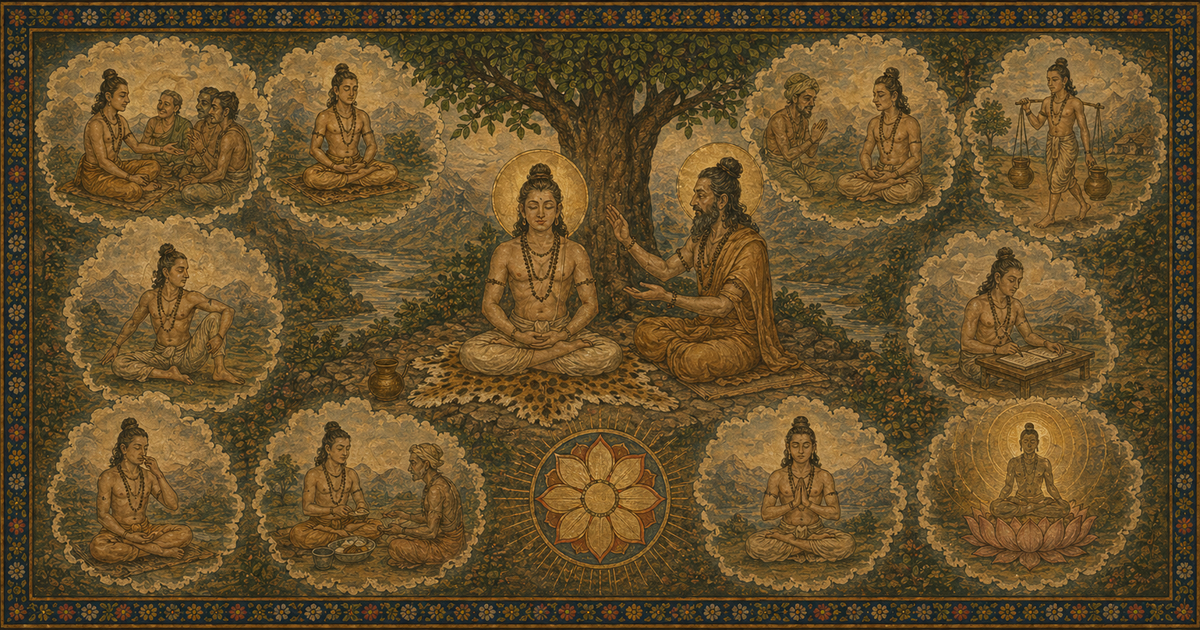
The weak student is inconsistent, fearful and lacking in strength. With great effort, Siddhi may mature over twelve years; Mantrayoga is appropriate for this student.

SiSa 5.17-5.20: Madhya and Layayoga

Śiva Saṃhitā 5.17-5.20: the Madhya student and Layayoga

The intermediate student has moderation, patience, kind speech and steady strength. Yoga matures more quickly for this student, whom the Guru initiates into Layayoga.

Śiva Saṃhitā 5.17
Of balanced outlook (sama-dṛṣṭiḥ | nom sg), endowed with patience (kṣamā-yuktaḥ | nom sg m), seeking merit (puṇyākāṃkṣī | nom sg m), speaking kindly (priyaṃ-vadaḥ | nom sg m); not (na) excessively self-assured (atiprauḍhaḥ | nom sg m), [but also not] confused (mūḍhaḥ | nom sg m), [rather] endowed with steady vigour and strength (sama-vīrya-balānvitaḥ | nom sg m)—such is this person (bhavān | nom sg m).
Dr. Ronald Steiner - 2026 - historically literal
Śiva Saṃhitā 5.18
Of balanced understanding (sama-buddhiḥ | nom sg), balanced practice (sama-abhyāsaḥ | nom sg), [and] balanced bodily proportions (sama-kāyaḥ | nom sg), and (ca) with illness (sāmayā | ins sg), [such is] the intermediate (madhya-sthaḥ | nom sg m) [student] on the paths of yoga (yoga-mārgeṣu | loc pl). Just as (yathā), [for example], people who have reached middle age (madhya-vayo-gatāḥ | nom pl m).
Dr. Ronald Steiner - 2026 - historically literal
Śiva Saṃhitā 5.19
This person is to be recognised (jñātavyaḥ | nom sg m) as having moderate energy (madhyotsāhī | nom sg m), moderate susceptibility to illness (madhya-rogī | nom sg m), [and] moderate vigour (madhya-vikramaḥ | nom sg). For these people (eteṣām | gen pl), the state of yoga (yogāvasthā | nom sg) is attained (prasiddhyati | 3p sg act pres) in eight years (varṣair aṣṭabhiḥ | ins pl).
Dr. Ronald Steiner - 2026 - historically literal
Śiva Saṃhitā 5.20
As one of moderate merit (madhya-puṇya-gataḥ | nom sg m), [as] the intermediate one (madhyaḥ | nom sg m), thereby (tena | ins sg m), [as] this person of moderate vigour (ete madhya-vikramaḥ | nom sg), [they are to be recognised].
Remaining in the middle (madhya-sthaḥ | nom sg m) in all activities (sarva-kāryeṣu | loc pl), this person (saḥ | nom sg m) is intermediate (madhyaḥ | nom sg m). [There is] no (na) doubt (saṃśayaḥ | nom sg) about this.
Having recognised (jñātvā | abs) this (etat | acc sg n), the gurus (gurubhiḥ | ins pl) indeed (eva) give (dīyate | 3p sg pas pres) laya yoga (layaḥ | nom sg) in an appropriate way (yuktitaḥ).
Dr. Ronald Steiner - 2026 - historically literal
SiSa 5.21-5.23: Adhimātra and Haṭhayoga

Śiva Saṃhitā 5.21-5.23: the Adhimātra student and Haṭhayoga

The advanced student is determined, courageous, strong and persevering. Haṭhayoga is suitable for this student; maturation is expected to take six years.

Śiva Saṃhitā 5.21
Of steady mind (sthira-buddhiḥ | nom sg), practised (yuktaḥ | nom sg m ppp) in laya yoga (laye | loc sg), independent (svādhīnaḥ | nom sg m), and also (api) powerful (vīryavān | nom sg m); generous-hearted (mahāśayaḥ | nom sg m), endowed with compassion (dayā-yuktaḥ | nom sg m), patient (kṣamavān | nom sg m), and also (api) filled with inner strength (sattvavān | nom sg m).
Dr. Ronald Steiner - 2026 - historically literal
Śiva Saṃhitā 5.22
Courageous (śūraḥ | nom sg m), in the prime of life (vayaḥsthaḥ | nom sg m), full of trust (śraddhāvān | nom sg m), worshipping the guru's lotus foot (guru-pādābja-pūjakaḥ | nom sg m), and indeed (caiva) devoted to yoga practice (yogābhyāsa-rataḥ | nom sg m)—[by these signs] one of a higher degree (adhimātrakaḥ | nom sg m) is to be recognised (jñātavyaḥ | nom sg m).
Dr. Ronald Steiner - 2026 - historically literal
Śiva Saṃhitā 5.23
For this person (etasya | gen sg), attainment (siddhiḥ | nom sg) could arise (bhavet | 3p sg act opt) in six years (ṣaḍ-varṣaiḥ | ins pl) through commitment to practice (abhyāsa-yogataḥ | abl sg). To this person (etasmai | dat sg), haṭha yoga (haṭha-yogaḥ | nom sg), together with its limbs (sāṅgataḥ | nom sg m), is given (dīyate | 3p sg pas pres) by discerning [teachers] (dhīraiḥ | ins pl).
Dr. Ronald Steiner - 2026 - historically literal
SiSa 5.24-5.28: Adhimātratama

Śiva Saṃhitā 5.24-5.28: the Adhimātratama student and all paths of Yoga

The most capable student is free from doubt, steadfast and wholly committed to practice. All paths of Yoga are open to this student; maturation is expected within three years.

Śiva Saṃhitā 5.24
Filled with great strength and enthusiasm (mahā-vīrya-anvita-utsāhī | nom sg m), likeable (manojñaḥ | nom sg m), also (api) brave (śauryavān | nom sg m), knowing the teaching (śāstra-jñaḥ | nom sg m), devoted to practice (abhyāsa-śīlaḥ | nom sg m), and (ca) free from delusion (nirmohaḥ | nom sg m), and (ca) undisturbed (nirākulaḥ | nom sg m).
Dr. Ronald Steiner - 2026 - historically literal
Śiva Saṃhitā 5.25
Endowed with fresh youth (nava-yauvana-sampannaḥ | nom sg m), moderate in eating (mitāhārī | nom sg m), in control of the senses (jitendriyaḥ | nom sg m), and (ca) fearless (nirbhayaḥ | nom sg m), pure (śuciḥ | nom sg m), capable (dakṣaḥ | nom sg m), generous (dātā | nom sg), [and] a refuge for all people (sarva-janāśrayaḥ | nom sg m).
Dr. Ronald Steiner - 2026 - historically literal
Śiva Saṃhitā 5.26
Unchanging (avikārī | nom sg m), steadfast (sthiraḥ | nom sg m), wise (dhīmān | nom sg m), abiding as one wishes (yathā-icchā-avasthitaḥ | nom sg m), patient (kṣamī | nom sg m), of good character (suśīlaḥ | nom sg m), living according to dharma (dharma-cārī | nom sg m), and (ca) restrained in conduct (gupta-ceṣṭaḥ | nom sg m), speaking kindly (priyaṃ vadaḥ | nom sg m).
Dr. Ronald Steiner - 2026 - historically literal
Śiva Saṃhitā 5.27
Filled with trust in the teaching (śāstra-viśvāsa-sampannaḥ | nom sg m), worshipping the deity and the guru (devatā-guru-pūjakaḥ | nom sg m), and (ca) detached from social company (jana-saṅga-viraktaḥ | nom sg m), free from serious illnesses (mahā-vyādhi-vivarjitaḥ | nom sg m), and (ca) knowing the vows of the higher level (adhimātra-vrata-jñaḥ | nom sg m), [this person is] a practitioner (sādhakaḥ | nom sg) of yoga in its entirety (sarva-yogasya | gen sg).
Dr. Ronald Steiner - 2026 - historically literal
Śiva Saṃhitā 5.28
For this person (etasya | gen sg), attainment (siddhiḥ | nom sg) could arise (syāt | 3p sg act opt) in three years (tribhiḥ saṃvatsaraiḥ | ins pl). [There is] no (na) doubt (saṃśayaḥ | nom sg). This person (saḥ | nom sg m) is qualified for all forms of yoga (sarva-yogādhikārī | nom sg). Here (atra), no further deliberation (vicāraṇā | nom sg) is to be undertaken (kāryā | nom sg f).
Dr. Ronald Steiner - 2026 - historically literal
SiSa 5.29-5.35: Pratīka-upāsanā

Śiva Saṃhitā 5.29-5.35: Pratīka-upāsanā, reverence for one’s own form

One’s own form is used as a symbol for meditation. Steady practice leads to inner vision, purification and ultimately liberation.

Śiva Saṃhitā 5.29
Meditation on a form or symbol (pratīka-upāsanā | nom sg) is to be practised (kāryā | nom sg f); [it] grants visible and invisible results (dṛṣṭa-adṛṣṭa-phala-pradā | nom sg f). It purifies (punāti | 3p sg act pres) through seeing (darśanād | abl sg) alone (eva). Here (atra), no (na) doubt (vicāraṇā | nom sg) is to be entertained (kāryā | nom sg f).
Dr. Ronald Steiner - 2026 - historically literal
Śiva Saṃhitā 5.30
The pair of wide-open eyes (visphārita-locana-dvayam | acc sg), having looked (nirīkṣya | abs), [beholds] Īśvara (īśvaram | acc sg) in one's own reflection (sva-pratibimba | acc sg) in intense sunlight (gāḍhātape | loc sg).
When (yadā) it looks (paśyati | 3p sg act pres) at the sky (nabhaḥ | acc sg), it sees (paśyati | 3p sg act pres) one's own form (sva-pratīkam | acc sg) in the expanse of the sky (nabho-'ṅgaṇe | loc sg) at precisely (eva) that instant (tat-kṣaṇam | acc sg).
Dr. Ronald Steiner - 2026 - historically literal
Śiva Saṃhitā 5.31
Indeed (vai), whoever (yaḥ | nom sg m) contemplates (prekṣate | 3p sg med pres) their own form (sva-pratīkam | acc sg) in the firmament (nabho-'ṅgaṇe | loc sg) every day (pratyaham), for that person (tasya | gen sg m), longevity and mental strength (āyur-buddhiḥ | nom sg) could arise (bhavet | 3p sg act opt). Death (mṛtyuḥ | nom sg) would never (na) at any time (kadācana) occur (syāt | 3p sg act opt) for them.
Dr. Ronald Steiner - 2026 - historically literal
Śiva Saṃhitā 5.32
When (yadā) one sees (paśyati | 3p sg act pres) one's own form (sva-pratīkaṃ | acc sg) completely (saṃpūrṇam | acc sg n) in the firmament (nabho-'ṅgaṇe | loc sg), then (tadā) mastery (jayaḥ | nom sg) arrives (samāyāti). Having conquered (nirjitya | abs) the breath (vāyuṃ | acc sg), one should move (caret | 3p sg act opt) within it (taṃ | acc sg m).
Dr. Ronald Steiner - 2026 - historically literal
Śiva Saṃhitā 5.33
And (ca) whoever (yaḥ | nom sg m) always (sadā) performs (karoti | 3p sg act pres) [this] practice (abhyāsam | acc sg) recognises (vindate | 3p sg med pres) the highest Self (ātmānam param | acc sg) through the clarity of their own form (sva-pratīka-prasādataḥ | abl sg): the one Puruṣa of complete bliss (pūrṇānanda-eka-puruṣam | acc sg).
Dr. Ronald Steiner - 2026 - historically literal
Śiva Saṃhitā 5.34
During pilgrimage (yātrā-kāle | loc sg), at a wedding (vivāhe | loc sg), and (ca) during an auspicious act (śubhe karmaṇi | loc sg), in distress (saṃkaṭe | loc sg), as sin diminishes (pāpa-kṣaye | loc sg), [and] as merit increases (puṇya-vṛddhau | loc sg), one should practise (caret | 3p sg act opt) worship of the form, one's own image (pratīka-upāsanām | acc sg).
Dr. Ronald Steiner - 2026 - historically literal
Śiva Saṃhitā 5.35
Through uninterrupted practice (nirantara-kṛtābhyāsāt | abl sg), one recognises (paśyati | 3p sg act pres) the unchanging (dhruvam | acc sg n) within (antare | loc sg). Then (tadā) the yogi (yogī | nom sg), whose mind is controlled (niyata-mānasaḥ | nom sg m), attains (avāpnoti | 3p sg act pres) liberation (muktim | acc sg).
Dr. Ronald Steiner - 2026 - historically literal
SiSa 5.36-5.37: Inner light

Śiva Saṃhitā 5.36-5.37: closing the senses and seeing the inner light

Closing the eyes and ears, together with control of the breath, turns perception inwards; the Yogi sees the Self as light.

SiSa 5.38-5.47: Nāda-Laya

Śiva Saṃhitā 5.38-5.47: the vision of light, secrecy and Nāda-Laya

Inner light, steady practice and secret transmission lead into the experience of Nāda; sound becomes the path of dissolution.

Śiva Saṃhitā 5.38
By whoever (yena | ins sg) that light (tat tejas | nom sg) is seen (dṛśyate | 3p sg pas pres) undisturbed (nirākulam | acc sg n) for even a single instant (kṣaṇa-mātram | acc sg n), that person (saḥ | nom sg m), completely freed from all harm (sarva-pāpa-vinirmuktaḥ | nom sg m), reaches (yāti | 3p sg act pres) the highest goal (paramāṃ gatim | acc sg f).
Dr. Ronald Steiner - 2026 - historically literal
Śiva Saṃhitā 5.39
Through uninterrupted practice (nirantara-kṛtābhyāsāt | abl sg), the yogi (yogī | nom sg) [becomes] free from impurity (vigata-kalmaṣaḥ | nom sg m). Having forgotten (vismṛtya | abs) everything (sarvam | acc sg n), the body and the rest (dehādi | acc sg n), the yogi would become (bhavet | 3p sg act opt), of themselves (svayam), however (tu), distinct from it (tad-bhinnaḥ | nom sg m).
Dr. Ronald Steiner - 2026 - historically literal
Śiva Saṃhitā 5.40
The person (mānavaḥ | nom sg) who (yaḥ | nom sg m) always (sadā) performs (karoti | 3p sg act pres) the practice (abhyāsam | acc sg) through concealed conduct (guptācāreṇa | ins sg), that person (saḥ | nom sg m) would (syāt | 3p sg act opt) indeed (vai) be dissolved (līnaḥ | nom sg m) in Brahman (brahmaṇi | loc sg), even if (yadi) inclined to bad actions (pāpa-karma-rataḥ | nom sg m).
Dr. Ronald Steiner - 2026 - historically literal
Śiva Saṃhitā 5.41
[This yoga] is to be concealed (gopanīyaḥ | nom sg m pfp) carefully (prayatnena | ins sg), producing immediate confidence (sadyaḥ-pratyaya-kārakaḥ | nom sg m) and granting nirvāṇa (nirvāṇa-dāyakaḥ | nom sg m) in the world (loke | loc sg). This (ayam | nom sg m) yoga (yogaḥ | nom sg) [is] dear (vallabhaḥ | nom sg m) to me (mama | gen sg).
Dr. Ronald Steiner - 2026 - historically literal
Śiva Saṃhitā 5.42
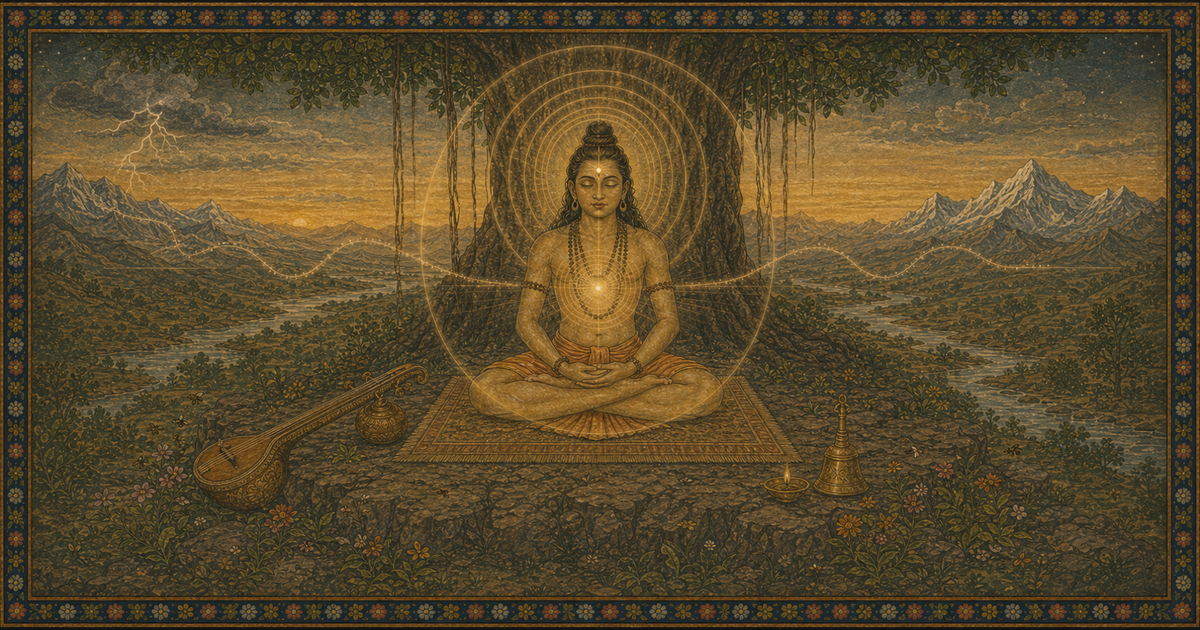
For this person (tasya | gen sg), a sound (nādaḥ | nom sg) indeed (vai) arises (saṃjāyate | 3p sg med pres) gradually (krameṇa), and (ca) through practice (abhyāsataḥ | abl sg). The first tone (prathamaḥ dhvaniḥ | nom sg m) resembles a vīṇā and a swarm of intoxicated bees (matta-bhṛṅga-āvalī-vīṇā-sadṛśaḥ | nom sg m).
Dr. Ronald Steiner - 2026 - historically literal
Śiva Saṃhitā 5.43
In this way (evam), through practice (abhyāsataḥ | abl sg), afterwards (paścāt), [a sound arises] that destroys the darkness of saṃsāra (saṃsāra-dhvānta-nāśanaḥ | nom sg m). Afterwards (paścāt), [there arises] a tone (dhvaniḥ | nom sg) like the ringing of a bell (ghaṇṭā-rava-samaḥ | nom sg m), [and] resembling the thunder of a cloud (megha-rava-upamaḥ | nom sg m).
Dr. Ronald Steiner - 2026 - historically literal
Śiva Saṃhitā 5.44
When (yadā), having directed (dattvā | abs) the mind (manas | acc sg) towards this (tasmin | loc sg m) sound (dhvanau | loc sg), one remains (tiṣṭhati | 3p sg act pres) wholly absorbed (nirbharam | acc sg n), then (tadā) the attainment (siddhiḥ | nom sg) of laya (layasya | gen sg), dear (vallabhā | nom sg f) to me (mama | gen sg), arises (saṃjāyate | 3p sg med pres).
Dr. Ronald Steiner - 2026 - historically literal
Śiva Saṃhitā 5.45
When (yadā) the yogi's (yoginaḥ | gen sg) mind (cittam | nom sg) delights (ramate | 3p sg med pres) intensely (bhṛśam) there (tatra) in the sound (nāde | loc sg), then, having forgotten (vismṛtya | abs) everything external (sakalaṃ bāhyam | acc sg n), it becomes still (śāmyati | 3p sg act pres) together (saha) with the sound (nādena | ins sg).
Dr. Ronald Steiner - 2026 - historically literal
Śiva Saṃhitā 5.46
Through this yoga of practice (etad-abhyāsa-yogena | ins sg), having properly (samyag) overcome (jitvā | abs) the many (bahūn | acc pl m) guṇas (guṇān | acc pl), the [yogi] who relinquishes all undertakings (sarvārambha-parityāgī | nom sg m) dissolves (vilīyate | 3p sg pas pres) into the space of consciousness (cid-ākāśe | loc sg).
Dr. Ronald Steiner - 2026 - historically literal
Śiva Saṃhitā 5.47
There is no (na) posture (āsanam | nom sg) equal to Siddha (siddha-sadṛśam | nom sg n), no (na) power (balam | nom sg) equal to Kumbha (kumbha-sadṛśam | nom sg n), no (na) mudrā (mudrā | nom sg) equal to Khecarī (khecarī-samā | nom sg f), and no (na) laya (layaḥ | nom sg) equal to inner sound (nāda-sadṛśaḥ | nom sg m).
Dr. Ronald Steiner - 2026 - historically literal
SiSa 5.48-5.71: Inner meditation

Śiva Saṃhitā 5.48-5.71: varied practices and inner meditation

The underlying text varies between manuscripts; this working version follows its source. The section covers transmission and meditations on breath, sound, Śūnya and the gaze.

Śiva Saṃhitā 5.48
Now (idānīm) I shall explain (kathayiṣyāmi | 1p sg act fut) the highest experience (anubhavam param | acc sg m) of the liberated one (muktasya | gen sg m). Having known (jñātvā | abs) this (yat | acc sg m), the practitioner (sādhakaḥ | nom sg) attains (labhate | 3p sg med pres) liberation (muktim | acc sg), even (api) when afflicted by harm (pāpa-yuktaḥ | nom sg m).
Dr. Ronald Steiner - 2026 - historically literal
Śiva Saṃhitā 5.49
Having worshipped (samabhyarcya | abs) Īśvara (īśvaram | acc sg) fully and correctly (samyak), the wise person (buddhimān | nom sg m), having become (bhūtvā | abs) well aligned (su-sthitaḥ | nom sg m) and satisfied (saṃtoṣya | abs) the guru (gurum | acc sg), should receive (gṛhṇīyāt | 3p sg act opt) the highest yoga (yogam uttamam | acc sg m) at the guru's side (tat-pārśve | loc sg).
Dr. Ronald Steiner - 2026 - historically literal
Śiva Saṃhitā 5.50
Having given (dattvā | abs) all possessions (sakalaṃ vastu | acc sg n), beginning with life itself (jīvādi | acc sg n), to the guru (gurum | acc sg) who knows yoga (yoga-vidam | acc sg m), and having satisfied [the guru] (saṃtoṣya | abs) with the greatest effort (ati-prayatnena | ins sg), this (ayam | nom sg m) yoga (yogaḥ | nom sg) is received (gṛhyate | 3p sg pas pres) by the wise (budhaiḥ | ins pl).
Dr. Ronald Steiner - 2026 - historically literal
Śiva Saṃhitā 5.51
Having satisfied (saṃtoṣya | abs) the Brahmins (viprān | acc pl), the discerning [practitioner] (medhāvī | nom sg m), endowed with various auspicious signs (nānā-maṅgala-saṃyutaḥ | nom sg m), having become (bhūtvā | abs) pure (śuciḥ | nom sg m) in my (mama | gen sg) abode (ālaye | loc sg), should receive (pragṛhṇīyāt | 3p sg act opt) that which is auspicious in nature (śubhātmakam | acc sg n).
Dr. Ronald Steiner - 2026 - historically literal
Śiva Saṃhitā 5.52
Having cast off (saṃnyasya | abs), through this method (anena vidhinā | ins sg), the former (prāktanam | acc sg n) body and the rest (vigrahādikam | acc sg n), the yogi (yogī | nom sg), having become (bhūtvā | abs) one with a divine body (divya-vapuḥ | nom sg m), should receive (gṛhṇīyāt | 3p sg act opt) what is to be taught next (vakṣyamāṇakam | acc sg n).
Dr. Ronald Steiner - 2026 - historically literal
Śiva Saṃhitā 5.53
The yogi (yogī | nom sg), seated in the lotus posture (padmāsana-sthitaḥ | nom sg m) and free from social company (jana-saṃga-vivarjitaḥ | nom sg m), should close (nirodhayet | 3p sg act caus opt) the pair of nāḍīs of knowledge (vijñāna-nāḍī-dvitayam | acc sg) with two fingers (aṅgulībhyām | ins du).
Dr. Ronald Steiner - 2026 - historically literal
Śiva Saṃhitā 5.54
Then (tadā) attainment (siddhiḥ | nom sg) manifests (āvirbhavati | 3p sg act pres). [The yogi is] of the form of happiness (sukha-rūpī | nom sg m) and without blemish (nirañjanaḥ | nom sg m). Effort (pariśramaḥ | nom sg) is to be made (kāryaḥ | nom sg m pfp) towards this (tasmin | loc sg), through which (yena | ins sg) one may become (bhavet | 3p sg act opt) truly (khalu) accomplished (siddhaḥ | nom sg m).
Dr. Ronald Steiner - 2026 - historically literal
Śiva Saṃhitā 5.55
For whoever (yaḥ | nom sg m) always (sadā) performs (karoti | 3p sg act pres) the practice (abhyāsam | acc sg), attainment (siddhiḥ | nom sg) is not (na) far away (dūrataḥ) for them (tasya | gen sg). For this (tasya | gen sg) person (puṃsaḥ | gen sg), mastery of the breath (vāyu-siddhiḥ | nom sg) arises (bhavet | 3p sg act opt) gradually (kramāt | abl sg); there is no (na) doubt (saṃśayaḥ | nom sg) about it.
Dr. Ronald Steiner - 2026 - historically literal
Śiva Saṃhitā 5.56
The yogi (yogī | nom sg) who (yaḥ | nom sg m) performs (kurute | 3p sg med pres) [this] even once (sakṛt) would certainly (dhruvam) destroy (nāśayet | 3p sg act caus opt) the flood of sins (pāpaugham | acc sg). For this person (tasya | gen sg), the entry of the breath (vāyu-praveśaḥ | nom sg) into the central [channel] (madhyame | loc sg) will occur (syāt | 3p sg act opt); there is no (na) doubt (saṃśayaḥ | nom sg) here (atra).
Dr. Ronald Steiner - 2026 - historically literal
Śiva Saṃhitā 5.57
Whoever (yaḥ | nom sg m) makes this practice a habit (etad-abhyāsa-śīlaḥ | nom sg m), that person (saḥ | nom sg m) is a yogi (yogī | nom sg) worshipped by the gods (deva-pūjitaḥ | nom sg m). Having attained (labdhvā | abs) the powers beginning with aṇimā (aṇimādi-guṇān | acc pl), they may roam (vicaret | 3p sg act opt) through the three worlds (bhuvana-traye | loc sg n).
Dr. Ronald Steiner - 2026 - historically literal
Śiva Saṃhitā 5.58
For the person whose (yasya | gen sg m) practice (abhyāsaḥ | nom sg) has become (syāt | 3p sg act opt) unwavering (niścalaḥ | nom sg m), this (tat | nom sg n) arises (bhavet | 3p sg act opt) in their (tasya | gen sg m) body (vigrahe | loc sg). The wise person (medhāvī | nom sg m) should abide (tiṣṭhet | 3p sg act opt) in the Self (ātmani | loc sg); then (punaḥ), they delight (krīḍate | 3p sg med pres) greatly (bhṛśam).
Dr. Ronald Steiner - 2026 - historically literal
Śiva Saṃhitā 5.59
This highest yoga (etad yogaṃ param | acc sg m) is to be kept secret (gopyam | acc sg m pfp); it is not (na) to be given (deyam | acc sg m pfp) to just anyone (yasya | gen sg) at all (kasyacit | gen sg). Whoever (yaḥ | nom sg m), however (tu), is as [dear] (samaḥ | nom sg m) as one's own vital forces (sva-prāṇaiḥ | ins pl), to that person (tam | acc sg m) alone (eva) it is certainly (dhruvam) explained (kathyate | 3p sg pas pres).
Dr. Ronald Steiner - 2026 - historically literal
Śiva Saṃhitā 5.60
When (yadā) the yogi (yogī | nom sg) remains (tiṣṭhet | 3p sg act opt) in the lotus posture (padmāsane | loc sg), attending (smaran | nom sg m pca) to the hollow of the throat (kaṇṭha-kūpe | loc sg), and having placed (kṛtvā | abs) the tongue (jihvām | acc sg) at the root of the palate (tālu-mūle | loc sg), hunger and thirst (kṣut-pipāsā | nom sg) disappear (nivartate | 3p sg med pres).
Dr. Ronald Steiner - 2026 - historically literal
Śiva Saṃhitā 5.61
Below (adhaḥ) the hollow of the throat (kaṇṭha-kūpāt | abl sg), at a certain place (sthāne | loc sg), there is (asti | 3p sg act pres) the beautiful (śobhanā | nom sg f) Kūrma Nāḍī (kūrma-nāḍī | nom sg). Having directed (dattvā | abs) the mind (manas | acc sg) towards it (tasmin | loc sg), the yogi (yogī | nom sg) may attain (labhet | 3p sg act opt) great (bhṛśam) steadiness of mind (citta-sthairyam | acc sg).
Dr. Ronald Steiner - 2026 - historically literal
Śiva Saṃhitā 5.62
When (yadā) one visualises (cintayet | 3p sg act opt) the opening (vivaram | acc sg), Rudra's eye (rudrākṣam | acc sg), within the skull (śiraḥ-kapāle | loc sg), then (tadā) a radiance of light (jyotiḥ-prakāśaḥ | nom sg) may arise (syāt | 3p sg act opt), shining like a cluster of lightning flashes (vidyut-puñja-sama-prabhaḥ | nom sg m).
Dr. Ronald Steiner - 2026 - historically literal
Śiva Saṃhitā 5.63
Through this meditation alone (etac-cintana-mātreṇa | ins sg), the complete destruction (saṃkṣayaḥ | nom sg) of sins (pāpānām | gen pl) may arise (bhavet | 3p sg act opt). Even (api) a person (puruṣaḥ | nom sg) of bad conduct (dur-ācāraḥ | nom sg m) attains (labhate | 3p sg med pres) the highest state (paramaṃ padam | acc sg n).
Dr. Ronald Steiner - 2026 - historically literal
Śiva Saṃhitā 5.64
When (yadā) the knowledgeable [yogi] (vicakṣaṇaḥ | nom sg m) performs (karoti | 3p sg act pres) this meditation (tat cintām | acc sg) day and night (ahar-niśam), then for that person (tasya | gen sg), a vision (darśanam | nom sg) of the siddhas (siddhānām | gen pl) and (ca) conversation (bhāṣaṇam | nom sg) [with them] will certainly (dhruvam) arise (bhavet | 3p sg act opt).
Dr. Ronald Steiner - 2026 - historically literal
Śiva Saṃhitā 5.65
Standing (tiṣṭhan | nom sg m pca), eating (bhuñjan | nom sg m pca), sleeping (svapan | nom sg m pca) [and] walking (gacchan | nom sg m pca), one should meditate (dhyāyet | 3p sg act opt) on emptiness (śūnyam | acc sg n) day and night (ahar-niśam). Then (tadā) the yogi (yogī | nom sg), composed of space (ākāśa-mayaḥ | nom sg m), dissolves (vilīyate | 3p sg pas pres) into the space of consciousness (cid-ākāśe | loc sg).
Dr. Ronald Steiner - 2026 - historically literal
Śiva Saṃhitā 5.66
This meditation (etad dhyānam | nom sg) is always (sadā) to be performed (kāryam | nom sg n pfp) by the yogi (yoginā | ins sg) who desires (icchatā | ins sg m pca) attainment (siddhim | acc sg). Through uninterrupted practice (nirantara-kṛtābhyāsāt | abl sg), that person will certainly (dhruvam) become (bhavet | 3p sg act opt) equal (tulyaḥ | nom sg m) to me (mama | gen sg).
Dr. Ronald Steiner - 2026 - historically literal
Śiva Saṃhitā 5.67
Through the power of this meditation (etad-dhyāna-balāt | abl sg), the yogi (yogī | nom sg) may become (bhavet | 3p sg act opt) dear (vallabhaḥ | nom sg m) to all (sarveṣām | gen pl). Having gained (kṛtvā | abs) victory over all beings or elements (sarva-bhūta-jayam | acc sg), [the yogi is] without desire (nirāśīḥ | nom sg m) and without possessiveness (aparigrahaḥ | nom sg m).
Dr. Ronald Steiner - 2026 - historically literal
Śiva Saṃhitā 5.68
For the person by whom (yena | ins sg), seated in the lotus posture (padmāsana-gatena | ins sg m ppp), the tip of the nose (nāsā-agram | acc sg) is indeed (vai) observed (dṛśyate | 3p sg pas pres), the cessation (maraṇam | nom sg) of the mind (manasaḥ | gen sg) and the state of khecara (khecaratvam | nom sg) are accomplished (prasiddhyati | 3p sg act pres) for them (tasya | gen sg).
Dr. Ronald Steiner - 2026 - historically literal
Śiva Saṃhitā 5.69
The lord of yogis (yogīndraḥ | nom sg) sees (paśyati | 3p sg act pres) a pure (śuddham | acc sg n) light (jyotiḥ | acc sg), resembling a pure mountain (śuddhācala-upamam | acc sg n). Through the power of practice (abhyāsa-balena | ins sg) directed precisely (eva) towards it (tatra), the yogi may themselves (svayam) become (bhavet | 3p sg act opt) its guardian (tad-rakṣakaḥ | nom sg m).
Dr. Ronald Steiner - 2026 - historically literal
Śiva Saṃhitā 5.70
Having rested (suptvā | abs), lying stretched out (uttāna-śayanaḥ | nom sg m) on the ground (bhūmau | loc sg), the knowledgeable (vicakṣaṇaḥ | nom sg m) yogi (yogī | nom sg) should themselves (svayam) meditate (dhyāyet | 3p sg act opt) continuously (nirantaram), so that fatigue disappears immediately (sadyaḥ-śrama-vināśāya | dat sg).
Dr. Ronald Steiner - 2026 - historically literal
Śiva Saṃhitā 5.71
Through meditation (dhyāne | loc sg) on the back of the head (śiraḥ-pāścātya-bhāgasya | gen sg), one may become (bhavet | 3p sg act opt) a conqueror of death (mṛtyuṃ-jayaḥ | nom sg m). Indeed (hi), through merely gazing at the centre between the eyebrows (bhrū-madhya-dṛṣṭi-mātreṇa | ins sg), [one] is praised (parikīrtitaḥ | nom sg m ppp) as incomparable (aparaḥ | nom sg m).
Dr. Ronald Steiner - 2026 - historically literal
SiSa 5.72-5.73: Nourishing the body

Śiva Saṃhitā 5.72-5.73: nourishment of the subtle and physical bodies

Food is divided into components: the finest part nourishes the Liṅga body, while the other parts sustain the physical body.

SiSa 5.74-5.76: Circulation through the Nāḍīs

Śiva Saṃhitā 5.74-5.76: the Nāḍīs and the circulation of breath

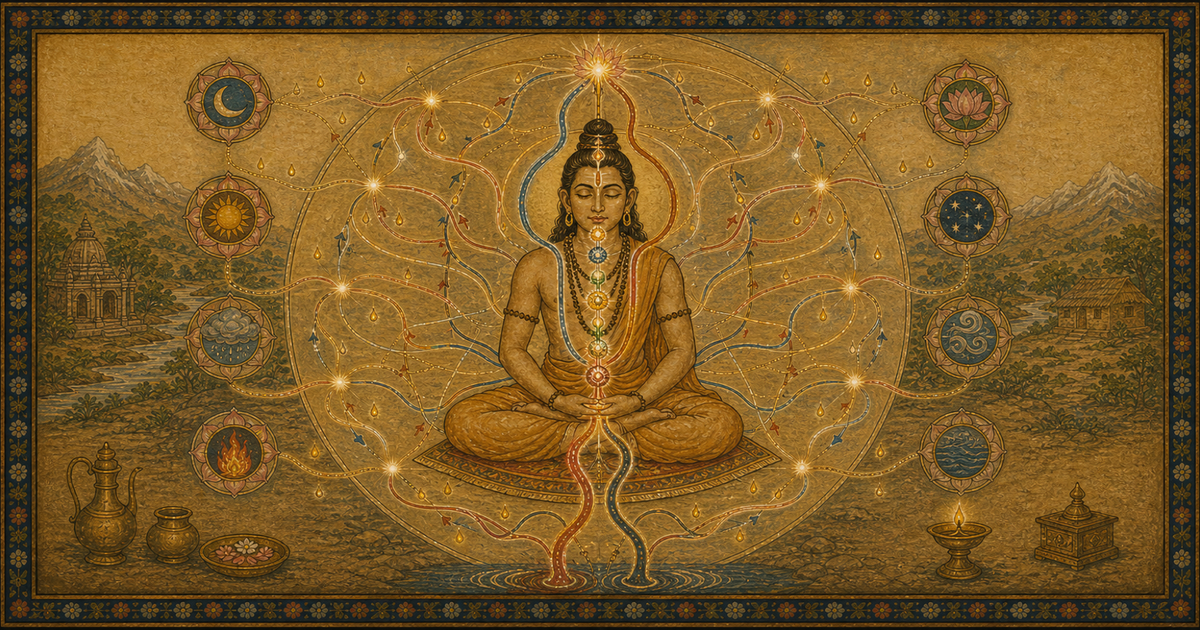
The Nāḍīs are described as channels through which the breath circulates in the body and the nourishing power of food acts evenly throughout it.

Śiva Saṃhitā 5.74
The nāḍīs (nāḍyaḥ | nom pl) are described (proktāḥ | nom pl f ppp) [in terms of] two (dvayam | acc sg) lower regions (adho-bhāgam | acc sg); these (tāḥ | nom pl f), together (sakalāḥ | nom pl f), also (api) propel (preṣayanti | 3p pl act pres caus) the breath (vāyum | acc sg) [through] the body (vapuḥ | acc sg), from the soles of the feet to the head (āpāda-tala-mastakam | acc sg).
Dr. Ronald Steiner - 2026 - historically literal
Śiva Saṃhitā 5.75
When (yadā) the breath (vāyuḥ | nom sg) moves (saṃcarate | 3p sg med pres) through all these nāḍīs (nāḍībhir ābhiḥ sarvābhiḥ | ins pl f), at that very moment (tadaiva) the nourishing essence of food (anna-rasaḥ | nom sg) begins to move (pravartate | 3p sg med pres) evenly (sāmyena | ins sg) here (iha) in the body (dehe | loc sg).
Dr. Ronald Steiner - 2026 - historically literal
Śiva Saṃhitā 5.76
Among these (tatra), here (iha) in their functioning (vyāpāre | loc sg), of the fourteen (caturdaśānām | gen pl), priority (mukhyatā | nom sg) is assumed (matā | nom sg f ppp) [for these two]; these (tāḥ | nom pl f) channels for the circulation of prāṇa (prāṇa-saṃcāra-nāḍikāḥ | nom pl) [are] complete (samagrāḥ | nom pl f), and not (na) subordinate (hīnāḥ), these (tāḥ).
Dr. Ronald Steiner - 2026 - historically literal
SiSa 5.77-5.81: Kanda and the main Nāḍīs

Śiva Saṃhitā 5.77-5.81: Kanda, Kuṇḍalinī and the three main Nāḍīs

Kanda, Kuṇḍalinī, Iḍā, Piṅgalā and Suṣumṇā are introduced as central structures of subtle anatomy, and their relationships are explained.

Śiva Saṃhitā 5.77
Two fingerbreadths (dvy-aṅgulatas) above (ūrdhvam) the anus (gudāt | abl sg), and (ca) one fingerbreadth from the penis (meḍhra-ekāṅgulatas), however (tu), below it (adhaḥ), there is (asti | 3p sg act pres) a single (ekam | nom sg), even (samam | nom sg n) knot (kandam | nom sg). [It is] four fingerbreadths wide (caturaṅgulam | acc sg) in every direction (samantāt).
Dr. Ronald Steiner - 2026 - historically literal
Śiva Saṃhitā 5.78
Facing backwards (paścimābhimukhī | nom sg f) [is] the yoni (yoniḥ | nom sg), situated in the space between the anus and the penis (guda-meḍhra-antarāla-gā | nom sg f). There (tatra) [is what is] called (samākhyātam | nom sg n ppp) the kanda (kandam | nom sg); there (tatra), Kuṇḍalī (kuṇḍalī | nom sg) always (sadā) abides (āste | 3p sg med pres).
Dr. Ronald Steiner - 2026 - historically literal
Śiva Saṃhitā 5.79
Having encircled (saṃveṣṭya | abs) all the nāḍīs (sakala-nāḍīḥ | acc pl), [she has] a form coiled three and a half times (sārdha-tri-kuṭilā-ākṛtiḥ | nom sg). Having placed (niveśya | abs caus) her tail (puccham | acc sg) in her mouth (mukhe | loc sg), she (sā | nom sg f) is situated (sthitā | nom sg f ppp) in the opening of the Suṣumṇā (suṣumṇā-vivare | loc sg).
Dr. Ronald Steiner - 2026 - historically literal
Śiva Saṃhitā 5.80
Resembling a resting snake (supta-nāga-upamā | nom sg) [is] indeed (hi) this [power] (eṣā | nom sg f). [She is] shimmering (sphurantī | nom sg f pca) with her own radiance (prabhayā svayā | ins sg). [She is] like a snake (ahivat), [and] situated at the junction (sandhi-saṃsthānā | nom sg f). [She is] the goddess of speech (vāg-devī | nom sg) and [is] called bīja (bīja-saṃjñikā | nom sg f).
Dr. Ronald Steiner - 2026 - historically literal
Śiva Saṃhitā 5.81
This is to be known (jñeyā | nom sg f) as the power (śaktiḥ iyam | nom sg f) of Viṣṇu (viṣṇoḥ | gen sg):
[1:] pure (nirmalā | nom sg f), radiant with a golden glow (svarṇa-bhāsvarā | nom sg f).
[2:] Sattva (sattvam | nom sg), rajas (rajas | nom sg) and (ca) tamas (tamas | nom sg)—she unfolds the guṇas threefold (guṇa-traya-vikasvarā | nom sg f).
Thus it is said (iti).
Dr. Ronald Steiner - 2026 - historically literal
SiSa 5.82-5.89: Mūlādhāra

Śiva Saṃhitā 5.82-5.89: the colour and Mantra of the Mūlādhāra-Cakra

Mūlādhāra is described through its colour, Bīja, luminous form and deities; meditation on it opens access to powers, protection and knowledge.

Śiva Saṃhitā 5.82
It is said (prakīrtitam | nom sg n ppp) that there (tatra), shining in the colour of a bandhūka flower (bandhūka-puṣpābham | nom sg n), [is] the seed mantra of Kāma, [the god of love] (kāma-bījam | nom sg). Through combination with the haṃsa sound (kala-haṃsa-prayogena | ins sg), it takes the form of an uttered syllable (prayukta-akṣara-rūpiṇam | acc sg m).
Dr. Ronald Steiner - 2026 - historically literal
Śiva Saṃhitā 5.83
And (ca), having attached itself (saṃśliṣya | abs) within the Suṣumṇā (suṣumṇāyām | loc sg), the excellent (varam | nom sg n) seed syllable (bījam | nom sg) is situated (sthitam | nom sg n ppp) there (tatra). This (etat | nom sg n) threefold light (tejas-trayam | nom sg n), resembling the autumn moon (śarad-candra-nibham | nom sg n), stands before one (puraḥ-sthitam | nom sg n ppp).
Dr. Ronald Steiner - 2026 - historically literal
Śiva Saṃhitā 5.84
Radiant as millions of suns (sūrya-koṭi-pratīkāśam | nom sg n), [and] very cool as millions of moons (candra-koṭi-suśītalam | nom sg n), this (etat | nom sg n), having united (militvā | abs), [is] a triad (trayam | nom sg n). [It is] indeed (eva) the goddess (devī | nom sg): Tripura-Bhairavī (tripura-bhairavī | nom sg).
Dr. Ronald Steiner - 2026 - historically literal
Śiva Saṃhitā 5.85
The highest (paraṃ | nom sg n) fire (tejas | nom sg n) is described (parikīrtitam | nom sg n ppp) as that which is called bīja (bīja-saṃjñam | nom sg n). It is precisely (eva) that (tat | nom sg n) which (yat | nom sg n), joined (yutam | nom sg n) with the two powers of action and knowledge (kriyā-vijñāna-śaktibhyām | ins du), moves (bhramat | nom sg n pca) on all sides (parito).
Dr. Ronald Steiner - 2026 - historically literal
Śiva Saṃhitā 5.86
[It is] rising (uttiṣṭhat | nom sg n pca), resembling a lotus fibre (bisa-tantu-ābham | nom sg n), subtle (sūkṣmam | nom sg n), [and] endowed with a red flame (śoṇa-śikhā-yutam | nom sg n). This (tat | nom sg n) highest (param | nom sg n) light (tejaḥ | nom sg) [is] situated in the yoni (yoni-stham | nom sg n) [and] established in the Svayambhū Liṅga (svayambhū-liṅga-saṃsthitam | nom sg n).
Dr. Ronald Steiner - 2026 - historically literal
Śiva Saṃhitā 5.87
This (etat | nom sg n) lotus at the base [of the body] (ādhāra-padmam | nom sg) is (asti | 3p sg act pres) indeed (hi) [the lotus] whose (yasyāḥ | gen sg f) yoni (yoniḥ | nom sg) comes from the kanda (kandataḥ | abl sg). Vibrating (parisphurat | kd pca), it bears four syllables, beginning with va and ending with sa (vādi-sānta-catur-varṇam | nom sg n), [and has] four petals (catur-dalam | nom sg).
Dr. Ronald Steiner - 2026 - historically literal
Śiva Saṃhitā 5.88
[This lotus] is called Kula (kulābhidham | nom sg n), [is] shining like gold (suvarṇābham | nom sg n), [and is] named Svayambhū Liṅga (svayambhū-liṅga-saṃjñitam | nom sg n). Within it (yatra), Dviraṇḍa (dviraṇḍaḥ | nom sg) is (asti | 3p sg act pres) the siddha (siddhaḥ | nom sg m), [and] within it (yatra), Ḍākinī (ḍākinī | nom sg) [is] the deity (devatā | nom sg).
Dr. Ronald Steiner - 2026 - historically literal
Śiva Saṃhitā 5.89
Situated in the centre of this lotus (tat-padma-madhya-gā | nom sg f) [is] the yoni (yoniḥ | nom sg). There (tatra), Kuṇḍalinī (kuṇḍalinī | nom sg) is situated (sthitā | nom sg f ppp). Above (ūrdhve) her (tasyāḥ | abl sg f) [is] sparkling light (sphurat-tejaḥ | nom sg), [as] the seed of Kāma (kāma-bījam | nom sg), conceived as moving (bhraman-matam | nom sg n ppp).
Dr. Ronald Steiner - 2026 - historically literal
SiSa 5.90-5.93: The effects of Mūlādhāra meditation

Śiva Saṃhitā 5.90-5.93: meditation on Mūlādhāra and its effects

Continued meditation on Mūlādhāra produces purification, inner concentration and special abilities while remaining on the path of Yoga.

Śiva Saṃhitā 5.90
The knowledgeable [yogi] (vicakṣaṇaḥ | nom sg m) who (yaḥ | nom sg m) always (sadā) performs (karoti | 3p sg act pres) meditation (dhyānam | acc sg) on Mūlādhāra (mūlādhāre | loc sg):
For that person (tasya | gen sg m), the frog accomplishment (dārdurī-siddhiḥ | nom sg), [namely] gradually (krameṇa | ins sg) leaving the ground (bhūmi-tyāgaḥ | nom sg), could indeed (vai) arise (syāt | 3p sg act opt).
Dr. Ronald Steiner - 2026 - historically literal
Śiva Saṃhitā 5.91
[Through this meditation] there arise (prajāyate | 3p sg med pres): outstanding (utkṛṣṭā | nom sg f) beauty (kāntiḥ | nom sg) of the body (vapuṣaḥ | gen sg), [and] an increase in digestive fire (jaṭharāgni-vivardhanam | nom sg), and (ca) health (ārogyaṃ | nom sg), and (ca) sharpness (paṭutvaṃ | nom sg) of the senses (karaṇānāṃ | gen pl).
Dr. Ronald Steiner - 2026 - historically literal
Śiva Saṃhitā 5.92
[Through this meditation], one knows (vetti | 3p sg act pres) what has truly happened (bhūtārtham | acc sg), and (ca) the future (bhaviṣyam | acc sg), and (ca) [also understands] the speech (bhāṣaṇam | acc sg) of every (sarvasya | gen sg) [living being].
Even (api) teachings (śāstrāṇi | acc pl) never heard before (aśrutāni | acc pl n) could certainly (dhruvam) be explained (vadet | 3p sg act opt), together with their secret meaning (sa-rahasyam | acc sg).
Dr. Ronald Steiner - 2026 - historically literal
Śiva Saṃhitā 5.93
The goddess (devī | nom sg) Sarasvatī (sarasvatī | nom sg) always (sadā) dances (nṛtyati | 3p sg act pres) freely (nirbharam) in the mouth (vaktre | loc sg). For this person (tasya | gen sg m), mastery of mantra (mantra-siddhiḥ | nom sg) could arise (bhavet | 3p sg act opt) through recitation (japāt | abl sg) alone (eva)—[there is] no (na) doubt (saṃśayaḥ | nom sg).
Dr. Ronald Steiner - 2026 - historically literal
SiSa 5.94-5.101: Mūlādhāra-Siddhis

Śiva Saṃhitā 5.94-5.101: further results of Mūlādhāra meditation

These verses unfold further results: purification, Siddhis, proximity to liberation and the ability to contemplate one’s own form in an expansive space.

Śiva Saṃhitā 5.94
The guru's (guroḥ | gen sg) word (vacaḥ | nom sg) destroys (nāśayati | 3p sg act caus pres) the floods of ageing, death and suffering (jarā-maraṇa-duḥkhaughān | acc pl).
This (idam | nom sg n) highest (param | nom sg n) meditation (dhyānam | nom sg) is always (sadā) to be performed (kāryam | nom sg n pfp) by the practitioner of breath (pavanābhyāsinā | ins sg).
Through meditation alone (dhyāna-mātreṇa | ins sg), the master of yoga (yogīndraḥ | nom sg) is liberated (mucyate | 3p sg pas pres); about this (atra), [there is] no (na) doubt (saṃśayaḥ | nom sg).
Dr. Ronald Steiner - 2026 - historically literal
Śiva Saṃhitā 5.95
If (yadā) one were to meditate (dhyāyet | 3p sg act opt) on the root lotus (mūla-padmam | acc sg), called Svayambhū Liṅga (svayambhū-liṅga-saṃjñakam | acc sg n), then (tadā), through that instant [of meditation] alone (tat-kṣaṇa-mātreṇa | ins sg), one could certainly (dhruvam) destroy (nāśayet | 3p sg act opt caus) the flood of sins (pāpaugham | acc sg).
Dr. Ronald Steiner - 2026 - historically literal
Śiva Saṃhitā 5.96
Whatever (yad | acc sg n) it may be (yat | acc sg n) that one desires (kāmayate | 3p sg med pres) in the mind (citte | loc sg), that (tat | acc sg n), that very (tat | acc sg n) result (phalam | acc sg), one would attain (avāpnuyāt | 3p sg act opt). Through uninterrupted practice (nirantara-kṛtābhyāsāt | abl sg), one sees (paśyati | 3p sg act pres) him who grants liberation (taṃ vimuktidam | acc sg m).
Dr. Ronald Steiner - 2026 - historically literal
Śiva Saṃhitā 5.97
The inner (abhyantaram | nom sg n) [is] better (śreṣṭham | nom sg n) than the outer (bāhyāt | abl sg) [and is] to be worshipped (pūjanīyam | nom sg n) carefully (prayatnataḥ | abl sg). This (etat | nom sg n) [is] indeed (hi) the very best (śreṣṭhatamam | nom sg n) in tantra (tantre | loc sg); nothing (na) else (anyat | nom sg n) is (asti | 3p sg act pres) recognised (matam | nom sg n ppp) by me (mama | gen sg).
Dr. Ronald Steiner - 2026 - historically literal
Śiva Saṃhitā 5.98
Whoever (yaḥ | nom sg m), having abandoned (tyaktvā | abs) Śiva (śivam | acc sg) situated within the Self (ātma-saṃstham | acc sg m), would worship (samarcayet | 3p sg act opt caus) the one situated outside (bahiḥ-stham | acc sg m), throws away (utsṛjya | abs) the morsel held in the hand (hasta-sthaṃ piṇḍam | acc sg) and wanders (bhramate | 3p sg med pres) in the hope of staying alive (jīvitāśayā | ins sg).
Dr. Ronald Steiner - 2026 - historically literal
Śiva Saṃhitā 5.99
One should perform (kuryāt | 3p sg act opt) worship of the liṅga of one's own Self (ātma-liṅgārcanam | acc sg) without negligence (anālasyaḥ | nom sg m), day (dine | loc sg) after day (dine | loc sg). Complete attainment (sakalā siddhiḥ | nom sg f) could arise (syāt | 3p sg act opt) for that person (tasya | gen sg m). Here (atra), no deliberation (vicāraṇā | nom sg) is to be undertaken (kāryā | nom sg f).
Dr. Ronald Steiner - 2026 - historically literal
Śiva Saṃhitā 5.100
Through uninterrupted practice (nirantara-kṛtābhyāsāt | abl sg), one could attain (āpnuyāt | 3p sg act opt) accomplishment (siddhim | acc sg) in six months (.ṣaṇ-māsaiḥ | ins pl). For that person (tasya | gen sg m), the entry of the breath (vāyu-praveśaḥ | nom sg) into the Suṣumṇā (suṣumṇāyām | loc sg) could also (api) certainly (dhruvam) occur (bhavet | 3p sg act opt).
Dr. Ronald Steiner - 2026 - historically literal
Śiva Saṃhitā 5.101
And (ca) one gains (labhate | 3p sg med pres) control of the mind (mano-jayam | acc sg) [and] retention of breath and semen (vāyu-bindu-vidhāraṇam | acc sg). Attainment in this world and the next (aihikāmuṣmikī siddhiḥ | nom sg f) could arise (bhavet | 3p sg act opt)—here (atra), [there is] certainly (eva) no (na) doubt (saṃśayaḥ | nom sg).
Dr. Ronald Steiner - 2026 - historically literal
SiSa 5.102-5.107: Svādhiṣṭhāna

Śiva Saṃhitā 5.102-5.107: the Svādhiṣṭhāna-Cakra and its effects

The second lotus centre, at the root of the Liṅga, is described with its sounds, goddess and Siddha; meditation on it bestows powers and safety.

Śiva Saṃhitā 5.102
And (ca) the second lotus (dvitīyaṃ sarojaṃ | nom sg n), which (yat | nom sg n) is situated (vyavasthitam | nom sg n ppp) at the root of the liṅga (liṅga-mūle | loc sg), this (tat | nom sg n) [is] endowed with six sounds, from ba to la (bādi-lānta-ṣaḍ-varṇam | nom sg n), [and is] radiant all around, with six petals (paribhāsvara-ṣaḍ-dalam | nom sg n).
Dr. Ronald Steiner - 2026 - historically literal
Śiva Saṃhitā 5.103
This (tat | nom sg n) lotus (paṃkajam | nom sg), however (tu), called Svādhiṣṭhāna (svādhiṣṭhāna-abhidham | nom sg n), has a red form (śoṇa-rūpakam | nom sg n). There (yatra) is (asti | 3p sg act pres) the siddha (siddhaḥ | nom sg) called Bāla (bāla-ākhyaḥ | nom sg m), and there (yatra) is (asti | 3p sg act pres) the goddess Rākinī (devī rākinī | nom sg).
Dr. Ronald Steiner - 2026 - historically literal
Śiva Saṃhitā 5.104
Whoever (yaḥ | nom sg m) always (sadā) and steadily (nityam) meditates (dhyāyati | 3p sg act pres) on the Svādhiṣṭhāna Lotus (svādhiṣṭhāna-aravindakam | acc sg), that person (tasya | gen sg m) is adored (bhajante | 3p pl med pres) by all (sarvāḥ | nom pl f) amorous women (kāma-aṅganāḥ | nom pl), entranced by desire (kāma-mohitāḥ | nom pl f ppp).
Dr. Ronald Steiner - 2026 - historically literal
Śiva Saṃhitā 5.105
One could indeed (vai) certainly (dhruvam) expound (vadet | 3p sg act opt) varied (vividham | acc sg n) śāstra teachings (śāstram | acc sg) not heard before (aśrutam | acc sg n), without doubt (niḥśaṅkaḥ | nom sg m). Completely freed from all illnesses (sarva-roga-vinirmuktaḥ | nom sg m ppp), one moves (carati | 3p sg act pres) through the world (loke | loc sg) without fear (nirbhayaḥ | nom sg m).
Dr. Ronald Steiner - 2026 - historically literal
Śiva Saṃhitā 5.106
Death (maraṇam | nom sg n) is devoured (khādyate | 3p sg pas pres) by this person (tena | ins sg m); moreover (api), they (saḥ | nom sg m) are not (na) devoured (khādyate | 3p sg pas pres) by anyone (kena | ins sg). For them (tasya | gen sg m), the highest accomplishment (paramā siddhiḥ | nom sg f) arises (syāt | 3p sg act opt), granting the qualities beginning with aṇimā (aṇimādi-guṇa-pradā | nom sg f).
Dr. Ronald Steiner - 2026 - historically literal
Śiva Saṃhitā 5.107
The breath (vāyuḥ | nom sg) circulates (saṃcarate | 3p sg med pres) in the body (dehe | loc sg); an increase in bodily fluids (rasa-vṛddhiḥ | nom sg) will certainly (dhruvam) arise (bhavet | 3p sg act opt). The nectar of immortality dripping from the lotus of ether (ākāśa-paṅkaja-galat-pīyūṣam | nom sg) also (api) increases (varddhate | 3p sg med pres).
Dr. Ronald Steiner - 2026 - historically literal
SiSa 5.108-5.112: Maṇipūra

Śiva Saṃhitā 5.108-5.112: the Maṇipūra-Cakra and lower Siddhis

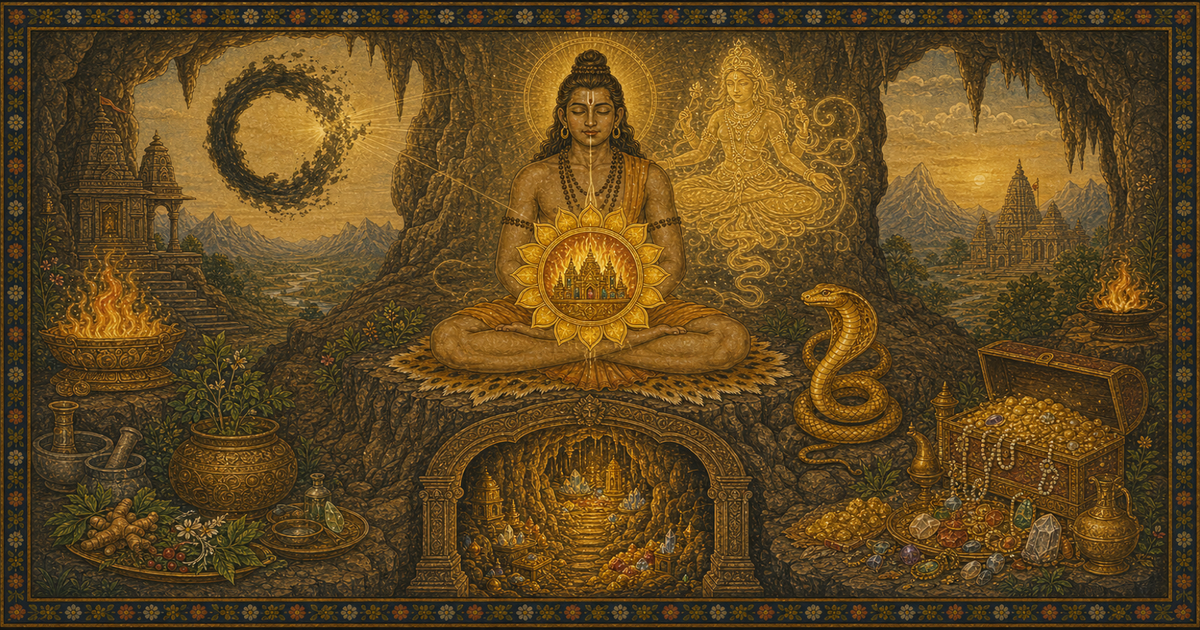
The navel centre, Maṇipūra, appears with ten petals; meditation on it brings Pātāla-Siddhi, healing and special perceptions.

Śiva Saṃhitā 5.108
The third lotus (tṛtīyaṃ paṃkajam | nom sg n) [is situated] at the navel (nābhau | loc sg) [and is] called Maṇipūraka (maṇipūraka-saṃjñakam | nom sg n). [It has] ten spokes (daśāram | nom sg n), with sounds from ḍa to pha (ḍādi-phāntārṇam | nom sg n), [and is] golden in colour (svarṇa-varṇam | nom sg n) and beautifully adorned (suśobhitam | ppp nom sg n).
Dr. Ronald Steiner - 2026 - historically literal
Śiva Saṃhitā 5.109
There (tatra) [is] the siddha (siddhaḥ | nom sg) called Bhujaṅga (bhujaṅgākhyaḥ | nom sg m); Lākinī (lākinī | nom sg) [is] the deity (devatā | nom sg) there (tatra).
Dr. Ronald Steiner - 2026 - historically literal
Śiva Saṃhitā 5.110
The yogi (yogī | nom sg) always (sadā) performs (karoti | 3p sg act pres) meditation (dhyānam | acc sg) in this (tasmin | loc sg n) Maṇipūraka (maṇipūrake | loc sg). For this person (tasya | gen sg m), pātāla siddhi (pātāla-siddhiḥ | nom sg) would arise (syāt | 3p sg act opt), bringing uninterrupted bliss (nirantara-sukhāvahā | nom sg f).
Dr. Ronald Steiner - 2026 - historically literal
Śiva Saṃhitā 5.111
And (ca), what is desired (īpsitam | nom sg n ppp) in the world (loke | loc sg) would arise (bhavet | 3p sg act opt); [likewise] the destruction of suffering and illness (duḥkha-roga-vināśanam | nom sg), and also (cāpi) outwitting (vañcanam | nom sg) death (kālasya | gen sg), [as well as] entry into another body (para-deha-praveśanam | nom sg).
Dr. Ronald Steiner - 2026 - historically literal
Śiva Saṃhitā 5.112
The production of gold and similar things (jāmbunadādi-karaṇam | nom sg), [and] the vision (darśanam | nom sg) of the siddhas (siddhānām | gen pl) would arise (bhavet | 3p sg act opt), and also (cāpi) the discovery of medicinal plants (oṣadhī-darśanam | nom sg), likewise (tathā) the discovery (darśanam | nom sg) of treasures (nidhīnām | gen pl).
Dr. Ronald Steiner - 2026 - historically literal
SiSa 5.113-5.120: Anāhata

Śiva Saṃhitā 5.113-5.120: the Anāhata-Cakra and Bāṇaliṅga

The teaching describes the heart lotus with Bāṇaliṅga and Kākinī; meditation on it brings knowledge, distant perception and Khecarī-Siddhi.

Śiva Saṃhitā 5.113
In the heart (hṛdaye | loc sg) would be (bhavet | 3p sg act opt) the fourth lotus (caturthaṃ paṃkajam | nom sg n), Anāhata (anāhataṃ | nom sg n) by name (nāma). [It has] an arrangement of sounds from ka to ṭha (kādi-ṭhāntārṇa-saṃsthānam | nom sg) and is endowed with twelve spokes (dvādaśāra-samanvitam | nom sg n ppp).
Dr. Ronald Steiner - 2026 - historically literal
Śiva Saṃhitā 5.114
[It is] deep red (atiśoṇam | nom sg n) [and is] described (īritam | nom sg n ppp) as the site of Kāmarāja's palace (kāmarāja-prasāda-sthānam | nom sg). That (tat | nom sg n) highest (param | nom sg n) light (tejaḥ | nom sg), situated in the lotus (padma-stham | nom sg n), is called (prakīrtitam | nom sg n ppp) Bāṇa Liṅga (bāṇa-liṅgam | nom sg).
Dr. Ronald Steiner - 2026 - historically literal
Śiva Saṃhitā 5.115
Through merely remembering (smaraṇa-mātreṇa | ins sg) it (tasya | gen sg n), visible and invisible results (dṛṣṭa-adṛṣṭa-phalaṃ | nom sg) could arise (bhavet | 3p sg act opt). There (yatra) dwells (āste | 3p sg med pres) the siddha (siddhaḥ | nom sg) Pinākī (pinākī | nom sg), and there (yatra), Kākinī (kākinī | nom sg) [is] the deity (devatā | nom sg).
Dr. Ronald Steiner - 2026 - historically literal
Śiva Saṃhitā 5.116
Whoever (yaḥ | nom sg m) steadily (satatam) performs (karoti | 3p sg act pres) meditation (dhyānam | acc sg) in this (etasmin | loc sg n) heart lotus (hṛt-pāthoje | loc sg), by that person's (tasya | gen sg m) radiance (kāntyā | ins sg), celestial women seized by love (kāmārtā divya-yoṣitaḥ | nom pl) are indeed (vai) stirred (kṣubhyante | 3p pl med pres).
Dr. Ronald Steiner - 2026 - historically literal
Śiva Saṃhitā 5.117
For this person (tasya | gen sg m), incomparable knowledge concerning the three times (jñānam apratimaṃ trikāla-viṣayam | nom sg) would also (ca) arise (bhavet | 3p sg act opt). Distant hearing (dūra-śrutiḥ | nom sg) [and] distant sight (dūra-dṛṣṭiḥ | nom sg) [arise]; at will (svecchayā | ins sg), one would attain (vrajet | 3p sg act opt) the ability to travel through the air (khagatām | acc sg).
Dr. Ronald Steiner - 2026 - historically literal
Śiva Saṃhitā 5.118
The vision (darśanam | nom sg) of siddhas (siddhānām | gen pl), and (ca) also (api), likewise (tathā), the vision of yoginīs (yoginī-darśanam | nom sg), would arise (bhavet | 3p sg act opt), and (ca) likewise (tathā) mastery (jayam | acc sg) over the khecaras (khecarāṇām | gen pl), [as well as] khecara siddhi (khecara-siddhiḥ | nom sg).
Dr. Ronald Steiner - 2026 - historically literal
Śiva Saṃhitā 5.119
Whoever (yaḥ | nom sg m) steadily (nityam) meditates (dhyāyati | 3p sg act pres) on the highest, second Bāṇa Liṅga (paraṃ bāṇa-liṅgaṃ dvitīyakam | acc sg), for that person (tasya | gen sg m), the supernatural abilities of immaterial and material yoginīs (khecarī-bhūcarī-siddhiḥ | nom sg) would arise (bhavet | 3p sg act opt); [there is] no (na) doubt (saṃśayaḥ | nom sg) about this.
Dr. Ronald Steiner - 2026 - historically literal
Śiva Saṃhitā 5.120
The power (māhātmyam | nom sg) of meditation on this [bāṇaliṅgaṃ] (etad-dhyānasya | gen sg) truly cannot (naiva) be (śakyate | 3p sg pas pres) described (kathitum | inf). All the gods (sakalā devāḥ | nom pl), beginning with Brahmā (brahmā-ādyāḥ | nom pl m), however (para.m tu), keep this (idam | acc sg n) [meditation] secret (gopayanti | 3p pl act pres caus).
Dr. Ronald Steiner - 2026 - historically literal
SiSa 5.121-5.127: Viśuddha

Śiva Saṃhitā 5.121-5.127: the Viśuddha-Cakra and timeless experience

The throat centre, Viśuddha, is described with its sounds, Śākinī and effects; meditation dissolves the sense of time and bodily limitation.

Śiva Saṃhitā 5.121
The lotus situated at the throat (kaṇṭha-sthāna-sthitaṃ padmaṃ | nom sg) [is] Viśuddha (viśuddhaṃ | nom sg n) by name (nāma), [and is] the fifth (pañcamam | nom sg n). [It is] beautifully golden (su-hemābham | nom sg n), endowed with gods (suropetam | nom sg n ppp), [and] adorned with sixteen sounds (ṣoḍaśa-svara-śobhitam | nom sg n ppp).
Dr. Ronald Steiner - 2026 - historically literal
Śiva Saṃhitā 5.122
Chagalāṇḍa (chagalāṇḍaḥ | nom sg) is (asti | 3p sg act pres) the siddha (siddhaḥ | nom sg) here (atra), and (ca) Śākinī (śākinī | nom sg) [is] the presiding deity (adhi-devatā | nom sg). Whoever (yaḥ | nom sg m) steadily (nityam) performs (karoti | 3p sg act pres) meditation (dhyānam | acc sg) [on this], that person (saḥ | nom sg m) [is] a sage among the masters of yoga (yogīśvara-paṇḍitaḥ | nom sg).
Dr. Ronald Steiner - 2026 - historically literal
Śiva Saṃhitā 5.123
What (kim | nom sg n) further (anyatra) [arises] for this yogi (tasya yoginaḥ | gen sg), [when], in the lotus called Viśuddha (viśuddhākhye saroruhe | loc sg), the four Vedas (catur-vedāḥ | nom pl) shine forth (vibhāsante | 3p pl med pres), like (iva) the secrets (rahasyāni | nom pl) of destiny (vidheḥ | gen sg)?
Dr. Ronald Steiner - 2026 - historically literal
Śiva Saṃhitā 5.124
When (yadā) the yogi (yogī | nom sg), situated (sthitaḥ | nom sg m ppp) here (iha) in this place (sthāne | loc sg), becomes (bhavet | 3p sg act opt) ruled by anger (krodha-vaśaḥ | nom sg m), then (tadā) all three worlds (samastaṃ trailokyaṃ | nom sg) tremble (kampate | 3p sg med pres); about this (atra), [there is] no (na) doubt (saṃśayaḥ | nom sg).
Dr. Ronald Steiner - 2026 - historically literal
Śiva Saṃhitā 5.125
When (yadā) a person's (yasya | gen sg m) mind (manaḥ | nom sg), by providence (daivāt | abl sg), enters (yāti | 3p sg act pres) dissolution (layam | acc sg) here (iha) in this place (sthāne | loc sg), then (tadā), having relinquished (parityajya | abs) the external (bāhyam | acc sg n), that person delights (ramate | 3p sg med pres) for a long time (ciram) within themselves (svāntare | loc sg).
Dr. Ronald Steiner - 2026 - historically literal
Śiva Saṃhitā 5.126
No (na) harm (kṣatiḥ | nom sg) comes (āyāti | 3p sg act pres) to this person (tasya | gen sg m), through the power (śaktitaḥ | abl sg) of their own body (sva-śarīrasya | gen sg), which indeed (vai), even (api) over a thousand years (saṃvatsara-sahasre | loc sg), [is] exceedingly hard like a diamond (vajrāti-kaṭhinasya | gen sg n).
Dr. Ronald Steiner - 2026 - historically literal
Śiva Saṃhitā 5.127
When (yadā) the master of yoga (yogīndraḥ | nom sg) leaves (tyajati | 3p sg act pres) that meditation (tad dhyānam | acc sg) in the earthly realm (avani-maṇḍale | loc sg), then (tadā) the accomplished one (kṛtī | nom sg m) regards (manyate | 3p sg med pres) thousands of years (varṣa-sahasrāṇi | acc pl) as that instant (tat-kṣaṇam | acc sg).
Dr. Ronald Steiner - 2026 - historically literal
SiSa 5.128-5.131: Ājñā

Śiva Saṃhitā 5.128-5.131: the Ājñā-Cakra and knowledge of Paramahaṃsa

The two-petalled Ājñā lotus between the eyebrows is described as the place of Mahākāla and Hākinī, leading to the highest Siddhi.

Śiva Saṃhitā 5.128
The Ājñā Lotus (ājñā-padmam | nom sg) [lies] in the middle (madhye | loc sg) between the two eyebrows (bhruvoḥ | gen du), [is] endowed with haṃ and kṣa (haṃ-kṣopetam | nom sg n ppp), [and has] two petals (dvi-pattrakam | nom sg n). [It is] shining white (śuklābham | nom sg n); this (tat | nom sg n) [is where] Mahākāla (mahākālaḥ | nom sg) [is] the siddha (siddhaḥ | nom sg), and Hākinī (hākinī | nom sg) [is] the goddess (devī | nom sg) here (atra).
Dr. Ronald Steiner - 2026 - historically literal
Śiva Saṃhitā 5.129
There (tatra) [is] an unfolded (vijṛmbhitam | nom sg n ppp) syllabic bīja (akṣara-bījam | nom sg), resembling the autumn moon (śarac-candra-nibham | nom sg n). This (ayam | nom sg m) person (pumān | nom sg) [is] a Paramahaṃsa (paramahaṃsaḥ | nom sg), who does not (na) perish (avasīdati | 3p sg act pres) after knowing (jñātvā | abs) this (yat | acc sg n).
Dr. Ronald Steiner - 2026 - historically literal
Śiva Saṃhitā 5.130
This (etad | nom sg n) very (eva) highest light (paraṃ tejaḥ | nom sg) is celebrated (mantritam | nom sg n ppp) in all the tantras (sarva-tantreṣu | loc pl). Having meditated upon it (cintayitvā | abs), one attains (labhate | 3p sg med pres) the highest accomplishment (parāṃ siddhim | acc sg). About this (atra), [there is] no (na) doubt (saṃśayaḥ | nom sg).
Dr. Ronald Steiner - 2026 - historically literal
Śiva Saṃhitā 5.131
The third liṅga (tritayaṃ liṅgam | nom sg) [is] the fourth state of consciousness (turīyam | nom sg n). That (tad | nom sg n) am I (aham | nom sg), the giver of liberation (muktidāyakaḥ | nom sg m). Through meditation alone (dhyāna-mātreṇa | ins sg), the master of yoga (yogīndraḥ | nom sg) certainly (dhruvam) becomes (bhavati | 3p sg act pres) equal to me (mat-samaḥ | nom sg m).
Dr. Ronald Steiner - 2026 - historically literal
SiSa 5.132-5.143: Inner Vārāṇasī

Śiva Saṃhitā 5.132-5.143: inner Vārāṇasī, Iḍā and Piṅgalā

Iḍā and Piṅgalā are interpreted as Varaṇā, Asī, Gaṅgā and Yamunā; their inner confluence becomes a sacred place.

Śiva Saṃhitā 5.132
Iḍā (iḍā | nom sg) is indeed (hi) called Varaṇā (varaṇākhyātā | nom sg f ppp); Piṅgalā (piṅgalā | nom sg) is indeed (hi) called (ucyate | 3p sg pas pres) Asī (asī | nom sg), thus (iti). In the middle (madhye | loc sg) between the two (tayoḥ | gen du m) [is] Vārāṇasī (vārāṇāsī | nom sg). Viśvanātha (viśva-nāthaḥ | nom sg) is said (bhāṣitaḥ | nom sg m ppp) to be there (atra).
Dr. Ronald Steiner - 2026 - historically literal
Śiva Saṃhitā 5.133
The power (māhātmyam | nom sg) of this sacred area [of Vārāṇasī or Viśvanātha] (etat-kṣetrasya | gen sg) has been proclaimed (proktam | nom sg n ppp) in many ways (bahudhā) in the teachings (śāstreṣu | loc pl) by ṛṣis who see truth (ṛṣibhiḥ tattva-darśibhiḥ | ins pl); [it is] well described (su-bhāṣitam | nom sg n ppp) as the highest reality (paraṃ tattvam | nom sg).
Dr. Ronald Steiner - 2026 - historically literal
Śiva Saṃhitā 5.134
Suṣumṇā (suṣumṇā | nom sg) runs (yātā | nom sg f ppp) along Meru (meruṇā | ins sg), to where (yataḥ) the opening of Brahman (brahma-randhram | acc sg) indeed (vai) is (asti | 3p sg act pres). Having turned back (parāvṛtya | abs), [it runs] from there (tataḥ) along the right side of the Ājñā Lotus (tad-ājñā-padma-dakṣiṇe | loc sg). [Thus] it reaches (yāti | 3p sg act pres) the left nostril (vāma-nāsā-puṭam | acc sg). It is celebrated (parigīyate | 3p sg pas pres) thus (iti) as Gaṅgā (gaṅgā | nom sg).
Dr. Ronald Steiner - 2026 - historically literal
Śiva Saṃhitā 5.135
The lotus (padmam | nom sg) which (yat | nom sg n) is situated (vyavasthitam | nom sg n ppp) in the opening of Brahman (brahma-randhre | loc sg) is indeed (hi) Sahasrāra (sahasrāram | nom sg). There (tatra), in the kanda (kande | loc sg), is indeed (hi) the yoni (yā yoniḥ | nom sg); within it (tasyām | loc sg f), the moon (candraḥ | nom sg) is situated (vyavasthitaḥ | nom sg m ppp).
Dr. Ronald Steiner - 2026 - historically literal
Śiva Saṃhitā 5.136
From its (tasyāḥ | gen sg f) triangular form (tri-koṇākāratas | abl sg), nectar (sudhā | nom sg) certainly (niścitam) drips (kṣarati | 3p sg act pres). There (tatra), the moon (candramāḥ | nom sg) lets the nectar of immortality (amṛtam | acc sg) flow (sravati | 3p sg act pres) evenly (samam) into Iḍā (iḍāyām | loc sg).
Dr. Ronald Steiner - 2026 - historically literal
Śiva Saṃhitā 5.137
It [Iḍā] (sā | nom sg f) carries [like a streambed] (vahati | 3p sg act pres) this nectar (tad amṛtam | acc sg) continuously (nirantaram) in the form of a stream (dhārā-rūpam | acc sg n). It reaches (yāti | 3p sg act pres) the left nostril (vāma-nāsā-puṭam | acc sg). Gaṅgā (gaṅgā | nom sg), thus (iti), it is indeed (hi) called (uktā | nom sg f ppp) by yogis (yogibhiḥ | ins pl).
Dr. Ronald Steiner - 2026 - historically literal
Śiva Saṃhitā 5.138
From the right side of the Ājñā Lotus (ājñā-paṅkaja-dakṣāṃsāt | abl sg), [it] has gone (gatā | nom sg f ppp) to the left nostril (vāma-nāsā-puṭam | acc sg). There (tatra), Iḍā (iḍā | nom sg), indeed (eva) flowing upwards (udag-vahā | nom sg f), is called (samudāhṛtā | nom sg f ppp) Varaṇā (varaṇā | nom sg).
Dr. Ronald Steiner - 2026 - historically literal
Śiva Saṃhitā 5.139
Piṅgalā (piṅgalā | nom sg) also (api) [has] the form of this [river] (tad-ākārā | nom sg f). [She lies] on the left side of that Ājñā lotus (tad-ājñā-kamalottare | loc sg n) [and] goes (yāti | 3p sg act pres) to the right nostril (dakṣa-nāsā-puṭe | loc sg). [She is] indeed (vai) called (proktā | nom sg f ppp) by us (asmābhiḥ | ins pl) as follows (iti): Asī (asī | nom sg). Therefore (tataḥ), one should now (tu) visualise (cintayet | 3p sg act opt) both (dvayam | acc sg n) here (iha), at [this] place (sthāne | loc sg), in Vārāṇasī (vārāṇasyām | loc sg).
Dr. Ronald Steiner - 2026 - historically literal
Śiva Saṃhitā 5.140
That lotus (yat padmam | nom sg), situated (vyavasthitam | nom sg n ppp) in Mūlādhāra (mūlādhāre | loc sg), [is] indeed (hi) four-petalled (catuṣ-patram | nom sg n). In the kanda (kande | loc sg), there (tatra), is (asti | 3p sg act pres) that yoni (yā yoniḥ | nom sg). Within it (tasyām | loc sg f), the sun (sūryaḥ | nom sg) is situated (vyavasthitaḥ | nom sg m ppp).
Dr. Ronald Steiner - 2026 - historically literal
Śiva Saṃhitā 5.141
From that solar disc (tat-sūrya-maṇḍalāt | abl sg), terrible poison (ghoraṃ viṣam | acc sg) drips (kṣarati | 3p sg act pres) continuously (saṃtatam). There (tatra), the sun (tāpanaḥ | nom sg) delivers (samarpayati | 3p sg act pres caus) the poison (viṣam | acc sg) into Piṅgalā (piṅgalāyām | loc sg).
Dr. Ronald Steiner - 2026 - historically literal
Śiva Saṃhitā 5.142
The one which (yā | nom sg f) carries (vahantī | nom sg f pca) the poison (viṣam | acc sg) there (tatra) continuously (nirantaram) in the form of a stream (dhārā-rūpam | acc sg n) goes (yāti | 3p sg act pres) to the right nostril (dakṣa-nāsā-puṭam | acc sg); this (iyam | nom sg f), however (tu), is formed (kalpitā | nom sg f ppp) as before (pūrvavat).
Dr. Ronald Steiner - 2026 - historically literal
Śiva Saṃhitā 5.143
From the left region of the Ājñā Lotus (ājñā-paṅkaja-vāmāsyāt | abl sg), [it] has gone (gatā | nom sg f ppp) to the right nostril (dakṣa-nāsā-puṭam | acc sg). Piṅgalā (piṅgalā | nom sg), too (api), flowing upwards (udag-vahā | nom sg f), was formerly (purā) called (prakīrtitā | nom sg f ppp) Asī (asī | nom sg), thus (iti).
Dr. Ronald Steiner - 2026 - historically literal
SiSa 5.144-5.155: Ājñā and Khecarī

Śiva Saṃhitā 5.144-5.155: meditation on Ājñā, Khecarī and liberation

The account of Ājñā deepens, presenting it as the secret place of Bindu, Nāda and Śakti; meditation on it dissolves Karma and opens the way to Rājayoga.

Śiva Saṃhitā 5.144
This (idam | nom sg n) is called (proktam | nom sg n ppp) the Ājñā Lotus (ājñā-padmam | nom sg), where (yatra) the god (devaḥ | nom sg) Maheśvara (maheśvaraḥ | nom sg) [is]. From there (tataḥ), and (ca) above (ūrdhvam), a triad of seats (pīṭha-trayam | nom sg n) is described (niruktam | nom sg n ppp) by those who contemplate yoga (yoga-cintakaiḥ | ins pl), named Bindu, Nāda and Śakti (tad-bindu-nāda-śakty-ākhyam | nom sg n), and situated (vyavasthitam | nom sg n ppp) on the surface of the forehead (bhāla-paṭṭe | loc sg).
Dr. Ronald Steiner - 2026 - historically literal
Śiva Saṃhitā 5.145
Whoever (yaḥ | nom sg m) always (sadā) performs (karoti | 3p sg act pres) the secret meditation (gopitaṃ dhyānam | acc sg) in the Ājñā Lotus (ājñā-padme | loc sg), their karma performed in previous births (pūrva-janma-kṛtaṃ karma | nom sg) would be (syāt | 3p sg act opt) remembered (smṛtam | nom sg n ppp) effortlessly (avirodhataḥ | abl sg).
Dr. Ronald Steiner - 2026 - historically literal
Śiva Saṃhitā 5.146
If (yadā) the yogi (yogī | nom sg), established (sthitaḥ | nom sg m ppp) here (iha), were to perform (kuryāt | 3p sg act opt) meditation (dhyānam | acc sg) continuously (nirantaram), then (tadā) they conduct (karoti | 3p sg act pres) a meaningful conversation (arthavat jalpanam | acc sg) directed (prati) towards the image (pratimāṃ | acc sg).
Dr. Ronald Steiner - 2026 - historically literal
Śiva Saṃhitā 5.147
Yakṣas, Rākṣasas and Gandharvas (yakṣa-rākṣasa-gandharvāḥ | nom pl), groups of Apsarases and Kinnaras (apsaro-gaṇa-kinnarāḥ | nom pl) serve (sevante | 3p pl med pres) that person's (tasya | gen sg m) two feet (caraṇau | acc du). All (sarve | nom pl m) follow their (tasya | gen sg m) power (vaśānugāḥ | nom pl m).
Dr. Ronald Steiner - 2026 - historically literal
Śiva Saṃhitā 5.148
The yogi (yogī | nom sg) brings (karoti | 3p sg act pres) the tongue (rasanām | acc sg) into the inserted, backward-turning position (praviṣṭāṃ viparīta-gām | acc sg f), having maintained (dhṛtvā | abs) the meditation that dispels fear (dhyānaṃ bhayāpaham | acc sg) in the cavities above the uvula (lambikordhveṣu garteṣu | loc pl).
Dr. Ronald Steiner - 2026 - historically literal
Śiva Saṃhitā 5.149
For the person whose (yasya | gen sg m) mind (manaḥ | nom sg) remains (vartate | 3p sg med pres) motionless (acalam | nom sg n) in this place (asmin sthāne | loc sg) for half an instant (kṣaṇārdham | acc sg), all sins (sarvāṇi pāpāni | nom pl) immediately (tat-kṣaṇāt | abl sg) pass (yānti | 3p pl act pres) into destruction (saṃkṣayam | acc sg) for them (tasya | gen sg m).
Dr. Ronald Steiner - 2026 - historically literal
Śiva Saṃhitā 5.150
Whatever (yāni | nom pl n), whatever (yāni | nom pl n) results (phalāni | nom pl) have indeed (vai) been described (proktāni | nom pl n ppp) here (iha) in the five-lotus [system] (pañca-padme | loc sg), all (sarvāṇi | nom pl n) those (tāni | nom pl n) indeed (hi) arise (bhavanti | 3p pl act pres) to an even greater degree (sutarām) through this meditation (etad-dhyānāt | abl sg).
Dr. Ronald Steiner - 2026 - historically literal
Śiva Saṃhitā 5.151
Whoever (yaḥ | nom sg m), discerning (vicakṣaṇaḥ | nom sg m), always (sadā) performs (karoti | 3p sg act pres) practice (abhyāsam | acc sg) in the Ājñā Lotus (ājñā-padme | loc sg), rejoices (pramodate | 3p sg med pres), having rejected (tiraskṛtya | abs) the great bondage (mahā-bandham | acc sg) of vāsanā (vāsanāyā | gen sg).
Dr. Ronald Steiner - 2026 - historically literal
Śiva Saṃhitā 5.152
Whoever (yaḥ | nom sg m), wise (sudhīḥ | nom sg m), remembers (smaran | nom sg m pca) that lotus (tat-padmam | acc sg) at the time when the life-breath departs (prāṇa-prayāṇa-samaye | loc sg) and would relinquish (tyajet | 3p sg act opt) the life-breath (prāṇam | acc sg), that person (saḥ | nom sg m), whose nature is dharma (dharmātmā | nom sg), dissolves (līyate | 3p sg pas pres) into the highest Self (paramātmani | loc sg).
Dr. Ronald Steiner - 2026 - historically literal
Śiva Saṃhitā 5.153
The person (naraḥ | nom sg) who (yaḥ | nom sg m) performs (kurute | 3p sg med pres) meditation (dhyānam | acc sg) while standing (tiṣṭhan | nom sg m pca), walking (gacchan | nom sg m pca), sleeping (svapan | nom sg m pca) [and] eating (bhuñjan | nom sg m pca), indeed (hi) does not (na) sink (majjati | 3p sg act pres) into sin (kilbiṣe | loc sg), even (api) when committing (kurvāṇaḥ | nom sg m pca) sinful actions (pāpa-karmā | nom sg m).
Dr. Ronald Steiner - 2026 - historically literal
Śiva Saṃhitā 5.154
Through contemplation of this (etac-cintanataḥ | abl sg), one would certainly (dhruvam) become (syāt | 3p sg act opt) qualified for rāja yoga (rāja-yogādhikārī | nom sg). The yogi (yogī | nom sg), through their own radiance (svīyayā prabhayā | ins sg), is themselves (svayam) freed from duality (dvandva-vinirmuktaḥ | nom sg m ppp), [being thus].
Dr. Ronald Steiner - 2026 - historically literal
Śiva Saṃhitā 5.155
The greatness of meditation on the two-petalled [lotus] (dvi-dala-dhyāna-māhātmyam | nom sg) simply (eva) cannot (na) be (śakyate | 3p sg pas pres) expressed (kathitum | inf). Even (eva) the deities beginning with Brahmā (brahmādi-devatāḥ | nom pl) know (vidanti | 3p pl act pres) only a little (kiṃcit | acc sg n) of it from me (mattaḥ | abl sg), and (ca) they (te | nom pl f) [too].
Dr. Ronald Steiner - 2026 - historically literal
SiSa 5.156-5.181: Sahasrāra

Śiva Saṃhitā 5.156-5.181: Sahasrāra, Suṣumṇā and Brahmarandhra

Sahasrāra, Suṣumṇā, Kuṇḍalinī and Brahmarandhra are described as the inner path to liberation and the highest goal.

Śiva Saṃhitā 5.156
Above (ūrdhvam) this point (ataḥ), at the root of the palate (tālu-mūle | loc sg), is (asti | 3p sg act pres) the Sahasrāra Lotus (sahasrāraṃ saroruham | nom sg), where (yatra) the root (mūlam | nom sg) of the Suṣumṇā (suṣumṇāyā | gen sg), with its opening (sa-vivaram | nom sg n), is situated (sthitam | nom sg n ppp).
Dr. Ronald Steiner - 2026 - historically literal
Śiva Saṃhitā 5.157
At the root of the palate (tālu-mūle | loc sg), this (sā | nom sg f) Suṣumṇā (suṣumṇā | nom sg) runs (pravartate | 3p sg med pres) with its opening directed downwards (adho-vaktrā | nom sg f). All nāḍīs (sarva-nāḍīḥ | acc pl), [running] through Mūlādhāra (mūlādhāreṇa | ins sg) and ending at the yoni (yony-antāḥ | nom pl f), are supported (samāśritāḥ | nom pl f ppp). These (tāḥ | nom pl f) have arisen from bīja (bīja-bhūtāḥ | nom pl f ppp), are extremely fine (atīva-tanvyaḥ | nom pl f), and show the path to Brahman (brahma-mārga-pradāyikāḥ | nom pl f).
Dr. Ronald Steiner - 2026 - historically literal
Śiva Saṃhitā 5.158
And (ca) the lotus (yat padmam | nom sg) at the palate (tālu-sthāne | loc sg), previously (purā) called (uditam | nom sg n ppp) Sahasrāra (sahasrāram | nom sg), has within its kanda (tat-kande | loc sg) a single yoni (yonir ekā | nom sg f), which is (asti | 3p sg act pres) regarded (matā | nom sg f ppp) as facing backwards (paścimābhimukhī | nom sg f).
Dr. Ronald Steiner - 2026 - historically literal
Śiva Saṃhitā 5.159
In its (tasya | gen sg n) centre (madhye | loc sg), the root (mūlam | nom sg) of the Suṣumṇā (suṣumṇāyā | gen sg), with its opening (sa-vivaram | nom sg n), is situated (sthitam | nom sg n ppp). That (tad | nom sg n) very [opening] (eva) is called Brahmarandhra (brahma-randhram uktam | nom sg), extending to the Mūlādhāra Lotus (ā-mūlādhāra-paṅkajam | acc sg). In the opening of that fine thread (tat-tantu-randhre | loc sg), its Śakti (tac-chaktiḥ | nom sg), Kuṇḍalī (kuṇḍalī | nom sg), is always (sadā) asleep (prasuptā | nom sg f ppp).
Dr. Ronald Steiner - 2026 - historically literal
Śiva Saṃhitā 5.160
Within the Suṣumṇā (suṣumṇāyām | loc sg) would be (syāt | 3p sg act opt) the nāḍī situated there (sthitā nāḍī | nom sg), Citrā (citrā | nom sg), dear (vallabhā | nom sg f) to me (mama | gen sg). Within it (tasyām | loc sg f), according to my (mama | gen sg) teaching (mate | loc sg), the conception of Brahmarandhra and the rest (brahma-randhrādi-kalpanā | nom sg) is to be formed (kāryā | nom sg f pfp).
Dr. Ronald Steiner - 2026 - historically literal
Śiva Saṃhitā 5.161
Through merely remembering (smaraṇa-mātreṇa | ins sg) it (yasyāḥ | gen sg f), omniscience (sarva-jñatvam | nom sg) arises (prajāyate | 3p sg med pres). And (ca) the destruction of sin (pāpa-kṣayaḥ | nom sg) occurs (bhavati | 3p sg act pres); one would not (na) become (bhavet | 3p sg act opt) human (puruṣaḥ | nom sg) again (bhūyaḥ).
Dr. Ronald Steiner - 2026 - historically literal
Śiva Saṃhitā 5.162
One should place (niveśayet | 3p sg act opt caus) one's own end (sva-lāṅgūlam | acc sg), inserted (praveśitam | acc sg n ppp), into one's own (svasya | gen sg n) mouth (mukhe | loc sg). Through this (tena), the breath-wind moving through the body (deha-cārī samīraṇaḥ | nom sg m) does not (na) flow (vahati | 3p sg act pres) precisely (eva) here (atra).
Dr. Ronald Steiner - 2026 - historically literal
Śiva Saṃhitā 5.163
Through this (tena), one no longer (na) continually (sarvadā) wanders (bhramati | 3p sg act pres) in this wheel of saṃsāra (saṃsāra-cakre asmin | loc sg), indeed (eva). For this purpose (tad-artham | acc sg), yogis (yoginaḥ | nom pl) indeed (vai) turn (pravartante | 3p pl med pres) to retention of the breath (prāṇa-dhāraṇe | loc sg).
Dr. Ronald Steiner - 2026 - historically literal
Śiva Saṃhitā 5.164
Only through this (tataḥ), indeed (eva), are all nāḍīs (akhilā nāḍyaḥ | nom pl f) closed (niruddhāḥ | nom pl f ppp), and (ca) this Kuṇḍalinī Śakti (iyaṃ kuṇḍalinī śaktiḥ | nom sg), coiled eight times (aṣṭa-veṣṭanā | nom sg f), leaves (tyajati | 3p sg act pres) the opening (randhram | acc sg), and not (na) otherwise (anyathā).
Dr. Ronald Steiner - 2026 - historically literal
Śiva Saṃhitā 5.165
When (yadā) the breath-wind (anilaḥ | nom sg) is fully retained (saṃniruddhaḥ | nom sg m ppp) in the filled nāḍīs (pūrṇāsu nāḍīṣu | loc pl f), then (tadā) Kuṇḍalī's (kuṇḍalyāḥ | gen sg) mouth (mukham | nom sg), through release of the bond (bandha-tyāgena | ins sg), would emerge (bhavet | 3p sg act opt) outwards (bahiḥ) from the opening (randhrāt | abl sg).
Dr. Ronald Steiner - 2026 - historically literal
Śiva Saṃhitā 5.166
This (ayam | nom sg m) prāṇa-wind (prāṇa-samīraṇaḥ | nom sg) should flow (vahet | 3p sg act opt) always (sadā), indeed (eva), in the Suṣumṇā (suṣumṇāyām | loc sg). The yoni (yoniḥ | nom sg), situated in the root lotus (mūla-padma-sthitā | nom sg f ppp), is [described] from its left and right corners (vāma-dakṣiṇa-koṇataḥ).
Dr. Ronald Steiner - 2026 - historically literal
Śiva Saṃhitā 5.167
In the middle (madhye | loc sg) between Iḍā and Piṅgalā (iḍā-piṅgalayoḥ | gen du) is Suṣumṇā (suṣumṇā | nom sg), passing into the centre of the yoni (yoni-madhya-gā | nom sg f). Brahmarandhra (brahma-randhram | nom sg), however (tu), is precisely there (tatraiva), in the region of the Suṣumṇā's base (suṣumṇādhāra-maṇḍale | loc sg). The discerning person (vicakṣaṇaḥ | nom sg m) who (yaḥ | nom sg m) knows (jānāti | 3p sg act pres) this, that person (saḥ | nom sg m) would be (syāt | 3p sg act opt) freed (muktaḥ | nom sg m ppp) from karmic bondage (karma-bandhāt | abl sg).
Dr. Ronald Steiner - 2026 - historically literal
Śiva Saṃhitā 5.168
At the mouth of Brahmarandhra (brahma-randhra-mukhe | loc sg) would be (syāt | 3p sg act opt) their (tāsām | gen pl f) confluence (saṃgamaḥ | nom sg), without doubt (asaṃśayaḥ | nom sg m). When one has bathed (snāte | loc sg n ppp) in it (yasmin | loc sg n), liberation (muktiḥ | nom sg) would (syāt | 3p sg act opt) [come] unhindered (avirodhataḥ) to those who have bathed (snātakānām | gen pl).
Dr. Ronald Steiner - 2026 - historically literal
Śiva Saṃhitā 5.169
In the middle (madhye | loc sg) between Gaṅgā and Yamunā (gaṅgā-yamunayoḥ | gen du), this (eṣā | nom sg f) Sarasvatī (sarasvatī | nom sg) flows (vahati | 3p sg act pres). Whoever, however (tu), blessed (dhanyaḥ | nom sg m), has bathed (snātvā | abs) at their (tāsām | gen pl f) confluence (saṃgame | loc sg), reaches (yāti | 3p sg act pres) the highest goal (parāṃ gatim | acc sg f).
Dr. Ronald Steiner - 2026 - historically literal
Śiva Saṃhitā 5.170
Iḍā (iḍā | nom sg) was formerly (purā) called (proktā | nom sg f ppp) Gaṅgā (gaṅgā | nom sg), and (ca) Piṅgalā (piṅgalā | nom sg) [is] the daughter of the sun (arka-putrikā | nom sg). The middle one (madhyā | nom sg f) is to be known (jñeyā | nom sg f pfp) as Sarasvatī (sarasvatī | nom sg). Their (tāsām | gen pl f) confluence (saṃgaḥ | nom sg) is extremely difficult to find (atidurlabhaḥ | nom sg m).
Dr. Ronald Steiner - 2026 - historically literal
Śiva Saṃhitā 5.171
Whoever (yaḥ | nom sg m) should perform (ācaret | 3p sg act opt) a bath (snānam | acc sg) mentally (manasā | ins sg) at the white and black confluence (sitāsite saṃgame | loc sg) reaches (yāti | 3p sg act pres) eternal Brahman (brahma sanātanam | acc sg n), freed from all sins (sarva-pāpa-vinirmuktaḥ | nom sg m ppp).
Dr. Ronald Steiner - 2026 - historically literal
Śiva Saṃhitā 5.172
Whoever (yaḥ | nom sg m) should indeed (vai) perform (samācaret | 3p sg act opt) the ancestral rite (pitṛ-karma | acc sg) at the confluence of the Triveṇī (tri-veṇyāṃ saṃgame | loc sg), that person (saḥ | nom sg m), having brought all the ancestors (pitṝn sarvān | acc pl m) across (tārayitvā | abs caus), reaches (yāti | 3p sg act pres) the highest goal (paramāṃ gatim | acc sg f).
Dr. Ronald Steiner - 2026 - historically literal
Śiva Saṃhitā 5.173
Whoever (yaḥ | nom sg m) should perform (samācaret | 3p sg act opt) the obligatory (nityam | acc sg n), occasional (naimittikam | acc sg n) and desire-driven (kāmyam | acc sg n) [rites] daily (pratyaham), that person (saḥ | nom sg m), having contemplated (cintayitvā | abs) mentally (manasā | ins sg), would attain (āpnuyāt | 3p sg act opt), however (tu), an imperishable result (akṣayaṃ phalam | acc sg n).
Dr. Ronald Steiner - 2026 - historically literal
Śiva Saṃhitā 5.174
Whoever (yaḥ | nom sg m) performs (kurute | 3p sg med pres) a bath (snānam | acc sg) even once (sakṛt), that person (saḥ | nom sg m), the yogi of pure mind (yogī śuddha-matiḥ | nom sg m), enjoys (bhunakti | 3p sg act pres) happiness (saukhyam | acc sg) in heaven (svarge | loc sg), having themselves (svayam) indeed (vai) burned away (dagdhvā | abs) all sins without remainder (pāpān aśeṣān | acc pl m).
Dr. Ronald Steiner - 2026 - historically literal
Śiva Saṃhitā 5.175
Impure (apavitraḥ | nom sg m), pure (pavitraḥ | nom sg m), or (vā), or (vā) even (api) having entered (gataḥ | nom sg m ppp) any state (sarvāvasthām | acc sg), one becomes (bhavati | 3p sg act pres) purified (pūtaḥ | nom sg m ppp) through the act of bathing alone (snānācaraṇa-mātreṇa | ins sg), and not (na) otherwise (anyathā).
Dr. Ronald Steiner - 2026 - historically literal
Śiva Saṃhitā 5.176
When (yadā), at the time of death (mṛtyu-kāle | loc sg), having envisioned (vicintya | abs) the body bathed (plutaṃ deham | acc sg m) in the waters (salile | loc sg) of the Triveṇī (triveṇyāḥ | gen sg), whoever (yaḥ | nom sg m) would relinquish (tyajet | 3p sg act opt) the life-breath (prāṇam | acc sg), that person (saḥ | nom sg m) would always (sadā) attain (āpnuyāt | 3p sg act opt) liberation (mokṣam | acc sg).
Dr. Ronald Steiner - 2026 - historically literal
Śiva Saṃhitā 5.177
No (na) higher secret (parataraṃ guhyam | nom sg n) than this (ataḥ) is found (vidyate | 3p sg med pres) in the three worlds (triṣu lokeṣu | loc pl). That (tat | nom sg n) is to be guarded (goptavyam | nom sg n pfp) carefully (prayatnena | ins sg), and (ca) is not (na) to be disclosed (ākhyeyam | nom sg n pfp) at any time (kadācana).
Dr. Ronald Steiner - 2026 - historically literal
Śiva Saṃhitā 5.178
If (yadi), having directed (dattvā | abs) the mind (manaḥ | acc sg) into Brahmarandhra (brahma-randhre | loc sg), one remains (tiṣṭhati | 3p sg act pres) for half an instant (kṣaṇārdham | acc sg), then that person (saḥ | nom sg m), completely freed from all sins (sarva-pāpa-vinirmuktaḥ | nom sg m ppp), reaches (yāti | 3p sg act pres) the highest goal (paramāṃ gatim | acc sg f).
Dr. Ronald Steiner - 2026 - historically literal
Śiva Saṃhitā 5.179
The yogi (sa yogī | nom sg m) whose (yasya | gen sg m) mind (manaḥ | nom sg) is dissolved (līnam | nom sg n ppp) in this (asmin | loc sg n) dissolves (līyate | 3p sg pas pres) into me (mayi | loc sg). Having experienced (bhuktvā | abs) the powers beginning with aṇimā (aṇimādi-guṇān | acc pl) at will (svecchayā | ins sg), [the yogi is] the highest of human beings (puruṣottamaḥ | nom sg m).
Dr. Ronald Steiner - 2026 - historically literal
Śiva Saṃhitā 5.180
Through meditation on this opening alone (etad-randhra-dhyāna-mātreṇa | ins sg), this mortal (saḥ martyaḥ | nom sg) in this saṃsāra (saṃsāre asmin | loc sg) would become (bhavet | 3p sg act opt) dear (vallabhaḥ | nom sg m) to me (me | gen sg). Having overcome (jitvā | abs) sin (pāpam | acc sg), [one becomes] qualified for the path of liberation (mukti-mārgādhikārī | nom sg). Having given (dattvā | abs) knowledge (jñānam | acc sg), I indeed (vai) swiftly (āśu) carry that person (tam | acc sg m) across (tārayāmi | 1p sg act pres caus).
Dr. Ronald Steiner - 2026 - historically literal
Śiva Saṃhitā 5.181
Inaccessible (agamyam | acc sg n pfp) to the gods beginning with the Four-Faced One (catur-mukhādi-tridaśaiḥ | ins pl), dear to yogis (yogi-vallabham | acc sg n), this Brahmarandhra (tad-brahma-randhram | acc sg), taught (uditam | acc sg n ppp) by me (mayā | ins sg), is to be guarded closely (su-gopyam | acc sg n pfp) with care (prayatnena | ins sg).
Dr. Ronald Steiner - 2026 - historically literal
SiSa 5.182-5.190: The moon in Sahasrāra

Śiva Saṃhitā 5.182-5.190: the moon in Sahasrāra and purifying Siddhi

Meditation on the moon, nectar and Sahasrāra purifies and promises vision, protection, success and equality with Śiva.

Śiva Saṃhitā 5.182
The yoni (yā yoniḥ | nom sg f) previously (purā) taught (uktā | nom sg f ppp) by me (mayā | ins sg) in the Sahasrāra Lotus (sahasrāre saroruhe | loc sg)—beneath it (tasyāḥ | gen sg f), below (adhas), the moon (candraḥ | nom sg) is situated (vartate | 3p sg med pres). Meditation on it (tad-dhyānam | nom sg) is performed (kriyate | 3p sg pas pres) by the wise (budhaiḥ | ins pl).
Dr. Ronald Steiner - 2026 - historically literal
Śiva Saṃhitā 5.183
Through merely remembering (smaraṇa-mātreṇa | ins sg) it (yasya | gen sg m), the lord of yogis (yogīndraḥ | nom sg) becomes (bhavati | 3p sg act pres) worthy of worship (pūjyaḥ | nom sg m pfp) by the gods (devānām | gen pl) in the earthly realm (avani-maṇḍale | loc sg), and would be (bhavet | 3p sg act opt) esteemed (sammataḥ | nom sg m ppp) among the siddhas (siddhānām | gen pl).
Dr. Ronald Steiner - 2026 - historically literal
Śiva Saṃhitā 5.184
Within the cavity of the skull (śiraḥ-kapāla-vivare | loc sg), one should visualise (dhyāyet | 3p sg act opt) the great ocean of milk (dugdha-mahodadhim | acc sg). Having remained (sthitvā | abs) there (tatra) in the Sahasrāra Lotus (sahasrāre padme | loc sg), one should contemplate (vicintayet | 3p sg act opt) the moon (candram | acc sg).
Dr. Ronald Steiner - 2026 - historically literal
Śiva Saṃhitā 5.185
Within the cavity of the skull (śiraḥ-kapāla-vivare | loc sg), it is endowed (yutaḥ | nom sg m ppp) with sixteen kalās (dvir-aṣṭa-kalayā | ins sg). The one radiating nectar (pīyūṣa-bhānuḥ | nom sg), called Haṃsa (haṃsākhyaḥ | nom sg m), may carry (tārayet | 3p sg act opt caus) that person (tam | acc sg m), the pure one (nirañjanam | acc sg m), across.
Dr. Ronald Steiner - 2026 - historically literal
Śiva Saṃhitā 5.186
Through uninterrupted practice (nirantara-kṛtābhyāsāt | abl sg), the practitioner certainly (dhruvam) sees (paśyati | 3p sg act pres) within three days (tri-dine | loc sg). Through the vision alone (dṛṣṭi-mātreṇa | ins sg), this practitioner (sa sādhakaḥ | nom sg) indeed (eva) burns away (dahati | 3p sg act pres) the flood of sin (pāpogham | acc sg).
Dr. Ronald Steiner - 2026 - historically literal
Śiva Saṃhitā 5.187
The future (anāgatam | nom sg n) shines forth (sphurati | 3p sg act pres), and (ca) purification of the mind (citta-śuddhiḥ | nom sg) would certainly (khalu) arise (bhavet | 3p sg act opt). Even (api) after having acted (kṛtvā | abs), one immediately (sadyaḥ) burns away (dahati | 3p sg act pres) the group of five great sins (mahā-pātaka-pañcakam | acc sg).
Dr. Ronald Steiner - 2026 - historically literal
Śiva Saṃhitā 5.188
The planets (grahāḥ | nom pl) become (yānti | 3p pl act pres) favourable (ānukūlyam | acc sg); all disturbances (sarve upadravāḥ | nom pl m) disappear (naśyanti | 3p pl act pres). Obstacles (upasargāḥ | nom pl) come (yānti | 3p pl act pres) to rest (śamam | acc sg), and in battle (yuddhe | loc sg), one would attain (avāpnuyāt | 3p sg act opt) victory (jayam | acc sg).
Dr. Ronald Steiner - 2026 - historically literal
Śiva Saṃhitā 5.189
From the vision of the moon in milk (kṣīrendu-darśanāt | abl sg), khecarī and bhūcarī siddhi (khecarī-bhūcarī-siddhiḥ | nom sg) would arise (bhavet | 3p sg act opt). Through meditation (dhyānāt | abl sg) alone (eva), everything (sarvam | nom sg n) would arise (bhavet | 3p sg act opt); here (atra), no deliberation (vicāraṇā | nom sg) is to be undertaken (kāryā | nom sg f pfp).
Dr. Ronald Steiner - 2026 - historically literal
Śiva Saṃhitā 5.190
Through the application of steady practice (satatābhyāsa-yogena | ins sg), a person (mānavaḥ | nom sg) becomes (bhavati | 3p sg act pres) accomplished (siddhaḥ | nom sg m ppp). Truly (satyam), truly (satyam), and again (punaḥ) truly (satyam): one would certainly (dhruvam) become (bhavet | 3p sg act opt) equal (tulyaḥ | nom sg m) to me (mama | gen sg). This is also (api) cultivated (abhiratam | nom sg n ppp) in the yoga teaching (yoga-śāstre | loc sg), granting attainment (siddhi-dāyakam | nom sg n) to yogis (yoginām | gen pl).
Dr. Ronald Steiner - 2026 - historically literal
SiSa 5.191-5.207: Kailāsa and Mahāśūnya

Śiva Saṃhitā 5.191-5.207: Kailāsa, Akula and Mahāśūnya

The highest Sahasrāra, beyond the egg of the body, is presented as Kailāsa and Akula; Citta dissolves into the great void.

Śiva Saṃhitā 5.191
Above (ūrdhvam) this (ataḥ), outside (bāhye | loc sg) the body called Brahmāṇḍa (brahmāṇḍākhyasya dehasya | gen sg), stands (tiṣṭhati | 3p sg act pres) the divinely formed Sahasrāra Lotus (divya-rūpaṃ sahasrāraṃ saroruham | nom sg n), granting liberation (mukti-dam | nom sg n).
Dr. Ronald Steiner - 2026 - historically literal
Śiva Saṃhitā 5.192
Kailāsa (kailāsaḥ | nom sg) is the name (nāma) of this (tasya | gen sg) very [place] (eva), where (yatra) Maheśa (maheśaḥ | nom sg) is (vidyate | 3p sg med pres). [He is] called Akula (akulākhyaḥ | nom sg m), imperishable (avināśī | nom sg m), and (ca) free from decline and growth (kṣaya-vṛddhi-vivarjitaḥ | nom sg m ppp).
Dr. Ronald Steiner - 2026 - historically literal
Śiva Saṃhitā 5.193
Through mere knowledge (jñāna-mātreṇa | ins sg) of this place (sthānasyāsya | gen sg), there is indeed (eva) no (na) further (bhūyaḥ) birth (saṃbhavaḥ | nom sg) for people (nṛṇām | gen pl) in this saṃsāra (saṃsāre asmin | loc sg). Through sustained practice (saṃtatābhyāsa-yogāt | abl sg), complete power (śaktiḥ samagrā | nom sg f) would arise (syāt | 3p sg act opt) to create (kartum | inf) and destroy (hartum | inf) the multitude of beings (bhūta-grāmam | acc sg).
Dr. Ronald Steiner - 2026 - historically literal
Śiva Saṃhitā 5.194
In the highest place (sthāne pare | loc sg n), which has become the dwelling of Haṃsa (haṃsa-nivāsa-bhūte | loc sg n ppp), here (iha) in the place named Kailāsa (kailāsa-nāmni | loc sg), with the mind immersed there (niviṣṭa-cetāḥ | nom sg m), the yogi (yogī | nom sg) lives (jīvati | 3p sg act pres) long (ciram), with illness removed (hṛta-vyādhiḥ | nom sg m), mental suffering and distress overcome (adhaḥ-kṛtādhi-bādhaḥ | nom sg m), and freed from death (mṛtyu-muktaḥ | nom sg m ppp).
Dr. Ronald Steiner - 2026 - historically literal
Śiva Saṃhitā 5.195
When (yadā) the movement of the mind (citta-vṛttiḥ | nom sg) is dissolved (līnā | nom sg f ppp) in the highest Lord (parameśvare | loc sg), called Akula (akulākhye | loc sg m), then (tadā) the yogi (yogī | nom sg), endowed with samādhi (samādhi-saṃpannaḥ | nom sg m ppp), would reach (vrajet | 3p sg act opt) motionlessness (niścalatām | acc sg).
Dr. Ronald Steiner - 2026 - historically literal
Śiva Saṃhitā 5.196
Through uninterrupted meditation (nirantara-kṛtād dhyānāt | abl sg), forgetting the world (jagad-vismaraṇam | nom sg) would arise (bhavet | 3p sg act opt). Then (tadā), various wondrous abilities (vicitra-sāmarthyam | nom sg) certainly (dhruvam) arise (bhavati | 3p sg act pres) for the yogi (yoginaḥ | gen sg).
Dr. Ronald Steiner - 2026 - historically literal
Śiva Saṃhitā 5.197
From this (asmāt | abl sg n), the yogi (yogī | nom sg) should drink (pibet | 3p sg act opt) the nectar that has dripped down (galita-pīyūṣam | acc sg) continuously (nirantaram), having swiftly (āśu) brought about (vidhāya | abs) the death of death (mṛtyu-mṛtyum | acc sg) and conquered (jitvā | abs) the Kula Lotus (kulaṃ saroruham | acc sg).
Dr. Ronald Steiner - 2026 - historically literal
Śiva Saṃhitā 5.198
Here (atra), Kuṇḍalinī Śakti (kuṇḍalinī śaktiḥ | nom sg), called Kula (kulābhidhā | nom sg f), enters (yāti | 3p sg act pres) dissolution (layam | acc sg). Then (tadā), the fourfold creation (catur-vidhā sṛṣṭiḥ | nom sg f) is dissolved (līyate | 3p sg pas pres) in the highest Self (paramātmani | loc sg).
Dr. Ronald Steiner - 2026 - historically literal
Śiva Saṃhitā 5.199
Having gone (gatvā | abs) there (yat | acc sg n) and reached (prāpya | abs) the object (viṣayam | acc sg), the movement of the mind (citta-vṛttiḥ | nom sg) is dissolved (vilīyate | 3p sg pas pres). Towards this (tasmin | loc sg n), the yogi without expectations (yogī nirapekṣakaḥ | nom sg m) makes (karoti | 3p sg act pres) an effort (pariśramam | acc sg).
Dr. Ronald Steiner - 2026 - historically literal
Śiva Saṃhitā 5.200
When (yadā) the movement of the mind (citta-vṛttiḥ | nom sg) is dissolved (līnā | nom sg f ppp) in this (tasmin | loc sg n), one would certainly (dhruvam) become (bhavet | 3p sg act opt) a yogi (yogī | nom sg). Then (tadā) the stainless (nirañjanam | nom sg n), whose form is unbroken knowledge (akhaṇḍa-jñāna-rūpi | nom sg n), triumphs (vijayate | 3p sg med pres).
Dr. Ronald Steiner - 2026 - historically literal
Śiva Saṃhitā 5.201
Having envisioned (saṃcintya | abs) one's own image (sva-pratīkam | acc sg), as taught (yathoditam | acc sg n ppp), outside Brahmāṇḍa (brahmāṇḍa-bāhye | loc sg), one should meditate (cintayet | 3p sg act opt) on it (tam | acc sg m), having brought it (āveśya | abs) into the great emptiness (mahac-chūnyam | acc sg n), freely (avirodhataḥ).
Dr. Ronald Steiner - 2026 - historically literal
Śiva Saṃhitā 5.202
[It is] without beginning, end or middle (ādy-anta-madhya-śūnyam | acc sg n), radiant as ten million suns (tat-koṭi-sūrya-sama-prabham | acc sg n) and shining as ten million moons (candra-koṭi-pratīkāśam | acc sg n). Having practised [on this] (abhyasya | abs), one may attain (āpnuyāt | 3p sg act opt) accomplishment (siddhim | acc sg).
Dr. Ronald Steiner - 2026 - historically literal
Śiva Saṃhitā 5.203
The tireless practitioner (anālasyaḥ | nom sg m) should perform (kuryāt | 3p sg act opt) this meditation (etad dhyānam | acc sg) always (sadā), day (dine | loc sg) after day (dine | loc sg). For that person (tasya | gen sg m), after one year (vatsarāt | abl sg), there would be (syāt | 3p sg act opt) complete siddhi (sakalā siddhiḥ | nom sg f); here (atra), there is no (na) doubt (saṃśayaḥ | nom sg).
Dr. Ronald Steiner - 2026 - historically literal
Śiva Saṃhitā 5.204
For the person whose (yasya | gen sg m) mind (manaḥ | nom sg) would remain (bhavet | 3p sg act opt) certainly (dhruvam) motionless (niścalam | acc sg n) there (tatra) for half an instant (kṣaṇārdham | acc sg), the accumulation of sins (kalmaṣa-saṃghātaḥ | nom sg) perishes (naśyati | 3p sg act pres) for them (tasya | gen sg m) immediately (tat-kṣaṇāt | abl sg), indeed (eva).
Dr. Ronald Steiner - 2026 - historically literal
Śiva Saṃhitā 5.205
Having seen (dṛṣṭvā | abs) that (yam | acc sg m), one does not (na) return (nivartate | 3p sg med pres) to the path of death and saṃsāra (mṛtyu-saṃsāra-vartmani | loc sg). That (tam | acc sg m) one should practise (abhyaset | 3p sg act opt) carefully (prayatnena | ins sg) by the path of Svādhiṣṭhāna (svādhiṣṭhānena vartmanā | ins sg).
Dr. Ronald Steiner - 2026 - historically literal
Śiva Saṃhitā 5.206
The greatness (māhātmyam | nom sg) of this meditation (etad-dhyānasya | gen sg) cannot (na) be (śakyate | 3p sg pas pres) expressed (vaktum | inf) by me (mayā | ins sg). Whoever (yaḥ | nom sg m) masters it (sādhayati | 3p sg act pres caus) and knows it (jānāti | 3p sg act pres), that person (saḥ | nom sg m) is esteemed (saṃmataḥ | nom sg m ppp) even (api) by us (asmākam | gen pl).
Dr. Ronald Steiner - 2026 - historically literal
Śiva Saṃhitā 5.207
Through meditation (dhyānāt | abl sg) alone (eva), he recognises (vijānāti | 3p sg act pres) the wondrous things that arise in an instant (vicitraṃ kṣaṇa-saṃbhavam | acc sg n). He indeed (eva) becomes (bhavati | 3p sg act pres) endowed with powers beginning with Aṇimā (aṇimādi-guṇopetaḥ | nom sg m ppp); there is no (na) doubt (saṃśayaḥ | nom sg).
Dr. Ronald Steiner - 2026 - historically literal
SiSa 5.208-5.222: Rājayoga

Śiva Saṃhitā 5.208-5.222: Rājayoga, Nirālamba and direct knowledge

Rājayoga is described as the secret highest practice: freedom from supports, the dissolution of false attribution and self-luminous knowledge.

Śiva Saṃhitā 5.208
Rāja yoga (rāja-yogaḥ | nom sg) has been taught (ākhyātaḥ | nom sg m ppp) by me (mayā | ins sg) and is hidden (gopitaḥ | nom sg m ppp) in all the tantras (sarva-tantreṣu | loc pl). Now (hi) I explain (kathayāmi | 1p sg act pres caus) Rājādhirāja yoga (rājādhirāja-yogam | acc sg) briefly (samāsataḥ).
Dr. Ronald Steiner - 2026 - historically literal
Śiva Saṃhitā 5.209
Having adopted (kṛtvā | abs) the Svastika posture (svastikam āsanam | acc sg) in a beautiful hut free of living creatures (su-maṭhe jantu-varjite | loc sg m ppp), and having worshipped (saṃpūjya | abs) the guru (gurum | acc sg) with care (yatnena | ins sg), one should perform (samācaret | 3p sg act opt) this meditation (dhyānam etat | acc sg n).
Dr. Ronald Steiner - 2026 - historically literal
Śiva Saṃhitā 5.210
Having understood (jñātvā | abs) through the insight of Vedānta (vedānta-yuktitaḥ | abl sg), the jīva (jīvaḥ | nom sg) would become (bhavet | 3p sg act opt) free of supports (nirālambaḥ | nom sg m). Having made (kṛtvā | abs) the mind (manaḥ | acc sg) free of supports (nirālambam | acc sg n), the wise person (sudhīḥ | nom sg m) should not (na) think (cintayet | 3p sg act opt) of anything (kiṃcit | acc sg n).
Dr. Ronald Steiner - 2026 - historically literal
Śiva Saṃhitā 5.211
Through this meditation (etad-dhyānāt | abl sg), great attainment (mahā-siddhiḥ | nom sg) certainly (eva) arises (bhavati | 3p sg act pres); there is no (na) doubt (saṃśayaḥ | nom sg). Having made (kṛtvā | abs) the mind (manaḥ | acc sg) free of vṛtti (vṛtti-hīnam | acc sg n), one would become (bhavet | 3p sg act opt) complete in form (pūrṇa-rūpaḥ | nom sg m) of one's own accord (svayam).
Dr. Ronald Steiner - 2026 - historically literal
Śiva Saṃhitā 5.212
Whoever (yaḥ | nom sg m) truly (vai) practises (sādhayet | 3p sg act opt caus) constantly (satatam), that yogi (sa yogī | nom sg) is free of desire (vigata-spṛhaḥ | nom sg m). In them (asmin | loc sg m), there is (vidyate | 3p sg med pres) no (na) “I” (aham | nom sg) of any kind (kaścit | nom sg m) as a mere designation (nāma); always (sarvadā), there is only (eva) the Self (ātmā | nom sg).
Dr. Ronald Steiner - 2026 - historically literal
Śiva Saṃhitā 5.213
What (kaḥ | nom sg m) is bondage (bandhaḥ | nom sg)? Or (vā) whose (kasya | gen sg m) is liberation (mokṣaḥ | nom sg)? One (saḥ | nom sg m) should indeed (hi) always (sadā) see (paśyet | 3p sg act opt) unity (ekam | acc sg n). Whoever (yaḥ | nom sg m) does (karoti | 3p sg act pres) this (etat | acc sg n) constantly (nityam) is (saḥ | nom sg m) liberated (muktaḥ | nom sg m ppp); there is no (na) doubt (saṃśayaḥ | nom sg) here (atra). That person (saḥ | nom sg m) alone (eva) is a yogi (yogī | nom sg), devoted to me (mad-bhaktaḥ | nom sg m ppp), honoured (pūjitaḥ | nom sg m ppp) in all worlds (sarva-lokeṣu | loc pl).
Dr. Ronald Steiner - 2026 - historically literal
Śiva Saṃhitā 5.214
When (yadā) [the idea] “I (aham | nom sg) am (asmi | 1p sg act pres)”, thus (iti), and (ca) [the duality] of the individual Self and the highest Self (jīvātma-paramātmanoḥ | gen du) [arise], one should, having relinquished (tyaktvā | abs) both (ubhayam | acc sg n), “I” (aham | nom sg), that (tat | nom sg n) and this (etat | nom sg n), meditate on (vicintayet | 3p sg act opt) the undivided (akhaṇḍam | acc sg n).
Dr. Ronald Steiner - 2026 - historically literal
Śiva Saṃhitā 5.215
The yogi (yogī | nom sg), free of all attachment (sarva-saṃga-vivarjitaḥ | nom sg m ppp), should take refuge (āśrayet | 3p sg act opt) in the seed of that (tad-bījam | acc sg) in which (yatra) everything (sarvam | nom sg n) dissolves (vilīyate | 3p sg pas pres) through superimposition and withdrawal (adhyāropāpavādābhyām | ins du).
Dr. Ronald Steiner - 2026 - historically literal
Śiva Saṃhitā 5.216
Having abandoned (tyaktvā | abs) immediate, complete consciousness-bliss (aparokṣaṃ cid-ānandaṃ pūrṇam | acc sg n), those confused by error (bhramākulāḥ | nom pl m), the deluded (mūḍhāḥ | nom pl m ppp), truly (vai) wander about (bhramanti | 3p pl act pres), and (ca) have made (kṛtvā | abs) the indirect (parokṣam | acc sg n) into the immediate (aparokṣam | acc sg n).
Dr. Ronald Steiner - 2026 - historically literal
Śiva Saṃhitā 5.217
Whoever (yaḥ | nom sg m) makes (karoti | 3p sg act pres) this world of moving and unmoving things (carācaram idaṃ viśvam | acc sg n) indirect (parokṣam | acc sg n), and (ca) has abandoned (tyaktvā | abs) the immediate, highest Brahman (aparokṣaṃ paraṃ brahma | acc sg n), dissolves (pralīyate | 3p sg pas pres) in it (tasmin | loc sg n).
Dr. Ronald Steiner - 2026 - historically literal
Śiva Saṃhitā 5.218
So that (yathā) knowledge born of the causes of knowledge (jñāna-kāraṇa-jaṃ jñānam | acc sg n) does not (na) arise (utpadyate | 3p sg med pres) forcefully (bhṛśam), the yogi (yogī | nom sg), free of attachment (saṃga-vivarjitaḥ | nom sg m ppp), thus (tathā) undertakes (kurute | 3p sg med pres) practice (abhyāsam | acc sg).
Dr. Ronald Steiner - 2026 - historically literal
Śiva Saṃhitā 5.219
Having restrained (saṃyamya | abs) all the senses (sarvendriyāṇi | acc pl) from their objects (viṣayebhyaḥ | abl pl), those with understanding (vicakṣaṇāḥ | nom pl m) remain (tiṣṭhanti | 3p pl act pres) free of all attachment (sarva-saṃga-vivarjitāḥ | nom pl m ppp), like (iva) those in deep sleep (suṣuptāḥ | nom pl m ppp).
Dr. Ronald Steiner - 2026 - historically literal
Śiva Saṃhitā 5.220
For one who practises (abhyasataḥ | gen sg m pca) constantly (nityam) in this way (evam), their own light (sva-prakāśaḥ | nom sg) shines forth (prakāśate | 3p sg med pres). Having placed (samarpya | abs) the meaning (artham | acc sg) in the buddhi (buddhau | loc sg) of the listener (śrotuḥ | gen sg), the words (giraḥ | nom pl) of the guru (guroḥ | gen sg) cease (nivartante | 3p pl med pres). Through the power of this practice (tad-abhyāsa-vaśāt | abl sg), a single knowledge (ekaṃ jñānam | nom sg n) arises (pravartate | 3p sg med pres) of its own accord (svataḥ).
Dr. Ronald Steiner - 2026 - historically literal
Śiva Saṃhitā 5.221
That from which (yataḥ | abl sg) words (vācaḥ | nom pl) return (nivartante | 3p pl med pres) without having reached it (aprāpya | abs), together with (saha) the mind (manasā | ins sg), shines forth (sphurati | 3p sg act pres) of its own accord (svayam) as pure knowledge (amalaṃ jñānam | nom sg) through practice (sādhanāt | abl sg); that (tat) is certain (dhruvam).
Dr. Ronald Steiner - 2026 - historically literal
Śiva Saṃhitā 5.222
Without (vinā) haṭha (haṭham | acc sg), rāja yoga (rāja-yogaḥ | nom sg) does not (na) succeed (sidhyati | 3p sg act pres), and without (vinā) rāja yoga (rāja-yogam | acc sg), haṭha (haṭhaḥ | nom sg) does not succeed. Therefore (tataḥ), one should practise thoroughly (samabhyaset | 3p sg act opt) both together (yugmam | acc sg) until completion (ā-niṣpatteḥ | gen sg). For this reason (tasmāt | abl sg), the yogi (yogī | nom sg), following the path of a good guru (sad-guru-mārgataḥ | nom sg m), begins (pravartate | 3p sg med pres) with haṭha (haṭhe | loc sg).
Dr. Ronald Steiner - 2026 - historically literal
SiSa 5.223-5.233: Practice in daily life

Śiva Saṃhitā 5.223-5.233: practice in daily life and the approach to Mantrasādhana

The text emphasises practice amid worldly life, letting go of Saṅga and the transition to the highest Mantra practice.

Śiva Saṃhitā 5.223
Whoever (yaḥ | nom sg m), while the body (dehe | loc sg) exists (sthite | loc sg m ppp) and lives (jīvati | loc sg m pca), certainly (dhruvam) does not (na) die (mriyate | 3p sg med pres) now (adhunā), that person (saḥ | nom sg m) lives (jīvati | 3p sg act pres) amid the pleasures of the objects of the senses (indriyārthopabhogeṣu | loc pl); there is no (na) doubt (saṃśayaḥ | nom sg).
Dr. Ronald Steiner - 2026 - historically literal
Śiva Saṃhitā 5.224
Otherwise (anyathā), the wise person (dhīmān | nom sg m) is not (na) able (pārayati | 3p sg act pres) to carry out (kartum | inf) the practice (sādhanam | acc sg) here (iha).
Dr. Ronald Steiner - 2026 - historically literal
Śiva Saṃhitā 5.225
The wise person (buddhimān | nom sg m) should avoid (tyajet | 3p sg act opt) excessive (atīva) conversation with good people (sādhu-saṃlāpam | acc sg) in an assembly (saṃsadi | loc sg). Free of much talk (bahv-ālāpa-vivarjitaḥ | nom sg m ppp), they act (karoti | 3p sg act pres) for the sake of maintaining the body (piṇḍa-rakṣārtham | acc sg).
Dr. Ronald Steiner - 2026 - historically literal
Śiva Saṃhitā 5.226
One should relinquish (tyajatām | 3p sg med imp), one should relinquish (tyajatām | 3p sg med imp) attachment (saṃgam | acc sg); in every way (sarvathā), one should relinquish (tyajatām | 3p sg med imp) it thoroughly (bhṛśam). Otherwise (anyathā), one does not (na) attain (labhet | 3p sg act opt) liberation (muktim | acc sg). Truly (satyam), truly (satyam), this has been said (uditam | nom sg n ppp) by me (mayā | ins sg).
Dr. Ronald Steiner - 2026 - historically literal
Śiva Saṃhitā 5.227
Practice (abhyāsaḥ | nom sg) is indeed (vai) performed (kriyate | 3p sg pas pres) at home (gṛhe | loc sg), having relinquished (tyaktvā | abs) attachment (saṃgam | acc sg) within (tad-antare | loc sg). Outwardly (bāhye | loc sg n), contact (saṃgaḥ | nom sg) is to be maintained (kartavyaḥ | nom sg m pfp) for everyday affairs (vyavahārāya | dat sg), not (na) out of passion (rāgataḥ | abl sg).
Dr. Ronald Steiner - 2026 - historically literal
Śiva Saṃhitā 5.228
All (sarve | nom pl m) those (te | nom pl m) who have arisen from karma (karma-saṃbhavāḥ | nom pl m) move (vartante | 3p pl med pres) within their own respective actions (sve sve karmaṇi | loc sg). In merely doing what circumstances call for (nimitta-mātra-karaṇe | loc sg), there is (asti | 3p sg act pres) no (na) fault (doṣaḥ | nom sg) at any time (kadācana).
Dr. Ronald Steiner - 2026 - historically literal
Śiva Saṃhitā 5.229
Having decided (niścitya | abs) this thus (evam) with insight (sudhiyā | ins sg), when (yadā) even (api) a householder (gṛhasthaḥ | nom sg) acts accordingly (ācaret | 3p sg act opt), then (tadā) they attain (avāpnoti | 3p sg act pres) accomplishment (siddhim | acc sg); no (na) further deliberation (vicāraṇā | nom sg) is needed (kāryā | nom sg f pfp) in this matter (atra).
Dr. Ronald Steiner - 2026 - historically literal
Śiva Saṃhitā 5.230
Whoever (yaḥ | nom sg m) is (bhavet | 3p sg act opt) free of sin and merit (pāpa-puṇya-vinirmuktaḥ | nom sg m ppp) and is a practitioner who has relinquished attachment to the body (parityaktāṅga-sādhakaḥ | nom sg) would (syāt | 3p sg act opt) be liberated (vimuktaḥ | nom sg m ppp), even if that person (saḥ | nom sg m) always (sadā) remains (tiṣṭhan | nom sg m pca) at home (gṛhe | loc sg) as a householder (gṛhī | nom sg).
Dr. Ronald Steiner - 2026 - historically literal
Śiva Saṃhitā 5.231
The householder (gṛhī | nom sg) who is always (sadā) united with yoga (yoga-yuktaḥ | nom sg m ppp) would not (na) be tainted (lipyeta | 3p sg med opt) by sin and merit (pāpa-puṇyaiḥ | ins pl), even (api) and (ca) when doing (kurvan | nom sg m pca) bad deeds (pāpāni | acc pl) in their own task (sva-kārye | loc sg) for the cohesion of the world (loka-saṃgrahe | loc sg).
Dr. Ronald Steiner - 2026 - historically literal
Śiva Saṃhitā 5.232
Now (adhunā) I shall teach (saṃpravakṣyāmi | 1p sg act fut) the highest mantra practice (mantra-sādhanam uttamam | acc sg n), through which (yena | ins sg) happiness in this world and the next (aihikāmuṣmika-sukham | nom sg) may arise (syāt | 3p sg act opt) unhindered (avirodhataḥ).
Dr. Ronald Steiner - 2026 - historically literal
Śiva Saṃhitā 5.233
When the best mantra (mantra-vare | loc sg m) has been understood (jñāte | loc sg m ppp), the accomplishment of yoga (yoga-siddhiḥ | nom sg) certainly (khalu) arises (bhavet | 3p sg act opt), bestowing all dominion and happiness (sarvaiśvarya-sukha-pradā | nom sg f) on the yogi (yoginaḥ | gen sg), the best of practitioners (sādhakendrasya | gen sg).
Dr. Ronald Steiner - 2026 - historically literal
SiSa 5.234-5.252: The Tripurā-Mantra

Śiva Saṃhitā 5.234-5.252: the Tripurā-Mantra, Bīja-Traya and the fruits of Japa

The secret threefold Mantra is described through Japa, Homa and progressive effects culminating in the highest union.

Śiva Saṃhitā 5.234
In Mūlādhāra (mūlādhāre | loc sg), there is (asti | 3p sg act pres) a lotus (padmam | nom sg) which (yat | nom sg n) has four petals (catur-dala-samanvitam | nom sg n ppp). In its centre (tan-madhye | loc sg) is the bīja born of speech (vāg-bhavaṃ bījam | nom sg), shining forth (visphurantam | nom sg n pca), radiant as lightning (taḍit-prabham | nom sg n).
Dr. Ronald Steiner - 2026 - historically literal
Śiva Saṃhitā 5.235
In the heart (hṛdaye | loc sg), however (tu), is Kāmarāja (kāma-rājam | nom sg), radiant as a Bandhūka flower (bandhūka-kusuma-prabham | nom sg n). In the Ājñā lotus (ājñāravinde | loc sg) is the [bīja] called Śakti (śakty-ākhyam | nom sg n), as radiant as ten million moons (candra-koṭi-sama-prabham | nom sg n).
Dr. Ronald Steiner - 2026 - historically literal
Śiva Saṃhitā 5.236
This triad of bījas (bīja-trayam idam | nom sg) is to be kept secret (gopyam | nom sg n pfp) and bestows the fruit of enjoyment and liberation (bhukti-mukti-phala-pradam | nom sg n). The yogi (yogī | nom sg) who realises accomplishment (siddhi-sādhakaḥ | nom sg) should practise (sādhayet | 3p sg act opt) this triad of mantras (etan mantra-trayam | acc sg).
Dr. Ronald Steiner - 2026 - historically literal
Śiva Saṃhitā 5.237
Having received (labdhvā | abs) this mantra (etan mantram | acc sg) from the guru (guroḥ | gen sg), one should recite (japet | 3p sg act opt) it with a mind free of doubt (niḥsaṃdigdha-manāḥ | nom sg m), not (na) quickly (drutam), not (na) slowly (vilambitam), but syllable by syllable in sequence (akṣarākṣara-saṃtānam | acc sg).
Dr. Ronald Steiner - 2026 - historically literal
Śiva Saṃhitā 5.238
Absorbed in it (tad-gataḥ | nom sg m ppp) and (ca) with a one-pointed mind (eka-cittaḥ | nom sg m), the wise person (sudhīḥ | nom sg m) should, according to the method taught in scripture (śāstrokta-vidhinā | ins sg), offer (hutvā | abs) one lakh [offerings] (lakṣam | acc sg) before (purataḥ) the goddess (devyāḥ | gen sg) and then recite (japet | 3p sg act opt) three lakhs (lakṣa-trayam | acc sg).
Dr. Ronald Steiner - 2026 - historically literal
Śiva Saṃhitā 5.239
At the end of the recitation (japānte | loc sg), the wise person with insight (dhīmān sudhīḥ | nom sg m) should offer (juhuyāt | 3p sg act opt) a Karavīra flower (karavīra-prasūnam | acc sg), mixed with jaggery, milk and ghee (guḍa-kṣīrājya-saṃyutam | acc sg n ppp), in a fire pit (kuṇḍe | loc sg) shaped like a yoni (yony-ākṛtau | loc sg).
Dr. Ronald Steiner - 2026 - historically literal
Śiva Saṃhitā 5.240
When this observance (asmin anuṣṭhāne | loc sg n) has been performed (kṛte | loc sg n ppp), it has indeed (hi) come to be (bhavet | 3p sg act opt) brought forth by the preceding worship (pūrva-sevā-kṛtā | nom sg f ppp). Then (tataḥ), the goddess Tripurabhairavī (devī tripura-bhairavī | nom sg) certainly (vai) grants (dadāti | 3p sg act pres) the wishes (kāmān | acc pl).
Dr. Ronald Steiner - 2026 - historically literal
Śiva Saṃhitā 5.241
Having pleased (saṃtoṣya | abs) the guru (gurum | acc sg) according to the rule (vidhivat) and received (labdhvā | abs) this best mantra (mantra-varam imam | acc sg), even (api) someone disadvantaged by fate (manda-bhāgyaḥ | nom sg m) succeeds (sidhyati | 3p sg act pres) through this method (anena vidhinā | ins sg) when committed to it (yuktaḥ | nom sg m ppp).
Dr. Ronald Steiner - 2026 - historically literal
Śiva Saṃhitā 5.242
The practitioner (sādhakaḥ | nom sg), whose senses are mastered (vijitendriyaḥ | nom sg m), who (yaḥ | nom sg m) now (tu) recites (japet | 3p sg act opt) one lakh (lakṣam ekam | acc sg): at the sight (darśanāt | abl sg) of him (tasya | gen sg), women (yoṣitaḥ | nom pl) become agitated (kṣubhyante | 3p pl med pres), overcome with love (madanāturāḥ | nom pl f). They fall (patanti | 3p pl act pres), shameless (nirlajjāḥ | nom pl f) and free of fear (bhaya-varjitāḥ | nom pl f ppp), in the presence (agre | loc sg) of the practitioner (sādhakasya | gen sg).
Dr. Ronald Steiner - 2026 - historically literal
Śiva Saṃhitā 5.243
And (ca) when two hundred thousand [repetitions] (dvi-lakṣeṇa | ins sg) have been recited (japtena | ins sg n ppp), those (ye | nom pl m) who live (sthitāḥ | nom pl m ppp) in any region (yasmin viṣaye | loc sg) come (āgacchanti | 3p pl act pres) as though (yathā) to a place of pilgrimage (tīrtham | acc sg), having left family and possessions behind (vimukta-kula-vigrahāḥ | nom pl m). They give (dadate | 3p pl med pres) him (tasya | gen sg) all their property (sarvasvam | acc sg) and (ca) stand (sthitāḥ | nom pl m ppp) entirely (eva) in his (tasya | gen sg) power (vaśe | loc sg).
Dr. Ronald Steiner - 2026 - historically literal
Śiva Saṃhitā 5.244
Likewise (tathā), through three lakhs of recited [repetitions] (tribhir lakṣaiḥ japtaiḥ | ins pl), all those (te sarve | nom pl m) regional rulers along with their districts (māṇḍalikāḥ sa-maṇḍalāḥ | nom pl m) come (āyānti | 3p pl act pres) under control (vaśam | acc sg); no (na) further deliberation (vicāraṇā | nom sg) is needed (kāryā | nom sg f pfp) in this matter (atra). Through six lakhs (ṣaḍbhir lakṣaiḥ | ins pl), the king (mahī-pālam | acc sg), together with servants, army and vehicles (sa-bhṛtya-bala-vāhanam | acc sg m), [comes under control].
Dr. Ronald Steiner - 2026 - historically literal
Śiva Saṃhitā 5.245
Through twelve lakhs of recited [repetitions] (lakṣair dvādaśakair japtaiḥ | ins pl), all those (te sarve | nom pl m) powerful Yakṣas, Rākṣasas and serpent beings (yakṣa-rakṣorageśvarāḥ | nom pl) come (āyānti | 3p pl act pres) under control (vaśam | acc sg) and constantly (nityaśaḥ) obey (kurvanti | 3p pl act pres) the command (ājñām | acc sg).
Dr. Ronald Steiner - 2026 - historically literal
Śiva Saṃhitā 5.246
Through fifteen lakhs of recited [repetitions] (tri-pañca-lakṣair japtaiḥ | ins pl), now (tu), for the wise, best of practitioners (sādhakendrasya dhīmataḥ | gen sg m), [come] Siddhas and Vidyādharas (siddha-vidyādharāḥ | nom pl), as well as (caiva) the hosts of Gandharvas and Apsarases (sa-gandharvāpsaro-gaṇāḥ | nom pl) ...
Dr. Ronald Steiner - 2026 - historically literal
Śiva Saṃhitā 5.247
... all of them (te sarve | nom pl m) come (āyānti | 3p pl act pres) under control (vaśam | acc sg); no (na) further deliberation (vicāraṇā | nom sg) is needed (kāryā | nom sg f pfp) in this matter (atra). Hearing at a distance and special knowledge (dūra-śravaṇa-vijñānam | nom sg), as well as omniscience (sarva-jñatvam | nom sg), arise (prajāyate | 3p sg med pres).
Dr. Ronald Steiner - 2026 - historically literal
Śiva Saṃhitā 5.248
Likewise (tathā), through eighteen lakhs (aṣṭādaśabhir lakṣaiḥ | ins pl), the practitioner (sādhakaḥ | nom sg) rises (uttiṣṭhet | 3p sg act opt) with this body (dehenānena | ins sg), having left (tyaktvā | abs) the earth (medinīm | acc sg). A divine body (divya-dehaḥ | nom sg) arises (jāyate | 3p sg med pres). The practitioner roams (bhramate | 3p sg med pres) at will (svecchayā | ins sg) through the world (loke | loc sg) and sees (paśyati | 3p sg act pres) the earth (medinīm | acc sg) in its entirety, without gaps (achidrām | acc sg f).
Dr. Ronald Steiner - 2026 - historically literal
Śiva Saṃhitā 5.249
Through twenty-eight lakhs (aṣṭāviṃśatibhir lakṣaiḥ | ins pl), one becomes (bhavet | 3p sg act opt) lord of the Vidyādharas (vidyādhara-patiḥ | nom sg). The practitioner (sādhakaḥ | nom sg), however (tu), becomes (bhavet | 3p sg act opt) wise (dhīmān | nom sg m), able to assume any desired form (kāma-rūpaḥ | nom sg m) and immensely powerful (mahā-balaḥ | nom sg m).
Dr. Ronald Steiner - 2026 - historically literal
Śiva Saṃhitā 5.250
Likewise (tathā), through thirty lakhs of recited [repetitions] (triṃśal-lakṣaiḥ japtaiḥ | ins pl), one becomes (bhavet | 3p sg act opt) equal to Brahmā and Viṣṇu (brahma-viṣṇu-samaḥ | nom sg m). Through sixty lakhs (ṣaṣṭibhir lakṣaiḥ | ins pl), the state of Rudra (rudratvam | nom sg) [arises]; through eighty (aśītibhiḥ | ins pl), the Śakti principle (śakti-tattvam | nom sg).
Dr. Ronald Steiner - 2026 - historically literal
Śiva Saṃhitā 5.251
Through one koṭi (koṭyā ekayā | ins sg f), the great yogi (mahā-yogī | nom sg) dissolves (līyate | 3p sg med pres) into the highest state (parame pade | loc sg). The practitioner (sādhakaḥ | nom sg), however (tu), becomes (bhavet | 3p sg act opt) a yogi (yogī | nom sg) who (saḥ | nom sg m) is exceedingly rare (atidurlabhaḥ | nom sg m) in the three worlds (trailokye | loc sg).
Dr. Ronald Steiner - 2026 - historically literal
Śiva Saṃhitā 5.252
O Tripurā (tripure | voc sg f), this wise person (asau dhīmān | nom sg m) attains (labhate | 3p sg med pres), certainly without (na) doubt (saṃdehaḥ | nom sg), the one Tripura (tripuram ekam | acc sg n), Śiva (śivam | acc sg), the highest cause (parama-kāraṇam | acc sg), that imperishable, peaceful, immeasurable, whole goal (akṣayaṃ tat-padaṃ śāntam aprameyam anāmayam | acc sg n), everything desired (sarvam abhīpsitam | acc sg n).
Dr. Ronald Steiner - 2026 - historically literal
SiSa 5.253-5.260: Closing teachings for householders

Śiva Saṃhitā 5.253-5.260: secrecy, transmission and closing teachings for householders

Śiva emphasises the secrecy of Haṭhavidyā, regular practice, transmission to suitable recipients and the attainment of Siddhi even in a householder’s life.

Śiva Saṃhitā 5.253
Śiva's knowledge (śiva-vidyā | nom sg) is profound knowledge (mahā-vidyā | nom sg) and (ca) has been kept secret (guptā | nom sg f ppp) from the beginning (agre | loc sg), O Maheśvarī (maheśvari | voc sg f). Therefore (ataḥ), this śāstra spoken by me (mad-bhāṣitam idaṃ śāstram | nom sg n) is to be kept secret (gopanīyam | nom sg n pfp) by the wise (budhaiḥ | ins pl).
Dr. Ronald Steiner - 2026 - historically literal
Śiva Saṃhitā 5.254
Haṭha vidyā (haṭha-vidyā | nom sg) is to be kept very (param) secret (gopyā | nom sg f pfp) by the yogi (yoginā | ins sg) who desires (icchatā | ins sg m pca) accomplishment (siddhim | acc sg). Protected (guptā | nom sg f ppp), it becomes (bhavet | 3p sg act opt) powerful (vīryavatī | nom sg f); made public (prakāśitā | nom sg f ppp), it becomes powerless (nirvīryā | nom sg f).
Dr. Ronald Steiner - 2026 - historically literal
Śiva Saṃhitā 5.255
For the discerning person (vicakṣaṇaḥ | nom sg m) who (yaḥ | nom sg m) reads (paṭhate | 3p sg med pres) this (idam | acc sg n) regularly (nityam) from beginning to end (ādyopāntam | acc sg n), the accomplishment of yoga (yoga-siddhiḥ | nom sg) certainly (eva) arises (bhavet | 3p sg act opt) gradually (krameṇa) for them (tasya | gen sg); there is no (na) doubt (saṃśayaḥ | nom sg).
Dr. Ronald Steiner - 2026 - historically literal
Śiva Saṃhitā 5.256
The wise person (dhīmān | nom sg m) who (yaḥ | nom sg m) regularly (nityam) venerates (arcayet | 3p sg act opt) this (idam | acc sg n) attains (labhate | 3p sg med pres) liberation (mokṣam | acc sg). And (ca) they should also (api) let all (sarvebhyaḥ | dat pl m) good people (sādhubhyaḥ | dat pl) who seek liberation (mokṣārthibhyaḥ | dat pl) hear it (śrāvayet | 3p sg act caus opt).
Dr. Ronald Steiner - 2026 - historically literal
Śiva Saṃhitā 5.257
For one engaged in practice (kriyā-yuktasya | gen sg m ppp), accomplishment (siddhiḥ | nom sg) arises (syāt | 3p sg act opt). How (katham) could it arise (bhavet | 3p sg act opt) for one who does not practise (akriyasya | gen sg m)? Therefore (tasmāt), practice (kriyā | nom sg) is to be performed (kartavyā | nom sg f pfp) by the best of yogis (yogi-puṃgavaiḥ | ins pl) according to the prescribed method (vidhānena | ins sg).
Dr. Ronald Steiner - 2026 - historically literal
Śiva Saṃhitā 5.258
Content with what comes of its own accord (yadṛcchā-lābha-saṃtuṣṭaḥ | nom sg m ppp), having completely relinquished inner attachment (saṃtyaktāntara-saṅgakaḥ | nom sg m), this householder (sa gṛhasthaḥ | nom sg), who has accomplished everything in full (kṛtāśeṣaḥ | nom sg m), becomes (syāt | 3p sg act opt) liberated (muktaḥ | nom sg m ppp) through the practices of yoga (yoga-sādhanaiḥ | ins pl).
Dr. Ronald Steiner - 2026 - historically literal
Śiva Saṃhitā 5.259
For householders (gṛhasthānām | gen pl) devoted to the practice of yoga (yoga-kriyābhiyuktānām | gen pl m ppp), accomplishment (siddhiḥ | nom sg) certainly (vai) arises (bhavet | 3p sg act opt) through worship of the Lord (īśvarārādhanena | ins sg). Therefore (tasmāt), the householder (gṛhī | nom sg) makes an effort (saṃyatate | 3p sg med pres).
Dr. Ronald Steiner - 2026 - historically literal
Śiva Saṃhitā 5.260
Having lived (sthitvā | abs) in a house (gehe | loc sg) filled with children, wife and so forth (putra-dārādi-pūrṇe | loc sg n ppp), and having relinquished (tyaktvā | abs) attachment (saṃgam | acc sg) inwardly (antare | loc sg) on the path of yoga (yoga-mārge | loc sg), the householder (gṛhasthaḥ | nom sg), having seen (vīkṣya | abs) the sign (cihnam | acc sg) of accomplishment (siddheḥ | gen sg), should certainly (vai) rejoice (krīḍet | 3p sg act opt) thereafter (paścāt), having realised (sādhayitvā | abs) my (me | gen sg) teaching (matam | acc sg).
Dr. Ronald Steiner - 2026 - historically literal

Continue with AYI Free

AI-generated illustrations.

Editor

Dr. Ronald Steiner

AYI Expert teacher

From 89075 Ulm

The "Yoga Doc" - Dr. Ronald Steiner is the founder of the AYI method. This method links traditional Ashtanga Yoga with innovative Yogatherapy and living Philosophy. This forms a practice that is personal for each and... more ›