

dāna दान – Freigebigkeit; Geben
Adjektiv · Substantiv Maskulin · Substantiv Neutrum · Worttyp nicht bestimmt
Wörterbuchquellen
AYI Wörterbuch Substantiv Neutrum
Freigebigkeit; Geben
Cappeller 1891 Substantiv Maskulin · Substantiv Neutrum
Originaltext · Englisch · Substantiv Neutrum
dāná1 ·n. giving, imparting, bestowing of (gen. or --°) on (loc. or --°); giving in marriage, giving up, sacrificing, offering, paying; teaching, communicating; granting, conceding; gift, present, donation.

Originaltext · Englisch · Substantiv Neutrum
dā́na3 ·n. cutting, dividing; pasture.
Originaltext · Englisch · Substantiv Neutrum
dāná4 ·n. the rut (of an animal) & the rutfluid (flowing from an elephant's temples in the time of rutting).
Originaltext · Englisch · Substantiv Maskulin
dāná2 ·m. distribution (concr. distributer, dispenser), liberality, (sacrificial) meal, share, portion, possession.
Monier-Williams 1872 Substantiv Maskulin · Substantiv Neutrum · Worttyp nicht bestimmt
Originaltext · Englisch · Substantiv Maskulin
1. dāna, as, m., Ved. a giver, giving; an offering, (according to Sāy. = datta or deya-bhūta, but thought by modern scholars to be the epithet of a horse); (am), n. giving, presenting; giving in marriage (e. g. kanyā-d˚, q. v.); giving up, sacri- ficing (e. g. prāṇa-d˚, q. v.); delivering, distributing; communicating, imparting, teaching, giving instruc- tion (e. g. brahma-d˚, q. v.); a gift, present, donation (e. g. dānaṃ dā, to offer a gift; cf. Lat. donum); special gift, oblation (e. g. udaka-d˚, q. v.); adding, addition; liberality; bribery (one of the four means by which a king overpowers his enemies; cf. upāya); the fragrant fluid that flows from the temples of an elephant in rut (more probably connected with rt. 3. dā; see 2. dāna, p. 408, col. 1); a kind of honey, (per- haps for dāla.)
Originaltext · Englisch · Substantiv Maskulin
2. dāna, as, m. (for 1. dāna see p. 407, col. 2), Ved. distribution (especially of food); a meal; a sacri- ficial meal; distributing, communicating, liberality; part, share, possession; a distributer; (am), n. cut- ting off, dividing; pasture; the fluid flowing from an elephant's temples when in rut; [cf. 1. dāna.]
Originaltext · Englisch · Substantiv Neutrum
3. dāna, am, n. purification; [cf. 1. ava-dāna.]
Originaltext · Englisch · Worttyp nicht bestimmt
dāna dāna, &c. See under rts. 1. and 3. dā.
Petersburger 1855 Substantiv Maskulin · Substantiv Neutrum · Worttyp nicht bestimmt
Originaltext · Deutsch · Substantiv Maskulin
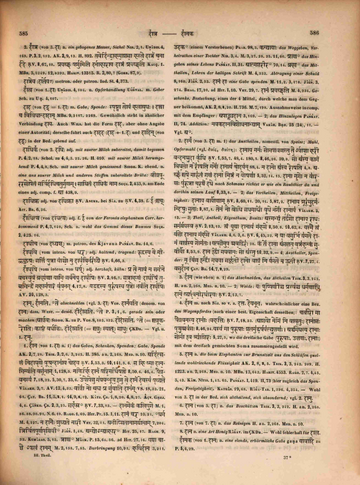
2. dāná (von 3. dā) m. 1〉 das Austheilen, namentl. von Speise; Mahl, Opfermahl (vgl. δαίς, δαίτη): dā̱nāya̱ manàḥ somapāvannastu te̱ 'rvāñcā̱ harī̀ vandanaśru̱dā kṛ̀dhi ṚV. 1,55,7. ṚV. 1,48,4. ṚV. 1,180,5. ṚV. 8,46,26. ṚV. 8,59,8. so àsya̱ kāmàṃ vidha̱to na ròṣati̱ manò dā̱nāyà co̱dayàn ṚV. 8,88,4. na dā̱no àsya roṣati ṚV. 8,4,8. acchà ṛṣe̱ mārùtaṃ ga̱ṇaṃ dā̱nā mi̱traṃ na yo̱ṣaṇā̀ ṚV. 5,52,14. ṚV. 5,52,15. dā̱nā mṛ̱go na vā̀ra̱ṇaḥ pùru̱trā ca̱rathàṃ dadhe nach Schmaus richtet er wie ein Raubthier da und dorthin seinen Lauf ṚV. 8,33,8. — 2〉 das Vertheilen, Mittheilen, Freigebigkeit: dā̱nāya̱ vāryā̀ṇām ṚV. 8,60,11. ṚV. 8,20,14. ṚV. 5,87,2. dā̱nāya̱ śūràmu̱damàndiṣuḥ su̱tāḥ ṚV. 9,87,1. tenà no bodhi sadha̱mādyò vṛ̱dhe bhagò dā̱nāyà VĀLAKH. 5,13. — 3〉 Theil, Antheil, Eigenthum, Besitz: a̱smabhya̱ṃ tadvàso dā̱nāya̱ rādha̱ḥ samàrthayasva ṚV. 2,13,13. tvaṃ yū̱thā dā̱nāyà maṃhase ṚV. 8,50,8. ṚV. 10,62,8. yasmai̱ tvaṃ vàso dā̱nāya̱ maṃhàse VĀLAKH. 4,6. VĀLAKH. 3,6. ṚV. 6,45,32. na ghā̱ vasu̱rni yàmate dā̱naṃ vājàsya̱ gomàtaḥ . yatsī̱mupa̱ śrava̱dgiràḥ ṚV. 6,45,28. kaṃ tè dā̱nā àsakṣata̱ vṛtràha̱nkaṃ su̱vīryā̀ ṚV. 8,53,9. dā̱na idvò maghavāna̱ḥ so àstu ṚV. 10,32,9. — 4〉 Austheiler, Spender: nū cìnna̱ indrò ma̱ghavā̱ sahū̀tī dā̱no vāja̱ṃ ni yàmate na ū̱tī ṚV. 7,27,4. vasudā́na ŚAT. BR. 14,7,2,29.
Originaltext · Deutsch · Substantiv Maskulin
4. dā́na m. nach SĀY. so v. a. datta, deyabhūta, wahrscheinlicher eine Bez. des Wagenpferdes (nach einer best. Eigenschaft desselben): catvā̀ro mā paijava̱nasya̱ dānā̀ḥ (vahanti) ṚV. 7,18,23. (āśavo nemiṃ ni vāvṛtuḥ) dānā̀saḥ pṛthu̱śravàsaḥ ṚV. 8,46,24. yasyà mā puru̱ṣāḥ śa̱tamùddha̱rṣayàntyu̱kṣaṇàḥ . aśvàmedhasya̱ dānā̱ḥ somā̀ iva̱ tryā̀śiraḥ ṚV. 5,27,5., wo die dreifache Gabe (puruṣāḥ, ukṣaṇaḥ, dānāḥ) mit dem dreifach gemischten Soma zusammengestellt wird.
Originaltext · Deutsch · Substantiv Neutrum
1. dā́na (von 1. dā) n. 1〉 das Geben, Schenken, Spenden; Gabe, Spende AK. 2,7,28. TRIK. 3,2,6. TRIK. 3,3,242. H. 386. H. an. 2,268. MED. n. 10. adìtsantaṃ cidāghṛṇe̱ pūṣa̱ndānā̀ya codaya ṚV. 5,53,3. ṚV. 10,141,5. ṚV. 10,141,6. sa hi ṣmā̱ dāna̱minvàti̱ vasū̀nām ṚV. 1,128,5. naki̱rhi dānàṃ pari̱mardhìṣa̱ttve ṚV. 8,50,6. ṚV. 8,46,4. pai̱ja̱va̱nasyà ṚV. 7,18,22. ṚV. 5,30,7. ṚV. 5,30,33. ṚV. 5,30,6. upo̱pennu màghava̱nbhūya̱ innu te̱ dānàṃ de̱vasyà pṛcyate VĀLAKH. 3,7. AV. 12,4,32. vājò no a̱dya pra sùvāti̱ dānàm VS. 18,33. VS. 21,61. ŚAT. BR. 11,5,7,1. ŚAT. BR. 14,9,1,19. KĀTY. ŚR. 1,8,20. KĀTY. ŚR. 4,8,27. ĀŚV. GṚHY. 4,4. ŚĀṄKH. ŚR. 2,3,25. sahásra˚ ṚV. 7,33,12. — dānamekaṃ kaliyuge M. 1,86. M. 1,88. M. 1,90. M. 1,91. N. 6,10. RAGH. 1,69. HIT. Pr. 15. HIT. Pr. I, 11. dānaṃ car HIT. 10,21. ˚dharma M. 4,227. na dānaiḥ śudhyate nārī VET. 32,11. abhīpsitānāmarthānām VET. 7,204. trirvittapūrṇapṛthivī˚ YĀJÑ. 1,48. anyo'nyāhāra˚ HIT. 25,17. RAGH. 9,32. KUMĀRAS. 5,15. trāṇa˚ MĀRK. P. 15,64. MĀRK. P. 15,56. ad HIT. 27,16. yathā cājñe 'phalaṃ dānam M. 2,158. M. 7,85. Darbringung M. 10,91. havirdāna M. 3,211. udaka˚ (einem Verstorbenen) PRAB. 98,3. kanyāyāḥ das Weggeben, Verheirathen einer Tochter NIR. 3,4. M. 3,27. M. 3,28. M. 3,35. M. 11,60. prāṇa˚ das Hingeben seines Lebens PAÑCAT. II, 31. ātmaśarīra˚ PAÑCAT. 70,14. brahma˚ das Mittheilen, Lehren der heiligen Schrift M. 4,233. Abtragung einer Schuld M. 8,160. YĀJÑ. 2,53. dānaṃ dā eine Gabe spenden M. 11,2. M. 3,178. YĀJÑ. 3,274. BHAG. 17,20. ad HIT. I, 10. VET. 29,7. dānaṃ prayacchati M. 4,234. Geschenke, Bestechung, eines der 4 Mittel, durch welche man dem Gegner beikommt, AK. 2,8,1,20. H. 736. M. 7,198. Ausnahmsweise in comp. mit dem Empfänger: apāṅktyadāna M. 3,169. — 2〉 das Hinzulegen PAÑCAT. II, 74. Addition: navakadānaviśodhanābhyām VARĀH. BṚH. 25 (24), 11. — Vgl. a˚.
Originaltext · Deutsch · Substantiv Neutrum
3. dā́na (wie eben) n. 1〉 das Abschneiden, das Abtheilen TRIK. 3,3,242. H. an. 2,268. MED. n. 10. — 2〉 Weide: yaḥ pu̱ṣpiṇī̀śca pra̱svàśca̱ dharma̱ṇādhi̱ dāne̱ vya1̱̀vanī̱radhā̀rayaḥ ṚV. 2,13,7.
Originaltext · Deutsch · Substantiv Neutrum
5. dāna n. die beim Elephanten zur Brunstzeit aus den Schläfen quellende wohlriechende Flüssigkeit AK. 2,8,2,5. TRIK. 3,3,242. TRIK. 3,3,209. H. 1223. H. an. 2,268. MED. n. 10. MBH. 13,642. HARIV. 4553. RAGH. 2,7. RAGH. 4,45. RAGH. 5,43. KĀM. NĪTIS. 1,45. KĀM. NĪTIS. 1,65. PAÑCAT. I, 419. PAÑCAT. I,II, 73 (hier zugleich das Spenden, Freigebigkeit). KATHĀS. 19,68. RĀJA-TAR. 1,296. RĀJA-TAR. 4,354. — Wohl von 3. dā in der Bed. sich abtheilend, sich absondernd; vgl. 2. dānu.
Originaltext · Deutsch · Substantiv Neutrum
6. dāna (von 5. dā) n. das Beschützen TRIK. 3,3,242. H. an. 2,268. MED. n. 10.
Originaltext · Deutsch · Substantiv Neutrum
7. dāna (von 7. dā) n. das Reinigen H. an. 2,268. MED. n. 10.
Originaltext · Deutsch · Substantiv Neutrum
8. dāna n. eine Art Honig RĀJAV._im_ŚKDR. — Wohl fehlerhaft für dāla.
Originaltext · Deutsch · Worttyp nicht bestimmt
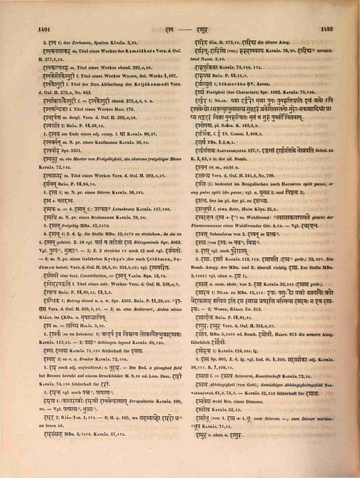
3. dāna 1〉 das Zerhauen, Spalten KĀVYĀD. 3,93.
Böhtlingk 1879 Substantiv Maskulin · Substantiv Neutrum · Worttyp nicht bestimmt
Originaltext · Deutsch · Substantiv Maskulin
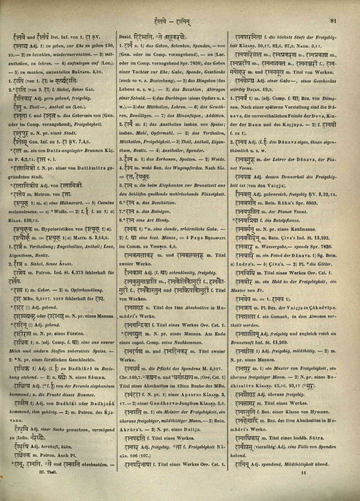
2. dāná m. — 1〉 das Austheilen insbes. von Speise; insbes. Mahl, Opfermahl. — 2〉 das Vertheilen, Mittheilen, Freigebigkeit. — 3〉 Theil, Antheil, Eigenthum, Besitz. — 4〉 Austheiler, Spender.
Originaltext · Deutsch · Substantiv Maskulin
4. dā́na m. wohl Bez. des Wagenpferdes. Nach SĀY. = datta, deyabhūta.
Originaltext · Deutsch · Substantiv Neutrum
1. dāná n. — 1〉 das Geben, Schenken, Spenden, — von (Gen. oder im Comp. vorangehend), — an (Loc. oder im Comp. vorangehend Spr. 7836), das Geben einer Tochter zur Ehe; Gabe, Spende, Geschenke (auch so v. a. Bestechung). — 2〉 das Hingeben (des Lebens u. s. w.). — 3〉 das Bezahlen, Abtragen einer Schuld. — 4〉 das Darbringen (eines Opfers u. s. w.). — 5〉 das Mittheilen, Lehren. — 6〉 das Gewähren, Bewilligen. — 7〉 das Hinzufügen, Addition.
Originaltext · Deutsch · Substantiv Neutrum
3. dā́na n. — 1〉 das Zerhauen, Spalten. — 2〉 Weide.
Originaltext · Deutsch · Substantiv Neutrum
5. dāna n. die beim Elephanten zur Brunstzeit aus den Schläfen quellende wohlriechende Flüssigkeit.
Originaltext · Deutsch · Substantiv Neutrum
6. *dāna n. das Beschützen.
Originaltext · Deutsch · Substantiv Neutrum
7. *dāna n. das Reinigen.
Originaltext · Deutsch · Substantiv Neutrum
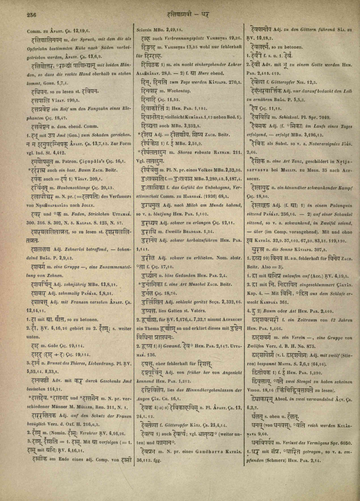
5. dāná n. Brunst des Thieres, Liebesdrang. Pl. ṚV. 5,52,14. ṚV. 8,33,8. [Nachtrag, Band 5]
Originaltext · Deutsch · Worttyp nicht bestimmt
8. *dāna eine Art Honig.
Originaltext · Deutsch · Worttyp nicht bestimmt
5. dāná III. 5. [Nachtrag, Band 7]
Apte 1890 Substantiv Maskulin · Substantiv Neutrum
Originaltext · Englisch · Substantiv Maskulin · Substantiv Neutrum
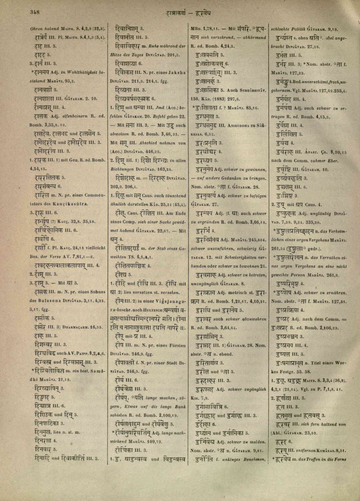
dānaṃ [dā-lyuṭ] 1 Giving, granting, teaching, &c. (in general). 2 Delivering, handing over. 3 A gift, donation, present; Ms. 2. 158; Bg. 17. 20; Y. 3. 274. 4 Liberality, charity, giving away as charity, munificence; R. 1. 69; Bh. 2. 43. 5 Ichor or the juice that exudes from the temples of an elephant in rut; sadānatoyena viṣāṇi nāgaḥ Śi. 4. 63; Ki. 5. 9; V. 4. 25; Pt. 2. 70 (where the word has sense 4 also); R. 2. 7, R. 4. 45, R. 5. 43. 6 Bribery, as one of the four Upāyas or expedients of overcoming one's enemy; see upāya. 7 Cutting, dividing. 8 Purification, cleaning. 9 Protection. 10 Pasture. 11 Adding. — naḥ Ved. 1 Distribution (of food), meal, especially a sacrificial meal. 2 Part, possession, share. 3 A distributor. Comp. — kāma a. liberal. — kulyā the flow of rut from an elephant's temples. — dharmaḥ alms-giving, charity. — patiḥ 1 an exceedingly liberal man. 2 Akrūra, a friend of Kṛṣṇa. — patraṃ a deed of gifts. — pātraṃ ‘a worthy recipient’, a Brāhmaṇa fit to receive gifts. — prātibhāvyaṃ security for payment of a debt. — bhinna a. made hostile by bribes. — vajraḥ an epithet of the Vaiśyas or men of the third tribe. — vāri n., — toyaṃ ichor flowing from the temples of elephants. — vīraḥ 1 a very liberal man. 2 (In Rhet.) the sentiment of heroism arising out of liberality, the sentiment of chivalrous liberality; e. g. Paraśurāma who gave away the earth with its seven continents; cf. the instance given in R. G. ([Page 0562-b]) under dānavīraḥ-kiyadidamadhikaṃ me yaddvijāyārthayitre kavacamaramaṇīyaṃ kuṃḍalaṃ cārpayāmi . akaruṇamavakṛtya drākkṛpāṇana niryadbahalarudhiradhāraṃ maulimāvedayāmi ... — śīla, -śūra, -śauṃḍa, a. exceedingly liberal or munificent.
Originaltext · Englisch · Substantiv Neutrum
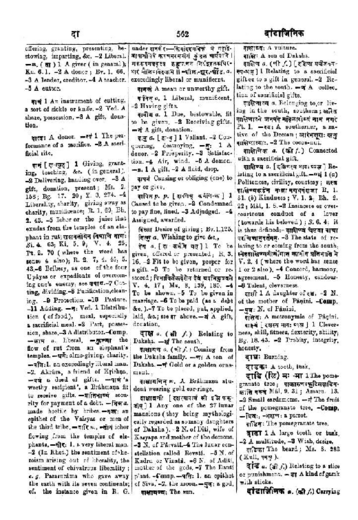
dāka, dāti, dātṛ, dānaṃ, dānu, &c. See under dā.
Cappeller 1887 Substantiv Neutrum
Originaltext · Deutsch · Substantiv Neutrum
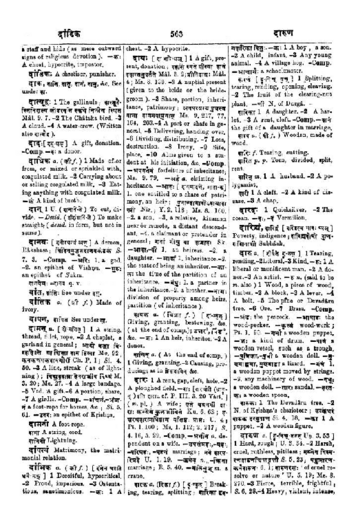
1. dāná n. das Geben, Schenken, das Verheiraten; Gabe, Spende; Bestechung, Bezahlung, Darbringung, Gewährung, Mitteilung.
Originaltext · Deutsch · Substantiv Neutrum
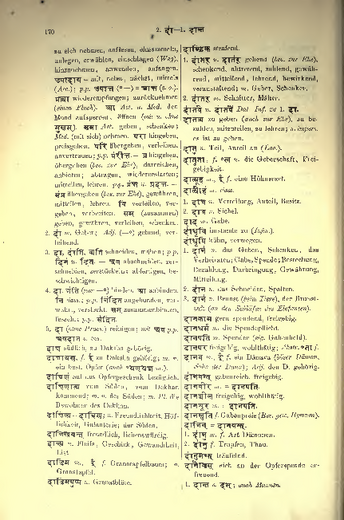
2. dā́na n. das Schneiden, Spalten.
Originaltext · Deutsch · Substantiv Neutrum
3. dāná n. Brunst (beim Tiere), der Brunstsaft (an den Schläfen des Elefanten).
Burnouf 1866 Adjektiv
Originaltext · Französisch · Adjektiv
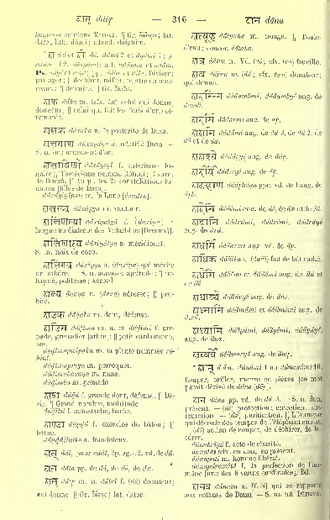
dāna dāna pp. vd. de dā 3. — S. n. don, présent. — (de) protection; entretien, sustentation. — (dai) purification. L'humeur qui découle des tempes de l'éléphant en rut. — (do) action de couper, de déchirer, de lacérer. dānakriyā f. acte de charité. dānatas adv. en don, en présent. dānapati m. homme libéral. dānapāramitā f. la perfection de l'aumône [une des 6 vertus cardinales], Bd.
Quelltextfundstellen (5)
HP 2 Fundstellen
SiSa 2 Fundstellen
SS 1 Fundstelle
Mit AYI Free weitermachen
Bildquelle: AYI Archiv.