

indra इन्द्र – Herr; König; Bester
Substantiv Maskulin · Worttyp nicht bestimmt
Wörterbuchquellen
AYI Wörterbuch Substantiv Maskulin
Herr; König; Bester
Cappeller 1891 Substantiv Maskulin
Originaltext · Englisch · Substantiv Maskulin
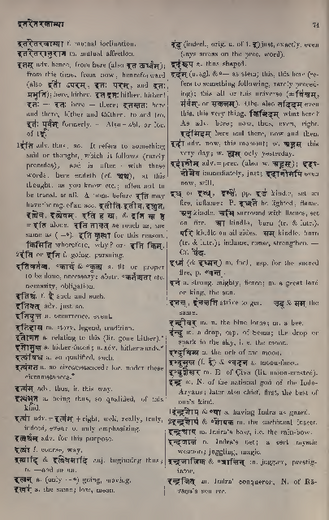
índra ·m. N. of the national god of the Indo-Aryans; later also chief, first, the best of one's kind.
Monier-Williams 1872 Substantiv Maskulin
Originaltext · Englisch · Substantiv Maskulin
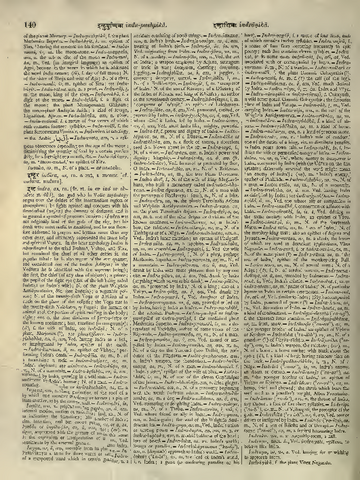
indra indra, as, m. (fr. rt. in or ind or ob- solete rt. id ?), the god who in Vedic mythology reigns over the deities of the intermediate region or atmosphere; he fights against and conquers with his thunderbolt (vajra) the demons of darkness, and is in general a symbol of generous heroism; (Indra was not originally lord of the gods of the sky, but his deeds were most useful to mankind, and he was there- fore addressed in prayers and hymns more than any other deity, and ultimately superseded the more lofty and spiritual Varuṇa. In the later mythology Indra is subordinated to the triad Brahmā, Viṣṇu, and Śiva, but remained the chief of all other deities in the popular mind; he is also regent of the east quarter, and considered one of the twelve Ādityas: in the Vedānta he is identified with the supreme being); the first, the chief (of any class of objects); a prince; the pupil of the right eye (that of the left being called Indrāṇī or Indra's wife); N. of the plant Wrightia Antidysenterica, &c. (see kuṭaja); a vegetable poi- son; N. of the twenty-sixth Yoga or division of a circle on the plane of the ecliptic; the Yoga star in the twenty-sixth Nakṣatra, γ Pegasi; the human or animal soul, the portion of spirit residing in the body; night; one of the nine divisions of Jambu-dvīpa or the known continent; best, excellent (in compounds); (ā), f. the wife of Indra, see indrāṇī; N. of a plant, Marjoram (?), see phaṇijjhava.
Petersburger 1855 Substantiv Maskulin · Worttyp nicht bestimmt
Originaltext · Deutsch · Substantiv Maskulin
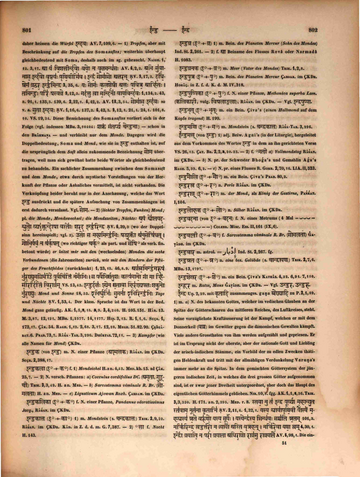
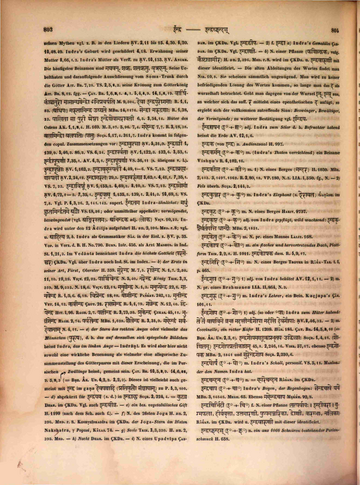
índra Uṇ. 2,29. mit kṛtādi zusammenges. gaṇa śreṇyādi zu P. 2,1,59. 1〉 m. a〉 N. des bekannten Gottes, welcher im vedischen Glauben an der Spitze der Götterschaaren des mittleren Reiches, des Luftkreises, steht. Seine vorzüglichste Kraftäusserung ist der Kampf, welchen er mit dem Donnerkeil (vajra) im Gewitter gegen die dämonischen Gewalten kämpft. Viele andere Grossthaten von ihm werden aufgezählt und gepriesen. Er ist im Ursprung nicht der oberste, aber der nationale Gott und Liebling der arisch-indischen Stämme, ein Vorbild der zu edlen Zwecken thätigen Heldenkraft und tritt mit der allmähligen Verdunkelung Varuṇaʼs immer mehr an die Spitze. In dem gemischten Göttersystem der jüngeren indischen Zeit, in welches die drei grossen Götter aufgenommen sind, ist er zwar jener Dreiheit untergeordnet, aber doch das Haupt des eigentlichen Götterhimmels geblieben. NIR. 10,8. fgg. AK. 1,1,1,36. TRIK. 3,3,330. H. 171. H. an. 2,395. MED. r. 8. stavā̱ nu tà indra pū̱rvyā ma̱hānyu̱ta stàvāma̱ nūtànā kṛ̱tānì ṚV. 2,11,6. ṚV. 1,32,1. yasya̱ dyāvā̀pṛthi̱vī paùsyàṃ ma̱hadyasyà vra̱te varùṇo̱ yasya̱ sūryàḥ . yasyendràsya̱ sindhàva̱ḥ saścàti vra̱tam ṚV. 1,101,3. nakìrindra̱ tvaduttàro̱ na jyā̀yām̐ asti vṛtrahan . nakìre̱vā yathā̱ tvam ṚV. 4,30,1. indrò jayāti̱ na parā̀ jayātā adhirā̱jo rājàsu rājayātai AV. 6,98,1. Die einzelnen Mythen vgl. z. B. in den Liedern ṚV. 2,11 bis ṚV. 2,15. ṚV. 4,30. ṚV. 6,20. ṚV. 10,48. ṚV. 2,49. Indraʼs Geburt wird geschildert ṚV. 4,18. Erwähnung seiner Mutter ṚV. 8,66,1. ṚV. 8,66,2. Indraʼs Mütter als Verff. zu ṚV. 10,153. ṚV. ANUKR. Die häufigsten Beinamen sind maghavan, śakra, śatakratu, vṛtrahan. Seine Uebelthaten und darauffolgende Ausschliessung vom Soma-Trunk durch die Götter AIT. BR. 7,28. TS. 2,5,1,2. seine Krönung zum Götterkönig AIT. BR. 8,12. fgg. — ŚAT. BR. 1,6,3,1. ŚAT. BR. 1,6,4,1. ŚAT. BR. 5,4,1,9. ŚAT. BR. 14,1,1,19. vārṣikāṃścaturo māsānyathendro 'bhipravarṣati M. 9,304. devā indrapurogamāḥ R. 1,1,83. (adhipaḥ) marutāmindra ucyate MBH. 14,1176. sendrā marudgaṇāḥ R. 1,38,23. pālitā sā purī śreṣṭhā indreṇevāmarāvatī R. 6,5. R. 3,54,14. Hüter des Ostens AK. 1,1,2,4. H. 169. M. 3,87. M. 5,96. M. 7,4. mahendra M. 7,7. R. 3,18,38. balamindro balapatiḥ (pātu) SUŚR. 1,17,4. SUŚR. 1,311,7. Indra kommt in folgenden copul. Zusammensetzungen vor: indrākutsā ṚV. 5,31,9. i̱ndrā̱gnī ṚV. 1,139,9. ṚV. 5,46,3. ṚV. 5,86,2. VS. 6,24. indrāparvatā ṚV. 1,122,3. ṚV. 1,132,6. ṚV. 3,53,1. indrā̀pū̱ṣaṇā̀ ṚV. 7,35,1. AV. 6,3,1. i̱ndrā̱pū̱ṣaṇā̀ VS. 36,11 (s. übrigens v. l.). i̱ndrā̱pū̱ṣṇoḥ ṚV. 1,162,2. indrā̱bṛha̱spatī̀ ṚV. 4,49,1—6. VS. 7,23. indrābrahmaṇaspatī ṚV. 2,24,12. indrāmarutaḥ ṚV. 2,29,3. indrā̱varùṇā ṚV. 3,62,1. ṚV. 4,41,1. ṚV. 7,35,1. VS. 7,23. indrā̱viṣṇū̀ ṚV. 1,155,2. ṚV. 6,69,2. ṚV. 8,10,2. VS. 7,23. indrā̱somā̀ ṚV. 6,72,1—ṚV. 6,72,5. ṚV. 7,35,1. i̱ndra̱vā̱yū ṚV. 1,135,5. ṚV. 1,139,1. ṚV. 2,41,3. ṚV. 10,69,5. VS. 7,8. Vgl. P. 6,3,26. P. 6,2,141. P. 6,3,142. superl. índratama Indra-ähnlichst: madhù hu̱tamindràtame a̱gnau VS. 18,36; oder unmittelbar appellativ: vermögendst, bezwingendst (vgl. aṅgirastama). anindraka adj. (loka) VIŚV. 10,22. Indra wird unter den VIŚV. 10,12 Āditya aufgeführt H. an. 2,396. MED. r. 8; vgl. u. āditya 2,b. Indra als Grammatiker SĀY. in der Einl. z. ṚV. p. 35. VOP._in_Verz. d. B. H. No. 790. BURN. Intr. 456. als Arzt MADHUS._in_Ind. St. 1,21,3. Im Vedānta bezeichnet Indra die höchste Gottheit (parameśvara) ŚKDR. Vgl. über Indra noch Ind. St._im_Index. — b〉 der Erste in seiner Art, Fürst, Oberster H. 359. surendra M. 7,5. rājendra N. 1,7. N. 2,30. N. 11,10. N. 19,29. VIŚV. 12,22. pārthivendra N. 5,40. narendra König TRIK. 3,3,359. M. 9,253. N. 18,6. VIŚV. 12,11. manujendra N. 1,2. manuṣyendra N. 22,6. mānavendra R. 1,5,6. R. 1,6,19. viprendra R. 1,18,10. yogīndra PAÑCAT. 242,13. munīndra VET. 14,13. kavīndra ŚRUT. 21. rākṣasendra R. 1,1,79. gajendra N. 12,40. dvipendra HIT. I, 96. RAGH. 2,7. pakṣīndra R. 3,73,35. śukendra ŚUKAS. 45,11. bhujaṃgendra RAGH. 2,74. parvatendra MBH. 1,628. śailendra R. 3,31,9. mahendraṃ sarvadevānām N. 4,11. — c〉 der Stern des rechten Auges oder vielmehr das Männchen (puruṣa), d. h. das auf demselben sich spiegelnde Bildchen heisst Indra, das im linken Auge — Indrāṇī. Es wird aber hier nicht sowohl eine wirkliche Benennung als vielmehr eine allegorische Zusammenstellung des Götterpaares mit dieser Erscheinung, die im Persischen جم Zwillinge heisst, gemeint sein. ŚAT. BR. 10,5,2,9. ŚAT. BR. 14,6,11,2. ŚAT. BR. 14,5,2,3 (= BṚH. ĀR. UP. 4,2,2. BṚH. ĀR. UP. 2,2,2). Dieses ist vielleicht auch gemeint mit indra im gaṇa devapathādi (pratikṛtau saṃjñāyām) zu P. 5,3,100. — d〉 abgekürzt für indrayava (s. d.) in indrāhva SUŚR. 2,224,4. = kuṭaja DHAR._im_ŚKDR. Vgl. auch indravīja. — e〉 ein bes. vegetabilisches Gift H. 1199 (nach dem Sch. auch f.). — f〉 N. des 26sten Yoga H. an. 2,396. MED. r. 8. KOṢṬHĪPRADĪPA_im_ŚKDR. der Yoga Stern im 26sten Nakṣatra, γ Pegasi, KĀLAS. 74. — g〉 Seele TRIK. 3,3,330. H. an. 2,395. MED. — h〉 Nacht DHAR._im_ŚKDR. — i〉 N. eines Upadvīpa ŚABDAM._im_ŚKDR. Vgl. indradvīpa. — 2〉 f. indrā a〉 Indraʼs Gemahlin ŚABDAR._im_ŚKDR. Vgl. indrāṇī. — b〉 N. einer Pflanze (phaṇijjhaka, vulg. kām̐ṭājāmīra) H. an. 2,396. MED. r. 8. wird im ŚKDR. u. indravāruṇī mit dieser identificirt. — Die alten Ableitungen des Wortes findet man NIR. 10,8. Sie scheinen sämmtlich ungenügend. Man wird zu keiner befriedigenden Lösung des Wortes kommen, so lange man das da als wurzelhaft betrachtet. Geht man dagegen von der Wurzel in, inv aus, an welcher sich das suff. ra mittelst eines epenthetischen da anfügt, so ergiebt sich der vollkommen zutreffende Sinn: Bezwinger, Bewältiger, der Vermögende; zu weiterer Bestätigung vgl. indriya.
Originaltext · Deutsch · Worttyp nicht bestimmt
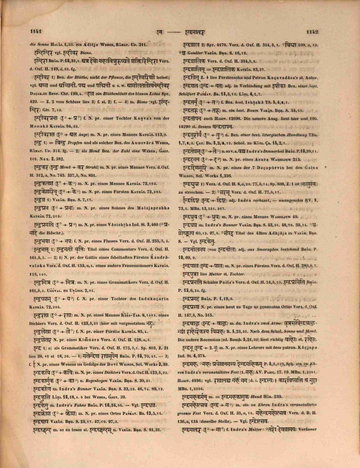
indra 1〉a〉 als Grammatiker Verz. d. Oxf. H. 175,b,1. Sp. 803, Z. 21 lies 38,16 st. 18,36. — b〉 makhendreṇa rājasūyena BHĀG. P. 10,70,41. — 3〉 f. ī N. pr. eines Wesens im Gefolge der Devī WILSON, Sel. Works 2,39.
Originaltext · Deutsch · Worttyp nicht bestimmt
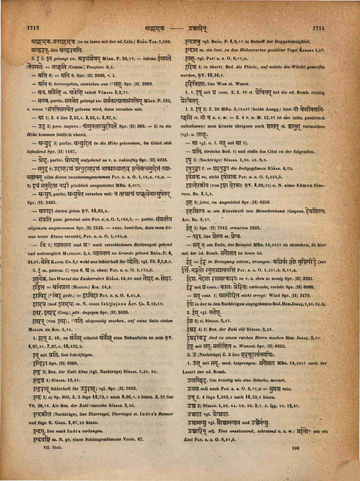
indra 1〉a〉 Sp. 803, Z. 3 füge 10,73,1 nach 8,66,1. 2 hinzu. Z. 21 lies VS. 38,16. Als Bez. der Zahl vierzehn SŪRYAS. 2,53.
Böhtlingk 1879 Substantiv Maskulin · Worttyp nicht bestimmt
Originaltext · Deutsch · Substantiv Maskulin
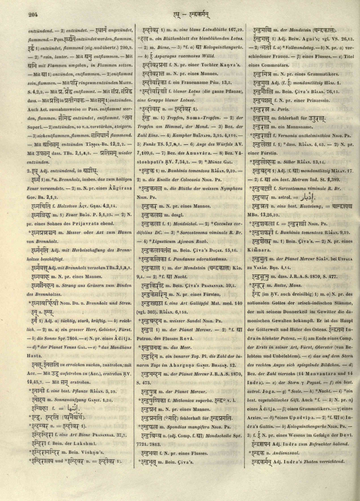
índra (im ṚV. auch dreisilbig) — 1〉 m. — a〉 N. pr. des nationalen Gottes der arisch-indischen Stämme, der mit seinem Donnerkeil im Gewitter die dämonischen Gewalten bekämpft. Er ist das Haupt der Götterwelt und Hüter des Ostens. índratama Indra in höchster Potenz. — b〉 am Ende eines Comp. der Erste in seiner Art, Fürst, Oberster (von Belebtem und Unbelebtem). — c〉 das auf dem Stern des rechten Auges sich spiegelnde Bildchen. — d〉 Bez. der Zahl vierzehn (14 Manvantara und 14 Indra). — e〉 der Stern γ Pegasi. — f〉 ein best. astrol. Yoga. — g〉 *Seele. — h〉 *Nacht. — i〉 *ein best. vegetabilisches Gift Auch *f. — k〉 N. pr. — α〉 eines Āditya. — β〉 eines Grammatikers. — γ〉 eines Arztes. — δ〉 *eines Upadvīpa. — 2〉 *f. ā — a〉 Indraʼs Gattin. — b〉 Koloquinthengurke NIGH. PR. — 3〉 f. ī N. pr. eines Wesens im Gefolge der Devī.
Originaltext · Deutsch · Worttyp nicht bestimmt
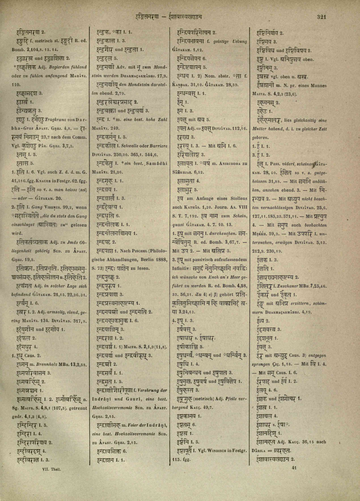
indra I. *m. eine best. hohe Zahl MAHĀVY. 249. [Nachtrag, Band 7]
Cappeller 1887 Substantiv Maskulin
Originaltext · Deutsch · Substantiv Maskulin
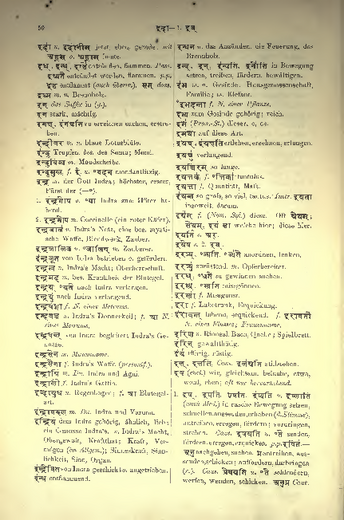
índra m. der Gott Indra; höchster, erster, Fürst der (—˚).
Burnouf 1866 Substantiv Maskulin
Originaltext · Französisch · Substantiv Maskulin
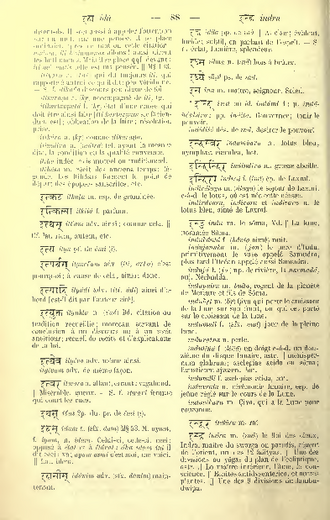
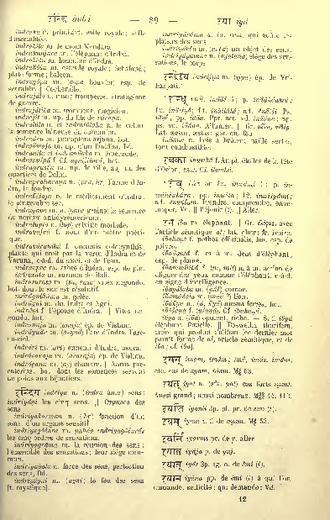
indra indra m. (ind) le Roi des cieux, Indra, maître du svarga ou paradis, régent de l'orient, un des 12 ādityas. Une des divisions ou yogas du plan de l'écliptique, astr. Le maître intérieur, l'âme, la conscience. Echites antidysenterica, et autres plantes. Une des 9 divisions du Jambudvīpa. [Page089-1] indraka n. primitivt. salle royale: salle d'assemblée. indrakīla m. le mont Mandara. indrakuñjara m. l'éléphant d'Indra. indraketu m. bannière d'Indra. indrakhoṣa m. estrade royale; échafaud; plate-forme; balcon. indragopa m. (gopa bouvier) esp. de scarabée. Cochenille. indrajāla n. ruse; tromperie; stratagème de guerre. indrajālika m. trompeur, magicien. indrajit m. np. du fils de rāvaṇa. indratūla n. et indratūlaka n. le coton, la semence laineuse du cotonnier. indradru m. pentaptera arjuna, bot. indradhvaja m. np. d'un Buddha, Bd. indranīla et indranīlaka m. émeraude. indrapuṣpā f. Cf. agnijihvā, bot. indraprastha m. np. de ville, auj. un des quartiers de Delhi. indrapraharaṇa n. (pra, hṛ) l'arme d'Indra, la foudre. indrabheṣaja n. le médicament d'Indra, le gingembre sec. indrayava m. n. (yava graine) la semence du nerium antidysentericum. indralupta n. (lup) calvitie morbide. indravajrā f. nom d'un mètre poétique. indravāruṇikā f. cucumis colocynthis, plante qui croît par la vertu d'Indra et de Varuṇa, c-à-d. du soleil et de l'eau. indravṛkṣa m. arbre d'Indra, esp. de pin. indrasuta m. surnom de Bali. indrasurasa m. (su, rasa) vitex negundo, bot. dont le suc est résolutif. indrāgnidhūma m. gelée. indrāgnī m. du. Indra et Agni. indrāṇī f. l'épouse d'Indra. Vitex negundo, bot. indrānuja m. (anuja) ép. de Viṣṇu. indrāyudha m. (ā-yudh) l'arc d'Indra, l'arc-en-ciel. indrāri m. (ari) ennemi d'Indra, asura. indrāvaraja m. (avaraja) ép. de Viṣṇu. indrāśana m. (aś) chanvre. Abrus precatorius, bot. dont les semences servent de poids aux bijoutiers.
Abgeleitete Wörter
Quelltextfundstellen (14)
DYS 1 Fundstelle
HP 3 Fundstellen
HTK 1 Fundstelle
MAN 1 Fundstelle
SiSa 5 Fundstellen
Mit AYI Free weitermachen
Bildquelle: AYI Archiv.