

jāti जाति – Leben; Art; Geburt; Lebensform; Stand; Gattung
Substantiv Feminin · Worttyp nicht bestimmt
Wörterbuchquellen
AYI Wörterbuch Substantiv Feminin
Leben; Art; Geburt; Lebensform; Stand; Gattung
Herkunft
Cappeller 1891 Worttyp nicht bestimmt
Originaltext · Englisch · Worttyp nicht bestimmt
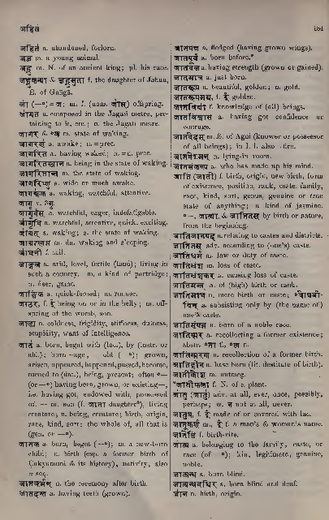
jāti ·(jātī) f. birth, origin, new birth, form of existence, position, rank, caste, family, race, kind, sort, genus, genuine or true state of anything; a kind of jasmine. °--, jātyā & jātitas by birth or nature, from the beginning.
Monier-Williams 1872 Substantiv Feminin · Worttyp nicht bestimmt
Originaltext · Englisch · Substantiv Feminin
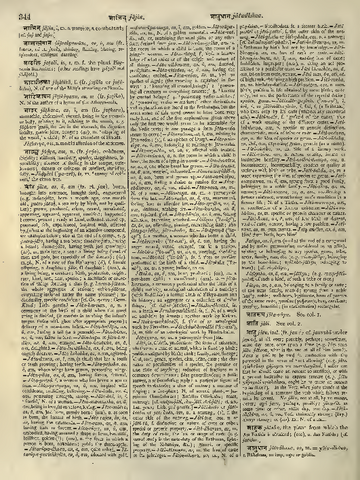
Jāti, is, f. birth, production; the form of existence, whether as a man or animal, which is fixed by birth; position assigned by birth; rank; family, race, lineage; kind, sort, genus, species, class, tribe, caste; the cha- racter or peculiarities of a species, the genuine or true state of anything; reduction of fractions to a common denominator; false generalization; a futile answer, a self-confuting reply; a particular figure of speech in rhetoric; a class of metres; a manner of singing; a fire-place; N. of several plants, = Jas- minum Grandiflorum; Emblica Officinalis; mace, nutmeg; [cf. antya-jāti, eka-jāti, dvi-jāti; cf. also Lat. gens; Lith. pri-gentis.]
Originaltext · Englisch · Worttyp nicht bestimmt
jāti jāti. See col. 2.
Petersburger 1855 Substantiv Feminin · Worttyp nicht bestimmt
Originaltext · Deutsch · Substantiv Feminin
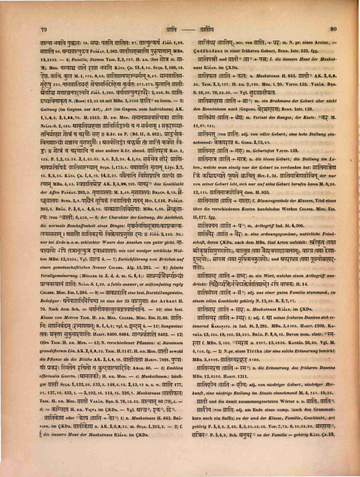
jāti (von jan) f. TRIK. 3,5,1. 1〉 Geburt AK. 3,4,14,70. H. an. 2,168. fg. MED. t. 19. BURN. Intr. 487. BURN. Intr. 493. Lot. de la b. l. 331. ācāryastvasya yāṃ jātiṃ vidhivadvedapāragaḥ . utpādayati sāvitryā sā satyā sājarāmarā .. M. 2,148. jātyandha von Geburt blind, blindgeboren M. 9,201. MBH. 1,4193. MBH. 13,1825. BHARTṚ. 1,89. sapta jātiśatānyeva mṛtapāḥ saṃbhavantu te R. 1,59,18. jātiṣu bei den Wiedergeburten R. 1,62,17. Auch jātīḥ jātīmaraṇabhīru MBH. 13,1051. MBH. 14,427. MBH. 14,471. na saṃsarati jātīṣu paramaṃ sthānamāśritaḥ MBH. 14,1266. — 2〉 die durch die Geburt bestimmte Daseinsform (als Mensch, Thier u. s. w.): jātyāyurbhogaḥ YOGAS. 2,13. vedābhyāsena satataṃ śaucena tapasaiva ca . adroheṇa ca bhūtānāṃ jātiṃ smarati paurvikīm .. M. 4,148. M. 4,149; vgl. jātismara fgg. aśvajātijña kennend die eigentliche oder frühere Daseinsform des Pferdes KATHĀS. 18,98. — 3〉 die durch die Geburt bestimmte Stellung im Staate, Stand, Rang (als Brahmane u. s. w.) YOGAS. 2,31. hīnajāti M. 3,15. avakṛṣṭa˚ M. 8,177. utkṛṣṭāṃ jātimaśnute (śūdraḥ) M. 9,335. śreyasīṃ jātim M. 10,64. kṣatriyādviprakanyāyāṃ sūto bhavati jātitaḥ M. 11. jāto niṣādācchūdrāyāṃ jātyā bhavati pukkasaḥ M. 18. sadyaḥ patati jātitaḥ M. 97. jātyutkarṣa YĀJÑ. 1,96. sajāti YĀJÑ. 90. anyajātyudbhava PAÑCAT. I, 382. jātīsahasrāṇi puruṣāṇām MBH. 14,2549. — 4〉 Familie, Stamm TRIK. 3,3,157. H. an. (lies gotra st. gātra). MED. yasyāśca jāte rājā bhavati KĀTY. ŚR. 15,4,14. SUŚR. 1,106,18. deśa, jāti, kula M. 1,118. M. 8,46. jātijānapadāndharmān M. 8,41. grāmajātisamūheṣu M. 221. nāmajātigrahaṃ tveṣāmabhidroheṇa kurvataḥ M. 271. M. 273. kulāni jātīḥ śreṇīśca gaṇāñjanapadānapi YĀJÑ. 1,360. varṇajātyuttarādharaiḥ YĀJÑ. 2,206. YĀJÑ. 2,St. jātidravyavinākṛta N. (BOPP) 13,25 ist mit MBH. 3,2556 jñāti˚ zu lesen. — 5〉 Gattung (im Gegens. zur Art), Art (im Gegens. zum Individuum) AK. 1,1,4,9. AK. 3,4,14,70. H. 1515. H. an. MED. samānaprasavātmikā jātiḥ NYĀYA-S. 2,134. ākṛtigrahaṇā jātirliṅgānāṃ ca na sarvabhāk . sakṛdākhyātanirgrāhyā gotraṃ ca caraṇaiḥ saha .. Kār. zu P. (Bd. II, S. 462). prādurbhāvavināśābhyāṃ sattvasya yugapadguṇaiḥ . asarvaliṅgāṃ bahvarthāṃ tāṃ jātiṃ kavayo viduḥ .. gotraṃ ca caraṇāni ca eine andere Kār. ebend. jātiparatva KAP. 1,155. P. 1,2,52. P. 1,2,58. P. 2,1,63. P. 2,1,65. P. 2,4,6. P. 3,2,98. P. 4,1,63. sarvameva kṣīraṃ prāṇināmapratiṣiddhaṃ jāṃtisātmyāt SUŚR. 1,175,4. yathājāti mṛgān LĀṬY. 2,7,15. LĀṬY. 6,5,25. KĀTY. ŚR. 1,4,10. KĀTY. ŚR. 14,2,31. yathaitāni viśiṣṭāni jātyāṃ jātyām MBH. 4,45. svajātiśreṣṭha AK. 3,4,18,129. vānara˚ das Geschlecht der Affen PAÑCAT. 203,3. tṛṇajātayaḥ M. 1,48. mṛgajātayaḥ DRAUP. 4,16. mlecchajātayaḥ SUND. 2,8. paśyainaṃ mūṣikaṃ svajātitāṃ gatam HIT. I, 116. PAÑCAT. 203,3. BHĀG. P. 2,6,4. BHĀG. P. 4,6,16. vākyajātiviśeṣāḥ MBH. 1,69. mlecchajātyaḥ (von ˚jātī) MBH. 6,456. — 6〉 der Charakter der Gattung, die Aechtheit, die normale Beschaffenheit eines Dinges: mṛccarmamaṇisūtrāyaḥkāṣṭhavalkalavāsasām . ajātau jātikaraṇe vikreyāṣṭaguṇo damaḥ .. YĀJÑ. 2,246. ST.: wer bei Erde u. s. w. schlechter Waare das Ansehen von guter giebt. nāvaśyāyo 'pi tatrābhūtkutra evābhrajātayaḥ wie viel weniger wirkliche Wolken MBH. 12,5334. Vgl. jātya MBH. 12,4. — 7〉 Zurückführung von Brüchen auf einen gemeinschaftlichen Nenner COLEBR. Alg. 13. COLEBR. Alg. 283. — 8〉 falsche Verallgemeinerung (MÜLLER_in_Z. d. d. m. G. 6,4): sādharmyavaidharmyābhyāṃ pratyavasthānaṃ jātiḥ NYĀYA-S. 1,58. a futile answer, or selfconfuting reply COLEBR. Misc. Ess. I, 294. — 9〉 = vākyajāti eine best. Darstellungsweise, Redefigur: anekajātivaicitrya ist eine der 35 vāgguṇāḥ der Arhant H. 70. Nach dem Sch. = varṇanīyavastusvarūpavarṇanāni. — 10〉 eine best. Klasse von Metren TRIK. H. an. MED. COLEBR. Misc. Ess. II, 88. jātibhiḥ saptabhirbaddham (rāmāyaṇam) R. 1,4,6; vgl. u. chandas R. 1,4,4. — 11〉 Sangweise: tataḥ pravṛttā sukumārajātiḥ HARIV. 8460. HARIV. 8464. gāndharvajāti HARIV. 8462. — 12〉 Ofen TRIK. H. an. MED. — 13〉 N. verschiedener Pflanzen: a〉 Jasminum grandiflorum Lin. AK. 2,4,2,53. TRIK. H. 1147. H. an. MED. jātī sowohl die Pflanze als die Blüthe AK. 2,4,1,19. jātīlatā HARIV. 7891. puṣpāṇāṃ prakaraḥ smitena racito na kundajātyādibhiḥ AMAR. 40. — b〉 Emblica officinalis Gaertn. (āmalakī) H. an. MED. — c〉 Muskatbaum; häufiger jātī SUŚR. 1,132,20. SUŚR. 1,133,2. SUŚR. 1,148,8. SUŚR. 1,132,12. SUŚR. 2,13,13 u. s. w. jāti SUŚR. 177,21. SUŚR. 137,10. SUŚR. 433,1. SUŚR. — 2,102,16. SUŚR. — 2,114,12. SUŚR. — 2,326,7. Muskatnuss (jātīphala) TRIK. H. an. MED. jātī VARĀH. BṚH. S. 76,13. VARĀH. BṚH. S. 76,32. jātyām VARĀH. BṚH. S. 80 (79), 4. — d〉 = kampilla H. an. VIŚVA_im_ŚKDR. — Vgl. antya˚, eka˚, dvi˚.

Originaltext · Deutsch · Worttyp nicht bestimmt
jāti 1〉 AIT. BR. 2,39. jātyā so v. a. von Anfang an, von Haus aus Spr. 1562. Spr. 4069. Spr. 4082. jātitas dass. Spr. 4453. — 5〉 Gegens. vyakti SARVADARŚANAS. 130,8 Ind. St. 8,341. fgg. jātivādin im Gegens. zu dravyavādin WEBER, RĀMAT. UP. 336. Gegens. viśeṣa SARVADARŚANAS. 104,8. mahāsāmānyameva jātiḥ das Allgemeine SARVADARŚANAS. 144,11. fgg. Davon nom. abstr. ˚tva n. Abstraction SARVADARŚANAS. 132,9. — 8〉 lies eine auf blosse Gleichartigkeit oder Ungleichartigkeit sich stützende Einwendung, eine Einwendung, die in sich selbst einen Widerspruch enthält. svavyāghātakamuttaraṃ jātiḥ SARVADARŚANAS. 114,9. SARVADARŚANAS. 112,17. NYĀYAS. 5,1. fgg. jātirasaduttaram Schol. zu PRAB. S. 98, Z. 6. — 9〉 unter den śabdālaṃkārāḥ und arthālaṃkārāḥ Verz. d. Oxf. H. 208, No. 489. — 10〉 KĀVYĀD. 1,11. Ind. St. 8,192. Ind. St. 8,289. Ind. St. 8,467. fg. — 13〉a〉 jātī BHĀG. P. 10,30,8. jātīpuṣpa Spr. 1005.
Böhtlingk 1879 Substantiv Feminin
Originaltext · Deutsch · Substantiv Feminin
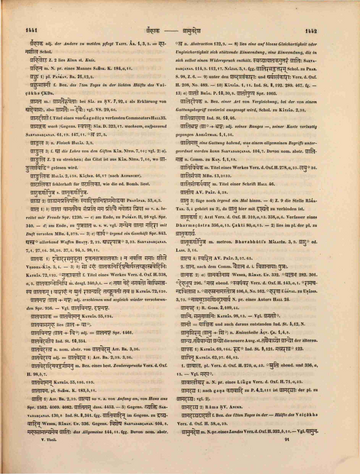
jāti und jātī (seltener) f. — 1〉 Geburt, Ursprung. jātyā, jātitas und jāti˚ von Geburt —, von Anfang an, von Haus aus. — 2〉 Wiedergeburt Chr. 91,5. KĀRAṆḌ. 95,21. — 3〉 die durch Geburt bestimmte Daseinsform (Mensch, Thier u. s. w.), — Stellung im Leben, Stand, Rang (Brahman, Krieger u. s. w.). jātitas im Sinne eines Abl. oder Instr. — 4〉 Familie, Stamm, Geschlecht. — 5〉 Gattung (Gegens. Art), Art (Gegens. Individuum); das Allgemeine. — 6〉 Art, Anlage CARAKA. 2,1. — 7〉 der Charakter der Gattung, Aechtheit, normale Beschaffenheit eines Dinges. abhrajātayaḥ so v. a. wirkliche Wolken. — 8〉 Zurückführung von Brüchen auf einen gemeinschaftlichen Nenner. — 9〉 eine auf blosse Gleichartigkeit oder Ungleichartigkeit sich stützende —, eine in sich selbst einen Widerspruch enthaltende Einwendung. — 10〉 eine best. Redefigur. — 11〉 eine best. Klasse von Metren. — 12〉 Sangweise. — 13〉 *Ofen. — 14〉 Jasminum grandiflorum. — 15〉 Muskatbaum, -nuss. — 16〉 *Emblica officinalis. — 17〉 *= kampilla. — 18〉 bisweilen mit jñāti verwechselt.
Apte 1890 Substantiv Feminin
Originaltext · Englisch · Substantiv Feminin
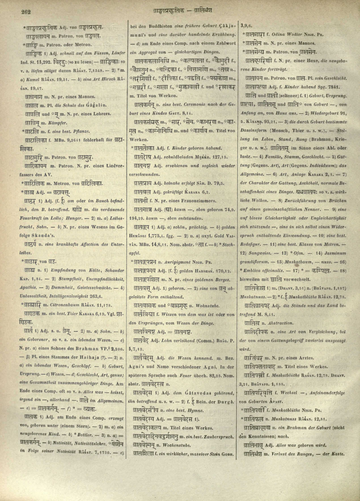
jātiḥ f. [jan-ktin] 1 Birth, production; Pt. 1. 38; Ms. 2. 148. 2 The form of existence fixed by birth. 3 Race, family, lineage, rank. 4 A caste, tribe or class (of men); are mūḍha jātyā cedavadhyo'haṃ eṣā sā jātiḥ parityaktā Ve. 3; (the primary castes of the Hindus are only four: -brāhmaṇa, kṣatriya, vaiśya and śūdra). 5 A class, genus, kind, species; paśujātiḥ, puṣpajātiḥ &c. 6 The properties which are peculiar to a class and distinguish it from all others, the essential characteristics of a species; as gotva, aśvatva of cows, horses &c.; see guṇa, kriyā and dravya; Śi. 2. 47 and cf. K. P. 2. 7 A fireplace. 8 Nutmeg. 9 The Jasmine plant or its flower; puṣpāṇāṃ prakaraḥ smitena raciṃto no kuṃdajātyādibhiḥ Amaru. 40 (written also as jātī in the last two senses). 10 (In Nyāya) Futile answer. 11 (In music) The seven primary notes of the Indian gamut. 12 Reduction of fractions to a common denominator. 13 False generalization. 14 A figure of speech (in rhetoric) which consists in so arranging words that they may read the same in Sanskrit as well as in Prākṛta (saṃskṛtaprākṛtayoḥ samā jātiḥ); cf. Vb. 1. 30. 15 A class of metres; see App. Comp. — aṃdha a. born blind; Bh. 1. 90. — kośaḥ, -ṣaḥ, -ṣaṃ nutmeg. — kośī, -ṣī the outer skin of the nutmeg. — dharmaḥ 1 the duties of a caste. 2 a generic property. — dhvaṃsaḥ loss of caste or its privileges. — patrī the outer skin of the nutmeg. — phalaṃ a nutmeg. — brāhmaṇaḥ a Brāhmaṇa only by birth, but not by knowledge or religious austerities, an ignorant Brāhmaṇa; (tapaḥ śrutaṃ ca yoniśca trayaṃ brāhmaṇyakāraṇaṃ . tapaḥśrutābhyāṃ yo hīno jātibrāhmaṇa eva saḥ .. śabdārthaciṃtāmaṇi). — bhraṃśaḥ loss of caste; Ms. 11. 67. — bhraṣṭa a. outcast. — mahaḥ birth-day festival. — mātraṃ 1 ‘mere birth,’ position in life obtained by mere birth. 2 caste only (but not the ([Page 0511-c]) performance of duties pertaining to it); Ms. 8. 20; Ms. 12. 114. 3 species, genus. — lakṣaṇaṃ generic distinction, a characteristic of a class. — vācaka a. expressing a genus, generic (as a word); gauraśvaḥ puruṣo hastī. — vairaṃ instinctive or natural hostility. — vairin m. a born enemy. — vailakṣaṇyaṃ inconsistency, incompatibility in kind. — śabdaḥ a name conveying the idea of a genus, a generic word, common noun; gauḥ, aśvaḥ, puruṣaḥ, hastī &c. — saṃkaraḥ admixture of caste; mixed blood. — saṃpanna a. belonging to a noble family. — sāraṃ nutmeg. — smara a. remembering one's condition in a former life; jāṃtismaro munirasmi jātyā K. 355. — svabhāvaḥ generic character or nature. — hīna a. of low birth, outcast.
Cappeller 1887 Worttyp nicht bestimmt
Originaltext · Deutsch · Worttyp nicht bestimmt
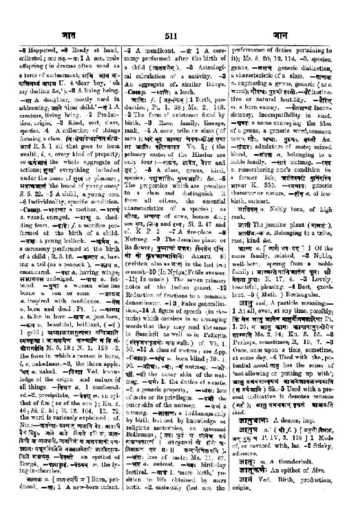
jāti (jātī) f. Geburt, Wiedergeburt, Stellung, Rang, Kaste, Familie, Geschlecht, Gattung, Art, Anlage. ˚— u. jātitas von Geburt.
Burnouf 1866 Substantiv Feminin
Originaltext · Französisch · Substantiv Feminin
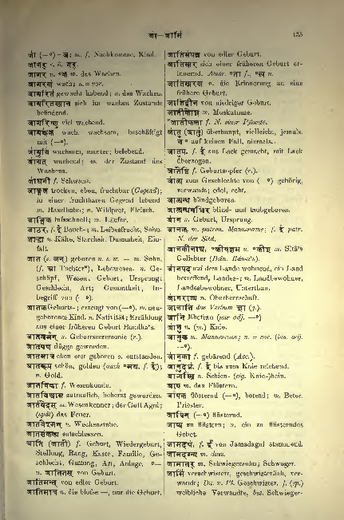
jāti jāti f. (jan; sfx. ti) naissance; production. Nature d'une ch., genre, espèce; fami le, tribu, race. La place du feu jātavedas, foyer. Mètre poétique; fleur de rhétorique. Phyllanthus emblica, bot. — jātī et jālī f. jasmin à grandes fleurs; macis ou muscade. — jātī f. fleur du grand jasmin. jātikośa n. noix de muscade. jātidharma m. loi relative aux familles, le jus gentium des Latins. jātiphala n. noix de muscade. jātibrāhmaṇa m. brâhmane de naissance.
Quelltextfundstellen (6)
PYS 6 Fundstellen
Mit AYI Free weitermachen
Bildquelle: AYI Archiv.