

caraṇa चरण – foot
substantive masculine · substantive neuter · Word type unspecified
Dictionary sources
AYI dictionary substantive masculine
Cappeller 1891 substantive masculine · substantive neuter
Original text · English · substantive masculine · substantive neuter
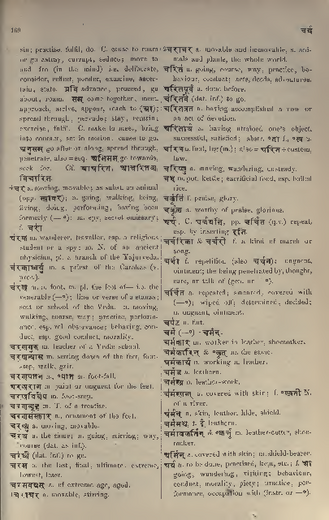
cáraṇa ·m. n. foot, m. pl. the feet of -- i.e. the venerable (--°); line or verse of a stanza; sect or school of the Veda. n. moving, walking, course, way; practice, performance, esp. rel. observance; behaving, conduct, esp. good conduct, morality.
Monier-Williams 1872 substantive masculine
Original text · English · substantive masculine
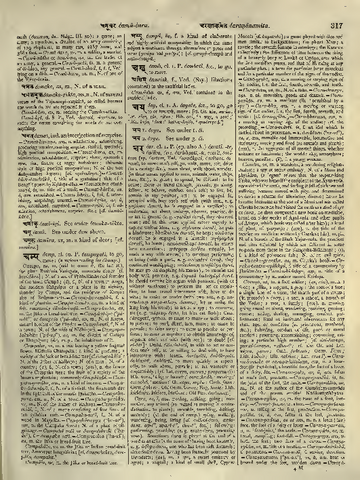
Caraṇa, as, m. a foot soldier; (as, am), m. n. a foot; a pillar, a support, a prop; the root of a tree; a single line of a verse, the fourth part of a stanza; (in prosody) a dactyl; a sect, a school, a branch of the Vedas; a race, a family; (am), n. moving, going round or about, wandering, roaming, grazing; course; acting, dealing, managing, conduct, per- formance; fixed or instituted observances for any class, age, or condition (as priesthood, manhood, &c.); behaving, conduct of life, good or moral conduct; practising, accomplishing; consuming, eat- ing; a particular high number; [cf. dvi-caraṇa, puraś-caraṇa, ratha-c˚; cf. also Gr. and Lat. πέρνα, perna; Goth. fairzna; Germ. Ferse; Lith. kulnis; Hib. cairine; Lat. crus ?].
Petersburger 1855 substantive masculine · substantive neuter · Word type unspecified
Original text · German · substantive masculine · substantive neuter
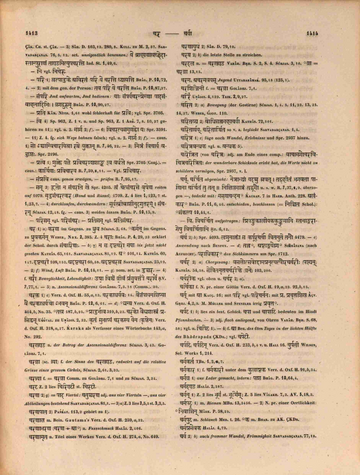
cáraṇa (von car) 1〉 m. Fusssoldat HARIV. 5957. — 2〉 m.n. gaṇa ardharcādi zu P. 2,4,31. SIDDH. K. 249,a,5. a〉 Fuss AK. 2,6,2,22. TRIK. 3,3,127, H. 616. H. an. 3,204. MED. ṇ. 48. GOBH. 1,2,30. BĀDAR. 1,24. M. 9,277. MBH._in_LA. 46,9. R. 2,25,45. R. 5,62,11. SUŚR. 1,105,16. SUŚR. 1,116,14. SUŚR. 1,118,14. SUŚR. 2,49,5. MṚCCH. 9,19. ŚĀK. 45. ŚĀK. 69. neutr. ARJ. 9,8. MṚCCH. 143,25. Am Ende eines adj. comp. f. ā HARIV. 3914. MĀLAV. 41,13. ˚patita zu Füssen gefallen MEGH. 103. adhaścaraṇāvapātam BHARTṚ. 2,16. — b〉 Tragsäule: (mahāraṅgaḥ) citrāṣṭāsricaraṇaḥ HARIV. 4643. — c〉 Wurzel (wie alle Bezz. für Fuss) TRIK. H. an. MED. — d〉 = pāda der einzelne Vers einer Strophe ŚRUT. 22. ŚRUT. 24. ŚRUT. 33. — e〉 Dactylus COLEBR. Misc. Ess. II, 151. — f〉 Schule ROTH, Zur L. u. G. d. W. 57. Ind. St. 1,81. caraṇavyūha Ind. St. 3,269. sarvacaraṇānāṃ pārṣadāni NIR. 1,17. P. 2,4,3. P. 4,2,46 P. 4,3,126 P. 6,3,86 P. 4,3,120, Vārtt. 7. pṛṣṭaśca gotracaraṇam MBH. 12,6369. MBH. 13,3217. PAÑCAT. IV, 3. AK. 3,6,2,14. VOP. 4,15. = vedāṃśa und bahvṛcādi TRIK. = bahvṛcādi und gotra H. an. MED. — 3〉 n. a〉 das Sichbewegen, Sichumtreiben; Gang, = bhramaṇa H. an. MED. yatrā̀nukā̱maṃ caràṇaṃ trinā̱ke trìdi̱ve divàḥ ṚV. 9,113,9. sūryàsya ṚV. 3,3,5. ŚAT. BR. 2,6,2,17. ŚAT. BR. 10,3,5,3. prādurbhāvatirobhāvābhyāmābhimukhyena caraṇāt SĀH. D. 64,1. Vgl. kāmacaraṇa. — b〉 Bahn: a̱psa̱rasā̀ṃ gandha̱rvāṇā̀ṃ mṛ̱gāṇā̱ṃ caràṇe̱ caràn ṚV. 10,136,6. na̱dīnā̀m ṚV. 10,139,6. — c〉 das zu-Werke-Gehen, Verfahren; insbes. in der Liturgie: Begehung: yadùpāri̱ma caràṇe jātavedaḥ AV. 7,106,1. yathā vai devānāṃ caraṇaṃ tadanu manuṣyāṇām ŚAT. BR. 1,3,1,1. vapayā caranti yathaiva tasyai caraṇam ŚAT. BR. 4,5,2,3. ŚAT. BR. 1,9,2,27. yānyevāsya caraṇāni tairevainametatpramumodayiṣati die Arten seiner Thätigkeit ŚAT. BR. 3,3,4,18. ŚĀṄKH. ŚR. 5,11,18. ŚĀṄKH. ŚR. 15,1,19. KĀTY. ŚR. 12,5,20. KĀTY. ŚR. 26,2,2. — d〉 das Benehmen im Leben, Lebenswandel H. 843. vrātya˚ KĀTY. ŚR. 22,4,23. ramaṇīya˚ adj. CHĀND. UP. 5,10,7. ein guter, sittlicher Lebenswandel: vidyācaraṇavṛttaśīlasaṃpanna KAUŚ. 67. yau ca syātāṃ caraṇenopapannau yau vidyayā sadṛśau janmanā ca MBH. 13,3044. LALIT. ed. Calc. 3,3. mokṣopāyo yogo jñānaśraddhānacaraṇātmakaḥ H. 77. — e〉 das Ueben, Vollziehen, Vollbringen: tapasaścaraṇaiścograiḥ M. 6,75. tapaścaraṇa R. 1,31,2. R. 1,51,25. svadharma˚ N. 12,50. adharma˚ GOBH. 3,1,12. bhikṣā˚ ŚĀṄKH. GṚHY. 2,6. ŚĀṄKH. GṚHY. 2,12. bhaikṣa˚ M. 2,187. — f〉 das Essen, Zusichnehmen H. an. MED. — g〉 eine best. grosse Zahl VYUTP. 182. — Vgl. dvicaraṇa, puraścaraṇa, ratha˚.

Original text · German · Word type unspecified
caraṇa 2〉g〉 = pāda Viertel: catuścaraṇa adj. aus vier Vierteln —, aus vier Abtheilungen bestehend SARVADARŚANAS. 81,1. — 3〉a〉 Z. 3 lies 3,5,5 st. 3,3,5.
Böhtlingk 1879 substantive masculine · substantive neuter
Original text · German · substantive masculine · substantive neuter
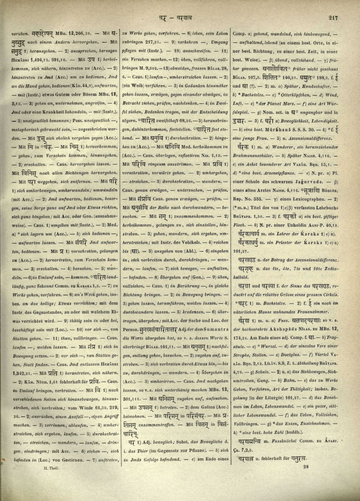
cáraṇa — 1〉 m. n. — a〉 Fuss. akṣapādacaraṇāḥ so v. a. der hochverehrte Akṣapāda NĪLAK. zu MBH. 12,174,24. Am Ende eines adj. Comp. f. ā. — b〉 Tragsäule. — c〉 *Wurzel. — d〉 der einzelne Vers einer Strophe, Stollen. — e〉 Dactylus. — f〉 Viertel VARĀH. BṚH. 2,13. LĪLĀV. S. 9, Z. 5. Abtheilung BHĀVAPR. 4,79. — g〉 Schule. — 2〉 n. — a〉 das Sichbewegen, Sichumtreiben, Gang. — b〉 Bahn. — c〉 das zu Werke Gehen, Verfahren, Art der Thätigkeit; insbes. Begehung (in der Liturgie) Chr. 101,27. — d〉 das Benehmen im Leben, Lebenswandel. — e〉 ein guter, sittlicher Lebenswandel. — f〉 das Ueben, Vollziehen, Vollbringen. — g〉 *das Essen, Zusichnehmen. — h〉 *eine best. hohe Zahl (buddh.).
Apte 1890 substantive masculine · substantive neuter
Original text · English · substantive masculine · substantive neuter
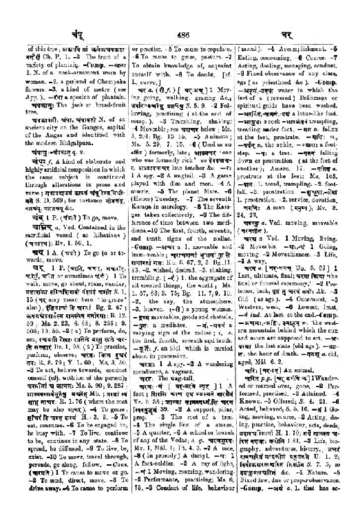
caraṇaḥ -ṇaṃ [car-karaṇe lyuṭ] 1 A foot; śirasi caraṇa eṣa nyasyate vārayainaṃ Ve. 3. 38; jātyā kāmamavadhyosi caraṇa tvidamuddhṛtaṃ Ve. 3. 39. 2 A support, pillar, prop. 3 The root of a tree. 4 The single line of a stanza. 5 A quarter. 6 A school or branch of any of the Vedas; e. g. caraṇaguravaḥ Mv. 1, Māl. 1; Pt. 4. 3. 7 A race. 8 (In prosody) A dactyl. — ṇaḥ 1 A footsoldier. 2 A ray of light. — ṇaṃ 1 Moving, roaming, wandering. 2 Performance, practising; Ms. 6. 75. 3 Conduct of life, behaviour ([Page 0486-c]) (moral). 4 Accomplishment. 5 Eating, consuming. 6 Course. 7 Acting, dealing, managing, conduct. 8 Fixed observance of any class, age (as priesthood &c). Comp. — amṛtaṃ, -udakaṃ water in which the feet of a (revered) Brāhmaṇa or spiritual guide have been washed. — araviṃdaṃ, -kamalaṃ, -padmaṃ a lotus-like foot. — āyudhaḥ a cock — āskaṃdanaṃ trampling, treading under foot. — gata a. fallen at the feet, prostrate. — graṃthiḥ m., — parvan n. the ankle. — nyāsaḥ a footstep. — paḥ a tree. — patanaṃ falling down or prostration (at the feet of another); Amaru. 17. — patita a. prostrate at the feet; Me. 105. — pātaḥ 1 tread, trampling. 2 footfall. 3 prostration. — śuśrūṣā, -sevā 1 prostration. 2 service, devotion.
Original text · English · substantive masculine · substantive neuter
caraṇaḥ -ṇaṃ [car-karaṇe lyuṭ] 1 A foot; śirasi caraṇa eṣa nyasyate vārayainaṃ Ve. 3. 38; jātyā kāmamavadhyosi caraṇa tvidamuddhṛtaṃ Ve. 3. 39. 2 A support, pillar, prop. 3 The root of a tree. 4 The single line of a stanza. 5 A quarter. 6 A school or branch of any of the Vedas; e. g. caraṇaguravaḥ Mv. 1, Māl. 1; Pt. 4. 3. 7 A race. 8 (In prosody) A dactyl. — ṇaḥ 1 A footsoldier. 2 A ray of light. — ṇaṃ 1 Moving, roaming, wandering. 2 Performance, practising; Ms. 6. 75. 3 Conduct of life, behaviour ([Page 0486-c]) (moral). 4 Accomplishment. 5 Eating, consuming. 6 Course. 7 Acting, dealing, managing, conduct. 8 Fixed observance of any class, age (as priesthood &c). Comp. — amṛtaṃ, -udakaṃ water in which the feet of a (revered) Brāhmaṇa or spiritual guide have been washed. — araviṃdaṃ, -kamalaṃ, -padmaṃ a lotus-like foot. — āyudhaḥ a cock — āskaṃdanaṃ trampling, treading under foot. — gata a. fallen at the feet, prostrate. — graṃthiḥ m., — parvan n. the ankle. — nyāsaḥ a footstep. — paḥ a tree. — patanaṃ falling down or prostration (at the feet of another); Amaru. 17. — patita a. prostrate at the feet; Me. 105. — pātaḥ 1 tread, trampling. 2 footfall. 3 prostration. — śuśrūṣā, -sevā 1 prostration. 2 service, devotion.
Cappeller 1887 substantive masculine · substantive neuter
Original text · German · substantive masculine · substantive neuter
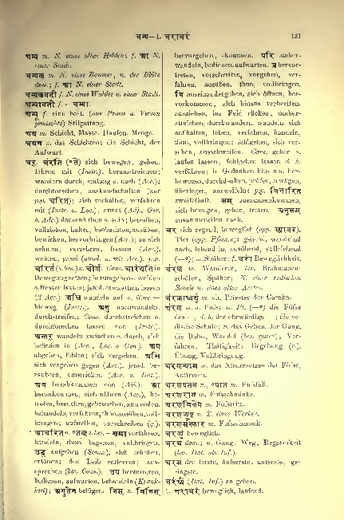
cáraṇa m. n. Fuß; m. Pl. (—˚) die Füße des —, d. h. der ehrwürdige —; die vedische Schule; n. das Gehen, der Gang, die Bahn, Wandel (bes. guter), Verfahren, Thätigkeit; Begehung (r.), Übung, Vollbringung.
Burnouf 1866 substantive neuter
Original text · French · substantive neuter
caraṇa n. action d'aller, de marcher, d'errer à l'aventure; action de manger. Exercice d'un emploi [par ex. prêtrise, magistrature, apostolat, etc.]. — S. m. pied; au fig. le pied d'un arbre. Lignée, famille, descendance. Une portion des Vedas, cf. caraka.

Occurrences in source texts (9)
DYS 1 occurrence
HP 3 occurrences
MAN 1 occurrence
SiSa 4 occurrences
Continue with AYI Free
Image source: AYI archive.