

go गो – cow
adverb · verbal root · substantive feminine · substantive masculine · Word type unspecified
Dictionary sources
AYI dictionary substantive feminine · substantive masculine
Cappeller 1891 substantive masculine
Original text · English · substantive masculine
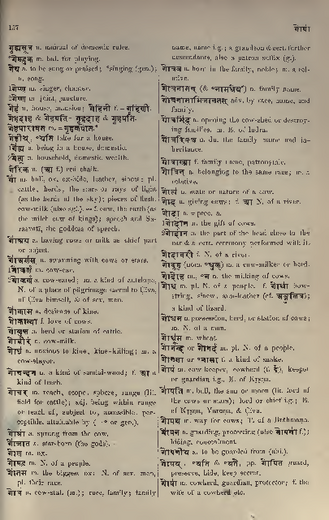
gó ·m. bull, ox, ox-hide, leather, sinew; pl. cattle, herds, the stars or rays of light (as the herds of the sky); pieces of flesh, cow-milk (also sgl.). --f. cow, the earth (as the milch cow of kings); speech and Sarasvati, the goddess of speech.
Monier-Williams 1872 substantive feminine · substantive masculine
Original text · English · substantive feminine · substantive masculine
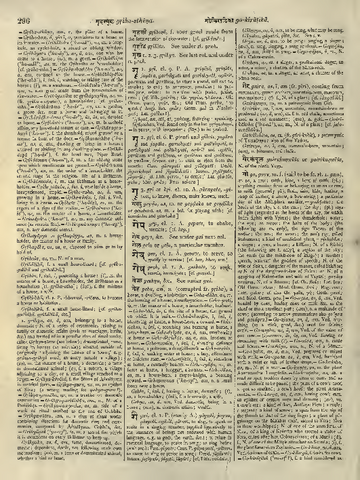
go go, gaus, m. f. (said to be fr. rt. 1. gam), an ox, a cow; cattle, kine, a herd of cattle (pl.); anything coming from or belonging to an ox or cow, as milk (generally pl.), flesh, skin, hide, leather, a strap of leather, a sinew, a bow-string; a particular day of the Abhiplava sacrifice, = goṣṭoma; the herds of the sky, i. e. the stars; the sky; (pl.) rays of light (regarded as the herds of the sky, for which Indra fights with Vṛtra); the thunderbolt; water; the eye; an arrow; the hairs of the body; (the following are m. only), the sign Taurus of the zodiac; the sun; the moon; the sun's ray, called Suṣumna; a kind of medicinal plant, = ṛṣabha; a singer; a goer, a horse; a billion; N. of a Ṛṣi; (the following are f. only), a region of the sky; the earth (as the milch-cow of kings); a mother; speech, Sarasvatī the goddess of speech; N. of the wife of Śuka, a daughter of the manes, called Sukālas; or N. of the daughter-in-law of Śuka; or N. of a daughter of Kakut-stha and wife of Yayāti; gavāṃ vratam, N. of a Sāman; [cf. Gr. βοῦς; Lat. bos; Old Germ. chuo; Mod. Germ. kuh; Eng. cow; Lett. gohw; cf. also Gr. γαῖα, γῆ; Goth. gavi; and Mod. Germ. gau.]
Petersburger 1855 substantive feminine · substantive masculine · Word type unspecified
Original text · German · substantive feminine · substantive masculine
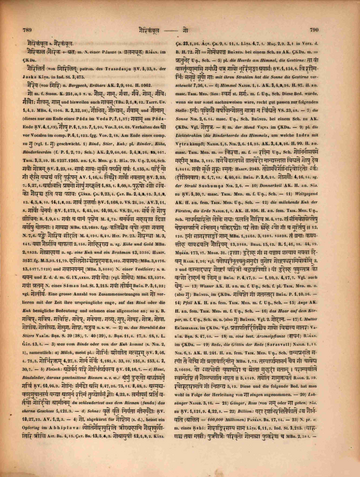
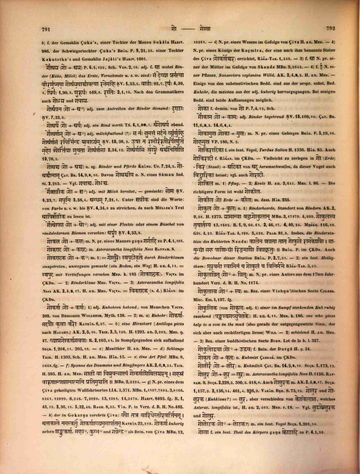
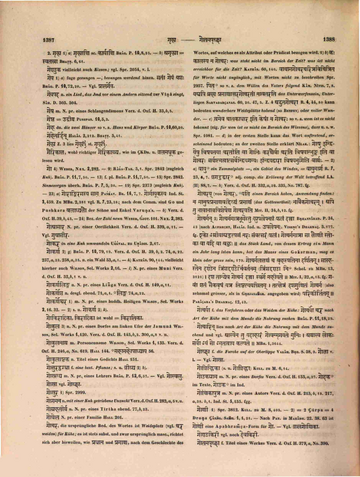
go m. f. SIDDH. K. 251,a,5 v. u. gaus, gām, gávā, gáve, gos, gávi; gā́vau; gā́vas, gās und bisweilen auch gāvas (TBR. 3,1,2,12. TAITT. UP. 1,4,2. MBH. 4,1506. R. 2,32,38), góbhis, góbhyas, gávām und gónām (dieses nur am Ende eines Pāda im Veda P. 7,1,57; gavām am Pāda- Ende ṚV. 4,1,19), góṣu P. 6,1,93. P. 7,1,90. VOP. 3,68. VOP. 3,69. Verhalten des o vor Vocalen im comp. P. 6,1,122. fgg. VOP. 2,18. Am Ende eines comp. zu gu (vgl. 1. gu) geschwächt. 1〉 Rind, Stier, Kuh; pl. Rinder, Kühe, Rinderheerden (f. P. 1,2,73, Sch.) AK. 2,9,60. AK. 2,9,66. AK. 3,4,3,26. AK. 2,25,167. TRIK. 3,3,59. H. 1257. H. 1265. H. an. 1,6. MED. g. 1. HĀR. 79. Uṇ. 2,66, Sch. gavā̀ṃ go̱tram ṚV. 2,23,18. sā̱kaṃ gāva̱ḥ suvàte̱ pacyàte̱ yavàḥ ṚV. 1,135,8. yadì no̱ gāṃ haṃsi̱ yadyaśva̱ṃ yadi̱ pūrùṣam AV. 1,16,4. sthi̱rau gāvaù bhavatā̱m ṚV. 3,53,7. ṚV. 5,27,1. aśvā̀vati pratha̱mo goṣù gacchati ṚV. 1,83,1. ṚV. 8,60,5. puruṣo 'jo 'viko gauraśva iti pañca paśavaḥ ŚĀṄKH. ŚR. 9,23,4. ŚAT. BR. 2,4,3,13. ŚAT. BR. 3,1,2,13. ŚAT. BR. 4,5,5,10. ŚAT. BR. 14,1,1,32. gāvà u̱kṣaṇàḥ ṚV. 1,168,2. VS. 21,20. AV. 3,11,8. gāvò dhe̱navàḥ ṚV. 1,173,1. ṚV. 6,45,28. ṚV. 10,95,6. VS. 21,19. sarve te goṣu jīvinaḥ R. 1,9,61. gavāṃ ca yānaṃ pṛṣṭhena M. 4,72. anargheyā mahārāja dvijā varṇeṣu cottamāḥ . gāvaśca MBH. 13,2689. fgg. kaliścaiva vṛṣo bhūtvā gavām N. 7,6. paṅke gauriva sīdati M. 4,191. M. 8,21. HIT. Pr. 23. gaurandhā M. 3,141. yathā gaurgavi cāphalā M. 2,158. gohiraṇya n. sg. Kühe und Gold MBH. 2,1833. gobrāhmaṇa n. sg. eine Kuh und ein Brahman MBH. 13,3350. HARIV. 3157. fg. M. 5,95. M. 11,79. hastigo'śvoṣṭradamaka M. 3,162. gavāmayaḥ (MBH. 3,8176. MBH. 13,5177. MBH. 13,7128) und gavāmayanam (MBH. 3,8080) N. einer Festfeier; s. u. ayana und Z. d. d. m. G. IX, LXXII. gavāṃ medhaḥ (vgl. gomedha) MBH. 13,5378. gavāṃ vratam N. eines Sāman Ind. St. 3,215. gavāṃ tīrtham BHĀG. P. 3,1,22; Vgl. gotīrtha. Eine grosse Anzahl von Zusammensetzungen mit go verlieren mit der Zeit ihre ursprüngliche enge, auf das Rind oder, die Kuh bezügliche Bedeutung und nehmen eine allgemeine an; so z. B. gaviṣ, gaviṣa, gaviṣṭi, gaveṣ, gaveṣaṇa, gavy, gup, gocara, gotra, gopā, gopītha, gopīthya, goyuga, goṣṭha, ṣaṅgava u. s. w. — 2〉 m. das Sternbild des Stiers VARĀH. BṚH. S. 39 (38), 7. VARĀH. BṚH. S. 40 (39), 3. BṚH. 11,4. BṚH. 17,2. BṚH. 18,1. L. JĀT. 13,1. — 3〉 was vom Rinde oder von der Kuh kommt (s. NIR. 2,5), namentlich: a〉 Milch, meist pl.: gobhìḥ śrīṇīta matsa̱ram ṚV. 9,46,4. ṚV. 9,71,5. gobhìra̱ktam ṚV. 4,27,5. gorna sekè ṚV. 1,181,8. ṚV. 1,33,10. ṚV. 1,151,8. ṚV. 1,153,4. ṚV. 2,30,7. — b〉 Fleisch: a̱gnervarma̱ pari̱ gobhìrvyayasva ṚV. 10,16,7. — c〉 Haut, Rindsleder, daraus geschnittene Riemen u. s. w.: a̱ṃśuṃ du̱hanto̱ adhyā̀sate̱ gavì ṚV. 10,94,9. gobhi̱ḥ saṃnàddho asi ṚV. 6,47,26. ṚV. 6,75,11. ṚV. 8,48,5. a̱sma̱dryakśuśucā̱nasyà yamyā ā̱śurna ra̱śmiṃ tu̱vyojàsa̱ṃ goḥ ṚV. 4,22,8. tvamā̀ya̱saṃ pratì vartayo̱ gordi̱vo aśmā̀nam du schleudertest aus dem Riemen (funda) das eherne Geschoss ṚV. 1,121. ṚV. 4,9. — d〉 Sehne: vṛ̱kṣe vṛ̀kṣe̱ niyàtā mīmaya̱dgauḥ ṚV. 10,27,22. AV. 1,2,3. — 4〉 go, abgekürzt für goṣṭoma (s. d.), heisst ein Opfertag im Abhiplava: jyotirgaurāyuriti trīṇyahāni gaurāyurjyotiri trīṇi AIT. BR. 4,15. ŚAT. BR. 13,5,4,3. goāyuṣī ŚAT. BR. 12,1,2,2. KĀTY. ŚR. 23,1,26. ĀŚV. ŚR. 9,1. ĀŚV. ŚR. 11,1. LĀṬY. 4,7,1. MAŚ. 2,9. MAŚ. 3,1_in_Verz. d. B. H. 72. go = gomedhayajña BHĀNUD. bei einem Sch. zu AK. ŚKDR. m. = kratubheda Uṇ., Sch. — 5〉 pl. die Heerde am Himmel, die Gestirne: tā vāṃ vāstū̀nyuśmasi̱ gamàdhyai̱ yatra̱ gāvo̱ bhūrìśṛṅgā a̱yāsàḥ ṚV. 1,154,6. vi ra̱śmibhìḥ sasṛje̱ sūryo̱ gāḥ mit ihren Strahlen hat die Sonne die Gestirne verscheucht ṚV. 7,36,1. — 6〉 Himmel NAIGH. 1,4. AK. 3,4,3,26. H. 87. H. an. masc. TRIK. MED. (lies: svarga st. sarga). m. f. Uṇ., Sch. Diese Bed. wurde. wenn sie nur sonst nachzuweisen wäre, recht gut passen zur folgenden Stelle: indràḥ pṛthi̱vyai varṣī̀yā̱ngostu mātrā̱ na vìdyate VS. 23,48. — 7〉 die Sonne NIR. 2,6. NIR. 2,14. masc. Uṇ., Sch. BHĀNUD. bei einem Sch. zu AK. ŚKDR. Vgl. goputra. — 8〉 m. der Mond VIŚVA_im_ŚKDR. — 9〉 pl. die Lichtstrahlen (die Rinderheerde des Himmels, um welche Indra mit Vṛtra kämpft) NAIGH. 1,5. NIR. 2,6. NIR. 14,25. AK. 3,4,3,26. H. 99. H. an. masc. TRIK. MED. m. = kiraṇa, m. f. = raśmi Uṇ., Sch. gobhirbhāsayase mahīm MBH. 3,182. tvamevaikastapase jātavedo nānyastaptā vidyate goṣu deva MBH. 1,8414. gavāṃ sūryo guruḥ smṛtaḥ HARIV. 2943. tejomayairgobhirivodito 'rkaḥ (dīptimavāpa) R. 1,7,18. R. 4,40,64. BHĀG. P. 2,6,21. gogaṇaiḥ BHĀG. P. 4,16,14. sg. der Strahl Suṣumṇa NIR. 2,6. — 10〉 Donnerkeil AK. H. an. SĀY._zu_ṚV. 5,30,7. masc. TRIK. MED. m.f. Uṇ., Sch. — 11〉 Weltgegend AK. H. an. fem. TRIK. MED. Uṇ., Sch. — 12〉 die milchende Kuh der Fürsten, die Erde NAIGH. 1,1. AK. H. 936. H. an. fem. TRIK. MED. Uṇ., Sch. nādharmaścarito loke sadyaḥ phalati gauriva M. 4,172. khaṃ saṃniveśayetkheṣu ceṣṭanasparśane 'nilam . paktidṛṣṭyoḥ paraṃ tejaḥ snehe 'po gāṃ ca mūrtiṣu .. M. 12. M. 120. imāṃ sāgarāpāṅgīṃ gām MBH. 1,2468. MBH. 3,1281. MBH. 3,15828. taṃ janāḥ kathayantīha yāvadbhavati gauriyam MBH. 13,3168. BHAG. 15,13. R. 1,41,18. R. 1,44,19. MṚCCH. 173,17. MEGH. 31. (rājā) dudoha gāṃ sa yajñāya śasyāya maghavā divam RAGH. 1,26; vgl. payodharībhūtacatuḥsamudrāṃ jugopa gorūpadharāmivorvīm RAGH. 2,3 und kasmāddadhāra gorūpaṃ dharitrī bahurūpiṇī . yāṃ dudoha pṛthustatra ko vatso dohanaṃ ca kim .. BHĀG. P. 4,17,3. —BHĀG. P. 1,10,3. BHĀG. P. 4,17,7. Vgl. auch dhenu. — 13〉 Wasser AK. H. an. m.f. Uṇ., Sch. f. pl. TRIK. MED. m.n. (also gu) BHĀNUD._im_ŚKDR. gaviṣṭho gāṃ gatastadā BHĀG. P. 1,10,36. — 14〉 Pfeil AK. H. an. fem. TRIK. MED. m.f. Uṇ., Sch. — 15〉 Auge AK. H. an. fem. TRIK. MED. m.f. Uṇ., Sch. — 16〉 das Haar auf dem Körper, m. f. Uṇ., Sch. m.n. (also gu) BHĀNUD. Vgl. BHĀNUD. 2. godāna. — 17〉 f. Mutter EKĀKṢARAK._im_ŚKDR. Vgl. prajāpatirditiścaiva gāvo viśvasya mātaraḥ VARĀH. BṚH. S. 47,68. — 18〉 m. eine best. Arzeneipflanze (ṛṣabha) RĀJAN._im_ŚKDR. — 19〉 Rede, die Göttin der Rede (Sarasvatī) NAIGH. 1,11. NIR. 6,2. AK. H. 241. H. an. fem. TRIK. MED. Uṇ., Sch. janmaprabhṛti matyāṃ te vedmi gāṃ brahmavādinīm MBH. 1,72. tasyārdhyamāsanaṃ caiva gāṃ cāvedya MBH. 3,16696. yo 'satsevī vṛthācāro ca śrotā suhṛdāṃ satām . parānvṛṇīte svāndveṣṭi taṃ gaustyajati bhārata .. MBH. 5,4149. tatheti gāmuktavate RAGH. 2,59. raghorudārāmapi gāṃ niśamya RAGH. 5,12. Diese und die folgende Bed. hat man wohl in Folge der Herleitung von gā singen angenommen. — 20〉 Lobsänger NAIGH. 3,16. — 21〉 Gänger, Ross (von gam oder gā gehen) SĀY._zu_ṚV. 1,121,9. ṚV. 4,22,8. — 22〉 Billion: yadā daśabhirakṣitairyajate 'tha gaurbhavati (akṣita = 100,000 Millionen) PAÑCAV. BR. 17,14. — 23〉 N. pr. a〉 m. eines Ṛṣi: gorāṅgirasasya sāma LĀṬY. 6,11,3. Ind. St. 3,215. (vāruṇaśca tathā mantrī) putrapautraiḥ parivṛto gonāmnā puṣkareṇa ca MBH. 2,381. — — b〉 f. der Gemahlin Śukaʼs, einer Tochter der Manen Sukāla HARIV. 986. der Schwiegertochter Śukaʼs BHĀG. P. 9,21,25. einer Tochter Kakutsthaʼs und Gemahlin Yayātiʼs HARIV. 1601.
Original text · German · substantive feminine
go 4〉 WEBER, Nax. 2,282. — 9〉 RĀJA-TAR. 5,1. Spr. 2842 (zugleich Kuh). BHĀG. P. 11,7,50. — 13〉 f. pl. BHĀG. P. 11,7,50. — 15〉 Spr. 2842. Sinnesorgan überh. BHĀG. P. 7,5,30. — 19〉 Spr. 2373 (zugleich Kuh). — 23〉a〉 gorāṅgirasasya sāma PAÑCAV. BR. 16,7,7. gormāyūkasya Ind. St. 3,459. Zu MBH. 2,381 vgl. R. 7,23,28; nach dem Comm. sind Go und Puṣkara balādhyakṣau der Söhne und Enkel Varuṇaʼs. — b〉 Verz. d. Oxf. H. 39,b,43. — 24〉 Bez. der Zahl neun WEBER, JYOT. 101. Nax. 2,382.
Original text · German · Word type unspecified
go 24〉 (Nachträge) SŪRYAS. 1,42. SŪRYAS. 2,36. SŪRYAS. 3,44. wegen der neun Erden.
Böhtlingk 1879 adverb · verbal root · substantive feminine · substantive masculine · Word type unspecified
Original text · German · adverb
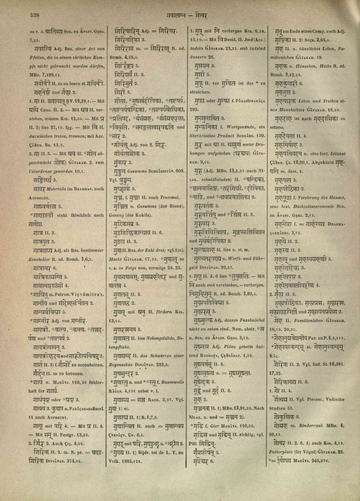
2. *go Adv. mit kar in eine Kuh umwandeln.
Original text · German · verbal root
1. √go II. 4. [Nachtrag, Band 7]
Original text · German · substantive feminine · substantive masculine
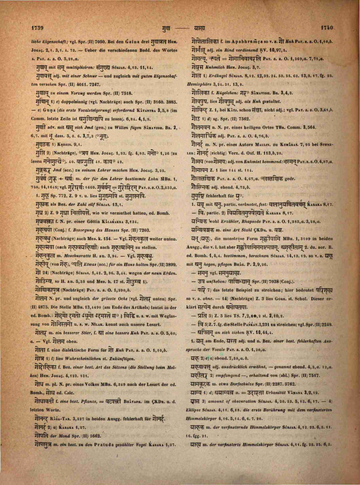
1. gó — 1〉 m. Rind, Stier; f. Kuh; Pl. Rinder, Rinderheerden, Kühe. gavāmayaḥ und gavāmayanam eine best. Feier, gavāṃ medhaḥ Kuhopfer, gavāṃ vratas Name eines Sāman, gavaṃ tīrtham N. pr. eines Tīrtha. — 2〉 m. der Stier im Thierkreise. — 3〉 Kuhmilch, meist Pl. — 4〉 Pl. Fleischstücke vom Rinde. — 5〉 Rindshaut. — Leder, daraus geschnittene Riemen u. s. w. — 6〉 Sehne. — 7〉 ein best. Ekāha im Abhiplava. — 8〉 Pl. die Heerde am Himmel, die Gestirne. — 9〉 (*m. *f.) der Himmel. — 10〉 m. die Sonne in goputra 3〉. — 11〉 *m. der Mond. — 12〉 m. (*f.) Pl. Lichtstrahlen. — 13〉 *der Sonnenstrahl Suṣumṇa. — 14〉 *m. f. Donnerkeil. — 15〉 *f. Weltgegend. — 16〉 f. = govīthī VP.² 2,276. — 17〉 f. die milchende Kuh der Fürsten, die Erde. — 18〉 f. Bez. der Zahl neun. — 19〉 (*m.) f. Sg. und Pl. Wasser. — 20〉 Sinnesorgan. — 21〉 Auge. — 22〉 *m. f. das Haar auf dem Körper. — 23〉 *f. Mutter. — 24〉 f. Rede, die Göttin der Rede. — 25〉 *m. Lobsänger. — 26〉 *m. Ross. — 27〉 Billion. — 28〉 *Bein. der Gaurī GAL. — 29〉 N. pr. — a〉 m. verschiedener Ṛṣi. — b〉 f. verschiedener Frauen.
Original text · German · Word type unspecified
1. gó 1〉 Rinder als Kriegsbeute; daher der Ausdruck góṣu gam so v. a. in den Streit ausziehen, z. B. ṚV. 2,25,4. ṚV. 5,45,9. ṚV. 8,60,5. [Nachtrag, Band 4]
Apte 1890 substantive feminine · substantive masculine
Original text · English · substantive feminine · substantive masculine
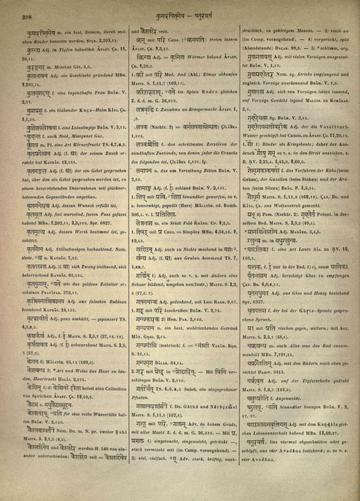
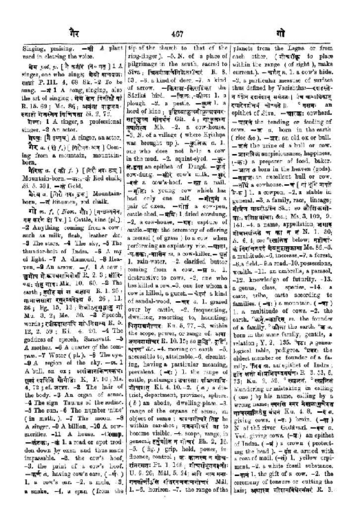
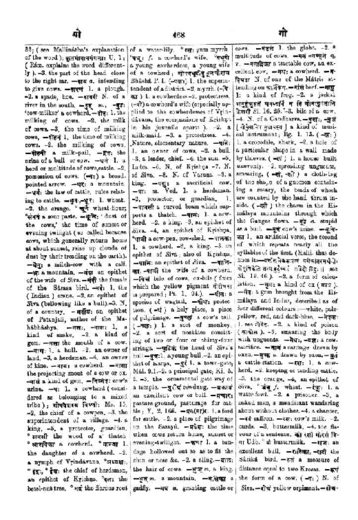
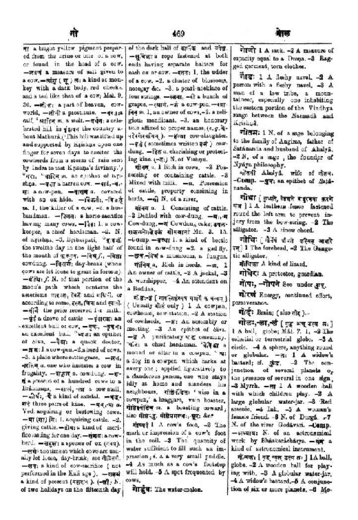
go m. f. (Nom. gauḥ) [gacchatyanena, gam karaṇe ḍo Tv.] 1 Cattle, kine (pl.). 2 Anything coming from a cow; such as milk, flesh, leather &c. 3 The stars. 4 The sky. 5 The thunder-bolt of Indra. 6 A ray of light. 7 A diamond. 8 Heaven. 9 An arrow. — f. 1 A cow; jugopa gorūpadharāmivorvī R. 2. 3; kṣīriṇyaḥ saṃtu gāvaḥ Mk. 10. 60. 2 The earth; dudoha gāṃ sa yajñāya R. 1. 26; gāmāttasārāṃ raghurapyavekṣya R. 5. 26, R. 5. 11. R. 5. 36; Bg. 15. 13; seko'nugṛhṇātu gāṃ Mu. 3. 2; Me. 30. 3 Speech, words; raghorudārāmapi gāṃ niśamya R. 5. 12, R. 2. 59; Ki. 4. 20. 4 The goddess of speech, Sarasvatī. 5 A mother. 6 A quarter of the compass. 7 Water (pl.). 8 The eye. 9 A region of the sky. — m. 1 A bull, an ox; asaṃjātakiṇaskaṃdhaḥ sukhaṃ svapiti gaurgaḍiḥ K. P. 10; Ms. 4. 72; cf. jaradgava. 2 The hair of the body. 3 An organ of sense. 4 The sign Taurus of the zodiac. 5 The sun. 6 The number ‘nine’ (in math.). 7 The moon. 8 A singer. 9 A billion. 10 A cowsacrifice. 11 A house. Comp. — kaṃṭakaḥ, -kaṃ 1 a road or spot trodden down by oxen and thus made impassable. 2 the cow's hoof. 3 the print of a cow's hoof. — karṇa a. having cow's ears. — (rṇaḥ) 1 a cow's ear. 2 a mule. 3 a snake. 4 a span (from the ([Page 0467-b]) tip of the thumb to that of the ring finger). 5 N. of a place of pilgrimage in the south, sacred to Śiva; śritagokarṇaniketamīśvaraṃ R. 8. 33. 6 a kind of deer. 7 a kind of arrow. — kirāṭā, -kirāṭikā the Sārikā bird. — kilaḥ, -kīlaḥ 1 a plough. 2 a pestle. — kulaṃ 1 a herd of kine; vṛṣṭivyākulagokulāvanarasāduddhṛtya govardhanaṃ Gīt. 4; gākulasya tṛṣārtasya Mb. 2 a cow-house. 3 N. of a village (where Kṛṣṇa was brought up). — kulika a. 1 one who does not help a cow in the mud. 2 squint-eyed. — kulodbhavā an epithet of Durgā. — kṛtaṃ cow-dung. — kṣīraṃ cow's milk. — kṣuraṃ — rakaṃ a cow's-hoof. — khā a nail. — gṛṣṭiḥ a young cow which has had only one calf. — goyugaṃ a pair of oxen. — goṣṭhaṃ a cow-pen, cattle-shed. — graṃthiḥ 1 dried cowdung. 2 a cow-house. — grahaḥ capture of cattle. — grāsaḥ the ceremony of offering a morsel (of grass) to a cow when performing an expiatory rite. — ghātaḥ, — ghātakaḥ, -ghātin m. a cow-killer. — ghṛtaṃ 1 rain-water. 2 clarified butter coming from a cow. — ghna a. 1 destructive to cows. 2 one who has killed a cow. 3 one for whom a cow is killed, a guest. — caṃdanaṃ a kind of sandal-wood. — cara a. 1 grazed over by cattle. 2 frequenting, dwelling, resorting to, haunting; pitṛsadmagocaraḥ Ku. 5. 77. 3 within the scope, power, or range of; avāṅmanasagocaraṃ R. 10. 15; so buddhi˚, dṛṣṭi˚, śravaṇa˚ &c. 4 moving on earth. 5 accessible to, attainable. 6 circulating, having a particular meaning, prevalent. — (raḥ) 1 the range of cattle, pasturage; upāratāḥ paścimarātrigocarāt Ki. 4. 10. 2 (a) a district, department, province, sphere. (b) an abode, dwelling-place. 3 range of the organs of sense, an object of sense; śravaṇagocare tiṣṭha be within ear-shot; nayanagocaraṃ yā to become visible. 4 scope, range, in general; harturyāti na gocaraṃ Bh. 2. 16. 5 (fig.) grip, hold, power, influence, control; kaḥ kālasya na gocarāṃtaragataḥ Pt. 1. 146; gocarībhūtamakṣṇoḥ U. 6. 26; Māl. 5. 24; api nāma manāgavatīrṇo'si ratiramaṇabāṇagocaraṃ Māl. 1. 6 horizon. 7 the range of the ([Page 0467-c]) planets from the Lagna or from each other. (gocarīkṛ to place within the range of sight, make current.). — carman n. 1 a cow's hide. 2 a particular measure of surface thus defined by Vasiṣṭha: -daśahastena vaṃśena daśavaṃśān samaṃtataḥ . paṃca cābhyadhikān dadyādetadgocarma cocyate ... ˚vasanaḥ an epithet of Śiva. — cārakaḥ cowherd. — cāraṇaṃ the tending or feeding of cows. — ja a. born in the earth (rice &c). — jaraḥ an old ox or bull. — jalaṃ the urine of a bull or cow. — jāgarikaṃ auspiciousness, happiness. — (kaḥ) a preparer of food, baker. — jāta a born in the heaven (gods). — tallajaḥ an excellent bull or cow. — tīrthaṃ a cowhouse. — traṃ [gāṃ bhūrmi trāyate trai-ka] 1 a cowpen. 2 a stable in general. 3 a family, race, lineage; gotreṇa māṭharo'smi Sk.; so kauśikagotrāḥ, vasiṣṭhagotrāḥ &c.; Ms. 3. 109, Ms. 9. 141. 4 a name, appellation; jagāda gotraskhalite ca kā na taṃ N. 1. 30; Ś. 6. 4; see ˚skhalita below; madgotrāṃkaṃ viracitapadaṃ geyamudgātukāmā Me. 86. 5 a multitude. 6 increase. 7 a forest. 8 a field. 9 a road. 10 possessions, wealth. 11 an umbrella, a parasol. 12 knowledge of futurity. 13 a genus, class, species. 14 a caste, tribe, caste according to families. — (traḥ) a mountain. — (trā) 1 a multitude of cows. 2 the earth. ˚kartṛ, -kārin m. the founder of a family. ˚kīlā the earth. ˚ja a. born in the same family, gentile, a relation; Y. 2. 135. ˚paṭaḥ a genealogical table, pedigree. ˚pravaraḥ the oldest member or founder of a family. ˚bhida m. an epithet of Indra; hṛdi kṣato gotrabhidapyamarṣaṇaḥ R. 3. 53, R. 6. 73; Ku. 2. 52. ˚skhalanaṃ, ˚skhalitaṃ blundering or mistaking in calling (one) by his name, calling by a wrong name; smarasi smara mekhalāguṇairuta gātraskhaliteṣu baṃdhanaṃ Ku. 4. 8. — da a. giving cows. — (daḥ) brain. — (dā) N. of the river Godāvarī. — datra a. Ved. giving cows. — (traḥ) an epithet of Indra. — (traṃ) a crown (protecting the head). — daṃta a. armed with a coat of mail. — (taṃ) 1 yellow orpiment. 2 a white fossil substance. — dānaṃ 1 the gift of a cow. 2 the ceremony of tonsure or cutting the hair; athāsya godānavidheranaṃtaraṃ ([Page 0468-a]) R. 3. 33; (see Mallinātha's explanation of the word); kṛtagodānamaṃgalāḥ U. 1; (Rām. explains the word differently). 3 the part of the head close to the right ear. — dāya a. intending to give cows. — dāraṇaṃ 1 a plough. 2 a spade, hoe. — dāvarī N. of a river in the south. — duh m., — duhaḥ ‘cow-milker’ a cowherd. — dohaḥ 1 the milking of cows. 2 the milk of cows. 3 the time of milking cows. — dohanaṃ 1 the time of milking cows. 2 the milking of cows. — dohanī a milk-pail. — dravaḥ the urine of a bull or cow. — dhanaṃ 1 a herd or multitude of cows, cattle. 2 possession of cows. — (naḥ) a broadpointed arrow. — dharaḥ a mountain. — dharmaḥ the law of cattle, rules relating to cattle. — dhuptaḥ, -dhūptaḥ 1 wheat. 2 the orange. ˚cūrṇaṃ wheat-flour; ˚saṃbhavaṃ a sour paste. — dhūliḥ ‘dust of the cows,’ the time of sunset or evening twilight (so called because cows, which generally return home at about sunset, raise up clouds of dust by their treading on the earth). — dhenuḥ a milch-cow with a calf. — dhraḥ a mountain. — naṃdā an epithet of the wife of Śiva. — naṃdī the female of the Sārasa bird. — nardaḥ 1 the (Indian) crane. 2 an epithet of Śiva (bellowing like a bull). 3 N. of a country. — nardīyaḥ an epithet of Patañjali, author of the Mahābhāshya. — nasaḥ, -nāsaḥ 1 a kind of snake. 2 a kind of gem. — nasā the mouth of a cow. — nāthaḥ 1 a bull. 2 an owner of land. 3 a herdsman. 4 an owner of kine. — nāyaḥ a cowherd. — nāsā the projecting snout of a cow or ox. — nāsaṃ a kind of gem. — niṣyaṃdaḥ cow's urine. — paḥ 1 a cowherd (considered as belonging to a mixed tribe); gopaveśasya viṣṇoḥ Me. 15. 2 the chief of a cowpen. 3 the superintendent of a village. 4 a king. 5 a protector, guardian. ˚anasī the wood of a thatch. ˚āṭavikā a cowherd. ˚kanyā 1 the daughter of a cowherd. 2 a nymph of Vṛndāvana. ˚adhyakṣaḥ, ˚iṃdraḥ, ˚īśaḥ the chief of herdsmen, an epithet of Kṛṣṇa. ˚dalaḥ the betel-nut tree. ˚bhadraṃ the fibrous root ([Page 0468-b]) of a water-lily. ˚rasaḥ gum myrrh ˚vadhūḥ f. a cowherd's wife. ˚vadhūṭī a young cowherdess, a young wife of a cowherd; gopavadhūṭīdukūlacaurāya Bhāṣā P. 1. — (pakaḥ) 1 the superintendent of a district. 2 myrrh. ( — pikā) 1 a cowherdess. 2 protectress. — (pī) a cowherd's wife (especially applied to the cowherdesses of Vṛndāvana, the companions of Kṛṣṇa in his juvenile sports). 2 a milk-maid. 3 a protectress. 4 Nature, elementary nature. — patiḥ 1 an owner of cows. 2 a bull. 3 a leader, chief. 4 the sun. 5 Indra. 6 N. of Kṛṣṇa 7 N. of Śiva. 8 N. of Varuṇa. 9 a king. — paśuḥ a sacrificial cow. — pāḥ m. Ved. 1 a herdsman. 2 protector, or guardian. 1 — pānasī a curved beam which supports a thatch. — pālaḥ 1 a cowherd. 2 a king. 3 an epithet of Śiva. 4 an epithet of Kṛṣṇa. ˚dhānī a cow-pen, cow-shed, — pālakaḥ 1 a cowherd. 2 a king. 3 an epithet of Śiva; also of Kṛṣṇa. — pāliḥ an epithet of Śiva. — pālikā, -pālī the wife of a cowherd. — pittaṃ bile of cows, ox-bile (from which the yellow pigment gorocanā is prepared; Pt. 1. 94.). — pītaḥ a species of wagtail. — pīthaḥ protection. — (thaṃ) a holy place, a place of pilgrimage. — pucchaṃ a cow's tail. — (cchaḥ) 1 a sort of monkey. 2 a sort of necklace consisting of two or four or thirty-four strings. — puṭikaṃ the head of Śiva's bull — putraḥ 1 a young bull. 2 an epithet of Karṇa. — puraṃ 1 a town-gate; Māl. 9. 1. 2 a principal gate; Ki. 5. 5. 3 the ornamental gate-way of a temple. — purīṣaṃ cowdung. — prakāḍaṃ an excellent cow or bull. — pracāraḥ pasture-ground, pasturage for cattle; Y. 2. 166. — prata(tā)raḥ 1 a ford for cattle. 2 a place of pilgrimage on the Sarayū. — praveśaḥ the time when cows return home, sunset or evening-twilight. — phaṇā 1 a bandage hollowed out so as to fit the chin or nose &c. 2 a sling. — bālaḥ the hair of cows. — bhuj m. a king. — bhṛt m. a mountain. — makṣikā a gadfly. — magha a. granting cattle or ([Page 0468-c]) cows. — maṃḍalaṃ 1 the globe. 2 a multitude of cows. — mataṃ = gavyūti q, v. — matallikā a tractable cow, an excellent cow. — mathaḥ a cowherd. — mahiṣadā N. of one of the Mātṛs attending on kārtikeya. — māṃsaṃ beef. — māyu 1 a kind of frog. 2 a jackal anuhuṃkurute ghanadhvaniṃ na hi gomāyurutāni kesarī Śi. 16. 25. 3 bile of a cow. 4 N. of a Gandharva. — mukhaḥ, -mukhaṃ [gormukhamiva mukhamasya] a kind of musical instrument; Bg. 1. 13. — (khaḥ) 1 a crocodile, shark. 2 a hole of a particular shape in a wall made by thieves. — (khaṃ) 1 a house built unevenly. 2 spreading unguents, smearing. — (khaṃ, -khī) a cloth-bag of the shape of a gnomon containing a rosary, the beads of which are counted by the hand thrust inside. — (khī) the chasm in the Himālaya mountains through which the Ganges flows. — mūḍha a. stupid as a bull. — mūtraṃ cow's urine. — mūtrikā 1 an artificial verse, the second of which repeats nearly all the syllables of the first (Malli. thus defines it: -vaṃrṇānāmekarūpatvaṃ yadyekāṃtaramardhayoḥ gomūtriketi tatprāhurduṣkaraṃ tadvido viduḥ .. see Śi. 19. 46). 2 a form of calculation. — mṛgaḥ a kind of ox (gavaya). — medaḥ a gem brought from the Himālaya and Indus, described as of four different colours: -white, paleyellow, red, and dark-blue. — medakaḥ 1 see gomeda. 2 a kind of poison (kākola). 3 smearing the body with unguents. — medhaḥ, -yajñaḥ a cowsacrifice. — yānaṃ a carriage drawn by oxen. — yukta a. drawn by oxen. — yutaṃ a cattle-station. — rakṣaḥ 1 a cowherd. 2 keeping or tending cattle. 3 the orange. 4 an epithet of Śiva. ˚jaṃbū f. wheat. — raṃkuḥ 1 a water-fowl. 2 a prisoner. 3 a naked man, a mendicant wandering about without clothes. 4 a chanter. — ravaṃ saffron. — rasaḥ cow's milk. 2 curds. 3 buttermilk. 4 the flavour of a sentence, ko raso gorasaṃ vinā Udb. ˚jaṃ buttermilk. — rājaḥ an excellent bull. — rāṭikā, -rāṭī the Sārikā bird. — rutaṃ a measure of distance equal to two Krośas. — rūpaṃ the form of a cow. — (paḥ) N. of Śiva. — rocaṃ yellow orpiment. ([Page 0469-a]) — rocanā a bright yellow pigment prepared from the urine or bile of a cow, or found in the head of a cow. — lavaṇaṃ a measure of salt given to a cow. — lāṃgu (gū) laḥ a kind of monkey with a dark body, red cheeks. and a tail like that of a cow; Māl. 9. 30. — lokaḥ a part of heaven, cowworld. — lomī a prostitute. — vatsaḥ a calf. ˚ādin m. a wolf. — vardhanaḥ a celebrated hill in vṛṃdāvana the country about Mathurā. (This hill was lifted up and supported by Kṛṣṇa upon one finger for seven days to shelter the cowherds from a storm of rain sent by Indra to test Kṛṣṇa's divinity.’) ˚dharaḥ, ˚dhārin m. an epithet of Kṛṣṇa. — vaśā a barren cow. — vāṭaṃ, — vāsaḥ a cow-pen. — vāsana a. covered with an ox-hide. — vikartaḥ, -vikrartṛ m. 1 the killer of a cow. 2 a husbandman. — vitataḥ a horse-sacrifice having many cows. — viṃdaḥ 1 a cowkeeper, a chief herdsman. 2 N. of Kṛṣṇa. 3 Bṛhaspati. ˚dvādaśī the twelfth day in the light half of the month of phalguna. — viṣ f., — viṣṭhā cowdung. — visargaḥ day-break (when cows are let loose to graze in forests). — vīthiḥ f. N. of that portion of the moon's path which contains the asterisms bhādrapadā, revatī and aśvinī, or according to some, hasta, citrā and svātī. — vīryaṃ the price received for milk. — vṛṃdaṃ a drove of cattle. — vṛṃdārakaḥ an excellent bull or cow. — vṛṣaḥ, -vṛṣabhaḥ an excellent bull. ˚dhvajaḥ an epithet of Śiva. — vaidyaḥ a quack doctor. — vrajaḥ 1 a cow-pen. 2 a herd of cows. 3 a place where cattle graze. — vrata, — vratin a. one who imitates a cow in frugality. — śakṛt n. cowdung. — śataṃ a present of a hundred cows to a Brāhmaṇa. — śālaṃ, -lā a cow-stall. — śīrṣaḥ, -rṣaṃ a kind of sandal. — ṣaḍgavaṃ three pairs of kine. — ṣan, -ṣā a. Ved. acquiring or bestowing cows. — ṣā (sā) tiḥ 1 acquiring cattle. 2 giving cattle. — ṣṭomaḥ a kind of sacrificelasting for one day. — saṃkhyaḥ a cowherd. — sadṛkṣaḥ a species of ox (gavaya). — sargaḥ the time at which cows are usually let loose, day-break; see govisarga. — savaḥ a kind of cow-sacrifice (not performed in the Kali age). — sahasraṃ a kind of present (mahādāna). — (srī) N. of two holidays on the fifteenth day ([Page 0469-b]) of the dark half of kārtika and jyeṣṭha. — sūtrikā a rope fastened at both ends having separate halters for each ox or cow. — stanaḥ 1 the udder of a cow. 2 a cluster of blossoms, nosegay &c. 3 a pearl-necklace of four strings. — stanā, -nī a bunch of grapes. — sthānaṃ, -kaṃ a cow-pen. — svāmin m. 1 an owner of cows. 2 a religious mendicant. 3 an honorary title affixed to proper names; (e. g. vopadevagosvāmin). — hatyā cow-slaughter. — hallaṃ (sometimes written hannaṃ) cowdung. — hita a. cherishing or protecting kine. — (taḥ) N. of Viṣṇu.
Cappeller 1887 substantive masculine
Original text · German · substantive masculine
gó m. Rind, Stier; Kuhmilch (meist. Pl.), Rindshaut, Sehne; Pl. Gestirn, Lichtstrahlen; f. Kuhm Erde.
Burnouf 1866 substantive masculine
Original text · French · substantive masculine
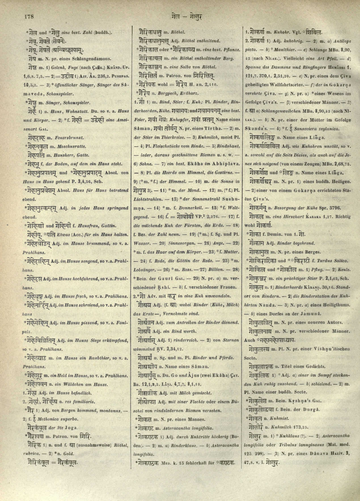
go go m. [M. §40] bœuf. Dans le Veda, tout ce qui est bon: ciel, rayon de lumière, lune, soleil, foudre. — go m. et gu n. poils du corps. Eau. — S. f. go vache. Dans le Veda, tout ce qui est bon: la terre, la nuée, le sacrifice, la parole sainte, l'offrande, la mère, etc. Œil. Flèche. Point cardinal. Gr. βοῦς; lat. bos; angl. cow; dan. kœ; suéd. ko; germ. kuh. gokaṇṭaka m. pas de vache. Esp. de plante, cf. gokhura. gokarṇa m. esp. d'antilope (le nîlgau?); mulet; esp. de serpent; serpent, en gén. Empan [du bout du pouce au bout du petit doigt]. — gokarṇi f. aletris hyacinthoides, bot. gokirāṭikā f. esp. d'oiseau [? le turdus salica]. gokila m. [go terre] charrue. Pilon. gokīla m. mms. [Page223-2] gokula n. troupeau de bœufs ou de vaches. Etable. Np. de pays dans la légende de Kṛṣṇa. gokulika a. louche. Qui ne porte pas secours à une vache embourbée. gokṛta n. (kṛ) bouse de vache. gokṣura m. et gokhura m. esp. de plante. gogranthi m. étable à vaches. Bouse de vache desséchée. gogṛṣṭi f. vache qui a vêlé une fois. goghna m. (han) hôte [m à m. celui qui tue une vache]. goghṛta n. le lait de la vache, c-à-d. l'eau du nuage, la pluie, Vd. gocara m. (car) pâturage, prairie; étendue de terrain comprise dans des bornes déterminées. Au fig. les objets des sens; en composition: qui est à la portée de, dans le champ de: dṛṣṭigocara, vāṇagocara qui est à la portée de la vue, de la flèche; pañca indriyagocarās les 5 ordres de perceptions. gojāgarika m. (jāgṛ) morelle épineuse. — N. chose heureuse, de bon augure. gojihvā f. langue de bœuf ou hieracium, bot.
Occurrences in source texts (11)
DYS 1 occurrence
HP 7 occurrences
HP 3.33-3.48*1: Khecarī and Soma 3 occurrences
Direct occurrences
MAN 1 occurrence
SiSa 1 occurrence
SVU 1 occurrence
Continue with AYI Free
Image source: AYI archive.