

moha मोह – delusion
substantive masculine
Dictionary sources
AYI dictionary substantive masculine
delusion
Derived from
Cappeller 1891 substantive masculine
Original text · English · substantive masculine
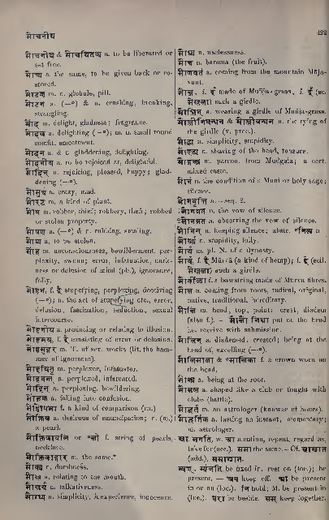
móha ·m. unconsciousness, bewilderment, perplexity, swoon; error, infatuation, darkness or delusion of mind (ph.), ignorance, folly.
Monier-Williams 1872 substantive masculine
Original text · English · substantive masculine
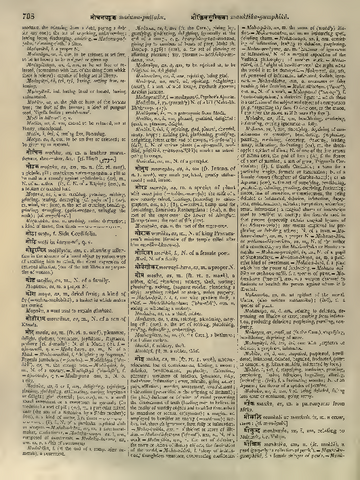
moha moha, as, m. (fr. rt. 1. muh), uncon- sciousness, loss of consciousness, fainting, a swoon; delusion, bewilderment, perplexity, distraction, phrenzy; weakness of intellect, ignorance, folly, foolishness, infatuation; error, mistake, going astray; pain, affliction; wonder, amazement, astonishment; Infatuation (personified as the offspring of Brahmā); (in phil.) darkness or delusion of mind preventing the discernment of truth (leading men to believe in the reality of worldly objects and to addict themselves to mundane or sensual enjoyment); a magical art employed to bewilder an enemy (= mohana); mo- hāt, ind. through ignorance, from folly or infatuation.
Petersburger 1855 substantive masculine
Original text · German · substantive masculine
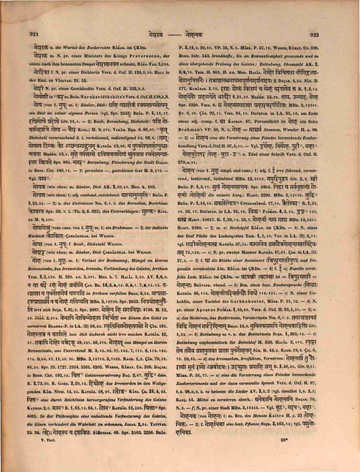
móha (von 1. muh) m. 1〉 Verlust der Besinnung, Mangel an klarem Bewusstsein, das Irrewerden, Irresein, Verblendung des Geistes, Irrthum TRIK. 3,3,459. H. 320. H. an. 2,601. MED. h. 7. HALĀY. 5,53. AV. 8,8,9. na vā are 'haṃ mohaṃ bravīmi ŚAT. BR. 14,5,4,14. ŚAT. BR. 14,6,4,1. ŚAT. BR. 14,7,3,14. ŚAT. BR. 14,5,4,15. yajjñātvā na punarmohamevaṃ yāsyasi in Irrthum verfallen BHAG. 4,35. matprasādātprajāsarge na ca mohaṃ gamiṣyati MBH. 3,12799. Spr. 2853. bhiṣaṅmohamupaiti irrt sich SUŚR. 1,62,9. Spr. 2687. mohena hi samāviṣṭaḥ Spr. 4748. M. 12,29. YĀJÑ. 2,214. kenāpi yoṣinmohāya nirmitā um Einem den Geist zu verwirren BRAHMA-P. in LA. (II) 56,22. smṛtibhinnamohatamaso me ŚĀK. 181. mohastatra na kāryaste lass dich dadurch nicht irre machen KATHĀS. 42,21. tavāpi moho yatredṛk KATHĀS. 49,221. KATHĀS. 56,276. mohāt aus Mangel an klarem Bewusstsein, aus Unverstand M. 3,15. M. 3,52. M. 3,97. M. 3,140. M. 7,111. M. 8,118. M. 8,120. M. 8,174. M. 9,68. M. 9,87. M. 11,46. M. 11,90. MBH. 3,15714. MBH. 5,7432. RAGH. 1,2. ŚĀK. 79,16. ŚĀK. 84,20. Spr. 33. Spr. 1727. Spr. 2554. Spr. 3561. Spr. 4203. WEBER, RĀMAT. UP. 356. DAŚAK._in_BENF. Chr. 192,13. citta˚ Geistesverwirrung DAŚ. 2,67. buddhi˚ dass. R. 2,73,20. R. GORR. 2,20,13. diṅmoha das Irrewerden in den Weltgegenden KĀM. NĪTIS. 14,24. KATHĀS. 18,97. stotra˚ KĀTY. ŚR. 25,4,23. vitta˚ eine durch Reichthum hervorgerufene Verfinsterung des Geistes KAṬHOP. 2,6. kāma˚ R. 1,63,12. R. 1,64,1. lobha˚ KATHĀS. 13,336. cintā˚ Spr. 4051. In der Philosophie eine anhaltende Verfinsterung des Geistes, die Einen verhindert die Wahrheit zu erkennen, YOGAS. 2,34. TATTVAS. 25. TATTVAS. 34. (bhedaḥ) mohasya ca daśavidhaḥ SĀṂKHYAK. 48. Spr. 2163. Spr. 2256. BHĀG. P. 3,12,2. BHĀG. P. 3,20,18. VP. 34, N. 2. MĀRK. P. 47,15. WEBER, RĀMAT. UP. 338. BURN. Intr. 543. krankhafte, bis an Bewusstlosigkeit grenzende und in diese übergehende Trübung des Geistes; Betäubung, Ohnmacht AK. 2,8,2,78. TRIK. H. 801. H. an. MED. HALĀY. moho vicittatā bhītiduḥkhāveśānucintanaiḥ . tatrājñānabhramāghātaghūrṇanādarśanādayaḥ .. DAŚAR. 4,24. SĀH. D. 177. KUMĀRAS. 3,73. rājñaḥ śokaṃ vilāpaṃ ca mohaṃ maraṇameva ca R. 1,3,12. mohametau prahāsyete bhrātarau R. 6,21,29. MṚCCH. 53,22. tāpa, unmāda, moha Spr. 3320. VIKR. 8. sa mohamagamadrājā prahāravarapīḍitaḥ MBH. 3,15781. ṚT. 6,26. ŚĀK. 92,11. VIKR. 84,10. DHŪRTAS. in LA. 95,16. am Ende eines adj. comp. f. ā CAURAP. 47. Personificirt ist moha ein Sohn Brahmanʼs VP. 50, N. 2. moha = āścarya Staunen, Wunder H. ś. 88. — 2〉 = mohana eine die Verwirrung eines Feindes bezweckende Zauberhandlung Verz. d. Oxf. H. 97,b,11. — Vgl. durmoha, nirmoha, purī˚, mahā˚.
Böhtlingk 1879 substantive masculine
Original text · German · substantive masculine
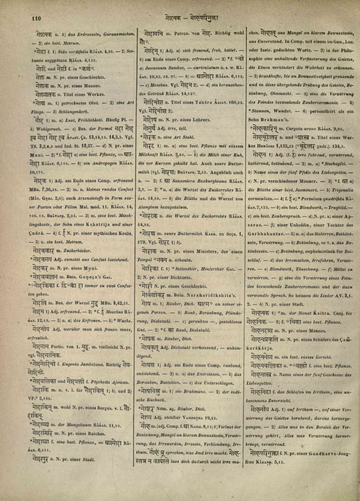
móha m. (adj. Comp. f. ā NAIṢ. 8,15) — 1〉 Verlust der Besinnung, Mangel an klarem Bewusstsein, Verwirrung, das Irrewerden, Irresein, Verblendung, Irrthum. mohaṃ bra sprechen, was Jmd irre macht. mohastatra na kāryaste lass dich dadurch nicht irre machen. [Page5-110-c] mohāt aus Mangel an klarem Bewusstsein, aus Unverstand. In Comp. mit einem in Gen., Loc. oder Instr. gedachten Worte. — 2〉 in der Philosophie eine anhaltende Verfinsterung des Geistes die Einen verhindert die Wahrheit zu erkennen. — 3〉 krankhafte, bis an Bewusstlosigkeit grenzende und in diese übergehende Trübung des Geistes, Betäubung, Ohnmacht. — 4〉 eine die Verwirrung des Feindes bezweckende Zauberceremonie. — 5〉 *Staunen, Wunder. — 6〉 personificirt als ein Sohn Brahmanʼs.
Apte 1890 substantive masculine
Original text · English · substantive masculine
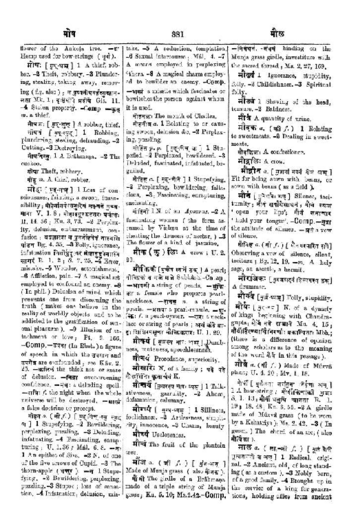
mohaḥ [muh-ghañ] 1 Loss of consciousness, fainting, a swoon, insensibility; mohenāṃtarvaratanuriyaṃ lakṣyate mucyamānā V. 1. 8; mohādabhūtkaṣṭataraḥ prabodhaḥ R. 14. 56; Ku. 3. 73. 2 Perplexity, delusion, embarrassment, confusion; yajjñātvā na punarmohapevaṃ yāsyasi pāṃḍava Bg. 4. 35. 3 Folly, ignorance, infatuation titīrṣurdustaraṃ mohāduḍupenāsmi sāgaraṃ R. 1. 2; Ś. 7. 25. 4 Error, mistake. 5 Wonder, astonishment. 6 Affliction, pain. 7 A magical art employed to confound an enemy. 8 (In phil.) Delusion of mind which prevents one from discerning the truth (makes one believe in the reality of worldly objects and to be addicted to the gratification of sensual pleasures). 9 Illusion of attachment or love; Pt. 2. 166. Comp. — upamā (In Rhet.) a figure of speech in which the upamāna and upameya are confounded; see Kāv. 2. 25. — kalilaṃ the thick net or snare of delusion. — nidrā over-weening confidence. — maṃtraḥ a deluding spell. — rātriḥ f. the night when the whole universe will be destroyed. — śāstraṃ a false doctrine or precept.
Cappeller 1887 substantive masculine
Original text · German · substantive masculine
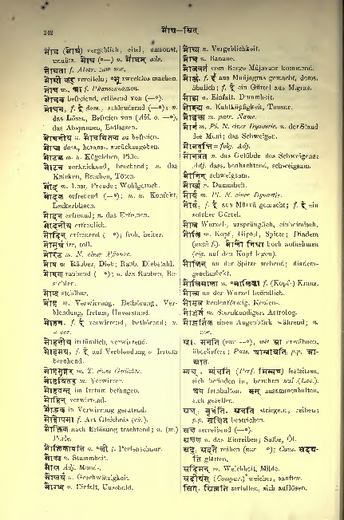
móha m. Verwirrung, Bethörung, Verblendung, Irrtum, Unverstand.
Burnouf 1866 substantive masculine
Original text · French · substantive masculine
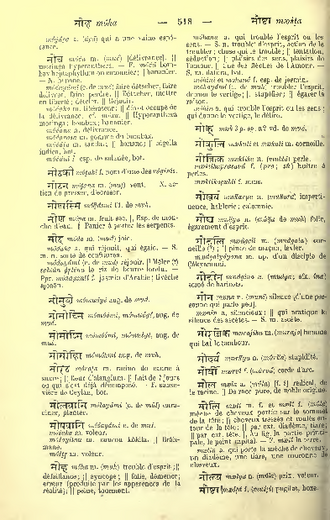
moha moha m. (muh) trouble d'esprit; défaillance; syncope; folie, démence; erreur [produite par les apparences de la réalité]; peine, tourment. [Page518-2] mohana a. qui trouble l'esprit ou les sens. — S. n. trouble d'esprit; action de le troubler; chose qui le trouble; tentation, séduction; plaisirs des sens, plaisirs de l'amour. Une des flèches de l'Amour. — S. m. datura, bot. mohinī et mohanā f. esp. de jasmin. mohayāmi (c. de muh) troubler l'esprit, donner le vertige; stupéfier; égarer la raison. mohin a. qui trouble l'esprit ou les sens; qui donne le vertige, le délire.
Occurrences in source texts (10)
IVU 1 occurrence
MAN 1 occurrence
PYS 1 occurrence
SiSa 1 occurrence
SS 3 occurrences
SVU 2 occurrences
VBT 1 occurrence
Continue with AYI Free
Image source: AYI archive.