

sāra सार – essence
adjective · substantive masculine · substantive neuter · Word type unspecified
Dictionary sources
AYI dictionary substantive masculine · substantive neuter
Cappeller 1891 adjective · substantive masculine · substantive neuter
Original text · English · adjective
sāra1 ·a. driving away, removing; m. course, way (only --°).
Original text · English · substantive masculine · substantive neuter
sā́ra2 ·m. n. the interior firm parts of a body; firmness, solidity, strength; property, wealth; substance or essence of anything; nectar; water.
Monier-Williams 1872 substantive masculine
Original text · English · substantive masculine
sāra sāra, as, m. (fr. rt. sṛ, ‘to go, pervade,’ apparently involving in some of its deriva- tives a meaning ‘to be strong, to be whole or entire,’ cf. sarva), essence, substance; the substantial or essential part of anything; the best or choicest part; the quintessence; the heart; the matter (of a book, speech, &c.; also am, n., according to some); real meaning, main point, real truth, (also am, n.); marrow; pith; the sap of trees and plants, (also am, n.); cream, curds; nectar; the matter formed in a boil or ulcer, pus; strength, power, vigour, force, courage, prowess, valour, heroism; firmness, hardness; worth, excellence, highest degree of per- fection; wealth, goods, riches; a compendium, sum- mary, epitome; impure carbonate of soda; sickness, disease [cf. sāraṇa ]; air, wind; (as, ī), m. f. a chess-man, piece at chess or backgammon [cf. śāra, śāri]; (ā), f. a kind of plant (= kṛṣṇa-trivṛtā); Dūrvā grass; Kuśa grass; (ī), f. a kind of bird (= sārikā); a kind of plant, = saptalā; (am), n. pith; sap; water; fresh butter; wealth; propriety, fitness; steel; a wood, thicket, = vipina; (in rhe- toric) a climax; (as, ā, am), essential, substantial; vigorous, strong, hard; excellent; good, sound, best; real, true, genuine; sound (as an argument), thoroughly proved; [cf. Lat. serum.]
Petersburger 1855 adjective · substantive masculine · substantive neuter · Word type unspecified
Original text · German · adjective · substantive masculine · substantive neuter
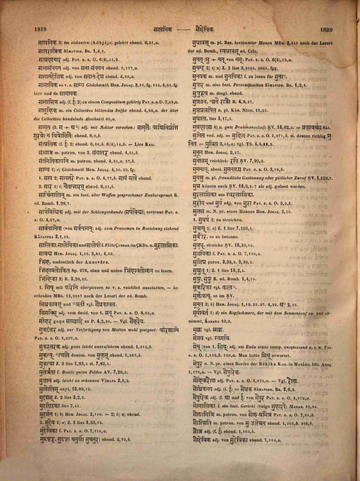
2. sā́ra (sārá P. 3,3,17; vgl. P. 6,1,159) 1〉 m.n. gaṇa ardharcādi zu P. 2,4,31. SIDDH. K. 249,b,4. am Ende eines adj. comp. f. ā. a〉 die inneren festen Bestandtheile eines Körpers: kha̱di̱rasyà Kernholz ṚV. 3,53,19. khadira˚, śāla˚ P. 3,3,17, Schol. tindukasāreṇa nirmitaḥ paryaṅkaḥ VARĀH. BṚH. S. 79,11. abhyantaragataiḥ sārairyathā tiṣṭhanti bhūruhāḥ . asthisāraistathā dehāḥ SUŚR. 1,339,18. ŚĀRṄG. SAṂH. 1,5,4. asthīni na vinaśyanti sārāṇyetāni dehinām SUŚR. 1,339,21. sārāṇi von Früchten neben rasa und tvac vielleicht Kerngehäuse MBH. 3,10064. sāra m. = sthira P. 3,3,17. = sthirāṃśa AK. 3,4,25,173. H. an. 2,466. MED. r. 96. = atidṛḍha ŚABDAR._im_ŚKDR. — b〉 Festigkeit, Härte; Stärke, Kraft: bhujayoḥ sāramarpaya MBH. 1,6029. MBH. 5,1991. BHĀG. P. 5,1,29. ˚sthita SUŚR. 1,188,3. dharitrīdharaṇakṣama eines Berges KUMĀRAS. 1,17. ˚gurubhiḥ padanyāsaiḥ desgl. KUMĀRAS. 6,50. Kāmaʼs KUMĀRAS. 3,13. akhilasārasaṃbhṛta Viṣṇu als Zwerg BHĀG. P. 8,18,20. yadi vaḥ pradhane śraddhā sāraṃ vā kṣullakā hṛdi BHĀG. P. 6,11,5. adrākṣamahametatte hṛtsāraṃ mahadadbhutam BHĀG. P. 7,3,18. āhārasya die nährende Kraft SUŚR. 1,43,5. SUŚR. 1,247,21. ŚĀRṄG. SAṂH. 1,6,4. sāroddharaṇadūṣita (māṃsa) MĀRK. P. 34,56. sārà (sārā Padapāṭha padap., wohl für sāram) ṛṣa̱bhāṇā̀m die zeugende Kraft AV. 4,4,4. vāksāra die Kraft der Rede, Beredsamkeit VARĀH. BṚH. S. 2, S. 4, Z. 18. fg. am Ende eines adj. comp.: vajrasamāna˚ ein Mann MBH. 1,7076. mahendrādisamāna˚ RAGH. 6,54. mahābhujau giriśṛṅgasārau R. 6,37,64. bhuje bhujagendrasamānasāre RAGH. 2,74. nala˚ die Härte (d. i. Weichheit, Schwäche) des Rohrschilfs habend MBH. 12,11156. utpalapattra˚ RAGH. 6,42. sarvātirikta˚ (ātman) RAGH. 1,14. vapuḥ sasāram KUMĀRAS. 5,19. dṛṣṭa˚ Spr. (II) 6212 (gajendra). RAGH. 11,47 (vīryaśulka). dṛṣṭistṛṇīkṛtajagattrayasattvasārā UTTARAR. 111,17 (UTTARAR. 151,1 = SĀH. D. 38,10). ajāta˚ R. GORR. 1,39,17. abhedya˚ RĀJA-TAR. 4,298. kṣīṇa˚ MBH. 13,281. gṛhīta˚ BHĀG. P. 5,14,19. ātta˚ BHĀG. P. 6,10,29. smaranunna˚ BHĀG. P. 10,21,12. mahā˚ fest, stark: Bogen R. 2,100,19. alpa˚ schwach Spr. (II) 1952. KĀM. NĪTIS. 11,8. hṛtasārā sudhā berauschende Kraft R. 2,61,18. sāra m. = sthāman HALĀY. 5,67. = bala AK. 2,4,12. H. an. MED. — c〉 Werth: sāratas M. 8,405. YĀJÑ. 2,275. (vijñātaḥ) rājñā himavataḥ sāro rājñaḥ sāro himādriṇā RAGH. 4,79. puruṣārtha˚ BHĀG. P. 3,13,49. mahā˚ adj. werthvoll, kostbar R. 3,72,1. R. 4,33,15. R. 4,43,33. alpa˚ adj. von geringem Werth M. 11,164. gata˚ adj. werthlos geworden, nichtig Spr. (II) 2067. Spr. (II) 6122. — d〉 Vermögen, Besitz, Reichthum; neutr. H. 191. H. an. MED. HALĀY. 1,80. masc. HALĀY. 5,67. sārāparādhau M. 8,126. M. 9,262. karaṃ dāpayāmāsa sāragrahaṇapūrvakam MĀRK. P. 122,10. sārāpahāramakarotparihāsapurasya RĀJA-TAR. 5,160. sāratas DAŚAK. 70,13. am Ende eines adj. comp.: naikakoṭi˚ DAŚAK. 75,13. sāvitrīmātra˚ M. 2,118. gāmāttasārām RAGH. 5,26. — e〉 Kern so v. a. Hauptsache, Quintessenz, das Beste, Werthvollste, etwas Werthvolles: etatsāram (kāmaḥ) — dharmārthāvatra saṃsthitau MBH. 12,6244. sāraṃ tato grāhyam Spr. (II) 243. sarvataḥ sāramādadyāt Spr. (II) 459. atra na kimapi sāramaṇīyaḥ Spr. (II) 554. Spr. (II) 777. Spr. (II) 1794. Spr. (II) 2347. Spr. (II) 2954. Spr. (II) 5699. Spr. (II) 5776. Spr. (II) 6605. Spr. (II) 6639. fg. Spr. (II) 7211. sāra iti (besser als ratnamiti) VIKR. 143, v. l. KATHĀS. 28,16. KATHĀS. 34,190. KATHĀS. 39,213. SĀH. D. 23,17. MĀRK. P. 18,43. VET. in LA. (III) 16,16. BHĀG. P. 1,1,11. BHĀG. P. 4,18,2. BHĀG. P. 4,18,13. SARVADARŚANAS. 158,20. sārātsāraṃ vadasva naḥ Verz. d. Oxf. H. 7,a, No. 42. apām RAGH. 10,10. RAGH. 10,53. kṛtsnasya jagataḥ R. 5,12,27. dharmasya KATHĀS. 33,34. dṛṣṭaḥ sārastasyāḥ (so ist zu lesen) puro bhavān KATHĀS. 54,62. tat — sarvavedetihāsānāṃ sāraṃ sāraṃ samuddṛtam BHĀG. P. 1,3,41. PAÑCAR. 1,15,13. sarvamantreṣu sāraśca mantrarājaḥ prakīrtitaḥ PAÑCAR. 2,3,104. Verz. d. Oxf. H. 252,b, No. 626, Z. 4. kathāmeva kathāsu sāram . uddhṛtya puṣpebhya iva BHĀG. P. 3,5,15. ˚mārgaṇam Spr. (II) 4823. sārādānaṃ ṣaṭpadavat KAP. 4,13. ˚śūnya Spr. (II) 2919. ˚saṃgraha CĀṆ. 1. ˚grāhin R. 3,72,1. ˚darśin R. 5,84,7. sārārthin MBH. 4,1567. samudra˚ MBH. 2,1893. kathāsāro hi sā (kathā) matā MBH. 12,12711. loka˚ MBH. 14,597. trivarga˚ (dharma) KUMĀRAS. 5,31. muktā˚ RAGH. 4,50. PAÑCAR. 1,4,54. PAÑCAR. 1,7,49. PAÑCAR. 1,11,13. veda˚, yajña˚, sāma˚ PAÑCAR. 4,3,50. ācāra˚ RĀJA-TAR. 4,344. mandira˚ Spr. (II) 473. sakalārthaśāstra˚ PAÑCAT. Pr. 3. jīvaloka˚ PAÑCAT. 49,4. samastavastusaṃbhāra˚ PAÑCAT. 157,22. DHŪRTAS. 88,1. vastusārāṇām BHĀG. P. 2,6,4. BHĀG. P. 10,6,7. am Ende eines adj. comp.: hṛta˚ R. 2,33,18. R. GORR. 2,36,12. upātta˚ MĀLAV. 22,19. ātta˚ BHĀG. P. 3,15,23. sāra m. = śreṣṭha H. an. HALĀY. 5,67. — f〉 das Vorwaltende, Hauptsache am Ende eines adj. comp. (vgl. den Gebrauch von para): tūṣṇīṃ˚ AIT. BR. 2,31. prīti˚ (kāma) MBH. 2,153. R. GORR. 2,109,61. kṣamā˚ HARIV. 15624. fg. dharma˚ R. 2,33,15. Spr. (II) 3113. WEBER, RĀMAT. UP. 338. ŚRUT. 20. Spr. (II) 2789. Spr. (II) 3738. Spr. (II) 4253. Spr. (II) 6233. Spr. (II) 6985. GĪT. 5,8. KATHĀS. 40,48. VP. 1,9,22. BHĀG. P. 1,19,19. BHĀG. P. 3,5,45. BHĀG. P. 6,9,50. BHĀG. P. 8,16,60. CAURAP. 5. CAURAP. 33. — g〉 ein dem Temperamente eines Menschen zu Grunde liegender Hauptbestandtheil des Körpers: es werden deren acht oder auch nur sieben angenommen: sattva (fehlt bei VARĀH.), śukra, majjan, asthi, medas, māṃsa, rakta und śukra SUŚR. 1,125,11. SUŚR. 1,126,18. tvaksāra adj. SUŚR. 127,3. CARAKA 3,8. VARĀH. BṚH. S. 68,1. VARĀH. BṚH. S. 68,96. VARĀH. BṚH. S. 69,21. rakta˚ adj. VARĀH. BṚH. S. 68,97. māṃsa˚ adj. VARĀH. BṚH. S. 100. LAGHUJ. 2,13. fgg. — h〉 Bestandtheil überh.: pañca˚ adj. (peya) SUŚR. 2,421,5. — i〉 das Rechte, Richtige; neutr. = nyāyya AK. H. an. MED. naitatsāram Comm. zu TS. PRĀT. 14,5. tadasāram zu TS. PRĀT. 1,21. — k〉 Nektar: yattatrotpatsyate sāraṃ tatpāsyāmaḥ R. GORR. 1,46,19. sāraṃ juṣāṃ caraṇayoḥ BHĀG. P. 7,6,25. am Ende eines adj. comp.: nirviṣṭasārāṃ pitṛbhirhimāṃśorantyāṃ kalām RAGH. 14,80. — l〉 Seim KAP. 4,13. BHĀG. P. 1,18,7. — m〉 saurer Rahm SUŚR. 2,378,6. dadhnā sasāreṇa SUŚR. 441,8. sāra n. = dadhyuttara ŚABDAC._im_ŚKDR. — n〉 verdickter als Räucherwerk verwandter Pflanzensaft, Harz SUŚR. 1,133,9. fg. SUŚR. 1,133,12. SUŚR. 1,183,15. fg. SUŚR. 2,12,15. SUŚR. 2,63,1. fg. SUŚR. 2,73,21. SUŚR. 2,83,14. fg. SUŚR. 2,119,3. SUŚR. 2,175,4. fg. SUŚR. 2,468,21. ŚĀRṄG. SAṂH. 1,1,42. Vgl. sārin. — o〉 Dünger KṚṢIS. 8,26. vinā sāreṇa yaddhānyaṃ vardhate na phalatyapi KṚṢIS. 9,3. — p〉 ein Fürst, der einem andern im Kriege zu Hilfe kommt, Bundesgenosse VARĀH. BṚH. S. 34,22; vgl. āsāra 3〉 in den Nachträgen. — q〉 Bez. des Gürtels bei den Maga Verz. d. Oxf. H. 33,b,30. — r〉 m. in der Rhetorik eine Art Klimax: uttarottaramutkarṣo bhavetsāraḥ parāvadhiḥ KĀVYAPR. 173,8 (331,15). SĀH. D. 731. KUVALAY. 113,a. PRATĀPAR. 103,b,3. Beispiele Spr. (II) 2347. Spr. (II) 5776. — Die Lexicographen kennen noch folgende nicht zu belegende Bedd. α〉 m. = majjan AK. 2,4,1,12. H. 1121. H. an. MED. HALĀY. 2,28. HALĀY. 5,67. = asthi H. 626 (neutr. v. l.). = tvacisāra H. 1153, Schol. = vajrakṣāra RĀJAN. 6,256. = vāyu (vgl. śāra) JAṬĀDH._im_ŚKDR. = roga DHAR. ebend. = pāśaka (vgl. śāra) ŚABDAR. ebend. — β〉 n. = jala H. an. MED. = navanīta RĀJAN._im_ŚKDR. = lauha BHĀVAPR. ebend. = vipina ŚABDAR. ebend. — 2〉 f. ā = kṛṣṇatrivṛtā ŚABDAR._im_ŚKDR. = dūrvā (vgl. śārī) ŚABDAC. ebend. — 3〉 f. ī der Vogel Sārikā und = pāśaka (vgl. śārī) ŚABDAR._im_ŚKDR. = saptalā RĀJAN._im_ŚKDR. — 4〉 adj. a〉 hart, fest, stark: ˚druma VARĀH. BṚH. S. 43,58. ˚dāru VARĀH. BṚH. S. 54,118. dhanuṣī R. GORR. 1,77,14. ˚puṅkha ŚĀK. 10. ˚gātra (˚yodha ed. Bomb.) MBH. 6,3316. SUŚR. 1,151,5. CARAKA 3,8. madhusūdana HARIV. 5794. ye tu garbhāṅkurāḥ sārāstāndivyānparvatānviduḥ HARIV. 11446 (die neuere Ausg. hat eine andere Lesart). bala Kerntruppen (Gegens. phalgu) MBH. 2,1031. fg. MBH. 5,2205. MBH. 5,2516. fg. MBH. 5,5244. KĀM. NĪTIS. 18,58. KĀM. NĪTIS. 19,59. Spr. (II) 5966. MĀRK. P. 122,18. — b〉 kostbar, werthvoll: sārābharaṇa DAŚAK. 84,11. — c〉 der vorzüglichste, beste; = vara AK. 3,4,25,173. MED. sarvavedoddhṛtaḥ sāro mantraḥ Verz. d. Oxf. H. 106,a,32. sūkta BHĀG. P. 4,22,17. PAÑCAR. 1,5,22. — d〉 mit einem instr. voller: śukreṇa = śukrasāra adj. comp. Samen zum Hauptbestandtheil im Körper habend VARĀH. BṚH. S. 69,33. — e〉 = śāra bunt, scheckig: maṇḍūkaḥ kṛṣṇaḥ sāraḥ (kṛṣṇasāraḥ?) kuhakaḥ SUŚR. 2,290,6. sāraḥ śabalaḥ kṛṣṇaścāsau sāraśca kṛṣṇasāraḥ kṛṣṇamṛgaḥ MALLIN._zu_KUMĀRAS. 3,36. nicht schwarz und scheckig, sondern in dem das Schwarze vorwaltet. — sāraniyuktaṃ HARIV. 4530 wohl fehlerhaft für sādhunirvyūhaṃ, wie die neuere Ausg. liest. Vgl. a˚ (werthlos, nichtig auch MBH. 14,597. KATHĀS. 36,105. BHĀG. P. 7,5,26), aguru˚ (das Harz der Aquilaria Agallocha SUŚR. 1,183,15. SUŚR. 2,175,4. RAGH. 6,8), agra˚, adri˚, antaḥ˚ (innerer Gehalt Spr.(II) 350. inwendig hart, — fest VARĀH. BṚH. 3,7), ambhaḥ, artha˚, aśma˚, kaṃ˚, karka˚, kāla˚, kusuma˚, kṛṣṇa˚, kṣīra˚, gandha˚, gāyatri˚, giri˚, ghana˚, candana˚ (auch R. 2,78,6), carma˚, takra˚, tantu˚, tantra˚, taru˚, tīkṣṇa˚, tṛṇa˚, tvak˚, tvaci˚, dravya˚, dhānya˚, naya˚, niḥ˚, nīti˚, piṅga˚, picchila˚, pīta˚, pīlu˚, puṇya˚, puṣkarasārī, puṣpa˚, prapañca˚, prayoga˚, prāṇa˚ (Lebenskraft RĀJA-TAR. 6,368), bahu˚, bindu˚, bimbi˚, bhadra˚, bhāgavata˚, bhāvasāraviveka, bhāvanāsārasaṃgraha, bhūta˚, bhūṣaṇasāradarpaṇa, majjā˚, maṇi˚, mada˚, manaḥ˚, mahā˚, māṃsa˚, mādhvasiddhānta˚, megha˚, moca˚, yajña˚, yathāsāram, yuddha˚, yoga˚, rakta˚, laghu˚, lokabindu˚, vajra˚, vasu˚, vākya˚, vāri˚, viveka˚, viśva˚, veda˚, veṣṭa˚, vaidyakasārasaṃgraha, vaiyākaraṇabhūṣaṇa˚ (unter vaiyākaraṇabhūṣaṇa), vyavahāra˚, vyākhyā˚, śāla˚, śilā˚, śubha˚, śaila˚ (auch KIR. 10,14), śyāma˚, śveta˚, sakalavedopaniṣat˚, saṃkṣipta˚ (unter saṃkṣipta), saṃgīta˚, samara˚, samudra˚, sarva˚, sita˚, siddhānta˚.
Original text · German · substantive masculine
1. sāra (von sar) m. 1〉 Lauf, Gang in ˚sārin und pūrva˚. — 2〉 = prasāra Ausstreckung: sarvāṅgulyagra˚ KĀLACAKRA 3,187.
Original text · German · Word type unspecified
2. sāra 1〉i〉 naitatsāram ebend. 8,21,b.
Böhtlingk 1879 adjective · substantive masculine · substantive neuter
Original text · German · adjective · substantive masculine
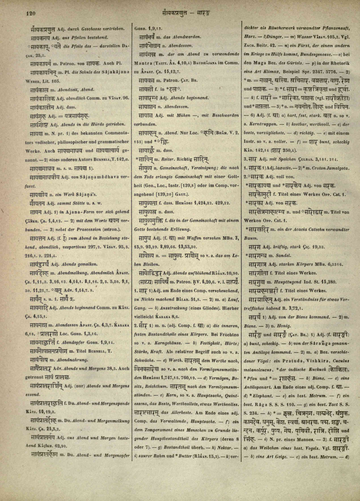
1. sāra — 1〉 Adj. am Ende eines Comp. verscheuchend, zu Nichte machend BĀLAR. 51,8. — 2〉 m. — a〉 Lauf, Gang. — b〉 Ausstreckung (eines Gliedes). Hierher vielleicht CARAKA. 8,6.
Original text · German · adjective · substantive masculine · substantive neuter
2. sā́ra — 1〉 m. n. (adj. Comp. f. ā) — a〉 die inneren, festen Bestandtheile eines Körpers. Bei Früchten so v. a. Kerngehäuse. — b〉 Festigkeit, Härte; Stärke, Kraft. Als relativer Begriff auch so v. a. Schwäche. — c〉 Werth. sāratas dem Werthe nach vibhavasāreṇa so v. a. nach den Vermögensumständen HEMĀDRI 1,747,15. 760,19. — d〉 Vermögen, Besitz, Reichthum. sāratas nach den Vermögensumständen. — e〉 Kern, so v. a. Hauptsache, Quintessenz, das Beste, Werthvollste, etwas Werthvolles. sārātsāram das Allerbeste. Am Ende eines adj. Comp. das Vorwaltende, Hauptsache. — f〉 ein dem Temperament eines Menschen zu Grunde liegender Hauptbestandtheil des Körpers (deren 8 oder 7). — g〉 Bestandtheil überh. — h〉 Nektar. — i〉 saurer Rahm und *Butter (RĀJAN. 15,2). — k〉 verdickter [Page7-120-c] als Räucherwerk verwandter Pflanzensaft, Harz. — l〉 Dünger. — m〉 Wasser VĀSAV. 105,2. Vgl. ZACH. Beitr. 42. — n〉 ein Fürst, der einem anderen im Kriege zu Hülfe kommt, Bundesgenosse. — o〉 bei dem Maga Bez. des Gürtels. — p〉 in der Rhetorik eine Art Klimax. Beispiel Spr. 2347. Spr. 5775. — 2〉 *m. = majjan, asthi, tvacisāra, vajrakṣāra, vāyu, roga und pāśaka. — 3〉 *f. sārā = kṛṣṇatrivṛtā und dūrvā. — 4〉 f. sārī = *sārikā, pāśana (vgl. sārīkrīḍā) und *saptalā. — 5〉 *n. = nacanīta, lauha und vipina. — 6〉 Adj. (f. ā) — a〉 hart, fest, stark. bala n. so v. a. Kerntruppen. — b〉 kostbar, werthvoll. — c〉 der beste, vorzüglichste. — d〉 richtig. — e〉 mit einem Instr. so v. a. voller. — f〉 = śāra bunt, scheckig KĀD. 142,14 (śāra Chr. 250,4).
Original text · German · adjective
3. sāra Adj. mit Speichen ŚULBAS. 3,181. 214.
Apte 1890 adjective · substantive neuter
Original text · English · adjective · substantive neuter
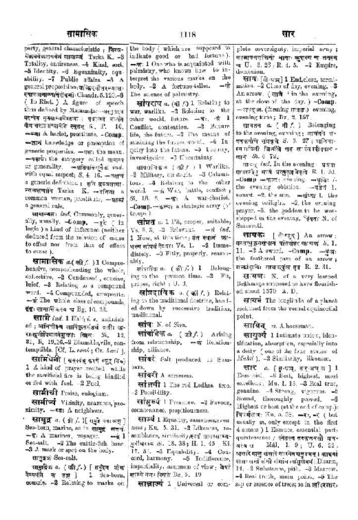
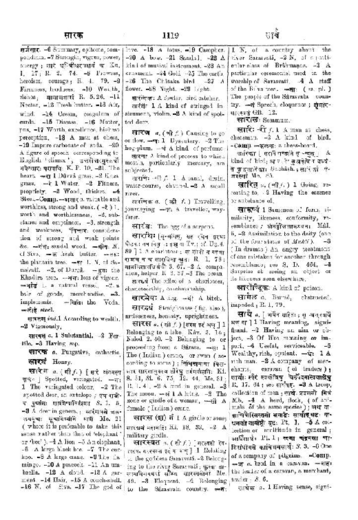
sāra a. [sṛ-ghañ, sār-ac vā] 1 Essential. 2 Best, highest, most excellent; Mu. 1. 13. 3 Real, true, genuine. 4 Strong, vigorous. 5 Sound, thoroughly proved. 6 Highest or best (at the end of comp.); trivargasāraḥ Ku. 5. 38. — raḥ, -raṃ (but usually m. only except in the first 4 senses) 1 Essence, essential part, quintessence; snehasya tatphalamasau praṇayasya sa Māl. 1. 9; U. 6. 22. asāre khalu saṃsāre sārametaccatuṣṭayam . kāśyāṃ vāsaḥ satāṃ saṃgo gaṃgāṃbhaḥ śaṃbhusevanaṃ .. Dharm. 14. 2 Substance, pith. 3 Marrow. 4 Real truth, main point. 5 The sap or essence of trees; as in khadirasāra, ([Page 1119-a]) sarjasāra. 6 Summary, epitome, compendium. 7 Strength, vigour, power, energy; sāraṃ dharitrīdharaṇakṣamaṃ ca Ku. 1. 17; R. 2. 74. 8 Prowess, heroism, courage; R. 4. 79. 9 Firmness, hardness. 10 Wealth, riches; gāmāttasārāṃ R. 5. 26. 11 Nectar. 12 Fresh butter. 13 Air, wind. 14 Cream, coagulum of curds. 15 Disease. 16 Matter, pus. 17 Worth, excellence, highest perception. 18 A man at chess. 19 Impure carbonate of soda. 20 A figure of speech corresponding to English ‘climax’; uttarottaramutkarṣo bhavetsāraḥ parāvadhiḥ K. P. 10. 21 The heart. — rā 1 Dūrvā grass. 2 Kuśa grass. — raṃ 1 Water. 2 Fitness, propriety. 3 Wood, thicket. 4 Steel. Comp. — asāra a. valuable and worthless, strong and weak. — (raṃ) 1 worth and worthlessness. 2 substance and emptiness. 3 strength and weakness. ˚vicāraḥ consideration of strong and weak points &c. — gaṃdhaḥ sandal wood. — grīvaḥ N. of Śiva. — jaṃ fresh butter. — taruḥ the plantain tree. — dā 1 N. of Sarasvatī. 2 of Durgā. — drumaḥ the Khadira tree. — bhaṃgaḥ loss of vigour. — bhāṃḍaṃ 1 a natural vessel. 2 a bale of goods, merchandise. 3 implements. — mitiḥ the Veda. — lohaṃ steel.
Cappeller 1887 substantive masculine · substantive neuter · Word type unspecified
Original text · German · substantive masculine · substantive neuter
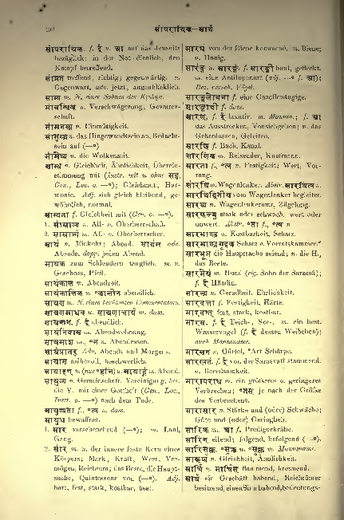
2. sā́ra m. n. der innere feste Kern eines Körpers; Mark, Kraft, Wert, Vermögen, Reichtum; das Beste, die Hauptsache, Quintessenz von (—˚). Adj. hart, fest, stark, kostbar, best.
Original text · German · Word type unspecified
1. sāra verscheuchend (—˚); m. Lauf, Gang.
Burnouf 1866 adjective
Original text · French · adjective
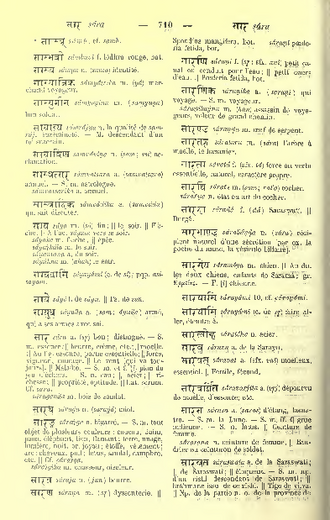
sāra sāra a. (sṛ) bon; distingué. — S. m. essence; beurre, crème, etc.; moelle. Au fig. essence, partie essentielle; force, vigueur; courage. Le vent [qui va toujours]. Maladie. — S. m. et f. [ī] pion du jeu d'échecs. — S. n. eau; acier; richesse; propriété, aptitude. Lat. sérum. Cf. sara. sāragandha m. bois de sandal.
Occurrences in source texts (14)
HP 5 occurrences
HP 3.33-3.48*1: Khecarī and Soma 2 occurrences
Direct occurrences
MandUp 1 occurrence
PJH 3 occurrences
VBT 5 occurrences
Continue with AYI Free
Image source: AYI archive.