

tala तल – surface; plane; sole
substantive feminine · substantive masculine · substantive neuter · Word type unspecified
Dictionary sources
AYI dictionary substantive neuter
surface; plane; sole
Cappeller 1891 substantive masculine · substantive neuter
Original text · English · substantive masculine · substantive neuter
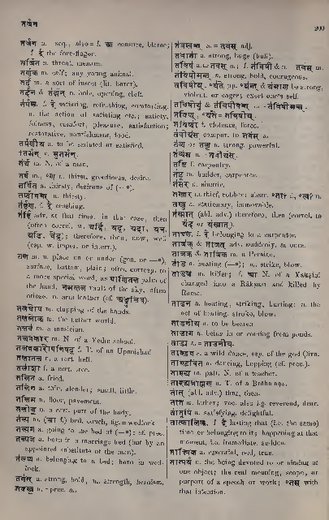
tala ·m. n. place on or under (gen. or --°), surface, bottom, plain; often corresp. to a more special word, as pāṇitala palm of the hand, nabhastala vault of the sky, often otiose. n. arm-leather (cf. aṅgulitra).
Monier-Williams 1872 substantive masculine · substantive neuter
Original text · English · substantive masculine · substantive neuter
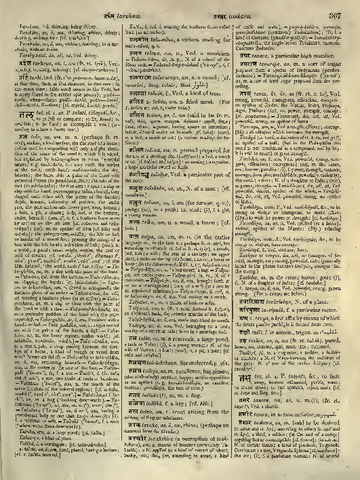
tala tala, as, am, m. n. (perhaps fr. rt. stṛ), surface, a level surface, the flat roof of a house; (often used in composition with only a slight altera- tion of the sense of the word to which it is added, but explained by lexicographers to mean ‘essential nature,’ e. g. mahī-tala, the very earth, the surface of the earth, earth itself; nabhas-tala, the sky, heaven); the inner side or palm of the hand with extended fingers (in pāṇi-tala, &c.); the sole of the foot (in pāda-tala); the fore-arm; a span; a slap or clap with the hand, (anyonyasya talān daduḥ, they slapped each other with the palms of the hands); depth, lowness, inferiority of position, the under part, the part underneath, lower part, base, bottom; a hole, a pit, a chasm; tale, ind. at the bottom, under, beneath; (am, ā), n. f. a leathern fence worn by archers on the left arm [cf. tala-tra and tala- trāṇa]; (as), m. an epithet of Śiva [cf. tāla and a-tala]; the palmyra-tree, = tāla; the hilt or haft or handle of a sword &c.; pressing the strings of a lute with the left hand; a division of hell; (am), n. a wood; a pond; cause, origin, motive, the root or seed of events; [cf. a-tala, jihvā-t˚, dharaṇī-t˚, ni-t˚, pra-t˚, mahā-t˚, rasā-t˚, vi-t˚, su-t˚; cf. also Hib. talamh, ‘the world, earth;’ Lat. tellus.]
Petersburger 1855 substantive masculine · substantive neuter · Word type unspecified
Original text · German · substantive masculine · substantive neuter
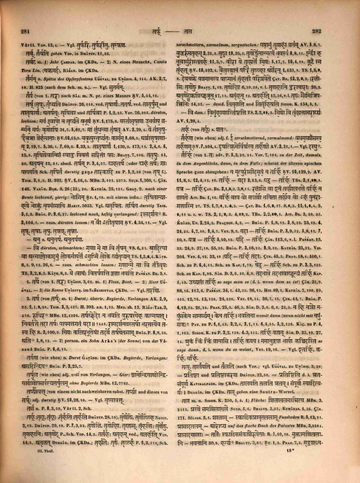
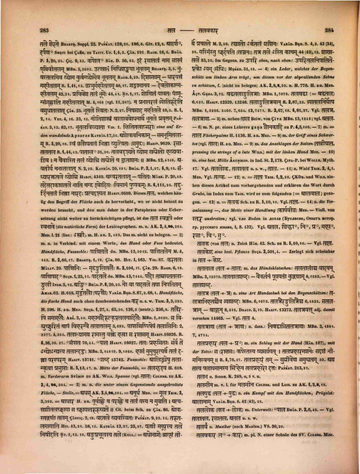
tala m.n. SIDDH. K. 250,b,8. 1〉 Fläche: śilātalamāśritya MBH. 3,2412. prasthe samaśilātale SUND. 4,6. BHARTṚ. 3,25. KUMĀRAS. 1,56. ŚĀK. 171. SŪRYAS. 3,1. śālām — sphāṭikaprāvṛtatalām Fussboden R. 5,13,11. prāsādatalam — āropya auf das flache Dach des Palastes MBH. 3,2582. prāsādamālāḥ — talaiḥ sphāṭikasaṃkāśairupetāḥ R. 5,10,10. muktāmaṇitalāni — bhavanāni R. 5,50,9. harmya˚ BHARTṚ. 3,81. ṚT. 1,3. PRAB. 7,5. mṛduśayanatale śerate BHARTṚ. Suppl. 25. PAÑCAT. 128,20. PAÑCAT. 186,8. GĪT. 12,2. ādarśa˚, darpaṇa˚ SMṚTI_bei_ŚAṂK._zu_TAITT. UP. 1,4,3. ŚĀK. 191 RAGH. 16,6. BHĀG. P. 5,20,35. ŚIŚ. 9,53. kapola˚ SĀH. D. 56,13. idaṃ rasātalaṃ nāma saptamaṃ pṛthivītalam MBH. 5,3602. utkhātaṃ nidhiśaṅkayā bhūtalam BHARTṚ. 3,5. bhuvastalamiva vyoma kurvanvyomeva bhūtalam RAGH. 4,29. diśāgajam — dhārayantaṃ mahītalam R. 1,41,13. jagmurmahītalam R. 1,40,17. gaṅgāmānaya — devalokānmahītalam R. 1,42,21. praviveśa talaṃ bhūmeḥ R. 1,44,41. ṚT. 1,17. śoṇitaṃ yāvataḥ pāṃśūnsaṃgṛhṇāti mahītalāt M. 4,168 (vgl. M. 11,207). na prabhātaralaṃ jyotirudeti vasudhātalāt ŚĀK. 25. bhūtale sthitaḥ N. 2,27. niṣasāda mahītale N. 10,5. R. 1,2,14. VET. 4,16. VET. 33,13. nītiśāstraṃ bālāvabodhanārthaṃ bhūtale pravṛttam PAÑCAT. 5,13. PAÑCAT. 63,17. bhūtalavikhyātā VID. 1. kṣititalāpsarāḥ eine auf Erden wandelnde Apsaras KATHĀS. 17,34. aśokavanikām — samabhūmitalām R. 5,20,10. svaṃ jalaughatalaṃ bhittvā vyutthitaḥ (samudraḥ) HARIV. 9639. rasātalatala R. 1,44,42. pātāla˚ R. 1,31,20. talavaddṛśyate vyoma khadyoto havyavāḍiva . na caivāsti talaṃ vyomni khadyote ca hutāśanaḥ .. MBH. 12,4148. avatīrya nabhastalāt N. 2,29. KATHĀS. 20,181. BHĀG. P. 2,1,27. BHĀG. P. 6,9,15. saṃdhyāraktatale vyomni HARIV. 4349. amvaratalāt — patitaḥ MĀRK. P. 20,48. tadetadākāśatale bhāti candra ivoditaḥ (vimānaṃ puṣpakam) R. 6,111,25. taddurdinatalaṃ bhittvā nāradaḥ pratyadṛśyata HARIV. 9609. Dieses tala, welches häufig den Begriff der Fläche auch da hervorhebt, wo er nicht betont zu werden braucht, und den man daher in der Paraphrase oder Uebersetzung nicht weiter zu berücksichtigen pflegt, ist das tala svarūpe oder svabhāve (die natürliche Form) der Lexicographen. m.n. AK. 3,4,26,204. MED. l. 21 (lies: 'strī). m. H. an. 2,489. Das m. nicht zu belegen. — 2〉 m.n. in Verbind. mit einem Worte, das Hand oder Fuss bedeutet, Handfläche, Fusssohle: pāṇitale du. MBH. 13,5013. pāṇitalena M. 4,143. R. 2,66,17. BHARTṚ. 1,19. ŚĀK. 80. HIT. I, 163. VID. 87. karatalaḥ MĀLAV. 39. pāṇibhiḥ — mṛdvaṅgulitalaiḥ R. 2,104,17. ŚĀK. 29. RAGH. 6,18. pāṇipāda˚ SUŚR. 1,25,11. pādatale du. MBH. 13,7444. pādau tāmrāyatatalāṅgulī INDR. 5,12. aṅghri˚ BHĀG. P. 8,20,23. no vā pādatale tayā nipatitam AMAR. 62. H. 618. mṛdutalau (caraṇau) VARĀH. BṚH. S. 67,2. VARĀH. BṚH. S. 68,1. Handfläche, die flache Hand auch ohne danebenstehendes kara u. s. w. TRIK. 3,3,393. H. 596. H. an. MED. SUŚR. 1,27,4. SUŚR. 1,65,20. SUŚR. 1,126,3 (neutr.). SUŚR. 256,8. talairapi samāhataiḥ ARJ. 3,40. mahānādairutkṛṣṭatalanāditaiḥ MBH. 1,8020. sa vidyucchuritaṃ cāpaṃ viharanvai talāttalam MBH. 3,695. pāpānniṣpiṣeyaṃ talāsibhiḥ MBH. 2,2377. MBH. 4,353. talābhyāmatha rāmastu vaktre hatvā sa rākṣasam HARIV. 16026. R. 6,36,36. R. 6,36,37 ˚saṃpāta R. 6,70,44. ˚ghāta HARIV. 16027. tataḥ prahasitāḥ sarve te 'nyo'nyasya talāndaduḥ MBH. 3,14819. MBH. 9,1860. hāsaṃ mumucuratyarthaṃ talaṃ dattvā parasparam HARIV. 15741. ˚śabda HARIV. 15742. Fusssohle: āliṅgyeṣu talānkṛtvā prasuptāḥ R. 5,13,47. n. Mitte der Fusssohle, = talahṛdaya H. 618. m. Vorderarm SVĀMIN_zu_AK. WILS. Spanne (vgl. tāla) COLEBR._zu_AK. 3,4,26,204. — 3〉 m.n. die unter einem Gegenstande ausgebreitete Fläche, — Stelle, = adhas AK. 3,4,26,204. = anūrdhva MED. = mūla TRIK. 3,3,393. = ādhāra H. an. pūrvāhṇe ca parāhṇe ca talaṃ yasya na muñcati . atyantaśītalacchāyā sa cchāyātarurucyate .. Cit. beim Sch. zu ŚĀK. 86. okastarūṇāṃ talam ŚĀNTIŚ. 2,19. vaṭatale vyavasthitaḥ PAÑCAT. 9,23. PAÑCAT. 9,14. tarutalamāyāti HIT. 43,21. HIT. 58,15. KATHĀS. 13,97. KATHĀS. 25,87. phaṇī mayūrasya tale niṣīdati ṚT. 1,13. ṚT. 1,18. aṅguṣṭhamūlasya tale (KULL.: = adhobhāge) brāhmaṃ tīrthaṃ pracakṣate M. 2,59. tyajato 'rkatalaṃ śaśinaḥ VARĀH. BṚH. S. 4,3. VARĀH. BṚH. S. 43 (34), 28. yasmiṃstu cchardayati (khañjanaḥ) tatra tale 'sti kācam VARĀH. BṚH. S. 44 (43), 12. śākhātale VARĀH. BṚH. S. 53,55. Im Gegens. zu upari oben, nach oben: uparitalanipātiteṣṭako 'yam (saṃdhiḥ) MṚCCH. 51,18. — 4〉 ein Leder, welches der Bogenschütz am linken Arm trägt, um diesen vor der abprallenden Sehne zu schützen, f. (nicht zu belegen) AK. 2,8,2,52. n. H. 776. H. an. MED. ĀŚV. GṚHY. 3,12. baddhatalāṅgulitrāḥ MBH. 1,7075. talabaddhā (= baddhatala) MBH. 6,621. HARIV. 12529. HARIV. 13246. talāṅgulitravān R. 2,87,23. jyātalanirghoṣa MBH. 1,5236. MBH. 1,5460. MBH. 7,654. MBH. 13,7471. R. 2,67,18. R. 6,81,27. Vgl. talatra, talatrāṇa. — 5〉 m. neben tāla Beiw. von Śiva MBH. 13,1243; vgl. atala. — 6〉 m. N. pr. eines Lehrers gaṇa śaunakādi zu P. 4,3,106. — 7〉 m. = tāla Fächerpalme H. 1136. H. an. MED. — 8〉 m. der Griff eines Schwertes (vgl. tāla) H. an. MED. — 9〉 m. das Anschlagen der Saiten (tantrīghāta, pressing the strings of a lute WILS.) mit der linken Hand MED. — 10〉 m. eine best. Hölle ĀRUṆIKOP._in_Ind. St. 2,178. ŚIVA-P._bei_WOLLH. Myth. 17. Vgl. talaloka, talātala u. s. w., tāla. — 11〉 n. Wald TRIK. 2,4,1. MED. Vgl. talka. — 12〉 n. = talla TRIK. 1,2,28. ŚKDR. und WILS. ziehen diesen Artikel zum vorhergehenden und erklären das Wort durch Grube, im Index zum TRIK. wird es zum folgenden (= ālavāla) gezogen. — 13〉 n. = talaka Sch. zu R. 5,10,10. Vgl. talla. — 14〉 n. die Veranlassung —, das Motiv einer Handlung (kāryavīja) MED. — Viell. von star ausbreiten; vgl. (тло Boden in дотла Буслаева, Опытъ истор. гр. русскаго языка, I, S. 132.) Vgl. atala, jihvā˚, ni˚, pra˚, mahā˚, rasā˚, vi˚, su˚.
Original text · German · Word type unspecified
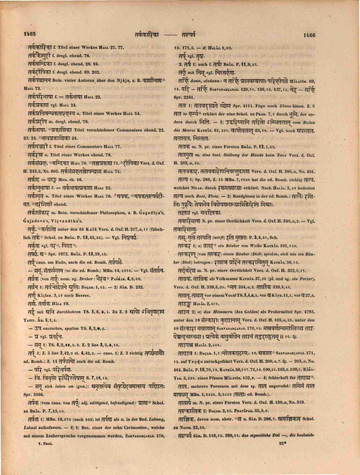
tala 1〉 talavaddṛśyate vyoma Spr. 4111. Füge noch Ebene hinzu. Z. 5 tala in harmya˚ erklärt der eine Schol. zu PRAB. 7,5 durch bhūmi, der andere durch bhitti. — 3〉 uddhariṣyāmi tadito 'bdhitalāt vom Boden des Meeres KATHĀS. 61,280. vāpītalāt KATHĀS. 63,18. — Vgl. noch adhastala, talātala, nistala.
Böhtlingk 1879 substantive feminine · substantive masculine · substantive neuter · Word type unspecified
Original text · German · substantive feminine · substantive masculine · substantive neuter
tala — 1〉 m. n. — a〉 Fläche, Ebene, Plan. Der Begriff der Fläche wird häufig auch da hervorgehoben, wo wir es nicht zu thun pflegen. *m. Am Ende eines adj. Comp. f. ā. — b〉 mit Hand oder Fuss verbunden, Handfläche, Fusssohle. — c〉 Handfläche, die flache Hand. anyo'nyasya oder parasparaṃtalaṃ oder talān dā einander in die Hände klatschen. — d〉 Fusssohle. *n. — e〉 die unter einem Gegenstande (Gen. oder in Comp. vorangehend) ausgebreitete Fläche, — Stelle. *m. — 2〉 — a〉 *Vorderarm. — b〉 Spanne. — c〉 *Schwertgriff. — d〉 Fächerpalme VIDDH. 44,9. — e〉 *das Anschlagen der Saiten mit der linken Hand. — f〉 ein best. Hölle. — g〉 Bein. Śivaʼs MBH. 13,17,130. — h〉 *N. pr. eines Lehrers. — 3〉 (*f.) n. ein Leder, welches der Bogenschütze am linken Arme trägt, um diesen vor der abprallenden Bogensehne zu schützen. — 4〉 f. ā N. pr. einer Tochter Raudrāśvaʼs VP.² 4,129. — 5〉 *n. — a〉 Mitte der Fusssohle. — b〉 Wald. — c〉 Teich. — d〉 = ālavāla 1〉 oder Grube. — e〉 die Veranlassung —, das Motiv einer Handlung.

Original text · German · Word type unspecified
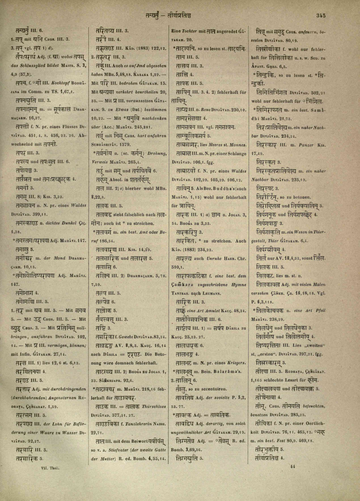
tala III. 2〉e〉 hierher wohl MBH. 8,22,8. [Nachtrag, Band 7]
Apte 1890 substantive masculine · substantive neuter
Original text · English · substantive masculine · substantive neuter
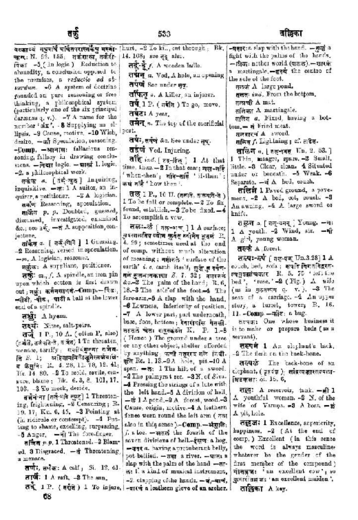
talaḥ -laṃ [tal-ac] 1 A surface; bhuvastalamiva vyoma kurvan vyomeva bhūtalaṃ R. 4. 29; sometimes used at the end of comp. without much alteration of meaning; mahītalaṃ ‘surface of the earth’ i. e. earth itself; śuddhe tū darpaṇatale mulabhāvakāśā Ś. 7. 32; nabhastalaṃ &c. 2 The palm of the hand; R. 6. 18. 3 The sole of the foot. 4 The fore-arm. 5 A slap with the hand. 6 Lowness, inferiority of position. 7 A lower part, part underneath, base, foot, bottom; revārodhasi vetasītarutale cetaḥ samutkaṃṭhate K. P. 1. 8 (Hence) The ground under a tree or any other object, shelter afforded by anything; phaṇī mayūrasya tale niṣīdati Rs. 1. 13. 9 A hole, pit. 10 A span. — laḥ 1 The hilt of a sword. 2 The palmyra tree. 3 N. of Śiva. 4 Pressing the strings of a lute with the left hand. 5 A division of hell. — laṃ 1 A pond. 2 A forest, wood. 3 Cause, origin, motive. 4 A leathern fence worn round the left arm (talā also in this sense). Comp. — aṃguliḥ f. a toe. — atalaṃ the fourth of the seven divisions of hell. — īkṣaṇaḥ a hog. — udara a. having a protuberant belly, pot-bellied. — udā a river. — ghātaḥ a slap with the palm of the hand. — tālaḥ 1 a kind of musical instrument. 2 clapping of the hands. — traṃ, -trāṇaṃ, — vāraṇaṃ a leathern glove of an archer. ([Page 0533-c]) — prahāraḥ a slap with the hand. — yuddhaṃ a fight with the palms of the hands. — lokaḥ nether world (pātāla). — sārakaṃ a martingale. — hṛdayaṃ the centre of the sole of the foot.
Original text · English · substantive masculine · substantive neuter
talaḥ -laṃ [tal-ac] 1 A surface; bhuvastalamiva vyoma kurvan vyomeva bhūtalaṃ R. 4. 29; sometimes used at the end of comp. without much alteration of meaning; mahītalaṃ ‘surface of the earth’ i. e. earth itself; śuddhe tū darpaṇatale mulabhāvakāśā Ś. 7. 32; nabhastalaṃ &c. 2 The palm of the hand; R. 6. 18. 3 The sole of the foot. 4 The fore-arm. 5 A slap with the hand. 6 Lowness, inferiority of position. 7 A lower part, part underneath, base, foot, bottom; revārodhasi vetasītarutale cetaḥ samutkaṃṭhate K. P. 1. 8 (Hence) The ground under a tree or any other object, shelter afforded by anything; phaṇī mayūrasya tale niṣīdati Rs. 1. 13. 9 A hole, pit. 10 A span. — laḥ 1 The hilt of a sword. 2 The palmyra tree. 3 N. of Śiva. 4 Pressing the strings of a lute with the left hand. 5 A division of hell. — laṃ 1 A pond. 2 A forest, wood. 3 Cause, origin, motive. 4 A leathern fence worn round the left arm (talā also in this sense). Comp. — aṃguliḥ f. a toe. — atalaṃ the fourth of the seven divisions of hell. — īkṣaṇaḥ a hog. — udara a. having a protuberant belly, pot-bellied. — udā a river. — ghātaḥ a slap with the palm of the hand. — tālaḥ 1 a kind of musical instrument. 2 clapping of the hands. — traṃ, -trāṇaṃ, — vāraṇaṃ a leathern glove of an archer. ([Page 0533-c]) — prahāraḥ a slap with the hand. — yuddhaṃ a fight with the palms of the hands. — lokaḥ nether world (pātāla). — sārakaṃ a martingale. — hṛdayaṃ the centre of the sole of the foot.
Cappeller 1887 substantive masculine · substantive neuter
Original text · German · substantive masculine · substantive neuter
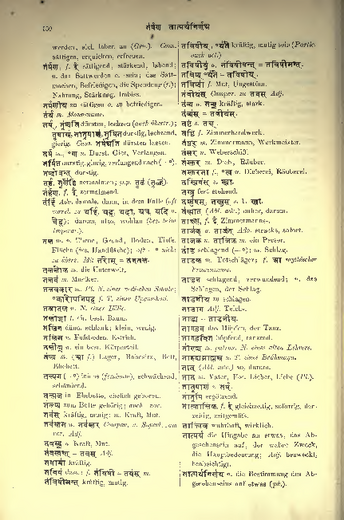
tala m. n. Ebene, Grund, Boden, Tiefe, Fläche (bes. Handfläche); oft—˚ nicht zu übers. Mit taros = tarutala.
Burnouf 1866 substantive neuter
Original text · French · substantive neuter
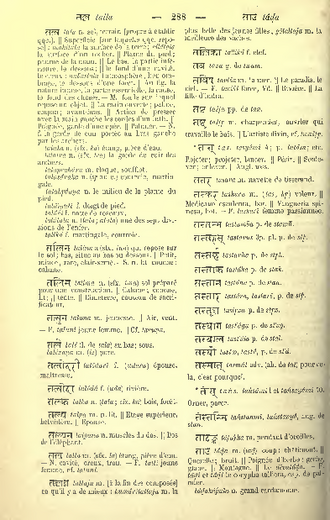
tala tala n. sol, terrain [propre à établir qqc.]. Superficie [sur laquelle qqc. repose]: mahītala la surface de la terre; śilātala la surface d'un rocher. Plante du pied; paume de la main. Le bas. la partie inférieure, le dessous; le fond d'une cavité, le creux: nabhastala l'atmosphère; lieu ombragé, le dessous d'une forêt. Au fig. la nature intime, la partie essentielle, la cause, le fond des choses. — M. fonds sur lequel repose un objet. La main ouverte; palme, empan; avant-bras. Action de presser avec la main gauche les cordes d'un luth. Poignée, garde d'une épée. Palmier. — N. f. la garde de cuir portée au bras gauche par les archers. talaka n. (sfx. ka) étang, pièce d'eau. talatra n. (sfx. tra) la garde de cuir des archers. talaprahāra m. claque, soufflet. talasāraka n. (sṛ au c.) courroie, martingale. talahṛdaya n. le milieu de la plante du pied. talāṅguli f. doigt de pied. talācī f. natte de roseaux. talatala n. (tala; atala) une des sept divisions de l'enfer. talikā f. martingale, courroie.
Occurrences in source texts (7)
GoS 1 occurrence
HP 4 occurrences
Continue with AYI Free
Image source: AYI archive.