

anubhava अनुभव – Erfahrung
Substantiv Maskulin · Worttyp nicht bestimmt
Wörterbuchquellen
AYI Wörterbuch Substantiv Maskulin
Erfahrung
Cappeller 1891 Substantiv Maskulin
Originaltext · Englisch · Substantiv Maskulin
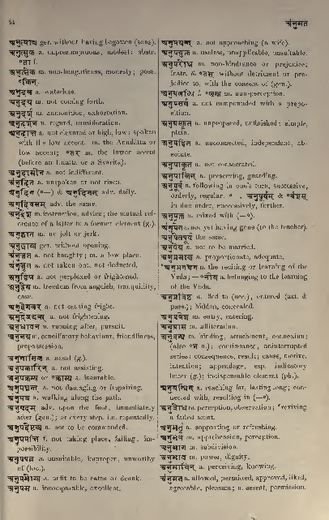
anubhava ·m. apprehension, perception.
Monier-Williams 1872 Substantiv Maskulin
Originaltext · Englisch · Substantiv Maskulin
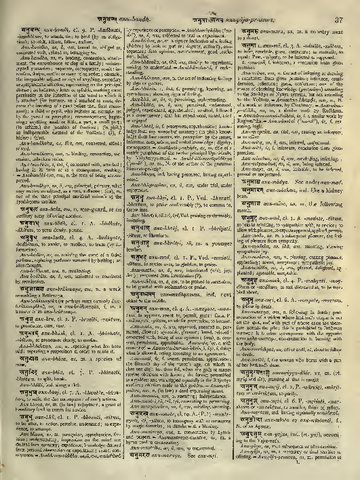
Anu-bhava, as, m. perception, apprehension, fru- ition; understanding; impression on the mind not derived from memory; experience, knowledge derived from personal observation or experiment; result, con- sequence.
Petersburger 1855 Substantiv Maskulin
Originaltext · Deutsch · Substantiv Maskulin
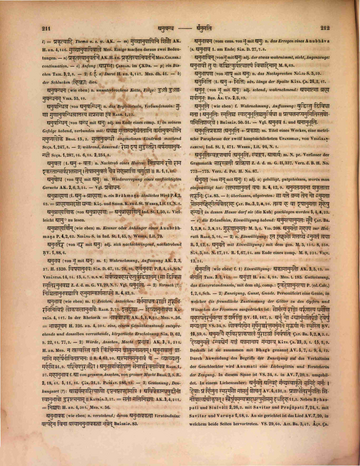
anubhava (von bhū mit anu) m. 1〉 Wahrnehmung, Auffassung AK. 3,3,27. H. 1520. viṣayānubhavaḥ SĀH. D. 67,15. SĀH. D. 76,10. haryanubhavaḥ P. 8,4,46, Sch. VEDĀNTAS. 14,14. VEDĀNTAS. 15,4. VEDĀNTAS. 15,7. u. s. w. sarvavyavahāraheturbuddhijñānam . sā dvividhā smṛtiranubhavaśca Z. d. d. m. G. VI, 29, N. 7. Vgl. anubhūti. — 2〉 Versuch (?): niścitānubhavaścāpi hanumānkāryasādhane R. 4,42,9.
Böhtlingk 1879 Substantiv Maskulin · Worttyp nicht bestimmt
Originaltext · Deutsch · Substantiv Maskulin
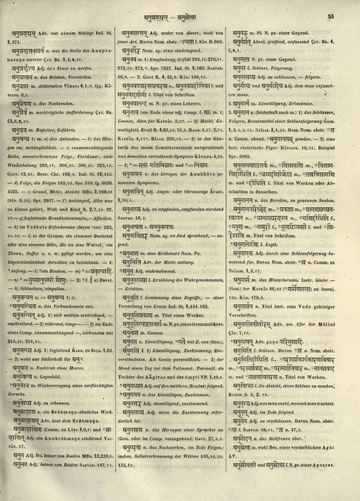
anubhava m. — 1〉 Empfindung, Gefühl Chr. 285,15. Chr. 270,31. Chr. 272,30. Chr. 273,7. Spr. 7627. Ind. St. 9,163. SARVAD. 16,9. — 2〉 Geist R. 4,42,9. KĀD. 196,16.
Originaltext · Deutsch · Worttyp nicht bestimmt
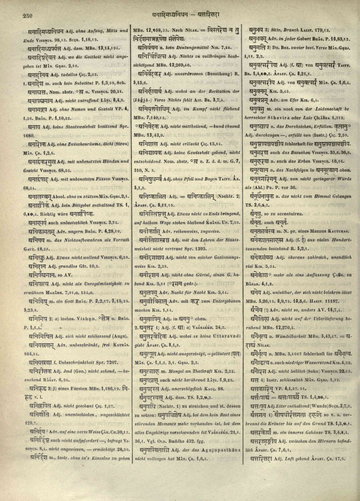
anubhava 3〉 Sitte, Brauch LALIT. 179,13. [Nachtrag, Band 3]
Originaltext · Deutsch · Worttyp nicht bestimmt
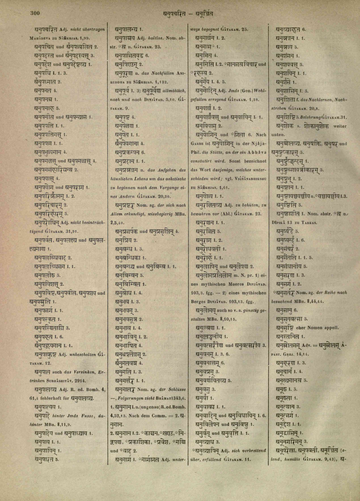
anubhava I. 3. [Nachtrag, Band 7]
Apte 1890 Substantiv Maskulin · Worttyp nicht bestimmt
Originaltext · Englisch · Substantiv Maskulin
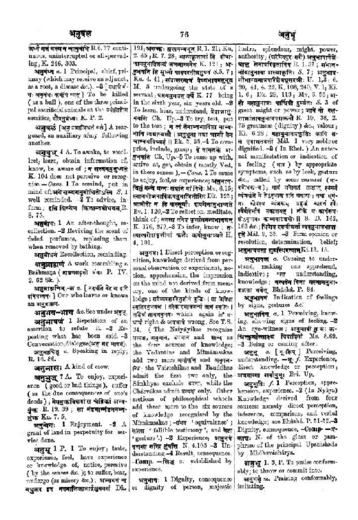
anubhavaḥ 1 Direct perception or cognition, knowledge derived from personal observation or experiment, notion, apprehension, the impression on the mind not derived from memory, one of the kinds of knowledge; sarvavyavahāraheturjñānaṃ buddhiḥ . sā dvividhā smṛtiranubhavaśca . saṃskāramātrajanyaṃ jñānaṃ smṛtiḥ . tadbhinnaṃ jñānamanubhavaḥ which again is yathārtha right & ayathārtha wrong. See T. S. 34. (The Naiyāyikas recognize pratyakṣa, anumāna, upamāna and śābda as the four sources of knowledge; the Vedāntins and Mīmāṃsakas add two more arthāpatti and anupalabdhi; the Vaiśeṣikas and Bauddhas admit the first two only, the Sāṃkhyas exclude upamā, while the Cārvākas admit pratyakṣa only. Other sections of philosophical schools add three more to the six sources of knowledge recognised by the Mīmāṃsakas; — saṃbhava ‘equivalence’; aitihya ‘fallible testimony’, and ceṣṭā ‘gesture’.) 2 Experience; anubhavaṃ vacasā sakhi luṃpasi N. 4. 105 3 Understanding. 4 Result, consequence. Comp. — siddha a. established by experience.
Originaltext · Englisch · Worttyp nicht bestimmt
anubhava -bhāva &c. See under anubhū.
Cappeller 1887 Substantiv Maskulin
Originaltext · Deutsch · Substantiv Maskulin
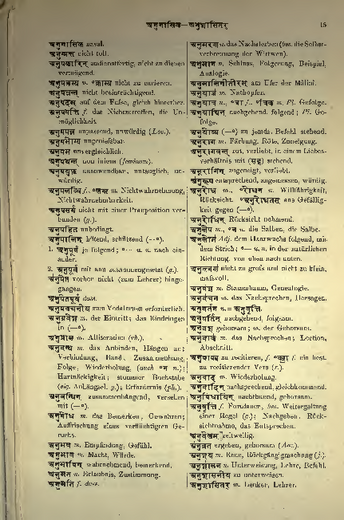
anubhava m. Empfindung, Gefühl.
Burnouf 1866 Substantiv Maskulin
Originaltext · Französisch · Substantiv Maskulin
anubhava anubhava m. conception, appréhension de l'idée.

Quelltextfundstellen (5)
HP 1 Fundstelle
SiSa 1 Fundstelle
SS 2 Fundstellen
VBT 1 Fundstelle
Mit AYI Free weitermachen
Bildquelle: AYI Archiv.