

bhava भव – Werden; Dasein; Existenz; Zustand
Adjektiv · Substantiv Maskulin · Substantiv Neutrum · Worttyp nicht bestimmt
Wörterbuchquellen
AYI Wörterbuch Substantiv Maskulin
Werden; Dasein; Existenz; Zustand
Herkunft
Cappeller 1891 Substantiv Maskulin
Originaltext · Englisch · Substantiv Maskulin
bhavá ·m. coming into existence, birth, birthplace, origin (often a. --° born of, sprung from, being in); becoming (--°); being, existence, world; means of existence, wealth, prosperity; N. of a god.
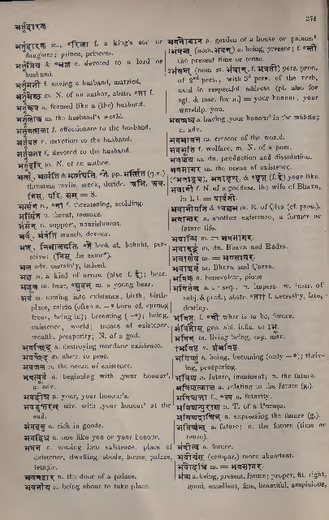
Monier-Williams 1872 Substantiv Maskulin · Worttyp nicht bestimmt
Originaltext · Englisch · Substantiv Maskulin
bhava bhava, as, m. (fr. rt. 1. bhū), = bhāva, being, state of being (= sat-tā), existing, existence; birth, production, origin; worldly existence, life; place of being, the world (= saṃ-sāra); means of exist- ence; a sound state of being, welfare, prosperity, health (= śreyas); excellence, superiority; (according to some) = āpti, prāpti, obtaining, acquisition; a god, deity; N. of a deity attending on Rudra and frequently mentioned in connection with Śarva; (in the later mythology) a N. of Śiva or a form of Śiva; N. of a Rudra; (according to some = jala, water); of a son of Mahā-deva; of Agni (Ved.); N. of the first and fourth Kalpa; of a king; of a son of Prati-hartṛ; of Vi- loman; of an author; (au), m. du. the god Bhava or Śiva with his wife Bhavānī; (am), n. the fruit of Dillenia Speciosa, = bhavya, bhaviṣya, 2. bhā- vana; (as, ā, am), arising, coming, produced or born from, originating in, relating to, (in these senses at the end of an adj. comp., e. g. deha-bh˚, produced from the body; ākāśa-bhavā, ‘coming from heaven,’ said of Sarasvatī; cf. araṇya-bh˚.)
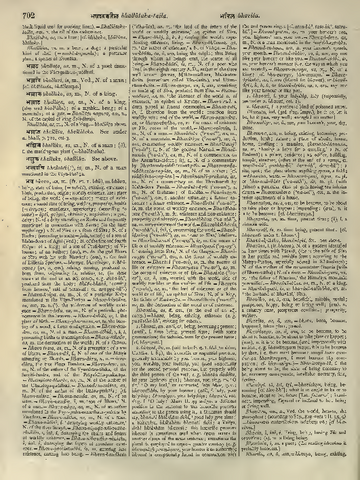
Originaltext · Englisch · Worttyp nicht bestimmt
Bhava, bhavat, bhavatu, bhavita, &c. See p. 702, cols. 1, 2, 3.
Petersburger 1855 Substantiv Maskulin · Substantiv Neutrum · Worttyp nicht bestimmt
Originaltext · Deutsch · Substantiv Maskulin · Substantiv Neutrum
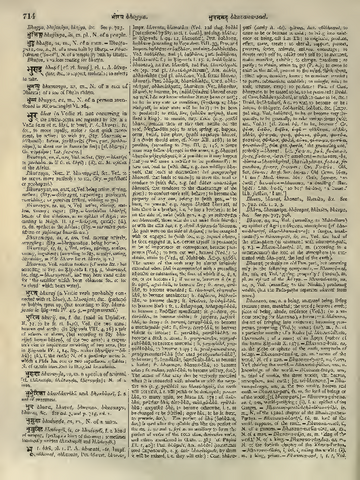
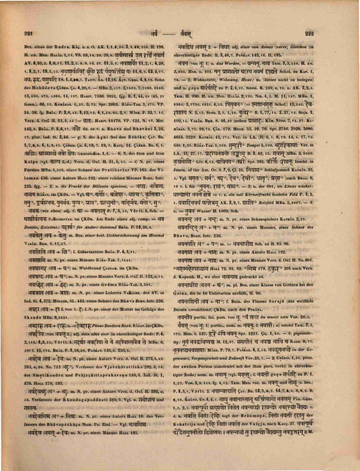
bhavá (von bhū) 1〉 m. KĀŚ._zu_P. 3,1,143. = bhāva VOP. 26,36. a〉 Entstehung, Geburt AK. 3,4,27,208. H. an. 2,532. MED. v. 20. jātisahasreṣu YĀJÑ. 3,64. prayāti jīvo 'yaṃ bhavaṃ yoniśateṣu YĀJÑ. 131. bhavo 'bhāvaḥ BHAG. 10,4. bhavo hi lokābhyudayāya tādṛśām RAGH. 3,14. ŚĀK. 186. Spr. 5209. yato bhavaḥ . manasaścendriyāṇāṃ ca bhūtānāṃ mahatāmapi BHĀG. P. 3,26,24. śāpabhavabhīru BRAHMA-P. in LA. (II) 55,9. bhūtabhavyabhavo hyasi du bist es ja, aus dem das Vergangene und Gegenwärtige entstanden ist, MĀRK. P. 99,48. sarvabhūta˚ MBH. 7,9489. bhūtabhavyabhavodbhava MBH. 7,9507. das Werden zu Etwas: kilāsaṃbhava KĀṬH. 33,4. Vgl. sāyaṃ˚. — b〉 am Ende eines adj. comp. (f. ā) das und da entstanden, von da und da kommend, da und da befindlich: gandhānnānāpuṣpabhavān R. 2,94,14. vanavāsabhavairduḥkhaiḥ R. GORR. 2,30,34. anṛtubhavā (vṛṣṭi) VARĀH. BṚH. S. 46,38. SŪRYAS. 11,3. tīrthe toyavyatikarabhave RAGH. 8,94. kumbhapūraṇa˚ (ninada) RAGH. 9,73. ādi˚ (pumaṃs) RAGH. 13,8. ākāśabhavā (sarasvatī) KUMĀRAS. 4,39. MEGH. 46. ŚĀK. 41, v. l. Spr. 132. Spr. 2808. Spr. 5046. AK. 2,9,54. SĀH. D. 14,6. SĀH. D. 71,15. H. 162. H. 1402. mūlaṃ traṣusībhavaṃ yat d. i. die Wurzel der Trapusī SUŚR. 2,481,12. AK. 1,1,2,3. AK. 2,8,1,23. H. 168. adūra˚ Sch. zu P. 1,2,51. P. 4,2,70. tatrabhavo raviḥ SŪRYAS. 3,40. Nach dem Schol. adj.: tatra pade bhava utpannaḥ. pañcayajñabhava so v. a. zu den fünf Opfern in Beziehung stehend KULL._zu_M. 3,286. — c〉 das Dasein, Existenz; = sattā TRIK. 3,3,419. H. an. MED. sattvasaṃbhavabhava Spr. 922. BURN. Intr. 487. BURN. Intr. 493. fg. Lot. de la b. l. 331. bhavāgra Lot. de la b. l. 309. bhavāntara eine andere, frühere Existenz Schol. zu KĀTY. ŚR. 38,24. eine künftige Existenz, das künftige Leben Spr. 3207. AK. 3,5,8. H. 1528. HALĀY. 5,91. — d〉 das weltliche Dasein, die Welt, = saṃsāra KĀŚ._zu_P. 3,1,143. TRIK. 1,1,133. TRIK. 3,3,419. H. an. MED. HALĀY. 5,20. YOGAS. 1,19. KUMĀRAS. 2,51. Spr. 664. Spr. 937. Spr. 993. Spr. 1412. Spr. 2036. Spr. 2071. Spr. 2156. Spr. 2894. Spr. 3317. Spr. 5229. PAÑCAR. 1,12,45 (pl.). MĀRK. P. 23,43. PRAB. 59,6. ˚kāntāra VYUTP. 153. bhavāraṇya Spr. 2032. bhavāmburāśi Spr. 2877. bhavārṇava Spr. 4100. PAÑCAR. 2,4,16. bhavābdhi PAÑCAR. 1,10,19 (lies: ˚bhavābdheḥ). Spr. 734. LA. (II) 92,21. ˚sindhu BHĀG. P. 1,6,35. bhaveśa, bhavabandheśa und bhavābdhināvināvika Beinn. von Śiva PAÑCAR. 1,8,18. bhavāri WEBER, RĀMAT. UP. 327. ˚cchid BHĀG. P. 2,6,35. BHĀG. P. 4,1,48. BHĀG. P. 9,9,14. PRAB. 108,6. bhavoccheda PRAB. 5. ˚ccheda ŚIŚ. 1,35. ˚nibandhavināśinī WEBER, RĀMAT. UP. 361. ˚nigaḍanibandhanacchedanī PAÑCAR. 1,2,7. bhavātiga PAÑCAR. 4,3,19. ˚mocana GĪT. 1,21. bhava in LA. (II) 32,6 ist schwerlich richtig, da das Wort niemals wie loka auch die Menschen bezeichnet; die erste Ausg. hat hier eine ganz andere Lesart. So ist auch Spr. 2525 die Lesart bhuvi vorzuziehen. — e〉 eine gute Existenz, Wohlfahrt, Heil; = śreyas H. an. = kṣema MED. bhavāya sa hi lokānāṃ rāvaṇasya vadhāya ca R. 1,19,5 (R. 1,19,13 GORR.). ko hi nāma bhavenārthī sāhasena samācaret MBH. 1,7958. yasmādudvijeta lokaḥ kathaṃ tasya bhavo bhavet MBH. 3,1050. MBH. 3,1066. bhavābhavau MBH. 1,1065. SĀV. 3,10. Spr. 5238. Spr. 5241. R. 2,22,22. R. 2,77,24. R. 5,21,22. R. 5,89,31. brāhmaṇā hi mahātmānaḥ śriyo mūlaṃ bhavasya ca R. GORR. 1,79,18. R. GORR. 1,79,19. Spr. 3769. ˚bhāvana BHĀG. P. 1,10,2. BHĀG. P. 8,6,19. sarvabhavāraṇi MĀRK. P. 19,7. Nach H. an. und MED. auch = āpti, prāptī Erlangung, Erreichung. — f〉 N. eines Gottes, Gefahrten des Rudra; oft in Verbindung mit Śarva genannt. In den späteren Schriften (vom MBH. an) = Śiva oder eine Form desselben; so auch Bez. eines der Rudra. KĀŚ. a. a. O. AK. 1,1,1,30. AK. 3,4,27,208. H. 198. H. an. MED. HALĀY. 1,11. VS. 16,18. VS. 16,28. VS. 39,8. śa̱rvāyāstrà u̱ta rājñè bha̱vāyà AV. 6,93,2. AV. 8,8,17. AV. 11,2,3. AV. 11,2,8. AV. 11,2,9. AV. 11,2,16. AV. 11,2,27. AV. 15,5,1. bhavāśarvau AV. 11,2,1. AV. 4,28,1. AV. 8,2,7. AV. 10,1,23. bha̱vā̱śa̱rvāvi̱daṃ brū̀mo ru̱draṃ pàśu̱patìśca̱ yaḥ AV. 11,6,9. AV. 12,4,17. bhava, rudra, paśupati TS. 1,4,36,1. TAITT. ĀR. 10,16. ĀŚV. GṚHY. 4,8,19. Sohn des Mahādeva ŚĀṄKH. ŚR. 4,20,1. — MBH. 2,417. MBH. 3,1618. MBH. 7,2898. MBH. 7,9586. MBH. 13,690. MBH. 13,875. MBH. 13,4360. MBH. 14,197. HARIV. 7586. HARIV. 9891. fgg. R. 1,44,28 (R. 1,45,21 GORR.). R. 1,66,11. KUMĀRAS. 1,21. KUMĀRAS. 3,72. Spr. 2005. RĀJA-TAR. 3,271. VP. 54. VP. 58. fg. BHĀG. P. 2,6,42. BHĀG. P. 3,12,12. BHĀG. P. 4,1,48. BHĀG. P. 4,1,64. BHĀG. P. 4,2,1. MĀRK. P. 52,7. MĀRK. P. 52,14. Verz. d. Oxf. H. 53,b,45 (= jala). HARIV. 14170. VP. 121, N. 17. MIT. 142,8. BHĀG. P. 6,6,17. bhavau du. so v. a. Bhava und Bhavānī BHĀG. P. 5,24,17. plur. Ind. St. 2,46. — g〉 N. des Agni (bei den Bāhīka) ŚAT. BR. 1,7,3,8. ŚAT. BR. 6,1,3,15. ŚĀṄKH. ŚR. 4,18,7. ŚĀṄKH. ŚR. 4,19,1. KAUŚ. 51. ŚĀṄKH. BR. 6,2. (agniḥ) āvasathye bhavo jñeyaḥ GṚHYASAṂGR. 1,6. — h〉 N. des 1ten und 4ten Kalpa (vgl. kalpa 2,d.) Verz. d. Oxf. H. 51,b,41. — i〉 N. pr. eines Fürsten MBH. 1,226. eines Sohnes des Pratihartar VP. 165. des Viloman VP. 436. eines Autors HALL 192. eines reichen Mannes BURN. Intr. 235. fgg. — 2〉 n. die Frucht der Dillenia speciosa, = bhavya, bhaviṣya, bhāvana RĀJAN._im_ŚKDR. — Vgl. a˚, arṇo˚, aśleṣā˚, ātma˚, kṛttikā˚, tanu˚, durvāgbhava, punarbhava, puṣpa˚, prāya˚, phalgunī˚, bahirbhava, mano˚, su˚.
Originaltext · Deutsch · Worttyp nicht bestimmt
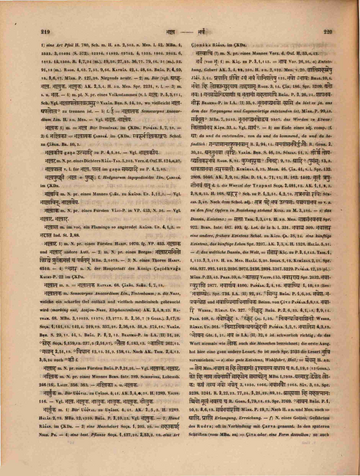
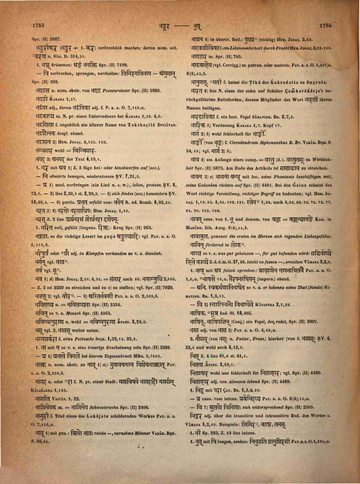
bhava 1〉d〉 HEM. YOGAŚ. 2,51. YOGAŚ. 4,54. = saṃsāra nach YOGAŚ. 66. bhavāmbudhi YOGAŚ. 2,106. — Z. 3 ist 5229 zu streichen und zu e〉 zu stellen; vgl. Spr. (II) 7029.
Böhtlingk 1879 Substantiv Maskulin · Substantiv Neutrum
Originaltext · Deutsch · Substantiv Maskulin · Substantiv Neutrum
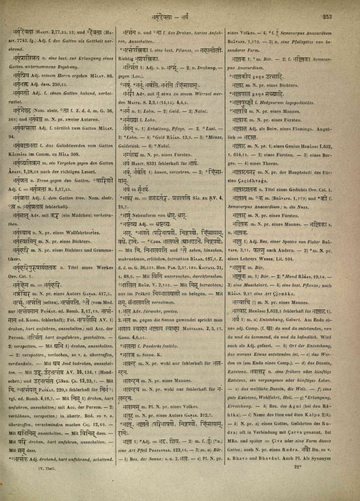
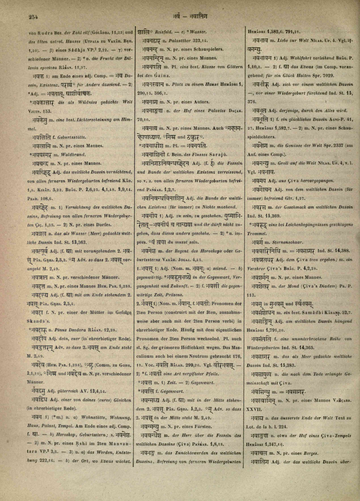
bhavá — 1〉 m. — a〉 Entstehung, Geburt. Am Ende eines adj. Comp. (f. ā) da und da entstanden, von da und da kommend, da und da befindlich. Wird auch als Adj. gefasst. — b〉 Ort der Entstehung, das woraus Etwas entstanden ist. — c〉 das Werden zu (am Ende eines Comp.). — d〉 das Dasein, Existenz. bhavāntara n. eine frühere oder künftige Existenz, ein vergangenes oder künftiges Leben. — e〉 das weltliche Dasein, die Welt. — f〉 eine gute Existenz, Wohlfahrt, Heil. — g〉 *Erlangung, Erreichung. — h〉 Bez. des Agni (bei den Bāhīka) — i〉 Name des 1ten und 4ten Kalpa 2〉h〉. — k〉 N. pr. — α〉 eines Gottes, Gefährten des Rudra; oft in Verbindung mit Śarva genannt. Im MBH. und Später = Śiva oder eine Form dieses Gottes; auch N. pr. eines Rudra. bhadau Du. so v. a. Bhava und Bhavānī. Auch Pl. Als Synonym [Page4-254-a] von Rudra Bez. der Zahl eilf (GOLĀDHY. 11,23) und des 11ten astrol. Hauses (UTPALA zu VARĀH. BṚH. 1,20). — β〉 eines Sādhya VP. 22,22. — γ〉 verschiedener Männer. — 2〉 *n. die Frucht der Dillenia speciosa RĀJAN. 11,97.
Apte 1890 Adjektiv · Substantiv Maskulin
Originaltext · Englisch · Adjektiv · Substantiv Maskulin
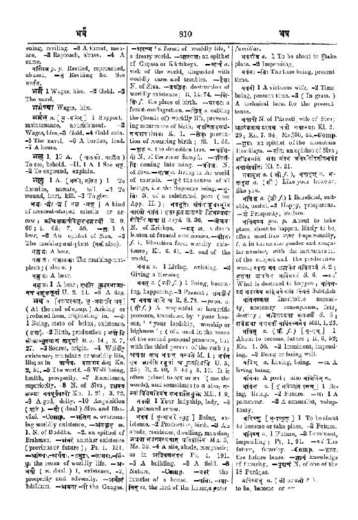
bhava a. [bhavatyasmāt, bhū-apādāne ap] (At the end of comp.) Arising or produced from, originating in. — vaḥ 1 Being, state of being, existence, (sattā). 2 Birth, production; bhavo hi lokābhyudayāya tādṛśāṃ R. 3. 14, Ś. 7. 27. 3 Source, origin. 4 Woldly existence; mundane or worldly life, life; as in vārṇava, vasāgara &c; Ku. 2. 51. 5 The world. 6 Well-being, health, prosperity. 7 Excellence, superiority. 8 N. of Śiva; dakṣasya kanyā bhavapūrvapatnī Ku. 1. 21; Ku. 3. 72. 9 A god, deity. 10 Acquisition (prāpti). — vau (dual) Śiva and Bhavānī. Comp. — atiga a. overcoming worldly existence. — aṃtakṛt m. 1 N. of Buddha. 2 an epithet of Brahman. — aṃtaraṃ another existence (previous or future); Pt. 1. 121. — abdhiḥ, -arṇavaḥ, -samudraḥ, -sāgaraḥ, — siṃdhuḥ the ocean of worldly life. — abhavau (m. dual.) 1 existence. 2 prosperity and adversity. — abhīṣṭaṃ bdellium. — ayanā -nī the Ganges. ([Page 0810-b]) — araṇyaṃ ‘a forest of worldly life,’ a dreary world. — ātmajaḥ an epithet of Gaṇeśa or Kārtikeya. — ārta a. sick of the world, disgusted with worldly cares and troubles. — īśaḥ N. of Śiva. — ucchedaḥ destruction of worldly existence; R. 14. 74. — kṣitiḥ f. the place of birth. — ghasmaraḥ a forest-conflagration. — chid a. cutting the (bonds of) worldly life, preventing recurrence of birth; bhavacchidastryaṃbakapadapāṃśavaḥ K. 1. — chedaḥ prevention of recurring birth; Śi. 1. 35. — dāru n. the devadāru tree. — nāśinī N. of the river Sarayū. — pratisaṃdhiḥ coming into being. — baṃgheśaḥ N. of Śiva. — bhāj a. living in the world of mortals. — bhūtaṃ the source of all beings, i. e. the Supreme being. — bhūtiḥ N. of a celebrated poet (see App. II.); bhavabhūteḥ saṃbaṃdhādbhūdharabhūreva bhāratī bhāti . etatkṛtakāruṇye kimanyathā roditi grāvā .. Āryā S. 36. — mocanaḥ N. of Kṛṣṇa. — rud m. a drum beaten at funeral ceremonies. — vītaḥ f. 1 liberation from worldly existence; Ki. 6. 41. 2 end of the world.
Cappeller 1887 Substantiv Maskulin
Originaltext · Deutsch · Substantiv Maskulin
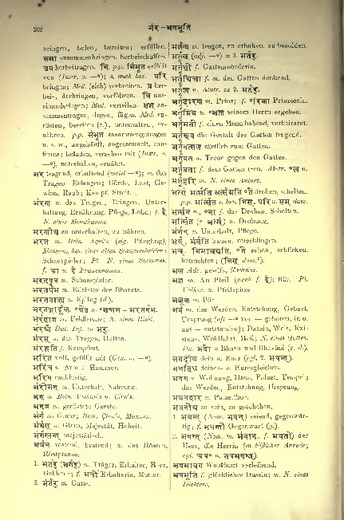
bhava m. das Werden, Entstehung, Geburt, Ursprung (oft — ˚ von — geboren, in o. aus — entstanden); Dasein, Welt, Existenz, Wohlfahrt, Heil; N. eines Gottes. Du. bhavau = Bhava und Bhavānī (s. d.).
Burnouf 1866 Substantiv Maskulin · Worttyp nicht bestimmt
Originaltext · Französisch · Substantiv Maskulin
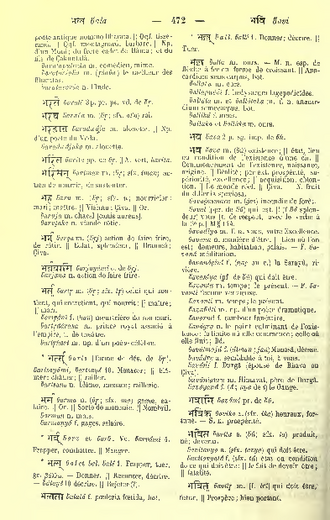
bhava bhava m. (bhū) existence; état, lieu ou condition de l'existence d'une ch. Commencement de l'existence, naissance, origine. Réalité; par ext. prospérité, supériorité, excellence; acquisition, obtention. Le monde réel. Śiva. — N. fruit du dillenia speciosa. bhavāghasamara m. (ghas) incendie de forêt. bhavat (ppr. de bhū) qui est. (? bhā splendeur) vous [t. de respect, avec le verbe à la 3ᵉ p.] M§ 114. bhavadiya m. f. n. vous, votre Excellence. bhavana n. manière d'être. Lieu où l'on est; demeure, habitation, palais. — F. bhavanā méditation. bhavanāśinī f. (naś au c.) la Sarayū, rivière. bhavanīya (pf. de bhū) qui doit être. bhavanta m. temps; le présent. — F. bhavantī femme vertueuse. bhavanti m. temps; le présent. bhavabhūti m. np. d'un poète dramatique. bhavarud f. tambour funéraire. bhavāgra n. le point culminant de l'existence; la limite où elle commence; celle où elle finit; Bd. bhavātmajā f. (ātman; jan) Manasā, déesse. bhavādṛś a. semblable à toi, à vous. bhavānī f. Durgā [épouse de Bhava ou Śiva]. bhavānīguru m. Himavat, père de Durgā. bhavāyanā f. (ā; aya de i) le Gange.
Originaltext · Französisch · Worttyp nicht bestimmt
bhava bhava 2p. sg. imp. de bhū.
Quelltextfundstellen (7)
GoS 1 Fundstelle
PYS 1 Fundstelle
SiSa 3 Fundstellen
SVU 1 Fundstelle
VBT 1 Fundstelle
Mit AYI Free weitermachen
Bildquelle: AYI Archiv.