

uttara उत्तर – folgend; später; nachfolgend; oberer; höherer; weiterer
Adjektiv · Substantiv Maskulin · Substantiv Neutrum · Worttyp nicht bestimmt
Wörterbuchquellen
AYI Wörterbuch Adjektiv
folgend; später; nachfolgend; oberer; höherer; weiterer
Cappeller 1891 Worttyp nicht bestimmt
Originaltext · Englisch · Worttyp nicht bestimmt
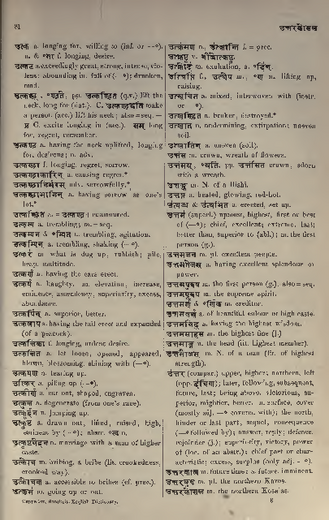
úttara ·(compar.) upper, higher; northern, left (opp. dákṣiṇa); later, following, subsequent, future, last; being above, victorious, superior, mightier, better. n. surface, cover (mostly adj. --° covered with); the north. hinder or last part, sequel, consequence (--° followed by); answer, reply; defence, rejoinder (j.); superiority, victory, power of (loc. of an abstr.); chief part of characteristic; excess, surplus (only adj. --°).
Monier-Williams 1872 Adjektiv · Worttyp nicht bestimmt
Originaltext · Englisch · Adjektiv
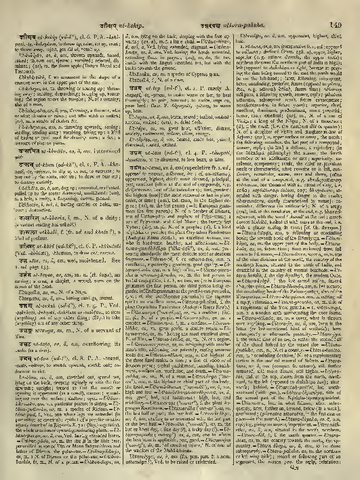
1. ut-tara, as, ā, am (comparative fr. 1. ud; opposed to adhara; declined Gram. 238. a), upper, higher, superior (e. g. uttare dantās, the upper teeth); northern (because the northern part of India is high); left (opposed to dakṣiṇa or right, because in pray- ing the face being turned to the east the north would be on the left-hand); later, following, subsequent, latter, concluding, posterior, future (opposed to pūrva, &c., e. g. uttaraḥ kālaḥ, future time; uttaraṃ vākyam, a following speech, answer, reply; phalam uttaram, subsequent result, future consequence; varṣottareṣu, in future years); superior, chief, excellent, dominant, predominant, more powerful; better, more excellent; (as), m., N. of a son of Virāṭa; a king of the Nāgas; N. of a mountain; (ā), f. the north (i. e. the northern diś or quarter); N. of a daughter of Virāṭa and daughter-in-law of Arjuna; (am), n. upper surface or cover; the north; the following member, the last part of a compound; answer, reply; (in law) a defence, a rejoinder; (in the Mimāṃsā philosophy) the answer, the fourth member of an adhikaraṇa or case; superiority, ex- cellence, competency; result, the chief or prevalent result or characteristic, what remains or is left, con- clusion, remainder, excess, over and above, (often at the end of a compound, e. g. ṣaṣṭyuttaraṃ sahasram, one thousand with an excess of sixty, i. e. 1060; saptottaraṃ śatam, 107; bhayottara, at- tended with danger, having danger as the result; dharmottara, chiefly characterized by virtue); re- mainder, difference (in arithmetic); N. of a song; (am), ind. at the conclusion, at the end, e. g. bhavad- uttaram, with the word ‘bhavad’ at the end; asrot- taram īkṣitā, looked at with tears at the end, i. e. with a glance ending in tears; [cf. Gr. ὕστερος.]
Originaltext · Englisch · Adjektiv
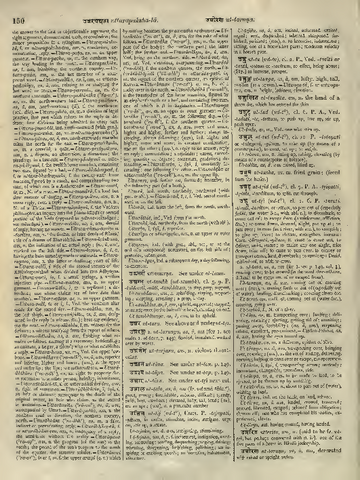
2. ut-tara, as, ā, am (for 1. see p. 149, col. 3), crossing over; to be crossed (in the word dur-uttara, difficult to be come out of or escaped from).
Originaltext · Englisch · Worttyp nicht bestimmt
uttara ut-tara. See above and under ut-tṝ.
Petersburger 1855 Adjektiv · Substantiv Maskulin · Substantiv Neutrum · Worttyp nicht bestimmt
Originaltext · Deutsch · Adjektiv · Substantiv Maskulin · Substantiv Neutrum
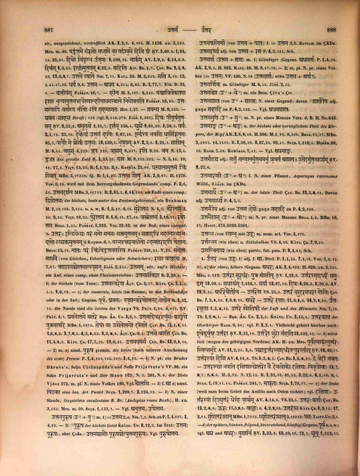
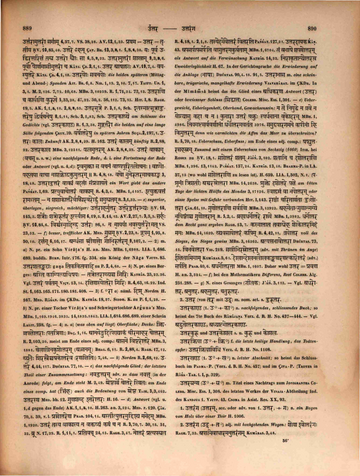
1. úttara (von ud) 1〉 adj. f. ā, Decl. P. 1,1,34. P. 7,1,16. VOP. 3,9. VOP. 3,12. VOP. 3,37. a〉 der obere, höhere (Gegens. adhara) AK. 3,4,192. H. 828. H. an. 3,524. MED. r. 119. uttàrā̱ sūradhàraḥ pu̱tra ā̀sīt ṚV. 1,32,9. uttàrasmā̱dadharàṃ samu̱dram ṚV. 10,98,5. sa̱dhasthàm ṚV. 1,154,1. sadmà ṚV. 10,67,10. di̱vaḥ ṚV. 4,26,6. ṚV. 8,20,6. AV. 10,2,24. adhàre̱ṇauṣṭhèna — uttàreṇa VS. 25,2. uttaraṃ hyudaramadharā yoniḥ ŚAT. BR. 7,5,1,38. ŚAT. BR. 8,6,2,15. adhare — uttare dantāḥ ŚAT. BR. 11,4,1,5. ŚAT. BR. 14,3,1,28. úttaramūlā ŚAT. BR. 1,2,4,16. uttare jyotiṣī der Luft und des Himmels NIR. 7,16. TS. 5,2,8,4. — BṚH. ĀR. UP. 2,2,2. CHĀND. UP. 3,15,1. uttarakāya der Oberkörper RAGH. 9,60; vgl. P. 2,2,1. Vielleicht gehört hierher auch: e̱veddhūrvṛṣṇa̱ uttàrā ṚV. 8,33,18. uttàro dhu̱ro vàhati ṚV. 10,102,10. — b〉 nördlich (wegen des gebirgigen Nordens) AK. H. an. MED. pūrvàsmāddha̱ṃsyuttàrasminsamu̱dre AV. 11,2,25. AV. 11,5,6. pa̱ścāduttàrasmā̱dadhàrātpu̱rastā̀t ṚV. 10,42,11. uttàrasyāṃ di̱śi AV. 4,14,8. TS. 5,3,4,4. ŚAT. BR. 5,5,4,21. dve vedī bhavataḥ — uttarānyā bhavati dakṣiṇānyottaro vai devaloko dakṣiṇaḥ pitṛlokaḥ ŚAT. BR. 12,7,3,7. ŚAT. BR. 12,8,3,6. M. 5,92. N. 12,43. R. 1,33,16. R. 1,41,22. R. 3,22,8. R. 4,1,16. R. 4,8,4. SUŚR. 1,19,11. SUŚR. 1,19,14. PAÑCAT. 241,7. mārutaḥ SUŚR. 1,76,17. — c〉 der linke (weil man beim Gebet das Antlitz nach Osten richtet; vgl. dakṣiṇa): uttàrasyāṃ di̱śyuttàraṃ dhehi pā̱rśvam AV. 4,14,8. VS. 25,5. uttaraḥ karṇaḥ ŚAT. BR. 12,2,4,6. ūruḥ ŚAT. BR. 11,5,2,5. bāhuḥ ŚAT. BR. 11,5,2,6. ŚAT. BR. 4,2,2,16. uttarāṃsa KĀTY. ŚR. 8,3,14. KĀTY. ŚR. 17,2,11. gūḍhottarāṃsān MBH. 1,7212. vyūḍhottarāṃsān MBH. 3,10249. pakṣaḥ TAITT. UP. 2,1. — d〉 der spätere, hintere, folgend, bevorstehend, künftig (Gegens. pūrva u. s. w.; vgl. agra und adhara): yu̱gānì ṚV. 3,33,8. ṚV. 10,10,10. ṚV. 10,72,1. dyūn ṚV. 1,113,13. uttàrāmuttarā̱ṃ samā̀m ṚV. 4,57,7. VS. 38,28. AV. 12,1,33. prathama — uttara — tṛtīya ṚV. 10,85,40. uttare 'han ŚAT. BR. 13,3,2,1. ŚAT. BR. 1,8,1,30. yaḥ pūrva uddhirantarikṣaṃ tadya uttaro dyauḥ sā ŚAT. BR. 6,4,2,22. uttarāmuttarāṃ śākhām ŚAT. BR. 9,3,3,6. pūrvāṃ paurṇamāsīmuttarāṃ ca KĀTY. ŚR. 2,1,1. uttara āṣāḍhāḥ AV. 19,7,4. vayasyuttare KĀTY. ŚR. 4,1,18. uttarayoḥ savanayoḥ die beiden späteren (Mittagund Abend-) Spenden AIT. BR. 6,8. NIR. 1,19. NIR. 2,10. NIR. 7,17. TAITT. UP. 1,3,1. M. 2,136. M. 7,72. M. 10,68. MBH. 3,10259. R. 1,71,24. R. 1,72,13. uttarāṇi ca kāryāṇi kurute R. 5,33,28. R. 5,47,22. R. 5,50,2. R. 5,56,112. R. 5,73,15. HIT. I, 8. RAGH. 19,5. AK. 1,1,5,18. AK. 2,8,2,55. uttarasūtre P. 3,1,6, Sch. etasmātsūtrāduttareṣu dvirvacaneṣu P. 8,1,11, Sch. P. 3,1,83, Sch. uttarakāvye am Schlusse des Gedichts (vgl. uttarakāṇḍa) R. 1,3,38. gurūttarau die beiden auf eine lange Silbe folgenden ŚRUT. 39. varṣottareṣu in spätern Jahren SUŚR. 2,197,1. uttaraḥ kālaḥ Zukunft AK. 2,8,1,29. H. 162. uttaraṃ kālam künftig R. 2,88,22. uttarakāla MBH. 3,12511. phalamuttaram AK. 2,8,1,29. uttaraṃ vākyam (vacas u. s. w.) eine nachfolgende Rede, d. i. eine Fortsetzung der Rede oder Antwort (vgl. u. 4,d〉): evamuktvā sa vacanaṃ vāṣpapūritalocanaḥ . vāṣpopahatayā vācā nāśaknodvaktumuttaram .. R. 4,8,18. vaco muneruttaramācakāṅkṣa R. 3,18,48. uttarāduttaraṃ vākyaṃ vadatāṃ saṃprajāyate ein Wort giebt das andere PAÑCAT. I, 69. pratyuvācottaraṃ vākyam R. 4,3,4. MBH. 1,4157. ityuktavantaṃ rāmastam — na śaśākottarairvākyairavaroddhuṃ samudyatam R. 3,1,33. — e〉 superior, überlegen, siegreich, mächtiger: uttàrā̱hamùttara̱ utta̱reduttàrābhyaḥ ṚV. 10,145,3. śatròḥ śatro̱ruttàra̱ itsyā̀ma ṚV. 6,19,3. ṚV. 8,14,15. AV. 2,27,7. AV. 3,5,5. sahàḥ ṚV. 10,84,6. viśvàsmā̱dindra̱ uttàraḥ ṚV. 10,86,1. na mā̱yayā̀ bhava̱syuttàro̱ mat VS. 23,52. — f〉 besser, trefflicher AK. MED. su̱mnam ṚV. 2,23,8. rū̱pam ṚV. 1,95,8. ṚV. 1,50,10. dakṣàm ṚV. 6,16,17. andhàsā śrī̱ṇanto̱ gobhi̱ruttàram ṚV. 9,107,2. — 2〉 m. a〉 N. pr. ein Sohn Virāṭaʼs H. an. MED. MBH. 1,6988. LIA. I, 686. LIA. I,689. buddh. BURN. Intr. 176. fg. BURN. Intr. 334. ein König der Nāga VYUTP. 85. uttaraśalaṅkaṭāḥ gaṇa tikakitavādi zu P. 2,4,68. — b〉 N. pr. eines Berges: asti kāmpilyaviṣayaḥ — tatrottarākhyaśca giriḥ KATHĀS. 25,23. KATHĀS. 25,26. Vgl. uttaraṃ parvatam VIŚV. 13,14. dakṣiṇasyottaro giriḥ R. 4,63,16. R. 4,63,22 Ind. St. 1,163. Ind. St. 1,165. Ind. St. 1,171. Ind. St. 1,180. Ind. St. 1,181. Ind. St. 1,408. — 3〉 f. ˚rā a〉 näml. diś Norden H. 167. MED. RĀJAN._im_ŚKDR. KATHĀS. 18,57. SIDDH. K._zu_P. 1,1,28. — b〉 N. pr. einer Tocher Virāṭaʼs und Schwiegertochter Arjunaʼs MED. MBH. 1,169. MBH. 1,1946. MBH. 1,3835. MBH. 14,1835. MBH. 14,1843. LIA. I, 684. LIA. I,686. LIA. I,689. einer Sclavin LALIT. 258. fg. — 4〉 n. a〉 (was oben auf liegt) Oberfläche; Decke: klinnapakṣottarāḥ (patatriṇaḥ) DAŚ. 1,16. ānayeṅgudipiṇyākaṃ cīramāhara cottaram R. 2,103,20. meist am Ende eines adj. comp.: āsane viṣṭarottare MBH. 3,1881. celājinakuśottaram (āsanam) BHAG. 6,11. R. 2,88,4. RAGH. 17,12. cyutaiḥ śirastraiścaṣakottareva (raṇakṣitiḥ) RAGH. 7,46. — b〉 Norden R. 2,68,12. uttare R. 4,44,117. DHŪRTAS. 77,10. — c〉 das nachfolgende Glied; der letztere Theil einer Zusammensetzung: bhavaduttaram adv. so dass bhavant (in der Anrede) folgt, am Ende steht M. 2,49. śreṣṭhārthe cottare sthitaḥ am Ende eines comp. hat (siṃha) auch die Bedeutung von śreṣṭha TRIK. 3,3,462. uttarastha MED. bh. 12. guṇaśabda itarottaraḥ H. 16. — d〉 Antwort (vgl. u. 1,d gegen das Ende) AK. 1,1,5,10. H. 263. H. an. 3,524. MED. r. 120. ŚĀK. 70,3. ŚĀK. 70,59, v. l. praśnottareṇa PRAB. 104,14. astītyuttaramuddiśya mamedam MBH. 1,1920. uttaraṃ tasya vākyasya na vaktavyaṃ kathaṃ ca na R. 3,70,7. R. 3,30,15. R. 3,51,32. brū N. 17,29. R. 1,14,1. prativac R. 1,24,15. RAGH. 3,47. nottaraṃ pratyapadyata R. 4,18,1. R. 2,1,8. tasyedamevottaraṃ vitarati PAÑCAT. 127,21. uttaradāyaka CĀṆ. 43. apasarpāpasarpeti vāguttaramakurvatām MBH. 1,6704. taṃ babhāṣe śapathottaram als Antwort auf die Verwünschung KATHĀS. 14,52. nirākṛtānyottaratva Unwiderleglichkeit H. 67. In der Gerichtssprache die Erwiederung auf die Anklage (bhāṣā) DHŪRTAS. 90,4. DHŪRTAS. 90,18. DHŪRTAS. 91,5. uttarābhāsa m. eine scheinbare, trügerische, mangelhafte Erwiederung VYAVAHĀRAT._im_ŚKDR. In der Mīmāṃsā heisst das 4te Glied eines adhikaraṇa Antwort (uttara) oder bewiesener Schluss (siddhānta) COLEBR. Misc. Ess. I, 301. — e〉 Uebergewicht, Ueberlegenheit, Oberhand, Gewachsensein: na te niyuddhe na jave na yogyāsu kadā ca na . kumārā uttaraṃ cakruḥ spardhamānā vṛkodaram MBH. 1,4986. niyamātsarvavarṇānāṃ dharmottaramavartata MBH. 1,3976. samudrapāragamane kapīnāṃ hi kimuttaram denn wie vermöchten die Affen das Meer zu überschreiten? R. 5,70,18. Ueberschuss, Ueberfluss; am Ende eines adj. comp.: ṣaṣṭyuttarasahasram Tausend mit einem Ueberschuss von Sechzig (1060) ITIH._bei_ROSEN_zu_ṚV. 18,1. saptottaraṃ śatam YĀJÑ. 3,102. śatāni ca daśottarāṇi MBH. 1,296. MBH. 13,1143. PAÑCAT. 157,24. KATHĀS. 13,40. BRAHMA-P. in LA. 57,15 (wo wohl saptottarāṇi zu lesen ist). H. 659. LIA. I, 502, N. 1. (paśūnāṃ triśatī) aśvaratnottarā MBH. 14,2638. śukle daśottare pakṣe am 10ten Tage der lichten Hälfte des Mondes MBH. 3,17126. svādvannaṃ vā bhayottaram oder süsse Speise mit Gefahr verbunden HIT. I, 143. rājñāṃ caritārthatā duḥkhottarā ŚĀK. 61,18. guṇottarāṇi sarvāṇi MBH. 3,13922. ahametānguṇānmanye bhūyiṣṭhāṃśca guṇottarān R. 5,2,4. brahmadharmottare rājye MBH. 1,3982. dharmottara dem Recht ganz ergeben RAGH. 13,7. kasmāttāta tavādyeha śokottaramidaṃ manaḥ MBH. 14,1639. vyavasāyottaraṃ kapim R. 4,42,11. jayottara voll des Sieges, des Sieges gewiss MBH. 3,16363. atyantabhāvottarā DHŪRTAS. 73,15. vibhavottarā VID. 219. sakhībhirasrottaram (adv. mit Thränen im Auge) īkṣitāmimām KUMĀRAS. 5,61. dolāndolanalolakaṅkaṇaraṇatkārottaraṃ (adv.) sarpati PRAB. 40,6. adharmottaratā MBH. 1,1607. Daher wohl uttara = pravaṇa H. an. 3,524. — f〉 bei den Mathematikern Differenz, Rest COLEBR. Alg. 251. COLEBR. Alg. 288. — g〉 N. eines Gesanges (gītaka) YĀJÑ. 3,113. — Vgl. adharottara, anuttara, ahamuttara, caturuttara.
Originaltext · Deutsch · Substantiv Maskulin
2. uttara (von tar mit ud) m. nom. act. s. duruttara.
Originaltext · Deutsch · Worttyp nicht bestimmt
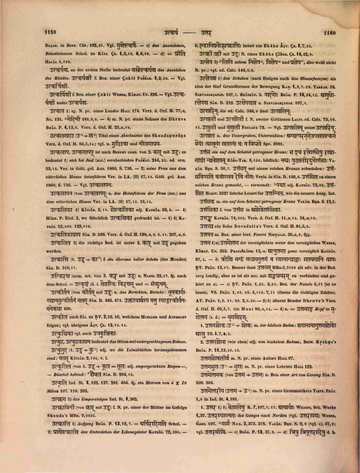
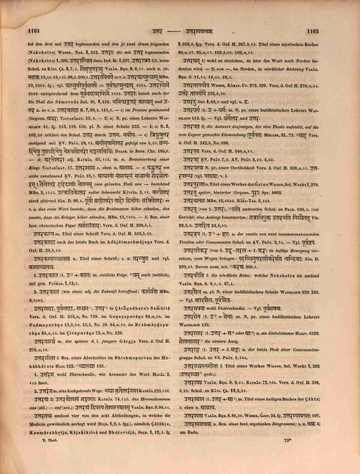
1. uttara 1〉b〉 kośaleṣu R. 7,107,7. R. 7,107,17 ācāryāḥ WILSON, Sel. Works 1,37. uttarasyāyanataḥ des Ganges nach Norden (vgl. uttarāyaṇa) WEBER, JYOT. 107. ˚mārga WEBER, Nax. 2,373. WEBER, Nax. 2,378. VARĀH. BṚH. S. 9,6 (vgl. 4). VARĀH. BṚH. S. 47,9; vgl. uttaravīthi. — c〉 BHĀG. P. 10,37,6. — d〉 triṣu triṣūttarādiṣu d. h. bei den drei mit uttara beginnenden und den je zwei ihnen folgenden (Nakṣatra) WEBER, Nax. 2,312. uttarāḥ die mit uttara beginnenden (Nakṣatra) WEBER, Nax. 1,309. uttarānbita dass. Ind. St. 5,297. uttarātraya Cit. beim Schol. zu KĀTY. ŚR. 4,7,4. tisṛṣūttarāsu VARĀH. BṚH. S. 6,11. auch n. (sc. nakṣatra) VARĀH. BṚH. S. 15,28. VARĀH. BṚH. S. 54,123. VARĀH. BṚH. S. 98,6. VARĀH. BṚH. S. 100,1. uttarāviṣaye so v. a. uttaraphalgunyām MBH. 13,3265. fg.; vgl. phalgunīpūrvasamaye = pūrvaphalgunyām MBH. 13,3264. uttarāyoge MBH. 13,3283 entsprechend dem pūrvabhādrapadāyoge MBH. 13,3282. uttarāḥ heisst auch der 2te Theil des Sāmaveda Ind. St. 8,151. bhaviṣyaduttaraṃ kāvyam und uttara n. so v. a. uttarakāṇḍa R. 7,99,2. R. 7,111,1. — e〉 im Process gewinnend (Gegens. adhara) VYAVAHĀRAT. 13,9. — 2〉a〉 N. pr. eines Lehrers WASSILJEW 41. fg. WASSILJEW 113. WASSILJEW 118. fg. WASSILJEW 150. pl. N. einer Schule WASSILJEW 233. — 4〉a〉 R. 2,103,20 erklärt der Schol. uttara durch uttama, navīna. — c〉 triṣṭubuttara endigend mit ṚV. PRĀT. 18,15. atītṛṣāmottara gefolgt von ṚV. PRĀT. 1,23. janmadineṣu puṇyadineṣu cotsavottaro maṅgalavidhiḥ DAŚAK._in_BENF. Chr. 180,6. — d〉 adattottarā adj. KATHĀS. 65,145. m.n. Beantwortung einer Klage VYAVAHĀRAT. 17. uttarābhāsa s. oben u. ābhāsa. — e〉 ṣaḻuttara um sechs zunehmend ṚV. PRĀT. 16,7. āḍhyānāṃ māṃsaparamaṃ madhyānāṃ gorasottaram . tailottaraṃ dadidrāṇāṃ bhojanam zum grössten Theil aus — bestehend MBH. 5,1143. utkalikottara voller Sehnsucht KĀVYĀD. 3,11. kampottara stark zitternd SĀH. D. 98,4. pūrvo brahmottaro vādo dvitīyaḥ kṣatriyottaraḥ so v. a. das erste Wort lautete, dass die Brahmanen höher ständen, das zweite, dass die Krieger höher ständen, MBH. 13,7200. — h〉 Bez. einer best. rhetorischen Figur (arthālaṃkāra) Verz. d. Oxf. H. 208,b,4.
Originaltext · Deutsch · Worttyp nicht bestimmt
1. uttara 4〉d〉 uttaraṃ dā Jmd (loc.) widersprechen Spr. (II) 584.
Böhtlingk 1879 Adjektiv · Substantiv Maskulin · Substantiv Neutrum · Worttyp nicht bestimmt
Originaltext · Deutsch · Adjektiv · Substantiv Maskulin · Substantiv Neutrum
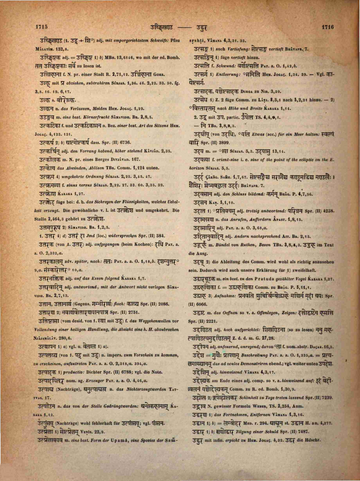
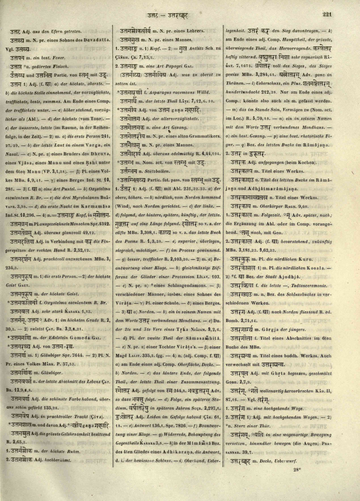
1. úttara — 1〉 Adj. (f. ā) mit Abl. Chr. 231,32. Chr. 231,33. — a〉 der obere, höhere. — b〉 nördlich, vom Norden kommend (Wind), nach Norden gerichtet. — c〉 der linke. — d〉 folgend, der hintere, spätere, künftig, der letzte. gúttara auf eine Länge folgend. daśottara so v. a. der eilfte MBH. 3,308,1. kāvya so v. a. das letzte Buch des Poems R. 1,3,38. — e〉 superior, überlegen, siegreich, mächtiger. — f〉 in Process gewinnend. — g〉 besser, trefflicher R. 2,103,20. — 2〉 m. — a〉 Beantwortung einer Klage. — b〉 gleichmässige Differenz der Glieder einer Prozession LĪLĀV. 103. — c〉 N. pr. — α〉 *eines Schlangendämons. — β〉 verschiedener Männer, insbes. eines Sohnes des Virāṭa. — γ〉 Pl. einer Schule. — δ〉 eines Berges. — 3〉 ā — a〉 Norden. — b〉 ein in seinem Namen mit dem Worte uttara. verbundenes Mondhaus. — c〉 Du. der 2te und 3te Vers eines Tṛca NYĀYAM. 9,2,6. — d〉 Pl. der zweite Theil der Sāmasaṃhitā. — e〉 N. pr. — α〉 einer Tochter Virāṭaʼs. — β〉 einer Magd LALIT. 335,2. fgg. — 4〉 n. (adj. Comp. f. ā) — a〉 am Ende eine adj. Comp. Oberfläche, Decke. — b〉 Norden. — c〉 das hintere Ende, der folgende Theil, der letzte Theil einer Zusammensetzung. smottara Adj. gefolgt von sma Chr. 244,8. bhavaduttaram Adv. so dass bhavant folgt. — d〉 Folge, ein späteres Stadium. varṣottareṣu in späteren Jahren SUŚR. 2,297,1. duḥkhottara Adj. Leiden im Gefolge habend ŚĀK. 61,18. — e〉 Antwort Chr. 136,1. Spr. 7826. — f〉 Beantwortung einer Klage. — g〉 Widerrede, Behauptung des Gegentheils CARAKA. 3,8. — h〉 in der Mīmāṃsā Bez. des 4ten Gliedes eines Adhikaraṇa, die Antwort, d. i. der bewiesene Schluss. — i〉 Oberhand, Ueberlegenheit. [Page1-221-c] uttaraṃ kar den Sieg davontragen. — k〉 am Ende eines adj. Comp. Haupttheil, der grösste, überwiegende Theil, das Hervorragende. kampottara heftig zitternd. vṛṣṭyuttarā niśā sehr regnerisch RĀJAT. 7,1675. jayottara voll des Sieges, des Sieges gewiss MBH. 3,284,41. asrottaram Adv. ganz in Thränen. — l〉 Ueberschuss, ein Plus. śatamaṣṭottaram hundertundacht Chr. 212,28. Nur am Ende eines adj. Comp. könnte also auch als m. gefasst werden. — m〉 das im Stande Sein, Vermögen zu (Nom. act. im Loc.) R. 5,70,18. — n〉 ein in seinem Namen mit dem Worte uttara verbundenes Mondhaus. — o〉 ein best. Gesang. — p〉 eine best. rhetorische Figur. — q〉 Bez. des letzten Buchs im Rāmāyaṇa.
Originaltext · Deutsch · Worttyp nicht bestimmt
2. uttara in duruttara.
Apte 1890 Adjektiv · Substantiv Maskulin · Substantiv Neutrum
Originaltext · Englisch · Adjektiv · Substantiv Maskulin · Substantiv Neutrum
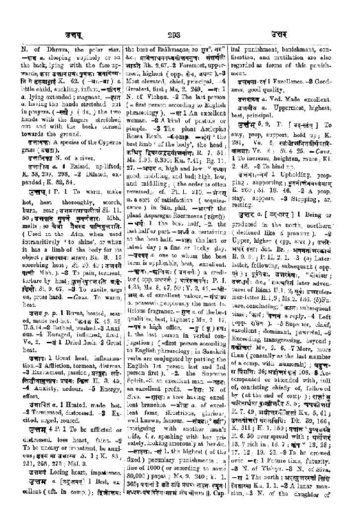
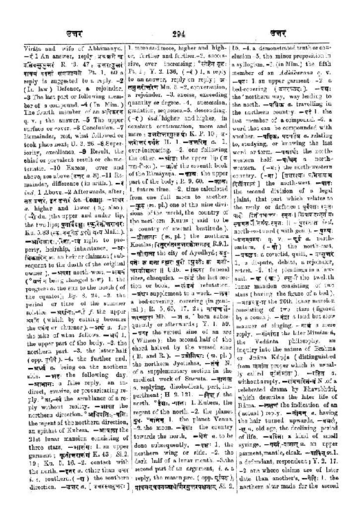
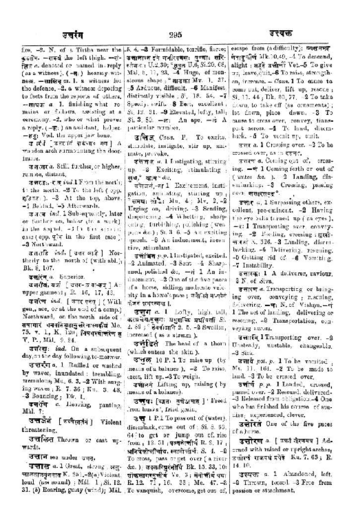
uttara a. [ud-tarap] 1 Being or produced in the north, northern (declined like a pronoun). 2 Upper, higher (opp. adhara); uttareadhare daṃtāḥ Śat. Br.; avanatottarakāyaṃ R. 9. 60; P. II. 2. 1. 3 (a) Later-latter, following, subsequent (opp. pūrva); pūrvameghaḥ, uttarameghaḥ, ˚bhīmāṃsā; uttarārdhaḥ &c.; ˚rāmacaritaṃ later adventures of Rāma U. 1. 2; pūrvaḥ-uttaraḥ former-latter H. 1. 9; Ms. 2. 136. (b) Future, concluding; ˚kālaḥ subsequent time; ˚phalaṃ; ˚vacanaṃ a reply. 4 Left (opp. dakṣiṇa). 5 Superior, chief, excellent; dominant, powerful. 6 Exceeding, transgressing, beyond; tarkottarāṃ Mv. 2. 6. 7 More, more than (generally as the last member of a comp. with numerals); ṣaḍuttarā viṃśatiḥ 26; aṣṭottaraṃ śataṃ 108. 8 Accompanied or attended with, full of, consisting chiefly of, followed by (at the end of comp); rājñāṃ tu caritārthatā duḥkhottaraiva Ś. 5; caṣakottarā R. 7. 49; asrottaramīkṣitāṃ Ku. 5. 61; utsavottaro maṃgalavidhiḥ Dk. 39, Dk. 166; K. 311; H. 1. 150; pravāla˚ puṣpaśayye R. 6. 50 over spread with; dharmottaraṃ R. 13. 7 rich in; R. 18. 7; kaṃpa˚ R. 13. 28; R. 17. 12; R. 19. 23. 9 To be crossed over. — raḥ 1 Future time, futurity. 2 N. of Viṣṇu. 3 N. of Śiva. — rā 1 The north; astyuttarasyāṃ diśi devatātmā Ku. 1. 1. 2 A lunar mansion. 3 N. of the daughter of ([Page 0294-a]) Virāṭa and wife of Abhimanyu. — raṃ 1 An answer, reply; pracakrame ca prativaktumuttaraṃ R. 3. 47; uttarāduttaraṃ vākyaṃ vadatāṃ saṃprajāyate Pt. 1. 60 a reply is suggested to a reply. 2 (In law) Defence, a rejoinder. 3 The last part or following member of a compound. 4 (In Mīm.) The fourth member of an adhikaraṇa q. v.; the answer. 5 The upper surface or cover. 6 Conclusion. 7 Remainder, rest, what followed or took place next; U. 3. 26. 8 Superiority, excellence. 9 Result, the chief or prevalent result or characteristic. 10 Excess, over and above; see above (uttara a. 8). 11 Remainder, difference (in arith.). — raṃ ind. 1 Above. 2 Afterwards, after; tata uttaraṃ, ita uttaraṃ &c. Comp. — adhara a. higher and lower (fig. also). ( — rau du.) the upper and under lip, the two lips; punarvivakṣuḥ sphuritottarādharaḥ Ku. 5. 83; (spharaṇabhūyiṣṭho'dharo yasya Malli.). — adhikāraḥ, -ritā, -tvaṃ right to property, heirship, inheritance. — adhikārin m. an heir or claimant (subsequent to the death of the original owner). — aparā north-west. — ayanaṃ (˚yaṇaṃ na being changed to ṇa) 1 the progress of the sun to the north (of the equator); Bg. 8. 24. 2 the period or time of the summer solstice. — araṇiḥ, -ṇī f. the upper araṇi (which by cutting becomes the pramaṃtha or churner). — artha a. for the sake of what follows. — ardhaṃ 1 the upper part of the body. 2 the northern part. 3 the latter half (opp. pūrvārdha). 4 the further end. — ardhya a. being on the northern side. — ahaḥ the following day. — ābhāsaḥ a false reply, an indirect, evasive, or prevaricating reply. ˚tā, -tvaṃ the semblance of a reply without reality. — āśā the northern direction. ˚adhipatiḥ, -patiḥ the regent of the northern direction, an epithet of Kubera. — āṣāḍhā the 21st lunar mansion consisting of three stars. — āsaṃgaḥ 1 an upper garment; kṛtottarāsaṃgaṃ K. 43; Śi. 2. 19; Ku. 5. 16. 2 contact with the north. — itara a. other than uttara i. e. southern. — (rā) the southern direction. — uttara a. [uttarasmāduttaraḥ] ([Page 0294-b]) 1 more and more, higher and higher, further and further. 2 successive, ever increasing; ˚snehena dṛṣṭaḥ Pt. 1; Y. 2. 136. — (raṃ) 1 a reply to an answer, reply on reply; alamuttarottareṇa Mu. 3. 2 conversation, a rejoinder. 3 excess, exceeding quantity or degree. 4 succession, gradation, sequence. 5 descending. — (raṃ) ind. higher and higher, in constant continuation, more and more; uttarottaramutkarṣaḥ K. P. 10; uttarottaraṃ vardhate H. 1. — uttarin a. 1 ever-increasing. 2 one following the other. — oṣṭhaḥ the upper lip (u ttaro-rau-ṣṭhaḥ). — kāṃḍaṃ the seventh book of the Rāmāyaṇa. — kāyaḥ the upper part of the body; R. 9. 60. — kālaḥ 1 future time. 2 time calculated from one full moon to another. — kuru (m. pl.) one of the nine divisions of the world, the country of the northern Kurus (said to be a country of eternal beatitude). — kosalāḥ (m. pl.) the northern Kosalas; pituranaṃtaramuttarakosalān R. 9. 1. — kośalā the city of Ayodhyā; yadupateḥ kva gatā mathurā purī raghupateḥ kva gatottarakośalā .. Udb. — kriyā funeral rites, obsequies. — khaṃḍaṃ the last section or book. — khaṃḍanaṃ refutation. — graṃthaḥ supplement to a work. — chadaḥ a bed-covering, covering (in general); R. 5. 65, R. 17. 21; nāgacarmottaracchadaḥ Mb. — ja a. born subsequently or afterwards; Y. 1. 59. — jyā the versed sine of an arc (Wilson); the second half of the chord halved by the versed sine (B. and R.). — jyotiṣāḥ (m. pl.) the northern Jyotiṣas. — taṃtraṃ N. of a supplementary section in the medical work of Suśruta. — dāyaka a. replying, disobedient, pert, impertinent; H. 2. 121. — diś f. the north. ˚īśaḥ, -pālaḥ 1 Kubera, the regent of the north. 2 the planet budha. ˚balin 1 the planet Venus. 2 the moon. — deśaḥ the country towards the north. — dheya a. to be done subsequently. — pakṣaḥ 1 the northern wing or side. 2 the dark half of a lunar month. 3 the second part of an argument, i. e. a reply, the reason pro. (opp. pūrvapakṣa); prāpayan pavanavyādhergiramuttarapakṣatām ([Page 0294-c]) Śi. 2. 15. 4 a demonstrated truth or conclusion 5 the minor proposition in a syllogism. 6 (in Mīm.) the fifth member of an Adhikaraṇa q. v. — paṭaḥ 1 an upper garment. 2 a bed-covering (uttaracchadaḥ). — pathaḥ the northern way, way leading to the north. — pathika a. travelling in the northern country. — padaṃ 1 the last member of a compound. 2 a word that can be compounded with another. — padika, padakīya a. relating to, studying, or knowing the last word or term. — paścārdhaḥ the northwestern half. — paścima a. northwestern. — (maḥ) the north-western country. — (mā) [uttarasyāḥ paścimāyāśca diśoṃtarālaṃ] the north-west. — pādaḥ the second division of a legal plaint, that part which relates to the reply or defence; pūrvapakṣaḥ smṛtaḥ pādo dvitīyaścottaraḥ smṛtaḥ . kriyāpādastṛtīyaḥ syāccaturyonirṇayaḥ smṛtaḥ .. — purastāt ind. northeastward (with gen.). — puruṣaḥ = uttamapuruṣaḥ q. v. — pūrva a. northeastern. — (rvā) the northeast. — pracchadaḥ a coverlid, quilt. — pratyuttaraṃ 1 a dispute, debate, a rejoinder, retort. 2 the pleadings in a lawsuit. — pha (phā) lgunī the twelfth lunar mansion consisting of two stars (having the figure of a bed). — bhādrapad-dā the 26th lunar mansion consisting of two stars (figured by a couch). — maṃdrā a loud but slow manner of singing. — mātraṃ a mere reply. — mīmāṃsā the later Mīmāṃsā, the Vedānta philosophy, an inquiry into the nature of Brahma or Jñāna Kāṇḍa (distinguished from māṃmāṃsā proper which is usually called pūrvamīmāṃsā). — rahita a. without a reply. — rāmacaritaṃ-traṃ N. of a celebrated drama by Bhavabhūti, which describes the later life of Rāma. — lakṣaṇaṃ the indication of an (actual) reply. — loman a. having the hair turned upwards. — vayasaṃ, — s n. old age, the declining period of life. — vastiḥ a kind of small syringe. — vastraṃ, -vāsas n. an upper garment, mantle, cloak. — vādin m. 1 a defendant, respondent; Y. 2. 17. 2 one whose claims are of later date than another's. — vediḥ 1 the northern altar made for the sacred ([Page 0295-a]) fire. 2 N. of a Tīrtha near the kurukṣetra. — sakyaṃ the left thigh. — saṃjñita a. denoted or named in reply (as a witness). — (taḥ) hearsay-witness. — sākṣin m. 1 a witness for the defence. 2 a witness deposing to facts from the reports of others. — sādhaka a. 1 finishing what remains or follows, assisting at a ceremony. 2 who or what proves a reply. — (kaḥ) an assistant, helper. — hanuḥ Ved. the upper jaw bone.
Originaltext · Englisch · Adjektiv
uttara a. 1 Crossing over. 2 To be crossed over, as in duruttara.
Cappeller 1887 Worttyp nicht bestimmt
Originaltext · Deutsch · Worttyp nicht bestimmt
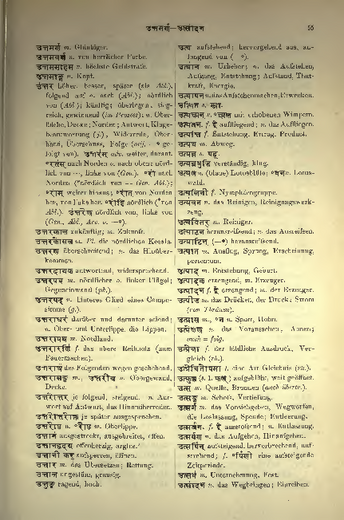
úttara höher, besser, später (als Abl.) folgend auf o. nach (Abl.); nördlich von (Abl;) kübnftig; überlegen, siegreich, gewinnend (im Prozess); n. Oberfläche, Decke; Norden; Antwort, Klagebeantwortung (j.,) Widerrede, Oberhand, Überschuss, Folge (adj. —˚ gefolgt von). uttarám adv. weiter, darauf. ˚ratám nach Norden o. nach oben; nördlich von —, links von (Gen.). ˚rā́ nach Norden (*nördlich von — Gen. Abl.); ˚rā́m weiter hinaus; ˚rā́t von Norden her, von links her. ˚rā́hi nördlich (*von Abl.). úttareṇa nördlich von, links von (Gen. Abl. Acc. o. —˚).
Burnouf 1866 Adjektiv
Originaltext · Französisch · Adjektiv
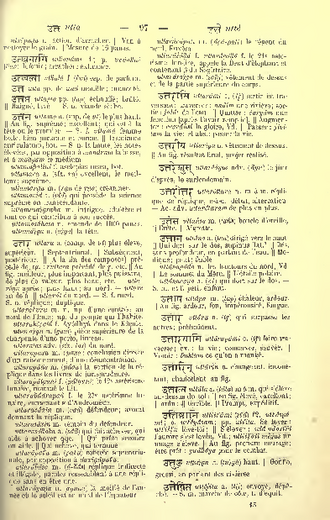
uttara uttara a. (comp. de ut) plus élevé, supérieur. Septentrional. Subséquent, postérieur. [A la fin des composés] précédé de, tg.: ruttara précédé de ṛ, etc. Au fig. meilleur, plus important, plus puissant, de plus de valeur, plus beau, etc. — uttareṇa après; plus haut; au nord. — uttare au delà. uttarāt du nord. — S. f. nord. — S. n. réplique; duplique. uttarakuru m. n. np. d'une contrée au nord de l'Inde; np. du peuple qui l'habite. uttarakośalā f. Ayodhyā dans le Kośala. uttaraṅga n. (gam) pièce supérieure de la charpente d'une porte, linteau. uttaratas adv. (sfx. tas) du nord. uttarapakṣa m. (pakṣa) conclusion directe d'un raisonnement, d'une démonstration. uttarapāda m. (pāda) la section de la réplique dans les livres de jurisprudence. uttaraphālgunī f. (phālgunī) le 12ᵉ astérisme lunaire, nommé le Lit. uttarabhādrapad f. le 27ᵉ astérisme lunaire, contenant a d'Andromède. uttaravādin m. (vad) défendeur; avocat donnant la réplique. uttarasākṣin m. témoin du défendeur. uttarasādhaka a. (sādh) qui fait achever, qui aide à achever qqc. Qui prête secours ou aide. Qui achève, qui termine. uttarāpatha m. (patha) contrée septentrionale, par opposition à dakṣiṇāpatha. uttarābhāsa m. (ā-bhās) réplique indirecte et illégale, paroles ressemblant à une réplique sans en être une. uttarāyaṇa n. [ayana] la moitié de l'année où le soleil est au nord de l'équateur. [Page097-2] uttarāśāpati m. (āśā-pati) le régent du nord, Kuvera. uttarāṣāḍhā f. uttarāśāḍhā f. le 21ᵉ astérisme lunaire, appelé la Dent d'éléphant et contenant β du Sagittaire. uttarāsaṅga m. (sañj) vêtement de dessus et de la partie supérieure du corps.
Abgeleitete Wörter
Quelltextfundstellen (6)
MAN 1 Fundstelle
PYS 1 Fundstelle
SiSa 1 Fundstelle
SVU 2 Fundstellen
VBT 1 Fundstelle
Mit AYI Free weitermachen
Bildquelle: AYI Archiv.