
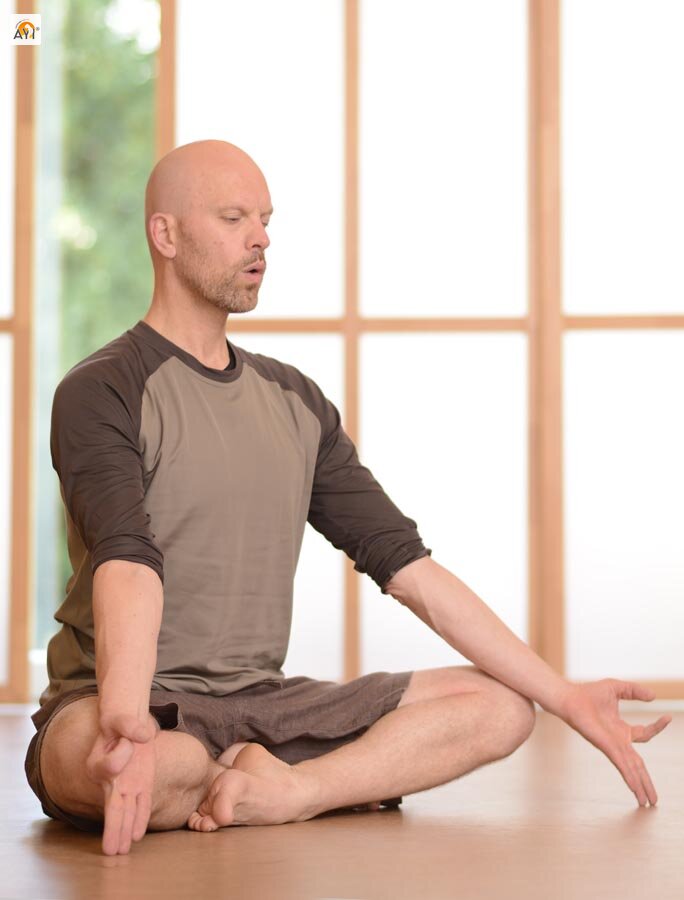
"After taking seven Led Classes, where I learned the basic positions and the final sequence of Aṣṭāṅga Yoga, I attended a Mysore event for the first time. I was curious about this unfamiliar class format. It was a real eye-opener, as I became all too aware of the fact that I was still far from clear in recalling the order of the poses and the transitions, let alone the breath-movement connection. After a few months, it was clear that Mysore-style was the best choice for me!"
For beginners to the practice who have not attended a beginners class with the fundamentals of the sequence, the first few Mysore-style classes can be rather short, sometimes lasting only 30 to 45 minutes.
"The uncertainty and unrefined awareness of a beginner's practice is tested in the Mysore-style class with it's consistency. You are working through the same set of postures each time, where you can constantly ask and answer new questions, receive individual tips and suggestions and just the right dose of adjustments. You are constantly challenged and motivated in this teaching format.“
The "King's Discipline“: Teaching Mysore Style
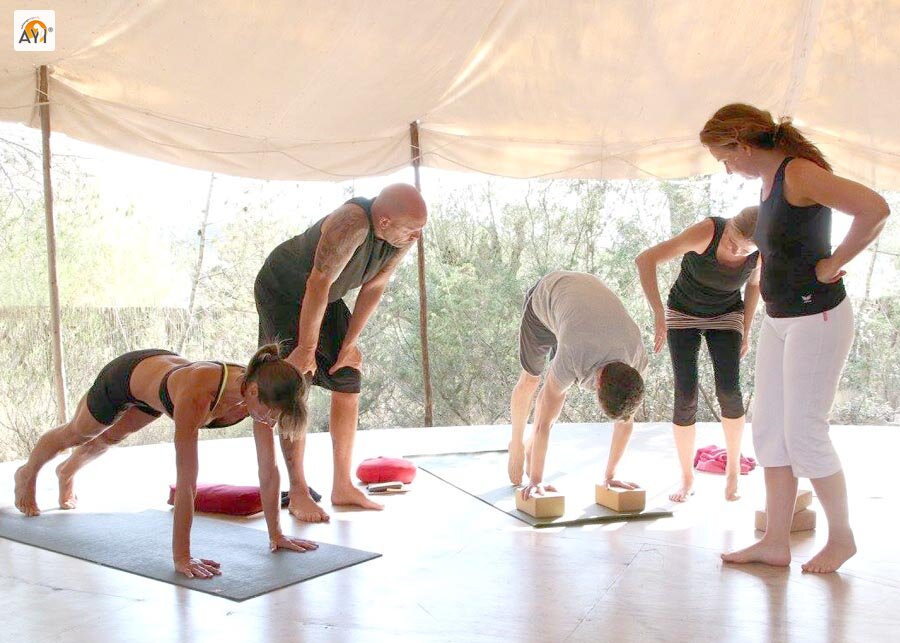
As a teacher I try to take a look at the student's practice as a whole. Gradually, I learn more about how the person is practicing and I see what elements the student is consciously working with, as well as where the student may be skipping over things or where certain things that the student may not be aware of can be used. These can be very subtle things such as breathing, alignment or the application of bandha.
"My first Mysore-style classes were rather short, because I had just begun learning the poses and so my repertoire was limited to a few sequences. Over time it became much easier to connect movement with breath and the transitions between poses became smoother. Gradually, I received one or two new asana until I established a good foundation with the standing postures of the Primary Series. Simultaneously, I developed my own personal practice that I could practice on my own, whenever and wherever I like, without needing the support of a teacher. “
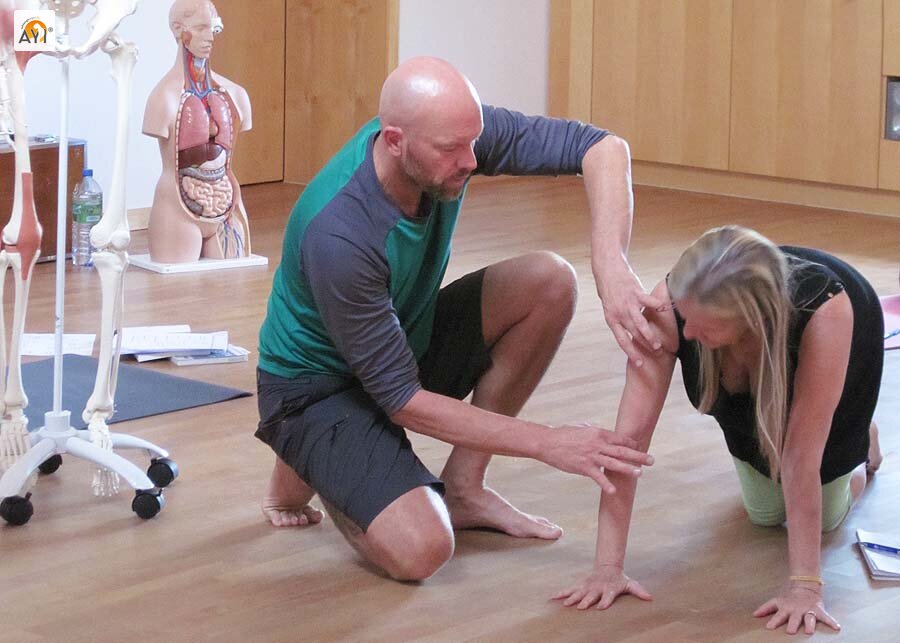
Nonverbal adjustments are my preferred method for helping my students, and they are really quite practical to use. You can use touch to share ideas or give a sense of orientation in a very clear way. Words can also help, but when you use them keep it short and sweet and give them in a six-inch voice directly to the student so you don't disrupt the concentration of others. In a Mysore-style class there is no space or time for long explanations - here is a time to let the students flow, stay warm through movement and maintain a mindful connection with movement and breath. After class, there is usually time to have a small discussion if something needs to be explained further.
"I like my rhythm. In contrast to a led class where I have to follow the rhythm of the group which is often too slow or too fast for me, I can truly focus on my breath. The breath is dependent on lots of things and it is simply beautiful in a Mysore class to be able to flow to your breath count and follow your own beat."
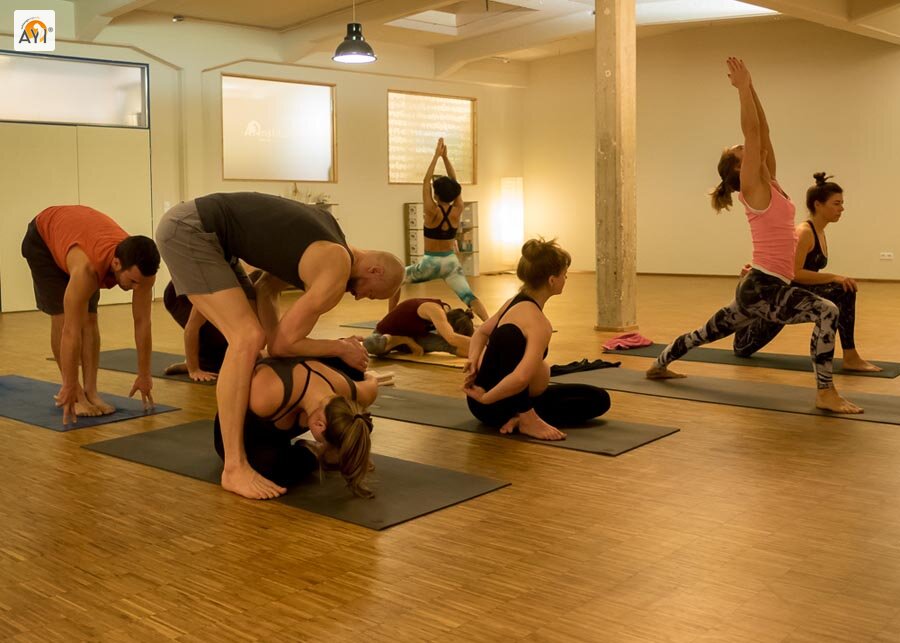
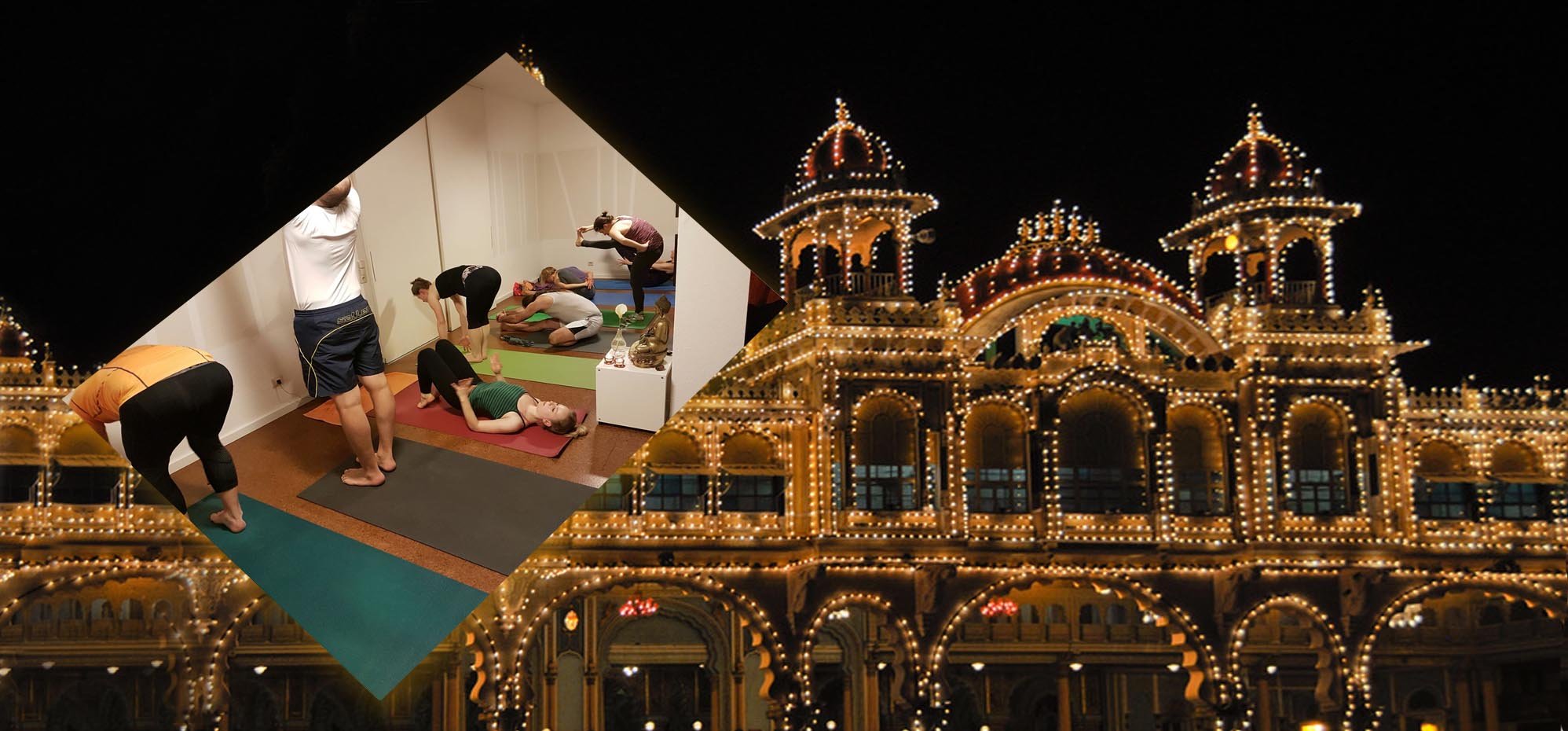
Let's say for example that in your shala, there is a Mysore-style class from 6:00 a.m. to 8:30 a.m. What does that mean? The rule of thumb is that you can come up to 15 minutes early, in this case 5:45 a.m., get yourself ready, roll out the mat and start practicing. In contrast with the Led Class format, you are not expected to stay the entire time and practice. Depending on what your day looks like and what appointments have, you could arrive at 6:30 a.m. or even 6:58 a.m. and then leave at any time based on what works for you. The only requirement is that you come early enough to be able to practice and still have time for a final relaxation.
"I practice Mysore-style because I want to be more in touch with my body and I want to establish ongoing contact in that way. I can practice at my own pace and do not have to follow the lead of a teacher. Additionally, I see how I can let go of old beliefs that don't serve me and perhaps I can learn to curb tendencies of reacting to input by becoming suddenly neurotic. In practicing, I would like to liberate myself of the burdens of the past and lead a more chill and accepting of the moment type of existence. I want to balance out mental deficits and get in touch with my innate sense of trust. Moreover, I would like to improve my flexibility and to practice the Primary Series without so many modifications. "
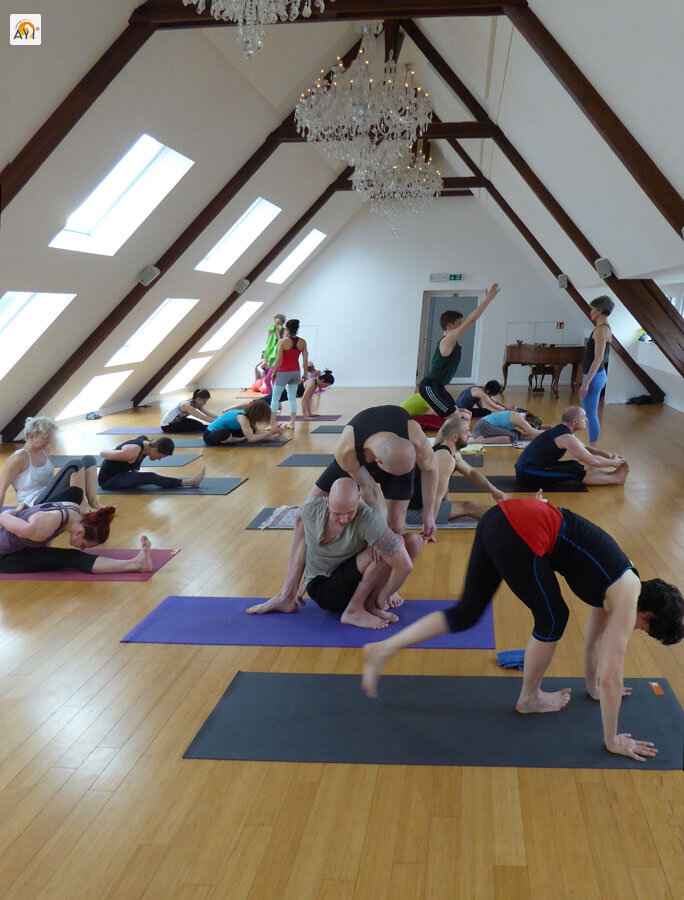
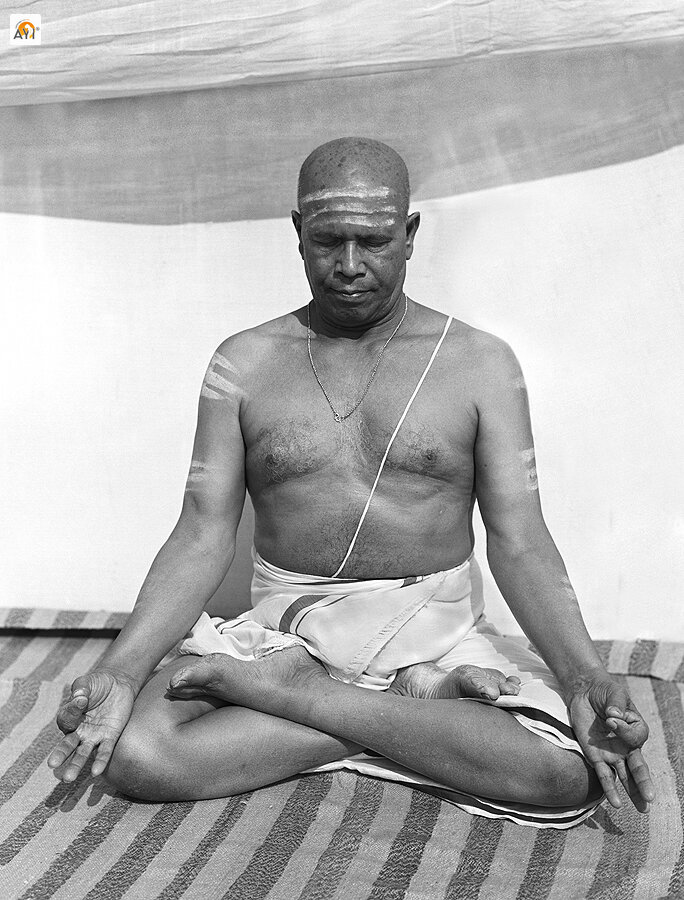
First and foremost, Mysore is the name of the city in India, where Sri. K. Pattabhi Jois, one of the founders of modern Aṣṭāṅga Yoga, lived and worked. When, at the beginning of the 1970s, the first Americans came to him to learn his form of yoga, they met a man who had switched from studying Sanskrit to teaching asana.
"I like the peace in the room. Having a job that requires a lot of communication and two children, I spend most of my day answering questions. I am very grateful for the silence and appreciate not being verbally led through the class by a teacher. The only thing I hear while practicing is my breath and the breath of the other practitioners. It's really wonderful! And the occasional whisper between teacher and student does not bother me at all.“
Please log in to write a message. Go to login
No messages yet.