

Alignment Cues - Uṣṭrāsana
Camel pose is not quite as simple as it may seem. This backbend stretches the front body powerfully and invites openness through the chest and spine.
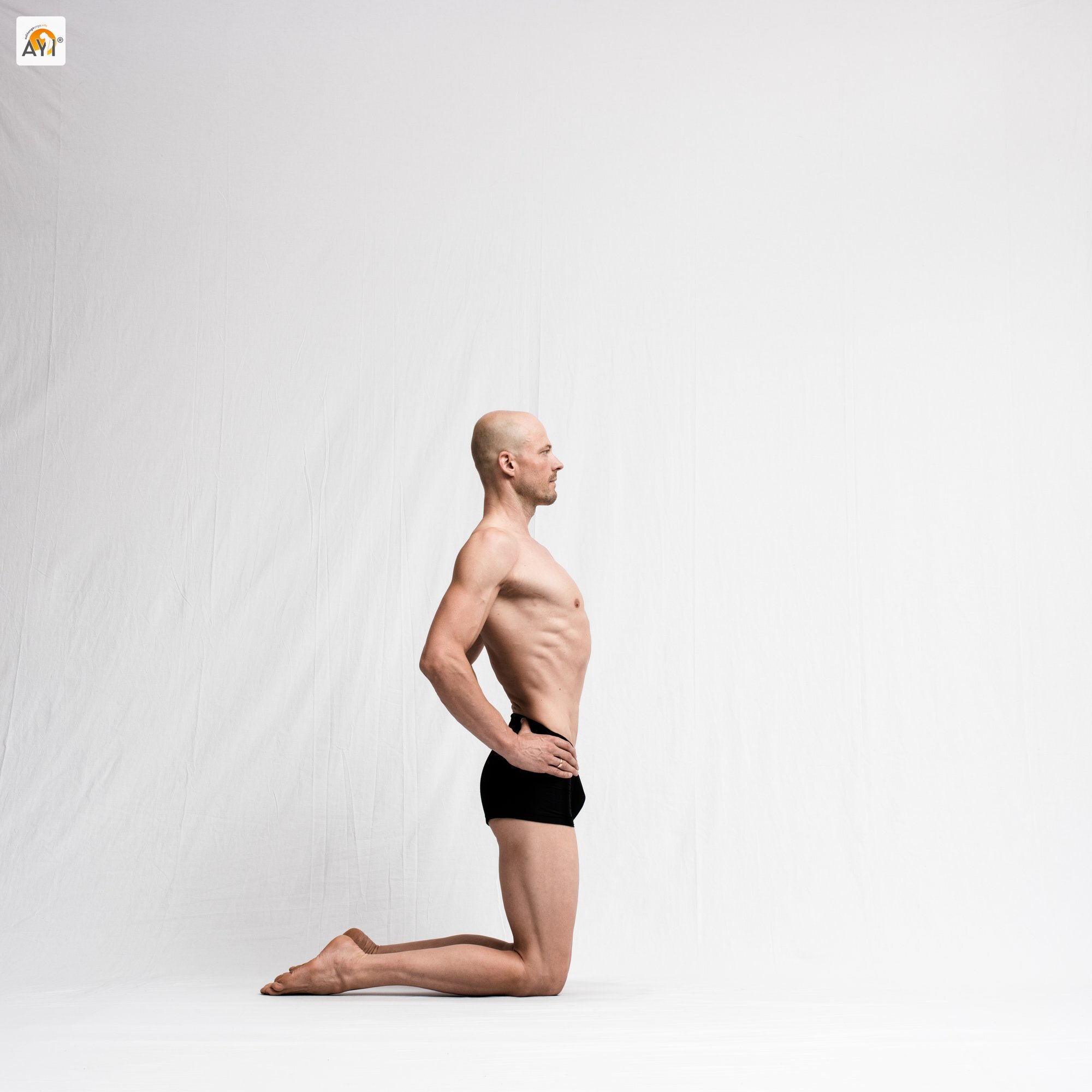
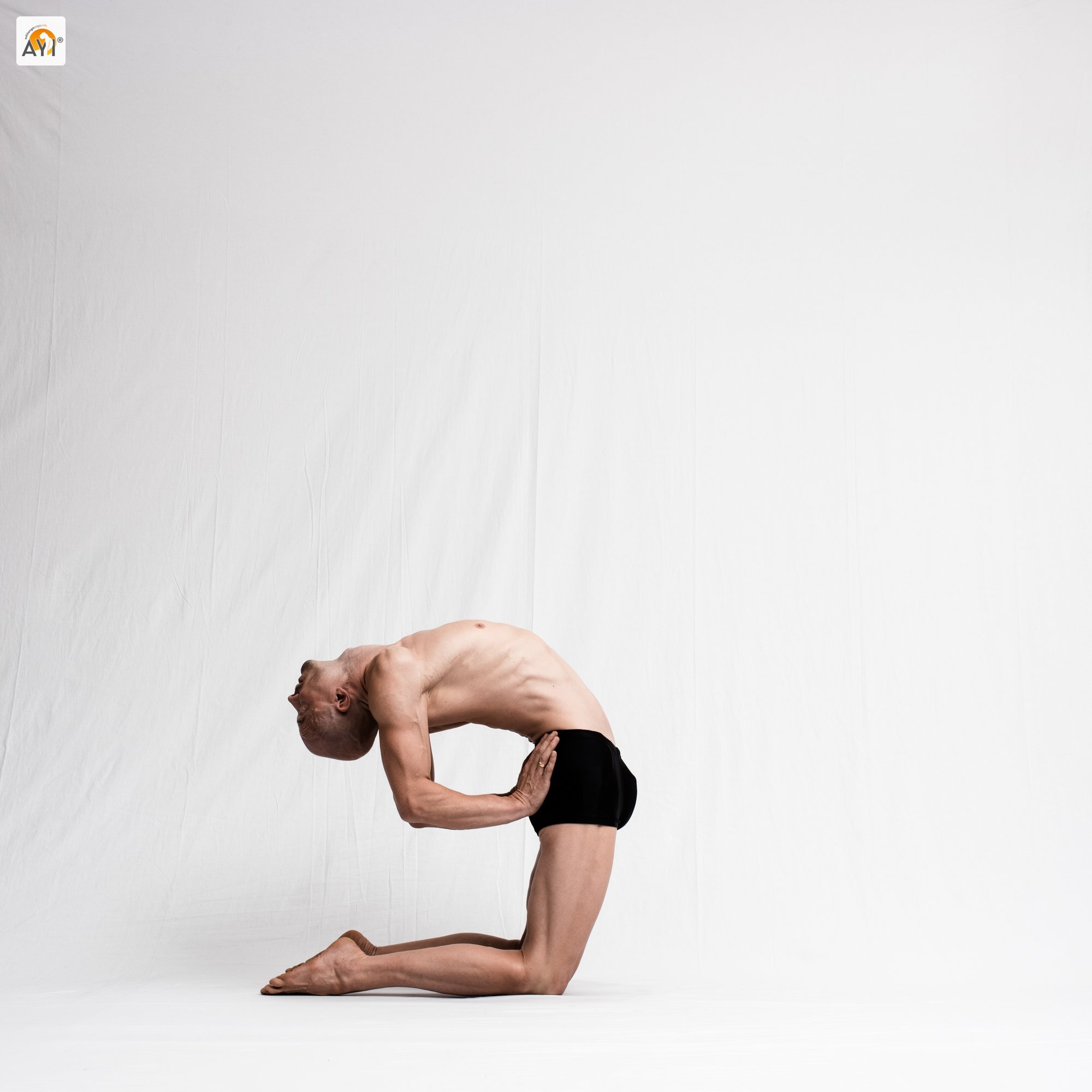
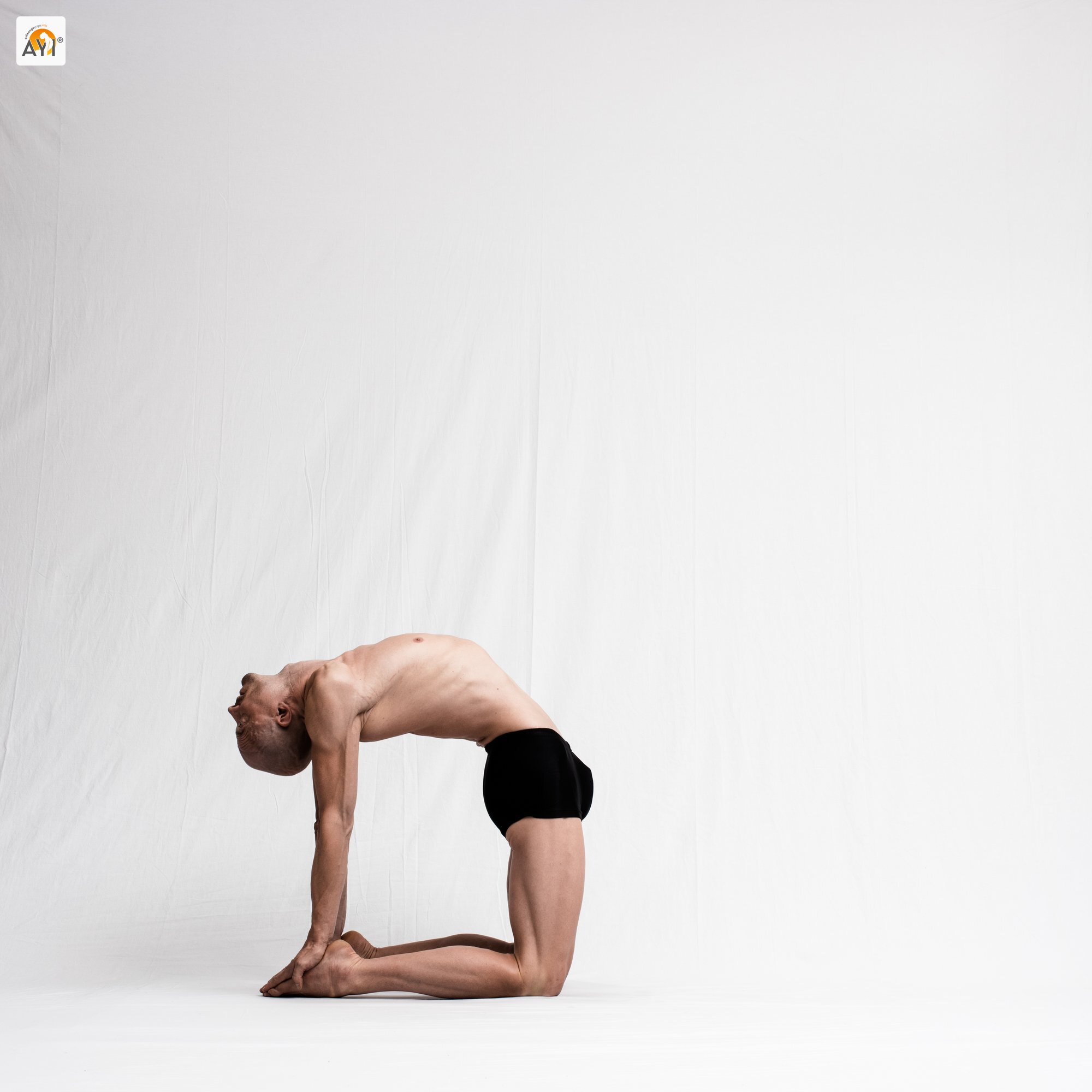
Hips in front of the knees: As you open your heart space in Step 2, move your pelvis forwards to ensure it remains vertically above your knees. The focus here is on opening the chest and keeping the hips over the knees, rather than reaching backwards.
Activate the straight gluteal fibres: Activating the straight fibres of the gluteal muscles helps create more freedom of movement at the hips. The upper part of gluteus maximus acts as an antagonist to the hip flexor, iliopsoas. Engaging it allows the hip flexor to relax more easily and the backbend to deepen.
Keep the deep gluteal muscles relaxed: Take care, however, to keep the deeper gluteal muscles — the lower part of gluteus maximus and piriformis — relaxed. Consciously move your sitting bones apart. This creates space in the sacroiliac joints and allows more movement into the backbend.
Include the shoulder blades: As you let your arms relax backwards in Step 3, imagine that they begin at the shoulder blades rather than at the shoulder joints. You then move not only your arms but also your entire shoulder blades gently backwards, creating even greater space in the heart area.
Bowstring tension for an active front body: Despite all this opening, stability is essential. In an uncontrolled backbend, the spinous processes of the spine can come too close together, potentially causing inflammation. To prevent this, create activity along the front of the body. The best way is to hold your feet with your hands and gently lift your pelvis, drawing your arms taut like a bowstring. This activates the fronts of your thighs. Allow this muscular engagement to continue through the rectus abdominis and sternal fascia to the front of your neck.
Alternative Form — Basic Form
If you cannot reach your feet with your hands, approach the posture through the following alternatives:
- Kneeling Uṣṭrāsana: Instead of starting in upright kneeling, sit on your heels and place your hands on the floor behind your feet. From here, move your heart space forwards and upwards to open it.
- Uṣṭrāsana with the hands on the sacrum: Instead of reaching for your feet, place your hands on the sacrum, between the two halves of the pelvis. Pressing down against the sacrum lengthens and supports the spine, allowing you to open safely into the backbend.
Find out more about Uṣṭrāsana here >>
Photographer: Richard Pilnick — www.richardpilnick.com
Please log in to write a message. Go to login
No messages yet.