
Alternative Form Pūrvottānāsana

Alignment Cues - Pūrvottānāsana

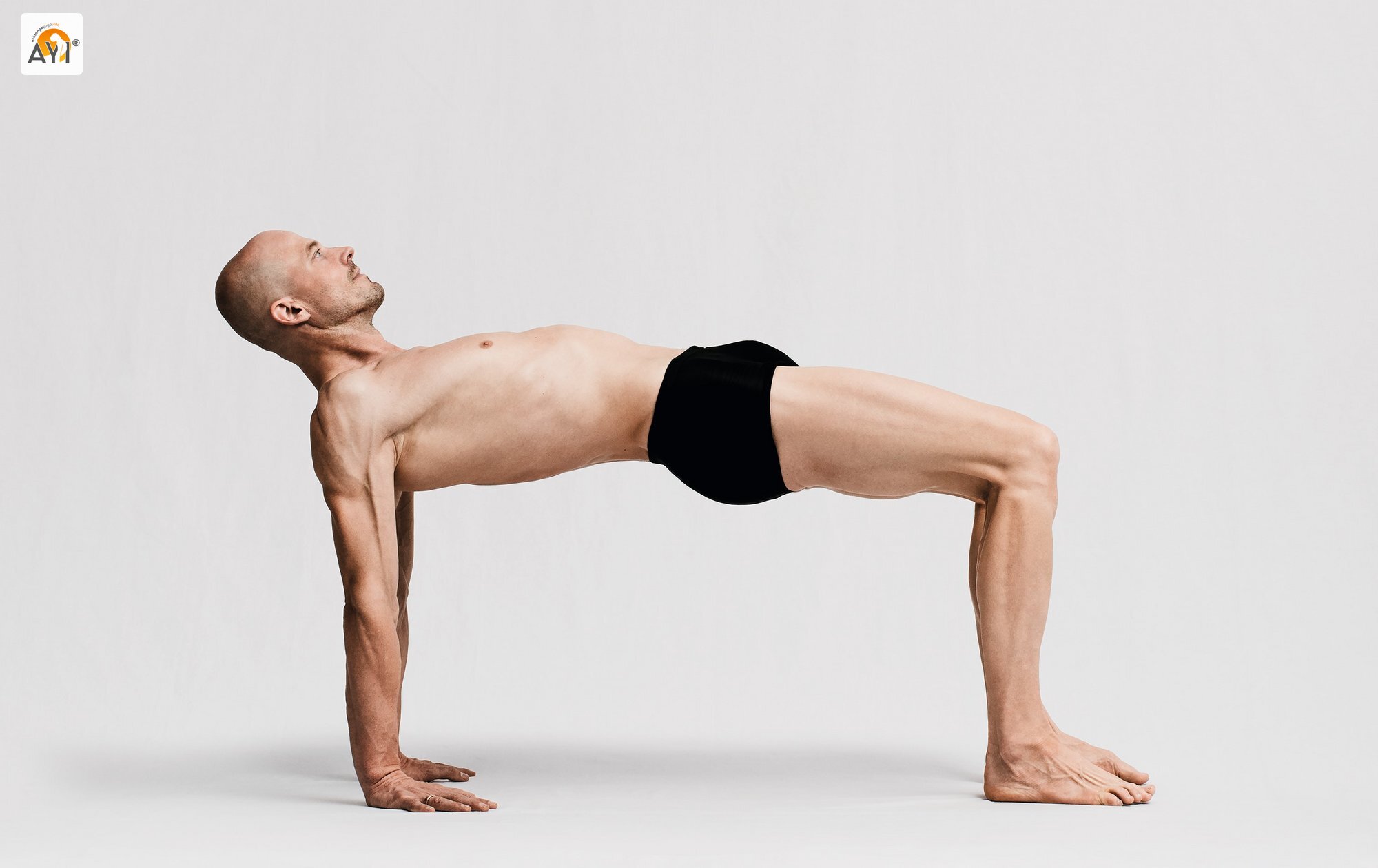
The intense front-body stretch is a powerful arm-supported posture. The front of the body opens upward while strength and length work together.
Alternative Form
Pūrvottānāsana

Effects

This posture strengthens the back of the body, particularly the area between the shoulder blades, the gluteal muscles and the backs of the thighs. It also offers an excellent opportunity to develop arm strength. In many practice systems, including Aṣṭāṅga Yoga, Iyengar Yoga and Shivananda Yoga, it traditionally serves as a counterpose to the straight seated forward bend, Paścimottānāsana.

How to Practise

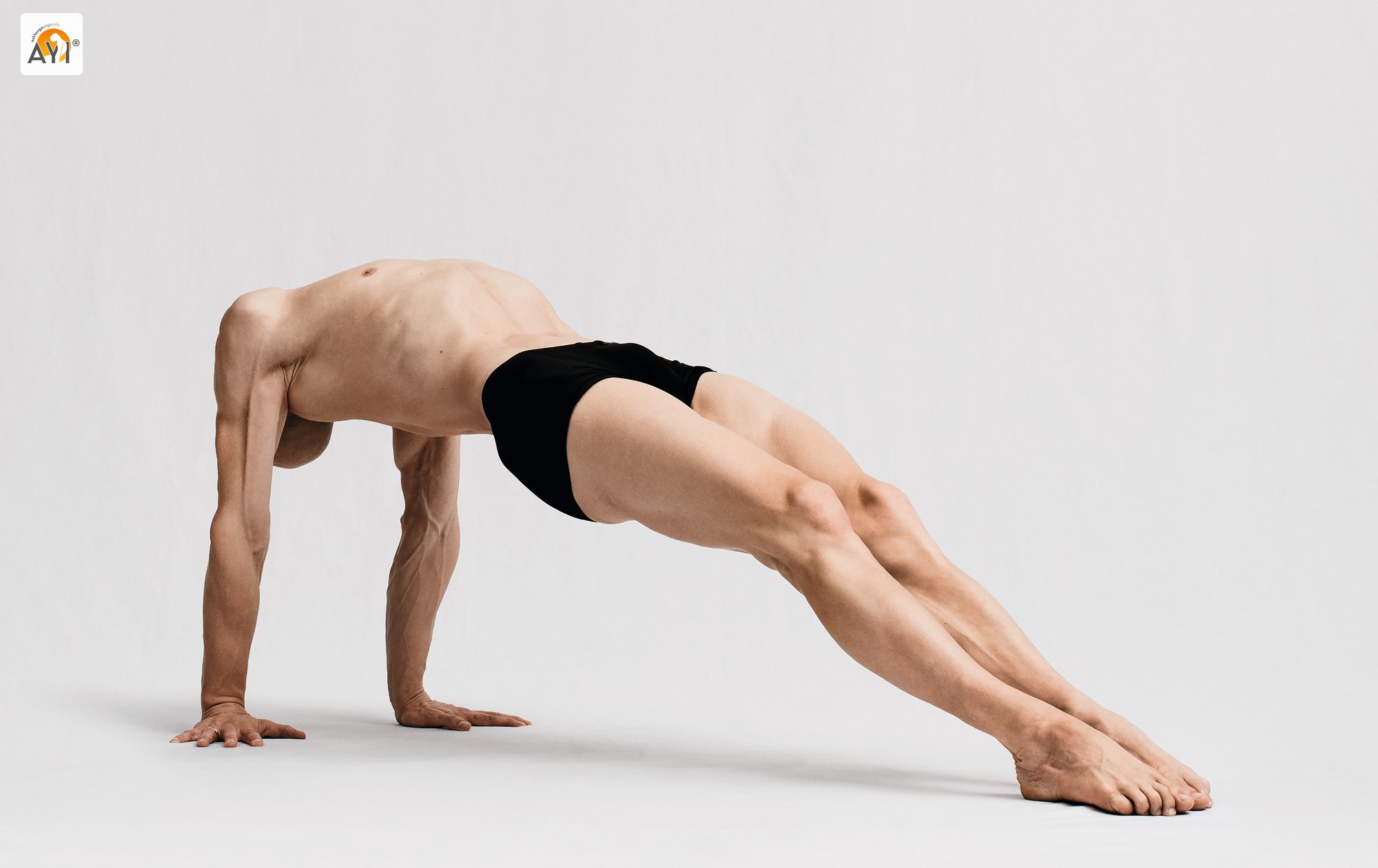
Build the posture consciously from sitting. Bend your knees deeply enough to anchor the entire soles of your feet on the floor. Place your hands as far behind your back as possible, with the fingers pointing diagonally outwards. Bend your elbows until your upper arms are almost horizontal. Now establish a stable backbend in your torso. Only then use the strength of your legs to push backwards, keeping your soles firmly grounded. Your arms naturally straighten as you do so, bringing you into the posture with stable, powerful tension through the arch of your body.

Alignment Cues

Long arms: Before lifting, while your pelvis is still on the floor, consciously move your shoulder blades towards your arms. Bend your elbows deeply and bring your shoulder blades as close together as possible behind your back.

Alignment Cues
Pūrvottānāsana

Armpits upwards: At the same time, engage your shoulder blades in diagonal external rotation. Imagine turning your armpits to face sideways or upwards.

Inner elbows inwards: The purpose of the shoulder-blade positioning described above is to create room for movement beneath the shoulder blade. This works only if you engage the upper arm in the opposite direction to the shoulder blade. Keep your elbow slightly bent even as you push into the posture. Combine this bend with the image of turning the inner elbow slightly inwards again, in the opposite direction to the armpit. The inner elbow indicates the upper arm's position, while the armpit indicates the shoulder blade's position. To create space between them, direct these two reference points in opposite directions.

Keep the buttocks broad: Although the sacroiliac joint is relatively firm, the small amount of space within it makes a significant difference, especially in this posture. At first, engaging the legs in internal rotation from the pelvis may seem counterproductive, because it bends the knees. Yet precisely this internal-rotation action creates space in the sacroiliac joint. Keep the soles of your feet firmly grounded as you push your torso upwards and backwards. This preserves the space you have created and gives you the freedom to lift higher into the posture.

Move the heart space and pelvis apart: Your body should transmit force through tension rather than compression. In the spine, this creates both stability and space between the intervertebral discs. Achieve this by establishing opposing directions of tension between the pelvis and breastbone. Imagine tipping your pelvis away from the heart space while tipping the front of the heart space away from the pelvis. This creates traction along the front of your body between these two areas.

Lengthen between the sacrum and back of the head: For truly three-dimensional stability, tension at the front of the body is not enough. Build a similar line of tension along the back by imagining the back of your head and your sacrum growing away from each other. Make sure this does not sacrifice either the tension at the front of the body or the space in the sacroiliac joint.
New Series: Alignment Cues
Also published in Yoga Journal

Alternative Form

Every posture can be practised in different forms. An alternative form retains some of the effects and characteristics of the posture while avoiding one or more of its difficulties.

The shoulders face a real challenge in Purvottanasana. Healthy shoulder-blade alignment and buoyant tension between the shoulder blade and upper arm require considerable strength. To make alignment easier, begin with your legs bent more deeply and your feet about hip-width apart. Your knees then remain bent at roughly right angles as you lift. This shortens the lever created by your body weight, making it easier to support your shoulder blades against gravity. It also becomes easier to establish tension between your pelvis and heart space, and between your sacrum and the back of your head.

Lowering the head backwards extends the cervical spine. This is unproblematic for a healthy cervical spine, but many people have pre-existing problems in this area. In that case, keeping the chin on the chest may help.

Photographer: Richard Pilnick - www.richardpilnick.com

Continue with AYI Free

Messages (0)

Please log in to write a message. Go to login

No messages yet.