
Once we have learned how to relax this muscle we have to look a level deeper at the iliofemoral ligament, the strongest ligament in the human body. On average this ligament will block a backbend at three to seven degrees. If you wish to produce deeper flexion of the back from the hip joint you will need to lengthen this ligament. This requires a lot of patience and consistent practice over years time. I would recommend against trying to push this too far too quickly. Holding the stretch for 20-50 seconds is just enough. The stretch is repeated three to five times, interrupted by a short dynamic sequence to keep the body warm. Keeping the body warm when stretching helps to loosen the hydrogen sulfide in the connective tissue. In this way you are able to gradually lengthen the connective tissue.
You can perform the exercises on all fours that we previously described in between stretches. While the lengthening of the iliofemoral ligament requires years of dedicated practice, you will be able to observe how the stretch deepens from one repetition to the next.
2. The first step
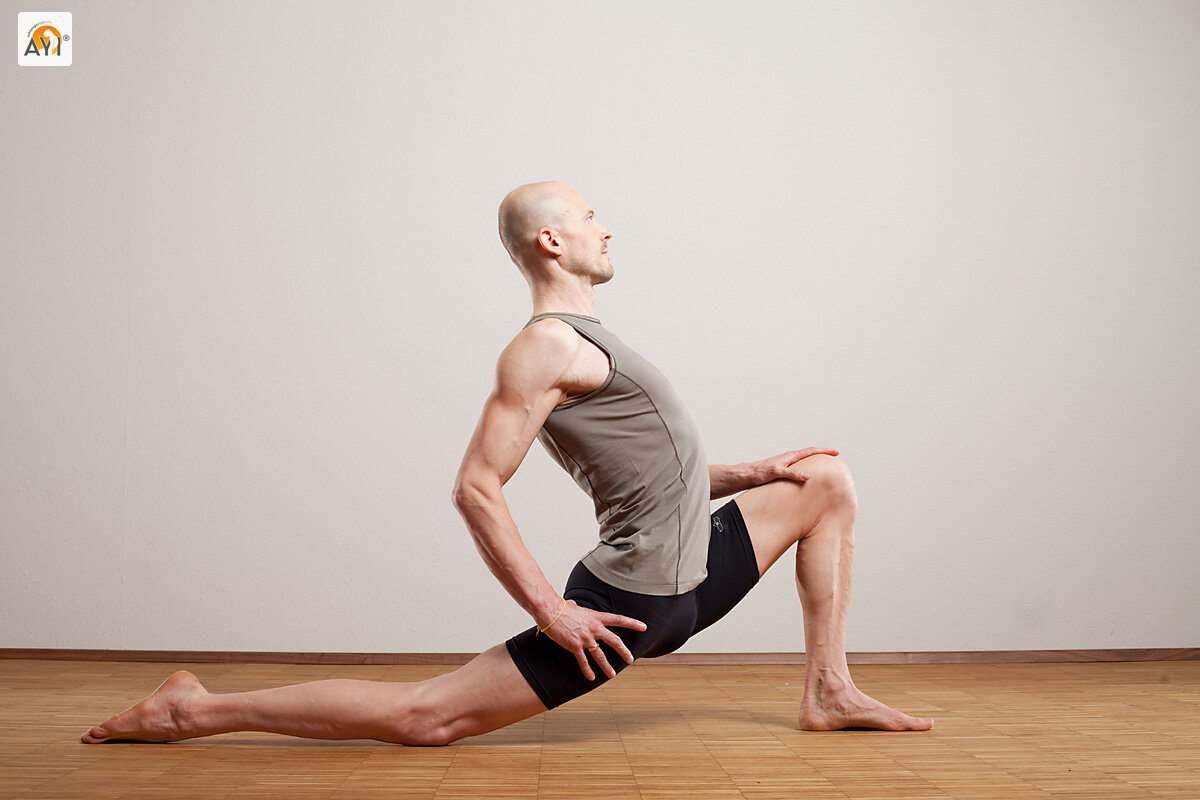
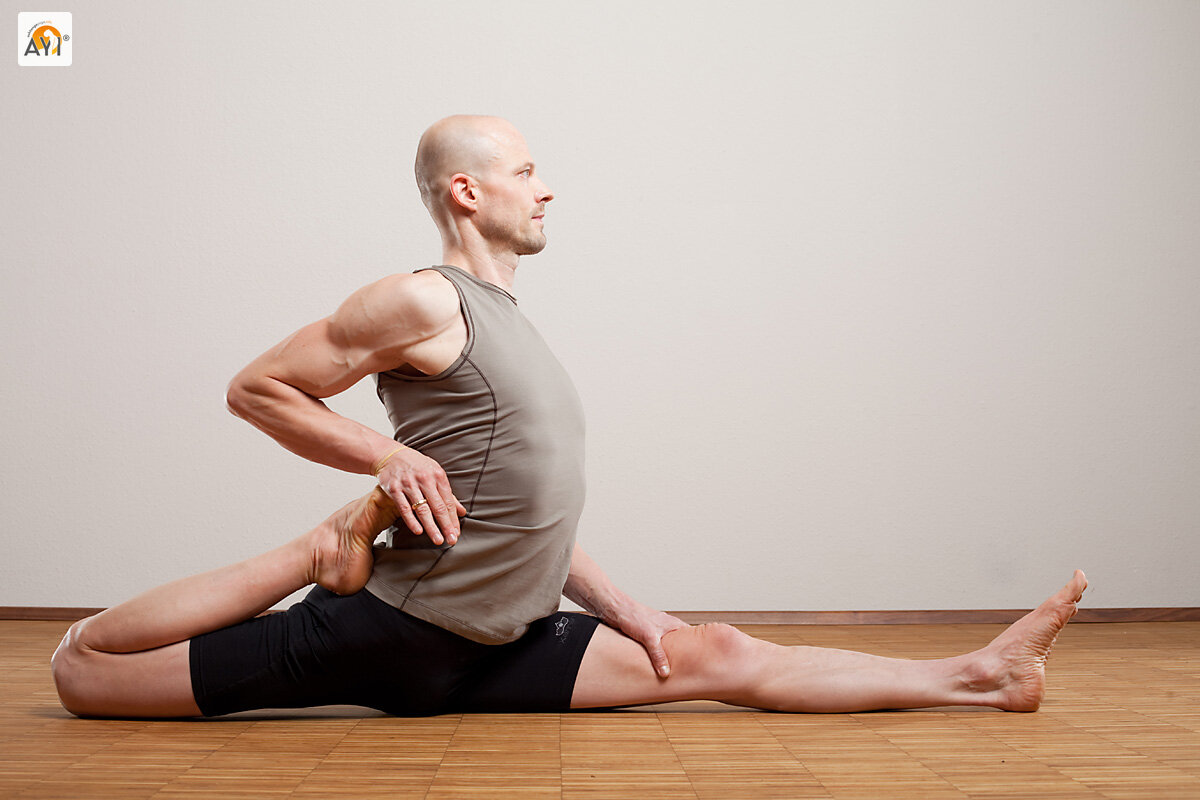
Start off with a long but relaxed lunge. Take care to see that the front knee is just above the ankle. To reduce pressure on the back knee, simply lift it off of the ground and try to bring it further back, place it back on the ground and draw the knee forwards. Place a hand on the outer side of the sitz bone of the back leg. Rotate the leg outwards and upwards (figure 2). Observe how this brings the pelvis further into alignment and the stretch becomes more intense at the front of the hip. Feel into the posture and observe if you can feel the stretch in the psoas muscle as well. Stay and enjoy the stretch. Calm, deep breath will allow the tension in the muscles to slowly relax. After some time the stretch will also reach the iliofemoral ligament. Then hold for another 5-10 deep breaths.
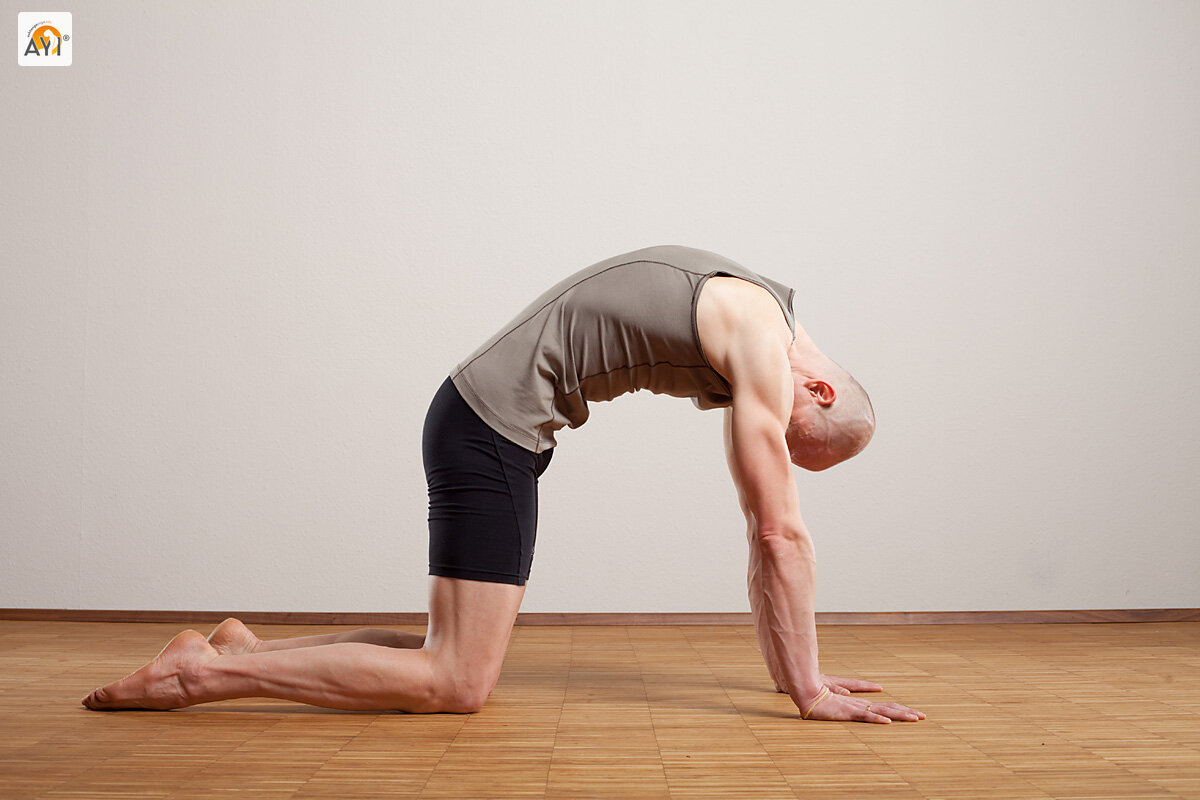
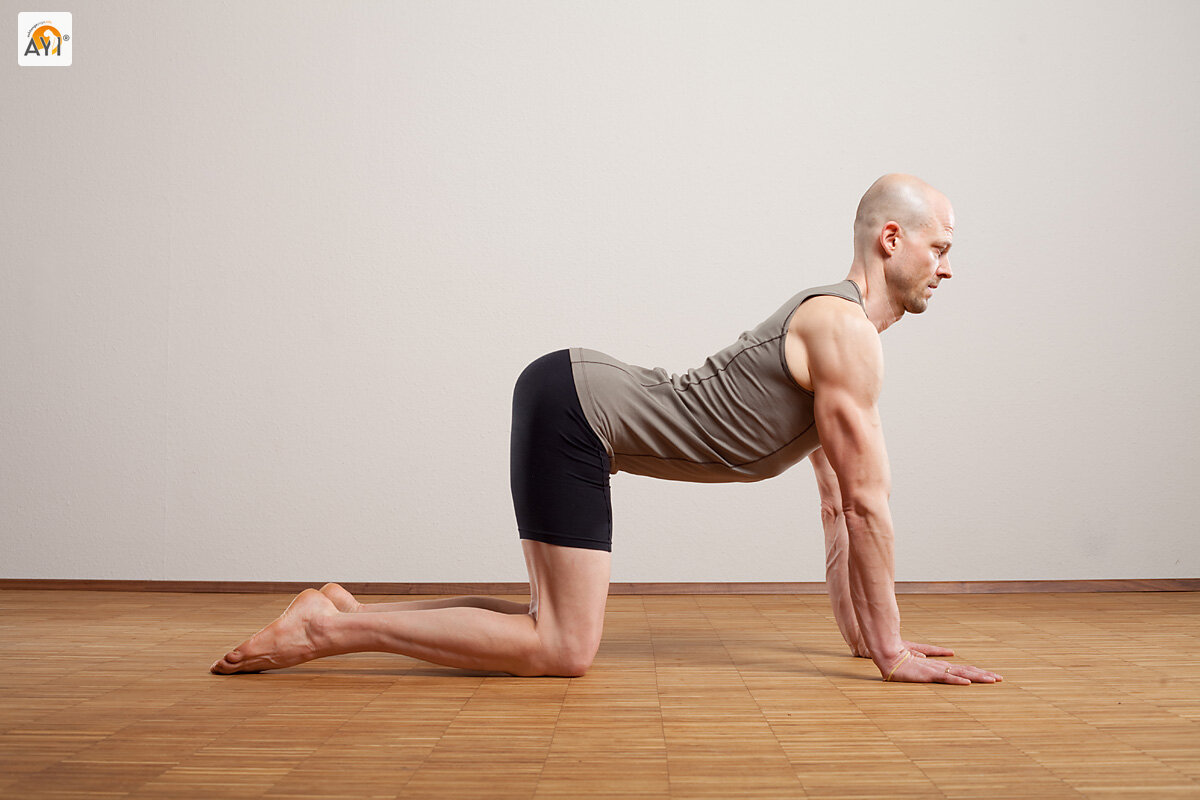
Come out of the posture and practice a few rounds of cat-cow before switching sides (figures 1a-1b).
3. The next step
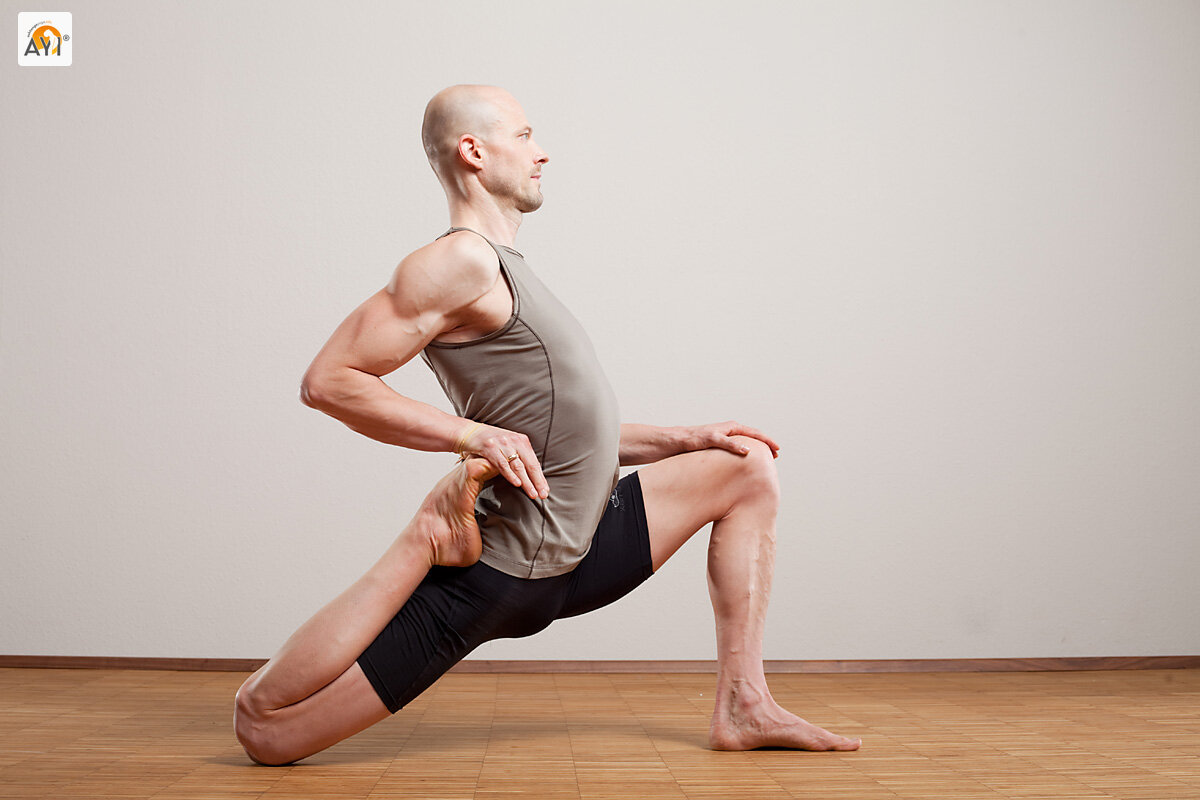
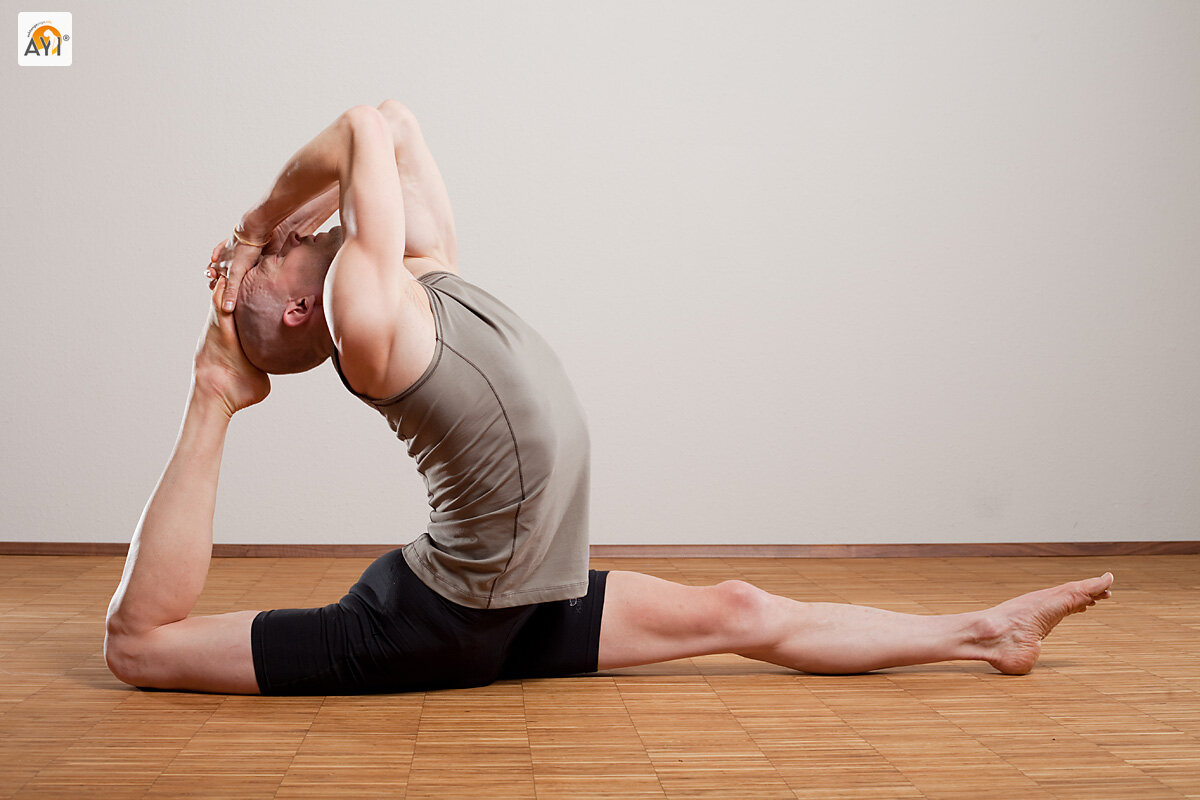
Repeat the sequence again following your last cat-cow and observe how your body responds to the exercise. If you are able to see and feel that your body is opening up to the heat and stretch that this posture provides, you can modify to increase the intensity in order to explore a bit further. You do this by bending the back knee and bringing the hand around the top of the foot. If this can be done with relative ease, you can draw the foot towards the hip and can turn your hand around the foot so that the fingers and toes are pointing in the same direction (figure 3). Hold for some breaths, then come out of the posture and do a few rounds of cat-cow before moving to the second side.
4. Repetitive Stretching
Following this approach we will repeat the stretch several times, with the option to intensify the basic stretch with increasingly difficult variations. For the next round, try rotating the front leg outward from the hip joint and bending the knee, placing the leg on the floor (figure 4a). Make sure that the thigh and pelvis make contact with the ground. If the thigh does not make contact with the floor, it will create unfavorable torsional pressure on the knee. If your torso is crooked, it is too soon to start with this variation. Go back a step and work on one of the previous variations instead.
Bring the stretch into the front of the back hip by using your hands to adjust your placement as in the previous exercise.
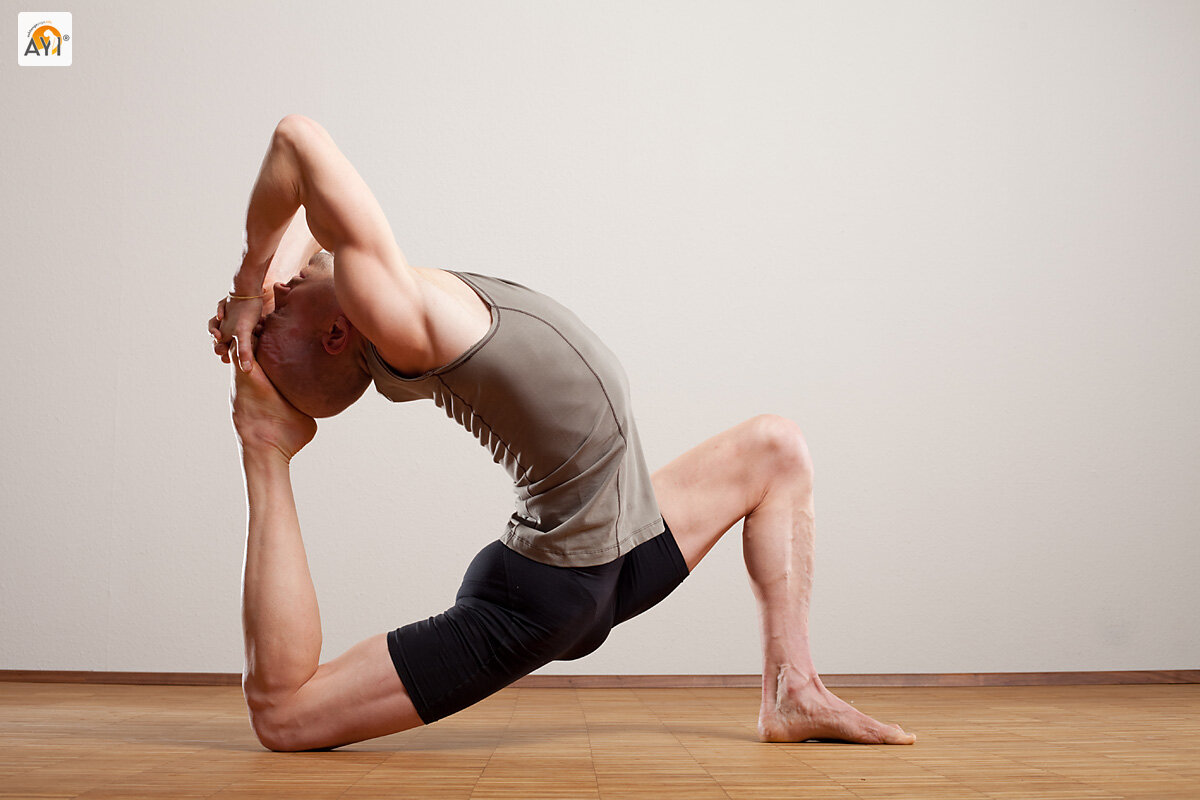
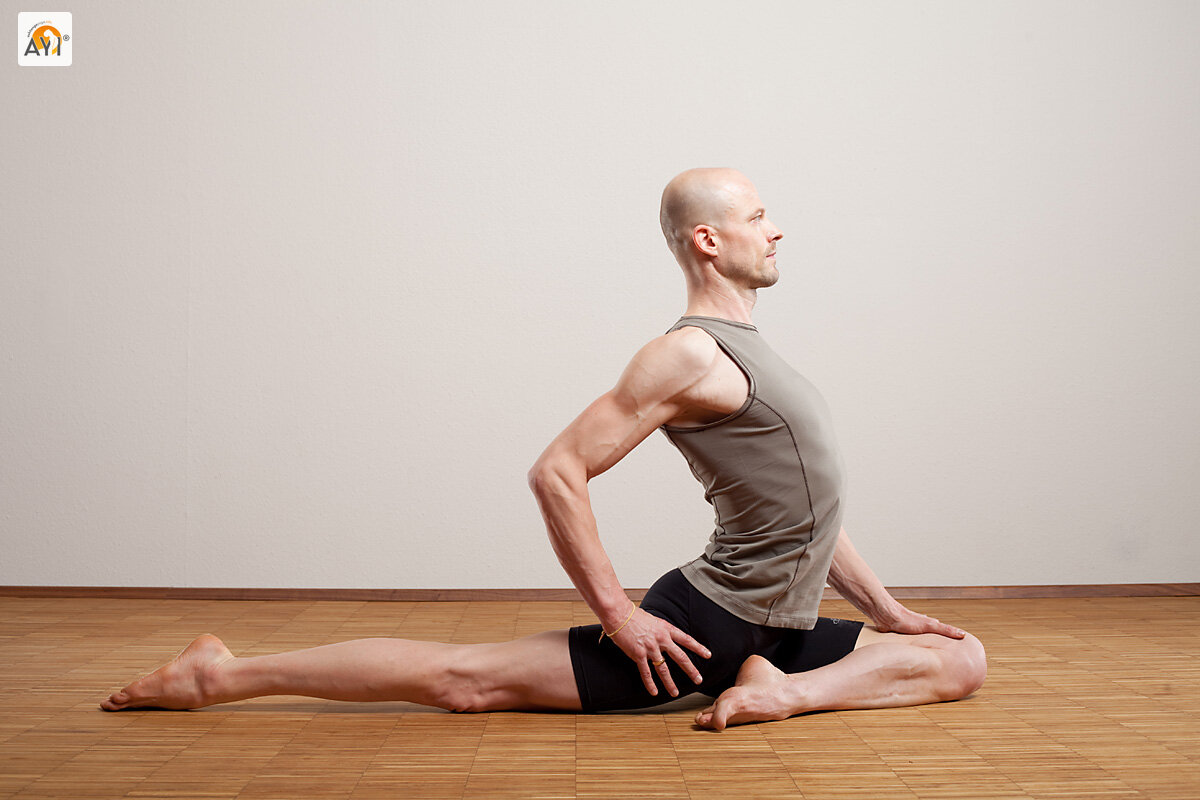
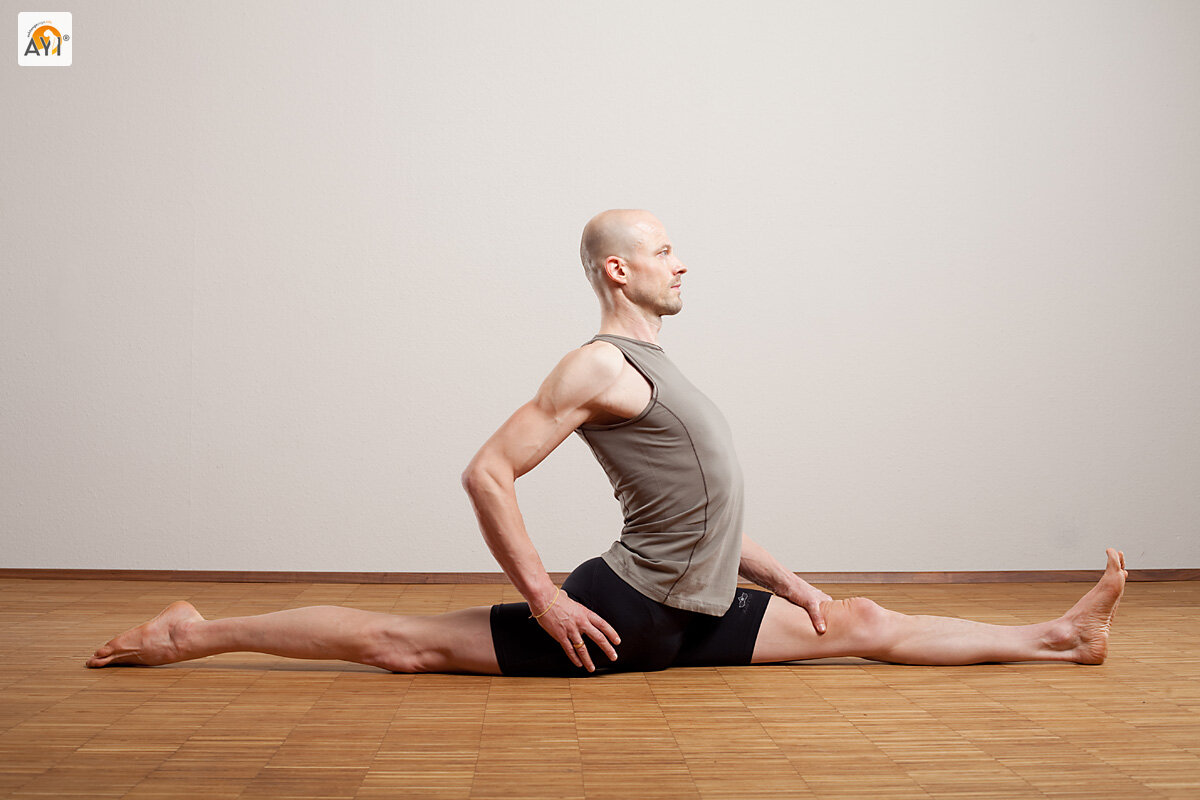
To go even further you can flex the back leg (figure 4c) and you can even do the same stretches starting from a forward split (figure 4d).
5. Anjaneyāsana
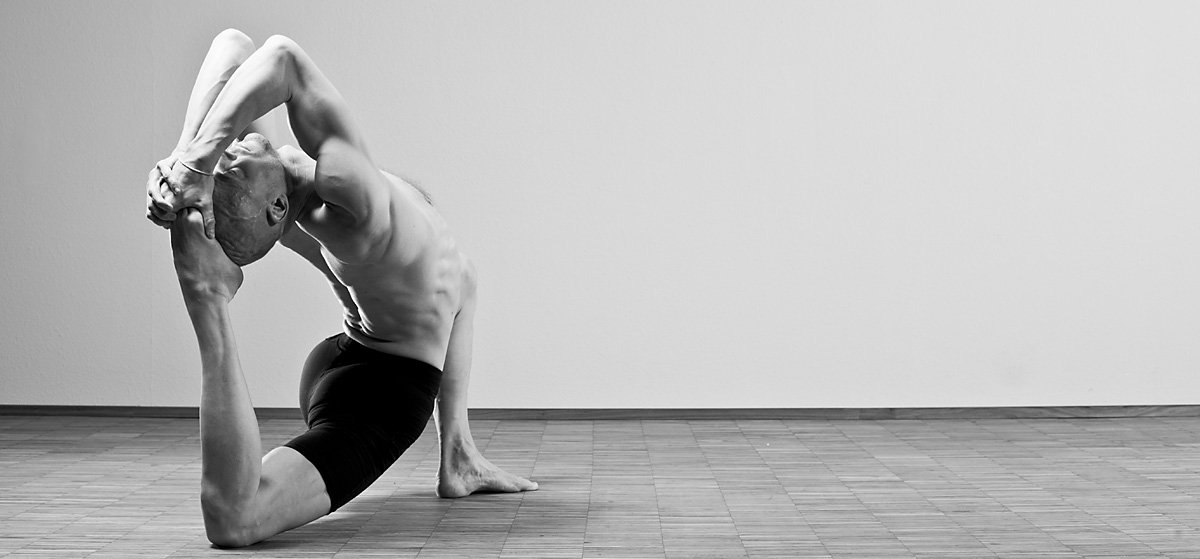
Once you are comfortable with the preliminary exercises, you may be ready to take the complete pose Rāja-Anjaneyāsana.
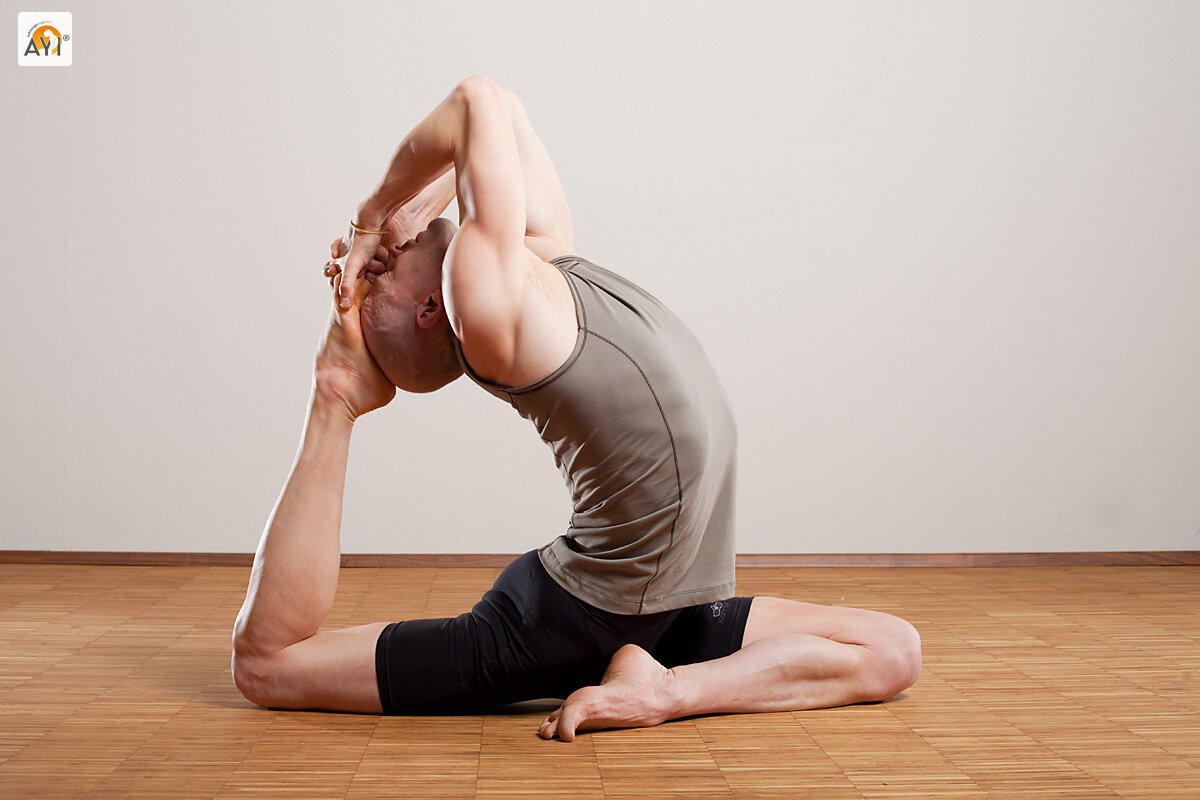
Here the difficulty increases in the reverse order. For many, a forward split will be the easiest way to bend the back leg and to grasp the outer edge of the foot with the hand of the same side from the outside. Once you have grasped the foot, fold your elbow up, bring your foot to the top of the skull and finally bring the second arm up to hold the foot on the other side (figure 5a). Pay close attention to distribute the backbend evenly across the entirety of your spine and that the stretch is originating from the hip joint. By working on all of the preparation postures you will be well prepared to take this posture.
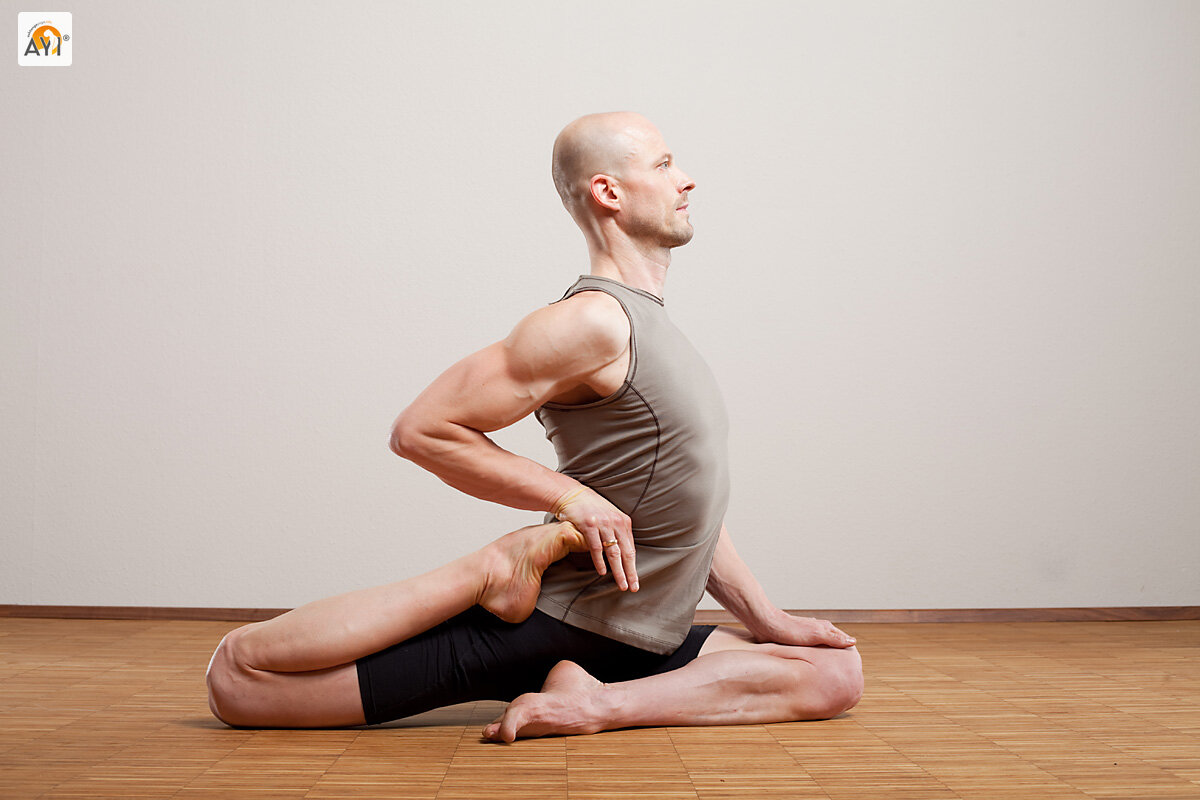
From the forward splits you progress to Hanumānāsana (figure 5a), from pigeon pose to Ekapāda Rājakapotāsana (figure 5b) and from the deep lunge to Anjaneyāsana (figure 5c). Three extremely challenging postures. Here is a way to work towards them. Just remember that the journey is more important than the destination. Have fun practicing!
Anjaneyas grasping the sun and how devotion developed from it
Perhaps it was this very posture in which the monkey god Anjaneya was reaching for the sun that he learned that only through devotion can you discover your true strength. In any case, you can certainly develop this quality in your practice of Anjaneyāsana. In the end it is not brute force or will that brings your spine into a harmonious well-balanced backbend, but rather humble devotion.
Please log in to write a message. Go to login