
Nāvāsana

Alignment Cues - Nāvāsana

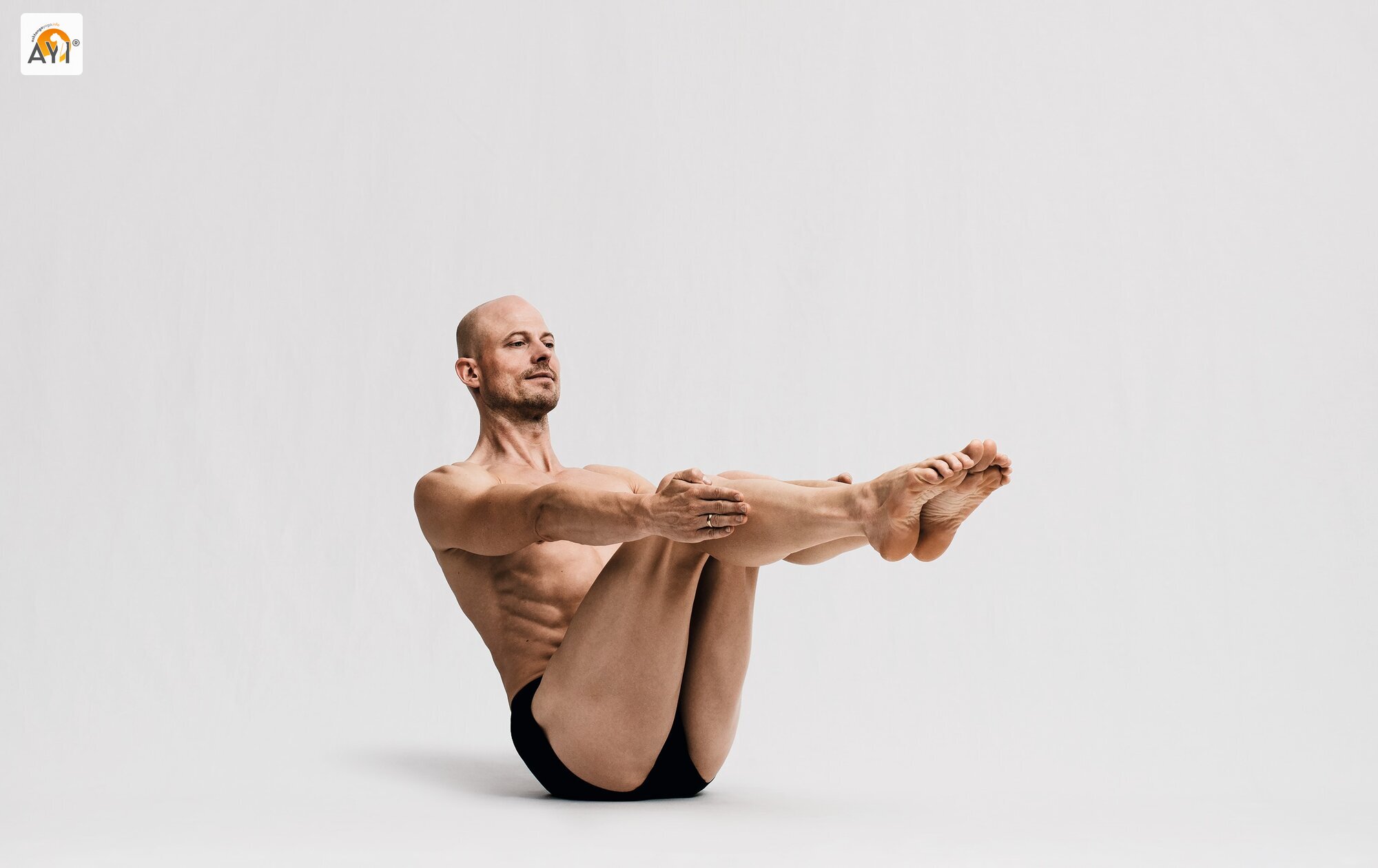
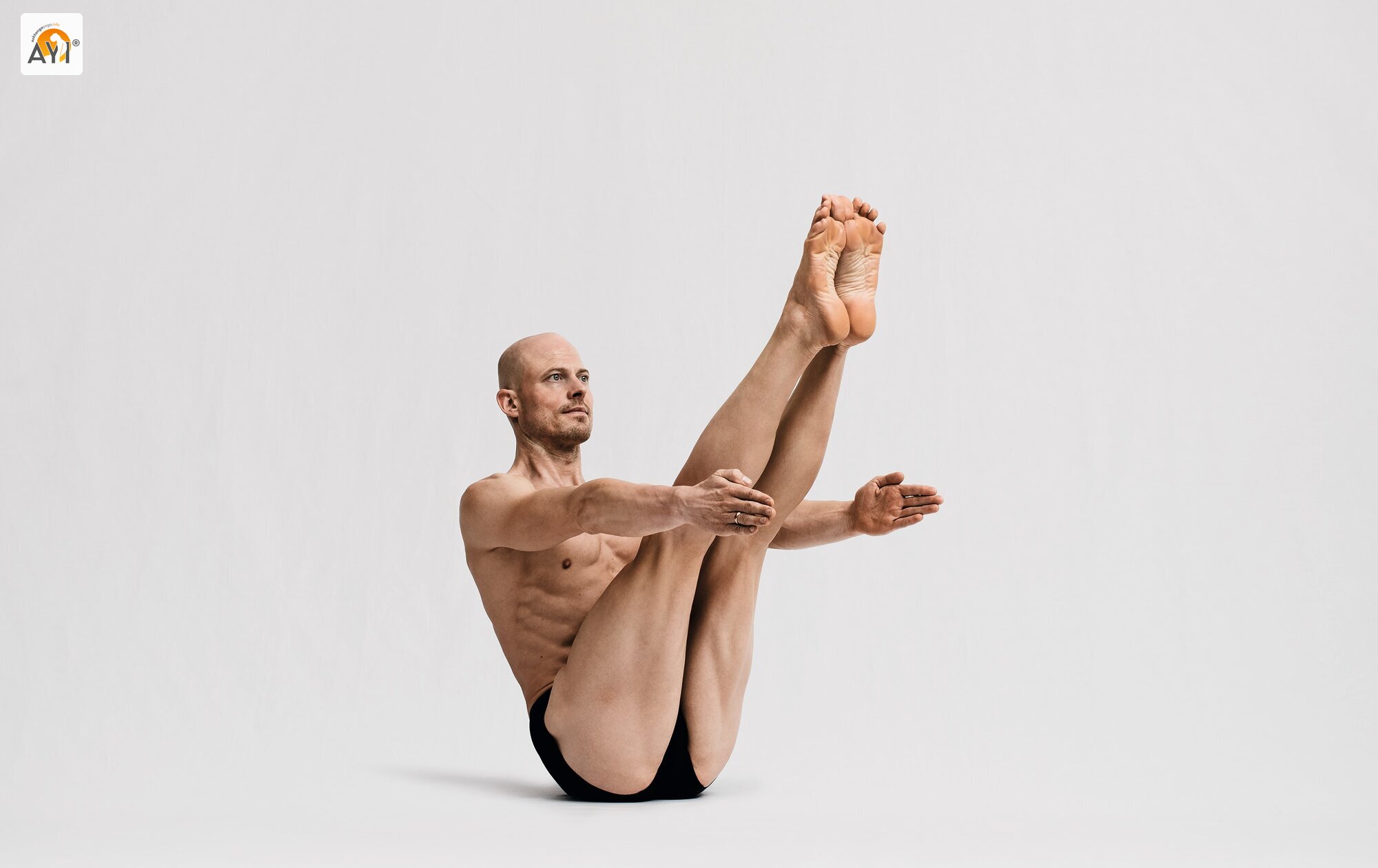
Strong and light at the same time, boat pose is a balance posture on the sitting bones. The legs and upper body create a clear, lifted shape.
Alternative Form
Nāvāsana
New Series: Alignment Cues
Also published in Yoga Journal

Effect

When performed correctly, Boat Pose creates stability throughout the torso. The hip flexor, iliopsoas, lifts the legs, while the diagonal abdominal muscles — the internal and external obliques — wrap around the torso, giving it both firmness and length. This supports the diaphragm from below, allowing it to lift the sides of the torso during breathing. The pelvic floor also contributes, supporting the internal organs from beneath.

How to Practise

Phase 1: Begin seated. Place your feet on the floor in front of you and support yourself with your hands behind you.

Phase 2: As you inhale, first lift your arms and extend them parallel to the floor. Then slowly lift one foot, followed by the other. Finally, straighten your legs into the air.

Alignment Cues

Inward rotation from the pelvis: Tilt your pelvis while still seated. Imagine rotating the legs inwards, starting from the pelvis. This brings you fully into balance on your sitting bones.

Active helix: Before lifting your legs, consciously activate the helical muscle-fascial lines of your torso. Below the navel, draw diagonally inwards and upwards from the groins. Create an opposing pull diagonally downwards and inwards from the lower ribs.

Legs close to the torso, adductors active: As soon as you lift your feet, first draw your thighs close to your torso. From here, create inward tension between your thighs to activate your adductors. Only then slowly straighten your legs. Keep your thighs from moving away from your upper body as you do so. This requires sufficient flexibility, but it makes lifting your legs surprisingly easy.

Shoulders long, heart space open: Let your shoulder blades move forwards with the extension of your arms. This positions the shoulder blade's joint socket behind the upper arm. At the same time, lift your heart space forwards and upwards. Opposing tension develops between the thoracic spine and the shoulder blades, stabilising the shoulder girdle.
Alignment Cues
Nāvāsana

Alternative Forms

The crucial point in this posture is to maintain the engagement around the torso created by the helical muscle-fascial lines. If it is lost, the hip flexor, iliopsoas, pulls the lumbar spine forwards. This can overload the area and, in any case, deprives you of internal stability.

If in doubt, keep your thighs closer to your body. The closer the legs are to the torso, the shorter their lever arm. This makes it easier to establish opposing helical tension around the torso. Straighten your legs only as far as you can — for example, until your lower legs are horizontal. This allows your thighs to remain close to your upper body.

Photographer: Richard Pilnick — www.richardpilnick.com

Continue with AYI Free

Messages (0)

Please log in to write a message. Go to login

No messages yet.