

sat सत् – gut; wahr; wirklich
Adjektiv · Adverb · Substantiv Maskulin · Substantiv Neutrum · Worttyp nicht bestimmt
Wörterbuchquellen
AYI Wörterbuch Adjektiv · Substantiv Neutrum
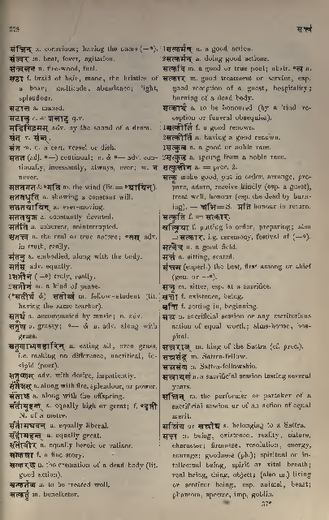
Cappeller 1891 Worttyp nicht bestimmt
Originaltext · Englisch · Worttyp nicht bestimmt
sát ·-> sánt.
Monier-Williams 1872 Worttyp nicht bestimmt
Originaltext · Englisch · Worttyp nicht bestimmt
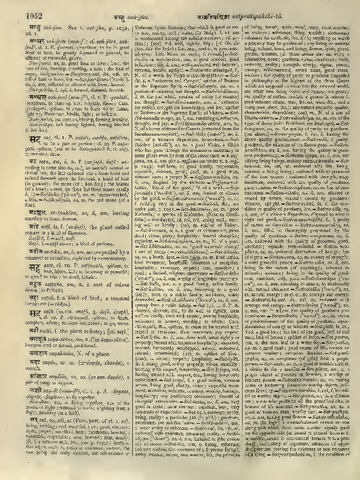
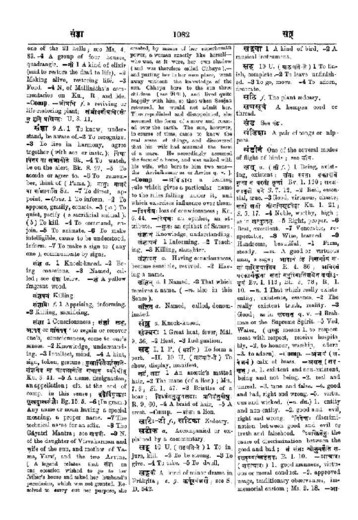
sat sat, an, atī, at (Pres. part. of rt. 1. as), being, existing; real, essential, true; good, virtuous; right, proper; excellent, best; handsome, beautiful; venerable, respectable; wise, learned; firm, steady; (ī), f. a virtuous wife, &c., (see p. 1053); (sat), n. that which really is, entity or existence, essence, the true being, the really existent, the self-existent or Universal Spirit, Brahma; that which is good or real or true, reality, truth; water, (in Naigh. 1. 12. sat is enumerated among the udaka-nāmāni; cf. sa- tīna); (sat), ind. well, rightly, fitly; [cf. Gr. ὤν (Ion. ἐών for ἐσών); Lat. sens, sent-is, in prœ-sens, ab-sens; Lith. Nom. m. esañs, f. esanti.]
Petersburger 1855 Adverb
Originaltext · Deutsch · Adverb
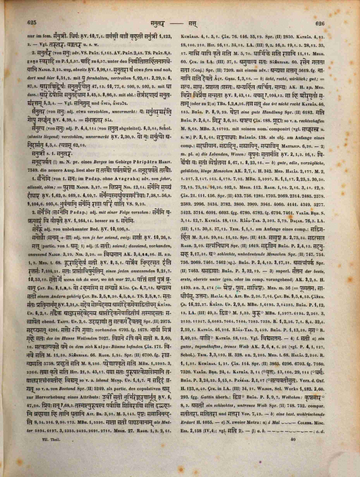
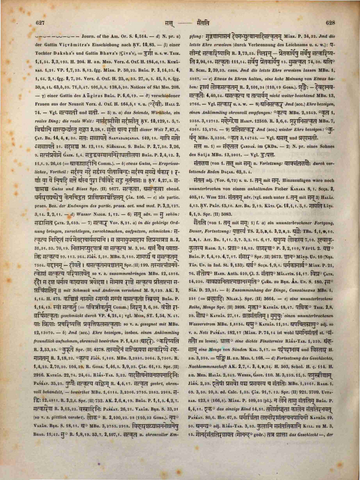
√sant (partic. von 1. as) 1〉 adj. (f. satī) seiend; daseiend, vorhanden, anwesend NAIGH. 3,29. NIR. 3,20. = vidyamāna AK. 3,4,14,86. H. an. 1,9. MED. t. 68. dū̱rādi̱hevà sa̱tī ṚV. 8,5,1. pātrèva bhi̱ndatsa̱ta èti ra̱kṣasàḥ ṚV. 7,104,21. sa̱taḥ prāsā̀viṣurma̱tim eines jeden anwesenden ṚV. 9,21,7. ṚV. 10,53,10. sa̱to mè wenn ich da war, wo ich war ṚV. 10,27,4. patiṃ santaṃ putraṃ brūyāt ŚAT. BR. 8,1,3,5. yo 'hamasmi sa sanyaje KĀTY. ŚR. 4,7,18. anyasya satī einem Andern gehörig ŚAT. BR. 2,5,2,20. ŚAT. BR. 4,5,5,4. TS. 2,5,2,7. sa̱taḥ sàtaḥ prati̱mānàm ṚV. 3,31,8. sadeva somyedamagra āsīdekamevādvitīyam CHĀND. UP. 6,2,1. taddhaika āhurasadevedamagra āsīdekamevādvitīyaṃ tasmādasataḥ sajjāyeta ebend. TAITT. UP. 2,6. udārāṇāṃ tu satkarmadaivatam Spr. (II) 2975. sadapyasat Spr. (II) 4201. santo 'pi guṇāḥ vorhanden Spr. (II) 6795. fg. Spr. (II) 1678. bhāryā mitraṃ gṛhe sataḥ des im Hause Weilenden Spr. (II) 7027. vijane 'pi vane satī R. 2,60,10. satkalpavṛkṣe vane in dem sich Kalpa- Bäume befinden ŚĀK. 171. vibhave sati M. 11,38. SĀṂKHYAK. 66. RAGH. 1,94. Spr. (II) 6700. fg. rājanyasati Spr. (II) 5758. prahṛte sati M. 8,286. pareṇāpakṛte sati MBH. 1,5985. MBH. 3,2366. tathā kṛte sati HIT. 21,9. HIT. 43,17. yathā sataḥ puruṣātkeśalomāni tathākṣarātsaṃbhavatīha viśvam so v. a. lebend MUṆḌ. UP. 1,1,7. na sadidaṃ jagat so v. a. von Bestand Spr. (II) 5249. als partic. des copulativen as zur Hervorhebung eines Attributs: u̱rvī sa̱tī bhūmìraṃhūra̱ṇābhū̀t ṚV. 6,47,20. pri̱yaḥ san ṚV. 7,68,5. tasmātpuruṣasya parvāṇi śithirāṇi santi dṛḻhāni brahmaṇā hi tāni dhṛtāni AIT. BR. 3,31. M. 5,145. pṛṣṭaḥ sannābhinandati M. 8,54. M. 8,216. M. 9,90. M. 9,173. MBH. 1,5591. mātā satī pāṇḍavānām als Mutter MBH. 1,5894. MBH. 1,6197. MBH. 3,2355. MBH. 1,2425. MBH. 1,2691. MBH. 1,2711. MEGH. 27. RAGH. 1,9. RAGH. 2,61. KUMĀRAS. 4,1. KUMĀRAS. 5,1. ŚĀK. 76. ŚĀK. 146. ŚĀK. 55,19. Spr. (II) 2850. KATHĀS. 4,82. KATHĀS. 18,100. KATHĀS. 18,210. HIT. 16,11. HIT. 34,18. LA. (III) 9,2. LA. (III) 16,3. LA. (III) 19,1. LA. (III) 19,5. LA. (III) 28,12. LA. (III) 28,35. LA. (III) 28,17. nāmni vāpi kṛte sati M. 5,70. dhārmike sati rājani M. 11,11. MEGH. 60. ŚUK. in LA. (III) 37,5. aguṇasya sataḥ SĀṂKHYAK. 60. rasena galatā satā (Conj.) Spr. (II) 7209. mit einem adv.: anyathā santam Spr. (II) 5619. fg. nānāpi sati daivate ĀŚV. GṚHY. 1,3,10. — b〉 ächt, recht, wirklich; gut; = satya, sādhu, praśasta (śasta), abhyarhita (arcita, mānya) AK. H. an. MED. vipro̱ viprèṇa̱ sansa̱tā ṚV. 8,43,14. vacas ṚV. 7,104,12. sā hi śrīra̱mṛtā̀ sa̱tām (oder zu 2〉a) TBR. 1,2,1,26. tanna sat das ist nicht recht KATHĀS. 46. KATHĀS. 185. BHĀG. P. 8,9,29. ceṣṭā eine gute Handlung Spr. (II) 6182. mati BHĀG. P. 2,4,1. gir BHĀG. P. 3,6,36. apatya ŚĀK. 188. śūdrāḥ so v. a. rechtschaffen M. 8,68. MBH. 3,16702. mit seinem nom. componirt (vgl. sacchāstra u. s. w.) P. 2,1,61. sadupādhayaḥ BHĀṢĀP. 138. als obj. am Anfange eines comp.: sadadhīyāna, sadvādin, saddhyāyin, sadyājin MAITRYUP. 6,30. — 2〉 m. pl. a〉 die Lebenden, Wesen: vṛ̱ṣa̱bhaḥ sa̱tāmàsi ṚV. 2,1,3. ṚV. 2,16,1. viśvèṣāṃ vaḥ sa̱tāṃ jyeṣṭhàtamā ṚV. 6,67,1. ṚV. 8,23,16. — b〉 gute, edle, vorzügliche, gebildete, kluge Menschen AK. 2,7,4. H. 342. MED. HALĀY. 2,177. M. 2. M. 1. M. 217. M. 3,147. M. 165. M. 4,178. M. 7,93. MBH. 5,5997. R. 1,1,17. R. 2,25,2. R. 2,30,30. R. 2,72,15. R. 2,75,34. R. 2,94,26. R. 2,102,5. MEGH. 112. RAGH. 1,10. RAGH. 2,16. RAGH. 3,41. RAGH. 12,9. ŚĀK. 21. ŚĀK. 111. ŚĀK. 156. Spr. (II) 433. fgg. Spr. (II) 756. Spr. (II) 1281. fgg. Spr. (II) 1705. Spr. (II) 2069. fgg. Spr. (II) 2314. Spr. (II) 2485. fgg. Spr. (II) 2578. Spr. (II) 2589. fgg. Spr. (II) 2996. Spr. (II) 3434. fgg. Spr. (II) 3782. Spr. (II) 3800. fgg. Spr. (II) 3909. Spr. (II) 3941. fgg. Spr. (II) 4060. Spr. (II) 4141. fgg. Spr. (II) 4349. Spr. (II) 5277. fgg. Spr. (II) 5423. Spr. (II) 5714. fgg. Spr. (II) 6091. Spr. (II) 6693. fgg. Spr. (II) 6780. Spr. (II) 6782. fg. Spr. (II) 6794. fgg. Spr. (II) 7461. VARĀH. BṚH. S. 3,14. VARĀH. BṚH. S. 12,7. KATHĀS. 18,118. RĀJA-TAR. 3,305. RĀJA-TAR. 5,79. DAŚAK. 76,3. LA. (III) 1,15. LA. (III) 30,3. LA. (III) 57,12. TRIK. 1,1,1. am Anfange eines comp.: sadvigarhita M. 3,46. M. 10,84. M. 11,52. Spr. (II) 413. sajjuṣṭa R. 2,75,34. sadvatsala RAGH. 2,69. satsaṃnidhāna Spr. (II) 1619. sadvṛjina BHĀG. P. 2,4,13. sadanugraha BHĀG. P. 3,17,31. a˚ schlechte, unbedeutende Menschen Spr. (II) 747. Spr. (II) 754. Spr. (II) 756. Spr. (II) 2069. Spr. (II) 7461. Spr. (II) 7462 (sg.). BHĀG. P. 2,4,13. BHĀG. P. 3,17,31. asatsaṃparka Spr. (II) 7463. asadgāthāḥ BHĀG. P. 3,32,19. — 3〉 superl. sáttama der beste, erste, oberste unter (gen. oder im comp. vorangehend) AK. 3,2,8. H. 1439. H. an. 3,474 (= śreṣṭha, pūjya, sādhiṣṭha). MED. m. 56 (= pūjyatama, sādhīyaṃs, uttama). HALĀY. 4,5. AIT. BR. 2,36. AIT. BR. 7,16. ŚAT. BR. 9,5,1,53. ŚĀṄKH. ŚR. 16,22,27. CHĀND. UP. 2,9,6. MBH. 1,6195. MBH. 3,14385. BHĀG. P. 1,12,18. LA. (III) 49,3. dvija˚ M. 1,33. kuru˚ MBH. 1,5977. MBH. 1,6194. MBH. 2,261. MBH. 3,2159. MBH. 3,11947. MBH. 5,6082. MBH. 5,7064. MBH. 5,7104. MBH. 5,7283. MBH. 5,7338. R. 1,2,26. R. 1,7,1. R. 1,8,4. R. 1,52,4. R. 2,59,1. KATHĀS. 46,216. RĀJA-TAR. 3,459. BHĀG. P. 1,13,38. mṛga˚ R. 3,49,25. vāji˚ KATHĀS. 18,102. Vgl. viśvasattama. — 4〉 f. satī a〉 ein gutes, tugendhaftes, treues Weib AK. 2,6,1,6. AK. 2,6,1,26. (vgl. P. 4,1,127, Schol.). TRIK. 3,3,193. H. 528. H. an. 2,205. MED. t. 68. HALĀY. 2,340. R. 1,1,81. KUMĀRAS. 1,21. ŚĀK. 114. Spr. (II) 3865. fg. Spr. (II) 6296. Spr. (II) 6703. fg. Spr. (II) 7160. fg. Spr. (II) 7520. VARĀH. BṚH. 24,4. KATHĀS. 3,14 (˚vṛtta). KATHĀS. 13,160. KATHĀS. 29,114 (˚dharma). BHĀG. P. 3,24,23. BHĀG. P. 5,15,8. PAÑCAR. 2,1,17 (˚satyavatīsuta). Verz. d. Oxf. H. 123,a,40. ŚUK. in LA. (III) 34,21. WILSON, Sel. Works 1,182. WILSON, Sel. Works 2,60. WILSON, Sel. Works 2,293. fgg. Gattin überh.: dvija˚ BHĀG. P. 5,9,7. Weibchen: kṛṣṇasāra˚ BHĀG. P. 8,3. asatī ein schlechtes, untreues Weib Spr. (II) 748. Spr. (II) 752. compar. satītarā, satitarā und sattarā VOP. 7,49. — b〉 eine best. wohlriechende Erdart H. 1055. — c〉 N. zweier Metra: α〉 4 Mal ⏑ ⏑ ⏑ – COLEBR. Misc. Ess. 2,158 (COLEBR. Misc. Ess. IV, 4); vgl. sati 2〉. — β〉 a. b: – – ⏑ – – ⏑ ⏑ – ⏑ – – c. d: ⏑ – ⏑ – – ⏑ ⏑ – ⏑ – – Journ. of the Am. Or. S. 6,514. — d〉 N. pr. α〉 der Gattin Viśvāmitraʼs Einschiebung nach ṚV. 10,85. — β〉 einer Tochter Dakṣaʼs und Gattin Bhavaʼs (Śivaʼs), = durgā u. s. w. TRIK. 1,1,54. TRIK. 3,3,193. H. 204. H. an. MED. Verz. d. Oxf. H. 184,a,18. KUMĀRAS. 1,21. VP. 1,7,23. VP. 1,8,12. fgg. MĀRK. P. 50,22. BHĀG. P. 3,14,35. fgg. BHĀG. P. 4,1,64. BHĀG. P. 4,2,1. fgg. BHĀG. P. 8,7,36. Verz. d. Oxf. H. 25,a,33. fgg. Verz. d. Oxf. H. 27,a,5. Verz. d. Oxf. H. 45,b,8. fgg. Verz. d. Oxf. H. 50,a,41. Verz. d. Oxf. H. 63,b,35. fgg. Verz. d. Oxf. H. 71,b,47. Verz. d. Oxf. H. 101,b,8. fgg. Verz. d. Oxf. H. 138,b,20. Notices of Skt. Mss. 208. — γ〉 einer Gattin des Aṅgiras BHĀG. P. 6,6,19. — δ〉 verschiedener Frauen aus der Neuzeit Verz. d. Oxf. H. 164,b,1 v. u. (˚devī). HALL 2. HALL. 74. — Vgl. satyasatī und satī. — 5〉 n. a〉 das Seiende, Wirkliche, ein reales Ding; die reale Welt: nāsàdāsī̱nno sadā̀sīt ṚV. 10,129,1. ṚV. 10,5,7. viśvā̀ni̱ sāntya̱bhyàstu ma̱hnā ṚV. 2,28,1. sa̱to a̱sya rājā̀ dieser Welt ṚV. 7,87,6. ŚAT. BR. 14,4,1,30. sataḥ sajjāyate SARVADARŚANAS. 149,18. nāpi sato 'sajjāyate 21. sadasacca M. 12,118. SĀṂKHYAK. 9. BHĀG. P. 2,7,50. BHĀG. P. 3,26,9. satsaṃprayoge JAIM. 1,4. sadudbhavasthānanirodhalīlayā BHĀG. P. 2,4,12. BHĀG. P. 3,11,1. BHĀG. P. 3,11,2. BHĀG. P. 3,26,46 (= ākāśādīni Comm.). — b〉 etwas Gutes, — Erspriessliches, Vortheil: sadàsya̱ made̱ sadvàsya pī̱tāvindra̱ḥ sadàsya sa̱khye càkāra . raṇā̀ vā̱ ye ni̱ṣadi̱ satte àsya pu̱rā vìvidre̱ sadu̱ nūtànāsaḥ .. ṚV. 6,27,2. saccāsacca Gutes und Böses Spr. (II) 1677. satkṛtvā, asatkṛtvā ebend. dharmāraṇyacareṣu kenaciduta prāṇiṣvasacceṣṭitam ŚĀK. 106. — c〉 als partic. praes. Bez. der Endungen des partic. praes. act. und med. P. 3,2,127. P. 3,3,14. P. 2,2,11. — d〉 Wasser NAIGH. 1,12. — 6〉 sat adv. = su schön: sadbhāsita ŚATR. 2,659. — 7〉 satkar VOP. 8,21. a〉 in die gehörige Ordnung bringen, zurechtlegen, zurechtmachen, aufputzen, schmücken: satkṛtya nihitaṃ sarvametadācāryasadmani . sa tvamāyudhamādāya kṣipramāvraja R. 2,31,31. R. 2,31,33. R. 2,70,19. bhikṣāmapyudapātraṃ vā satkṛtya M. 3,96. annaṃ caiva yathāśakti satkṛtya M. 99. M. 113. M. 264. YĀJÑ. 1,31. MBH. 5,180. gāmardhyaṃ ca susatkṛtam MBH. 5,7504. yaddānam — dīyate . asatkṛtamavajñātam Spr. (II) 199. tasmātsaṃjanayetkośaṃ satkṛtya paripālayet so v. a. zusammenbringen MBH. 12,4816. dadau sa daśa dharmāya kaśyapāya trayodaśa . somāya rājñe satkṛtya prītātmā saptaviṃśatim .. mit Schmuck und Anderem versehend M. 9,129. AK. 3,1,14. H. 475. kaccittvaṃ nāgamo 'gamyāṃ gamyāṃ vāsatkṛtāṃ striyam BHĀG. P. 1,14,42. svāṃ satkartuṃ (= pavitrīkartum Comm.) giram BHĀG. P. 3,6,36. vaṃśo rājarṣisatkṛtaḥ geschmückt durch VP. 4,21,4; vgl. MUIR, ST. 1,54, N. 41. yāḥ kriyāḥ pracariṣyanti pravṛttiphalasatkṛtāḥ so v. a. gesegnet mit MBH. 12,13070. — b〉 Jmd (acc.) Ehre bezeigen, insbes. einen Ankömmling freundlich aufnehmen, ehrenvoll bewirthen P. 1,4,63 (ādare). ˚kariṣyati R. 3,53,25. ˚kurute Spr. (II) 4278. tasmādenaṃ satkriyayā satkariṣye 'hamāgatam R. 3,18,32. ˚kṛtya YĀJÑ. 1,108. MBH. 3,2881. MBH. 3,3064. MBH. 5,7501. R. 1,4,25. R. 2,70,20. R. 2,104,29. R. GORR. 1,46,5. R. GORR. 3,9,25. ŚĀK. 61,12. Spr. (II) 2916. KATHĀS. 22,74. KATHĀS. 24,64. RĀJA-TAR. 5,32. pādaśaucabhojanaśayanādibhiḥ PAÑCAT. 35,25. puṣpaiḥ satkṛtya vahnim R. 4,4,17. satkṛta geehrt, ehrenvoll behandelt, — bewirthet MBH. 1,6114. MBH. 3,2306. MBH. 3,2755. MBH. 3,2882. MBH. 3,2918. sadbhiḥ MBH. 12,4811. R. 3,2,6. Spr. (II) 752. AK. 2,6,1,19. BHĀG. P. 1,1,5. BHĀG. P. 4,2,7. satkāreṇa R. 3,15,22. vastrādibhiḥ PAÑCAT. 26,21. VARĀH. BṚH. S. 33,21 (so v. a. göttlich verehrt). loka˚ R. 2,100,22. R. 2,100,28 (R. 2,110,23 GORR.). nṛpa˚ VARĀH. BṚH. S. 18,11. a˚ MBH. 3,2755. MBH. 3,2918. vihāraśayyāsanabhojaneṣu BHAG. 11,42. su˚ R. 1,8,19. R. 1,53,7. R. 2,107,1. satkṛta n. ehrenvoller Empfang: gurūṇāmāsanaṃ deyamabhyutthānādisatkṛtam MĀRK. P. 34,32. Jmd die letzte Ehre erweisen (durch Verbrennung des Leichnams u. s. w.): pakṣīndraṃ satkariṣyāmi R. 3,73,35. pitaram — pretakāryeṣu sarveṣu satkariṣyati R. 2,94,18. satkṛtaḥ R. 3,111,14. sarveṣu pretakāryeṣu 15. susatkṛta R. 3,74,30. ati˚ R. SCHL. 2,39,33. caus. Jmd die letzte Ehre erweisen lassen MBH. 1,5867. — c〉 Etwas in Ehren halten, eine hohe Meinung von Etwas haben: rājyaṃ lokasatkṛtam R. 2,101,24 (R. 2,110,19 GORR.). śṛṅgaiḥ — devadānavasatkṛtaiḥ R. 4,40,34. asatkṛtya ca tatsarvam nicht weiter beachtend MBH. 13,2766. — Vgl. satkāra u. s. w. — 8〉 abhisatkar Jmd (acc.) Ehre bezeigen, einen Ankömmling ehrenvoll empfangen: ˚kṛtya MBH. 2,2549. ˚kṛta MBH. 1,2358. MBH. 3,12713. mahendreṇa HARIV. 12510. R. 5,6,6. śūrābhisatkṛta MBH. 7,6261. MBH. 15,570. — 9〉 pratisatkar Jmd (acc.) wieder Ehre bezeigen: ˚kurvan MBH. 5,3356. ˚kṛta MBH. 3,14745. — Vgl. asant und brahmasatī.
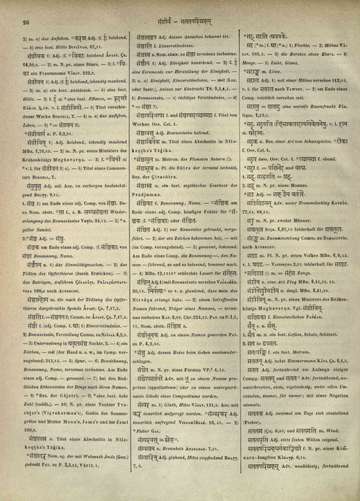
Böhtlingk 1879 Worttyp nicht bestimmt
Originaltext · Deutsch · Worttyp nicht bestimmt
sát s. u. sánt.
Apte 1890 Adjektiv · Substantiv Maskulin · Substantiv Neutrum
Originaltext · Englisch · Adjektiv · Substantiv Maskulin · Substantiv Neutrum
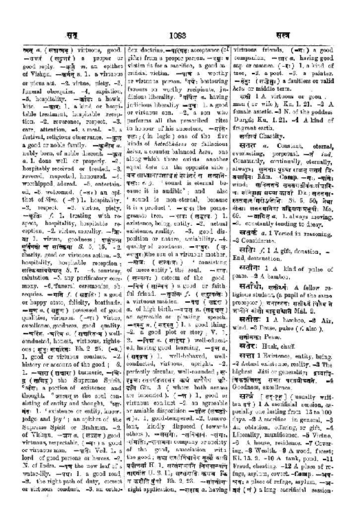
sat a. (tī f.) 1 Being, existing, existent; saṃtaḥ svataḥ prakāśaṃte guṇā na parato nṛṇāṃ Bv. 1. 120; satkalpavṛkṣe vane Ś. 7. 12. 2 Real, essential, true. 3 Good, virtuous, chaste; satī satī yogavisṛṣṭadehā Ku. 1. 21; Ś. 5. 17. 4 Noble, worthy, high; as in satkulam. 5 Right, proper. 6 Best, excellent. 7 Venerable, respectable. 8 Wise, learned. 9 Handsome, beautiful. 10 Firm, steady. — m. A good or virtuous man, a sage; ādānaṃ hi visargāya satāṃ vārimucāmiva R. 4. 86; avirataṃ parakāryakṛtāṃ satāṃ madhurimātiśayena vaco'mṛtaṃ Bv. 1. 113; Bh. 2. 78; R. 1. 10. — n. 1 That which really exists entity, existence, essence. 2 The really existent truth, reality. 3 Good; as in sadasat q. v. 4 Brahman or the Supreme Spirit. 5 Ved. Water. (satkṛ means 1 to respect treat with respect, receive hospitably. 2 to honour, worship, adore 3 to adorn). Comp. — aṃjanaṃ ( sadaṃjanaṃ) calx of brass. — asat ( sadasat) a. 1 existent and non-existent, being and not being. 2 real and unreal. 3 true and false. 4 good and bad, right and wrong. 5 virtuous and wicked. ( — n. du.) 1 entity and non-entity. 2 good and evil, right and wrong. ˚vivekaḥ discrimination between good and evil or truth and falsehood. ˚vyaktihetuḥ the cause of discrimination between the good and bad; taṃ saṃtaḥ śrotumarhaṃti sadasadvyaktihetavaḥ R. 1. 10. — ācāraḥ (sadācāraḥ) 1 good manners, virtuous or moral conduct. 2 approved usage, traditionary observances, immemorial custom; Ms. 2. 18. ([Page 1083-a]) — ātman a. (sadātman) virtuous, good. — uttaraṃ (saduttaraṃ) a proper or good reply. — kartṛ m. an epithet of Viṣṇu. — karman n. 1 a virtuous or pious act. 2 virtue, piety. 3 funeral obsequies. 4 expiation. 5 hospitality. — kāṃḍaḥ a hawk, kite. — kāraḥ 1 a kind or hospitable treatment, hospitable reception. 2 reverence, respect. 3 care, attention. 4 a meal. 5 a festival, religious observance. — kulaṃ a good or noble family. — kulīna a. nobly born, of noble descent. — kṛta a. 1 done well or properly. 2 hospitably received or treated. 3 revered, respected, honoured. 4 worshipped, adored. 5 entertained. 6 welcomed. — (taḥ) an epithet of Śiva. — (taṃ) 1 hospitality. 2 respect. 3 virtue, piety. — kṛtiḥ f. 1 treating with respect, hospitality, hospitable reception. 2 virtue, morality. — kriyā 1 virtue, goodness; śakuṃtalā mūrtimatī ca satkriyā Ś. 5. 15. 2 charity, good or virtuous action. 3 hospitality, hospitable reception; satkriyāviśeṣāt Ś. 7. 4 courtesy, salutation. 5 any purificatory ceremony. 6 funeral ceremonies, obsequies. — gati f. (sadratiḥ) a good or happy state, felicity, beatitude. — guṇa a. (sadguṇa) possessed of good qualities, virtuous. — (ṇaḥ) virtue, excellence, goodness, good quality. — carita, -caritra a. (saccasti-tra) wellconducted, honest, virtuous, righteous; sūtuḥ saccaritaḥ Bh. 2. 25. ( — n.) 1 good or virtuous conduct. 2 history or account of the good; Ś. 1. — cārā (saccārā) turmeric. — cid (saccid) the Supreme Spirit. ˚aṃśaḥ a portion of existence and thought. ˚ātman m. the soul consisting of entity and thought. ˚ānaṃdaḥ 1 ‘existence or entity, knowledge and joy’; an epithet of the Supreme Spirit or Brahman. 2 of Viṣṇu. — jana a. (sajjana) good, virtuous, respectable. — (naḥ) a good or virtuous man. — patiḥ Ved 1 a lord of good persons or heroes. 2 N. of Indra. — patraṃ the new leaf of a water-lily. — pathaḥ 1 a good road 2 the right path of duty, correct or virtuous conduct. 3 an ([Page 1083-b]) orthodox doctrine. — parigrahaḥ acceptance (of gifts) from a proper person. — paśuḥ a victim fit for a sacrifice, a good sacrificial victim. — pātraṃ a worthy or virtuous person. ˚varṣaḥ bestowing favours on worthy recipients, judicious liberality. ˚varṣin a. having judicious liberality — putraḥ 1 a good or virtuous son. 2 a son who performs all the prescribed rites in honour of his ancestors. — pratipakṣaḥ; (in logic) one of the five kinds of hetvābhāsas or fallacious hetus, a counter balanced hetu, one along which there exists another equal hetu on the opposite side; yatra sādhyābhāvasādhakaṃ hetvaṃtaraṃ sa satpratipakṣaḥ; e. g. ‘sound is eternal because it is audible’; and also ‘sound is non-eternal, because it is a product’. — phalaḥ the pomegranate tree. — bhāvaḥ (sadbhāvaḥ) 1 existence, being, entity. 2 actual existence, reality. 3 good disposition or nature, amiability. 4 quality of goodness. — māturaḥ ( sanmāturaḥ) the son of a virtuous mother. — mātraḥ (sanmātraḥ) ‘consisting of mere entity’, the soul. — mānaḥ (sanmānaḥ) esteem of the good. — mitraṃ (sanmitraṃ) a good or faithful friend. — yuvatiḥ f. (sadyuvatiḥ) a virtuous maiden. — baṃśa (sadbaṃśa) a. of high birth. — vacas n. (sadvacas) an agreeable or pleasing speech. — vastu n. (sadvastu) 1 a good thing. 2 a good plot or story; V. 1. 2. — vidya a. (sadvidya) well-educated, having good learning. — vṛtta a. (sadvṛtta) 1 well-behaved, wellconducted, virtuous, upright. 2 perfectly circular, well-rounded; sadvṛttaḥ stanamaṃḍalastava kathaṃ prāṇairmama krīḍati Gīt. 3 (where both senses are intended). — (tta) 1 good or virtuous conduct. 2 an agreeable or amiable disposition — śīla ( sacchīla) a. 1 good-tempered. 2 benevolent, kindly disposed (towards others). — saṃsargaḥ, -saṃnidhānaṃ, -saṃgaḥ, — saṃgatiḥ, -samāgamaḥ company or society of the good, association with the good; tathā satsaṃnidhānena mūrkho yāti pravīṇatāṃ H. 1. satsaṃgajāni nidhanānyapi tārayatiṃ U. 2. 11; satsaṃgatiḥ kathaya kiṃ na karoti puṃsāṃ Bh. 2. 23. — saptayoga; right application. — sahāya a. having ([Page 1083-c]) virtuous friends. — (yaḥ) a good companion. — sāra a. having good sap or essence. — (raḥ) 1 a kind of tree. 2 a poet. 3 a painter. — hetuḥ (saddhetuḥ) a faultless or valid hetu or middle term.
Cappeller 1887 Worttyp nicht bestimmt
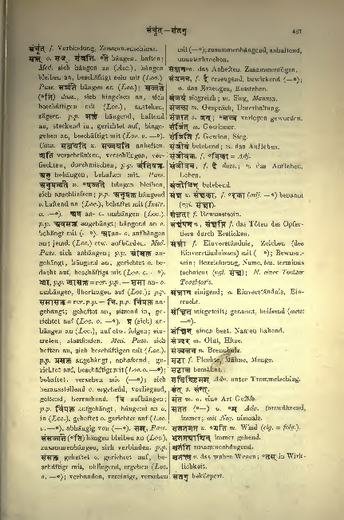
Originaltext · Deutsch · Worttyp nicht bestimmt
sát s. sánt.
Burnouf 1866 Worttyp nicht bestimmt
Originaltext · Französisch · Worttyp nicht bestimmt
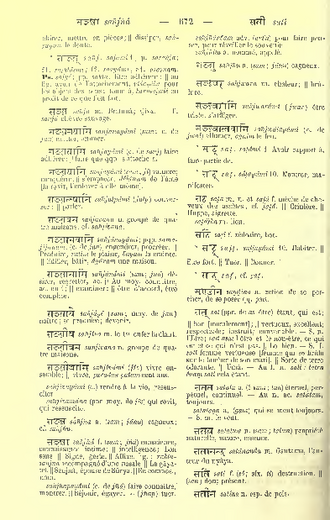
sat sat (ppr. de as être) étant, qui est; bon [moralement]; vertueux, excellent; respectable; instruit; convenable. — S. n. l'Etre; sad asat l'être et le non-être, ce qui est et ce qui n'est pas. Le bien. — S. f. satī femme vertueuse [femme qui se brûle sur le bucher de son mari]. Sorte de terre odorante. Umā. — Au l. n. sati; tatra evaṃ sati cela étant.
Quelltextfundstellen (8)
HP 3 Fundstellen
MAN 1 Fundstelle
SiSa 4 Fundstellen
Mit AYI Free weitermachen
Bildquelle: AYI Archiv.