

bīja बीज – seed; germ; seed syllable; generative fluid
substantive masculine · substantive neuter · Word type unspecified
Dictionary sources
AYI dictionary substantive neuter
seed; germ; seed syllable; generative fluid
Cappeller 1891 substantive neuter
Original text · English · substantive neuter
bī́ja ·n. seed (of plants and animals), seedcorn, grain, germ, element, origin, beginning, adj. caused by (--°).
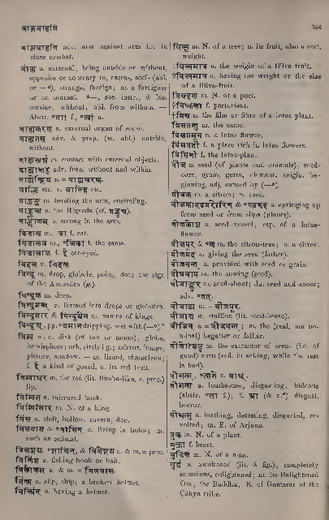
Monier-Williams 1872 substantive neuter
Original text · English · substantive neuter
bīja bīja, am, n. (in classical Sanskrit more usually written vīja, q. v., perhaps fr. rt. jan with vi), the seed or germ of plants and animals; seed-corn, corn, (see vīja.)
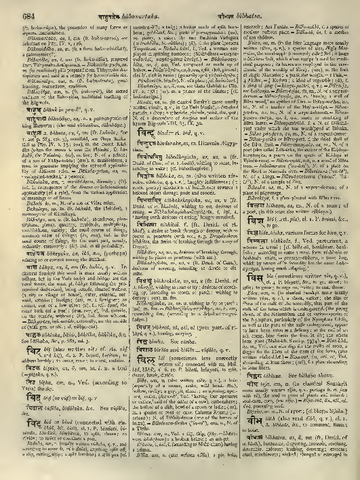
Petersburger 1855 substantive masculine · substantive neuter · Word type unspecified
Original text · German · substantive masculine · substantive neuter
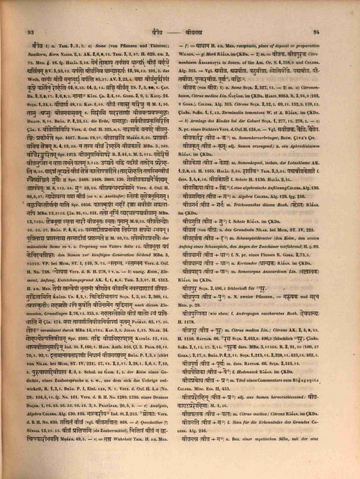
bī́ja 1〉 n. TRIK. 3,5,7. a〉 Same (von Pflanzen und Thieren); Saatkorn, Korn NAIGH. 2,2. AK. 2,6,2,13. TRIK. 3,3,87. H. 629. H. an. 2,73. MED. j. 16. fg. HALĀY. 3,16. yenà to̱kāya̱ tanàyāya dhā̱nyaṃ1̱̀ bīja̱ṃ vahàdhve̱ akṣìtam ṚV. 5,53,13. vapànto̱ bījàmiva dhānyā̱kṛtàḥ ṚV. 10,94,13. ṚV. 10,101,3. das Weib, yasyā̱ṃ bījàṃ manu̱ṣyā3̱̀ vapànti ṚV. 10,85,37. AV. 3,23,4. yathā bījàmu̱rvarā̀yāṃ kṛ̱ṣṭe phālèna̱ rohàti AV. 10,6,33. AV. 14,2,14. jajñi̱ bījàm TS. 7,5,20,1. ŚAT. BR. 3,3,3,17. ŚAT. BR. 8,6,2,2. nānā˚ KĀTY. ŚR. 2,4,10. GOBH. 2,9,5. KAUŚ. 24. SUŚR. 1,34,4. vījārtha SUŚR. 48,12. KAP. 1,10. vījaṃ sthāsnu cariṣṇu ca M. 1,56. tāsu (apsu) vījamavāsṛjat 8. śirāṃsi pādarakṣāṇāṃ vījavatpravapanmuhuḥ DRAUP. 8,10. BHĀG. P. 8,24,34. die Erde, yāmāhuḥ sarvavījaprakṛtiriti ŚĀK. 1. vījoptividhi Verz. d. Oxf. H. 325,a,4. nārājake janapade bījamuṣṭiḥ prakīryate Spr. 4417. RAGH. 19,57. vījāñjali MṚCCH. 6,20. prāptavījamiva kṣetram R. 4,13,39. na tasya vījaṃ rohati vījakāle MBH. 5,386. bījairaṅkuritam Spr. 1972. vījamuptamivoṣare R. 3,44,3. M. 2,112. yatheriṇe vījamuptvā na vaptā labhate phalam M. 3,142. upyate yaddhi yadvījaṃ tattadeva prarohati M. 9,40. yādṛśaṃ tūpyate bījaṃ kṣetre kālopapādite . tādṛgrohati tattasminbījaṃ svairvyañjitaṃ guṇaiḥ .. Spr. 2469. Spr. 2468. Spr. 3809. Spr. 130. govījakāñcanairvaiśyam (śāpayet) M. 8,113. M. 8,88. su˚ M. 10,69. bījabandhanapraveśane Verz. d. Oxf. H. 86,b,27. nyagrodhasya yathā bījaṃ (so v. a. Ausläufer) stokaṃ sūkṣetrabhūmigam . bahuvistīrṇatāṃ yāti Spr. 1656. phālakṛṣṭāṃ mahīṃ dattvā savījāṃ saphalāmapi MBH. 13,3133. ŚĀK. 91,14. ŚĀK. 91,151. tato bhūmiṃ vyadadhātpañcavījām MBH. 13,7394. kṣetrabhūtā smṛtā nārī vījabhūtaḥ smṛtaḥ pumān M. 9,33. vījayonyoḥ M. 56. M. 35. M. 37. BHĀG. P. 4,6,42. yasmādvījaprabhāveṇa tiryagjā ṛṣayo 'bhavan . pūjitāśca praśastāśca tasmādvījaṃ praśasyate .. M. 10,72. tapovījaprabhāvaiḥ der männliche Same so v. a. Ursprung von Vaters Seite M. 42. vījabhūtā vayaṃ kecidavaśiṣṭāḥ den Samen zur künftigen Generation bildend MBH. 3,15359. VP._bei_MUIR, ST. I, 149, N. 75. ˚stambha, ˚stambhana Verz. d. Oxf. H. No. 758. ˚poṣaṇa Verz. d. B. H. 278,7 v. u. — b〉 uneig. Keim, Element, Anfang, Entstehungsgrund AK. 1,1,4,6. TRIK. 3,3,87. H. 1513. H. an. MED. teṣāṃ khalveṣāṃ bhūtānāṃ trīṇyeva vījāni bhavantyāṇḍajaṃ jīvajamudbhijjamiti CHĀND. UP. 6,3,1. cikitsitasya SUŚR. 1,5,20. SUŚR. 2,360,14. (ayaskṛtīḥ) sahasraśo 'pi kurvīta bījenānena buddhimān nach diesen Elementen, Grundlagen SUŚR. 2,76,15. SUŚR. 2,355,9. mahatastejaso vījaṃ bālo 'yaṃ pratibhāti me ŚĀK. 174. mayā tāvannītivījanirvāpaṇaṃ kṛtam PAÑCAT. 85,17. PAÑCAT. 85,20. lobha˚ veranlasst durch MBH. 14,2784. KAP. 3,3. YOGAS. 1,25. NĪLAK. 34. mohasyotpattibījam Spr. 2595. taddhi vījamihāpadām KATHĀS. 15,134. bhāṣyavījānusārin Ind. St. 5,160,1. HAEB. Anth. 410, Śl. 3. PRAB. 10,11. PRAB. 70,1. PRAB. 93,7. etannānāvatārāṇāṃ nidhānaṃ vījamavyayam BHĀG. P. 1,3,5 (citirt von NĪLAK._bei_MUIR, ST. IV, 221). BHĀG. P. 17,18. BHĀG. P. 2,1,17. BHĀG. P. 3,28,1. BHĀG. P. 5,6,1. BHĀG. P. 7,10,3. puruṣāyādivījāya BHĀG. P. 8,3,2. Schol. zu JAIM. 1,2. der Keim eines Gedichts, eines Zauberspruchs u. s. w., aus dem sich das Uebrige entwickelt, R. 1,3,1. BHĀG. P. I, Einl. LXX, N. 1. Verz. d. Oxf. H. 4,a (No. 28). 104,b,10. fg. Verz. d. Oxf. H. No. 4,a (No. 28). 104,b,161. Verz. d. B. H. No. 1289. Verz. d. B. H. No. 1350. eines Dramas DAŚAR. 1,16. DAŚAR. 1,23. DAŚAR. 1,26. DAŚAR. 1,33. DAŚAR. 1,39. DAŚAR. 1,46. DAŚAR. 3,3. PRATĀPAR. 20,b,9. — c〉 Analysis, Algebra COLEBR. Alg. 130. COLEBR. Alg. 195. bhāskarīya˚ Ind. St. 2,253. ˚ślokāḥ Verz. d. B. H. No. 830. gaṇitaṃ vījaṃ (vgl. bījagaṇita) Verz. d. B. H. 868. — d〉 Quecksilber(?) SŪRYAS. 13,20. SŪRYAS. 13,23. bījaṃ prakṣipāmi (als Zaubermittel), nikṣiptaṃ bījaṃ na kvacitsphārībhavati MṚCCH. 49,5. — e〉 = tattva Wahrheit TRIK. H. an. MED. — f〉 = ādhāna H. an. MED. receptacle, place of deposit or preparation WILSON. — g〉 Mark RĀJAN._im_ŚKDR. — 2〉 m. = bījaka, bījapūraka Citronenbaum ĀRYABHAṬṬA_in_Journ. of the Am. Or. S. 6,558,6 und COLEBR. Alg. 315. — Vgl. avīja, agravīja, jyotirvīja, padmabīja, pītabījā, puṣkarabīja, pūrṇa˚, vahni˚.
Original text · German · Word type unspecified
bīja 1〉b〉 am Ende hinzuzufügen SĀH. D. 317. fg.
Böhtlingk 1879 substantive masculine · substantive neuter
Original text · German · substantive masculine · substantive neuter
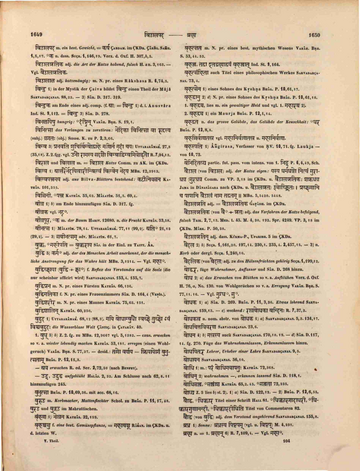
bī́ja — 1〉 n. (adj. Comp. f. ā) — a〉 Same (von Pflanzen, Menschen und Thieren), Saatkorn (MṚCCH. 49,5), Korn; auch ein Ausläufer des indischen Feigenbaums. — b〉 Keim, Element, Anfang, Entstehungsgrund. Am Ende eines adj. Comp. So v. a. veranlasst durch. — c〉 der Keim eines Gedichts, eines Schauspiels, eines Zauberspruchs u. s. w., aus dem sich das Uebrige entwickelt. — d〉 Analysis, Algebra. — e〉 Quecksilber (?). — f〉 Armlage des Kindes bei der Geburt BHĀVAPR. 6,186. — g〉 *Mark. — h〉 *= tattva. — i〉 = ādhāna. — 2〉 m. Citronenbaum RĀJAN. 11,176.
Apte 1890 substantive masculine · substantive neuter
Original text · English · substantive masculine · substantive neuter
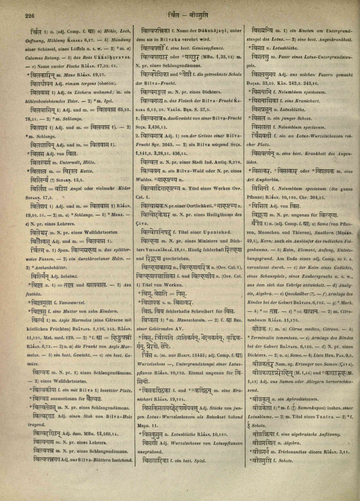
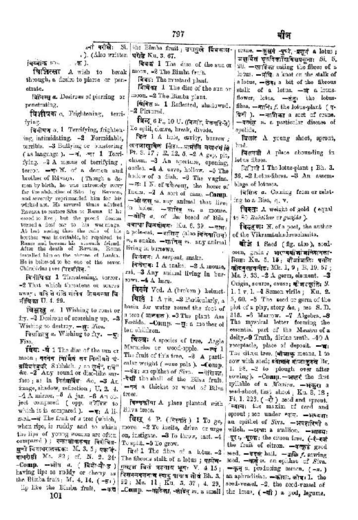
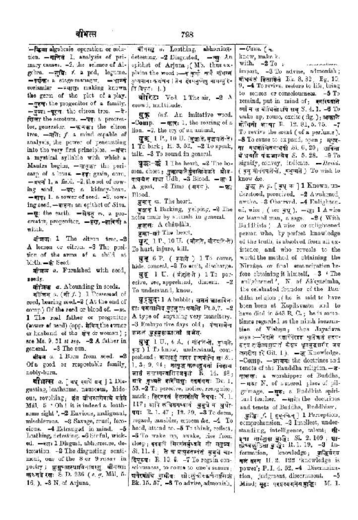
bījaṃ 1 Seed(fig. also), seedcorn, grain; araṇyabījāṃjalidānalālitāḥ Ku. 5. 15; bījāṃjaliḥ patati kīṭamukhāvalīḍhaḥ Mk. 1. 9; R. 19. 57; Ms. 9. 33. 2 A germ, element. 3 Origin, source, cause; bījaprakṛtiḥ Ś. 1. 1 v. 1 4 Semen virile; Ku. 2. 5, Ku. 2. 60. 5 The seed or germ of the plot of a play, story &c.; see S. D. 318. 6 Marrow. 7 Algebra. 8 The mystical letter forming the essential part of the Mantra of a deity. 9 Truth, divine truth. 10 A receptacle, place of deposit. — jaḥ The citron tree. (bījākṛ means. 1 to sow with seed; vyomani bījākurute Bv. 1. 98. 2 to plough over after sowing). Comp. — akṣaraṃ the first syllable of a Mantra. — aṃkuraḥ a seed-shoot, first shoot; Ku. 3. 18; Pt. 1. 223. — (rau) seed and sprout. ˚nyāyaḥ the maxim of seed and sprout; see under nyāya. — adhyakṣaḥ an epithet of Śiva. — apahāriṇī a witch. — aśvaḥ a stallion. — āḍhyaḥ pūraḥ, -pūrakaḥ the citron tree. — (raṃ -rakaṃ) the fruit of citron. — utkṛṣṭaṃ good seed. — udakaṃ hail. — uptiḥ f. sowing seed. — kartṛ m. an epithet of Śiva. — kṛt a. producing semen. ( — n.) an aphrodisiac. — kośaḥ, koṣaḥ 1 the seed-vessel. 2 the seed-vessel of the lotus. — (śī) a pod, legume. ([Page 0798-a]) — kriyā algebraic operation or solution. — gaṇitaṃ 1 analysis of primary causes. 2 the science of Algebra. — guptiḥ f. a pod, legume. — darśakaḥ a stage-manager. — dhānyaṃ coriander — nyāsaḥ making known the germ of the plot of a play. — puruṣaḥ the progenitor of a family. — puṣpaḥ -pūraṇaḥ the citron tree. — pe śikā the scrotum. — pradaḥ a procreator, generator. — phalakaḥ the citron tree. — matiḥ f. a mind capable of analysis, the power of penetrating into the very first principles. — maṃtraḥ a mystical syllable with which a Mantra begins. — mātṛkā the pericarp of a lotus. — ruhaḥ grain, corn. — vapanaṃ 1 a field. 2 the act of sowing seed. — varaḥ a kidney-bean. — vāpaḥ 1 a sower of seed. 2 sowing seed. — vāhanaḥ an epithet of Śiva. — sūḥ the earth. — sektṛ m. a procreator, progenitor. — harā, -hāriṇī a witch.
Cappeller 1887 substantive neuter
Original text · German · substantive neuter
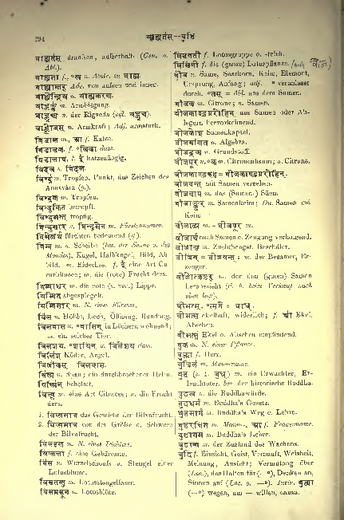
bī́ja n. Same, Saatkorn, Keim, Element, Ursprung, Anfang; adj. —˚ veranlasst durch. ˚tas = Abl. aus dem Samen.
Derived words
Occurrences in source texts (23)
HP 4 occurrences
PJH 1 occurrence
PYS 5 occurrences
SiSa 11 occurrences
SiSa 5.82-5.89: Mūlādhāra 4 occurrences
Direct occurrences
1 more source page
SiSa 5.234-5.252: Tripurā-Mantra 2 occurrences
Direct occurrences
-
SiSa 5.234 Segment 14
-
SiSa 5.236 Segment 1
SS 1 occurrence
SVU 1 occurrence
Continue with AYI Free
Image source: AYI archive.