

jana जन – person; human; people
adjective · substantive masculine · Word type unspecified
Dictionary sources
AYI dictionary substantive masculine
person; human; people
Cappeller 1891 substantive masculine
Original text · English · substantive masculine
jána1 ·m. creature, man, person, tribe, race, nation; pl. & sgl. coll. people, folks. Often --° w. collect. or indiv. mg, e.g. preṣyajana a servant or the servants. --ayaṃ janaḥ & eṣa janaḥ this person ( = I or he, she). f. janā birth, production.

Original text · English · substantive masculine
janá2 ·m. N. of a man.
Monier-Williams 1872 substantive masculine
Original text · English · substantive masculine
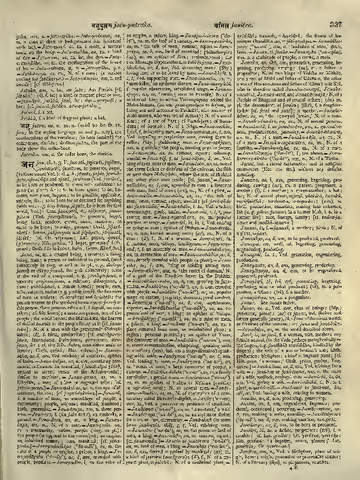
Jana, as, m. a created being, a creature, a living being, man; a person or individual in general, (used collectively in sing. as well as in pl., e. g. daivyo janaḥ or divyo janaḥ, the gods collectively; often at the end of a compound, e. g. preṣya-jana, a servant; svajana-jana, a relation; dāsa-jana, a slave; sakhī-jana, a female friend); people, race, tribe, subjects, nation (e. g. pañca janāḥ, the five races of men or nations; cf. carṣaṇi and kṛṣṭi); the person nearest to the speaker (hence ayaṃ janaḥ = this person, these persons, often = I, I myself, we our- selves; cf. hic homo); a common person, one of the people; the world beyond the Mahar-loka, the heaven of deified mortals or the people living in it [cf. jana- loka]; N. of a man with the patronymic Śārkarā- kṣya; (ā), f. birth, production; [cf. antaḥpura- jana, itara-jana, kula-jana, guru-jana, tiro- jana, &c.; cf. also Hib. duine, man either male or female; Goth. qvinô; Slav. schena.]
Petersburger 1855 adjective · substantive masculine
Original text · German · adjective
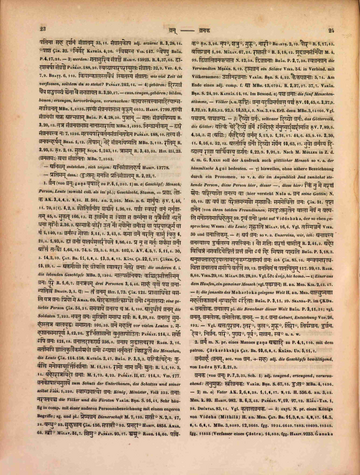
1. jana 1〉a〉γ〉 jana iva jane gacchati puraḥ indem der mir zunächst Stehende vor meinen Augen aufbricht, als wäre er ein mir Fremder, Spr. 817. — δ〉 MBH. 8,709. HARIV. 7110. Spr. 2311. — ζ〉 asau janaḥ so v. a. der Geliebte Spr. 4043. — 2〉 ajana = nārāyaṇa BHĀG. P. 10,3,1. — 3〉 adj. erzeugend in puraṃjana.
Original text · German · substantive masculine
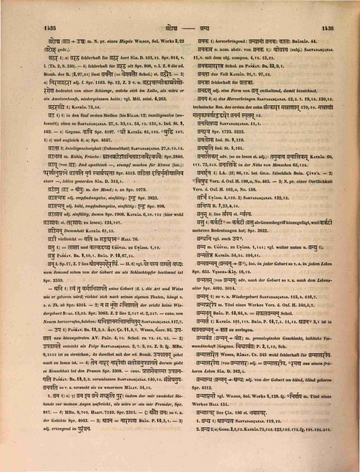
1. jána (von jan) gaṇa vṛṣādi zu P. 6,1,203. 1〉 m. a〉 Geschöpf; Mensch; Person, Leute (sowohl coll. als im pl.); Geschlecht, Stamm, = prajā, loka AK. 3,4,1,2. AK. 3,4,2,34 H. 501. H. an. 2,265. MED. n. 6. mānùṣaḥ ṚV. 1,48,11. ṚV. 1,70,2 (1). ṚV. 6,2,3. jyoti̱rjanā̀ya̱ śaśvàte ṚV. 1,36,19. yajā̀ svadhva̱raṃ janaṃ manùjātam ṚV. 1,45,1. su̱kṛt ṚV. 1,166,12. sa ijjanèna̱ sa vi̱śā sa janmànā̱ sa pu̱trairvājàṃ bharate̱ dhanā̱ nṛbhìḥ ṚV. 2,26,3. a̱smākàṃ vī̱rām̐ u̱ta nò ma̱ghono̱ janā̀ṃśca̱ yā pā̱rayā̱ccharma̱ yā cà ṚV. 1,140,12. janàsya go̱pāḥ ṚV. 5,11,1. ṚV. 3,43,5. kamā janàṃ carati̱ kāsù vi̱kṣu ṚV. 6,21,4. ṚV. 1,93,8. dvā janā̀ yā̱tayànna̱ntarī̀yate ṚV. 9,86,42. pra nū sa marta̱ḥ śavàsā̱ janā̱m̐ atì tasthau ṚV. 1,64,13. ṚV. 1,74,5. ṚV. 1,75,3. ṚV. 1,64,4. ṚV. 1,81,9. ṚV. 1,102,5. AV. 4,5,7. AV. 5,11,4. AV. 5,30,2. AV. 14,2,59. ŚAT. BR. 11,4,1,4. ŚAT. BR. 13,5,4,15. KĀTY. ŚR. 22,1,27. ŚĀṄKH. ŚR. 15,19,1. — akarmāṇo hi jīvanti sthāvarā netare janāḥ die anderen d. i. die lebenden Geschöpfe MBH. 3,1204. nālpasaṃnicayaḥ kaścidāsīttasmin janaḥ pure R. 1,6,7. janatrayam drei Personen R. 3,4,46. sāhaṃ vṛṇe pañca janānpatitve DRAUP. 3,5. yaḥ — taṃ janam HIT. I, 73. ŚĀK. 121. prāṇādhiko vasati yatra janaḥ priyo me AMAR. 69. odakāntātsnigdho jano 'nugantavyaḥ eine geliebte Person ŚĀK. 54,21. samavāye janasya ca M. 4,108. āyudhīyaṃ janam die Soldaten M. 7,222. bhavatu janaḥ sukhito mamādya sarvaḥ R. 6,39,32. janastu sumahāṃstatra bālavṛddhaḥ samāgataḥ R. 6,101,33. jane mahati vor vielen Leuten R. 6,39,2. mahājanasamāpūrṇa R. 5,12,26. durbhikṣājjano bubhukṣāpīḍitaḥ PAÑCAT. 114,4. sarvo 'pi janaḥ PAÑCAT. 121,18. janāttadākarṇya PAÑCAT. 256,8. janāya śuddhāntacarāya RAGH. 3,16. satīmapi jñātikulaikasaṃśrayāṃ jano 'nyathā bhartṛmatīṃ viśaṅkate die Menschen, die Leute ŚĀK. 114. ŚĀK. 158. KATHĀS. 2,47. BHĀG. P. 3,5,3. yatkiṃcidenaḥ kurvanti manovāṅmūrtibhirjanāḥ M. 11,241. rāmo nāma janaiḥ śrutaḥ R. 1,1,10. R. 1,5,14. ahorātravido janāḥ M. 1,73. M. 4,22. PAÑCAT. II, 47. PAÑCAT. II,114,5. VID. 177. janakoṣātmaguptaye zum Schutz der Unterthanen, des Schatzes und seiner selbst YĀJÑ. 1,320. svāmyamātyo janaḥ König, Minister, Volk YĀJÑ. 352. janāḥ narapatayaśca die Völker und die Fürsten VARĀH. BṚH. S. 16,41. Sehr häufig in comp. mit einer anderen Personenbezeichnung mit einem engeren Begriffe; sg. und pl.: preṣyajana Dienerschaft M. 7,125. sakhī˚ N. 2,5. N. 17,24. bandhu˚ N. 23. suhṛjjana ŚĀK. 156. sapatnī˚ ŚĀK. 93. pramadā˚ HARIV. 4854. AMAR. 64. strī˚ MĀLAV. 51,7. śiśu˚ PAÑCAT. 95,17. śvaśrū˚ RAGH. 14,60. pathi ka˚ — ṚT. 3,26. nṛpa˚, śatru˚, guru˚, nārī˚ BHARTṚ. 2,19. paura˚ R. 1,17,13. baṇigjana R. 1,1,96. MĀLAV. 67,21. rākṣasī˚ R. 5,18,12. śūdrajanasaṃnidhau M. 4,99. dvijātijanavatsala N. 12,58. dvijajanāḥ BHĀG. P. 2,7,38. svajanajana die Verwandten MṚCCH. 8,19. dāsajana ein Sclave VIKR. 54. in Verbind. mit Völkernamen: uśīnarajanāḥ VARĀH. BṚH. S. 4,22. kaikayajanāḥ VARĀH. BṚH. S. 5,74. Am Ende eines adj. comp. f. ā MBH. 13,6794. R. 2,37,27. R. 2,57,7. VARĀH. BṚH. S. 24,20. KATHĀS. 14,16. Im Besond. α〉 pañca janāḥ die fünf Menschenstämme, — Völker (s. u. kṛṣṭi)ḥ janā̱ yada̱gnimayàjanta̱ pañcà ṚV. 10,45,6. ṚV. 3,37,9. ṚV. 8,32,22. ṚV. 9,65,23. ṚV. 9,92,3. ṚV. 10,53,4. ṚV. 10,53,5. NIR. 3,8 u. Erll. dazu. MBH. 3,14160. Vgl. pañcajana, pāñcajanya. — β〉 daivyo̱ janàḥ, seltener di̱vyo janàḥ, das Göttervolk, die Götter: yatkiṃ ce̱daṃ daivye̱ janè 'bhidro̱haṃ mànu̱ṣyā̱3̱̀ścarā̀masi ṚV. 7,89,5. ṚV. 4,54,3. sa (agniḥ) yàkṣa̱ddaivya̱ṃ janàm ṚV. 5,13,3. ṚV. 1,31,17. ṚV. 1,44,6. ṚV. 1,45,9. ṚV. 1,31,10. ṚV. 2,30,11. ṚV. 6,16,6. ṚV. 6,52,12. astā̀vi̱ janò di̱vyo gayèna ṚV. 10,63,17. bhuvo̱ janàsya di̱vyasya̱ rājā̱ pārthìvasya̱ jagàtaḥ ṚV. 6,22,9. ṚV. 9,91,2. Nach M. MüLLER_in_Z. d. d. m. G. 9, XXII soll der Ausdruck auch göttlicher Mensch so v. a. der himmlische Agni bedeuten. — γ〉 bisweilen, ohne nähere Bezeichnung durch ein Pronomen, so v. a. die im Augenblick Jmd zunächst stehende Person, diese Person hier, dieser —, diese hier: kiṃ nu me maraṇaṃ śreyaḥ parityāgo janasya vā (hier versteht Nala u. jana seine Gattin) N. 10,10. kva vayaṃ kva parokṣamanmatho mṛgaśāvaiḥ samamedhito janaḥ ŚĀK. 51. pṛṣṭā janena (von ihren beiden Freundinnen) samaduḥkhasukhena bālā neyaṃ na vakṣyati manogatamādhihetum ŚĀK. 59. evaṃ jano (geht auf Vidūṣaka, der so ebengesprochen; WEBER: die Leute) gṛhṇāti MĀLAV. 16,6. Vgl. tasmiñjane VIKR. 30 und janāntikam. — δ〉 ayaṃ janaḥ so v. a. Unsereins, wir, ich: anāthasya janasyāsya durbalasya tapasvinaḥ . yo gatiḥ śaraṇaṃ cāsīt R. 2,41,2. aho vicitraṃ bhagavadviceṣṭitaṃ ghnantaṃ jano 'yaṃ hi miṣanna paśyati BHĀG. P. 5,18,3. anuśayataptahṛdayastāvadanukampyatāmayaṃ janaḥ ich ŚĀK. 85,16. nanvayamārādhayitā janastava samīpe vartate ŚĀK. 39,13. janamimaṃ ca pātayitum ŚĀK. 117. ŚĀK. 59,13. RAGH. 8,80. VIKR. 29,16. MĀLAV. 26. MĀLAV. 28,8. Vgl. ὅδε ἀνήρ, hic homo.⫽print_change — ε〉 Einer aus dem Haufen, ein gemeiner Mensch (vgl. pṛthagjana) H. an. MED. KIR. 2,42. KIR. 2,47. — b〉 die jenseits des Maharloka gelegene Welt H. an. MED. yāntyuṣmaṇā maharlokājjanaṃ bhṛgvādayo 'rditāḥ BHĀG. P. 3,11,29. SKANDA-P._im_ŚKDR. u. janaloka. janālaya pl. die Bewohner dieser Welt BHĀG. P. 3,11,31; vgl. janat, janaloka, janoloka, janas. — 2〉 f. janā Geburt, Entstehung VOP. 26,192. — Vgl. antaḥpurajana, itara˚, kula˚, guru˚, tiro˚, tiryagjana, durjana, deva˚, nirjana, pari˚, puṇya˚, pūrva˚, sajjana, sva˚ u. s. w.
Original text · German · substantive masculine
2. janá m. N. pr. eines Mannes gaṇa aśvādi zu P. 4,1,110. mit dem patron. Śārkarākṣya ŚAT. BR. 10,6,1,1. CHĀND. UP. 5,11,1.
Böhtlingk 1879 adjective · substantive masculine · Word type unspecified
Original text · German · adjective · substantive masculine
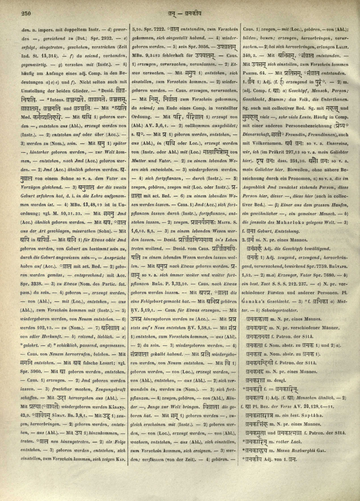
1. jána — 1〉 Adj. (f. ī) erzeugend in puraṃ˚. — 2〉 m. (adj. Comp. f. ā) — a〉 Geschöpf, Mensch, Person; Geschlecht, Stamm; das Volk, die Unterthanen. Sg. auch mit collectiver Bed. Sg. mit mahant und sumahant viele —, sehr viele Leute. Häufig in Comp. mit einer anderen Personenbezeichnung (preṣya˚ Dienerschaft, sakhī˚ Freundin, Freundinnen), auch mit Völkernamen. ayaṃ janaḥ so v. a. Unsereins, wir, ich (im Prākrit Chr. 297,13. so v. a. mein Geliebter hier). eṣa janaḥ dass. Chr. 251,30. asau janaḥ so v. a. mein Geliebter hier. Bisweilen, ohne nähere Bezeichnung durch ein Pronomen. — α〉 so v. a. die im Augenblick Jmd zunächst stehende Person, diese Person hier, dieser —, diese hier (auch in collectiver Bed.). — β〉 Einer aus dem grossen Haufen, ein gewöhnlicher —, ein gemeiner Mensch. — b〉 die jenseits des Maharloka gelegene Welt. — 3〉 f. janā Geburt, Entstehung.
Original text · German · substantive masculine
2. janá m. N. pr. eines Mannes.
Original text · German · Word type unspecified
1. jana II. m. so v. a. fremdes Volk, — Land ĀPAST. ŚR. 9,11,4. [Nachtrag, Band 7]
Apte 1890 substantive masculine
Original text · English · substantive masculine
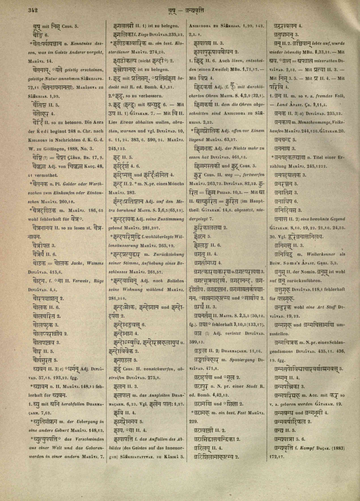
janaḥ [jan-ac] 1 A creature, living being, man. 2 An individual or person (whether male or female); kva vayaṃ kva parokṣamanmatho mṛgaśāvaiḥ samamedhito janaḥ Ś. 2. 18; tattasya kimapi dravyaṃ yo hi yasya priyo janaḥ U. 2. 19; so sakhījanaḥ a female friend; dāsajanaḥ a slave, abalājanaḥ &c. (In this sense janaḥ or ayaṃ janaḥ is often used by the speaker-whether male or female, in the sing. or pl.-instead of the first personal pronoun to speak of himself in the third person); ayaṃ janaḥ praṣṭumanāstapodhane Ku. 5. 40 (male); bha gavanparavānayaṃ janaḥ pratikūlācaritaṃ kṣamasva me R. 8. 81 (female); paśyānaṃgaśarāturaṃ janamimaṃ trātāpi no rakṣāsi Nāg. 1. 1 (female and pl.). 3 Men collectively, the people, the world (in sing. or pl.); evaṃ jano gṛhṇāti M. 1; satīmapi jñātikulaikasaṃśrayāṃ jano'nyathā bhartṛmatīṃ viśaṃkate Ś. 5. 17. 4 Race, nation, tribe. 5 The world beyond Maharloka, the heaven of deified mortals. — nā Birth, production. Comp. — atiga ([Page 0505-b]) a. extraordinary, uncommon, superhuman. — adhipaḥ, -adhināthaḥ 1 a king. 2 N. of Viṣṇu. — aṃtaḥ 1 a place removed from men, an uninhabited place. 2 a region. 3 an epithet of Yama. 4 personal proximity. — aṃtikaṃ secret communication, whispering or speaking aside (to another). ( — ind.) aside (to another) (in dramas); the S. D. thus defines this stage direction: -tripatākakareṇānyānapavāryāṃtarā kathāṃ . anyonyāmaṃtraṇaṃ yat syājjanāṃte tajjanāṃtikaṃ .. S. D. 425. — arṇavaḥ a large concourse of people, caravan. — arthaśabdaḥ a family appellation. — ardanaḥ an epithet of Viṣṇu or Kṛṣṇa. — aśanaḥ a wolf. — ākīrṇa a. thronged or crowded with people; Ś. 5. 10. — ācāraḥ 1 a popular usage or custom. 2 propriety, decorum. — āśramaḥ an asylum for people, an inn, caravansary. — āśrayaḥ a pavilion. — iṃdraḥ, -īśaḥ, -īśvaraḥ, a king. — iṣṭa a. desired or liked by the people. — (ṣṭaḥ) a kind of jasmine. — (ṣṭā) turmeric. — udāharaṇaṃ glory, fame. — oghaḥ a concourse of people, crowd, mob. — kārin m. lac. — cakṣus n. ‘the people's eye’, the sun. — janmādiḥ the Supreme Being. — trā an umbrella, a parasol. — devaḥ a king. — padaḥ 1 a community, race, nation; Y. 1. 361 v. l. 2 a kingdom, an empire, an inhabited country; janapade na gadaḥ padamādadhau R. 9. 4; dākṣiṇātye janapade Pt. 1; Me. 48. 3 the country (opp. the town pura, nagara); janapadavadhūlocanaiḥ pīyamānaḥ Me. 16. 4 the people, subjects (opp. the sovereign); janapadahitakartā tyajyate pārthivena Pt. 1. 131. 5 mankind. — padin m. the ruler of a country or community. — pravādaḥ 1 rumour, report. 2 scandal, calumny. — priya a. 1 philanthropic. 2 liked by the people, popular. — (yaḥ) 1 an epithet of Śiva. 2 coriander-seed. — marakaḥ an epidemic disease. — maryādā established custom or usage, popular custom. — raṃjanaṃ gratifying the people, courting popular favour. — ravaḥ 1 rumour. 2 calumny, scandal. — lokaḥ one, (i. e. the fifth), of the seven divisions of the universe situated above Maharloka. — vādaḥ (also janevādaḥ) 1 news, rumour. 2 a scandal. — vyavahāraḥ popular usage. — śruta a. well-known ([Page 0505-c]) among people, famous. — śrutiḥ f. a rumour, report. — saṃbādha a. densely crowded with people. — sthānaṃ N. of a part of the Daṇḍakā forest; R. 12. 42; R. 13. 22, U. 1. 28, U. 2. 17.

Cappeller 1887 substantive masculine
Original text · German · substantive masculine
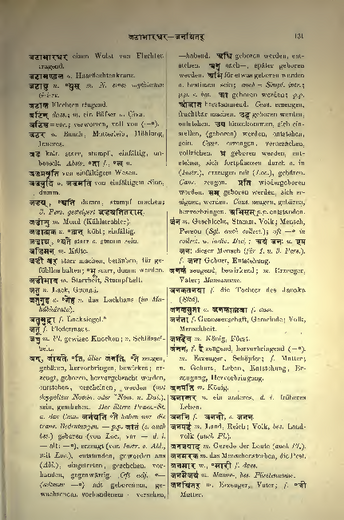
jána m. Geschlecht, Stamm, Volk; Mensch, Person (Sgl. auch collect.); oft —˚ in collect. u. indiv. Bed.; ayaṃ janaḥ u. eṣa janaḥ dieser Mensch (für 1. u. 3. Perst). f. janā Geburt, Entstehung.
Burnouf 1866 substantive masculine
Original text · French · substantive masculine
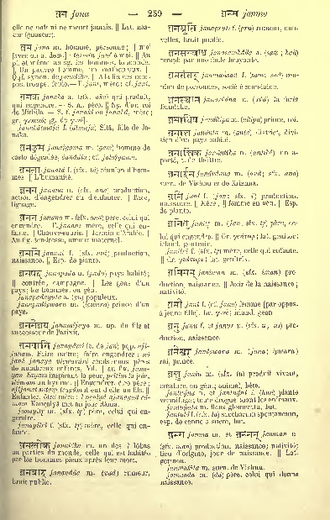
jana jana m. homme, personne; moi [avec un a. dém.]: tasmin jane à moi. Au pl. et même au sg. les hommes, le monde. Un pauvre homme, un malheureux. Qqf. synon. de janaloka. À la fin des compos. troupe, foule. — F. janī, mère; cf. jani.
Occurrences in source texts (20)
DYS 3 occurrences
GoS 1 occurrence
HP 2 occurrences
IVU 1 occurrence
PJH 1 occurrence
SiSa 6 occurrences
SiSa 5.24-5.28: Adhimātratama 2 occurrences
Direct occurrences
SVU 4 occurrences
Continue with AYI Free
Image source: AYI archive.