

dakṣa दक्ष – rechts
Adjektiv · Substantiv Maskulin · Substantiv Neutrum · Worttyp nicht bestimmt
Wörterbuchquellen
AYI Wörterbuch Adjektiv
rechts
Cappeller 1891 Adjektiv
Originaltext · Englisch · Adjektiv
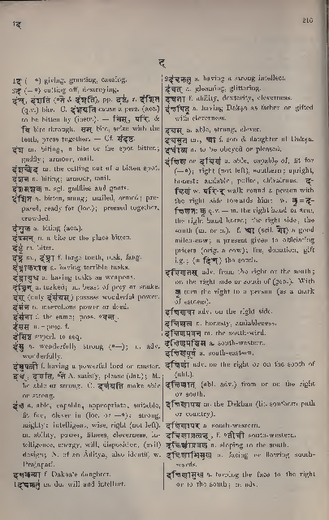
dákṣa ·a. able, capable, appropriate, suitable, fit for, clever in (loc. or --°); strong, mighty; intelligent, wise, right (not left). m. ability, power, fitness, cleverness, intelligence, energy, will, disposition, (evil) design; N. of an Aditya, also identif. w. Prajapati.
Monier-Williams 1872 Adjektiv
Originaltext · Englisch · Adjektiv
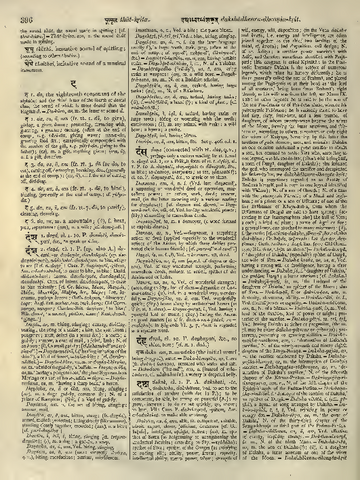
Dakṣa, as, ā, am, able, fit, competent, suitable, adroit, expert, clever, judicious, dexterous [cf. Gr. δεξιός]; intelligent, upright, honest; (as), m. epi- thet of Soma (as heightening or strengthening the intellectual faculties; according to Sāy. = vṛddha); epithet of Śiva; epithet of the Ganges (as satisfying or suiting all); ability, power, fitness; capacity, intellectual ability, mental power, talent; strength of will, energy, will, disposition; (in the Veda dakṣa and kratu, i. e. energy and intelligence, are often joined together as the chief two faculties of the mind, cf. kratu); bad disposition, evil design; N. of an Āditya; a creative power associated with Aditi, and therefore sometimes identified with Prajā- pati; (his daughter is called Kṛttikā: in the Post- vedic literature Dakṣa is the subject of numerous legends, which relate his history differently; he is there generally called the son of Brahmā, and placed among the Prajā-patis or at their head as ‘the lord of all creatures,’ being born from Brahmā's right thumb, as his wife was from the left, see Manu IX. 128: in other legends he is said to be the son of the ten Pra-cetasas or of Pra-cetas alone, whence his patronymic Prācetasa; he is variously stated to have had fifty, sixty, forty-four, and a less number of daughters, of whom twenty-seven became the wives of the Moon, forming the lunar asterisms, and thir- teen or, according to others, seventeen or only eight the wives of Kaśyapa, becoming by this latter the mothers of gods, demons, men, and animals: Dakṣa on one occasion celebrated a great sacrifice to obtain a son, but omitted to invite Śiva who, according to one legend, was his son-in-law, (Śiva's wife being Satī, a form of Durgā, daughter of Dakṣa); this irritated the god, who interrupted the sacrifice and decapitated his father-in-law, see dakṣādhvara-dhvaṃśa-kṛt: Dakṣa is sometimes regarded as an Avatār of Brahmā himself, and is even in one legend identified with Viṣṇu); N. of a son of Garuḍa; N. of a man with the patronymic Pārvati; of a Muni and legis- lator; of a prince or a son of Uśīnara; of one of the five Brāhmans of Kānya-kubja, from whom the Brāhmans of Bengal are said to have sprung; (ac- cording to the lexicographers also) the bull of Śiva; a cock; a kind of plant; a name of Agni or fire; a general lover, one attached to many mistresses; (ā), f. the earth; [cf. atūrta-dakṣa, dīna-d˚, &c.: cf. also dakṣiṇa; Gr. δεξιός, δεξιτερός; Lat. dex-ter, dex- timus; Goth. taihsvs; Angl. Sax. teso; Old Germ. zeso; Hib. deas, ‘right, southern.’]
Petersburger 1855 Adjektiv · Substantiv Maskulin · Worttyp nicht bestimmt
Originaltext · Deutsch · Adjektiv · Substantiv Maskulin
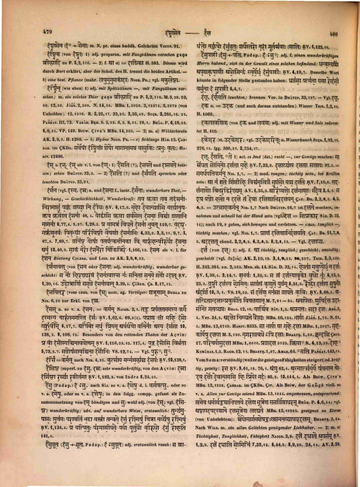
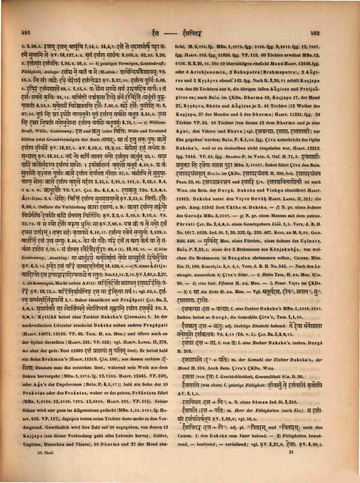
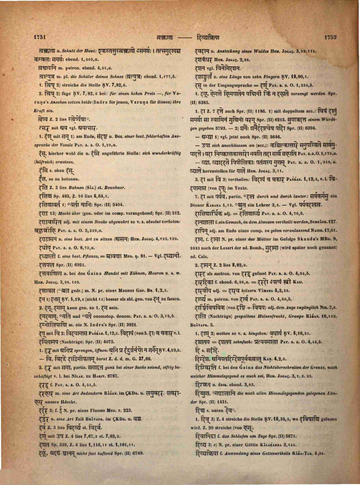
dakṣá (von dakṣ) 1〉 adj. f. ā tüchtig, tauglich; geschickt, anstellig; gescheidt (vgl. δεξιός) AK. 2,10,19. AK. 3,4,9,42. AK. 2,26,207. TRIK. 3,3,438. H. 342. H. 384. H. an. 2,563. MED. ṣ. 14. SĀH. D. 32,14. hotā̀ manu̱ṣyo̱3̱̀ na dakṣàḥ ṚV. 1,59,4. ṚV. 3,14,7. ṛ̱bhavàḥ ṚV. 1,51,2. sa tvaṃ dakṣàsyāvṛ̱ko vṛ̱dho bhū̀ḥ ṚV. 6,15,3. ṚV. 6,23,2. ju̱ṣṭvī dakṣàsya so̱mina̱ḥ sakhā̀yaṃ kṛṇute̱ yujàm ṚV. 8,51,6. raudro̱ dakṣā̀ya suṣu̱mām̐ àdarśi ṚV. 10,3,1. VS. 18,53. saṃ dakṣèṇa̱ manàsā jāyate ka̱viḥ ṚV. 9,68,5. atandritāndakṣānprakurvīta vicakṣaṇān M. 7,61—M. 7,64. anāpekṣaḥ śucirdakṣa udāsīno gatavyathaḥ BHAG. 12,16. pārthiva SĀV. 1,3. apramattaḥ sadā dakṣaḥ ARJ. 5,4. VET. 34,8. adakṣo nindyate vaiśyaḥ MBH. 10,124. bhāryā YĀJÑ. 1,76. N. 11,5. MBH. 13,6749. HARIV. 8335. sā bhāryā yā gṛhe dakṣā MBH. 1,3027. gṛhakāryeṣu dakṣayā M. 5,150. mṛgarājabadhe 'pi dakṣāḥ BHARTṚ. 1,58. chandasi ŚRUT. 17. paricaryāsudakṣā MBH. 1,8010. prajādakṣa MBH. 1,3133. kriyā˚ R. 4,13,29. doha˚ KUMĀRAS. 1,2. RAGH. 12,11. BHARTṚ. 1,87. AMAR. 64. ˚mati PAÑCAT. 143,11. Vom Soma: verständig (weil er die geistigen Fähigkeiten steigert) od. kräftig, geistig: rasa ṚV. 9,61,18. ṚV. 9,76,1. aṃśu ṚV. 9,62,4. a̱smāntsàma̱rye ṣàvamāna codaya̱ dakṣò de̱vānā̱masi̱ hi pri̱yo madàḥ ṚV. 85,2. ṚV. 10,144,1. Als Beiw. Śivaʼs MBH. 13,1228. ŚABDAR._im_ŚKDR. ŚIV. Als Beiw. der Gaṅgā viell. so v. a. Allen zur Genüge seiend MBH. 13,1844. angemessen, entsprechend: tvameva dharmārthadughābhipattaye dakṣeṇa sūtreṇa sasarjithādhvaram BHĀG. P. 4,6,44; vgl. aṣṭāṃpadapadasthāne dakṣasūtreṇa lakṣyate MBH. 12,10983. geeignet zu Etwas (von Unbelebtem): śreyomārgamaśeṣaduḥkhaśamanavyāpāradakṣam BHARTṚ. 3,64. Nach WILS. m. ein allen Geliebten genügender Liebhaber. — 2〉 m. a〉 Tüchtigkeit, Tauglichkeit, Fähigkeit NAIGH. 2,9. dakṣàṃ dadhāte a̱pasàm ṚV. 1,2,9. dakṣàṃ dadhāti so̱minì ṚV. 7,32,12. ṚV. 6,44,9. ṚV. 8,9,20. ṚV. 8,24,14. AV. 2,29,3. AV. 5,28,5. ratnam dakṣam āyūṃṣi AV. 7,14,4. AV. 16,4,7. dakṣàṃ te bha̱dramābhā̀rṣa̱ṃ parā̱ yakṣmàṃ suvāmi te ṚV. 10,137,4. ṚV. 10,137,2. a̱yaṃ dakṣā̀ya̱ sādhànaḥ ṚV. 9,105,3. ṚV. 9,62,29. ṚV. 5,20,3. dakṣā̀ṇā̱ṃ dakṣàpatiḥ ṚV. 1,95,6. ṚV. 1,56,2. — b〉 geistiges Vermögen, Geisteskraft; Fähigkeit, Anlage: dakṣàśca me̱ balàṃ ca me (MAHĪDH.: jñānendriyakauśalam) VS. 18,2. ni tvā̀ (agne) dadhe̱ varèṇya̱ṃ dakṣàsye̱ḻā ṚV. 3,27,10. dakṣàsya pū̱rbhiḥ ṚV. 5,66,4. i̱ṣi̱raṃ dakṣàmāśāte ṚV. 68,4. ṚV. 1,15,6. yaḥ sòma sa̱khye tavà rā̱raṇàddeva̱ martyàḥ . taṃ dakṣàḥ sacate ka̱viḥ ṚV. 1,91,14. a̱cìttī̱ yaccàkṛ̱mā daivye̱ janè dī̱nairdakṣai̱ḥ prabhū̀tī puruṣa̱tvatā̀ ṚV. 4,54,3. a̱ce̱tasàṃ ciccitayanti̱ dakṣaìḥ ṚV. 7,60,6. agne̱ dakṣaì punīhi naḥ ṚV. 9,67,26. yū̱yaṃ hi ṣṭhā ra̱thyò nasta̱nūnā̀ṃ yū̱yaṃ dakṣàsya̱ vacàso babhū̱va ṚV. 6,51,6. u̱bhā hi da̱srā bhi̱ṣajā̀ mayo̱bhuvo̱bhā dakṣàsya̱ vacàso babhū̱vathùḥ ṚV. 8,75,1. — c〉 Willenskraft, Wille; Gesinnung; dakṣa und kratu (oder citti) Wille und Verstand bilden zwei Grundvermögen der Seele (manas). ā tà etu̱ mana̱ḥ puna̱ḥ kratve̱ dakṣā̀ya jī̱vasè ṚV. 10,57,4. AV. 6,19,2. AV. 18,2,23. śreyā̀ṃsa̱ṃ dakṣa̱ṃ manàsā jagṛbhyāt ṚV. 10,31,2. bha̱draṃ no̱ apì vātaya̱ mano̱ dakṣàmu̱ta kratùm ṚV. 10,25,1. adhā̱ hyàgne̱ kratòrbha̱drasya̱ dakṣàsya sā̱dhoḥ . ra̱thīrṛ̱tasyà bṛha̱to ba̱bhūthà ṚV. 4,10,2. pra vàḥ su̱tāsò harayanta pū̱rṇāḥ kratve̱ dakṣā̀ya harṣayanta pī̱tāḥ ṚV. 4,37,2. asā̀vi te jujuṣā̱ṇasya̱ soma̱ḥ kratve̱ dakṣā̀ya bṛha̱te madā̀ya ṚV. 5,43,5. ṚV. 1,91,2. ṚV. 1,111,2. ṚV. 8,42,3. ṚV. 9,4,3. u. s. w. kratū̱dakṣaù VS. 7,27. ŚAT. BR. 4,1,4,1. da̱kṣa̱kra̱tū TBR. 1,5,4,2. ĀŚV. GṚHY. 3,6. (dhehi) citti̱ṃ dakṣàsya subhaga̱tvama̱sme ṚV. 2,21,6. cittī, dakṣaiḥ ṚV. 8,68,4. Oefters die Verbindung kratvā dakṣasya, z. B.: kratvā̱ dakṣàsya̱ tarùṣo̱ vidhàrmaṇi de̱vāsò a̱gniṃ jànayanta̱ cittìbhiḥ ṚV. 3,2,3. ṚV. 5,10,2. ṚV. 9,16,2. VS. 33,72. na sa svo dakṣò varuṇa̱ dhruti̱ḥ sā ṚV. 7,86,6. yatra̱ kvà ca te̱ mano̱ dakṣàṃ dadhasa̱ uttàram . tatrā̱ sadàḥ kṛṇavase ṚV. 6,16,17. dakṣàsya̱ svenà ma̱nyunā̀ ṚV. 1,139,2. alàrti̱ dakṣà u̱ta ma̱nyuḥ ṚV. 8,48,8. ko vā̀ ya̱jñaiḥ pari̱ dakṣàṃ ta āpa̱ kenà vā te̱ manàsā dāśema ṚV. 1,76,1. saṃ jā̀nata̱ svairdakṣairamū̀rāḥ ṚV. 1,68,8. (4). ṚV. 10,92,10. — d〉 böse Gesinnung, Anschlag: mā bhrātùragne̱ anṛ̀jorṛ̱ṇaṃ ve̱rmā sakhyu̱rdakṣàṃ ri̱porbhùjema ṚV. 4,3,13. indro̱ dakṣa̱ṃ parì jānāda̱ḥīnā̀m ṚV. 10,139,6. — e〉 N. eines Āditya: ādityo dakṣa ityāhurādityamadhye ca stutaḥ NIR. 11,24. NIR. 2,13. ṚV. 1,89,3. ṚV. 2,27,1. als kosmogon. Macht neben Aditi: adìte̱rdakṣò ajāyata̱ dakṣā̱dvadìti̱ḥ parì ṚV. 10,72,4. adìti̱rhyajàniṣṭa̱ dakṣa̱ yā dùhi̱tā tavà ṚV. 10,72,5; vgl. ṚV. 10,64,5. dakṣàsya̱ janmànna̱ditèru̱pasthè ṚV. 10,5,7. Daher identificirt mit Prajāpati ŚAT. BR. 2,4,4,2. pra̱jāpàtaye tvā̱ jyotìṣmate̱ jyotìṣmantaṃ gṛhṇāmi̱ dakṣā̀ya dakṣa̱vṛdhè TS. 3,5,8,1. Kṛttikā heisst eine Tochter Dakṣaʼs ŚĀNTIKALPA 1. In der nachvedischen Literatur erscheint Dakṣa neben andern Pragāpati (HARIV. 14071. HARIV. 14149. VP. 49. TRIK. H. an. MED.) und öfters auch an der Spitze derselben (HARIV. 261. VP. 153; vgl. HARIV. LANGL. II, 378, wo aber der gedr. Text HARIV. 12492 dakṣaṃ prajānāṃ tu patim liest). Er heisst bald ein Sohn Brahmanʼs (HARIV. 11519. ŚĀK. 186), aus dessen rechtem (dakṣiṇa) Daumen man ihn entstehen lässt, während sein Weib aus dem linken hervorgeht (MBH. 1,2574. fg. MBH. 12,7536. HARIV. 12445. VP. 348), oder Ajaʼs des Ungeborenen (BHĀG. P. 4,1,47); bald ein Sohn der 10 Pracetas oder des Pracetas, woher er das patron. Prācetasa führt (MBH. 1,3130. MBH. 12,6136. MBH. 12,7573. MBH. 13,6830. HARIV. 101. VP. 115). Seiner Söhne wird nur ganz im Allgemeinen gedacht (MBH. 1,33. MBH. 1,3131. fg. HARIV. 102. VP. 117), dagegen treten seine Töchter desto mehr in den Vordergrund. Gewöhnlich wird ihre Zahl auf 50 angegeben, von denen 13 Kaśyapa (aus dieser Verbindung geht alles Lebende hervor, Götter, Ungötter, Menschen und Thiere), 10 Dharma und 27 der Mond ehelicht, M. 9,128. fg. MBH. 1,2575. fgg. MBH. 1,3133. MBH. 9,2013. fgg. MBH. 12,7537. fgg. HARIV. 103. fgg. HARIV. 11836. fgg. VP. 115. VP. 60 Töchter erwähnt MBH. 12,6136. R. 3,20,10. Die 10 überzähligen ehelicht Manu HARIV. 12446. fgg. oder 4 Ariṣṭanemin, 2 Bahuputra (Brahmaputra), 2 Aṅgiras und 2 Kṛśāśva ebend. 142. fgg. Nach R. 3,20,11 erhält Kaśyapa von den 60 Töchtern nur 8, die übrigen fallen Aṅgiras und Pratyaṅgiras zu; nach BHĀG._im_ŚKDR. Dharma 10, Kaśyapa 17, der Mond 27, Kṛśāśva, Bhūta und Aṅgiras je 2. 44 Töchter (12 Weiber des Kaśyapa, 27 des Mondes und 5 des Dharma) HARIV. 11521. fgg. HARIV. 24 Töchter VP. 54. VP. 16 Töchter (von denen 13 dem Dharma und je eine Agni, den Vätern und Bhava [vgl. dakṣakanyā, dakṣajā, dākṣāyaṇī] zur Ehe gegeben werden) BHĀG. P. 4,1,48. fgg. Śiva unterbricht das Opfer Dakṣaʼs, weil er zu demselben nicht eingeladen war, HARIV. 12212. fgg. HARIV. 7444. VP. 61. fgg. SKANDA-P._in_Verz. d. Oxf. H. 71,b. evamāśīḥ prayuktā hi dakṣeṇa yajatā purā MBH. 3,10537. Daher führt Śiva den Bein. dakṣādhvaradhvaṃsakṛt HALĀY._im_ŚKDR. dakṣādhvaradhvaṃsaka H. 200, Sch. dakṣādhvaradhvaṃsana PRAB. 33,15. dakṣayajñaprabhañjana und dakṣāri ŚIV. dakṣayajñavināśinī ist nach WILS. ein Bein. der Durgā. Dakṣa und Viṣṇu identificirt HARIV. 11815. Dakṣa unter den Viśve Devāḥ HARIV. LANGL. II, 311; die gedr. Ausg. HARIV. 11542 liest Uktha st. Dakṣa. — f〉 N. pr. eines Sohnes des Garuḍa MBH. 5,3597. — g〉 N. pr. eines Mannes mit dem patron. Pārvati ŚAT. BR. 2,4,4,6. eines Gesetzgebers YĀJÑ. 1,5. Verz. d. B. H. No. 1017. Verz. d. B. H. No. 1028. Ind. St. 1,20. fg. Ind. St. 1,232. Ind. St. 1,239. fg. Ind. St. 1,467. KULL._zu_M. 9,88. GILD. Bibl. 448. = munibheda MED. eines Fürsten, eines Sohnes des Uśīnara, BHĀG. P. 9,23,2. eines der 5 Brahmanen aus Kānyakubja, von welchen die Brahmanen in Bengalen abstammen sollen, COLEBR. Misc. Ess. II, 188. KṢITĪŚĀV. 2,8. KṢITĪŚĀV. 4,8. Verz. d. B. H. No. 543. — Nach den Lexicogrr. ausserdem h〉 Śivaʼs Stier. — i〉 Hahn TRIK. H. an. MED. HĀR. 90. — k〉 eine best. Pflanze H. an. MED. — l〉 Feuer VIŚVA_im_ŚKDR. — 3〉 f. ā die Erde H. an. MED. — Vgl. atūrtadakṣa, dīna˚, samāna˚, su˚, dākṣāyaṇa, dākṣi.
Originaltext · Deutsch · Worttyp nicht bestimmt
dakṣa 1〉 noch beizufügen rührig, fleissig (Gegens. alasa), welche Bedeutung das Wort an vielen der aufgeführten Stellen hat; vgl. noch MBH. 3,1243. Spr. 5246. = dakṣiṇa recht im Gegens. zu link WEBER, RĀMAT. UP. 292. dakṣavāmāviti ī proktau Verz. d. Oxf. H. 97,b,4. Z. 6 vom Ende, als Beiw. der Gaṅgā MBH. 13,1844 von NĪLAK. durch tāraṇasamarthā erklärt. Z. 3 vom Ende, MBH. 12,10983 liest die neuere Ausg. mudreva st. sūtreṇa und dakṣa wird von NĪLAK. als voc. gefasst; er erwähnt übrigens auch die andere Lesart: dakṣasūtreṇa lakṣyata iti pāṭhe sūtreṇa sūcakena mudrayeti yāvat yathā mudrayā kārṣāpaṇaviśeṣo lakṣyate evaṃ mātrādinā jātiviśeṣa ityarthaḥ. — Vgl. noch dhṛta˚, pūta˚.
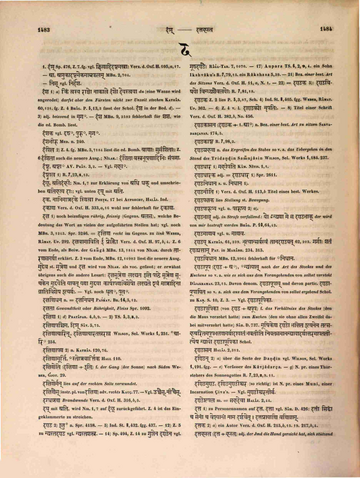
Originaltext · Deutsch · Worttyp nicht bestimmt
dákṣa , so zu betonen.
Böhtlingk 1879 Adjektiv · Substantiv Maskulin
Originaltext · Deutsch · Adjektiv · Substantiv Maskulin
dákṣa — 1〉 Adj. (f. ā) — a〉 tüchtig, tauglich, geschickt, anstellig, rührig, fleissig, gescheit. Das Wozu, Wobei oder Worin im Loc. oder im Comp. vorangehend. — b〉 vom Soma so v. a. kräftig, geistig, die geistigen Fähigkeiten steigernd. — c〉 von der Gaṅgā so v. a. passirbar (NĪLAK.). — d〉 angemessen, entsprechend, geeignet zu (im Comp. vorangehend). von Sachen. — e〉 recht (nicht Link). — 2〉 m. — a〉 Tüchtigkeit, Tauglichkeit, Fähigkeit. — b〉 geistiges Vermögen, Geisteskraft, Fähigkeit, Anlage. — c〉 Willenskraft, Wille, Gesinnung. — d〉 böse Gesinnung, Ausschlag. — e〉 eine best. Tempelform HEMĀDRI 2,58,11. — f〉 *eine allen Geliebten genügender Mann. — g〉 Hahn CARAKA. 1,27. 6,2. 9. — h〉 *eine best. Pflanze. — i〉 *Feuer. — k〉 *Śivaʼs Stier. — l〉 N. pr. — α〉 eines Āditya, der auch mit Prajāpati identificirt wird. — β〉 eines best. Prajāpati, dessen Opfer von Śiva zu Nichte gemacht wird. Hierher wohl dakṣasyāyanam als Bes. eines best. Opfers M. 6,10 (Hdschr.). — γ〉 eines Sohnes des Garuḍa. — δ〉 verschiedener Männer. — 3〉 *f. ā die Erde.
Apte 1890 Adjektiv · Substantiv Maskulin · Substantiv Neutrum
Originaltext · Englisch · Adjektiv · Substantiv Maskulin · Substantiv Neutrum
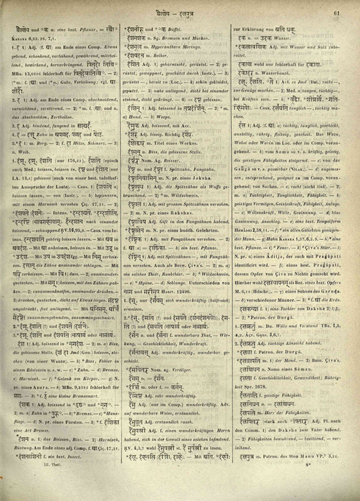
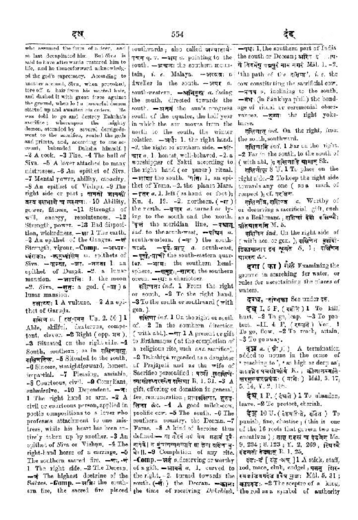
dakṣa a. [dakṣ-kartari ac] 1 Able, competent, expert, clever, skilful; nāṭye ca dakṣā vayaṃ Ratn. 1. 6; merau sthite dogdhari dohadakṣe Ku. 1. 2; R. 12. 11. 2 Fit, suitable. 3 Ready, care ful, attentive, prompt; Y. 1. 76. 4 Honest, upright. — kṣaḥ 1 N. of a celebrated Prajāpati. [He was one of the ten sons of Brahman, being born from his right thumb, and was the chief of the patriarchs of mankind. He is said to have had many daughters, 27 of whom became the wives of the moon, thus forming the 27 lunar mansions, and 13 the wives of Kaśyapa, becoming by him the mothers of gods, demons, men, and animals; see kaśyapa. At one time Dakṣa celebrated a great sacrifice, but did not invite his daughter Satī, nor her husband Śiva, the chief of the gods. Satī, however, went to the sacrifice, but being greatly insulted threw herself into fire and perished; cf. Ku. 1. 21. When Śiva heard this he was very much provoked, and, according to one account, himself went to the sacrifice, completely destroyed it, and pursued Dakṣa ([Page 0554-a]) who assumed the form of a deer, and at last decapitated him. But Śiva is said to have afterwards restored him to life, and he thenceforward acknowledged the god's supremacy. According to another account, Śiva, when provoked, tore off a hair from his matted hair, and dashed it with great force against the ground, when lo! a powerful demon started up and awaited his orders. He was told to go and destroy Dakṣa's sacrifice; whereupon the mighty demon, attended by several demigods, went to the sacrifice, routed the gods and priests, and, according to one account, beheaded Dakṣa himself.] 2 A cock. 3 Fire. 4 The bull of Śiva. 5 A lover attached to many mistresses. 6 An epithet of Śiva. 7 Mental power, ability, capacity. 8 An epithet of Viṣṇu. 9 The right side or part; vāmato jānakī yasya dakṣabhāge ca lakṣmaṇaḥ. 10 Ability, power, fitness. 11 Strength of will, energy, resoluteness. 12 Strength, power. 13 Bad disposition, wickedness. — kṣā 1 The earth. 2 An epithet of the Ganges. — kṣaṃ Strength, vigour. Comp. — adhvaraṣvaṃsakaḥ, -kratuṣvaṃsin m. epithets of Śiva. — kanyā, -jā, -tanayā 1 an epithet of Durgā. 2 a lunar mansion. — jāpatiḥ 1 the moon 2 Śiva. — sutaḥ a god. — (tā) a lunar mansion.
Cappeller 1887 Worttyp nicht bestimmt
Originaltext · Deutsch · Worttyp nicht bestimmt
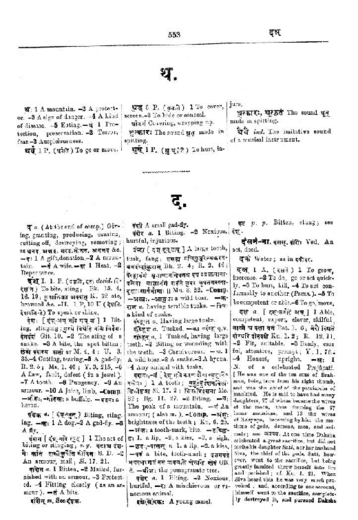
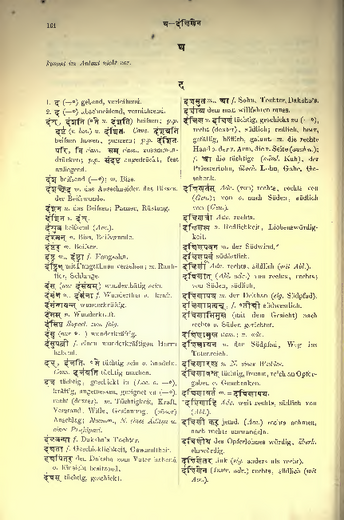
dákṣa tüchtig, geschickt in (Loc. o. —˚), kräftig, angemessen, geeignet zu (—˚), recht (dexter). m. Tüchtigkeit, Kraft, Verstand, Wille, Gesinnung, (böser) Anschlag; Mannsn., N. eines Āditya u. eines Prajāpati.
Burnouf 1866 Adjektiv
Originaltext · Französisch · Adjektiv
dakṣa dakṣa a. [primit. qui est à droite, qui va à droite], apte; adroit, habile; juste, honnête; dévot. — S. m. homme adroit; honnête homme. Un savant. Coq. Esp. [Page308a-2] d'arbre. Agni; Dakṣa, personnage astronomique du Veda, plus tard fils de Brahmā; Śiva; le taureau de Śiva. — F. dakṣā la terre. Cf. dakṣiṇa; gr. δέξιος; lat. dexter. dakṣakanyā f. la fille de Dakṣa, Durgā. dakṣajā f. (jan) mms. Astérisme lunaire. dakṣajāpati m. le maître des astérismes, c-à-d. la Lune. Śiva, époux de Durgā.

Quelltextfundstellen (19)
GoS 1 Fundstelle
HP 6 Fundstellen
HTK 3 Fundstellen
SiSa 9 Fundstellen
SiSa 5.132-5.143: Innere Vārāṇasī 3 Fundstellen
Direkt belegt
-
SiSa 5.139 Segment 10
-
SiSa 5.142 Segment 9
-
SiSa 5.143 Segment 5
Mit AYI Free weitermachen
Bildquelle: AYI Archiv.