

sthūla स्थूल – grob
Adjektiv · Verbalwurzel · Substantiv Maskulin · Substantiv Neutrum · Worttyp nicht bestimmt
Wörterbuchquellen
AYI Wörterbuch Adjektiv
grob
Cappeller 1891 Adjektiv
Originaltext · Englisch · Adjektiv
sthūlá ·a. = sthūrá, also coarse, gross, material (opp. sūkṣma); stupid, dull; n. = sthūlaśarīra.
Monier-Williams 1872 Adjektiv
Originaltext · Englisch · Adjektiv
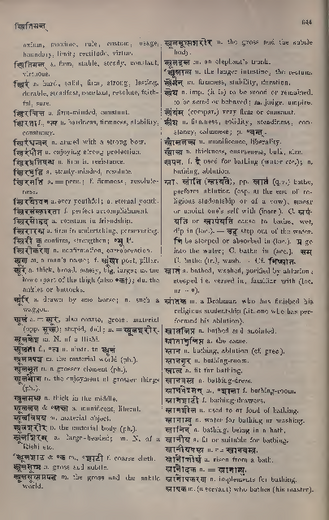
Sthūla, as, ā, am, (probably a later form of sthūra for sthāvara, see p. 1147, col. 3), strong, powerful; stout, bulky, big, huge; fat, corpulent; great, large, thick; clumsy, coarse, gross, rough, (opposed to sūkṣma); not exact; doltish, stolid, thick-headed; stupid, dull, ignorant; (as), m. the jack tree; (ā), f. a sort of pepper (= gaja-pippalī); a kind of gourd or cucumber (= ervāru); large cardamoms; (am), n. a heap, quantity; = kūṭa (according to Śabda-k.); a tent, (probably for 2. sthula.)
Petersburger 1855 Adjektiv · Substantiv Maskulin · Substantiv Neutrum · Worttyp nicht bestimmt
Originaltext · Deutsch · Adjektiv · Substantiv Maskulin · Substantiv Neutrum
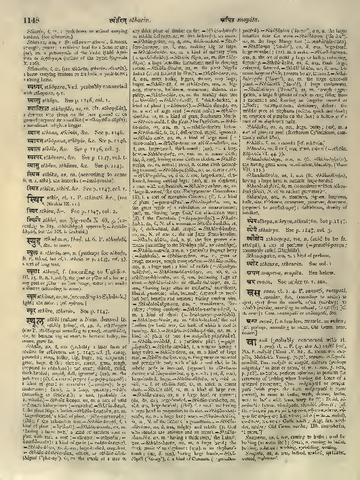
sthūlá (= sthūra) 1〉 adj. (f. ā) Gegens. sūkṣma, kṛśa, alpa. a〉 grob, dick, gross, feist, massiv; = pīna, pīvara AK. 3,2,10. H. 448. H. an. 2,516. MED. l. 55. HALĀY. 2,187. = dṛḍha AK. 3,4,12,47. — AV. 11,8,28. yadàsyā aṃhu̱bhedyā̀ḥ kṛ̱dhu sthū̱lamu̱pātàsat penis (vgl. ṚV. 8,1,34) VS. 23,28. yūpa ṢAḌV. BR. 4,4. ŚAT. BR. 14,6,8,8 (a˚). Ind. St. 2,262. SUŚR. 1,151,5. SUŚR. 1,198,24. KUMĀRAS. 2,11. VARĀH. BṚH. S. 4,20. VARĀH. BṚH. S. 47,17. BĀLAB. 2. PAÑCAR. 1,1,71. nala MBH. 7,1390. MBH. 8,693. vom Körper und seinen verschiedenen Theilen SUŚR. 1,256,11. MEGH. 14. Spr. (II) 6642. VARĀH. BṚH. S. 47,8. VARĀH. BṚH. S. 61,3. VARĀH. BṚH. S. 61,5. VARĀH. BṚH. S. 61,14. VARĀH. BṚH. S. 64,2. VARĀH. BṚH. S. 67,3. VARĀH. BṚH. S. 68,7. VARĀH. BṚH. S. 68,17 (ati˚). VARĀH. BṚH. S. 67. VARĀH. BṚH. S. 99. VARĀH. BṚH. S. 69,33. VARĀH. BṚH. S. 70,21. PAÑCAR. 1,14,57. Z. d. d. m. G. 27,30 (sthūlasthūla). tvac (die sonst māṃsadharā heisst) ŚĀRṄG. SAṂH. 1,5,7. verschiedene lebende Wesen R. 3,76,8. R. 5,10,17 (ati˚). VARĀH. BṚH. S. 45,2. H. 1299. SUŚR. 1,52,14 (ati˚). SUŚR. 53,17. SUŚR. 129,21. Spr. (II) 1739 (auch a˚). Spr. (II) 7380 (˚tara v. l.). MĀRK. P. 43,6. sthūlo jānātīti sthūladehasthaḥ Comm. zu TS. PRĀT. 6,9. SARVADARŚANAS. 3,22. VEDĀNTAS. (Allah.) No. 82. ˚taravaṭavṛkṣaskandha PAÑCAT. 134,5. giriśikharasthūlāni phalāni BHĀG. P. 5,16,17. KATHĀS. 53,61. COLEBR. Alg. 316. Steine, Steinmassen R. 4,44,115. AK. 2,3,6. H. 1036. HALĀY. 2,13. RĀJA-TAR. 1,265. gadā MBH. 5,2041. sthāla, kapāla Spr. (II) 7235. mañjūṣā KATHĀS. 4,48. yantra SUŚR. 1,25,21 (ati˚). Edelsteine, Perlen, Tropfen R. 3,32,4. MEGH. 47. MEGH. 105. RAGH. 6,28. RAGH. 15,99. VARĀH. BṚH. S. 81,3. VARĀH. BṚH. S. 81,4. KATHĀS. 36,82. PRAB. 81,16. yogatārakā SŪRYAS. 8,19. Zeug Spr. (II) 7233. VARĀH. BṚH. 2,12. RĀJA-TAR. 5,460. PAÑCAT. 133,1. Haare VARĀH. BṚH. S. 68,82. LAGHUJ. 2,19. Spr. (II) 7234. sindūratilaka dick KATHĀS. 20,50. — b〉 grob in übertr. Bed.: enas M. 11,252. vyasana Spr. (II) 6308. sūkṣmo vivādo viprāṇāṃ sthūlau kṣātrau jayājayau MBH. 8,637. varṇa Farbe (Gegens. svalpa) HARIV. 7014. pramāda SARVADARŚANAS. 120,7. sthūleccha so v. a. unbescheidene Wünsche habend Spr. (II) 2839. ˚buddhimant MBH. 12,11344. ˚mati adj. VARĀH. BṚH. S. 69,34 (nach einer Hdschr. des Comm. dumm, nach einer anderen klug). abhiprāya PAÑCAT. 168,25. sthūla = jaḍa dumm AK. 3,4,26,206. H. an. = niṣprajña MED. ein dummer Mensch Spr. (II) 7248. grob so v. a. nicht präcis, praeter propter bestimmt COLEBR. Alg. 70. COLEBR. Alg. 87. GAṆIT. SPAṢṬĀDH. 71. yathāsthūlam im Groben, im Grossen (Etwas beschreiben) MBH. 13,6524. SUŚR. 1,89,4. — sthūlātisthūlamātrāyām AMṚTAN. UP._in_Ind. St. 9,31. — c〉 in der Philosophie grob so v. a. materiell, für die Sinne wahrnehmbar (Gegens. sūkṣma atomartig); n. der grobe, wahrnehmbare Körper MĀṆḌ. UP. 3. NṚS. TĀP. UP._in_Ind. St. 9,125. fg. Ind. St. 9,133. fg. Ind. St. 9,138. KAP. 1,62. fg. KAP. 3,7. ˚darśin MBH. 12,11965. WEBER, RĀMAT. UP. 338. WEBER, RĀMAT. UP. 342. Verz. d. Oxf. H. 225,a,2 v. u. 226,a, No. 554. Verz. d. Oxf. H. 229,a,18 v. u. 231,b,2. Verz. d. Oxf. H. 229,a,18 v. u. 231,b,5. Verz. d. B. H. No. 1365. SARVADARŚANAS. 52,12. fg. SARVADARŚANAS. 164,14. BHĀG. P. 2,1,23. fg. BHĀG. P. 2,10,33. BHĀG. P. 4,12,17. fg. BHĀG. P. 5,11,7. BHĀG. P. 5,16,3. fg. BHĀG. P. 5,26,39. BHĀG. P. 7,3,33. fg. BHĀG. P. 11,3,17. VEDĀNTAS. (Allah.) No. 27. — 2〉 m. a〉 Artocarpus integrifolia Lin. (panasa) RĀJAN. 11,32. — b〉 N. pr. eines Wesens im Gefolge Śivaʼs VYĀḌI beim Schol. zu H. 210. wohl fehlerhaft für sthūṇa. — 3〉 n. = kūṭa H. an. — 4〉 m.n. gaṇa ardharcādi zu P. 2,4,31. — 5〉 f. ā Scindapsus officinalis Schott. ŚABDAC._im_ŚKDR. Cucumis utilissimus Roxb. RĀJAN. 7,204. grosse Kardamomen RATNAM. 117; vgl. sthūlailā. — 6〉 dṛḍhasthūla R. GORR. 2,114,5 fehlerhaft für ˚sthūṇa; vgl. Spr. (II) 5098. sthūlanimnāni R. 6,89,18 fehlerhaft für sthala˚. — Vgl. ati˚, sthaviṣṭha und sthavīyaṃs.
Originaltext · Deutsch · Worttyp nicht bestimmt
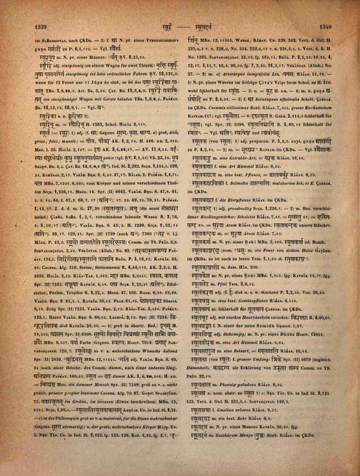
sthūla 1〉b〉 ˚steya ebend. 2,65.
Böhtlingk 1879 Adjektiv · Substantiv Maskulin · Substantiv Neutrum
Originaltext · Deutsch · Adjektiv · Substantiv Maskulin · Substantiv Neutrum
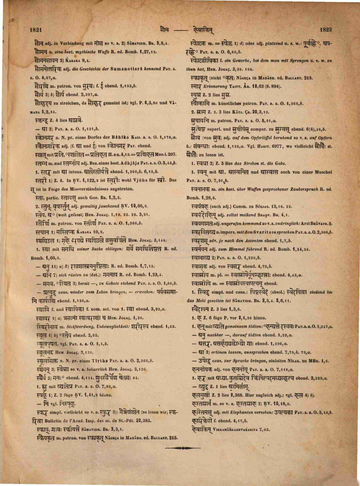
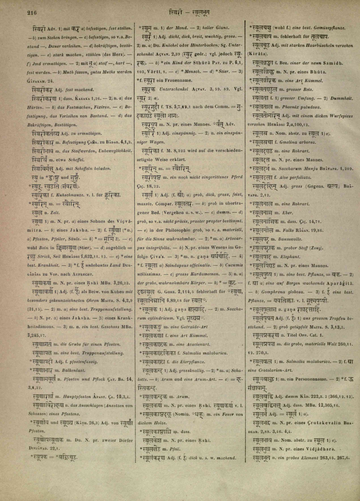
sthūlá — 1〉 Adj. (f. ā́) — a〉 grob, dick, gross, feist, massiv. Compar. sthūlatara. — b〉 grob in übertragener Bed. (Vergehen u. s. w.). — c〉 dumm. — d〉 grob, so v. a. nicht präcis, präterpropter bestimmt. — e〉 in der Philosophie grob, so v. a. materiell, für die Sinne wahrnehmbar. — 2〉 m. — a〉 Artocarpus integrifolius. — b〉 N. pr. eines Wesens im Gefolge Śivaʼs. — 3〉 m. n. gaṇa ardharcādi. — 4〉 f. sthūlā — a〉 Scindapsus officinalis. — b〉 Cucumis utilissimus. — c〉 grosse Kardamomen. — 5〉 n. — a〉 der grobe, wahrnehmbare Körper. — b〉 = kūṭa. — dṛḍhasthūla R. GORR. 2,114,5 fehlerhaft für ˚sthūṇa, *sthūlanimnāni R. GORR. 6,89,18 für sthala˚.
Apte 1890 Adjektiv · Substantiv Maskulin · Substantiv Neutrum
Originaltext · Englisch · Adjektiv · Substantiv Maskulin · Substantiv Neutrum
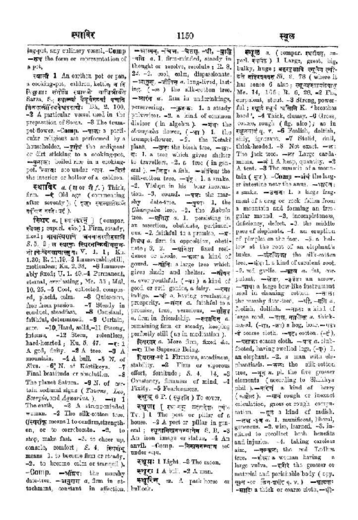
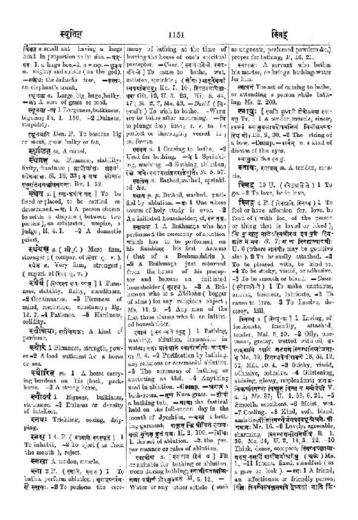
sthūla a. (compar. sthavīyas, superl. sthaviṣṭha) 1 Large, great, big, bulky, huge; bahuspṛśāpi sthūlena sthīyate bahiraśmavat Śi. 2. 78 (where it has sense 6 also); sthūlahastāvalepān Me. 14, Me. 106; R. 6. 28. 2 Fat, corpulent, stout. 3 Strong, powerful; sthūlaṃ sthūlaṃ śvasiti K. ‘breathes hard’. 4 Thick, clumsy. 5 Gross, coarse, rough (fig. also); as in sthūlamānaṃ q. v. 6 Foolish, doltish, silly, ignorant. 7 Stolid, dull, thick-headed. 8 Not exact. — laḥ The jack tree. — lā Large cardamoms. — laṃ 1 A heap, quantity. 2 A tent. 3 The summit of a mountain (kūṭa). Comp. — aṃtraṃ the larger intestine near the anus. — āsyaḥ a snake. — uccayaḥ 1 a large fragment of a crag or rock fallen from a mountain and forming an irregular mound. 2 incompleteness, deficiency, defect. 3 the middle pace of elephants. 4 an eruption of pimples on the face. 5 a hollow at the root of an elephant's tusks. — kaṃṭakikā the silk-cotton tree. — kaṃdaḥ 1 a kind of esculent root. 2 red garlic. — kāya a. fat, corpulent. — kṣeḍaḥ, -kṣveḍaḥ an arrow. — cāpaḥ a large bow-like instrument used in cleaning cotton. — tālaḥ the marshy date-tree. — dhī, -mati a. foolish, doltish. — nālaḥ a kind of large reed. — nāsa, nāsika a. thicknosed. — (saḥ, -kaḥ) a hog, boar. — paṭaḥ-ṭaṃ coarse cloth. — paṭṭaḥ cotton. — (ṭṭaṃ), — paṭṭākaḥ coarse cloth. — pāda a. clubfooted, having swelled legs. — (daḥ) 1 an elephant. 2 a man with elephantiasis. — phalaḥ the silk-cotton tree. — bhūta n. pl. the five grosser elements (according to Sāṃkhya phil.). — maricaṃ a kind of berry (kakkola). — mānaṃ rough or inexact calculation, gross or rough computation. — mūlaṃ a kind of radish. — lakṣa -kṣya a. 1 munificent, liberal, generous. 2 wise, learned. 3 inclined to recollect both benefits and injuries. 4 taking careless aim. — valkalaḥ the red Lodhra tree. — śaṃkhā a woman having a large vulva. — śarīraṃ the grosser or material and perishable body (opp. sūkṣma or liṃga-śarīra q. v.) — śāṭakaḥ — śāṭiḥ a thick or coarse cloth. ([Page 1151-a]) — śīṣiṃkā a small ant having a large head in proportion to its size. — ṣaṭpadaḥ 1 a large bee. 2 a wasp. — sūkṣma a. mighty and subtle (as the god). — skaṃdhaḥ the lakucha tree. — hastaḥ, an elephant's trunk.
Cappeller 1887 Worttyp nicht bestimmt
Originaltext · Deutsch · Worttyp nicht bestimmt
sthūlá = sthūra, auch grob, materiell (opp. sūkṣma);n. der grobe Körper (ph.).

Burnouf 1866 Verbalwurzel
Originaltext · Französisch · Verbalwurzel
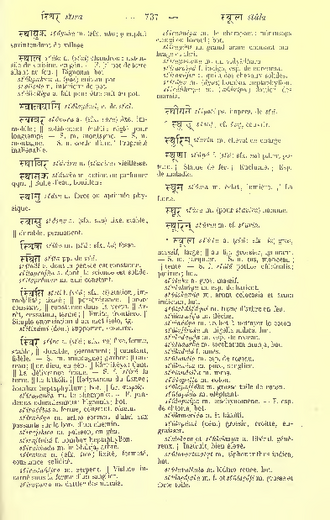
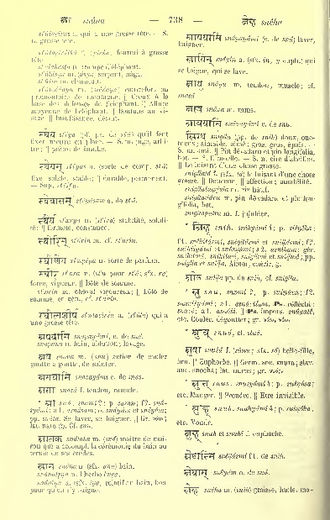
*sthūla sthūla a. (sthā; sfx. la) gros, massif, large; au fig. grossier, ignorant. — S. m. jacquier. — S. n. tas, monceau; tente. — S. f. sthūlā pothos officinalis; potiron; bot. sthūlaka a. gros, massif. sthūlakaṅgu m. esp. de haricot. sthūlakanda m. arum colocasia et arum indicum, bot. sthūlakāṣṭhāgni m. tronc d'arbre en feu. sthūlakṣveḍa m. flèche. sthūlacāpa m. archet à nettoyer le coton. sthūlajīraka m. nigella indica, bot. sthūladaṇḍa m. esp. de roseau. sthūladarbha m. saccharum munja, bot. sthūladalā f. aloës. sthūlanāla m. esp. de roseau. sthūlanāsa m. porc, sanglier. sthūlanāsika m. mms. sthūlapaṭṭa m. coton. sthūlapaṭṭāka m. grosse toile de coton. sthūlapāda m. éléphant. sthūlapuṣpa m. æschynomène. — F. esp. de clitoria, bot. sthūlamarica n. la kākolī. sthūlayāmi (dén.) grossir, croître, engraisser. sthūlalakṣa et sthūlalakṣya a. libéral, généreux. Instruit, bien élevé. sthūlavartmakṛt m. siphonanthus indica, bot. sthūlavalkala m. lôdhra rouge, bot. sthūlaśāṭaka m. f. et sthūlaśāṭi m. grosse et forte toile. [Page738-1] sthūlaśiras a. qui a une grosse tête. — S. n. grosse tête. sthūlaśīrṣikā f. (śīrṣa) fourmi à grosse tête. sthūlahasta n. trompe d'éléphant. sthūlāsya m. (āsya) serpent, nāga. sthūlin m. chameau. sthūloccaya m. (uccaya) contrefort ou promontoire de montagne. Creux à la base des défenses de l'éléphant. Allure moyenne de l'éléphant. Boutons au visage. Insuffisance, défaut.
Quelltextfundstellen (9)
MandUp 1 Fundstelle
PYS 1 Fundstelle
SiSa 1 Fundstelle
SVU 1 Fundstelle
VBT 5 Fundstellen
Mit AYI Free weitermachen
Bildquelle: AYI Archiv.