

viṣṇu विष्णु – Viṣṇu
Substantiv Feminin · Substantiv Maskulin · Substantiv Neutrum · Worttyp nicht bestimmt
Wörterbuchquellen
AYI Wörterbuch Substantiv Maskulin
Viṣṇu
Cappeller 1891 Substantiv Maskulin
Originaltext · Englisch · Substantiv Maskulin
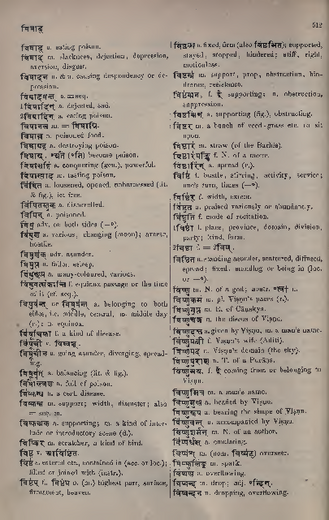
víṣṇu ·m. N. of a god; abstr. °tvaÅ n.
Monier-Williams 1872 Worttyp nicht bestimmt
Originaltext · Englisch · Worttyp nicht bestimmt
viṣṇu viṣṇu, us, us, u (in Uṇādi-s. III. 39. said to be fr. rt. 2. viṣ, ‘to pervade;’ according to some fr. rt. 1. viś), all-pervading, encompassing, pervading, penetrating (Ved); (us), m., N. of one of the principal Hindū deities, (in the later mythology regarded as ‘the preserver,’ and with Brahmā ‘the creator’ and Śiva ‘the destroyer,’ constituting the well-known Tri-mūrti or triad; although Viṣṇu comes second in the triad he is identified with the supreme deity by his worshippers; in the Vedic period, however, he is not placed in the foremost rank, and though frequently invoked with Indra, Varuṇa, the Maruts, Rudra, Vāyu, and the Ādityas, his superiority to these is never stated, and he is even described in one place as celebrating the praises of Indra and deriving his power from that god [cf. his later name Indrānuja, ‘younger brother of Indra’], the point which distinguishes him from the other Vedic deities being chiefly his striding over the heavens, which he is said to do in three paces [see tri-vikrama], explained as denoting the threefold manifestations of light in the form of fire, lightning, and the sun, or as designating the three daily stations of the sun in his rising, culminating, and setting; the later legend of the Vāmana Ava-tāra grew out of this Vedic conception [see bali]; he does not appear to have been included at first among the Ādityas or sons of Aditi, whose number in the Vedic period varies from six to eight, though in later times, when their number was raised to twelve, represent- ing the sun in the twelve months of the year, Viṣṇu is accorded the foremost place among them; in the Brāhmaṇas he is identified with sacrifice, and in one described as a dwarf; in the Mahā-bhārata and Rāmā- yaṇa he is not connected with the sun, but gradually rises to the supremacy which he now enjoys as the most popular deity of modern Hindū worship, and although in some passages of the former he is represented as paying homage to Śiva [cf. his name Śiva-kīrtana], the great rivalry between these gods and their wor- shippers — who are respectively called Vaiṣṇavas and Śaivas, and who each exalt their favourite to the first place in the Hindū Pantheon — is not fully developed till the period of the Purāṇas: the distinguishing feature in the character of the Post-vedic Viṣṇu is his condescending to become incarnate in a portion of his essence on ten principal occasions, to set right particular disturbances or deliver mankind from certain great dangers; his ten principal incarnations or Ava- tāras are, 1. the Matsya or ‘fish;’ 2. the Kūrma or ‘tortoise;’ 3. the Varāha or ‘boar;’ 4. the Nara- siṃha or ‘man-lion;’ 5. the Vāmana or ‘dwarf’ [see bali]; 6. Paraśu-rāma or ‘Rāma with the axe,’ i. e. Rāma, son of Jamad-agni; 7. Rāma-candra or ‘the illustrious Rāma,’ i. e. Rāma, the son of Daśa- ratha and hero of the Rāmāyaṇa; 8. Kṛṣṇa or ‘the dark One,’ who is held by the Vaiṣṇavas to be not so much an incarnation of Viṣṇu as the very essence of Viṣṇu or rather Viṣṇu himself, so that the Bala-rāma incarnation, which is sometimes mixed up with this eighth Ava-tāra, is also occasionally substituted for it; 9. Buddha or ‘the enlightened One,’ by adopting whom the Brāhmans appear to have desired to effect a compromise between their own creed and Buddhism; 10. Kalki, which is yet to come; see these various incarnations s. v.; some of the Purāṇas multiply these Ava-tāras to the number of twenty-two or even twenty-four; as the supreme being Viṣṇu is often identified with Nārā- yaṇa, the personified Puruṣa or primeval living spirit [described as moving on the waters, reclining on Śeṣa, the serpent of infinity, while the god Brahmā emerges from a lotus growing from his navel; cf. Manu I. 10]; the wife of Viṣṇu is Lakṣmī or Śrī, and his paradise is called Vaikuṇṭha; he is usually represented with a peculiar mark on his breast called Śrī-vatsa, and as holding a śaṅkha or conch- shell called Pāñcajanya, a cakra or quoit-like missile- weapon called Su-darśana, a gadā or club called Kau- modakī, and a padma or lotus; he has also a bow called Śārṅga, and a sword called Nandaka; his vāhana or vehicle is Garuḍa, q. v.; he has a jewel on his wrist called Syamantaka, another on his breast called Kaustubha, and the river Ganges is said to issue from his foot; the demons slain by him in his character of ‘preserver from evil,’ or by Kṛṣṇa as identified with him, are Madhu, Dhenuka, Cāṇūra, Yamala, and Arjuna [see yamalārjuna], Kālanemi, Haya- grīva, Śakaṭa, Ariṣṭa, Kaiṭabha, Kaṃsa, Keśin, Mura, Sālva, Mainda, Dvi-vida, Rāhu, Hiraṇya- kaśipu, Vāṇa, Kāliya, Naraka, Bali; he is wor- shipped under a thousand names, which are all enumerated in the Anuśāsana-parvan of the Mahā- bhārata, II. 6950-7056; for his epithet, ‘younger brother of Indra,’ see bali; he is sometimes regarded as the divinity of the lunar mansion called Śravaṇa; Viṣṇu Prājāpatya is said to be the author of Ṛg- veda X. 184); N. of Agni or fire; of one of the Vasus; of an ancient law-giver or writer of a law- book; a pure or pious person (= śuddha).

Petersburger 1855 Substantiv Feminin · Substantiv Maskulin
Originaltext · Deutsch · Substantiv Feminin · Substantiv Maskulin
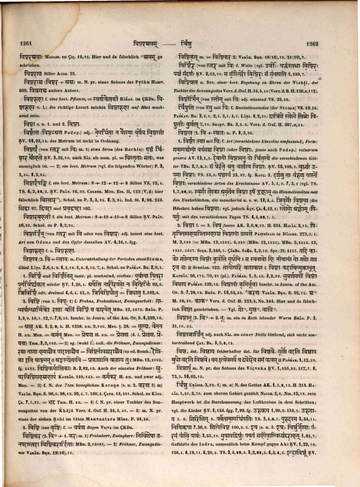
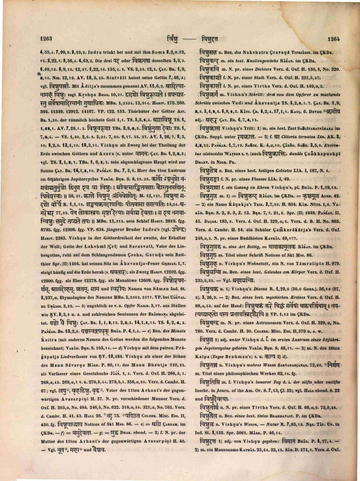
víṣṇu UṆĀDIS. 3,39. 1〉 m. a〉 N. des Gottes AK. 1,1,1,13. H. 214. HALĀY. 1,21. HALĀY. 5,70. zum oberen Gebiet gezählt NAIGH. 5,6. NIR. 12,18. sein Hauptwerk ist die Durchmessung des Luftkreises in drei Schritten; vgl. die Lieder ṚV. 1,154. fgg. ṚV. 7,99. fg. urukrama ṚV. 1,90,9. ṚV. 1,154,5. urugāya ṚV. 1,154,3. ṚV. 1,154,6. girikṣit 3. parvàtānā̱madhìpatiḥ TS. 3,4,5,1. purudasma TS. 3,54,14. niṣiktapā TS. 7,36,9. śipiviṣṭa TS. 100,5. TS. 100,6. eṣa (s. u. 3. eṣa). viṣṇùrgo̱pāḥ pàra̱maṃ pā̀ti̱ pāthàḥ TS. 3,55,10. mu̱ṣā̱yadviṣṇùḥ paca̱taṃ sahī̀yā̱nvidhyàdvarā̱ham TS. 1,61,7. Gefährte des Indra, namentlich beim Kampf gegen Ahi ṚV. 1,22,19. ṚV. 1,156,4. ṚV. 4,18,11. ṚV. 6,20,2. TS. 2,4,12,2. TS. 3,2,11,3. TS. 6,5,1,3. indrā̱viṣṇū̀ ṚV. 4,55,4. ṚV. 7,99,5. ṚV. 8,10,2. Indra trinkt bei und mit ihm Soma ṚV. 8,3,8. ṚV. 8,12,16. ṚV. 8,2,22. ṚV. 8,3,1. ṚV. 9,56,4. ṚV. 4,63,3. Die drei pada oder vikramaṇa desselben ṚV. 5,3,3. ṚV. 6,49,13. ṚV. 8,9,12. ṚV. 8,12,27. ṚV. 1,22,16. ṚV. 1,155,4. ṚV. 1,22,5. VS. 2,25. VS. 12,5. ŚAT. BR. 1,9,3. ŚAT. BR. 1,9,10. NIR. 12,19. AV. 10,5,25. Sinīvālī heisst seine Gattin AV. 7,46,3; vgl. viṣṇupatnī. Mit Ādityaʼs zusammen genannt AV. 11,6,2. ādityānāmahaṃ viṣṇuḥ sagt Kṛṣṇa BHAG. 10,21. dvādaśo viṣṇurucyate . jaghanyajastu sarveṣāmādityānāṃ guṇādhikaḥ MBH. 1,2524. MBH. 13,914. HARIV. 175. HARIV. 260. HARIV. 594. HARIV. 11549. HARIV. 12912. HARIV. 14167. VP. 122. VP. 153. Thürhüter der Götter AIT. BR. 1,30. der räumlich höchste Gott AIT. BR. 1,1. TS. 5,5,1,4. agnāviṣṇū TS. 1,1,12,1. AV. 7,29,1. AV. 7,29,2. viṣṇūvaruṇā TBR. 2,8,4,5. viṣṇùmukhā de̱vāḥ TS. 1,7,5,4. — VS. 1,30. VS. 2,6. VS. 2,8. VS. 5,21. VS. 7,20. VS. 8,17. VS. 8,55. VS. 8,57. AV. 5,26,7. AV. 8,5,10. AV. 9,2,6. AV. 12,1,10. AV. 18,3,11. Viṣṇu als Zwerg bei der Theilung der Erde zwischen Göttern und Asura (s. unter vāmana) ŚAT. BR. 1,2,5,3; vgl. TS. 2,1,3,1. TBR. 1,6,1,5. sein abgeschlagenes Haupt wird zur Sonne ŚAT. BR. 14,1,1,10. PAÑCAV. BR. 7,5,6. Herr des 1ten Lustrum im 60 jährigen Jupitercyclus VARĀH. BṚH. S. 8,23. VARĀH. BṚH. S. 8,26. kāryo 'ṣṭabhujo bhagavāṃścaturbhujo dvibhuja eva vā viṣṇuḥ . śrīvatsāṅkitavakṣāḥ kaustubhamaṇibhūṣitoraskaḥ .. VARĀH. BṚH. S. 58,31. krānte viṣṇum (saṃniveśayet) M. 12,121. viṣṇunā sadṛśo vīrye R. 1,1,18. śaṅkhacakragadāpāṇiḥ pītavāsā jagatpatiḥ R. 1,14,24. amareśvara R. 1,77,29. yena lokāstrayaḥ sṛṣṭā daityāḥ sarvāśca devatāḥ . sa eṣa bhagavānviṣṇuḥ samudre tapyate tapaḥ .. MBH. 13,312. sein Schlaf HARIV. 2819. fgg. HARIV. 8795. fgg. HARIV. 12308. fgg. VP. 634. jüngerer Bruder Indraʼs (vgl. upendra) HARIV. 2383. Viṣṇu in der Götterdreiheit der zweite, der Erhalter der Welt; Gatte der Lakṣmī (Śrī) und Sarasvatī, Vater des Liebesgottes, ruht auf dem Schlangendämon Śeṣa, Garuḍa sein Reitthier Spr. (II) 1404. hat seinen Sitz im Āhavanīya-Feuer GṚHYAS. 1,7. steigt häufig auf die Erde herab (s. avatāra); als Zwerg HARIV. 12202. fgg. HARIV. 12900. fgg. als Eber HARIV. 12278. fgg. als Mannlöwe HARIV. 12609. fgg. viṣṇorapamarṇam, ājyadoham, vratam, sāma und svarīyaḥ Namen von Sāman Ind. St. 3,237,a. Etymologien des Namens MBH. 5,2562. MBH. 5,2571. VP._bei_UJJVAL._zu_UṆĀDIS. 3,39. — b〉 angeblich so v. a. Opfer NAIGH. 3,17. aus Stellen wie ṚV. 8,3,8 u. a. und zahlreichen Sentenzen der BRĀHMAṆA abgeleitet. yajño vai viṣṇuḥ ŚAT. BR. 1,1,2,13. ŚAT. BR. 1,2,5,3. ŚAT. BR. 14,1,1,15. TS. 6,2,4,2. PAÑCAV. BR. 13,2,3. yajñasvarūpadhṛk BHĀG. P. 4,1,4. — c〉 Bez. des Monats Caitra (mit anderen Namen des Gottes werden die folgenden Monate bezeichnet) VARĀH. BṚH. S. 105,14. — d〉 Viṣṇu mit dem patron. Prājāpatya Liedverfasser von ṚV. 10,184. Viṣṇu als einer der Söhne des Manu Sāvarṇa MĀRK. P. 80,11. des Manu Bhautya MĀRK. P. 110,32. als Verfasser eines Gesetzbuchs YĀJÑ. 1,4. Verz. d. Oxf. H. 266,b,1. Verz. d. Oxf. H. 268,a,42. Verz. d. Oxf. H. 269,a,1 v. u. 270,b,44. Verz. d. Oxf. H. 279,b,1. Verz. d. Oxf. H. 356,a,28. Verz. d. Cambr. H. 67; vgl. laghu˚, bṛhadviṣṇu, vṛddha˚. Vater des 11ten Arhantʼs der gegenwärtigen Avasarpiṇi H. 37. n. pr. verschiedener Männer Verz. d. Oxf. H. 203,a, No. 484. Verz. d. Oxf. H. 246,b, No. 622. Verz. d. Oxf. H. 318,a,34. Verz. d. Oxf. H. 321,a, No. 761. Verz. d. Cambr. H. 41. Verz. d. Cambr. H. 43. HALL 26. ˚bhaṭṭa HALL. 75. ˚paṇḍita COLEBR. Misc. Ess. II, 450. fg. viṣṇūpādhyāya Notices of Skt Mss. 86. — e〉 = agni ŚABDAM._im_ŚKDR. — f〉 = vasudevatā. — g〉 = śuddha DHAR. ebend. — 2〉 f. N. pr. der Mutter des 11ten Arhantʼs der gegenwärtigen Avasarpiṇī H. 40. — Vgl. bhūta˚, mahā˚ und vaiṣṇava.
Böhtlingk 1879 Substantiv Feminin · Substantiv Maskulin · Substantiv Neutrum
Originaltext · Deutsch · Substantiv Feminin · Substantiv Maskulin · Substantiv Neutrum
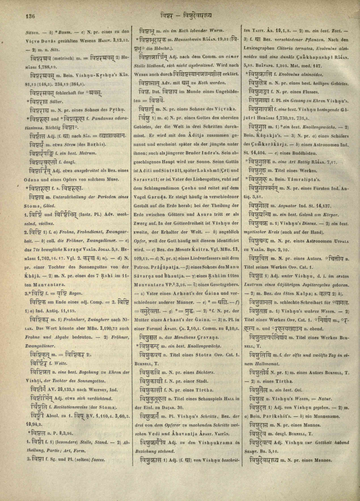
víṣṇu — 1〉 m. — a〉 N. pr. eines Gottes des obersten Gebietes, der die Welt in drei Schritten durchmisst. Er wird mit den Āditya zusammen genannt und erscheint später als der jüngste unter ihnen; auch als jüngerer Bruder Indraʼs. Seine Gattin ist Aditi und Sinīvālī, später Lakṣmī (Śrī) und Sarasvatī; er ist Vater des Liebesgottes, ruht auf dem Schlangendämon Śeṣa und reitet auf dem Vogel Garuḍa. Er steigt häufig in verschiedener Gestalt auf die Erde herab; bei der Theilung der Erde zwischen Göttern und Asura tritt er als Zwerg auf. In der Götterdreiheit ist Viṣṇu der zweite, der Erhalter der Welt. — b〉 angeblich Opfer, weil der Gott häufig mit diesem identificirt wird. — c〉 Bez. des Monats Caitra. Vgl. MBH. 13,109,12. — d〉 N. pr. — α〉 eines Liedverfassers mit dem Patron. Prājāpatya. — β〉 eines Sohnes des Manu Sāvarṇa und Bhautya. — γ〉 eines Ṛṣi im 11ten Manvantara VP. 23,26. — δ〉 eines Gesetzgebers. — ε〉 Vater eines Arhantʼs der Jaina und verschiedener anderer Männer. — e〉 *= agni. — f〉 = vāsudevatā. — g〉 *= śuddha. — 2〉 *f. N. pr. der Mutter eines Arhantʼs der Jaina. — 3〉 n. Pl. in einer Formel ĀPAST. ŚR. 2,10,4. Comm. zu ĀPAST. ŚR. 8,10,6.
Apte 1890 Substantiv Maskulin
Originaltext · Englisch · Substantiv Maskulin
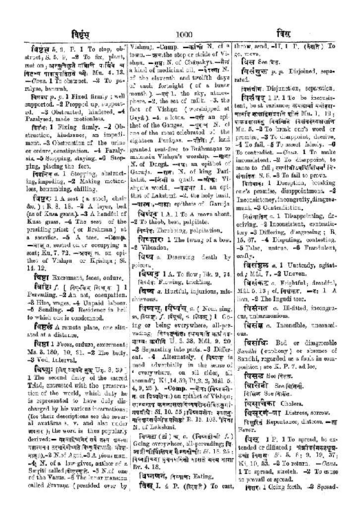
viṣṇuḥ [viṣ vyāpane nuk Uṇ. 3. 39] 1 The second deity of the sacred Triad, entrusted with the preservation of the world, which duty he is represented to have duly discharged by his various incarnations; (for their descriptions see the several avatāras s. v. and also under avatāra); the word is thus popularly derived: -yasmādviśvamidaṃ sarvaṃ tasya śaktyā mahātmanaḥ . tasmādevocyate viṣṇurvīśadhātoḥ praveśanāt ... 2 N. of Agni. 3 A pious man. 4 N. of a law-giver, author of a Smṛti called viṣṇusmṛti. 5 N. of one of the Vasus. 6 The lunar mansion called Śravaṇa (presided over by ([Page 1000-b]) Viṣṇu). Comp. — kāṃcī N. of a town. — kramaḥ the step or stride of Viṣṇu. — guptaḥ N. of Cāṇakya. — tailaṃ a kind of medicinal oil. — daivatyā N. of the eleventh and twelfth days of each fortnight (of a lunar month). — padaṃ 1 the sky, atmosphere. 2 the sea of milk. 3 the foot of Viṣṇu (worshipped at Gayā). 4 a lotus. — padī an epithet of the Ganges. — purāṇaṃ N. of one of the most celebrated of the eighteen Purāṇas. — prītiḥ f. land granted rent-free to Brāhmaṇas to maintain Viṣṇu's worship. — māyā N. of Durgā. — rathaḥ an epithet of Garuḍa. — rātaḥ N. of king Parīkṣit. — liṃgī a quail. — lokaḥ Viṣṇu's world. — vallabhā 1 an epithet of Lakṣmī. 2 the holy basil. — vāhanaḥ, -vāhyaḥ epithets of Garuḍa.
Cappeller 1887 Substantiv Maskulin
Originaltext · Deutsch · Substantiv Maskulin
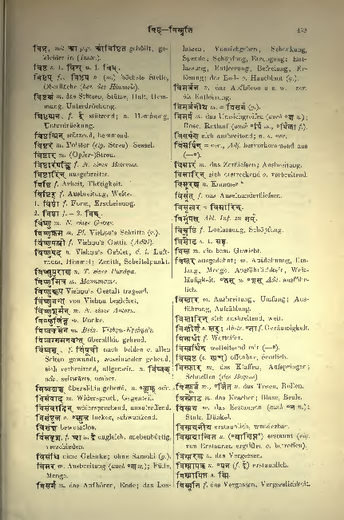
víṣṇu m. N. eines Gottes.
Burnouf 1866 Substantiv Maskulin
Originaltext · Französisch · Substantiv Maskulin
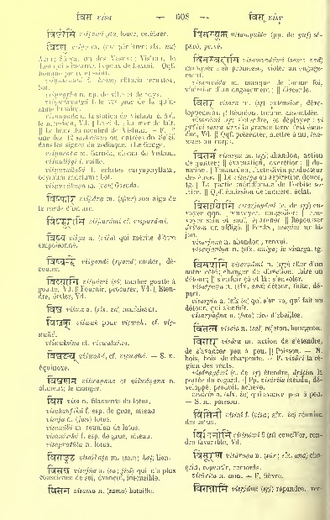
viṣṇu viṣṇu m. (viś pénétrer; sfx. nu) Agni; Sūrya, un des Vasus; Viṣṇu, le dieu qui s'incarne, l'époux de Lakṣmī. Qqf. homme pieux et saint. viṣṇukrāntā f. (kram) clitoria ternatea, bot. viṣṇugṛha n. np. de ville et de pays. viṣṇudaivatyā f. le 12ᵉ jour de la quinzaine lunaire. viṣṇupada n. la station de Viṣṇu, c-à-d. le méridien, Vd. Le ciel. La mer de lait. Le lotus du nombril de Viṣṇu. — F. [ī] une des 12 saṅkrāntis ou entrées du Soleil dans les signes du zodiaque. Le Gange. viṣṇuratha m. Garuḍa, oiseau de Viṣṇu. viṣṇuliṅgī f. caille. viṣṇuvallabhā f. echites caryophyllata; ocymum sanctum; bot. viṣṇuvāhaṇa m. (vah) Garuḍa.
Quelltextfundstellen (12)
DYS 2 Fundstellen
GoS 2 Fundstellen
HP 4 Fundstellen
SiSa 4 Fundstellen
Mit AYI Free weitermachen
Bildquelle: AYI Archiv.