

dharma धर्म – dharma; property; quality; task; righteousness; wholesome order; law
substantive masculine · substantive neuter · Word type unspecified
Dictionary sources
AYI dictionary substantive masculine
dharma; property; quality; task; righteousness; wholesome order; law
Derived from
- dhṛ धृ verbal root — hold; support
Cappeller 1891 substantive masculine
Original text · English · substantive masculine
dhárma ·m. statute, established order, custom, practice; law, right, justice (o. personif.); good works, merit, virtue; nature, character, quality, mark, attribute; E. of Yama & Prajāpati. -- Instr. dharmeṇa according to law or virtue; dharme sthitaḥ abiding by the law, virtuous. -- Abstr. °tāÅ f., °tvaÅ n.
Monier-Williams 1872 substantive masculine · substantive neuter · Word type unspecified
Original text · English · substantive masculine · substantive neuter
1. dharma, as, am, m. n. (rarely n.; the older form which occurs in the Ṛg-veda is dharman, q. v.; for 2. dharma see p. 451, col. 3), that which is to be held fast or kept, ordinance, statute, law, usage, practice, custom, the customary observances of caste, sect, &c.; religion, piety; prescribed course of conduct, duty, (thus ‘giving alms’ &c. is the dharma of the house- holder, ‘administering justice’ of a king, ‘piety’ of a Brāhman, ‘courage’ of a Kṣatriya); right, justice, equity, anything right, proper, or just; virtue, mora- lity, morals, merit, good works; nature, character, the peculiar state or condition of anything; an essential or characteristic quality, mark, peculiarity; manner, resemblance; any sacrifice; a peculiar kind of sacrifice; an Upaniṣad; religious abstraction, devotion (= yoga); associating with the virtuous; a bow; a drinker of Soma juice; Right, Justice, Law, or Virtue personified (as born from the right breast of Brahmā, and having Śama, Kāma, and Harṣa as his offspring); or personified as a Bull; or personified as a Dove; a N. of Yama (the Hindū Pluto, ruler of the lower regions, god of justice, and judge of the dead); one of the attendants of the god of the Sun; Justice or Virtue identified with Viṣṇu; also identified with Prajā-pati, and said to be son-in- law of Dakṣa; N. of the fifteenth Arhat of the present Ava-sarpiṇī, descended from Ikṣvāku, son of Bhānu and Su-vratā; N. of a son of Anu and father of Ghṛta; of a son of Gāndhāra and father of Dhṛta; of a son of Haihaya and father of Netra; of a son of Pṛthu-śravas and father of Uśanas; of a son of Su-vrata; of a son of Dīrgha-tapas; of a prince of Kaśmīra; of a lexicographer; (in astrology) N. of the ninth mansion; dharmāt or dharmeṇa, ind. according to right, rightly, justly, according to rule, according to the nature of anything.
Original text · English · Word type unspecified
2. dharma, Nom. P. dharmati, &c., to become law. (For 1. dharma see p. 449, col. 3.)
Original text · English · Word type unspecified
dharma dharma. See p. 449, col. 3; p. 451, col. 3.
Petersburger 1855 substantive masculine · substantive neuter
Original text · German · substantive masculine · substantive neuter
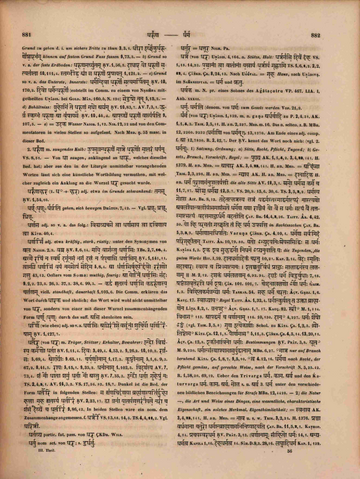
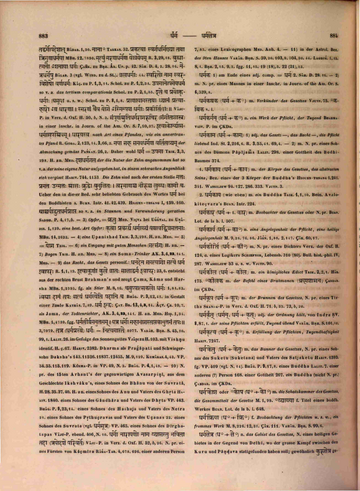
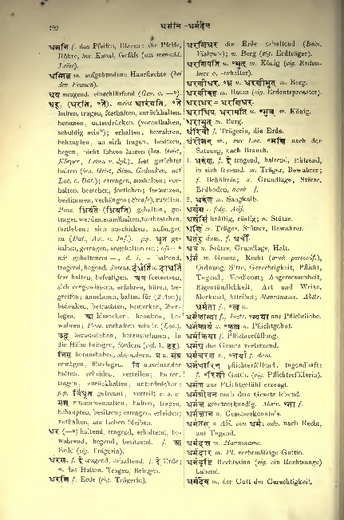
dhárma (von dhar) UṆĀDIS. 1,139. m.n. gaṇa ardharcādi zu P. 2,4,31. AK. 1,1,4,2. TRIK. 3,5,11. H. an. 2,327. MED. m. 16. Das n. selten. z. B. MBH. 12,2260. MBH. 12,9232 (dharmāṇi von dharman?). MBH. 13,1370. Am Ende eines adj. comp. f. ā MBH. 12,7850. R. 2,42,7. Der ṚV. kennt das Wort noch nich (vgl. 2. dharman). 1〉 Satzung, Ordnung; a〉 Sitte, Recht, Pflicht, Tugend; b〉 Gesetz, Brauch, Vorschrift, Regel; = puṇya AK. 1,1,4,2. AK. 3,4,23,141. H. 1379. H. an. MED. = ācāra AK. 3,4,23,141. H. an. MED. = ahiṃsā TRIK. 3,3,298. H. an. MED. = nyāya AK. H. an. MED. = dānādika H. an. dharmàṃ purā̱ṇamànupā̱layàntī die alte Sitte AV. 18,3,1. śramo̱ dharmàśca̱ karmà ca AV. 11,7,17. śrīśca̱ dharmàśca AV. 12,5,7. VS. 20,9. VS. 15,6. VS. 30,6. TS. 3,5,2,2. dharmasya goptā AIT. BR. 8,12. tadetatkṣatrasya kṣatraṃ yaddharmastasmāddharmātparaṃ nāstyatho abalīyānbalīyāṃsamāśaṃsate dharmeṇa yathā rājñaivaṃ yo vai sa dharmaḥ satyaṃ vai tattasmātsatyaṃ vadantamāhurdharmaṃ vadatīti ŚAT. BR. 14,4,2,26. TAITT. ĀR. 4,42,30. yo hi paramatāṃ gacchati taṃ hi dharma upayanti in Rechtssachen ŚAT. BR. 5,3,3,9. dharmāṇāmadhipatiḥ Varuṇa ŚĀṄKH. ŚR. 4,10,1. dharmeṇa sarvamidaṃ parigṛhītam TAITT. ĀR. 10,79. TAITT. ĀR. 10,80. yato 'bhyudayaniḥśreyasasiddhiḥ sa dharmaḥ KAṆĀDA 1,2. eka eva suhṛddharmo nidhane 'pyanuyāti yaḥ die Tugenden, die guten Werke HIT. I. 59. dānadharmādekaṃ caratu HIT. 10,21. KAP. 2,14. vedaḥ smṛtiḥ sadācāraḥ svasya ca pripamātmanaḥ . etaccaturvidhaṃ prāhuḥ sākṣāddharmasya lakṣaṇam .. M. 2,12. daśakaṃ dharmalakṣaṇam M. 6,92. M. 6,94. daṇḍaṃ dharmaṃ vidurbudhāḥ M. 7,18. ṣaṣṭhāṃśavṛtterapi dharma eṣaḥ ŚĀK. 101. ŚĀK. 101,7. codanālakṣaṇo 'rtho dharmaḥ JAIM. 1,2. vihitakarmajanyo dharmaḥ TARKAS. 54. saha dharmaṃ carataḥ ĀŚV. GṚHY. 1,6. KAUŚ. 17. svādhyāya˚ Regel TAITT. ĀR. 1,32,4. dharmānkuryāt ta uktā brāhmaṇena LĀṬY. 8,2,1. janapada˚ ĀŚV. GṚHY. 1,7. ĀŚV. GṚHY. 1,17. KAUŚ. 82. strī˚ M. 1,114. vibhāga˚ M. 115. āpaddharmaṃ ca varṇānām M. 116. M. 10,130. dāna˚ M. 4,227. dharmaḥ śeṣo 'ṅgaṃ (vgl. TRIK. 3,5,8) guṇa ityekārthāḥ Schol. zu KĀTY. ŚR. 1,2,3. jyotiṣṭoma˚ KĀTY. ŚR. 12,1,1. paurṇamāsa˚ KĀTY. ŚR. 5,11,3. ŚĀṄKH. ŚR. 4,5,14. ŚĀṄKH. ŚR. 13,20,11. ĀŚV. ŚR. 12,8. ekībhāvino dharmāḥ Bestimmungen ṚV. PRĀT. 3,8. dyūta˚ M. 9,220. dharmānsaṃsthāpayāmāsuryuddhānām MBH. 6,27. ˚mātra nur auf Brauch beruhend KĀTY. ŚR. 1,8,7. KĀTY. ŚR. 9,5,10. ˚tva KĀTY. ŚR. 4,12,16. dharmeṇa nach Recht, der Pflicht gemäss, auf gerechte Weise, nach der Vorschrift N. 5,25. N. 5,42. R. 1,58,20. R. 1,69,19. Ueber den Trivarga dharma, kāma, artha und den Caturvarga dharma, kāma, artha, mokṣa s. u. artha R. 1,69,3. dharma unter den verschiedenen bildlichen Bezeichnungen für Strafe MBH. 12,4428. — 2〉 die Natur —, die Art und Weise eines Dinges, eine wesentliche, charakteristische Eigenschaft, ein solches Merkmal, Eigenthümlichkeit; = svabhāva AK. 3,4,23,141. H. an. MED. = bhāva u. s. w. TRIK. 3,2,21. H. 1376. prajñā vardhamānā caturo dharmānbrāhmaṇamabhiniṣpādayati ŚAT. BR. 11,5,7,1. KAṬHOP. 4,14. pracayasvaradharma ṚV. PRĀT. 3,13. (varṇānām) saṃhito dharmaḥ ṚV. PRĀT. 14,1. anyadharmatva KAPILA 1,16. dehadharmatva KAPILA 1,14. SĀH. D. 9,3. SĀH. D. 28,16. laghvādidharma KAP. 1,129. taddharmopadeśāt BĀDAR. 1,20. nānā˚ TARKAS. 52. prakṛtyā svargadharmiṇyā tathā triguṇadharmayā MBH. 12,7850. mṛtyuṃ maraṇadharmeṇa yojayeyam R. 3,29,18. buddhyātmano 'śanāyā dharmaḥ ŚAṂK._zu_BṚH. ĀR. UP. p. 12. SĀH. D. 4,2. SĀH. D. 28,16. netradharmeṣu BĀLAB. 3 (vgl. WIND. zu d. St.). jaladharmāḥ 44. svarito nāma svaraviśeṣo varṇadharmaḥ KĀŚ._zu_P. 1,3,11. Schol. zu P. 1,2,31. upamānopameyadharma so v. a. das tertium comparationis Schol. zu P. 2,1,55. ete ca prayoktṛdharmāḥ (asūyā u. s. w.) Schol. zu P. 8,1,8. prāṇāyāmastathā dhyānaṃ pratyāhāro 'tha dhāraṇā . smaraṇaṃ caiva yoge 'sminpañca dharmāḥ prakīrtitāḥ .. VĀYUP._in_Verz. d. Oxf. H. 50,b, N. 3. saṃpūrṇaśrutidharmarāgarucira (saṃgītaśāstra) in einer Inschr. in Journ. of the Am. Or. S. 7,10,37. ikṣvākornyāsadharmānnapaśriyam . dhārayasva nach Art eines Pfandes, wie ein anvertrautes Pfand R. GORR. 2,123,14. R. GORR. 3,66,2. mayā saha samayadharmeṇa vartitavyam der Abmachung gemäss PAÑCAT. 26,2. Daher wohl dharma = upamā TRIK. 3,3,298. H. an. MED. daśadharmagata der die Natur der Zehn angenommen hat so v. a. der seine eigene Natur aufgegeben hat, in einem schwachen Augenblick sich vergisst HARIV. 744. HARIV. 1153 Die Zehn sind nach der ersten Stelle mattaḥ pramatta unmattaḥ śrāntaḥ kruddho bubhukṣitaḥ . tvaramāṇaśca bhīruśca lubdhaḥ kāmī ca. Ueber den in dieser Bed. sehr beliebten Gebrauch des Wortes dharma bei den Buddhisten s. BURN. Intr. 41. BURN. Intr. 42. BURN. Intr. 439. HIOUEN-THSANG I, 159. HIOUEN-THSANG I,160. āścaryādbhutadharmaprāpta so v. a. in Staunen und Verwunderung gerathen SADDH. P. 4,17,b. — 3〉 Opfer, = kratu MED. VIŚVA_bei_UJJVAL._zu_UṆĀDIS. 1,139. eine best. Art Opfer: kṛtvā pravargyaṃ dharmākhyaṃ yathāvaddvijasattamāḥ MBH. 14,2623. — 4〉 eine Upaniṣad TRIK. 3,3,298. H. an. MED. — 5〉 = yoga TRIK. — 6〉 ein Umgang mit guten Menschen (satsaṃga) H. an. — 7〉 Bogen TRIK. H. an. MED. — 8〉 ein Soma — Trinker AK. 3,4,23. AK. 3,4,141. MED. — 9〉 das Recht, das Gesetz personif.: dhanadena samatyāgo satye dharma ivāparaḥ R. 1,1,19. ikṣvākūṇāṃ kule jātaḥ sākṣāddharma ivāparaḥ R. 1,23,6. entsteht aus der rechten Brust Brahmanʼs und zeugt Śama, Kāma und Harṣa MBH. 1,2595. fg. als Stier M. 8,16. catuṣpātsakalo dharmaḥ M. 1,81. M. 1,82. vidyā dānaṃ tapaḥ satyaṃ dharmasyeti padāni ca BHĀG. P. 3,12,41. in Gestalt einer Taube KATHĀS. 7,89. dharma indraḥ ŚAT. BR. 13,4,3,14. ĀŚV. ŚR. 10,7. als Yama, der Todtenrichter, AK. 3,4,23,141. H. an. MED. HIḌ. 1,34. MBH. 1,4759. fgg. dharmatīrthamanuttamam . yatra dharmo mahābhāgastaptavānuttamaṃ tapaḥ .. MBH. 3,7079. tatra (dharmaprasthe) dharmaḥ — nityamāste MBH. 3,8077. VARĀH. BṚH. S. 45,10. VARĀH. BṚH. S. 99,1. LALIT. 26. im Gefolge des Sonnengottes VYĀḌI_zu_H. 103. mit Viṣṇu identif. H. ś. 67. HARIV. 2382. Dharma als Prajāpati und Schwiegersohn Dakṣaʼs HARIV. 143. HARIV. 11526. HARIV. 11837. HARIV. 12455. M. 9,129. KUMĀRAS. 4,43. VP. 54. VP. 55. VP. 115. VP. 119. KŪRMA-P._in_VP. 49, N. 2. BHĀG. P. 4,1,48. — 10〉 N. pr. des 15ten Arhantʼs der gegenwärtigen Avasarpiṇī, aus dem Geschlechte Ikṣvākuʼs, eines Sohnes des Bhānu von der Suvratā, H. 28. H. 35. H. 37. H. 40. H. an. eines Sohnes des Anu und Vaters des Ghṛta HARIV. 1840. eines Sohnes des Gāndhāra und Vaters des Dhṛta VP. 443. BHĀG. P. 9,23,14. eines Sohnes des Haihaya und Vaters des Netra BHĀG. P. 21. eines Sohnes des Pṛthuśravas und Vaters des Uśanas 32. eines Sohnes des Suvrata (vgl. dharmasūtra) VP. 465. eines Sohnes des Dirghatapas VĀYU-P. ebend. 406, N. 10. dharmo nārāyaṇo nāma vyāsastu bhavitā tadā (trayodaśe parivarte) VĀYU-P._in_Verz. d. Oxf. H. 52,b,26. N. pr. eines Fürsten von Kāśmīra RĀJA-TAR. 4,678. RĀJA-TAR. 4,696. einer anderen Person RĀJA-TAR. 7,85. eines Lexicographen MED. Anh. 4. — 11〉 in der Astrol. Bez. des 9ten Hauses VARĀH. BṚH. S. 59,20. VARĀH. BṚH. S. 103,9. VARĀH. BṚH. S. 104,30. VARĀH. BṚH. S. 104,44. LAGHUJ. 1,15. LAGHUJ. 8,1. BṚH. 2,15. fgg. BṚH. 9,2. BṚH. 11,15. fgg. BṚH. 19 (18), 3. fgg. BṚH. 22 (21), 13.
Original text · German · substantive neuter
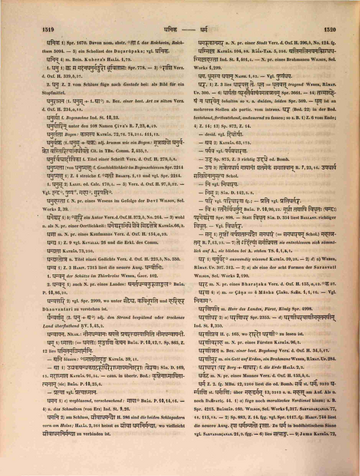
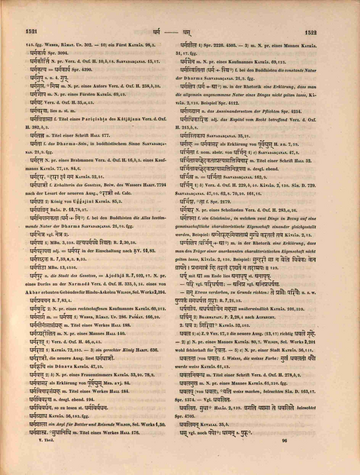
dharma Z. 2. fg. MBH. 12,2260 liest die ed. Bomb. sarvaṃ st. dharmaṃ, MBH. 12,9232 dharmyāṇi st. dharmāṇi; über mahaddharmam MBH. 13,3213 s. u. mahant am Anf. Als n. noch DAM̃PATĪŚ. 44. 1〉a〉 füge noch moralisches Verdienst hinzu; z. B. Spr. 4215. BHĀṢĀP. 160. WILSON, Sel. Works 1,317. SARVADARŚANAS. 77,18. SARVADARŚANAS. 115,18. — 2〉 Sp. 883, Z. 14. fgg. vgl. Spr. 1117. fg. HARIV. 744 liest die neuere Ausg. daśa dharmāngato rājā. Zu dharma in buddhistischem Sinne vgl. SARVADARŚANAS. 21,9. fgg. — 6〉 lies satsaṅga. — 9〉 Yama KATHĀS. 72,145. fgg. WEBER, RĀMAT. UP. 302. — 10〉 ein Fürst KATHĀS. 98,5.
Böhtlingk 1879 substantive masculine · Word type unspecified
Original text · German · substantive masculine
dhárma m. (adj. Comp. f. ā) — 1〉 Satzung, Ordnung, Gesetz, Brauch, Sitte, Vorschrift, Regel, Bestimmung, — in Betreff von (Gen. oder im Comp. vorangehend), Rechtssache, jus; Gerechtigkeit, das Rechte, Gute, Pflicht, Tugend, moralisches Verdienst, gute Werke. dhármeṇa nach dem Gesetz, nach Recht, auf gerechte Weise, der gute Sitte —, der Pflicht gemäss. dharme sthitaḥ am Gesetz sich haltend, pflichtgemäss sich benehmend Chr. 71,2. die Gerechtigkeit auch als Synonym von Strafe. Bei den Buddhisten oft so v. a. religio. Ausnahmsweise n. — 2〉 das Recht oder Gesetz wird häufig personificirt, insbes. als Yama (der Todtenrichter) und als ein Prajāpati, Schwiegersohn Dakṣaʼs. — 3〉 die Natur —, die Art und Weise eines Dinges, eine wesentliche, charakteristische Eigenschaft, ein solches Merkmal, Eigenthümlichkeit, Attribut. Bei den Buddhisten oft so v. a. bhāva Zustand. īrṣyā˚ LALIT. 333,17. daśa dharmāngatāḥ (HARIV. 1,13,15) = daśadharmagata. Häufig am Ende eines adj. Comp. (Nom. abstr. ˚tva n.). — 4〉 eine best. Ceremonie (pravargya). — 5〉 das 9te astrol. Haus. — 6〉 *Opfer. — 7〉 *eine Upaniṣad. — 8〉 *Umgang mit guten Menschen. — 9〉 *= yoga. — 10〉 = *upamā. — 11〉 *Bogen. — 12〉 *ein Soma-Trinker. — 13〉 N. pr. verschiedener Männer. — 14〉 mit dharmya verwechselt.
Original text · German · Word type unspecified
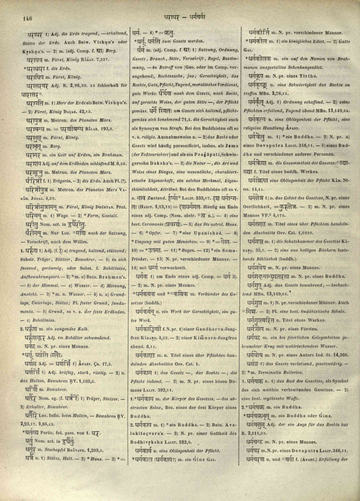
dharma III. 11〉 Bogen DHARMAŚ. 17,66. [Nachtrag, Band 7]
Apte 1890 substantive masculine
Original text · English · substantive masculine
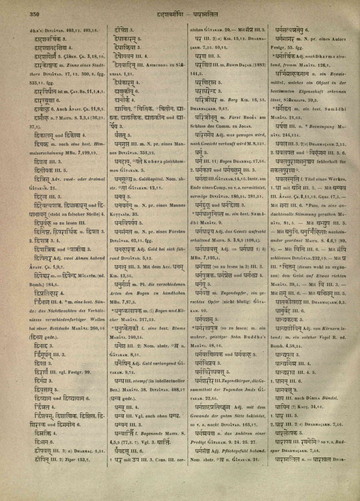
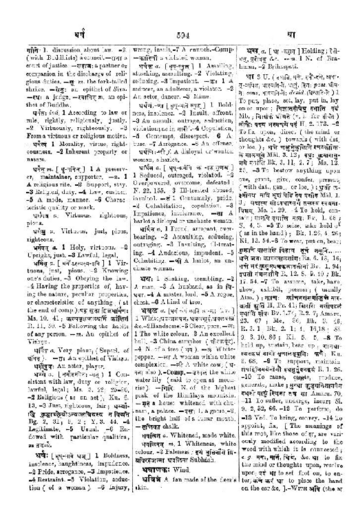
dharmaḥ [dhriyate loko'nena, dharati lokaṃ vā dhṛ-man; cf. Uṇ. 1. 137] 1 Religion the customary observances of a caste sect, &c. 2 Law, usage, practice custom, ordinance, statute. 3 Religious or moral merit, virtue, righteousness, good works (regarded as one of the four ends of human existence); Ku. 5. 38 and see trivarga also; eka eva suhṛddharmo nidhane'pyanuyāti yaḥ H. 1. 65. 4 Duty, prescribed course of conduct; ṣaṣṭhāṃśavṛtterapi dharma eṣaḥ Ś. 5. 4; Ms. 1. 114. 5 Right, justice, equity, impartiality. 6 Piety, propriety, decorum. 7 Morality, ethics. 8 Nature, disposition, character; Māl. 1. 6; prāṇi˚, jīva˚. 9 An essential quality, peculiarity, characteristic property, (peculiar) attribute; vadaṃti varṇyāvarṇyānāṃ dharmaikyaṃ dīpakaṃ budhāḥ Chandr. 5. 45; Pt. 1. 304. 10 Manner, resemblance, likeness. 11 A sacrifice. 12 Good company, associating with the virtuous. 13 Devotion, religious abstraction. 14 Manner, mode. 15 An Upaniṣad q. v. 16 N. of ([Page 0592-c]) Yudhiṣṭhira, the eldest Pāṇḍava. 17 N. of Yama, the god of death. 18 A bow. 19 A drinker of Soma juice. 20 (In astrol.) N. of the ninth lunar mansion. 21 An Arhat of the Jainas. 22 The soul. Comp. — aṃgaḥ ( — gā f.) the Indian crane. — adharmau (m. du.) right and wrong, religion and irreligion. ˚vid m. a Mīmāṃsaka who knows the right and wrong course of action. — adhikaraṇaṃ 1 administration of the laws. 2 a court of justice. — (ṇaḥ) a judge. — adhikaraṇikaḥ, -adhikārin m. a judge, magistrate, any judicial functionary. — adhikaraṇin m. a judge, magistrate. — adhikāraḥ 1 superintendence of religious affairs; Ś. 1. 2 administration of justice. 3 the office of a judge. — adhiṣṭhānaṃ a court of justice. — adhyakṣaḥ 1 a judge. 2 an epithet of Viṣṇu. — anuṣṭhānaṃ acting according to religion, virtuous or moral conduct. — anusāraḥ conformity to virtue or justice. — apeta a. deviating from virtue, wicked, immoral, irreligious. — (taṃ) vice, immorality, injustice. — araṇyaṃ a sacred or penance grove, a wood inhabited by ascetics; dharmāraṇyaṃ praviśati gajaḥ Ś. 1. 33. — arthaṃ ind. 1 for religious purposes. 2 justly, according to justice or right. — alīka a. having a false character. — āgamaḥ a religious statute, lawbook. — ācāryaḥ 1 a religious teacher. 2 a teacher of law or customs. — ātmajaḥ an epithet of Yudhiṣṭhira q. v. — ātman a. just, righteous, pious, virtuous. ( — m.) a saint, a pious man. — āśraya, — āśrita a. righteous, virtuous; Pt. 1. 415. — āsanaṃ the throne of justice, judgment-seat, tribunal; na saṃbhāvitamadya dharmāsanamadhyāsituṃ Ś. 6; dharmāsanādviśati vāsagṛhaṃ nareṃdraḥ U. 1. 7. — astikāyaḥ (with Jainas) the category or predicament of virtue; cf. astikāya. — iṃdraḥ an epithet of Yudhiṣṭhira. — īśaḥ an epithet of Yama. — uttara a. ‘rich in virtue’, chiefly characterized by justice, eminently just and impartial; dharmottaraṃ madhyamamāśrayaṃte R. 13. 7. — upadeśaḥ 1 instruction in law or duty, religious or moral instruction. 2 the collective body of laws. — upadeśakaḥ ([Page 0593-a]) 1 a teacher of the law. 2 a spiritual teacher, a Guru. — kathakaḥ an expounder of law. — karman n., — kāryaṃ, — kriyā 1 any act of duty or religion, any moral or religious observance, a religious act or rite. 2 virtuous conduct. — kathādaridraḥ the Kali age. — kāma a. 1 devoted to virtue. 2 observing duty or right. — kāyaḥ 1 an epithet of Buddha. 2 a Jaina saint. — kīlaḥ a grant, royal edict or decree. — kṛt a. observing duty, acting justly. ( — m.) 1 N. of Viṣṇu. 2 a pious man. — ketuḥ an epithet of Buddha. — kośaḥ, -ṣaḥ the collective body of laws or duties; dharmakoṣasya guptaye Ms. 1. 99. — kriyā, -kṛtyaṃ any act of religion, any moral or religious rite. — kṣetraṃ 1 Bharatavarṣa (the land of religion). 2 N. of a plain near Delhi, the scene of the great battle between the Kauravas and Pāṇḍavas; dharmakṣetre kurukṣetre samavetā yuyutsavaḥ Bg. 1. 1. — (traḥ) a virtuous or pious man. — gupta a. observing and protecting religion. — (ptaṃ) N. of Viṣṇu. — graṃthaḥ a sacred work or scripture. — ghaṭaḥ a jar of fragrant water offered daily (to a Brāhmaṇa) in the month of Vaiśākha. — ghna a. immoral, unlawful. — cakraḥ a Buddha. ˚bhṛt m. a Buddha or Jaina. — caraṇaṃ, -caryā observance of the law, performance of religious duties; Ku. 7. 83. — cārin a. practising virtue, observing the law, virtuous, righteous; R. 3. 45. ( — m.) an ascetic. — cāriṇī 1 a wife. 2 a chaste or virtuous wife. — ciṃtaka a. 1 studying or familiar with duty. 2 reflecting on the law. — ciṃtanaṃ, -ciṃtā study of virtue, consideration, of moral duties, moral reflection. — jaḥ 1 ‘duly or lawfully born’, a legitimate son; cf. Ms. 9. 107. 2 N. of yudhiṣṭhira. — janman m. N. of yudhiṣṭhira. — jijñāsā inquiry into religion or the proper course of conduct; athāto dharmajijñāsā Jaimini's Sūtra. — jīvana a. one who acts according to the rules of his caste or fulfils prescribed duties. — (naḥ) a Brāhmaṇa who maintains himself by assisting other men in the performance of their religious rites. ([Page 0593-b]) — jña a. 1 knowing what is right, conversant with civil or religious law; Ms. 7. 141, Ms. 8. 179, Ms. 10. 127. 2 just, righteous, pious. — tyāgaḥ abandoning one's religion, apostacy. — dānaṃ a charitable gift (made without any self-interest.) — dughā a cow milked for religious purposes only. — dravī N. of the Ganges. — dārāḥ (m. pl.) a lawful wife; strīṇāṃ bhartā dharmadārāśca puṃsāṃ Māl. 6. 18. — drohin m. a demon. — dhātuḥ an epithet of Buddha. — dhvajaḥ, -dhvajin m. a religious hypocrite, an impostor. — naṃdanaḥ an epithet of yudhiṣṭhira. — nāthaḥ a legal protector, rightful master. — nābhaḥ an epithet of Viṣṇu. — nibaṃdhin a. pious, holy. — niveśaḥ religious devotion. — niṣpattiḥ f. 1 discharge or fulfilment of duty. 2 moral or religious observance. — patnī a lawful wife; R. 2. 2, R. 2. 20, R. 2. 72; R. 8. 7; Y. 2. 128. — pathaḥ the way of virtue, a virtuous course of conduct. — para a. religiously-minded, pious, righteous. — pāṭhakaḥ a teacher of civil or religious law. — pālaḥ ‘protector of the law,’ said metaphorically of (daṃḍa) ‘punishment or chastisement,’ or ‘sword’. — pīḍā transgressing the law, an offence against law. — putraḥ 1 a lawful son, a son begotten from a sense of duty and not from mere lust or sensual pleasure. 2 an epithet of yudhiṣṭhira. 3 any one regarded as a son for religious purposes, a spiritual son. — pravaktṛ m. 1 an expounder of the law, a legal adviser. 2 a religious teacher, preacher. — pravacanaṃ 1 the science of duty; U. 5. 23. 2 expounding the law. — (naḥ) an epithet of Buddha. — bāṇijikaḥ, — vāṇijikaḥ 1 one who tries to make profit out of his virtue like a merchant. 2 one who performs religious rites with a view to reward, like a merchant dealing in transactions for profit. — bhaginī 1 a lawful sister. 2 a daughter of the spiritual preceptor. 3 a spiritual sister, any one regarded as a sister from discharging the same religious duties. — bhāginī a virtuous wife. — bhāṇakaḥ a lecturer or public reader who reads and explains to audiences sacred books like the Bhārata, Bhāgavata, ([Page 0593-c]) &c. — bhikṣukaḥ a mendicant from virtuous motives. — bhṛt m. 1 ‘a preserver or defender of justice,’ a king. 2 a virtuous person. — bhrātṛ m. 1 a fellow religious student, a spiritual brother. 2 any one regarded as a brother from discharging the same religious duties. — mahāmātraḥ a minister of religion, a minister in charge of religious affairs. — mūlaṃ the foundation of civil or religious law, the Vedas. — yugaṃ the Kṛta age. — yūpaḥ an epithet of Viṣṇu. — rati a. ‘delighting in virtue or justice’, righteous, pious, just; R. 1. 23. — rāj m. an epithet of Yama. — rājaḥ an epithet of 1 Yama. 2 Jina. 3 yudhiṣṭhira. 4 a king. — rājan m. N. of yudhiṣṭhira. — rodhin a. 1 opposed to law, illegal' unlawful. 2 immoral. — lakṣaṇaṃ 1 the essential mark of law. 2 the Vedas. — (ṇā) the Mīmāṃsā philosophy. — lopaḥ 1 irreligion, immorality. 2 violation of duty; R. 1. 76. — vatsala a. loving piety or duty. — vartin a just, virtuous. — vardhanaḥ an epithet of Śiva. — vādaḥ discussion about law or duty, religious controversy. — vāsaraḥ the day of full moon. — vāhanaḥ 1 an epithet of Śiva. 2 a buffalo (being the vehicle of Yama). — vid a. familiar with the law (civil or religious). ˚uttamaḥ N. of Viṣṇu. — vidyā knowledge of the law or right. — vidhiḥ a legal precept or injunction. — viplavaḥ violation of duty, immorality. — vivecanaṃ 1 judicial investigation. 2 dissertation on duty. — vīraḥ (in Rhet.) the sentiment of heroism arising out of virtue or piety, the sentiment of chivalrous piety; the following instance is given in R. G.: — sapadi vilayametu rājyalakṣmīrupari pataṃtvathavā kṛpāṇadhārāḥ . apaharatutarāṃ śiraḥ kṛtāṃto mama tu matirna manāgapaitu dharmāt ... — vṛddha a. advanced in virtue or piety; Ku. 5. 16. — vaitaṃsikaḥ one who gives away money unlawfully acquired in the hope of appearing generous. — śālā 1 a court of justice, tribunal. 2 any charitable institution. — śāsanaṃ, -śāstraṃ a code of laws, jurisprudence; H. 1. 17; Y. 1. 5. — śīla a. just, pious, virtuous. — saṃhitā a code of laws (especially compiled by sages like Manu, Yājṇavalkya, &c.). — saṃgaḥ 1 attachment to justice or virtue. 2 hypocrisy. ([Page 0594-a]) — saṃgītiḥ 1 discussion about law. 2 (with Buddhists) a council. — sabhā a court of justice. — sahāyaḥ a partner or companion in the discharge of religious duties. — sūḥ m. the fork-tailed shrike. — setuḥ an epithet of Śiva. — sthaḥ a judge. — svāmin m. an epithet of Buddha.
Cappeller 1887 substantive masculine
Original text · German · substantive masculine
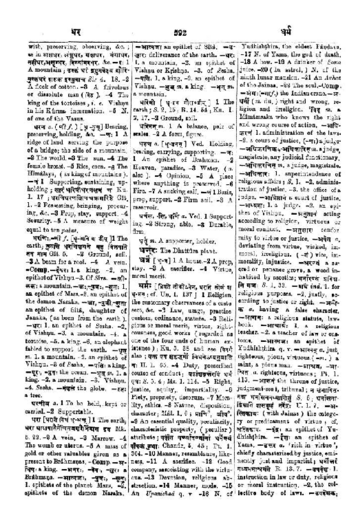
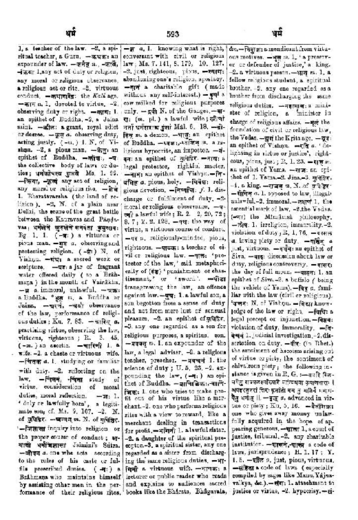
dhárma m. Gesetz, Recht (auch personif), Ordnung, Sitte, Gerechtigkeit, Pflicht, Tugend, Verdienst; Angemessenheit, Eigentümlichkeit, Art und Weise, Merkmal, Attribut; Mannsname. Abstr. dharmatā f., ˚tva n.
Burnouf 1866 substantive masculine · substantive neuter
Original text · French · substantive masculine · substantive neuter
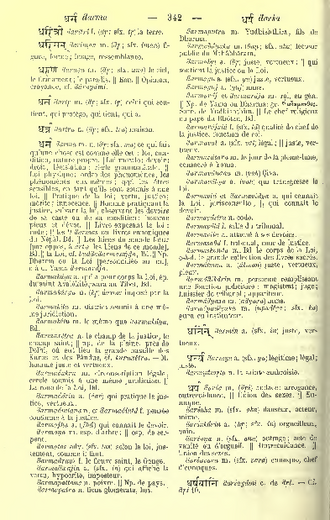
dharma dharma m. n. (dhṛ; sfx. ma) ce qui fait qu'une chose est comme elle est: loi, condition, nature propre. Loi morale; devoir; droit, législation; règle grammaticale. Loi physique; ordre des phénomènes; les phénomènes eux-mêmes; qqf. les êtres sensibles, en tant qu'ils sont soumis à une loi. Pratique de la loi; vertu, justice; mérite; innocence. Homme pratiquant la justice, suivant la loi, observant les devoirs de sa caste ou de sa condition; homme pieux et dévot. Livre exposant la loi: code; les 9 dharmas ou livres canoniques du Népâl, Bd. Les biens du monde futur [par oppos. à artha les biens de ce monde], Bd. la Loi, cf. buddhadhrmasaṅgha, Bd. Np. Dharma ou la Loi [personnifiée au m.], c-à-d. Yama dharmarāja. dharmakāya a. qui a pour corps la Loi, ép. du saint Avalokiteśvara au Tibet, Bd. dharmakārya n. (kṛ) devoir imposé par la Loi. dharmakīla m. district soumis à une même juridiction. dharmaketu m. le même que dharmakāya, Bd. dharmakṣetra n. le champ de la justice, le champ saint; np. de la plaine, près de Delhi, où eut lieu la grande bataille des Kurus et des Pāṇḍus, cf. kurukṣetra. — M. homme juste et vertueux. dharmacakra m. circonscription légale, cercle soumis à une même juridiction. La roue de la Loi, Bd. dharmacārin a. (car) qui pratique la justice, vertueux. dharmacintana n. et. dharmacintā f. pensée conforme à la justice. dharmajña a. (jñā) qui connaît le devoir. dharmaṇa m. esp. d'arbre; esp. de serpent. dharmatas adv. (sfx. tas) selon la loi, justement, comme il faut. dharmadravī f. le fleuve saint, le Gange. dharmadhvajin a. (sfx. in) qui affiche la vertu, hypocrite, imposteur. dharmapattana n. poivre. Np. de pays. dharmapatra n. ficus glomerata, bot. [Page342-2] dharmaputra m. Yudhiṣṭhira, fils de Dharma. dharmabhānaka m. (bhaṇ; sfx. aka) lecteur public du Mahābhārata. dharmabhṛt a. (bhṛ) juste, vertueux; qui soutient la justice ou la Loi. dharmayu a. (sfx. yu) juste, vertueux. dharmayuj a. (yuj) mms. dharmarāj et dharmarāja m. roi, en gén. Np. de Yama ou Dharma; gr. Ῥαδαμανθυς; Surn. de Yudhiṣṭhira. Le chef religieux ou pape du Bhôtan, Bd. dharmarājatā f. (sfx. tā) qualité de chef de la justice, fonction de roi. dharmavat a. (sfx. vat) légal; juste, vertueux. dharmavāsara m. le jour de la pleine-lune, consacré à Yama. dharmavāhana m. (vah) Śiva. dharmavāhya a. (vah) qui transgresse la loi. dharmavid et dharmavidya a. qui connaît la Loi, jurisconsulte; qui connaît le devoir. dharmaśāstra n. code. dharmaśālā f. salle du tribunal. dharmaśīla a. attaché à ses devoirs. dharmasabhā f. tribunal, cour de justice. dharmaskanda m. Bd. le corps de la Loi, c-à-d. la grande collection des livres sacrés. dharmātman a. (ātman) juste, vertueux, pieux. dharmādhikārin m. personne remplissant une fonction judiciaire: magistrat; juge; huissier de tribunal; appariteur. dharmādhyakṣa m. (adhyakṣa) mms. dharmopadeśaka m. (upadeśa; sfx. ka) guru ou instituteur.
Derived words
Occurrences in source texts (18)
IVU 1 occurrence
PYS 6 occurrences
PYS 3.13–14: Three Kinds of Transformation 3 occurrences
Direct occurrences
Occurrences through derived words
-
PYS 3.14 Segment 6
SiSa 4 occurrences
SiSa 5.6-5.9: Dharma-Hindernisse 2 occurrences
Direct occurrences
SVU 1 occurrence
Continue with AYI Free
Image source: AYI archive.