

jarā जरा – ageing; age; old age
substantive feminine
Dictionary sources
AYI dictionary substantive feminine
ageing; age; old age
Cappeller 1891 substantive feminine
Original text · English · substantive feminine
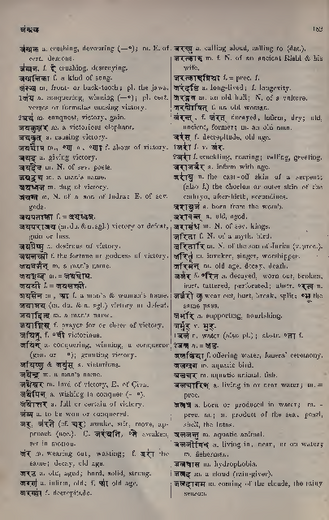
jarā́1 ·f. -> jára.
Original text · English · substantive feminine
jarā́2 ·f. crackling, roaring; calling, greeting.
Monier-Williams 1872 substantive feminine
Original text · English · substantive feminine
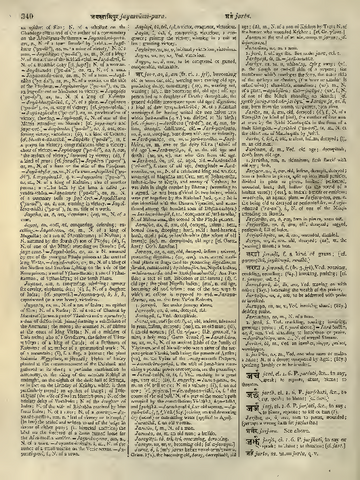
1. jarā, f. old age &c. See under jara, col. 2.
Original text · English · substantive feminine
2. jarā, f., Ved. crackling, roaring; invoking, greeting; praise; [cf. 1. jarā above.]
Petersburger 1855 substantive feminine
Original text · German · substantive feminine
1. jarā́ (von 1. jar) f. s. u. jara.

Original text · German · substantive feminine
2. jarā́ (von 3. jar) f. das Rauschen u. s. w.; Ruf, Gruss, = stuti NIR. 10,8. (agniḥ) tāsā̀ṃ ja̱rāṃ pràmu̱ñcannèti̱ nānàda̱dasu̱ṃ paràṃ ja̱nayàṃ jī̱vamastṛ̀tam ṚV. 1,140,8. acchā̀ vadā̱ tanā̀ gi̱rā ja̱rāyai̱ brahmàṇa̱spatìm ṚV. 1,38,13. ja̱rā vā̱ yeṣva̱mṛtèṣu dā̱vanè ṚV. 10,32,5.
Böhtlingk 1879 substantive feminine
Original text · German · substantive feminine
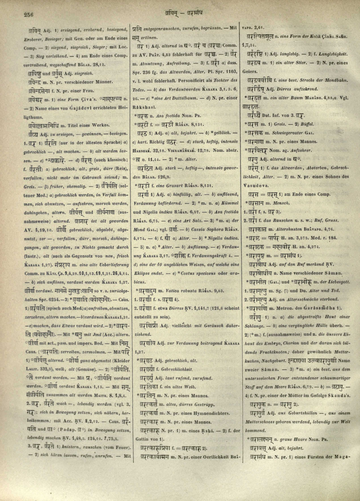
1. jarā́ f. s. jara 3〉.
Original text · German · substantive feminine
2. jarā́ f. das Rauschen u. s. w. Ruf, Gruss.
Apte 1890 substantive feminine
Original text · English · substantive feminine
jarā [jṝ-aṅ guṇaḥ] (The word jaras is optionally substituted for jarā before vowel terminations after acc. dual) 1 Old age; kaikeyīśaṃkayevāha palitacchadmanā jarā R. 12. 2; tasya dharmaraterāsīd vṛddhatvaṃ jarayā (jarasā) vinā R. 1. 23. 2 Decrepitude, infirmity, general debility consequent on old age. 3 Praise. 4 Digestion. 5 N. of a female demon; see jarāsaṃdha below. 6 Invoking, greeting. Comp. — avasthā decrepitude. — ātura a. 1 infirm. 2 old. — jīrṇa a. old through age, debilitated, infirm; Bh. 3. 17. — puṣṭa = jarāsaṃdha. — bhīruḥ the god of love, Cupid. — saṃdhaḥ N. of a celebrated king and warrior, son of Bṛhadratha. [According to a legend, he was born divided in two halves which were put together by a Rākṣasī called Jarā, whence the boy was called Jarāsandha. He became king of Magadha and Cedi after his father's death. When he heard that Kṛṣṇa had slain his son-inlaw Kaṃsa, he gathered a large army and besieged Mathurā eighteen times, but was as often repulsed. When Yudhiṣṭhira performed the great Rājasūya sacrifice, Kṛṣṇa, Arjuna and Bhīma went to the capital of Jarāsaṃdha disguised as Brāhmaṇas, chiefly with the object of slaying their enemy and liberating the kings imprisoned by him. He, however, refused to release the kings, whereupon Bhīma challenged him to a single combat. The challenge was accepted; a hard fight ensued, but Jarāsandha was at last overpowered and slain by Bhīma].

Cappeller 1887 substantive feminine
Original text · German · substantive feminine
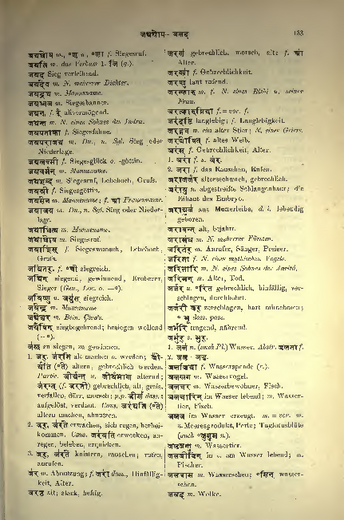
1. jarā́ f. s. jára
Original text · German · substantive feminine
2. jarā́ f. das Rauschen, Raufen.
Burnouf 1866 substantive feminine
Original text · French · substantive feminine
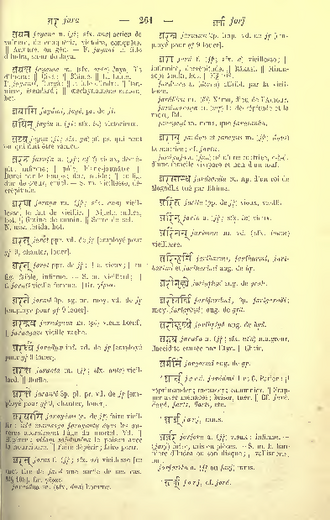
jarā jarā f. (jṝ; sfx. a) vieillesse; infirmité, décrépitude. Rākṣasī. Mimusops kauki, bot. M§ 108. jarātura a. (ātura) affaibli par la vieillesse. jarābhīru m. (bhī) Kāma, dieu de l'Amour. jarāmaraṇa n. (mṛ) la décrépitude et la mort, Bd. jarāyaṇi m. mms. que jarasandha.
Occurrences in source texts (18)
HP 10 occurrences
HP 3.33-3.48*1: Khecarī and Soma 3 occurrences
Direct occurrences
-
HP 3.34 Segment 15
-
HP 3.34*1–34*2 Segment 32
-
HP 3.47 Segment 22
SiSa 7 occurrences
SiSa 3.68-3.80: Vāyusādhana 2 occurrences
Direct occurrences
SVU 1 occurrence
Continue with AYI Free
Image source: AYI archive.