

sṛ सृ – move; flow; send forth
verbal root · Word type unspecified · verb
Dictionary sources
AYI dictionary verbal root
move; flow; send forth
Cappeller 1891 verb
Original text · English · verb
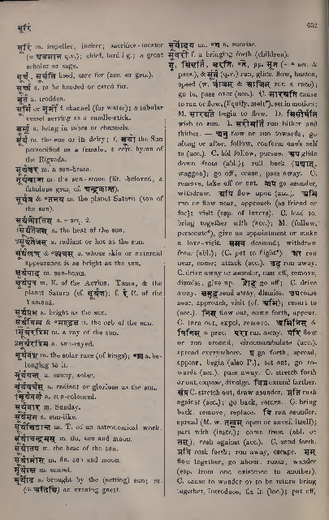
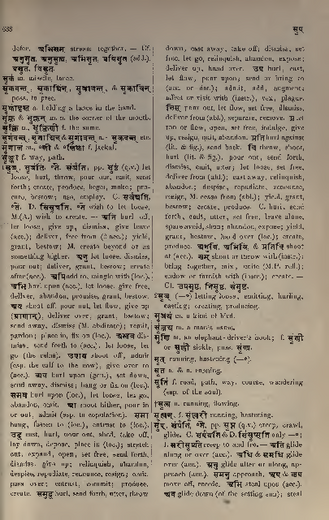
sṛ sísarti sarati sísarti sara°te ·v pp. sūtá (--° act. & pass.), & sū́rta (q.v.) run, glide, flow, hasten, speed (w. vā́jam & ājim run a race); go to, pass over (acc.). C. sārayati cause to run or flow, (liquify, melt*), set in motion; M. sāráyate begin to flow. D. sisīrṣati wish to run. I. sarīsarti run hither and thither. -- anu flow or run towards, go along or after, follow, conform one's self to (acc.). C. bid follow, pursue. apa glide down from (abl.); roll back (paścāt, waggon); go off, cease, pass away. C. remove, take off or out. vyapa go asunder, withdraw. api flow upon (acc.). abhi run or flow near, approach (as friend or foe); visit (esp. of lovers). C. lead to, bring together with (acc.); M. (follow, persecute*), give an appointment or make a love-visit. samava descend; withdraw from (abl.); (C. put to flight*). ā run near, come; attack (acc.). ud run away. C. drive away or asunder, cast off, remove, dismiss, give up. prod go off; C. drive away. samud send away, dismiss. upa come near, approach, visit (cf. abhi); resort to (acc.). nis flow out, come forth, appear. C. turn out, expel, remove. abhinis & vinis = prec. parā run away. pari flow or run around, circumambulate (acc.), spread everywhere. pra go forth, spread, appear, begin (also P.), set out, go towards (acc.), pass away. C. stretch forth or out, expose, divulge. vipra extend farther. saṃpra C. stretch out, draw asunder. prati rush against (acc.); go back, return. C. bring back, remove, replace. vi run asunder, spread (M. w. tanvṛm open or unveil itself); part with (instr.); come from (abl. or tas), rush against (acc.). C. send forth. pravi rush forth; run away, escape. sam flow together, go about, roam, wander (esp. from one existence to another). C. cause to wander or to be return bring together, introduce, fix in (loc.); put off, defer. abhisam stream together. -- Cf. anusṛta, anusṛtya, abhisṛta, pravisṛta (add.), prásṛta, visṛta.
Monier-Williams 1872 Word type unspecified
Original text · English · Word type unspecified
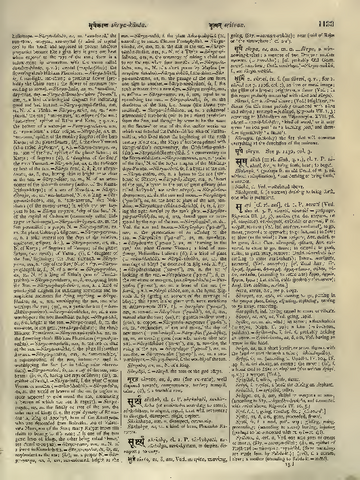
sṛ sṛ [cf. rt. sal], cl. 1. P. sarati (Ved. also cl. 3. P. sisarti, sisarṣi = prāpaya, Ṛg-veda III. 32, 5), sasāra (1st du. sasṛva, 1st pl. sasṛma), sariṣyati, asārṣīt or asarat, Prec. sriyāt, sartum (Ved. Inf. sartave, sartavai), to go, move, proceed; to approach; to go fast, run; to flow; to blow (as the wind): Pass. sriyate, Aor. asāri, to be gone, &c.: Caus. sārayati, -yitum, Aor. asī- sarat, to cause to go, move; to extend; to push, strike, to push away, remove: Desid. sisīrṣati (ac- cording to some susūrṣati): Intens. sesrīyate, sarsarti, (Ved. sarsṛte); [cf. Zend har; Gr. ὁρ-μή, ὁρμά-ω, ἀφ-ορμή, ὁρμη-τήριο-ν, σάλος, σάλα, σαλεύω, (according to some also) ἅρμα, ἁρμός, ὅρμος, ἕρμα; Lat. salio, salto (probably also serere); Angl. Sax. saltian, serian.]
Whitney Roots 1885 verbal root
Original text · English · verbal root
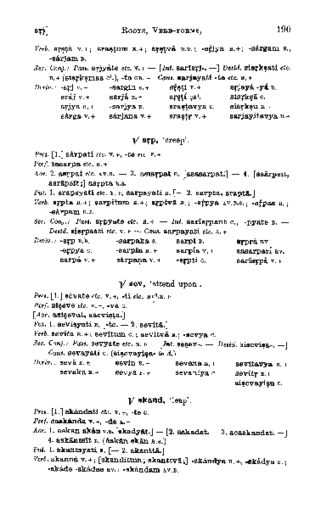
sṛ — flow
Apte 1890 Word type unspecified
Original text · English · Word type unspecified
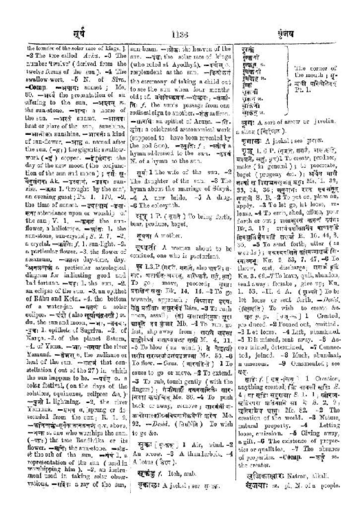
sṛ 1 3 P. (sarati, sasarti, also dhāvati; sasāra, asārṣīt-asarat, sariṣyati, sartuṃ, sṛta) 1 To go; move, proceed; mṛgāḥ pradakṣiṇaṃ sasruḥ Bk. 14. 14. 2 To go towards, approach; niṣpādya harayaḥ setuṃ pratītāḥ sasrurarṇavaṃ Rām. 3 To rush upon, assail; (taṃ) sasārābhimukhaḥ śūraḥ śādūrla iva kuṃjaraṃ Mb. 4 To run, go fast, slip away from; sarati sahasā bārhvormadhyaṃ gatāpyabalā satī M. 4. 11. 5 To blow (as wind); taṃ cedvāyau sarati saralaskaṃdhasaṃghaṭṭajanmā Me. 53. 6 To flow. — Caus. (sārayati-te) 1 To cause to go or move. 2 To extend. 3 To rub, touch gently (with the fingers); taṃtrīmārdrāṃ nayanasalilaiḥ sārayitvā kathaṃcit Me. 86. 4 To push back or away, remove; sārayaṃtiṃ gaṃḍābhogātkrīṭhanaviṣamāmekaveṇīṃ kareṇa Me. 92. — Desid. (sisīrṣati) To wish to go &c.
Cappeller 1887 Word type unspecified
Original text · German · Word type unspecified
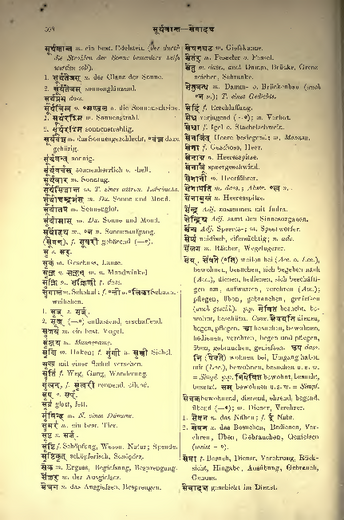
sṛ s. sar.
Burnouf 1866 verbal root
Original text · French · verbal root
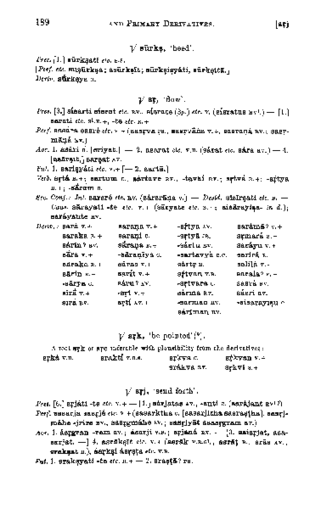
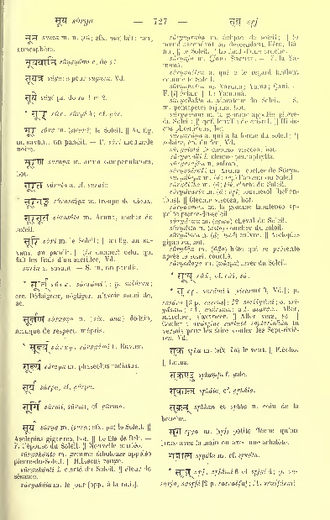
*sṛ sṛ. sarāmi 1 [sisarmi 3, Vd.]; p. sasāra [3p. sasrus]; f2. sariṣyāmi; o. sriyāsam; a1. asārṣam; a2. asaram. Aller, marcher, s'avancer. Aller vers, ac. Couler: avāsṛjas sartave saptasindhūn tu versais pour les faire couler les Sept-rivières, Vd.
Derived words
Further derivatives (1)
Occurrences in source texts (16)
DYS 2 occurrences
HP 4 occurrences
HTK 1 occurrence
PJH 2 occurrences
SiSa 4 occurrences
SVU 1 occurrence
Continue with AYI Free
Image source: AYI archive.