

śiras शिरस् – head
substantive neuter
Dictionary sources
AYI dictionary substantive neuter
Cappeller 1891 substantive neuter
Original text · English · substantive neuter
śíras ·n. head, top, point, summit, fore-part, front; yuddhasya an. -- Instr. w. kṛ, dhṛ, etc. bear on the head i.e. esteem highly, honour, respect.

Monier-Williams 1872 substantive neuter
Original text · English · substantive neuter
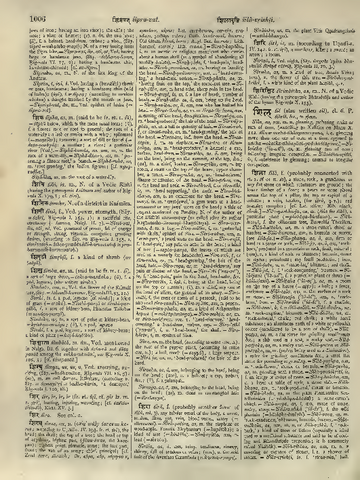
śiras śiras, as, n. (originally śaras = ka- ras; according to Uṇādi-s. IV. 193. fr. rt. śri), the head; the skull; the top of a tree; the head or top of anything, highest part, (jānu-śiras, the knee- pan); highest point, pinnacle, acme; the fore part, front; the van of an army; chief, principal; [cf. Zend śara, śāranh; Gr. κάρα, κάρ, κάρη-νο-ν, κρανίο-ν, κέρας; Lat. cere-bru-m, cere-bru-m, cer-vix, cra- nium, perhaps calva; Goth. hvair-n-ei, haurn; Old Germ. hirni, horn; Angl. Sax. hœrnes; Lith. karczei, szerai; Hib. ceann.]
Petersburger 1855 substantive neuter
Original text · German · substantive neuter
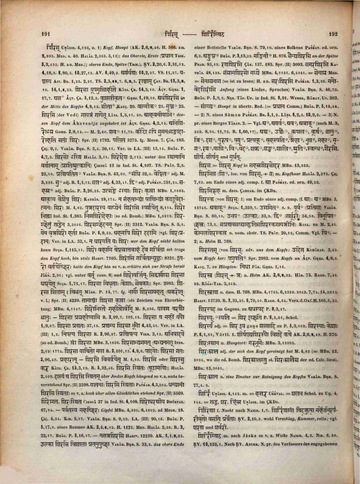
śíras UṆĀDIS. 4,193. n. 1〉 Kopf, Haupt (AK. 2,6,2,46. H. 566. H. an. 2,593. MED. 8. MED. 40. HALĀY. 2,363. HALĀY. 5,13); das Oberste, Erste (pradhāna TRIK. 3,3,452. H. an. MED.); oberes Ende, Spitze ? (TRIK.). ṚV. 2,20,6. ṚV. 3,51,12. ṚV. 4,18,9. ṚV. 8,80,5. ṚV. 10,27,13. AV. 6,49,2. athàrvaṇaḥ AV. 10,2,27. VS. 11,57. yajñasya AIT. BR. 1,25. AIT. BR. 2,21. TS. 2,5,11,7. TS. 2,6,3,5. rājñām ŚAT. BR. 13,3,3,10. ŚAT. BR. 14,1,1,23. śirasā yūpamujjihīte KĀTY. ŚR. 14,5,10. ĀŚV. GṚHY. 1,17,7. akṣa˚ ĀŚV. ŚR. 5,12,3. kuśalīkṛta˚ GṚHY. 1,19,10. ardhaśirasi in der Mitte des Kopfes GṚHY. 4,8,15. sītā˚ KAUŚ. 20. valmīka˚ 21. muñja˚ 25. śirasi (der Vedi) gāyatraṃ gāyet LĀTY. 1,5,11. LĀTY. 1,5,20. āhavanīyābhi˚ dessen Kopf dem Āhavanīya zugekehrt ist ĀŚV. GṚHY. 4,2,15. abhiśiro'gra GOBH. 2,9,12. — M. 2,60. śava˚ M. 11,72. kīṭo 'pi sumanaḥsaṅgādārohati satāṃ śiraḥ Spr. (II) 1782. palita Spr. (II) 3275. fg. MEGH. 7. ŚĀK. 183. ŚIŚ. 9,3. VARĀH. BṚH. S. 5,4. VARĀH. BṚH. S. 50,11. VET. in LA. (III) 13,14. BHĀG. P. 4,7,3. śiraso 'sthi HALĀY. 3,11. śirodeśa HALĀY. 2,112. unter den sthānāni varṇānām (prātiśrutkāni) ŚIKṢĀ 13_in_Ind. St. 4,107. TS. PRĀT. 2,3. TS. PRĀT. 23,10. praṇipatita˚ VARĀH. BṚH. S. 43,60. ˚saṃdhi VARĀH. BṚH. S. 52,4. veṣṭita˚ adj. M. 3,238. su˚ adj. R. 1,1,12. sapta˚ adj. R. 4,33,41. dvi˚ adj. PAÑCAT. 251,24. sahasra˚ adj. BHĀG. P. 3,26,25. utsaṅge 'syāḥ śiraḥ kṛtvā MBH. 1,1883. ākṛṣya keśeṣu śiraḥ KATHĀS. 18,174. nasaṃhatābhyāṃ pāṇibhyāṃ kaṇḍūyedātmanaḥ śiraḥ M. 4,82. putradārasya vāpyenaṃ śirāṃsi sparśayet M. 8,114. śiro bhittvā Ind. St. 1,383. bhinnaśirodehāḥ (so ed. Bomb.) MBH. 1,8319. śiraśchettuṃ khaḍgena MBH. 3,3046. śirasaśchedanam Spr. (II) 3312. VARĀH. BṚH. S. 5,1. yena vṛtraśiro hartā BHĀG. P. 6,9,53. ahamapi śiro dadāmi (vgl. śiraḥpradāna) VET. in LA. 33,1. na dhārayati yaḥ śiraḥ wer den Kopf nicht halten kann SUŚR. 1,115,11. śiro bahāmi ceṣṭatvāttavāhaṃ deva garvitā ich trage den Kopf hoch, bin stolz HARIV. 7105. śirāṃsi garvitānyūhuḥ HARIV. 8321. itaro vartayecchiraḥ halte den Kopf hin so v. a. erkläre sich zur Strafe bereit YĀJÑ. 2,96; vgl. unter vart caus. 8〉 und śirovartin. siddhārthāṃśca śirasā dhārayet SUŚR. 1,71,17. śirasā vidhṛtāḥ (keśāḥ, sevakāḥ) Spr. 2983. śirasā śilām . bibhrat MĀRK. P. 14,77. fg. bhāryāṃ śirasāvahat (akarot v. l.) Spr. (II) 4239. tāmājñāṃ śirasā kṛtvā (als Zeichen von Ehrerbietung) MBH. 4,1147. śirobhiste gṛhītvorvīm M. 8,256. yāvanna caraṇau bhrātuḥ — śirasā pragrahīṣyāmi R. 2,99,7. R. 2,101,15. śirasā ca mahīṃ yayau R. 1,9,67. śirasā praṇataḥ R. 2,57,18. praṇamya śirasā bhūmau R. 4,43,51. VET. in LA. (III) 1,2. nipatya śirasā R. 2,96,57. praṇipatya VIKR. 3,12. abhivādaye (so ed. Bomb.) tvāṃ śirasā MBH. 3,1836. śirasābhyagamat (abhyanamat INDR. 2,19) MBH. 3,1774. śirasā yācito mayā R. 2,101,13. R. 4,9,6. pādayoḥ śirasā gataḥ R. 2,96,49. prahārān — śirasi vivarjayet M. 4,83. śirasi oder śirassu kar KĀTY. ŚR. 13,3,19. R. 5,32,46. śirasi sthitaḥ (cūḍāmaṇiḥ) HALĀY. 2,409. dāsyaṃ ca śirasi sthitam über Jmdes Kopfe hängend so v. a. nahe bevorstehend Spr. (II) 2598. yātanāḥ śirasi sthitāḥ PAÑCAR. 4,3,204. dhanyānāṃ śirasi sthitāḥ so v. a. hoch über allen Glücklichen stehend Spr. (II) 5569. śirogata, śiraḥsthita ŚIKṢĀ 37_in_Ind. St. 4,108. śirodharaṇīya DHŪRTAS. 67,14. — parvatasya mahacchiraḥ Gipfel MBH. 4,830. MBH. 8,4803. ad. MEGH. 18. ŚIŚ. 4,54. KIR. 5,17. VARĀH. BṚH. S. 9,39. LA. (III) 90,16. BHĀG. P. 5,17,8. eines Baumes AK. 2,4,1,12. H. 1121. MED. HALĀY. 2,26. R. 3,22,17. BHĀG. P. 5,16,17. — nakṣatraśirasi HARIV. 12239. AK. 1,1,2,25. ulkā śirasi viśālā pratanupucchā VARĀH. BṚH. S. 33,8. das obere Ende einer Bettstelle VARĀH. BṚH. S. 79,10. eines Balkens PAÑCAT. ed. orn. 6,3. aṅguṣṭha˚ BHĀG. P. 3,13,22. maṅginī˚ H. 878. sainyaśirasi an der Spitze PRAB. 85,19. raṇaśirasi ŚĀK. 157. ŚĀK. 185. Spr. (II) 3093. samaraśirasi KATHĀS. 48,138. saṃgrāmaśiraso madhye MBH. 4,1131. MBH. 6,4041. = senāgra MED. = senāgrabhāga (so ist zu lesen) H. an. saraḥśirasi PAÑCAR. 1,3,56. manovedaśirāṃsi Anfang (eines Liedes, Spruches) VARĀH. BṚH. S. 46,73. BHĀG. P. 5,9,5. NṚS. TĀP. UP._in_Ind. St. 9,91. WEBER, RĀMAT. UP. 303. — sāṃkhya˚ Haupt in übertr. Bed. (= pradhāna Comm.) BHĀG. P. 5,14,44. — 2〉 N. eines Sāman PAÑCAV. BR. 5,1,2. LĀṬY. 6,2,5. LĀṬY. 10,9,3. — 3〉 N. pr. eines Berges TĀRAN. 3. — Vgl. a˚, atharva˚, ava˚, avāk˚ (auch M. 3,249. M. 8,94. M. 11,73. R. 1,60,17), aśva˚, uccaiḥ˚, kapāla˚, kūrca˚, jānu˚, tri˚, daśa˚, puruṣa˚, pṛthu˚, pratyak˚, bṛhaspati˚, brahma˚, bhuja˚, mahā˚, mṛga˚, ratha˚, vāji˚, vi˚, veda˚, śakra˚, śaṅkha˚, śāli˚, śruti˚, skandha˚, śairasi, śīrṣa, śīrṣan und mūrdhan.
Böhtlingk 1879 substantive neuter
Original text · German · substantive neuter
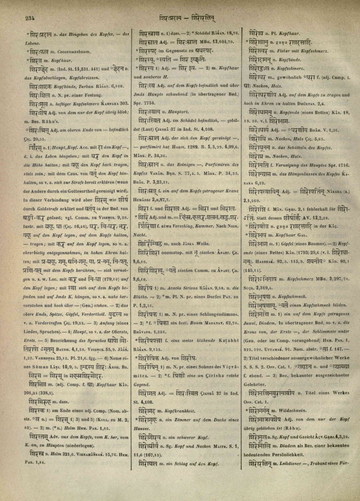
śíras n. — 1〉 Haupt, Kopf. Acc. mit dā den Kopf —, d. i. das Leben hingeben; mit dhar den Kopf in die Höhe halten; mit vah den Kopf hoch tragen, stolz sein; mit dem Caus. von vart den Kopf hinhalten, so v. a. zur Strafe bereit erklären (wenn der Andere durch ein Gottesurtheil gereinigt wird). In dieser Verbindung wird aber śiras wie śīrṣa durch Geldstrafe erklärt und vartay in der Bed. von aṅgī-kar gefasst; vgl. Comm. zu VIṢṆUS. 9,20. Instr. mit grah, dhā (ŚIŚ. 16,46), dhar, vi-dhar, bhar, vah auf den Kopf legen, auf dem Kopf halten, — tragen; mit kar auf den Kopf legen, so v. a. ehrerbietig entgegennehmen, in hohen Ehren halten; mit pra-grah, gam, abhi-gam, yā, pra-nam, ni-pat, praṇi-pat mit dem Kopf berühren, — sich verneigen u. s. w. Loc. mit kar und ni-dhā (Chr. 179,10) auf den Kopf legen; mit sthā sich auf dem Kopfe befinden und auf Jmds K. hängen, so v. a. nahe hervorstehen und hoch über — (Gen.) stehen. — 2〉 das obere Ende, Spitze, Gipfel, Vordertheil. yuddhasya so v. a. Vordertreffen ŚIŚ. 19,22. — 3〉 Anfang (eines Liedes, Spruches). — 4〉 Haupt, so v. a. der Oberste, Erste. — 5〉 Bezeichnung des Spruches āpo jyotirāpo 'mṛtam BAUDH. 4,1,28. VIṢṆUS. 55,9. YĀJÑ. 1,23. VASIṢṬHA 25,13. Pl. VASIṢṬHA 21,6. fgg. — 6〉 Name eines Sāman LĀṬY. 10,9,5. indrasya śiraḥ ĀRṢ. BR.
Apte 1890 substantive neuter
Original text · English · substantive neuter
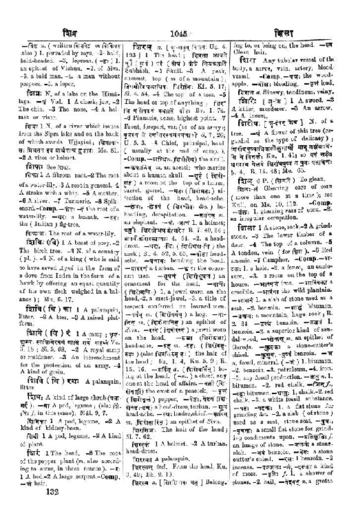
śiras n. [śṝ-asun nipātaḥ Uṇ. 4. 193] 1 The head; śirasā ślāghate pūrvaṃ (guṇaṃ) paraṃ (doṣaṃ) kaṃṭhe niyacchati Subhāṣ. 2 Skull. 3 A peak, summit, top (as of a mountain); himagaurairacalādhipaḥ śirobhiḥ Ki. 5. 17; Śi. 4. 54. 4 The top of a tree. 5 The head or top of anything; śirasi mapīpaṭalaṃ dadhāti dīpaḥ Bv. 1. 74. 6 Pinnacle, acme, highest point. 7 Front, forepart, van (as of an army); putrasya te raṇaśirasyayamagrayāyī Ś. 7. 26; U. 5. 3. 8 Chief, principal, head (usually at the end of comp.). Comp. — asthi n. (śirosthi) the skull. — kapālin m. an ascetic who carries about a human skull. — gṛhaṃ ( śirogṛhaṃ) a room on the top of a house, turret, garret. — grahaḥ (śirograhaḥ) affection of the head, head-ache. — chadaḥ, -chedanaṃ (śiraśchedaḥ &c.) beheading, decapitation. — tāpin m. an elephant. — traṃ, -trāṇaṃ 1 a helmet; cyutaiḥ śirastraiścaṣakottareva R. 7. 49, R. 7. 66; apanītaśirastrāṇāḥ R. 4. 64. 2 a headdress. — dharā, -dhiḥ (śirodharā -dhi) the neck; Śi. 4. 52, Śi. 5. 65. — pīḍā headache. — praṇāmaḥ bending the head. — prāvaraṇaṃ a turban. — phaṭhaḥ the cocoanut tree. — bhūṣaṇaṃ (śirobhūṣaṇaṃ) an ornament for the head. — maṇiḥ (śiromaṇiḥ) 1 a jewel worn on the head. 2 a crest-jewel. 3 a title of respect conferred on learned men. — marman m. (śiromarman) a hog. — mālin m. (śiromālin) an epithet of Śiva. — ratnaṃ (śiroratnaṃ) a jewel worn on the head. — rujā (śirorujā) head-ache. — ruh m. — ruhaḥ ( śiroruhruhaḥ) (also śirasiruh-haḥ) the hair of the head; Rs. 1. 4, Ku. 5. 9; R. 15. 16. — vartin a. (śirovartin) being at the head. ( — m.) a chief, any one at the head of affairs. — vallī ( śirovallī) the crest of a peacock. — vṛttaṃ (śirovṛttaṃ) pepper. — veṣṭaḥ, veṣṭanaṃ ( śiroveṣṭraḥ-ṣṭanaṃ) a head-dress, turban. — śūlaṃ head-ache. — sthaḥ leader, chief. — hārin m. (śirohārin) an epithet of Śiva.
Cappeller 1887 substantive neuter
Original text · German · substantive neuter
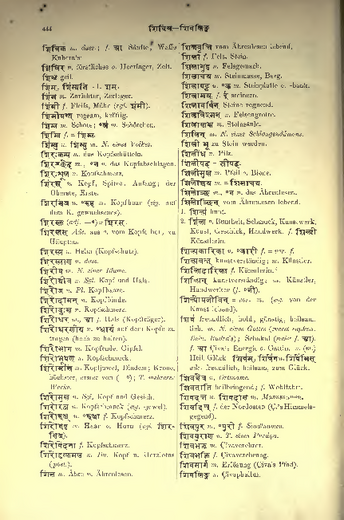
śíras n. Kopf, Spitze, Anfang; der Oberste, Erste.
Burnouf 1866 substantive neuter
Original text · French · substantive neuter
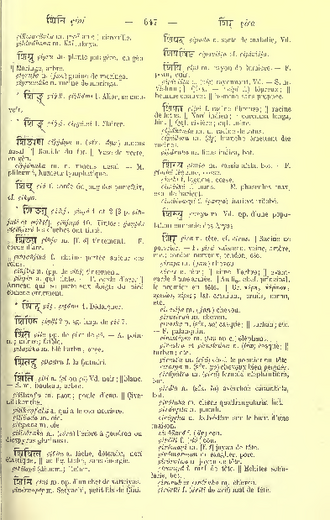
śiras n. tète; cime d'arbre; avantgarde d'une armée. Au fig. chef, principal, le premier en tête. Gr. ϰάρη, ϰάρηνον, ϰρανίον, ϰέρας; lat. cranium, crinis, cornu, etc.
Occurrences in source texts (19)
DYS 2 occurrences
GoS 1 occurrence
HP 2 occurrences
MAN 3 occurrences
SiSa 7 occurrences
SiSa 5.48-5.71: Innere Meditation 2 occurrences
Direct occurrences
SiSa 5.182-5.190: Sahasrāra-Mond 2 occurrences
Direct occurrences
-
SiSa 5.184 Segment 1
-
SiSa 5.185 Segment 1
SVU 2 occurrences
Continue with AYI Free
Image source: AYI archive.