


How can we recognise such an opportunity?
An opportunity often arrives unobtrusively. Life presents it to us. Above all, we need to recognise the possibilities in what seems to come to us naturally. Our school years are a good example. The better we use that space, the more joy we will find. Enjoying life begins with accepting its gifts.
Sometimes, though, we also need to recognise a space of freedom and then seize it courageously. Again, our school years are a wonderful example. I think the opportunities they offer include not only learning but also flicking chewing gum at the blackboard. That, too, can be part of a fulfilling time at school.
And finally, we need to let go again. Nothing tastes staler than chewing gum that has been chewed for too long. I also think of a homeless man with a school satchel whom I often saw outside a school. Perhaps he had enjoyed his school years and still wished he were a pupil?
Sometimes in life, an opportunity opens like a door. It is important to walk through it. What came before is then the past; what lies ahead is the new adventure. We can embrace it with all our energy.
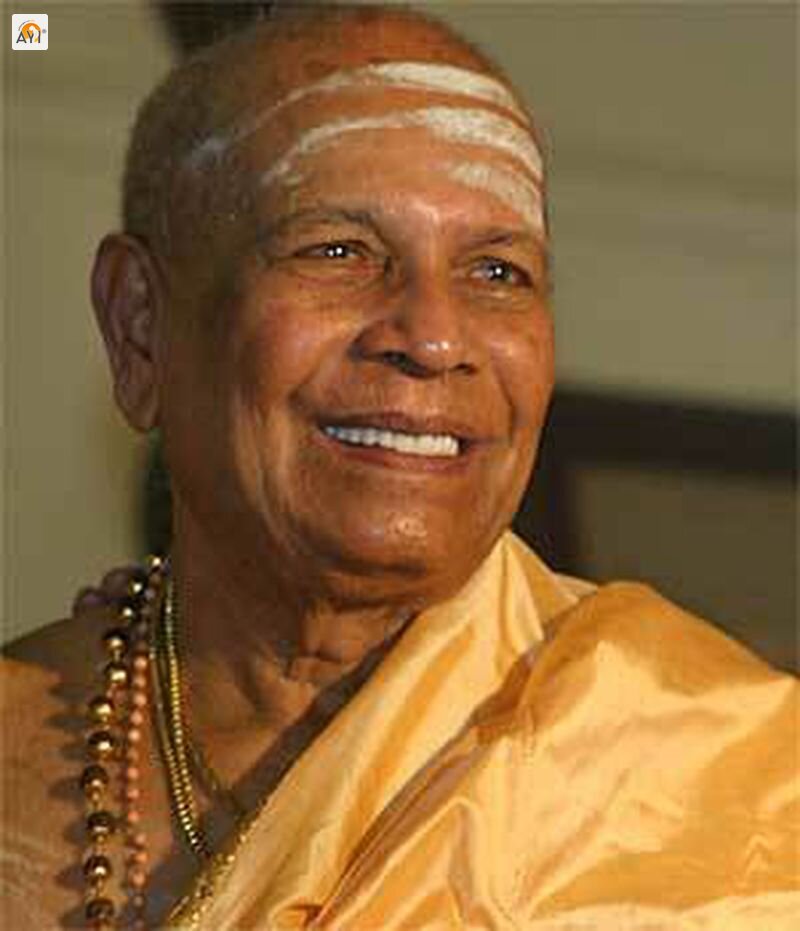
So learning with Pattabhi Jois was that kind of doorway for you?
Pattabhi Jois opened up a completely new approach to yoga for me. During that time, I was able not only to develop my physical practice but also to immerse myself in the philosophy. I became part of a global family. Something connects all those who practised with Pattabhi Jois and continue to bring Aṣṭāṅga Yoga into the world today.
What was it like to learn with Pattabhi Jois?
For me, Pattabhi Jois embodies traditional yoga teaching. Although I had practised yoga before, I started again from the beginning with him. Every posture he showed me was like a small initiation.
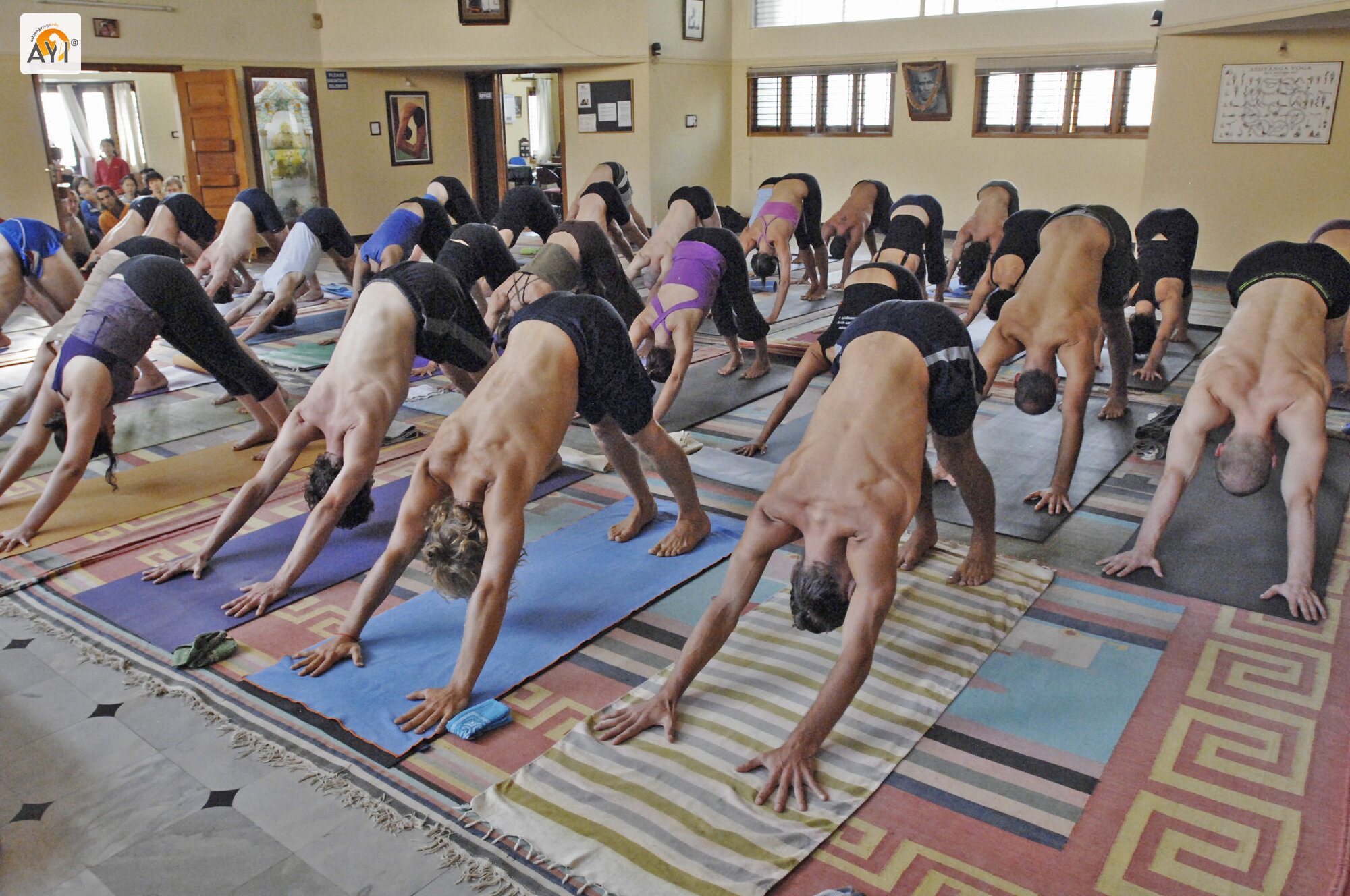
Following his teaching alongside the other yogis in the room was a magical experience. Our breath not only carried our movement; it could be heard out in the street. The air was damp with our sweat. Perhaps it was from this sweat that our family of practitioners emerged.
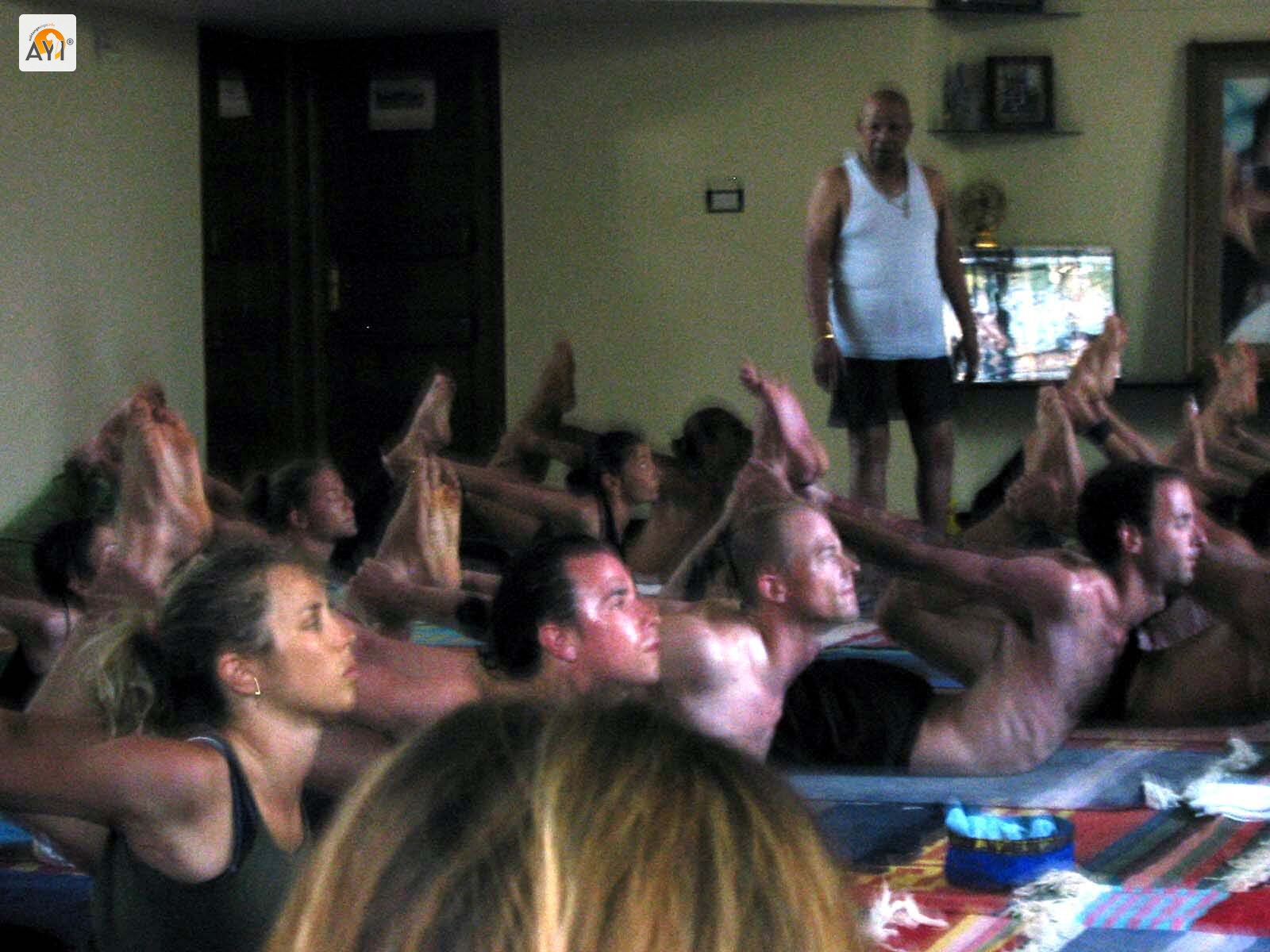
Pattabhi Jois knew how to become like a father to us. He unfolded the practice for each person in their own way. Breath by breath, posture by posture, the practice not only grew longer but also led ever more deeply into a moving meditation.
You are an Aṣṭāṅga Yoga teacher certified by Pattabhi Jois. What was the training with him like?
For Pattabhi Jois, personal practice was what mattered. He repeatedly emphasised:
Aṣṭāṅga Yoga is 99% transpiration and 1% explanation!
[Aṣṭāṅga Yoga is 99% sweating and 1% theory!]
When I was practising the third of what were then four Aṣṭāṅga Yoga series with him, he gave me his “Authorized to teach”. I learned systematic teaching techniques and the philosophical and physiological foundations for teaching elsewhere.
How closely are you still connected with this family of Aṣṭāṅga Yoga, as you call it?
Perhaps Aṣṭāṅga Yoga is a little like a yoghurt starter culture. Add it to milk, and yoghurt always develops. Yet it tastes different each time, depending on the milk.
Although many of us students practised with Pattabhi Jois at the same time and in the same room, each person could take something different away. For one, the journey was more physical; for another, more meditative. One immersed themselves in the magical symphony of breath and movement; another was more drawn to the sacred geometry of the postures themselves.
Added to this are the different backgrounds each student brought. A musician hears sounds everywhere; someone who draws sees contrasts everywhere; a sculptor recognises forms.
As a result, each student carries Aṣṭāṅga Yoga forwards a little differently.
What is distinctive about the AYI Method you founded?
As a physician, I want to support my students’ health. The AYI Method therefore teaches the postures and movements of the Aṣṭāṅga sequences through a systematic approach based on movement physiology. Individual adaptations, alignment and yoga therapy are important aspects.
As a scientist, I value a systematic, well-founded approach. In AYI Method training, we therefore place great emphasis on modern teaching methods. Anyone who wants to understand systematically the harmony carried by breath and movement, and learn how to pass it on, is in the right place here.
Thank you very much for the conversation.
And enjoy your practice.
Background: This interview was conducted as part of the final assignment for a yoga teacher training programme. Alexandra is exploring yoga according to T. Kṛṣṇamācārya and the four students she considers his most significant: T.K.V. Desikachar, Indra Devi, B.K.S. Iyengar and Pattabhi Jois.
Interview: Alexandra Wehinger
Author: Dr Ronald Steiner
Cover image: Tom Rosenthal

Please log in to write a message. Go to login