
MG 0503
MG 0503

A vivid tradition (part 3/3)

Aṣṭāṅga Yoga practice is characterised by both a universal tradition and regional as well as individual differences. Up to a certain degree, many practitioners of Aṣṭāṅga Yoga feel at home in the world.

Dr. Ronald Steiner Dr. Ronald Steiner
Yogalehrausbildung mit Dr. Ronald Steiner
Kraft des physischen Körpers ist eine Nebenwirkung der Praxis. Ziel ist die innere Erfahrung des Yoga.

Maybe Aṣṭāṅga Yoga is like yoghurt ferment. If you add a little ferment to the milk, the bacteria in the milk will transform it into yoghurt. No matter in which country you mix the milk with the ferment, the process will always be the same. But the yoghurt will always taste a little different because the ferment is the same but the milk is different. This also holds true for Aṣṭāṅga Yoga - the flavour depends on the region but ultimately it's always still Aṣṭāṅga Yoga.

Once you've mastered the Vinyāsa system, you can walk into an Aṣṭāṅga Shala anywhere in the world and join the practice. This is a great experience and feels a little like being at home all over the world. At the same time, you will notice little differences which may provide valuable input for your own practice. The combination of this universality with individual characteristics of teachers and pupils is part of the special magic charm of Aṣṭāṅga Yoga.

Despite the small differences already mentioned, all those teaching Aṣṭāṅga Yoga ultimately draw on the tradition brought to the Western world by Kṛṣṇamācārya and Pattabhi Jois. In citing the famous dictum »Never changed anything«, each teacher highlights this connection in the teacher-pupil-sequence. Objectively speaking, though, Aṣṭāṅga Yoga has undergone a certain development in the Western world.

Teaching by direct contact

Guiding a pupil directly into a position without many words but mainly by touches helps using the body's natural intelligence. However, the assistance - the so-called adjustments - Pattabhi gave in his early years of teaching were still very intensive, resulting in many muscle strains and overstretching. Therefore, many Western teachers started to use those adjustments as a basis for a more fine-tuned and balanced form of assistance, finally creating a type of adjustment that guides movements and helps prevent injuries. Through the dialogue between individual teachers, such adjustments are passed on in the community of traditional teaching and gain further precision.

Deutsches Yoga-Forum | Heft 3 | 06/2013
Der Yoga des Pattabhi Jois, Teil 3 von 3

A practice waiting to be started

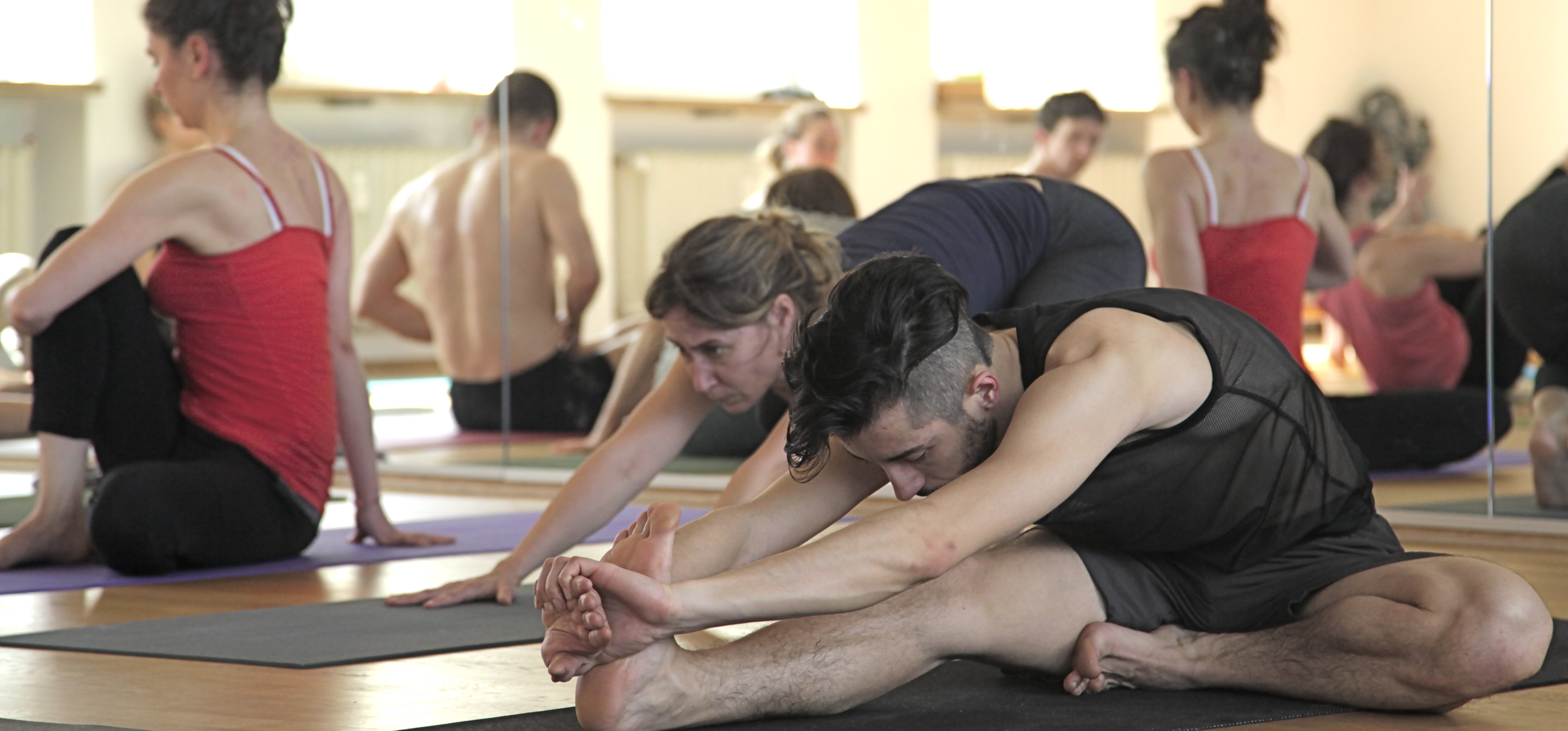
There is hardly any other tradition which makes it so easy for the practitioner to develop their own individual practice. Because in Aṣṭāṅga Yoga, the practice is already there and just waiting to be started. The form of teaching characteristic of Aṣṭāṅga Yoga is called Mysore Style. Here, everybody practices in tune with their own breathing rhythm - with the individual exercises and their sequence already known in advance. The teacher gives individual assistance whenever things are unclear or there is potential for further development.

Those who go through the same motions every day in this fashion can leave the surface of the sequence of exercises and pay closer attention to performing them with precision. The buzzword here is alignment, i.e. paying attention to a healthy and harmonic form of practice. This special focus is clearly one of the Western developments.

»Everybody can do Yoga« – this was one of Pattabhi Jois' main creeds. However, in the last years at Mysore, there was hardly a way to find an adequate practice for people with physical restrictions, also because of the enormous number of pupils. In my eyes, this is truly a pity because I think that precisely those people can profit a lot from the therapeutic potential of Aṣṭāṅga Yoga. For this reason, I will find an adequate form of practice for anyone joining one of my classes. In certain cases, this might, for instance mean using a chair as a tool to allow people with physical restrictions to go through the series of movements. In this way, the essence of Aṣṭāṅga Yoga becomes accessible for everyone.
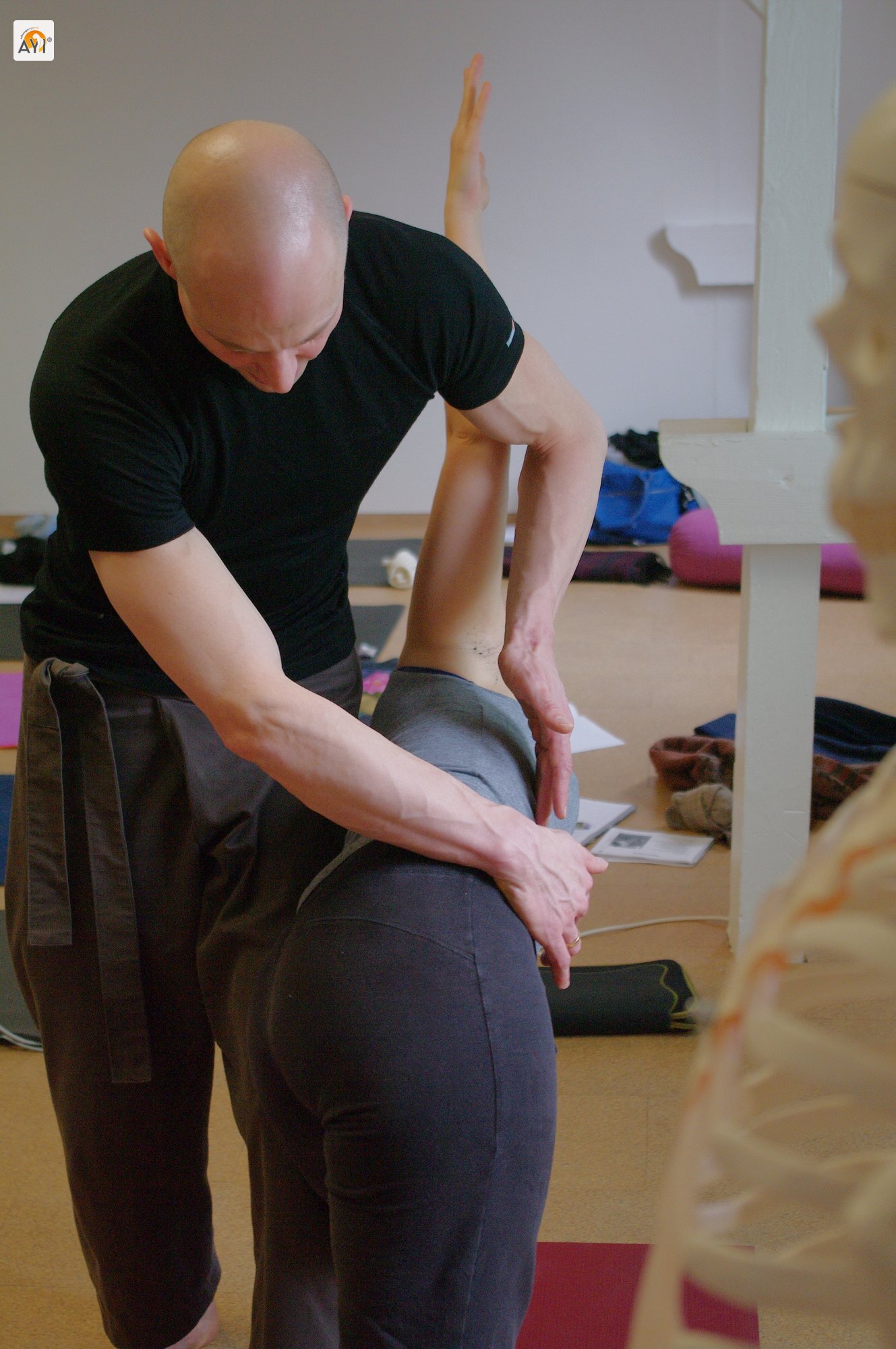
Adjustments mit Dr. Ronald Steiner
Die Feinheiten von Hilfestellungen im Rahmen einer Yogalehrer-Ausbildung

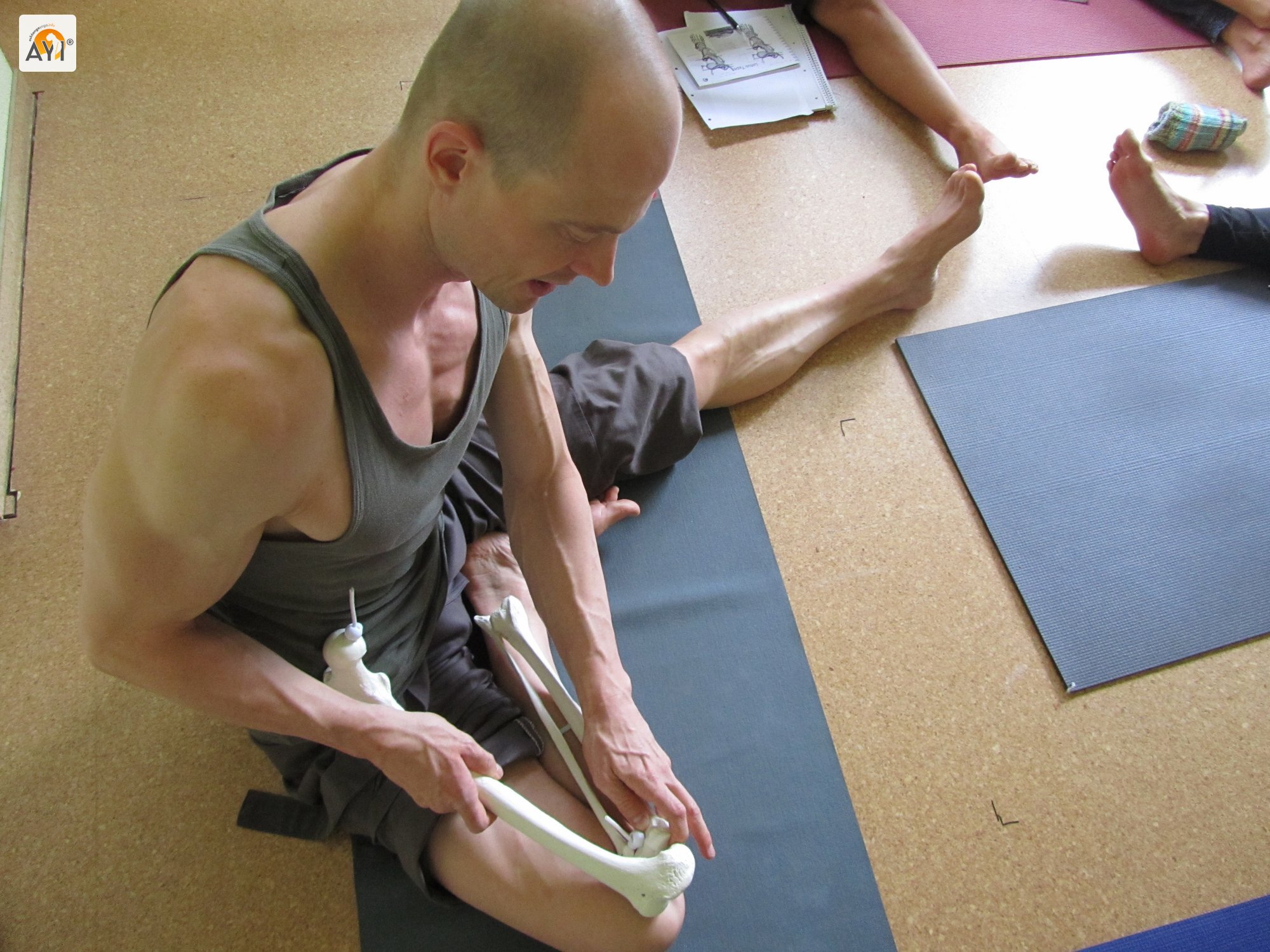
With knowledge from sports medicine and movement therapy, Aṣṭāṅga Yoga's curative power can come to fruition: those who do the same every day will also transform their bodies. With the correct alignment, we thus take a step towards better health and holistic wellbeing every day. – This is what yoga therapy is all about.

A web of learning and growth

Some of the Western innovations even find their way back to Mysore. A simple example of this phenomenon are the positions parivṛtta trikonāsana, the twisted triangle, and parivṛtta pārśvakoṇāsana, the revolved side angle. According to Nancy Gilgoff, one of the former students of Pattabhi Jois, those to positions were inserted by Western practioners since they coherently fit the system. Pattabhi then adopted those position in his own teaching.

However, Aṣṭāṅga Yoga has left certain traces also outside the formal boundaries of the established tradition: a large number of modern yoga styles developed from Aṣṭāṅga Yoga, from Jivamukti via Sharon Gannon and David Life to Brian Kest's Power Yoga. Their "inventors" all studied with Pattabhi Jois and even traditions that seem completely separate often integrate the basic elements of Aṣṭāṅga Yoga.

The centre of the practice

Without a doubt, bandha, vinyāsa and dṛṣṭi are the centre of Aṣṭāṅga Yoga practice. According to the Hatha Yoga Pradīpikā, bandha is a technique to reverse the energy, which always streams down and gets consumed, and to thus symbolically recharge our living power. From a physical point of view, the subtle muscle contractions already described by the Nāṭh Yogis straighten up within the Earth's field of gravity. The foundations for alignment, i.e. a healthy practice, were thus already laid in the ancient source texts of Hatha Yoga. As far as physics are concerned, this erection increases the energy of our body posture in space.

Vinyāsa means synchronising breath and movement to form a steady rhythm. Rhythm, in turn, structures time. From a physical point of view, energy in the dimension of time thus increases. Translated literally, dṛṣṭi means vision. The term refers to techniques which help us focus the otherwise often wandering gaze on certain points. The gaze is connected with our thoughts which otherwise also have a tendency to wander. The dṛṣṭi thus brings our thoughts into alignment. From a physical point of view, we increase the order and thus energy in our mind.

Bandha, vinyāsa and dṛṣṭi thus stand for an alignment in space, time and in our mind. Our practice recharges these dimensions with new energy. We become more present, more attentive and gain greater clarity. Finally, we immerge into the immediate perception of the moment, or, following Pantañjali's Yoga Sūtra 1.1: atha yoga-nuśāsanam – now introduction to Yoga. The state of yoga can be experienced in this moment.

Continue with AYI Free

Quiz: Eine lebendige Tradition

4 questions to deepen this article.

Author

Dr. Ronald Steiner

From Ulm

The "Yoga Doc" - Dr. Ronald Steiner is the founder of the AYI method. This method links traditional Ashtanga Yoga with innovative Yogatherapy and living Philosophy. This forms a practice that is personal for each and... more ›

Messages and ratings
0 messages

Please log in to write a message. Go to login

No messages yet.