

bhairava भैरव – formidable; terrifying
adjective · substantive masculine · substantive neuter · Word type unspecified
Dictionary sources
AYI dictionary adjective · substantive masculine
Cappeller 1891 Word type unspecified
Original text · English · Word type unspecified
bhairava ·f. ā & ī formidable, awful, horrible, n. adv. -- m. a form of Śiva, a man's name; f. ī a form of Durgā.
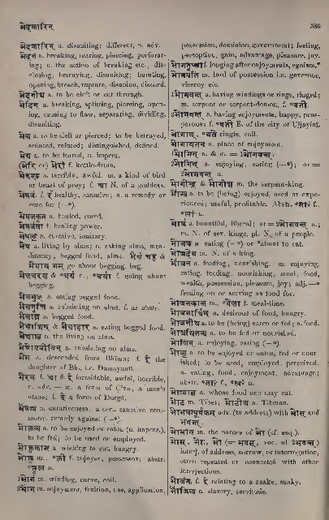
Monier-Williams 1872 adjective
Original text · English · adjective
bhairava bhairava, as, ī, am (fr. bhīru), for- midable, awful, horrible, terrific, terrible, horrid; miserable; relating to Bhairava; (as), m. a form of Śiva, (eight forms of Bhairavas are enumerated, viz. mahā-bh˚, saṃhāra-bh˚, asitāṅga-bh˚, ruru-bh˚, kāla-bh˚, krodha-bh˚, tāmra-cūḍa-bh˚ or ka- pāla-bh˚, candra-cūḍa-bh˚ or rudra-bh˚; other names of these forms are sometimes given, e. g. vidyā-rāja, kāma-r˚, nāga-r˚, sacchanda-r˚, lambita-r˚, deva-r˚, ugra-r˚, vighna-r˚); a man representing Bhairava; a Śivagaṇādhipa; a son of Śiva by Tārā-vatī (who was wife of Candra-śekhara, king of Karavīra-pura); N. of a Nāga; of a Yakṣa; of the author of the Pheṭkāriṇī-tantra; of a teacher of the Haṭha-vidyā; of two kings; of a hunter; of a river; of a Rāga or musical mode calculated to excite emotions of terror; (ī), f. a particular form of Durgā; a girl of twelve years (representing that goddess at the Durgā festival); N. of a Rāgiṇī or of a particular scale in the Hindū musical system; (am), n. terror, horror, the property of exciting terror, terribleness; = bhairava-tantra below.
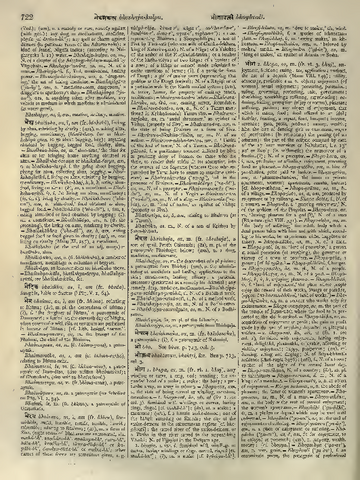
Petersburger 1855 adjective · substantive masculine · substantive neuter
Original text · German · adjective · substantive masculine
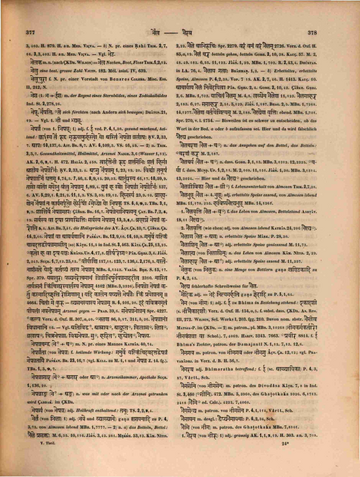
1. bhairava (von bhīru) 1〉 adj. grausig AK. 1,1,7,19. H. 303. H. an. 3,708. MED. v. 46. HALĀY. 4,20. śvāpada R. 1,26,14. vapus KATHĀS. 10,77. svarūpa Verz. d. Oxf. H. 59,a,1. saṃgrāma MBH. 1,215. Wunde SUŚR. 1,83,19. svara, niḥsvana, rava, rāva, śabda SUŚR. 2,388,5. MBH. 1,1213. MBH. 1,6278. MBH. 4,1525. MBH. 4,1525. MBH. 10,392 (die ed. Bomb. liest ravān st. raṇe). HIḌ. 4,20. R. 6,9,21. VARĀH. BṚH. S. 30,6. bhairavajarjaraśabda VARĀH. BṚH. S. 39,5. f. ī R. 6,9,22. ā (in beiden Ausgg.) HARIV. 5599. kurvāṇaṃ bhairavaṃ mahat Grausiges MBH. 4,1396. ati˚ MBH. 14,2471 (yuddha). RĀJA-TAR. 1,368 (bherīrava). bhairavam adv.: prākrośan MBH. 2,2690. MBH. 2,2695. nadan MBH. 8,63 (ed. Bomb. bhairavaṃ st. bhairavān). bhairavamuccairviravan VARĀH. BṚH. S. 30,3. subhairavam R. 6,11,36. bhairavābhirute yuddhe R. 6,70,29. — 2〉 m. a〉 eine Form Śivaʼs TRIK. 1,1,44. H. 198. H. an. MED. LA. (II) 87,7. PRAB. 59,7. Verz. d. Oxf. H. 69,b, N. 2. Verz. d. Oxf. H. 88,a,23. Verz. d. Oxf. H. 91,b,6. Verz. d. Oxf. H. 101,a,31. Verz. d. Oxf. H. 101,b,8. Verz. d. Oxf. H. 101,a,13. Verz. d. Oxf. H. 101,a,17. Verz. d. Oxf. H. 238,b,16. Verz. d. Oxf. H. 309,b,27. Verz. d. Oxf. H. 320,a,2. BURN. Intr. 551. WILSON, Sel. Works I, 21 u. s. w. bhūloka˚ RĀJA-TAR. 1,311. Es werden acht Formen Bhairavaʼs aufgeführt: mahā˚, saṃhāra˚, asitāṅga˚, ruru˚, kāla˚, krodha˚, tāmracūḍa˚, candracūḍa (statt der zwei letzten auch kapāla˚ und rudra˚) BRAHMAVAIV. P._in_Verz. d. Oxf. H. 25,b, N. 5 und im ŚKDR. oder: asitāṅga, ruru, caṇḍa, krodha, unmatta, kapālin (kupati WILS.), bhīṣaṇa und saṃhāra ŚAṂKARAVIJAYA_in_Verz. d. Oxf. H. 250,a,18. fgg. und TANTRASĀRA_im_ŚKDR. oder: vidyārāja, kāma˚, nāga˚, sacchanda˚, lamvita˚, deva˚, ugra˚ und vighna˚ VĀMANA-P._im_ŚKDR. ˚nāmāvalī Verz. d. B. H. No. 1302. bhairavatantra Verz. d. Oxf. H. 95,a,46. Verz. d. Oxf. H. 104,a,11. Verz. d. Oxf. H. 108,b,24. bhairavastotra (ein Abschnitt des Rudrayāmala) Verz. d. Oxf. H. 299,a, No. 729. bhairava = ugrabhairava Verz. d. Oxf. H. 257,a,2. — b〉 ein den Bhairava darstellender Mann WILSON, Sel. Works I, 258. — c〉 ein Śivagaṇādhipa KĀLIKĀ-P. 44_im_ŚKDR. — d〉 ein Sohn Śivaʼs von der Tārāvatī, der Gattin Candraśekharaʼs, Königs von Karavīrapura, KĀLIKĀ-P. 49_im_ŚKDR. — e〉 N. pr. eines Nāga MBH. 1,2158. eines Yakṣa Verz. d. Oxf. H. 18,b,38. — f〉 N. pr. eines Mannes HALL 173. Verz. d. Oxf. H. 101,b,13. Autors des Pheṭkāriṇītantra Verz. d. Oxf. H. 98,b,35. eines Lehrers der Haṭhavidyā Verz. d. Oxf. H. 233,b,38. zweier Fürsten Verz. d. Oxf. H. 137,b, No. 267. Verz. d. Oxf. H. 273,a, No. 648. eines Jägers HIT. 34,18. — g〉 N. pr. eines Flusses ŚABDAR._im_ŚKDR. — h〉 Bez. eines Rāga (einer musikalischen Weise) H. an. As. Res. III, 73. As. Res. III,77; vgl. bhairavī c. — 3〉 f. ī a〉 eine best. Form der Durgā H. 206. HALĀY. 1,17. Verz. d. Oxf. H. 88,a,23. Verz. d. Oxf. H. 93,b,13. fgg. bhairavyā dhāraṇayantram Verz. d. Oxf. H. 96,b,5. ˚kavaca Verz. d. Oxf. H. 94,a,40. ˚cakra Verz. d. Oxf. H. 92,a, N. 1. ˚tantra Verz. d. Oxf. H. 95,a,47 (Verz. d. B. H. No. 1335). ˚prayoga Verz. d. Oxf. H. 94,b,24. ˚mantrāḥ Verz. d. Oxf. H. 93,b,12. ˚yantra Verz. d. Oxf. H. 94,b,10. ˚stotra Verz. d. Oxf. H. 94,a,40. Vgl. tripura˚. — b〉 ein zwölfjähriges Mädchen, welches bei der Durgā-Feier diese Göttin vertritt, ANNADĀKALPA_im_ŚKDR. u. kumārī. WILSON, Sel. Works I, 257. fg. — c〉 Bez. einer Ragiṇī (vgl. bhairava 2,h.) As. Res. III, 77. GĪT. Einl. VIII. bhairavīrāga GĪT. 37,5.
Original text · German · adjective · substantive neuter
2. bhairava (von 1. bhairava 2,a.) 1〉 adj. f. ī zu Bhairava in Beziehung stehend: guṭikā, vaṭikā Verz. d. B. H. No. 963. — 2〉 n. so v. a. bhairavatantra s. u. 1. bhairava 2,a. bhairavāṣṭakam d. i. siddhibhairava, māyika˚, kaṅkāla˚, kālāgni˚, śakti˚, yoginī˚, mahā˚ und bhairavanāthatantra Verz. d. Oxf. H. 109,a,20. fgg.
Böhtlingk 1879 adjective · substantive masculine · substantive neuter
Original text · German · adjective · substantive masculine
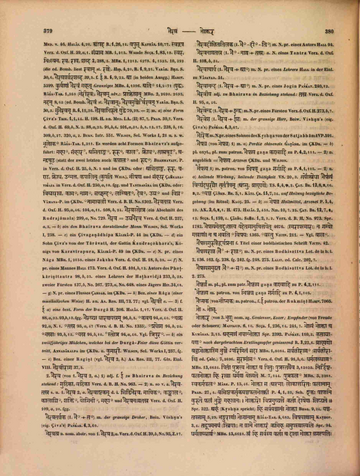
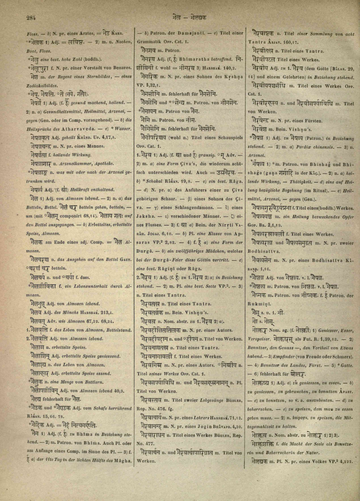
1. bhairava — 1〉 Adj. (f. ā und ī) grausig. ˚m Adv. — 2〉 m. — a〉 eine Form Śivaʼs. die wiederum achtfach unterschieden wird. Auch = ugrabhairava. — b〉 *Schakal RĀJAN. 19,8. — c〉 ein best. Rāga. — d〉 N. pr. — α〉 des Anführers einer zu Śiva gehörigen Schar. — β〉 eines Sohnes des Śiva. — γ〉 eines Schlangendämons. — δ〉 eines Yakṣa. — ε〉 verschiedener Manner. — ζ〉 eines Flusses. — 3〉 f. ā — a〉 Bein. der Nirṛti VARĀH. YOGAY. 6,10. — b〉 Pl. eine Klasse von Apsaras VP. 22,82. — 4〉 f. ī — a〉 eine Form der Durgā. — b〉 ein zwölfjähriges Mädchen, welches bei der Durgā-Feier diese Göttin vertritt. — c〉 eine best. Rāgiṇī oder Rāga.
Original text · German · adjective · substantive masculine · substantive neuter
2. bhairava — 1〉 Adj. (f. ī) zu 1. bhairava 2〉a〉 in Beziehung stehend. — 2〉 m. Pl. eine best. Secte VP.². — 3〉 n. Titel eines Tantra.
Apte 1890 adjective · substantive masculine · substantive neuter
Original text · English · adjective · substantive masculine · substantive neuter
bhairava a. (vī f.) [bhīroridaṃ aṇ] 1 Terrible, frightful, horrible, formidable; U. 5. 6. 2 Miserable. 3 Relating to Bhairava. — vaḥ 1 A form of Śiva (of which 8 kinds are enumerated). 2 The sentiment of terror (bhayānaka). 3 Fear, terror. 4 N. of a musical mode (rāga) calculated to excite emotions of fear or terror. — vī 1 A form of the goddess Durgā. 2 N. of a Rāgiṇī in the Hindu musical system. 3 A girl of 12 or a young girl representing the goddess Durgā at the Durga festival. — vaṃ Terror, horror. Comp. — īśaḥ an epithet of Viṣṇu (or Śiva ?); so bhairavatarjakaḥ — yātanā a sort of purificatory torment inflicted by Bhairava of Benares on those who die there, to make their spirits fit for absorption into the Supreme Spirit.
Cappeller 1887 Word type unspecified
Original text · German · Word type unspecified
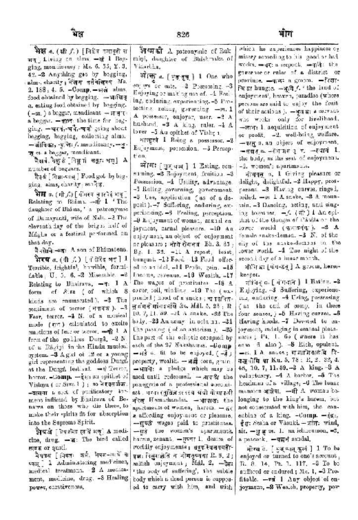
bhairava, f. ā u. ī grausig, n. adv. m. eine From Śiva's Mannsname. f. ī eine From der Durgā.
Burnouf 1866 adjective
Original text · French · adjective
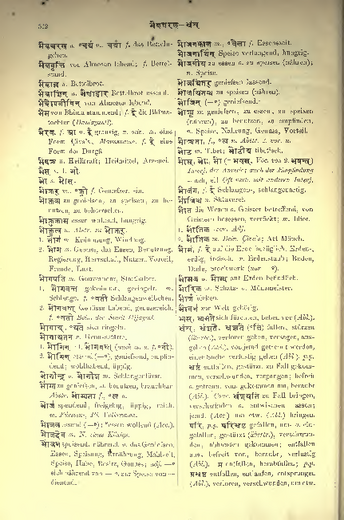
bhairava bhairava a. (bhīru) terrible, formidable. — S. m. nom d'un mode musical. Śiva [dans qqune de ses 8 incarnations secondaires]. Np. de riviere. — S. n. horreur, terreur. — S. f. bhairavi, Durgā.
Occurrences in source texts (35)
DYS 2 occurrences
HP 2 occurrences
SiSa 1 occurrence
SS 1 occurrence
VBT 29 occurrences
VBT 24–31: Breath and Śakti 4 occurrences
Direct occurrences
9 more source pages
VBT 86–92: Light and Darkness 3 occurrences
Direct occurrences
VBT 110–120: Everyday as Gate 2 occurrences
Direct occurrences
VBT 121–129: Devotion and Release 2 occurrences
Direct occurrences
VBT 130–138: Name and Fourfoldness 2 occurrences
Direct occurrences
VBT 139–145: Fruit of the Ways 2 occurrences
Direct occurrences
Continue with AYI Free
Image source: AYI archive.