

buddhi बुद्धि – buddhi; cognitive faculty
adjective · substantive feminine · substantive masculine · Word type unspecified
Dictionary sources
AYI dictionary substantive feminine
Cappeller 1891 substantive feminine
Original text · English · substantive feminine
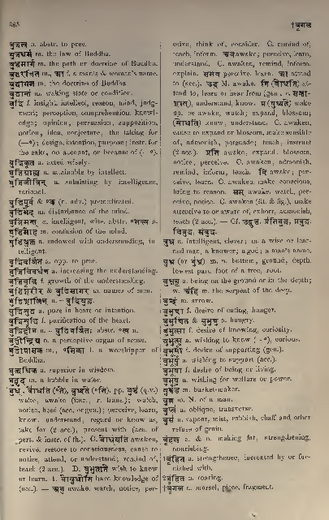
buddhi ·f. insight, intellect, reason, mind, judgment; perception, comprehension, knowledge; opinion, persuasion, supposition, notion, idea, conjecture, the taking for (--°); design, intention, purpose; instr. for the sake, on account, or because of (--°).
Monier-Williams 1872 substantive feminine
Original text · English · substantive feminine
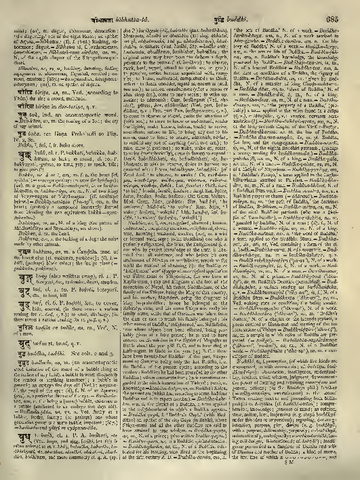
Buddhi, is, f. perception, (of which five kinds are enumerated, or with manas six; cf. indriya, bud- dhīndriya); observation, intelligence, understand- ing, intellect, mind, wisdom, judgment, discernment; the power of forming and retaining conceptions and general notions; (in the Sāṅkhya phil.) Intellect (= adhy-avasāya, ascertainment) as the second Tattva coming next to and proceeding from Mūla- prakṛti or A-vyakta [cf. buddhi-tattva]; compre- hension, knowledge; presence of mind; an opinion, view, notion, idea, impression (e. g. etayā buddhyā, under this idea or impression); regarding, deeming; intention, purpose, plan, design (e. g. buddhyā, with a purpose, deliberately, purposely; a-buddhyā, unintentionally, undesignedly; anartha-buddhi, hav- ing evil designs, ill-intentioned; cf. hita-b˚); Intelli- gence personified as a daughter of Dakṣa and wife of Dharma and mother of Bodha; a kind of metre, the first line of which is ˘¯˘¯¯˘˘¯˘¯¯, and the second, third, and fourth ¯¯˘ &c.; buddhiṃ kṛ, to turn the attention to, fix the mind upon (with loc.); to form a purpose or design, resolve to do any- thing (with inf. or with dat. or loc. or with prati and acc.; cf. rt. 1. kṛ, p. 246, col. 1, kṛta-b˚).

Petersburger 1855 adjective · substantive feminine · Word type unspecified
Original text · German · adjective
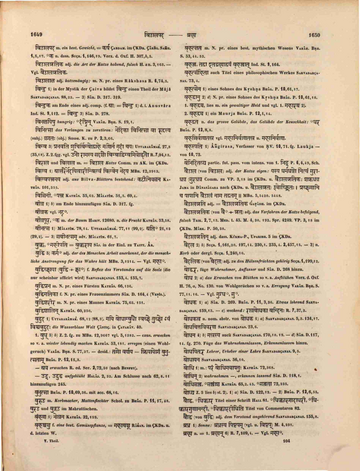
buddhi 5〉 karma˚ adj. der des Menschen Arbeit anerkennt, der die menschliche Anstrengung für das Wahre hält MBH. 3,1214. — Vgl. mahā˚.
Original text · German · substantive feminine
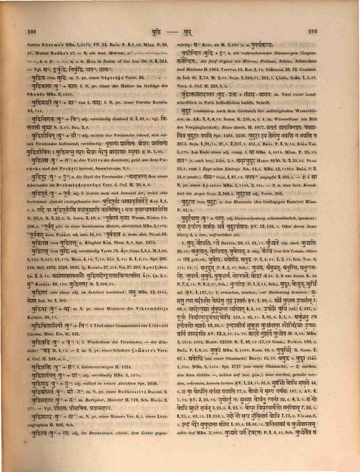
buddhi (von budh) f. VOP. 26,183. 1〉 Einsicht, Verstand, Geist, Intellect, das Vermögen Vorstellungen und Begriffe zu bilden und festzuhalten; Urtheilskraft AK. 1,1,4,10. AK. 3,4,18,112. AK. 3,4,18,125. TRIK. 1,1,114. H. 308. HALĀY. 2,179. ˚vivardhana M. 1,106. M. 4,18. ˚vṛddhikara M. 19. buddhirjñānena śudhyati M. 5,109. M. 12,10. buddhimākulīkuryuḥ SUŚR. 1,14,4. SUŚR. 1,378,17. ˚lāghava R. 2,58,36. śāstreṣvakuṇṭhitā RAGH. 1,19. na buddhirdhanalābhāya na jāḍyamasamṛddhaye Spr. 1424. buddhirbalavatī bhīrusattvānāṃ na parākramaḥ Spr. 1977. ˚śastra adj. (pārthiva) Spr. 1978. buddhiśca hīyate puṃsāṃ nīcaiḥ saha samāgamāt Spr. 1979. buddheragocaratayā Spr. 1980. fgg. Spr. 2439. fg. pareṅgitajñānaphalā hi buddhayaḥ Spr. 463. vyasaneṣveva sarveṣu yasya buddhirna hīyate Spr. 2915. madāndha˚ Spr. 4173. KATHĀS. 15,18. KATHĀS. 32,172. punarlabdhvā buddhiṃ ceto dhanāni ca N. 11,23. ˚saṃpanna verständig ĀŚV. GṚHY. 1,5. R. 1,16,3. ˚varjita KATHĀS. 33,39. ˚hīnatva Spr. 1902. jāta˚ adj. MĀRK. P. 74,49. alpa˚ M. 12,74. SUŚR. 1,14,4. vimalavipula˚ ebend. paṇḍita˚ Spr. 1540. ātmā buddhyā samarthyārthānmano yuṅke vivakṣayā ŚIKṢĀ_in_Ind. St. 4,106. Ind. St. 4,350. cintayantī buddhyā N. 5,11. DAŚ. 2,2. etadbuddhyā viniścitya manasā MBH. 5,5973. buddhau (jajñe) ca vijigīṣutā im Geiste VID. 16. adhyavasāyo buddhiḥ KAP. 2,13. SĀṂKHYAK. 23. TATTVAS. 5. TATTVAS. 8. sāntaḥkaraṇā buddhiḥ sarvaṃ viṣayamavagāhate yasmāt SĀṂKHYAK. 35. fgg. SĀṂKHYAK. 49. NĪLAK. 10. NĪLAK. 11. sthūla, sūkṣma NĪLAK. 25. NĪLAK. 45. sarvavyavahāraheturbuddhirjñānam sā dvividhā smṛtiranubhavaśca TARKAS. 19. BHĀṢĀP. 50. buddhirnāma niścayātmikāntaḥkaraṇavṛttiḥ VEDĀNTAS. (Allah.) No. 47. matirāgāmikā jñeyā buddhistatkāladarśinī . prajñā cātītakālasya medhā kālatrayātmikā .. Randgl. zu H. 309. manasaśca parā buddhirbuddherātmā mahānparaḥ KAṬHOP. 3,10. BHAG. 3,42. BHAG. 3,40. buddhīndriyamanāṃsi M. 2,192. tanubuddhimanaḥsu Spr. 4732. das Vorstellungsvermögen entsteht beim Fötus im 6ten Monat SUŚR. 1,323,19. — 2〉 Wahrnehmung: satsaṃprayoge puruṣasyendriyāṇāṃ buddhijanma tatpratyakṣam JAIM. 1,4. sechs Arten durch eben so viele Sinne NĪLAK. 22. Vgl. buddhīndriya. — 3〉 Verständniss, das Begreifen: śabda˚ SĀH. D. 16,21. āsattirbuddhyavicchedaḥ SĀH. D. 8,22. — 4〉 Meinung, Ansicht; Gedanken: eṣā te 'bhihitā māṃkhye buddhiḥ BHĀG. 2,39. BHĀG. 2,41. na vedmi kiṃcinmohena bhramantīva hi buddhayaḥ MĀRK. P. 76,31. tasya buddhiriyaṃ jātā R. 1,2,44. R. 1,8,2. R. 1,57,11. R. 1,63,11. mūḍhaḥ parapratyayaneyabuddhiḥ Spr. 4559. saṃdigdhabuddhiṃ māṃ kurvan ŚĀK. 69,2. kiṃ svinnaro vā sthāṇurvetyādibuddhistu saṃśayaḥ BHĀṢĀP. 128. naiṣā buddhiḥ so v. a. richtige, — vernünftige Ansicht R. 5,59,1. RAGH. 12,68. tvayyeva saktāmanivārya buddhim die nur an dir haftenden Gedanken R. GORR. 2,110,3. strībuddherasthiratvāt M. 8,77. etayā buddhyā bei dieser Ansicht PAÑCAT. 127,15. cakrurbuddhimayaṃ pāpaḥ sarvānno bhakṣayiṣyati sie fassten die Meinung R. 4,57,2. lakṣmaṇe bharate vā tvaṃ kuru buddhiṃ yathāsukham richte deine Gedanken auf, denke an R. 6,100,22. kalyāṇakṛtabuddhi KATHĀS. 15,144. spṛśanti na nṛśaṃsānāṃ hṛdayaṃ bandhubuddhayaḥ Gedanken an KATHĀS. 3,12. — 5〉 das Halten für Etwas: atasmiṃstadbuddhiḥ NĪLAK. 13,25. tatprāptibuddhyā in der Meinung, dass ich zu dir gekommen sei, RAGH. 13,32. bhittibuddhikara bewirkend den Glauben an eine Wand, dass man eine Wand zu sehen glaubt, KATHĀS. 29,59. sthale ca jalabuddhikṛt KATHĀS. 60. doṣabuddhyā BHĀG. P. 1,9,36. BHĀG. P. 4,7,53. MĀRK. P. 76,39. HIT. 81,14. KULL._zu_M. 8,95. paśya buddhyā manuṣyāṇāṃ rājannāpadamātmanaḥ schau auf das eigene Unglück, als wenn du es für das der Menschheit hieltest, Spr. 3505. — 6〉 Absicht, Vorsatz, Plan: sthirā buddhiḥ — duhitustava SĀV. 2,29. sthira˚ adj. R. 3,39,3. (nahi tava) saṃnivartayituṃ buddhiḥ śakyate R. SCHL. 2,34,32. etāṃ buddhiṃ samāśritya kṛtvā niścayamātmanaḥ R. SCHL. 3,48,16. nahyeṣā buddhirāstheyā hanūmannaṅgadaṃ prati R. SCHL. 4,23,11. evaṃ me niścitā buddhirmanaścāpi samāhitam R. SCHL. 2,19,11. dharmamāśritya sadbuddhimanuvartitumarhasi R. SCHL. 18,51. na ca me krodhamutsraṣṭuṃ buddhirbhavati R. SCHL. 1,21,7. kiṃ kariṣyāmo bhadraṃ te buddhiratra vicāryatām R. SCHL. 41,9. evaṃ tasya tadā buddhirdamayantyāṃ nyavartata . — damayantyā visarjane N. 10,15. raṇāya vīraḥ pratiyātabuddhiḥ R. 5,43,14. śaktāḥ sūkṣmāsu buddhiṣu R. SCHL. 1,7,9. Spr. 2657. kayāpi buddhyā in irgend einer Absicht Spr. 4811. kretāraḥ krīṇīyuriti buddhyāpaṇe prasāritaṃ vastu P. 6,1,82, Sch. pāpabuddhyā in böser Absicht R. 3,53,50. īśvarārpaṇabuddhyā NĪLAK. 9. anukrośabuddhyā so v. a. aus Mitleiden MEGH. 113. anartha˚ auf Schaden sinnend R. 1,2,32. hita˚ adj. Spr. 2166. droha˚ f. PAÑCAT. 58,21. adj. PAÑCAT. 8. śīghrayāne sadā buddhirdhriyate me viśeṣataḥ mein Sinn steht nach MBH. 3,2638. vivāhavidhaye buddhiṃ vyadhādvatseśvarastayoḥ so v. a. beschloss KATHĀS. 34,104. buddhiṃ kar einen Vorsatz fassen, sich zu Etwas entschliessen: kṛtvā naiṣṭhikīṃ buddhi- m R. 1,63,15. tasmātkuru hitāṃ buddhim R. GORR. 2,116,28. cakāra buddhiṃ svakulasya nāśinīm R. GORR. 3,38,27. kṛta˚ einen festen Vorsatz habend, fest entschlossen R. GORR. 6,100,21. M. 1,97. Spr. 3279. akṛtabuddhi M. 7,30. sa kathaṃ mamopari drohabuddhiṃ karoti PAÑCAT. 58,21. die Ergänzung ein infin.: sa buddhiṃ kṛtavān — brahmadattāya — dātuṃ kanyāśataṃ tadā R. 1,34,47. R. 1,44,9. R. 2,28,1. R. 2,31,3. MĀRK. P. 77,11. ein nom. act. im dat.: kṛtabuddhiṃ nivāsāya tatraiva R. GORR. 2,100,1. R. GORR. 2,99,40. VIKRAM. 86,19. KATHĀS. 22,39. ein nom. act. im loc.: dahane tu saputrāyāḥ kuntyā buddhimakārayat MBH. 1,5636. N. 26,10. R. 1,65,15. R. 2,24,30. R. GORR. 1,67,8. R. GORR. 6,37,77. ein nom. act. im acc. mit pratiḥ sa tu kṛtvā suvelasya buddhimārohaṇaṃ prati R. GORR. 6,14,1. — buddhiṃ prakuruṣva yathecchasi beschliesse N. 3,25. abuddhyā ohne Absicht N. 25,9. RĀJA-TAR. 1,79. — 7〉 die personif. Einsicht ist eine Tochter Dakṣaʼs und Gattin Dharmaʼs MBH. 1,2579. VP. 54. BHĀG. P. 4,1,49. MĀRK. P. 50,21. Mutter Bodhaʼs MĀRK. P. 27. — 8〉 ein best. Metrum, a: ⏑ – ⏑ – – ⏑ ⏑ – ⏑ – – b. c. d: – – ⏑ u. s. w. HALL_in_Journ. of the Am. Or. S. 6,514. — Vgl. a˚, durbuddhi, nirbuddhi, pāpa˚, prāṇa˚.
Original text · German · Word type unspecified
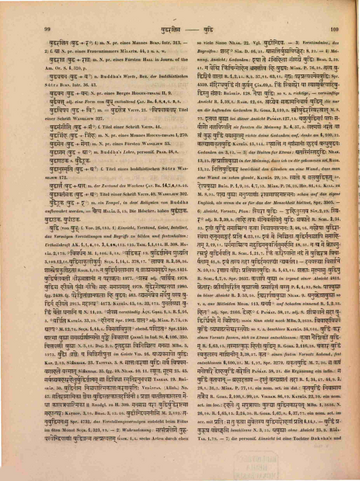
buddhi 4〉 pl. Spr. (II) 2286.
Böhtlingk 1879 substantive feminine
Original text · German · substantive feminine
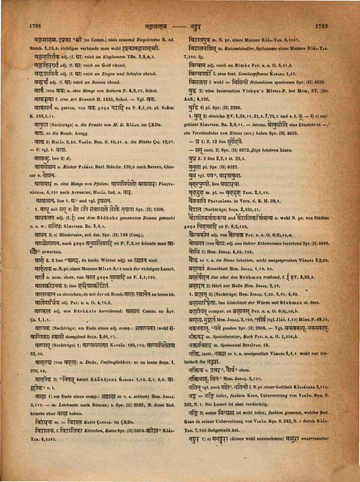
buddhi f. — 1〉 das Vermögen Vorstellungen und Begriffe zu bilden und festzuhalten, Einsicht, Verstand, Vernunft, Geist, Intellect, Urtheilskraft. [Page4-228-b] Ausnahmsweise auch Pl. — 2〉 Wahrnehmung. — 3〉 Verständniss, das Begreifen. buddhirātmana; oder buddhirbrāhmī Selbsterkenntniss, Psychologie CARAKA. 1,9. — 4〉 Meinung, Ansicht, Ueberzeugung, Vermuthung (Chr. 100,13), Gedanken, — über (Loc.) — 5〉 eine richtige, vernünftige Ansicht. — 6〉 die auf Etwas (Loc. oder im Comp. vorangehend) gerichteten Gedanken, das Sinnen auf Chr. 55,29. Chr. 55,30. Chr. 55,33. — 7〉 Absicht, Vorsatz, Plan. Instr. am Ende eines Comp. so v. a. aus, um (als Angabe des Beweggrundes) Chr. 290,19. — 8〉 das Halten für (im Comp. vorangehend). bhitti˚ die Meinung, dass es eine Wand sei. — 9〉 ein best. Metrum. — 10〉 das 5te astrologische Haus UTPALA zu VARĀH. BṚH. 1,20. — 11〉 die personificirte Einsicht ist eine Tochter Dakṣaʼs und Gattin Dharmaʼs. — 12〉 N. pr. einer Frau HEM. PAR. 3,2.
Apte 1890 substantive feminine
Original text · English · substantive feminine
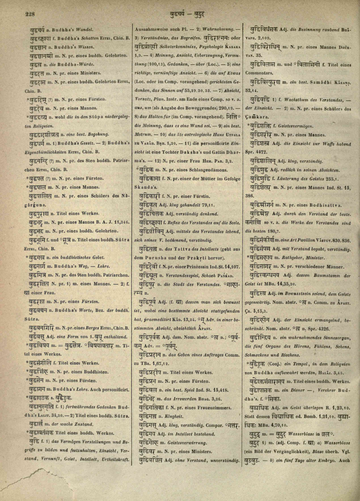
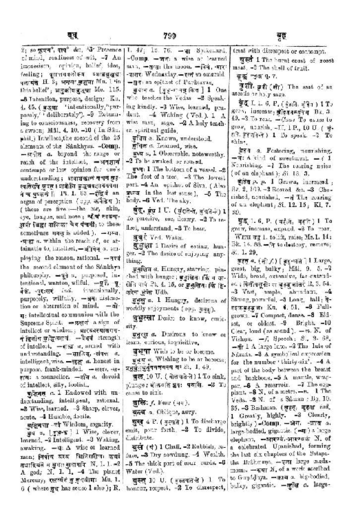
buddhiḥ f. [budh-ktin] 1 Perception, comprehension. 2 Intellect, understanding, intelligence, talent; tīkṣṇā nāruṃtudā buddhiḥ Śi. 2. 109; śāstreṣvakuṃṭhitā buddhiḥ R. 1. 19. 3 Information, knowledge; buddhiryasya balaṃ tasya H. 2. 122 ‘knowledge is power’; P. I. 4. 52. 4 Discrimination, judgment, discernment. 5 Mind; mūḍhaḥ parapratyayaneyabuddhiḥ M. 1. ([Page 0799-a]) M. 2; so kṛpaṇa˚, pāpa˚ &c. 6 Presence of mind, readiness of wit. 7 An impression, opinion, belief, idea, feeling; dūrāttamavalokya vyāghrabuddhyā palāyaṃte H. 3; anayā buddhyā Mu. 1 ‘in this belief’; anukrośabuddhyā Me. 115. 8 Intention, purpose, design; Ku. 4. 45. (buddhyā ‘intentionally,’ ‘purposely,’ ‘deliberately’). 9 Returning to consciousness, recovery from a swoon; Māl. 4. 10. 10 (In Sān. phil.) Intellect, the second of the 25 elements of the Sāṃkhyas. Comp. — atīta a. beyond the range or reach of the intellect. — avajñānaṃ contempt or low opinion for one's understanding; aprāptakālaṃ vacanaṃ bṛhaspatirapi bruvan . prāpnoti buddhyavajñānamapamānaṃ ca puṣkalaṃ .. Pt. 1. 63. — iṃdriyaṃ an organ of perception (opp. karneṃdriya); (these are five: -the ear, skin, eye, tongue, and nose; śrotraṃ tvakcakṣuṣī jihvā nāsikā caiva paṃcamī; to these sometimes manas is added). — gamya, grāhya a. within the reach of, or attainable to, intellect. — jīvin a. employing the reason, rational. — tattvaṃ the second element of the Sāṃkhya philosophy. — pūrva a. purposed, intentional, wanton, wilful. — pūrvaṃ, — pūrvakaṃ, -puraḥsaraṃ ind. intentionally, purposely, wilfully. — bhramaḥ distraction or aberration of mind. — yogaḥ intellectual communion with the Supreme Spirit. — lakṣaṇaṃ a sign of intellect or wisdom; prārabdhasyāṃtagamanaṃ dvitīyaṃ buddhilakṣaṇaṃ. — vaibhavaṃ strength of intellect. — śastra a. armed with understanding. — śālin, -saṃpanna a. intelligent, wise. śuddha a. honest in purpose, frank-minded. — sakhaḥ, — sahāyaḥ a counsellor. — hīna a. devoid of intellect, silly, foolish.
Cappeller 1887 substantive feminine · substantive masculine
Original text · German · substantive feminine
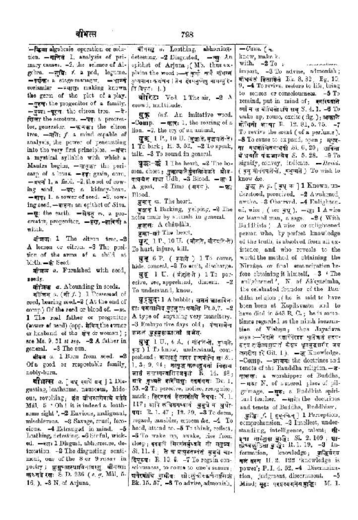
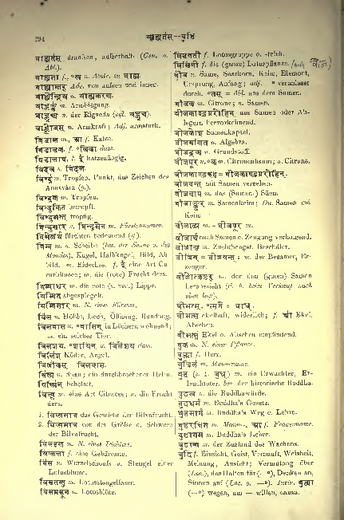
buddhi f. Einsicht, Geist, Vernunft, Weisheit, Meinung, Ansicht; Vermutung über (Loc.), das Halten für (—˚), Denken an, Sinnen auf (Loc. o. —˚). Instr. buddhyā (—˚) wegen, um — willen, causa.
Original text · German · substantive masculine
buddhi m. der Zustand des Wachens.
Burnouf 1866 substantive feminine
Original text · French · substantive feminine
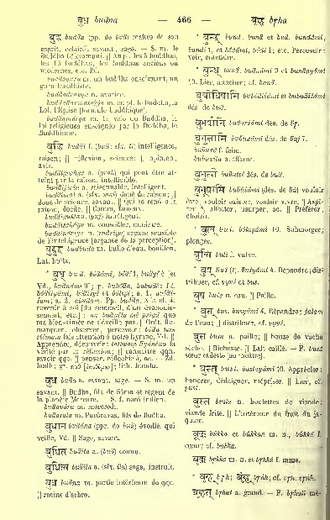
buddhi buddhi f. (budh; sfx. ti) intelligence, raison; réflexion, science; opinion, avis. buddhigrahya a. (grah) qui peut être atteint par la raison, intelligible. buddhijīvin a. raisonnable, intelligent. buddhimat a. (sfx. mat) doué de raison; doué de science, savant. Qui se rend à la raison, docile. Connu, fameux. buddhiyukta a. (yuj) intelligent. buddhisahāya m. conseiller, ministre. buddhīndriya n. (indriya) organe sensible de l'intelligence [organes de la perception].
Occurrences in source texts (24)
DYS 2 occurrences
GoS 1 occurrence
HP 1 occurrence
PYS 3 occurrences
SiSa 5 occurrences
SVU 6 occurrences
VBT 6 occurrences
Continue with AYI Free
Image source: AYI archive.